



ERK
Extracellular signal regulated kinases
ERKs (Extracellular-signal-regulated kinases) are widely expressed protein kinase intracellular signalling molecules that are involved in functions including the regulation of meiosis, mitosis, and postmitotic functions in differentiated cells. Many different stimuli, including growth factors, cytokines, virus infection, ligands for heterotrimeric G protein-coupled receptors, transforming agents, and carcinogens, activate the ERK pathway. In the MAPK/ERK pathway, Ras activates c-Raf, followed by mitogen-activated protein kinase kinase (abbreviated as MKK, MEK, or MAP2K) and then MAPK1/2 (below). Ras is typically activated by growth hormones through receptor tyrosine kinases and GRB2/SOS, but may also receive other signals. ERKs are known to activate many transcription factors, such as ELK1, and some downstream protein kinases. Disruption of the ERK pathway is common in cancers, especially Ras, c-Raf and receptors such as HER2.
ERK アイソフォーム特異的製品
All Product Categories
-
ERK Inhibitors
(762)
View all products
-
ERK Agonists
(10)
View all products
-
ERK Activators
(267)
View all products
-
ERK Modulators
(19)
View all products
-
ERK Chemical
(1)
View all products
-
ERK Inducers
(17)
View all products
-
ERK Degraders
(2)
View all products
-
ERK Controls
(3)
View all products
-
ERK Ligands
(2)
View all products
-
ERK 関連製品 (1167)
関連製品 (1167)

-
抗体 (22)
-
ERK Isoform Comparison
-
Peptide E5
 0 Images製品番号: HY-P11728CAS 番号: 1643580-44-2Peptide E5 is an antagonist targeting the CXCR4/CXCL12 axis. Peptide E5 blocks the CXCR4/CXCL12 axis, downregulates CXCR4 expression, and inhibits the phosphorylation of downstream Akt and Erk. Peptide E5 induces apoptosis, suppresses migration and adhesion of breast cancer cells. Peptide E5 inhibits CXCL12-mediated endothelial progenitor cell recruitment, thereby suppressing tumor angiogenesis. Peptide E5 is applicable to relevant research on breast cancer.
-
Theophylline-platinum(IV) prodrug-1
 0 Images製品番号: HY-175257Theophylline-platinum(IV) prodrug-1 is a PARP-1 inhibitor. Theophylline-platinum(IV) prodrug-1 enhances DNA damage, ROS production, mitochondrial dysfunction, apoptosis and S-phase arrest, along with reducing invasion and metastasis in cells. Theophylline-platinum(IV) prodrug-1 exhibits superior antitumor activity in the xenograft SKOV3-BRCA1-KD tumor model. Theophylline-platinum(IV) prodrug-1 can be used for the study of ovarian cancer.
-
Creosol (Standard)
 0 Images別名: 2-Methoxy-4-methylphenol (Standard)Creosol (Standard) (2-Methoxy-4-methylphenol (Standard)) is the analytical standard of Creosol (HY-W040971). This product is intended for research and analytical applications. Creosol (2-Methoxy-4-methylphenol) is an endogenous metabolite that acts as an important chemical intermediate and potential biofuel mainly derived from lignocellulosic biomass. Creosol is blood brain barrier penetrable.
-
Rohitukine
 0 Images製品番号: HY-119831CAS 番号: 71294-60-5Rohitukine is an orally active CDK9/T1 inhibitor with an IC50 of 0.3 μM. Rohitukine blocks ATP binding sites of CDK2/A and CDK9/T1, suppresses PPARγ, AKT, mTOR, C/EBPα, SREBP-2, and NF-κB signaling, and increases hepatic LXRα expression. Rohitukine induces S-phase cell cycle arrest, ROS generation, apoptosis, and exhibits anti-inflammatory activity. Rohitukine can be used for the research of leukemia, pancreatic cancer, prostate cancer, breast cancer, CNS cancer, ovarian cancer, lung cancer, dyslipidemia, inflammatory diseases, inflammatory bowel disease, and arthritis.
-
Anti-inflammatory agent 36
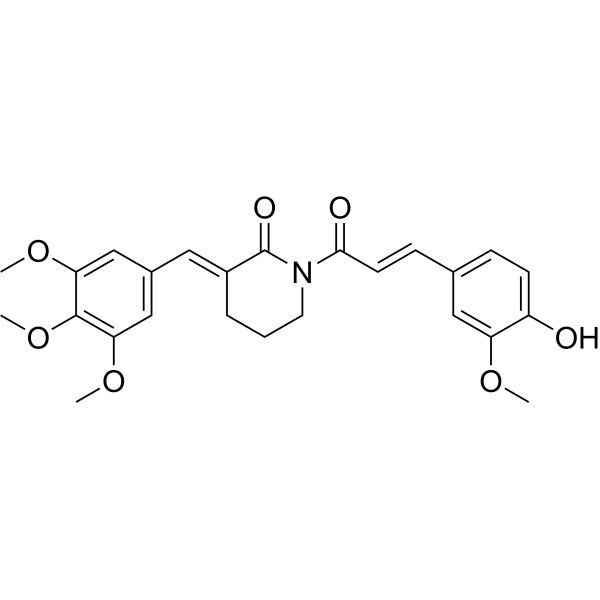 0 ImagesAnti-inflammatory agent 36 is an anti-inflammatory agent. Anti-inflammatory agent 36 inhibits LPS-induced macrophage activation.
-
(E/Z)-BIX02188
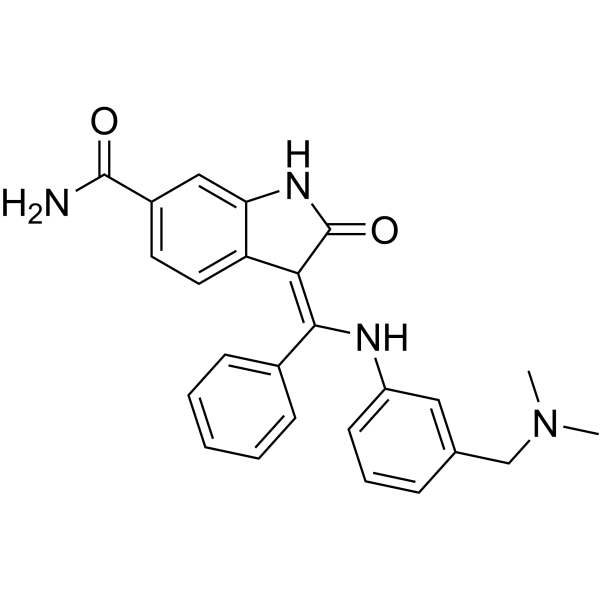 0 Images製品番号: HY-107622CAS 番号: 1094614-84-2(E/Z)-BIX02188 is a MEK5/ERK5 pathway inhibitor. (E/Z)-BIX02188 inhibits the catalytic function of purified MEK5 enzyme.(E/Z)-BIX02188 can be used for the role of MEK5/ERK5 pathway in various biological systems .
-
CST905
 0 Images製品番号: HY-175435CAS 番号: 3094183-98-6CST905 is a potent BRAF-V600E PROTAC degrader with a DC50 of 18 nM. CST905 recruits the VHL E3 ligase to form a ternary complex, mediating the degradation of BRAF-V600E via the ubiquitin-proteasome pathway. The ligand of CST905 disrupts the RAF dimerization interface, thereby preventing the aberrant activation of the harmful MAPK/ERK pathway in RAS-mutated cells while degrading the target protein. CST905 can be used in studies related to malignant melanoma and neuroblastoma.
-
EGFR-IN-189
 0 Images製品番号: HY-180949CAS 番号: 3037398-18-5EGFR-IN-189 (Compound 7) is a selective covalent epidermal growth factor receptor (EGFR) inhibitor with an IC50 of 200 nM. EGFR-IN-189 can effectively inhibit the C797S mutant type of EGFR. EGFR-IN-189 can inhibit cancer cells proliferation and inhibit EGFR phosphorylation and downstream ERK1/2 phosphorylation. EGFR-IN-189 can be used for research of nonsmall cell lung cancer.
-
N-Acetyldehydroanonaine
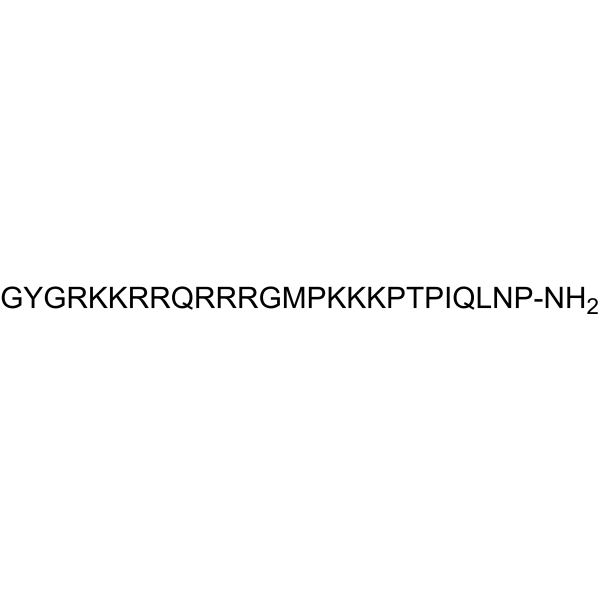
 0 Images製品番号: HY-N17458CAS 番号: 132646-11-8N-Acetyldehydroanonaine is an alkaloid that acts as a ligand for AKT1 and MAPK1. N-Acetyldehydroanonaine can be isolated from plants of the Zanthoxylum genus. N-Acetyldehydroanonaine is applicable to the research of diseases such as gastric cancer.
-
AC-P19M
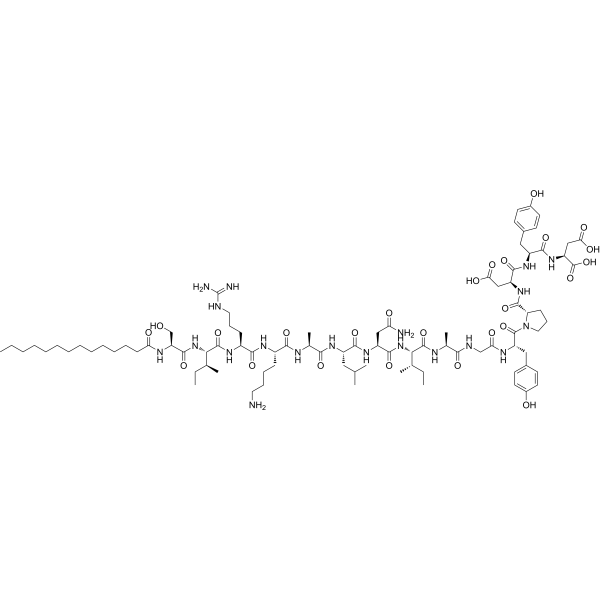
 0 Images製品番号: HY-P11198AC-P19M is an anticancer peptide. AC-P19M induces apoptosis by disrupting the cell membrane of cancer cells. AC-P19M reverses epithelial-mesenchymal transition (EMT). AC-P19M shows anti-angiogenic activity through the inhibition of VEGF-VEGFR2/ERK/Akt signaling. AC-P19M can be used for lung cancer research.
-
EGFR/tubulin-IN-1
 0 Images製品番号: HY-179049EGFR/tubulin-IN-1 (Compound 26) is a dual-target inhibitor of EGFR and tubulin. EGFR/tubulin-IN-1 significantly reduces the levels of p-EGFR, p-AKT, and p-ERK in cells, disrupting the microtubule structure of the cells. EGFR/tubulin-IN-1 significantly inhibits the proliferation of H1975 cells and significantly blocks the cells in the G2/M phase. EGFR/tubulin-IN-1 induces the expression of autophagy markers LC3B-II and Beclin-1, while down-regulating the expression of p62. EGFR/tubulin-IN-1 induces ferroptosis, with increased ROS content and depletion of glutathione (GSH). EGFR/tubulin-IN-1 inhibits epithelial-mesenchymal transition (EMT) and tumor metastasis. EGFR/tubulin-IN-1 has a significant tumor-suppressing effect in the H1975 transplanted tumor nude mouse model. EGFR/tubulin-IN-1 can be used for the study of non-small cell lung cancer.
-
KRAS G12C-IN-76
 0 Images製品番号: HY-181913CAS 番号: 3023465-61-1KRAS G12C-IN-76 (Compound 39) is an orally active KRASG12C inhibitor. KRAS G12C-IN-76 inhibits the phosphorylation of ERK. KRAS G12C-IN-76 exhibits anticancer activity against pancreatic cancer.
-
FLT3-IN-34
 0 Images製品番号: HY-178020CAS 番号: 3020729-11-4FLT3-IN-34 is a FLT3 inhibitor, with an IC50 value of 1.4 nM. FLT3-IN-34 blocks the phosphorylation of FLT3 and its downstream signaling molecules AKT and ERK1/2. FLT3-IN-34 induces concentration-dependent G0/G1 phase arrest and mild apoptosis in FLT3-ITD-positive MV4-11 cells. FLT3-IN-34 shows potent anti-proliferative activity against FLT3-ITD-positive MV4-11 cells (IC50 = 14.95 nM) and MOLM-13 (IC50 = 18.5 nM). FLT3-IN-34 can be used for the study of FLT3-positive acute myeloid leukemia (AML).
-
PACAP (1-38), human, ovine, rat TFA
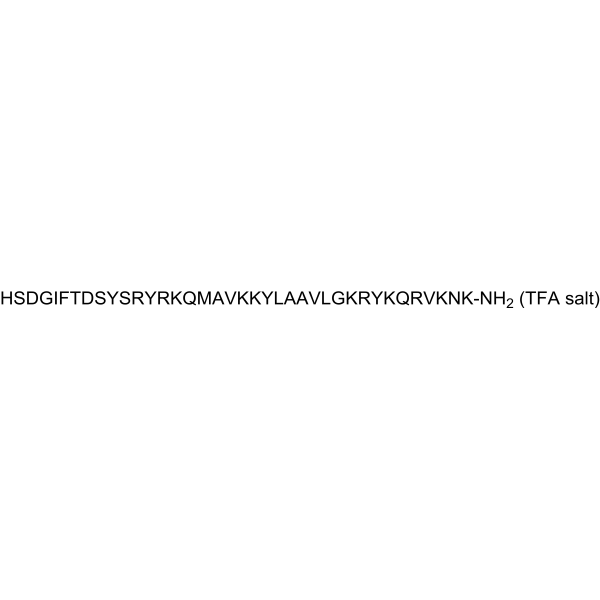 0 Images製品番号: HY-P0221A別名: Pituitary Adenylate Cyclase Activating Polypeptide 38 TFAPACAP (1-38), human, ovine, rat TFA is a PAC1 receptor agonist. PACAP (1-38), human, ovine, rat TFA binds to PACAP type I receptor, PACAP type II receptor VIP1, and PACAP type II receptor VIP2 with IC50s of 4 nM, 2 nM, and 1 nM, respectively. PACAP (1-38), human, ovine, rat TFA increases the α-secretase activity. PACAP (1-38), human, ovine, rat TFA elevates cytosolic Ca2+, increases proliferation and increases phosphorylation of extracellular regulates kinase (ERK) and the epidermal growth factor receptor (EGFR). PACAP (1-38), human, ovine, rat TFA demonstrates potent, efficacious, and sustained stimulatory effects on sympathetic neuronal NPY and catecholamine production. PACAP (1-38), human, ovine, rat TFA can be used for neurotrophic and neuroprotective research.
-
GSK143
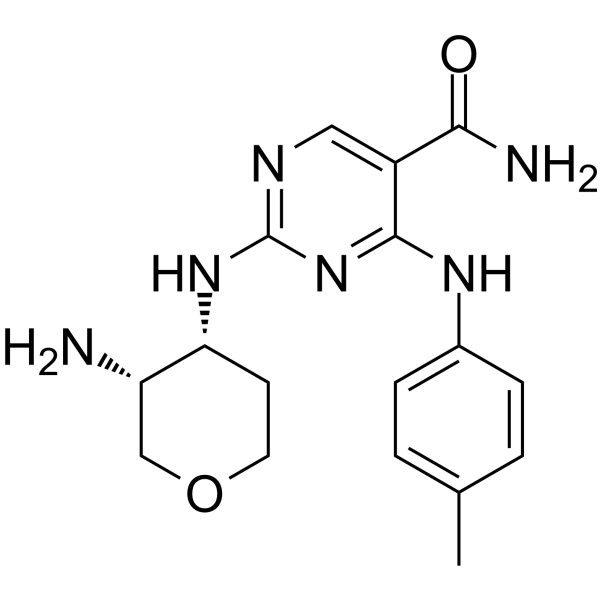 0 Images製品番号: HY-12736CAS 番号: 1240390-27-5

-
JWG-045
 0 Images製品番号: HY-181968CAS 番号: 1234480-61-5JWG-045 is a selective ERK5 inhibitor. JWG-045 exhibits unique ferroptosis-resistant activity independent of ERK5 inhibition. JWG-045 can be used in breast cancer research.
-
GNE-0749
 0 Images製品番号: HY-186283CAS 番号: 2719667-13-5GNE-0749 is an orally active pan-RAF inhibitor with a Ki value of 0.061 nM against CRAF. GNE-0749 inhibits RAF dimer signaling via a DFG-out/αC-helix-in binding mode, prevents paradoxical activation of the MAPK pathway, and suppresses downstream MEK/ERK/RSK signal transduction. GNE-0749 can be used in studies related to KRASG12C mutation-driven cancers.




