



ERK
Extracellular signal regulated kinases
ERKs (Extracellular-signal-regulated kinases) are widely expressed protein kinase intracellular signalling molecules that are involved in functions including the regulation of meiosis, mitosis, and postmitotic functions in differentiated cells. Many different stimuli, including growth factors, cytokines, virus infection, ligands for heterotrimeric G protein-coupled receptors, transforming agents, and carcinogens, activate the ERK pathway. In the MAPK/ERK pathway, Ras activates c-Raf, followed by mitogen-activated protein kinase kinase (abbreviated as MKK, MEK, or MAP2K) and then MAPK1/2 (below). Ras is typically activated by growth hormones through receptor tyrosine kinases and GRB2/SOS, but may also receive other signals. ERKs are known to activate many transcription factors, such as ELK1, and some downstream protein kinases. Disruption of the ERK pathway is common in cancers, especially Ras, c-Raf and receptors such as HER2.
ERK Isoform Specific Products
All Product Categories
-
ERK Inhibitors
(762)
View all products
-
ERK Agonists
(10)
View all products
-
ERK Activators
(267)
View all products
-
ERK Modulators
(19)
View all products
-
ERK Chemical
(1)
View all products
-
ERK Inducers
(17)
View all products
-
ERK Degraders
(2)
View all products
-
ERK Controls
(3)
View all products
-
ERK Ligands
(2)
View all products
-
ERK Related Products (1167)
Related Products (1167)

-
Antibodies (22)
-
ERK Isoform Comparison
-
RO5068760
 0 ImagesCat. No.: HY-111033CAS No.: 947182-25-4RO5068760 is a potent, orally active and selective non-ATP-competitive MEK1/2 inhibitor with an IC50 of 0.025 μM for MEK1. RO5068760 significantly inhibits MAPK pathway activity, thereby inducing G1 cell cycle arrest and apoptosis to inhibit cancer cell growth. RO5068760 exhibits significant efficacy in a broad spectrum of tumors with aberrant MAPK pathway activation. RO5068760 can be used for melanoma, colorectal cancer, non-small cell lung cancer (NSCLC), and pancreatic cancer research.
-
HA-1004 hydrochloride
 0 ImagesCat. No.: HY-112348CAS No.: 92564-34-6HA-1004 hydrochloride is a selective inhibitor of PKA, which can inhibit lipolysis and induce vascular relaxation. HA-1004 hydrochloride is also a dual inhibitor of cyclic GMP-dependent protein kinase and cyclic AMP-dependent protein (Cyclic GMP-AMP Synthase), and is involved in smooth muscle, second messenger, cyclic AMP and cyclic GMP regulation mechanisms. HA-1004 hydrochloride an antagonist for calcium, that can be used as a vasodilator to inhibit the contraction of rabbit aortic strips, or to antagonize ERK and tyrosine hydroxylase (TH) phosphorylation in morphine abstinence rat models.
-
Zoniporide dihydrochloride
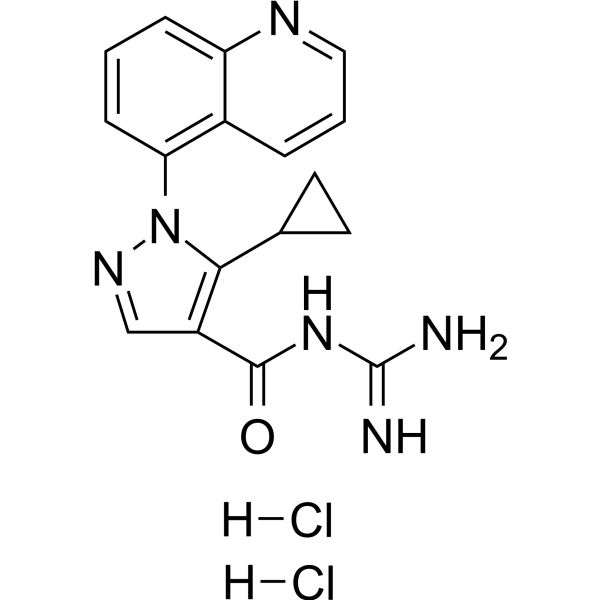 0 ImagesCat. No.: HY-105064CCAS No.: 241799-10-0Synonyms: CP-597396 dihydrochlorideZoniporide dihydrochloride (CP-597396 dihydrochloride) is a selective Na+/H+ exchanger subtype 1 (NHE1) inhibitor with cardioprotective activity, with IC50 values of 67 nM and 73 nM against rat NHE1. Zoniporide dihydrochloride reduces intracellular Na+ and Ca2+ overload, preserves mitochondrial integrity, activates pro-survival ERK1/2 and STAT3 signaling pathways, reduces necrosis and apoptosis, and decreases neutrophil aggregation. Zoniporide dihydrochloride is applicable to research related to myocardial ischemia-reperfusion injury and heart graft ischemia-reperfusion injury.
-
SHP2-IN-23
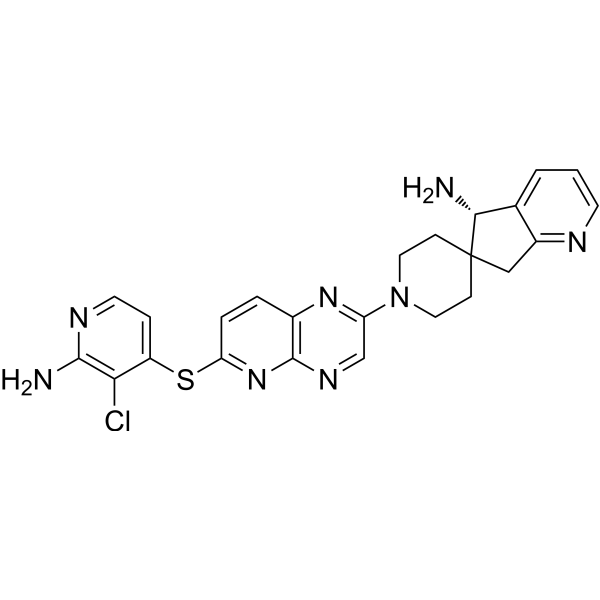 0 ImagesCat. No.: HY-149759CAS No.: 2415989-91-0
-
Prolylserine
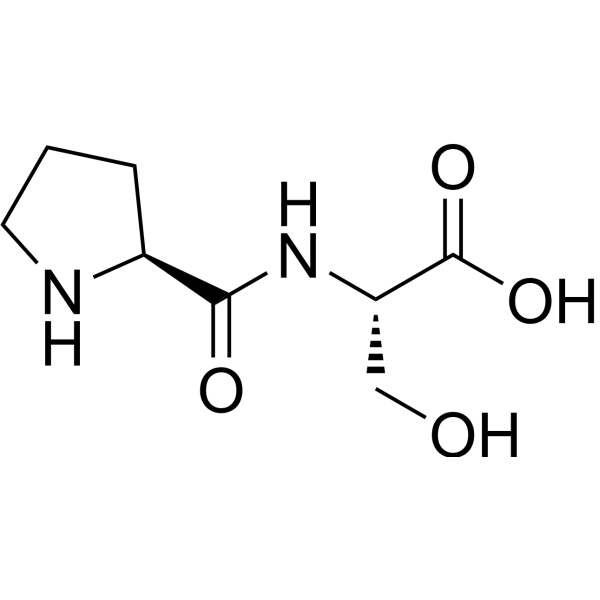 0 ImagesCat. No.: HY-P4497CAS No.: 71835-80-8Prolylserine, a dipeptide, is an inhibitor of melanogenesis production in Mel-Ab cells. Prolylserine decreases expression of microphthalmia-associated transcription factor (MITF) and tyrosinase, induces phorphosylation of ERK, but not cAMP response element binding protein (CREB).
-
LHF418
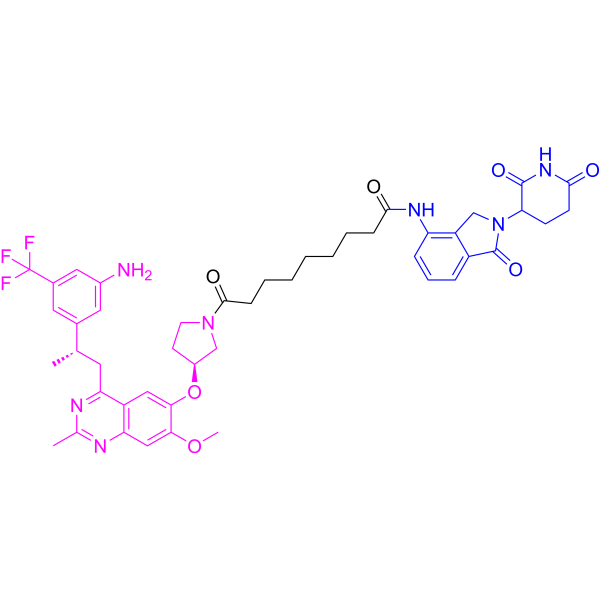 0 ImagesCat. No.: HY-161450LHF418 is a SOS1 PROTAC degrader that induces the degradation of the target protein SOS1 by recruiting cereblon. LHF418 promotes the formation of the SOS1-PROTAC-CRBN ternary complex and induces SOS1 degradation in a cereblon- and proteasome-dependent manner. LHF418 inhibits EGF-induced ERK1/2 phosphorylation and the clonogenic growth of KRAS-mutant cancer cells. LHF418 can be used in studies related to SOS1-targeted protein degradation and KRAS-driven tumors.
-
Myristicin (Standard)
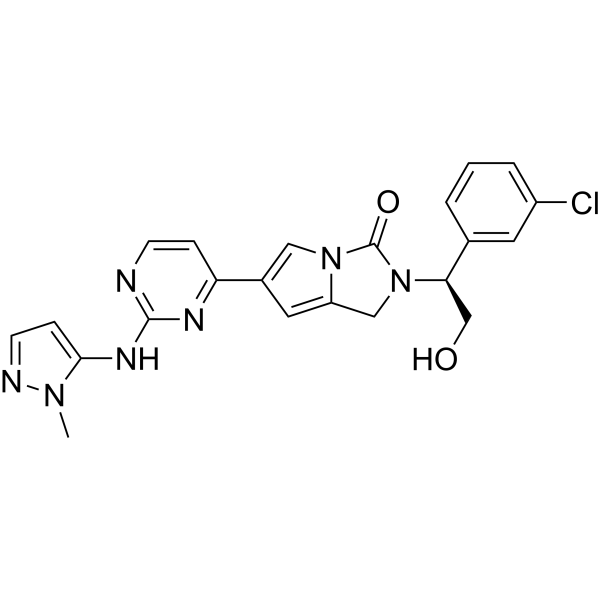
 0 ImagesMyristicin (Standard) is the analytical standard of Myristicin. This product is intended for research and analytical applications. Myristicine is an orally bioavailable serotonin receptor antagonist and weak monoamine oxidase (MAO) inhibitor. Myristicine also exerts anti-cancer effects on gastric cancer cells by inhibiting the EGFR/ERK signaling pathway. Myristicine is the main component of nutmeg essential oil and has anti-cancer, anti-proliferative, antibacterial, anti-inflammatory and apoptosis-inducing effects. Myristicine abuse can produce hallucinogenic effects, organ damage, etc.
-
MA191
 0 ImagesCat. No.: HY-175273MA191 is a FLT3 PROTAC degrader. MA191 targets and degrades mutant FLT3-ITD protein by recruiting the VHL E3 ligase in a manner dependent on ubiquitination and BIM, thereby blocking aberrant downstream MAPK/STAT5 signaling pathways and inducing apoptosis. MA191 can be used in research related to acute myeloid leukemia.
-
Adenosine receptor antagonist 7
 0 ImagesCat. No.: HY-179248CAS No.: 2570904-69-5Adenosine receptor antagonist 7 is an orally active triple A1/A2A/A2B adenosine receptor antagonist with Ki values of 1.5, 0.6 and 21 nM. Adenosine receptor antagonist 7 shows potent inhibitory activity (IC50 = 0.8 nM) of cAMP production in A2AR-HEK293 cells. Adenosine receptor antagonist 7 can enhance infiltration of effector T cells and increase the CD8+/Treg ratio companied with Avelumab (HY-108730). Adenosine receptor antagonist 7can be used for the research of cancer, such as colon cancer.
-
EGFR-IN-197
 0 ImagesCat. No.: HY-181502CAS No.: 3060883-16-8EGFR-IN-197 is an EGFR inhibitor with IC50 values of 19.5 nM and 12.0 nM against EGFRL858R/T790M and EGFRL858R/T790M/C797S, respectively. EGFR-IN-197 arrests the cell cycle of NCI-H1975 cells at the G2/M phase, while inhibiting their proliferation, colony formation and migration; it also inhibits mitochondrial translocation and upregulates mitochondrial H2S levels. EGFR-IN-197 disrupts anti-apoptotic signaling pathways by regulating apoptosis-related proteins; it induces DNA damage and activates pro-apoptotic pathways to trigger apoptosis. EGFR-IN-197 can be used in studies related to non-small cell lung cancer (NSCLC).
-
Eras-4001-d6
 0 ImagesCat. No.: HY-175870SCAS No.: 3024881-00-0Eras-4001-d6 is a deuterated form of Eras-4001 (HY-175870). Eras-4001 is a potent, orally active pan-KRAS inhibitor with Kd values of 110, 13 and 39 pM against wild-type, G12D and G12V mutant KRAS, respectively, and exhibits selectivity toward wild-type HRAS and NRAS. Eras-4001 inhibits ERK1/2 phosphorylation and cell viability in cancer cells. Eras-4001 induces tumor growth inhibition and regression in subcutaneous xenograft models. Eras-4001 can be used in research on non-small cell lung cancer, ovarian cancer, etc.
-
ERK1/2 inhibitor 13
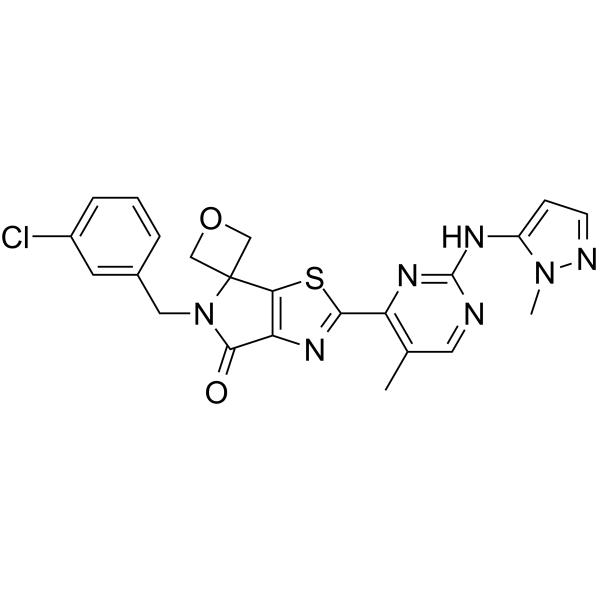
 0 ImagesCat. No.: HY-173060CAS No.: 3093367-23-5ERK1/2 inhibitor 13 (Compound 21y) is the orally active inhibitor for ERK that inhibits ERK1 and ERK2 with IC50 of 91.71 nM and 97.87 nM. ERK1/2 inhibitor 13 inhibits the proliferation of MCF-7, 4T1, MDA-MB-468, and HCC1970 (IC50 of 0.67, 2.76, 2.15 and 1.68 μM), inhibits the cancer cell migration, induces apoptosis and autophagy in MCF-7. ERK1/2 inhibitor 13 exhibits antitumor and anti-metastatic effect in 4T1 xenograft mouse model.
-
ERK1/2 inhibitor 8
 0 ImagesCat. No.: HY-142437CAS No.: 2648368-43-6
-
NY0123
 0 ImagesCat. No.: HY-123795CAS No.: 1801911-70-5NY0123 is a EPAC1 inhibitor. NY0123 significantly inhibits the expression of EPAC1, phosphorylated AKT, phosphorylated ERK1/2 and phosphorylated VEGFR2. NY0123 inhibits angiogenesis and tumor growth of triple-negative breast cancer. NY0123 is applicable to relevant research on triple-negative breast cancer.
-
EGFR-IN-151
 0 ImagesCat. No.: HY-173038EGFR-IN-151 (Compound 10) inhibits EGFR and its downstream signaling pathways ERK/STAT3. EGFR-IN-151 inhibits the proliferation of a variety lung cancer cells (IC50s for NCI-H1781, HCC827, NCI-H3255 and NCI-H1975 is 11.7, 5.19, 7.32 and 1.53 μM, respectively), inhibits the colony formation and migration of H1975, arrests the cell cycle at G1 phase, and induces apoptosis in H1975.
-
AKT1-IN-13
 0 ImagesCat. No.: HY-184145AKT1-IN-13 is an orally active AKT1 inhibitor with an IC50 of 5.17 μM. AKT1-IN-13 also exhibits high inhibitory activity against PAK1, PKA, MAP2K1 (MEK1 / MAPKK1) and MAPK1 (ERK2). AKT1-IN-13 induces cell apoptosis, activates the pro-apoptotic protein BAX, inhibits the anti-apoptotic protein Bcl-2, and activates caspase 3 simultaneously. As a cytotoxic agent, AKT1-IN-13 exerts a killing effect on orthotopically transplanted liver cancer in an AKT1-dependent manner. AKT1-IN-13 can be used in studies related to hepatocellular carcinoma.
-
Famotidine-13C3
 0 ImagesCat. No.: HY-W777002CAS No.: 1185241-48-8Synonyms: MK-208-13C3Famotidine-13C3 (MK-208-13C3) is the 13C3-labeled Famotidine (HY-B0377). Famotidine (MK-208) is an orally active and highly selective histamine H2 receptor antagonist. It inhibits gastric acid secretion by blocking the Gs signaling pathway, and regulates intracellular cAMP and ERK pathways. Famotidine inhibits TLR3-mediated inflammatory pathways, and reduces the expression of various inflammatory mediators and interferon-related genes. Famotidine scavenges DPPH and nitric oxide free radicals, alleviates oxidative stress damage in gastric tissue, inhibits proMMP-9, improves vascular endothelial permeability, and restores the normal physiological functions of neutrophils and eosinophils. Famotidine crosses intestinal epithelial cells via facilitated diffusion and passive diffusion, blocks paracellular cation transport, and increases intestinal transepithelial electrical resistance. Famotidine reduces serum levels of transaminases and alkaline phosphatase, exerts analgesic effects and gastric protective effects simultaneously. Famotidine can be used in studies related to COVID-19, liver injury and acute gastric ulcer.
-
Peptide CYP9
 0 ImagesCat. No.: HY-P11914CAS No.: 3124554-07-7Peptide CYP9 is a head-to-tail cyclic peptide derived from Antimicrobial peptide YD (HY-P11913). Peptide CYP9 inhibits the activation of the TGF-β/Smad signaling pathway, including the phosphorylation of Smad2/3. Peptide CYP9 inhibits the activation of the MAPK signaling pathway, including the phosphorylation of ERK and p38. Peptide CYP9 inhibits epithelial-mesenchymal transition. Peptide CYP9 inhibits extracellular matrix synthesis. Peptide CYP9 can be used for the research of pulmonary fibrosis.
-
FLT3-IN-37
 0 ImagesCat. No.: HY-179497FLT3-IN-37 (Compound 6z) is a potent inhibitor of FLT3-ITD, with IC50 values of 1.5 and 3.4 nM for FLT3-ITD and TEL-VEGFR2, respectively. FLT3-IN-37 exhibits high selectivity for wild-type FLT3 (WT) and c-Kit. FLT3-IN-37 inhibits FLT3 phosphorylation and downregulates the expression of p-Akt, p-STAT5, and p-ERK. FLT3-IN-37 exerts anti-leukemia effects by blocking the cell cycle and inducing apoptosis (apoptosis). FLT3-IN-37 can be used for research on acute myeloid leukemia (AML).




