



ERK2
ERK2 (MAPK1) is a core effector kinase of the Ras/Raf/MEK/ERK signaling cascade and functions as an integration point for extracellular signals that regulate cell proliferation, differentiation, survival, transcriptional programs, and development[1][2]. Mechanistically, ERK2 is activated through MEK-dependent phosphorylation and subsequently phosphorylates numerous substrates across cellular compartments, linking growth factor stimulation to broad biological responses[3]. Because ERK signaling controls fundamental cellular processes, dysregulation of the pathway is associated with multiple pathological conditions, particularly tumorigenesis, and aberrant ERK pathway activity is observed in a substantial proportion of human cancers[4]. In experimental systems, genetic disruption studies demonstrate that ERK2 is essential for normal mammalian development, as loss of ERK2 causes embryonic lethality, highlighting the critical requirement for adequate ERK signaling output[3]. Compared with the closely related isoform ERK1 (MAPK3), ERK2 shares highly conserved activation mechanisms, substrate recognition properties, and signaling functions, and many studies support the view that biological outcomes are largely determined by total ERK activity rather than strict isoform-specific functions[3]. For experimental applications, ERK pathway inhibitors targeting RAF, MEK, or ERK have been extensively developed and are widely used to investigate ERK-dependent signaling networks, disease mechanisms, therapeutic resistance, and pathway regulation in cancer models[4][5].
References:
- [1]. Mitogen Activated Protein Kinase 1. Sciencedirect topic.
- [2]. Wikipedia.
- [3]. Buscà R, et al. ERK1 and ERK2 Map Kinases: Specific Roles or Functional Redundancy? Front Cell Dev Biol. 2016 Jun 8;4:53. [Content Brief]
- [4]. Timofeev O, et al. ERK pathway agonism for cancer therapy: evidence, insights, and a target discovery framework. NPJ Precis Oncol. 2024 Mar 14;8(1):70. [Content Brief]
- [5]. Sah VK, et al. Advances in ERK1/2 inhibition: a medicinal chemistry perspective on structure and regulation. J Enzyme Inhib Med Chem. 2025 Dec;40(1):2555510. [Content Brief]
-
ERK2 Related Products (267)
Related Products (267)

-
Antibodies (1)
-
Pizotifen (Standard)
 0 ImagesSynonyms: Pizotyline (Standard); BC-105 (Standard)Pizotifen (Standard) (Pizotyline (Standard)) is the analytical standard of Pizotifen (HY-B0115). This product is intended for research and analytical applications. Pizotifen (Pizotyline) is a 5-HT2 receptor antagonist. Pizotifen inhibits the Wnt/β-catenin-EMT signaling pathway and induces mitochondria-mediated Apoptosis. Pizotifen causes transient ERK1/2 phosphorylation and restores ATP. Pizotifen blocks Serotonin (HY-B1473A)-mediated platelet activation, inhibits Serotonin-enhanced ADP-induced platelet aggregation, and prolongs carotid artery occlusion and tail bleeding time. Pizotifen exhibits anticancer activity against gastric cancer and colon cancer. Pizotifen exerts neuroprotective effects in the striatum of R6/2 mice. Pizotifen can be used for research on gastric cancer, colon cancer, Huntington's disease, metastasis, and thromboembolic diseases.
-
Zoniporide (Standard)
 0 ImagesCat. No.: HY-105064RCAS No.: 241800-98-6Synonyms: CP-597396 (Standard)Zoniporide (Standard) (CP-597396 (Standard)) is the analytical standard of Zoniporide (HY-105064). This product is intended for research and analytical applications. Zoniporide (CP-597396) is a selective Na+/H+ exchanger subtype 1 (NHE1) inhibitor with cardioprotective activity, with IC50 values of 67 nM and 73 nM against rat NHE1. Zoniporide reduces intracellular Na+ and Ca2+ overload, preserves mitochondrial integrity, activates pro-survival ERK1/2 and STAT3 signaling pathways, reduces necrosis and apoptosis, and decreases neutrophil aggregation. Zoniporide is applicable to research related to myocardial ischemia-reperfusion injury and heart graft ischemia-reperfusion injury.
-
Famotidine hydrochloride
 0 ImagesCat. No.: HY-B0377ACAS No.: 125193-62-6Synonyms: MK-208 hydrochlorideFamotidine hydrochloride (MK-208 hydrochloride) is an orally active and highly selective histamine H2 receptor antagonist. It inhibits gastric acid secretion by blocking the Gs signaling pathway, and regulates intracellular cAMP and ERK pathways. Famotidine hydrochloride inhibits TLR3-mediated inflammatory pathways, and reduces the expression of various inflammatory mediators and interferon-related genes. Famotidine hydrochloride scavenges DPPH and nitric oxide free radicals, alleviates oxidative stress damage in gastric tissue, inhibits proMMP-9, improves vascular endothelial permeability, and restores the normal physiological functions of neutrophils and eosinophils. Famotidine hydrochloride crosses intestinal epithelial cells via facilitated diffusion and passive diffusion, blocks paracellular cation transport, and increases intestinal transepithelial electrical resistance. Famotidine hydrochloride reduces serum levels of transaminases and alkaline phosphatase, exerts analgesic effects and gastric protective effects simultaneously. Famotidine hydrochloride can be used in studies related to COVID-19, liver injury and acute gastric ulcer.
-
Ravoxertinib benzenesulfonate
 0 ImagesCat. No.: HY-15947BCAS No.: 1817728-45-2Synonyms: GDC-0994 benzenesulfonateRavoxertinib benzenesulfonate (GDC-0994 benzenesulfonate) is an orally active ERK1/2 inhibitor. Ravoxertinib benzenesulfonate inhibits the ERK1/2 MAPK signaling pathway and reduces the expression levels of c-Myc, HK2 and LDHA. Ravoxertinib benzenesulfonate decreases mammosphere formation, and exerts additive and/or superadditive cytotoxicity when combined with Ipatasertib (HY-15186) in 3D tumor sphere models. Ravoxertinib benzenesulfonate can be used in research related to various cancers including breast cancer, melanoma, head and neck cancer, non-small cell lung cancer, ovarian cancer and Merkel cell carcinoma.
-
4-Hydroxychalcone (Standard)
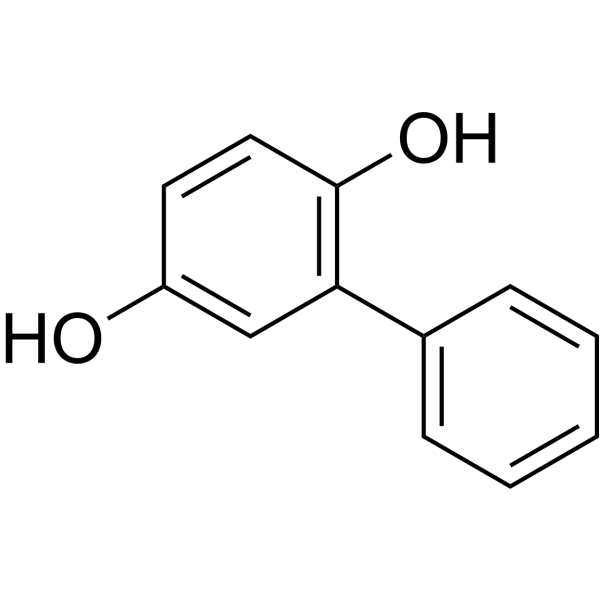
 0 ImagesCat. No.: HY-107818RCAS No.: 20426-12-44-Hydroxychalcone (Standard) is the analytical standard of 4-Hydroxychalcone (HY-107818). This product is intended for research and analytical applications. 4-Hydroxychalcone is an orally active flavonoid precursor. 4-Hydroxychalcone inhibits VEGF- and bFGF-induced phosphorylation of ERK1/2 and Akt. 4-Hydroxychalcone suppresses resistant hypertension by alleviating hyperaldosteronism, inflammation and renal injury in cryptochrome gene knockout mice. 4-Hydroxychalcone possesses anti-angiogenic activity.

-
Zoniporide hydrochloride hydrate (Standard)
 0 ImagesCat. No.: HY-105064DRCAS No.: 863406-85-3Synonyms: CP-597396 hydrochloride hydrate (Standard)Zoniporide hydrochloride hydrate (Standard) (CP-597396 hydrochloride hydrate (Standard)) is the analytical standard of Zoniporide hydrochloride hydrate (HY-105064D). This product is intended for research and analytical applications. Zoniporide hydrochloride hydrate (CP-597396 hydrochloride hydrate) is a selective Na+/H+ exchanger subtype 1 (NHE1) inhibitor with cardioprotective activity, with IC50 values of 67 nM and 73 nM against rat NHE1. Zoniporide hydrochloride hydrate reduces intracellular Na+ and Ca2+ overload, preserves mitochondrial integrity, activates pro-survival ERK1/2 and STAT3 signaling pathways, reduces necrosis and apoptosis, and decreases neutrophil aggregation. Zoniporide hydrochloride hydrate is applicable to research related to myocardial ischemia-reperfusion injury and heart graft ischemia-reperfusion injury.
-
Benfluron hydrochloride
 0 ImagesCat. No.: HY-106419ACAS No.: 80427-58-3Synonyms: Benflurone hydrochlorideBenfluron hydrochloride is an Apoptosis inducer and inhibitor of the HIV-1 Rev-RRE complex, with an IC50 of 5.0 μM against the HIV-1 Rev-RRE complex. Benfluron hydrochloride induces p53 activation, and triggers phosphorylation of Chk1 at serine 345, Chk2 at threonine 68, as well as ERK1/2 at threonine 202 and tyrosine 204. Benfluron hydrochloride activates Caspase 8, Caspase 9 and Caspase 3/7, inhibits HIV-1 viral transcription, and acts as a substrate for 11β-HSD 1 and cytosolic carbonyl reductase. Benfluron hydrochloride can be used in research related to leukemia and HIV-1 infection.
-
N-(p-Coumaroyl) Serotonin (Standard)
 0 ImagesCat. No.: HY-129440RCAS No.: 68573-24-0N-(p-Coumaroyl) Serotonin (Standard) is the analytical standard of N-(p-Coumaroyl) Serotonin (HY-129440). This product is intended for research and analytical applications. N-(p-Coumaroyl) Serotonin is an orally active polyphenol found in safflower seeds with potent anti-inflammatory, antioxidant, and antitumor activities. N-(p-Coumaroyl) Serotonin suppresses NF‑κB, TLR4/MyD88 and MAPK signaling, activates NQO1/HO‑1 pathways, and inhibits pro‑inflammatory cytokines, iNOS and COX‑2 and ROS production. N-(p-Coumaroyl) Serotonin induces S‑phase arrest and apoptosis in glioblastoma cells, reduces atherosclerotic lesions, and alleviates renal and vascular injuries. N-(p-Coumaroyl) Serotonin acts as a vasodilator, regulates calcium dynamics. N-(p-Coumaroyl) Serotonin can be used for the research of neurodegenerative diseases, atherosclerosis, glioblastoma, and acute renal failure.
-
Tizaterkib hexanedioic acid
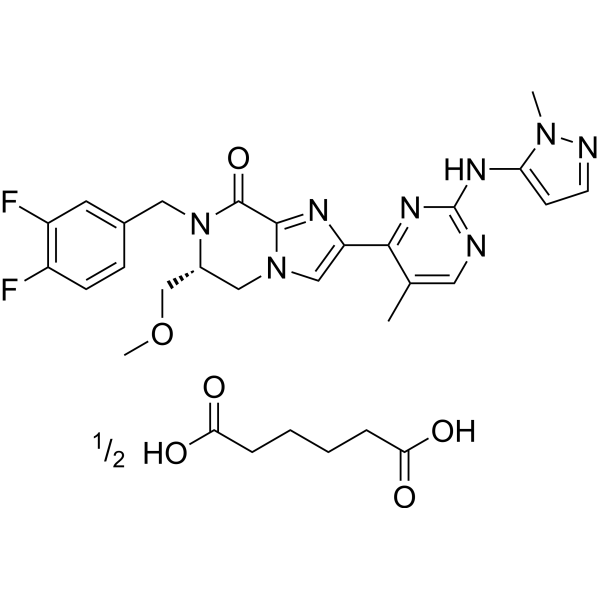 0 ImagesCat. No.: HY-111483ACAS No.: 2097416-93-6Tizaterkib hexanedioic acid (example 18) is a potent and selective ERK2 inhibitor, with an IC50 of 0.6 nM.
-
Tubulozole hydrochloride
 0 ImagesCat. No.: HY-119169ACAS No.: 83086-73-1Synonyms: R 46846 hydrochlorideTubulozole hydrochloride (R 46846 hydrochloride) is an orally active inhibitor of tubulin polymerization with an ID50 of 0.34 μM. Tubulozole hydrochloride induces activation of the Chk1 kinase and phosphorylation of ERK1/2, which is required for microtubule formation. Tubulozole hydrochloride arrests Mitosis at the metaphase stage. Tubulozole hydrochloride causes cells to accumulate in the radiosensitive mitotic phase of the cell cycle. Tubulozole hydrochloride exerts anticancer activity against colon cancer. Tubulozole hydrochloride produces a radiosensitizing effect in mouse tumor models and enhances the tumor growth delay effect when combined with γ-ray irradiation. Tubulozole hydrochloride is used in studies related to colon cancer, fascioliasis, MO4 fibrosarcoma, and Lewis lung carcinoma.
-
Erlotinib-d8
 0 ImagesCat. No.: HY-50896S3CAS No.: 1266656-97-6Synonyms: CP-358774-d8; NSC 718781-d8; OSI-774-d8Erlotinib-d8 (CP-358774-d8) is the deuterated-labeled Erlotinib (HY-50896). Erlotinib (CP-358774) is a selective, orally active EGFR tyrosine kinase inhibitor. Erlotinib also acts as a substrate and inhibitor of OATP2B1, with an IC50 of approximately 0.079 μM for inhibiting OATP2B1-mediated uptake of estrone 3-sulfate. Erlotinib blocks EGFR phosphorylation, downstream signal transduction, as well as the growth and proliferation of cancer cells. Erlotinib inhibits MMP-10-mediated renal injury, fibrotic lesions, the ERK1/2, GSK-3β and β-catenin signaling pathways, as well as the deposition of fibronectin, α-SMA, collagen and renal injury markers. Erlotinib is metabolized via CYP3A to produce the active metabolite OSI-420. Erlotinib can be used in research related to non-small cell lung cancer, gastric cancer, papillary renal cell carcinoma, EGFR inhibitor resistance and renal fibrosis.
-
Famotidine-13C
 0 ImagesCat. No.: HY-B0377S1Synonyms: MK-208-13CFamotidine-13C (MK-208-13C) is the 13C-labeled Famotidine (HY-B0377). Famotidine (MK-208) is an orally active and highly selective histamine H2 receptor antagonist. It inhibits gastric acid secretion by blocking the Gs signaling pathway, and regulates intracellular cAMP and ERK pathways. Famotidine inhibits TLR3-mediated inflammatory pathways, and reduces the expression of various inflammatory mediators and interferon-related genes. Famotidine scavenges DPPH and nitric oxide free radicals, alleviates oxidative stress damage in gastric tissue, inhibits proMMP-9, improves vascular endothelial permeability, and restores the normal physiological functions of neutrophils and eosinophils. Famotidine crosses intestinal epithelial cells via facilitated diffusion and passive diffusion, blocks paracellular cation transport, and increases intestinal transepithelial electrical resistance. Famotidine reduces serum levels of transaminases and alkaline phosphatase, exerts analgesic effects and gastric protective effects simultaneously. Famotidine can be used in studies related to COVID-19, liver injury and acute gastric ulcer.
-
CP-724714 succinate
 0 ImagesCat. No.: HY-14674ACAS No.: 543681-31-8CP-724714 succinate is an orally active and selective HER2 tyrosine kinase inhibitor with an IC50 of 10 nM. CP-724714 succinate inhibits HER2 receptor autophosphorylation and blocks the downstream Ras-Raf-Mek-Erk signaling pathway, thereby inducing cell cycle arrest and apoptosis in tumor cells. CP-724714 succinate exhibits antiviral activity and inhibits various porcine diarrheal coronaviruses, including SADS-CoV (IC50 of 0.91 μM). CP-724714 succinate is an inhibitor of the hepatic transport receptors OATP1B1/MDR1/BSEP, and can enter hepatocytes via active uptake and trigger the accumulation of drugs and bile acids within hepatocytes. CP-724714 succinate can be used in research related to HER2-overexpressing breast cancer and porcine diarrheal coronavirus infection.
-
O-Methylbulbocapnine
 0 ImagesO-Methylbulbocapnine is an aporphine alkaloid that acts as an inhibitor of LPS-induced inflammatory signaling and a dopamine D1R antagonist. O-Methylbulbocapnine inhibits LPS-induced phosphorylation of p38, ERK1/2, c-Jun, NF-κB p65 at Ser536, and Akt, decreases MyD88 protein levels, and reduces NF-κB nuclear translocation and DNA-binding activity. O-Methylbulbocapnine inhibits LPS-induced production of IL-6, TNF-α, PGE2, and NO, and decreases COX-2 and iNOS expression. O-Methylbulbocapnine can be used for research on Alzheimer's disease, cervical cancer, breast cancer, and malaria.
-
Methyl helicterate
 0 ImagesCat. No.: HY-125522CAS No.: 102637-02-5Methyl helicterate is a triterpenoid, that can be isolated from Helicteres angustifolia (Sterculiaceae). Methyl helicterate inhibits hepatic stellate cell activation and promotes cell apoptosis through downregulating the ERK1/2 signaling pathway.
-
Norflurazon (Standard)
 0 ImagesCat. No.: HY-114849RCAS No.: 27314-13-2Synonyms: SAN 9789 (Standard)Norflurazon (Standard) (SAN 9789 (Standard)) is the analytical standard of Norflurazon (HY-114849). This product is intended for research and analytical applications. Norflurazon (SAN 9789) is a pre-emergence Herbicide. Norflurazon non-competitively inhibits phytoene desaturase by competing with the enzyme cofactor and disrupts carotenoid biosynthesis, thereby leading to chlorophyll photodegradation and chlorosis. Norflurazon inhibits MGDG synthase, CDP-choline phosphotransferase, Omega-3 FAD7 desaturase, and PG delta-3-trans desaturase, and activates LysoPC-acyltransferase and Omega-3 FAD3 desaturase. Norflurazon inhibits photosynthetic membrane organization, mitochondrial respiration, ATP production, PI3K signaling, and ERK1/2 phosphorylation. Norflurazon activates MAPK P38 phosphorylation and ER stress signaling. Norflurazon induces morphological malformations and cardiovascular effects in zebrafish embryos.
-
Erlotinib mesylate
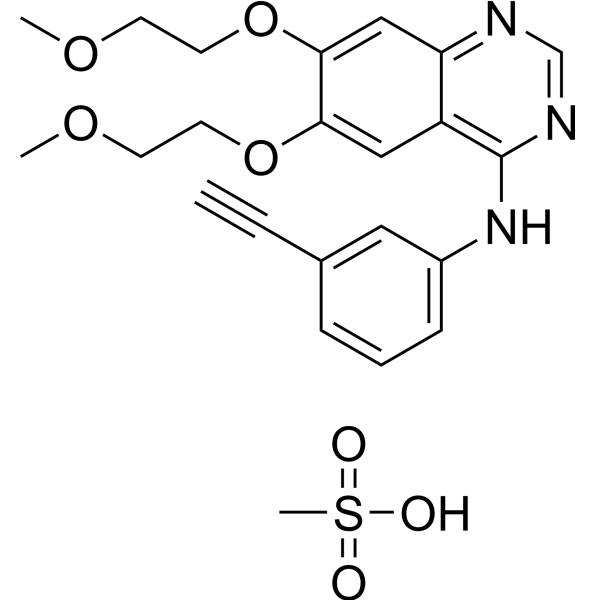 0 ImagesCat. No.: HY-12008ACAS No.: 248594-19-6Synonyms: CP-358774 mesylate; NSC 718781 mesylate; OSI-774 mesylateErlotinib (CP-358774) mesylate is a selective, orally active EGFR tyrosine kinase inhibitor. Erlotinib mesylate also acts as a substrate and inhibitor of OATP2B1, with an IC50 of approximately 0.079 μM for inhibiting OATP2B1-mediated uptake of estrone 3-sulfate. Erlotinib mesylate blocks EGFR phosphorylation, downstream signal transduction, as well as the growth and proliferation of cancer cells. Erlotinib mesylate inhibits MMP-10-mediated renal injury, fibrotic lesions, the ERK1/2, GSK-3β and β-catenin signaling pathways, as well as the deposition of fibronectin, α-SMA, collagen and renal injury markers. Erlotinib mesylate is metabolized via CYP3A to produce the active metabolite OSI-420. Erlotinib mesylate can be used in research related to non-small cell lung cancer, gastric cancer, papillary renal cell carcinoma, EGFR inhibitor resistance and renal fibrosis.
-
CNBDA
 0 ImagesCat. No.: HY-156487CAS No.: 2101321-90-6CNBDA is a selective SHP2 inhibitor with an IC50 of 5 μM. CNBDA binds to the active site of SHP2 through interactions with surrounding positively charged and polar amino acids, inhibits the PTPase activity of SHP2, and blocks the autodephosphorylation of SHP2. CNBDA inhibits the transformed phenotype, proliferation, anchorage-independent growth, and mammosphere formation of breast cancer cells, as well as EGF-induced Ras-ERK and PI3K-Akt signaling pathways, downregulates HER2 expression, and induces cell death. CNBDA can be used in breast cancer-related research.




