



ERK2
ERK2 (MAPK1) is a core effector kinase of the Ras/Raf/MEK/ERK signaling cascade and functions as an integration point for extracellular signals that regulate cell proliferation, differentiation, survival, transcriptional programs, and development[1][2]. Mechanistically, ERK2 is activated through MEK-dependent phosphorylation and subsequently phosphorylates numerous substrates across cellular compartments, linking growth factor stimulation to broad biological responses[3]. Because ERK signaling controls fundamental cellular processes, dysregulation of the pathway is associated with multiple pathological conditions, particularly tumorigenesis, and aberrant ERK pathway activity is observed in a substantial proportion of human cancers[4]. In experimental systems, genetic disruption studies demonstrate that ERK2 is essential for normal mammalian development, as loss of ERK2 causes embryonic lethality, highlighting the critical requirement for adequate ERK signaling output[3]. Compared with the closely related isoform ERK1 (MAPK3), ERK2 shares highly conserved activation mechanisms, substrate recognition properties, and signaling functions, and many studies support the view that biological outcomes are largely determined by total ERK activity rather than strict isoform-specific functions[3]. For experimental applications, ERK pathway inhibitors targeting RAF, MEK, or ERK have been extensively developed and are widely used to investigate ERK-dependent signaling networks, disease mechanisms, therapeutic resistance, and pathway regulation in cancer models[4][5].
References:
- [1]. Mitogen Activated Protein Kinase 1. Sciencedirect topic.
- [2]. Wikipedia.
- [3]. Buscà R, et al. ERK1 and ERK2 Map Kinases: Specific Roles or Functional Redundancy? Front Cell Dev Biol. 2016 Jun 8;4:53. [Content Brief]
- [4]. Timofeev O, et al. ERK pathway agonism for cancer therapy: evidence, insights, and a target discovery framework. NPJ Precis Oncol. 2024 Mar 14;8(1):70. [Content Brief]
- [5]. Sah VK, et al. Advances in ERK1/2 inhibition: a medicinal chemistry perspective on structure and regulation. J Enzyme Inhib Med Chem. 2025 Dec;40(1):2555510. [Content Brief]
-
ERK2 Related Products (269)
Related Products (269)

-
Antibodies (1)

-
ERK2-IN-6
 0 ImagesCat. No.: HY-174274CAS No.: 2095713-33-8
-
Breceptin
 0 ImagesCat. No.: HY-P1650CAS No.: 215713-39-6Synonyms: B 9870Breceptin (B 9870) is an antagonist of the bradykinin B1/B2 receptor (B1/B2R). Breceptin exhibits an irreversible antagonist effect on B2R, inhibiting the vasodilation induced by Bradykinin (HY-P0206) in the rabbit carotid vein contraction experiment. B-9870 shows partial agonist properties in HEK 293 cells with high expression of B2R, and can activate ERK1/2 phosphorylation, calcium ion mobilization, arachidonic acid release, and receptor internalization. Breceptin can be used in research to inhibit breast cancer and non-small cell lung cancer.
-
Trimebutine-d3 hydrochloride
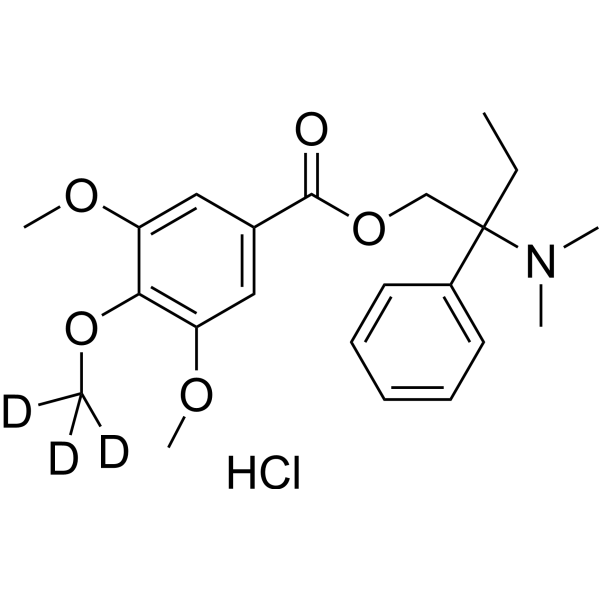 0 ImagesCat. No.: HY-B0380S2Trimebutine-d3 hydrochloride is deuterium labeled Trimebutine hydrochloride. Trimebutine hydrochloride is a multi-target inhibitor and opioid receptor agonist with antimuscarinic activity. Trimebutine hydrochloride inhibits L-type Ca2+ channels and large-conductance calcium-activated potassium channels (BKCa channels), thereby inhibiting extracellular calcium influx and potassium ion efflux. Trimebutine hydrochloride also targets Toll-like receptors, inhibits Toll-like receptor 2/4/7/8/9 signals, and inhibits LPS-induced IRAK1 activation, as well as ERK1/2, JNK and NF-κB activation, thereby exerting anti-inflammatory effects. Trimebutine hydrochloride also induces tumor cell apoptosis by inhibiting the AKT/ERK pathway. Trimebutine hydrochloride also inhibits excessive contraction of smooth muscle and can be used in the study of gastrointestinal disorders such as irritable bowel syndrome (IBS).
-
SHP1-IN-2
 0 ImagesCat. No.: HY-186140SHP1‑IN‑2 is a selective and orally active SHP1 inhibitor. SHP1‑IN‑2 covalently binds to Cys480 of SHP1. SHP1‑IN‑2 elicits potent antitumor immunity and suppresses syngeneic tumor growth. SHP1‑IN‑2 blocks tumor progression in a svngeneic cancer model by activating natural killer cells and cytotoxic CD8+ T cells, along with reduced T cel l. SHP1‑IN‑2 can be used for cancer‑related research.
-
Antitumor agent-226
 0 ImagesCat. No.: HY-189265CAS No.: 3056235-77-6Antitumor agent-226 is a DNMT3A inhibitor and epigenetic modulator. Antitumor agent-226 inhibits cell proliferation and migration by downregulating DNA Methyltransferase, reducing global DNA methylation, and modulating JNK, ERK1/2, and p38 phosphorylation through the MAPK pathway to induce mitochondria-dependent apoptosis, G2/M phase arrest, autophagy, and ROS production. Antitumor agent-226 can be used for research on prostate cancer.
-
C11 peptide-1
 0 ImagesCat. No.: HY-P11827C11 peptide-1 is an antifibrotic agent that binds directly to Collagen I. C11 peptide-1 physically disrupts Collagen I interaction with Lumican. C11 peptide-1 reduces inflammatory infiltration and inhibits the ERK1/2 and Smad2/3 signaling pathways. C11 peptide-1 can be used for the research of liver fibrosis.
-
MK2-IN-5
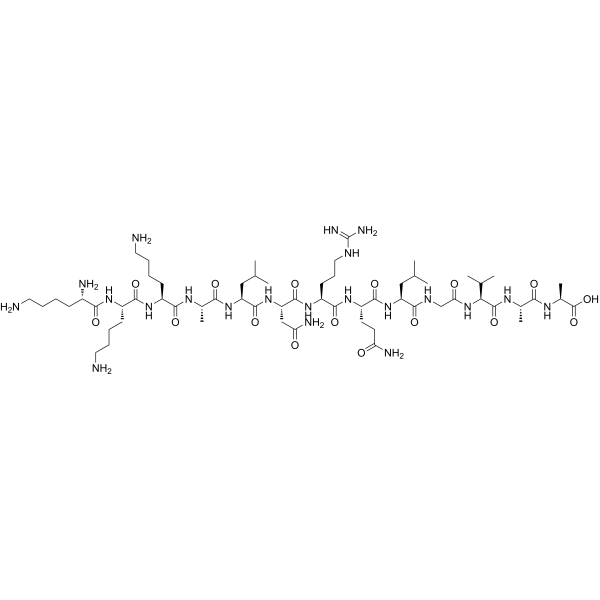 0 ImagesCat. No.: HY-P10072CAS No.: 474713-20-7Synonyms: Hsp25 kinase inhibitor; Mk2 pseudosubstrateMK2-IN-5 is a Mk2 pseudosubstrate (Ki= 8 μM). MK2-IN-5 targets the protein interaction domain in the MAPK pathway. MK2-IN-5 inhibits HSP25 and HSP27 phosphorylation.
-
Sitagliptin hydrochloride
 0 ImagesCat. No.: HY-13749ECAS No.: 486459-71-6Synonyms: MK-0431 hydrochlorideSitagliptin (MK-0431) hydrochloride is an orally active and highly selective DPP4 inhibitor with an IC50 value of 19 nM. Sitagliptin hydrochloride blocks the degradation of glucagon-like peptide-1 (GLP-1) and glucose-dependent insulinotropic peptide (GIP) by competing inhibition mechanism (Kᵢ = 1 nM), thereby increasing the level of active incretin. Sitagliptin hydrochloride can also directly stimulate the secretion of GLP-1 by intestinal L cells by activating the cAMP/PKA and ERK1/2 pathways, and this effect is independent of DPP-4. Sitagliptin hydrochloride shows protective effects on pancreatic islet grafts in 1-type diabetes models. Sitagliptin hydrochloride can be used for the study of 1-type and 2-type diabetes.
-
EUK-189
 0 ImagesCat. No.: HY-19382CAS No.: 186350-27-6EUK-189 is a synthetic superoxide dismutase (SOD) and catalase mimetic. EUK-189 can block oxygen/glucose deprivation (OGD)-induced ERK1/2 dephosphorylation, ATP depletion and eliminate ROS production. EUK-189 exhibits neuroprotective effect and can inhibit delayed radiation injury. EUK-189 can be used for the research of neurological disease, such as ischemic stroke.
-
Famotidine-13C,d3
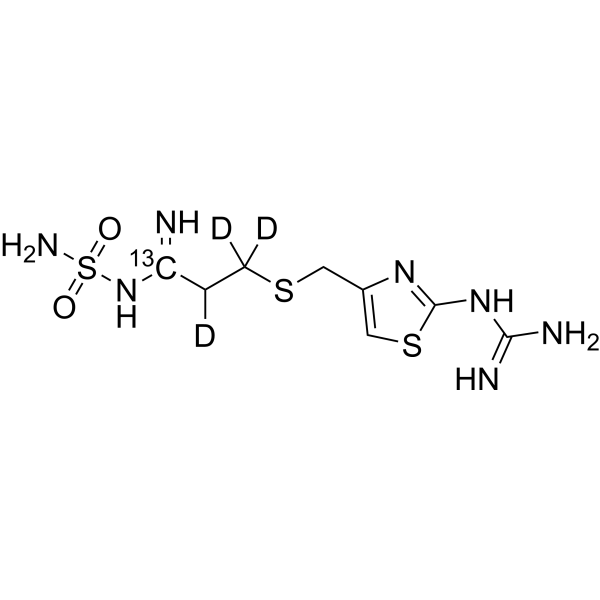 0 ImagesCat. No.: HY-B0377SCAS No.: 2744683-81-4Synonyms: MK-208-13C,d3Famotidine-13C,d3 (MK-208-13C,d3) is the deuterated, 13C-labeled Famotidine (HY-B0377). Famotidine (MK-208) is an orally active and highly selective histamine H2 receptor antagonist. It inhibits gastric acid secretion by blocking the Gs signaling pathway, and regulates intracellular cAMP and ERK pathways. Famotidine inhibits TLR3-mediated inflammatory pathways, and reduces the expression of various inflammatory mediators and interferon-related genes. Famotidine scavenges DPPH and nitric oxide free radicals, alleviates oxidative stress damage in gastric tissue, inhibits proMMP-9, improves vascular endothelial permeability, and restores the normal physiological functions of neutrophils and eosinophils. Famotidine crosses intestinal epithelial cells via facilitated diffusion and passive diffusion, blocks paracellular cation transport, and increases intestinal transepithelial electrical resistance. Famotidine reduces serum levels of transaminases and alkaline phosphatase, exerts analgesic effects and gastric protective effects simultaneously. Famotidine can be used in studies related to COVID-19, liver injury and acute gastric ulcer.
-
Kansuinine B
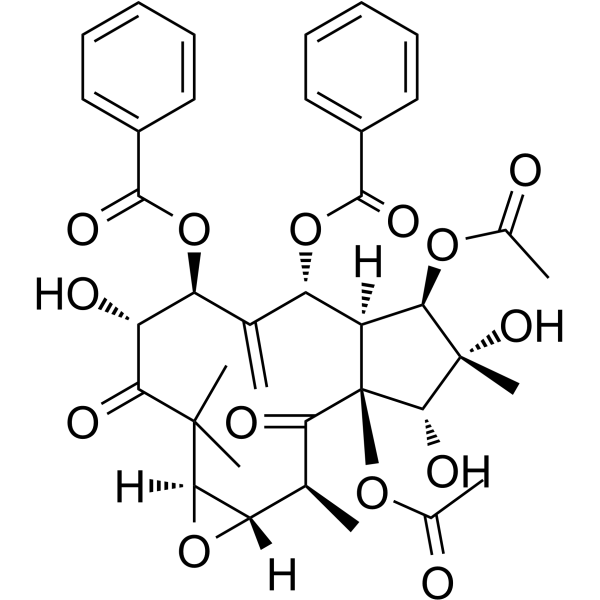 0 ImagesKansuinine B is a natural diterpenoid compound with anti-inflammatory, anti-cancer and anti-viral activities, which can be isolated from the roots of Euphorbia kansui. Kansuinine B induces sustained ERK1/2 activation, inhibits IL-6-induced Stat3 activation and tyrosine phosphorylation, and enhances serine phosphorylation of Stat3. Kansuinine B negatively regulates the IL-6 signaling pathway by upregulating the expression of SOCS-3. Kansuinine B promotes the proliferation of mouse splenic lymphocytes in vitro and stimulates rat peritoneal macrophages to produce NO. Kansuinine B can be used in studies related to liver cancer and COVID-19.
-
Len-604
 0 ImagesCat. No.: HY-182817Len-604 is a FGFR inhibitor with IC50 values of 9.71 nM, 9.93 nM, 29.80 nM and 14.48 nM against FGFR4, FGFR1, FGFR2 and FGFR3, respectively. Len-604 reduces the phosphorylation levels of FGFR4 and ERK, and induces DNA damage and apoptosis in cancer cells. Len-604 is applicable to research related to liver cancer.
-
Trimebutine-d5 fumarate
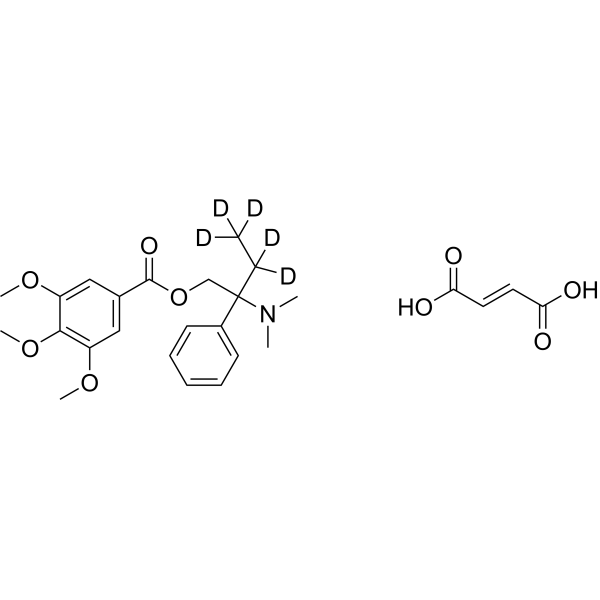 0 ImagesCat. No.: HY-B0380S1CAS No.: 2747915-18-8Trimebutine-d5 fumarate is deuterium labeled Trimebutine fumarate. Trimebutine fumarate is a multi-target inhibitor and opioid receptor agonist with antimuscarinic activity. Trimebutine fumarate inhibits L-type Ca2+ channels and large-conductance calcium-activated potassium channels (BKCa channels), thereby inhibiting extracellular calcium influx and potassium ion efflux. Trimebutine fumarate also targets Toll-like receptors, inhibits Toll-like receptor 2/4/7/8/9 signals, and inhibits LPS-induced IRAK1 activation, as well as ERK1/2, JNK and NF-κB activation, thereby exerting anti-inflammatory effects. Trimebutine fumarate also induces tumor cell apoptosis by inhibiting the AKT/ERK pathway. Trimebutine fumarate also inhibits excessive contraction of smooth muscle and can be used in the study of gastrointestinal disorders such as irritable bowel syndrome (IBS).
-
Erlotinib-13C6
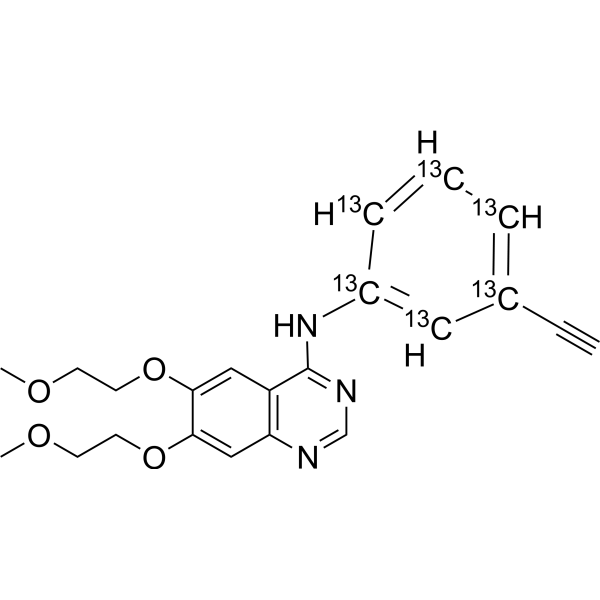 0 ImagesCat. No.: HY-50896S1CAS No.: 1211107-68-4Synonyms: CP-358774-13C6; NSC 718781-13C6; OSI-774-13C6Erlotinib-13C6 (CP-358774-13C6) is the 13C-labeled Erlotinib (HY-50896). Erlotinib (CP-358774) is a selective, orally active EGFR tyrosine kinase inhibitor. Erlotinib also acts as a substrate and inhibitor of OATP2B1, with an IC50 of approximately 0.079 μM for inhibiting OATP2B1-mediated uptake of estrone 3-sulfate. Erlotinib blocks EGFR phosphorylation, downstream signal transduction, as well as the growth and proliferation of cancer cells. Erlotinib inhibits MMP-10-mediated renal injury, fibrotic lesions, the ERK1/2, GSK-3β and β-catenin signaling pathways, fibronectin, α-SMA, collagen deposition, and renal injury markers. Erlotinib is metabolized via CYP3A to produce the active metabolite OSI-420. Erlotinib can be used in research related to non-small cell lung cancer, gastric cancer, papillary renal cell carcinoma, pancreatic cancer, renal fibrosis, and other conditions.
-
Anticancer agent 231
 0 ImagesCat. No.: HY-162575CAS No.: 128519-30-2Anticancer agent 231 (Compound P5) is a tyrosine protein kinase inhibitor with a IC50 value of 3.95 μM. Anticancer agent 231 inhibits the cell viability, cell proliferation, cell migration and cancer dryness of triple negative breast cancer (TNBC) cells by targeting EGFR-ERK 1/2 signaling pathway, and is expected to play an important role in the field of TNBC disease therapy.
-
Polfurmetinib hydrate
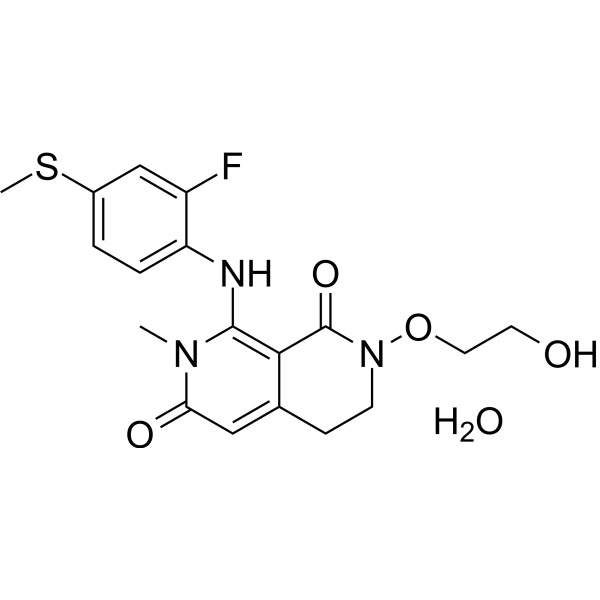 0 ImagesCat. No.: HY-153445ACAS No.: 2845153-35-5Synonyms: MEK-IN-6 hydrate
-
Pizotyline-d3
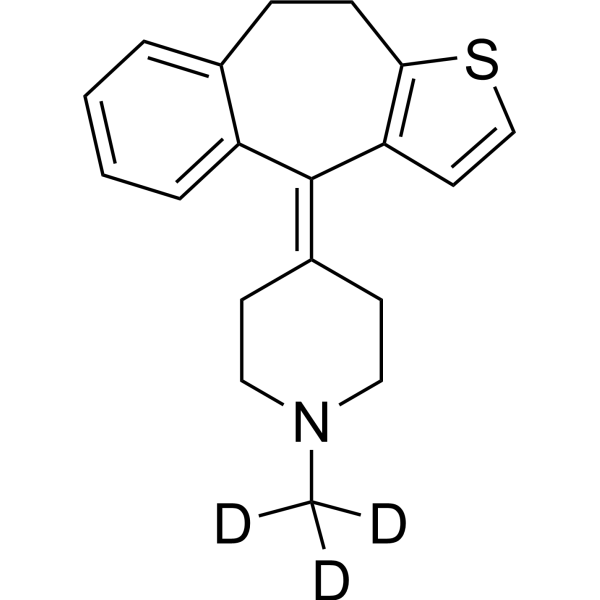 0 ImagesCat. No.: HY-B0115SSynonyms: Pizotyline-d3; BC-105-d3Pizotyline-d3 (BC-105-d3) is the d3-labeled Pizotifen (HY-B0115). Pizotifen (Pizotyline) is a 5-HT2 receptor antagonist. Pizotifen inhibits the Wnt/β-catenin-EMT signaling pathway and induces mitochondria-mediated Apoptosis. Pizotifen causes transient ERK1/2 phosphorylation and restores ATP. Pizotifen blocks Serotonin (HY-B1473A)-mediated platelet activation, inhibits Serotonin-enhanced ADP-induced platelet aggregation, and prolongs carotid artery occlusion and tail bleeding time. Pizotifen exhibits anticancer activity against gastric cancer and colon cancer. Pizotifen exerts neuroprotective effects in the striatum of R6/2 mice. Pizotifen can be used for research on gastric cancer, colon cancer, Huntington's disease, metastasis, and thromboembolic diseases.
-
EXP3179 (Standard)
 0 ImagesCat. No.: HY-114950RCAS No.: 114798-36-6Synonyms: Losartan Carboxaldehyde (Standard); DuP 167 (Standard)EXP3179 (Standard) (Losartan Carboxaldehyde (Standard)) is the analytical standard of EXP3179 (HY-114950). This product is intended for research and analytical applications. EXP3179 is a metabolite of Losartan (HY-17512). EXP3179 binds to AT1R with an affinity of 20 nM and blocks ANGII-induced AT1R signaling, inhibiting ERK1/2 activation. EXP3179 reduces NADPH oxidase activity. EXP3179 inhibits Phenylephrine (HY-B0769)-induced aortic contraction through an endothelium-dependent, NO-dependent mechanism. EXP3179 dose-dependently inhibits type I collagen-induced platelet aggregation and activation through GPVI binding, reducing platelet adhesion to the injured site. EXP3179 lowers blood pressure in normotensive and spontaneously hypertensive rats and mice. EXP3179 can be used for research on type 2 diabetes, hypertensive heart disease, hypertension, thrombosis, and coronary artery disease.
-
Leupeptin hydrochloride
 0 ImagesCat. No.: HY-183478CAS No.: 39740-82-4Leupeptin hydrochloride is a broad-spectrum protease inhibitor. By inhibiting the activation of the PTEN/PI3K/Akt/NF-κB/ERK1/2/p38 signaling pathway, Leupeptin hydrochloride significantly reduces LPS-induced NO and ROS production, mitochondrial membrane potential hyperpolarization, phagocytic activity, pro-inflammatory cytokine release, and M1 polarization in mouse peritoneal macrophages, and reverses autophagic flux impairment. It also decreases Concanavalin A (HY-P2149)-induced proliferation index of mouse splenic lymphocytes and the Th1/IL-10 and Th2/IL-10 cytokine ratios, thereby modulating innate and adaptive immune responses. Leupeptin hydrochloride inhibits blood coagulation and tumorigenesis in mouse skin. Leupeptin hydrochloride can be used in research on chronic inflammatory diseases and skin tumorigenesis.




