



Epigenetic Reader Domain
Epigenetic regulators of gene expression and chromatin state include so-called writers, erasers, and readers of chromatin modifications.Well-characterized examples of reader domains include bromodomains typically binding acetyllysine and chromatin organization modifier (chromo), malignant brain tumor (MBT), plant homeodomain (PHD), and Tudor domains generally associating with methyllysine. Research on epigenetic readers has been tremendously influenced by the discovery of selective inhibitors targeting the bromodomain and extraterminal motif (BET) family of acetyl-lysine readers. The human genome encodes 46 proteins containing 61 bromodomains clustered into eight families. Distinct experimental approaches are used to identify the first BET inhibitors, GSK 525762A and (+)-JQ-1.
The Polycomb group (PcG) protein, enhancer of zeste homologue 2 (EZH2), has an essential role in promoting histone H3 lysine 27 trimethylation (H3K27me3) and epigenetic gene silencing. This function of EZH2 is important for cell proliferation and inhibition of cell differentiation, and is implicated in cancer progression. Cyclin-dependent kinases regulate epigenetic gene silencing through phosphorylation of EZH2. In many types of cancers including lymphomas and leukemia, EZH2 is postulated to exert its oncogenic effects via aberrant histone and DNA methylation, causing silencing of tumor suppressor genes.
p300/CBP is not only a transcriptional adaptor but also a histone acetyltransferase.
Epigenetic Reader Domain Isoform Specific Products
-
Epigenetic Reader Domain
(448)
View all products
-
Brd
(3)
View all products
-
BRPF1
(9)
View all products
-
BRPF2
(5)
View all products
-
BRPF3
(2)
View all products
-
BRD2
(66)
View all products
-
BRD3
(61)
View all products
-
BRD4
(298)
View all products
-
BRDT
(26)
View all products
-
CECR2
(4)
View all products
-
BD1
(9)
View all products
-
BD2
(9)
View all products
-
BRD7
(9)
View all products
-
BRD9
(55)
View all products
-
BET
(22)
View all products
-
BAZ
(1)
View all products
All Product Categories
-
Epigenetic Reader Domain Inhibitors
(589)
View all products
-
Epigenetic Reader Domain Agonists
(3)
View all products
-
Epigenetic Reader Domain Antagonists
(2)
View all products
-
Epigenetic Reader Domain Activators
(11)
View all products
-
Epigenetic Reader Domain Modulators
(3)
View all products
-
Epigenetic Reader Domain Chemicals
(2)
View all products
-
Epigenetic Reader Domain Inducer
(1)
View all products
-
Epigenetic Reader Domain Degraders
(171)
View all products
-
Epigenetic Reader Domain Controls
(13)
View all products
-
Epigenetic Reader Domain Substrate
(1)
View all products
-
Epigenetic Reader Domain Ligands
(28)
View all products
-
Epigenetic Reader Domain Related Products (902)
Related Products (902)

-
Antibodies (109)
-
Epigenetic Reader Domain Isoform Comparison
-
653-47
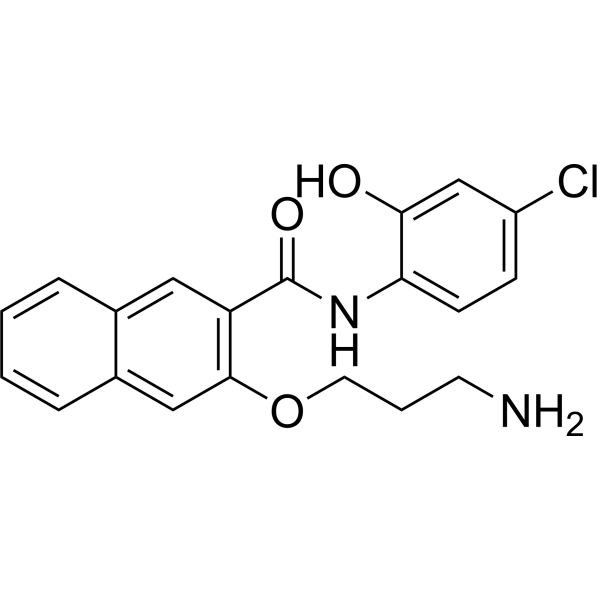 0 ImagesCat. No.: HY-134598CAS No.: 1224678-75-4653-47, a potentiator, significantly potentiates the cAMP-response element binding protein (CREB) inhibitory activity of 666-15. 653-47 is also a very weak CREB inhibitor with IC50 of 26.3 μM.
-
Y02224
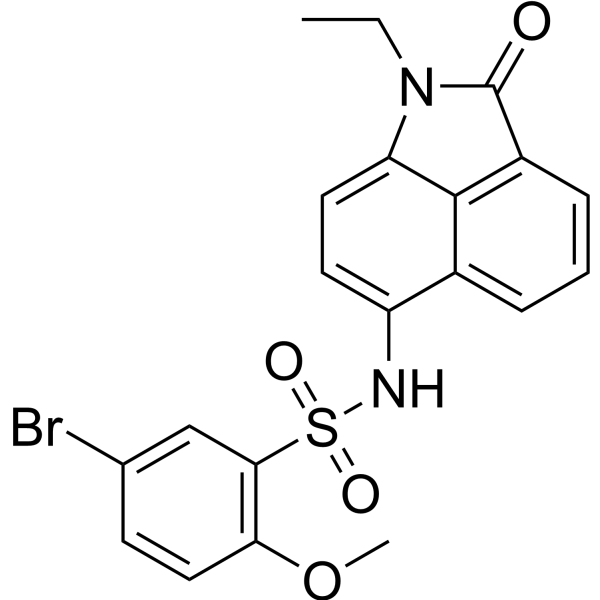 0 ImagesCat. No.: HY-114902CAS No.: 1853988-48-3Y02224 is a potent BRD4 inhibitor and exhibits reasonable antiproliferative effect on leukemia cells.Y02224 has the potential for? CRPC research.
-
PROTAC BRD4 Degrader-15
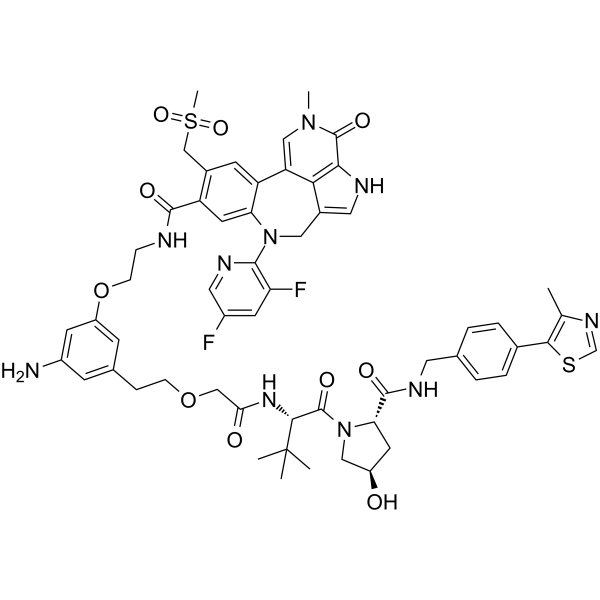 0 ImagesCat. No.: HY-139294CAS No.: 2417370-67-1PROTAC BRD4 Degrader-15 is a BRD4 PROTAC degrader with a DC50 of 2.1 nM. PROTAC BRD4 Degrader-15 forms a ternary complex with BRD4 and VHL ubiquitin ligase to induce degradation. PROTAC BRD4 Degrader-15 inhibits the transcription level of the MYC gene. PROTAC BRD4 Degrader-15 suppresses human megakaryocytopoiesis and exhibits antigen-dependent tumor growth inhibition in xenograft models of prostate cancer and acute myeloid leukemia. PROTAC BRD4 Degrader-15 can be used in studies related to prostate cancer and acute myeloid leukemia.

-
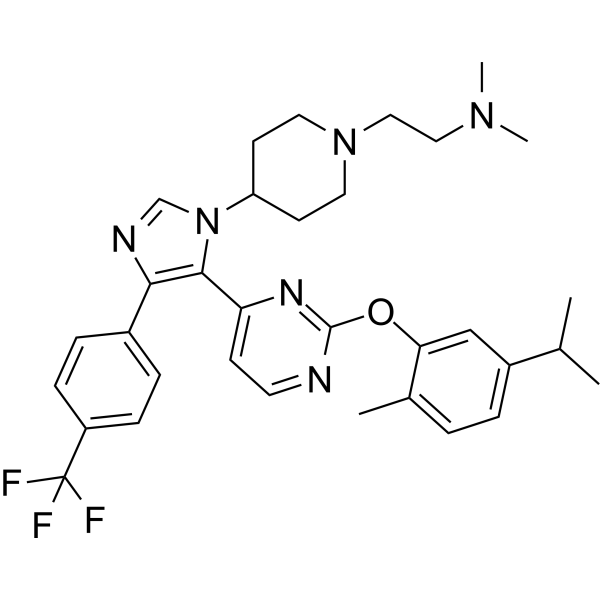
MS479
 0 ImagesCat. No.: HY-176035MS479 is a PROTAC degrader targeting BRD4, BRD3 and BRD2. MS479 recruits the E3 ligase SPOP by bridging the protein GLP, thereby promoting polyubiquitination modification and subsequent 26S proteasomal degradation. MS479 inhibits the proliferation of colorectal cancer cells and can be used for research on colorectal cancer and triple-negative breast cancer.
-
PLX-4104
 0 ImagesPLX-4104 is an orally active BRD4 molecular glue degrader with a DC50 of 2 nM. PLX-4104 selectively promotes BRD4 degradation via DCAF11 recruitment, triggering ubiquitination and proteasomal breakdown. PLX-4104 inhibits cancer cell proliferation. PLX-4104 induces complete regression of AML xenograft tumors. PLX-4104 can be used for the research of acute myeloid leukemia.
-
MS8535
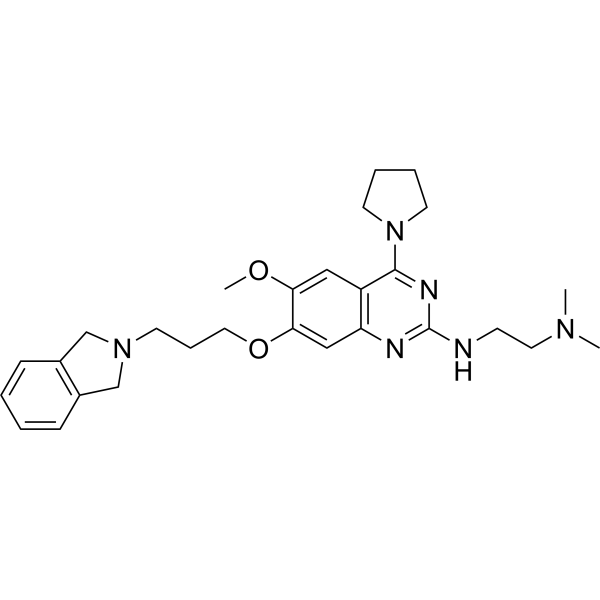 0 ImagesCat. No.: HY-163460CAS No.: 3060589-97-8MS8535 is a SPIN1 selective inhibitor, with an IC50 of 0.2 μM.
-
4-Pentynoyl-Coenzyme A TFA
 0 ImagesCat. No.: HY-CE00983ASynonyms: 4-Pentynoyl-CoA TFA4-Pentynoyl-Coenzyme A (4-Pentynoyl-CoA) TFA is an analog of the natural substrate acetyl-CoA (Acetyl-CoA) (HY-114293). 4-Pentynoyl-Coenzyme A TFA can replace acetyl-CoA to be recognized and utilized by lysine acetyltransferases such as p300. 4-Pentynoyl-Coenzyme A TFA can be conjugated to azide probes carrying fluorescent groups (e.g., Rhodamine-azide) or biotin (Biotin-azide) via Cu (I)-catalyzed azide-alkyne cycloaddition (CuAAC).
-
(S)-GNE-987
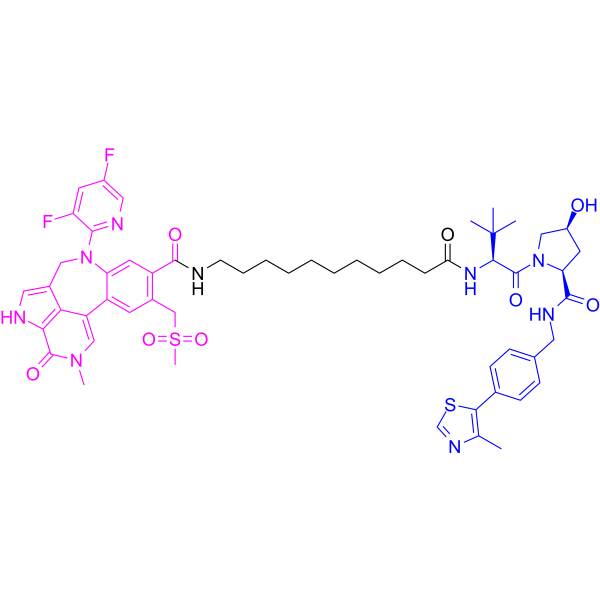 0 ImagesCat. No.: HY-129937CAS No.: 2738533-33-8(S)-GNE-987 is an isomer of GNE-987 (HY-129937A), which loses VHL binding capacity and BRD4 protein degradation activity, but retains BRD4 inhibitory activity. (S)-GNE-987 is a BRD4/BET inhibitor that potently binds to the BD1 and BD2 bromodomains of BRD4, with a BRD4 BD1 IC50 of 4.0 nM and a BRD4 BD2 IC50 of 3.9 nM. (S)-GNE-987 inhibits MYC expression and exhibits inhibitory activity against acute myeloid leukemia cells, whereas its CLL1‑6 antibody-drug conjugate shows almost no in vivo antitumor efficacy in the HL‑60 xenograft tumor model. (S)-GNE-987 can be used in related research on acute myeloid leukemia.
-
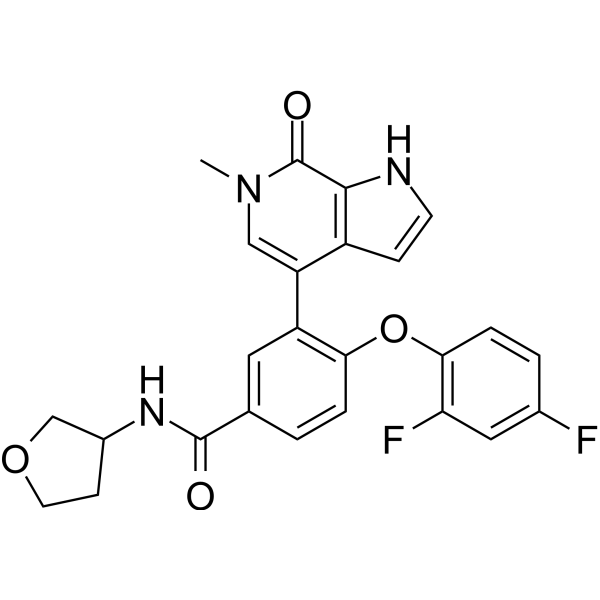
PARP1/BRD4-IN-3
 0 ImagesCat. No.: HY-169170PARP1/BRD4-IN-3 (compound HF4) is a potent BRD4 and PARP1 inhibitor with IC50 values of 1210, 2019 nM for BRD4, PARP1, respectively. PARP1/BRD4-IN-3 shows antiproliferative activities. PARP1/BRD4-IN-3 induces apoptosis and cell cycle arrest at G0/G1 phase. PARP1/BRD4-IN-3 causes DNA damage and reduces the protein expression of Rad51. PARP1/BRD4-IN-3 shows antitumor efficacy.
-
TP-472N
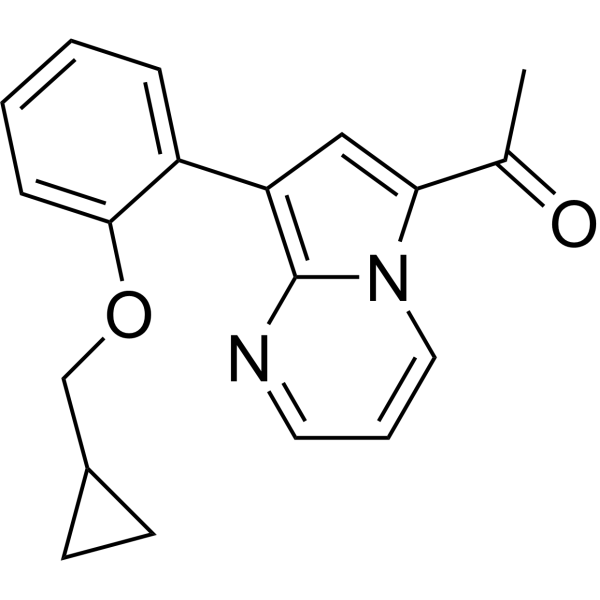 0 ImagesCat. No.: HY-136192CAS No.: 2080306-24-5TP-472N is a negative control probe for TP-472. TP-472 is a potent and selective BRD7/9 probe.
-
CDD-1154
 0 ImagesCat. No.: HY-177141CAS No.: 2757619-88-6CDD-1154 is an aminopyrimidine analog. CDD-1154 is a BRDT-BD2 inhibitor (IC50: 139 nM). CDD-1154 is used in male contraceptive research.
-
BRD4 Inhibitor-29
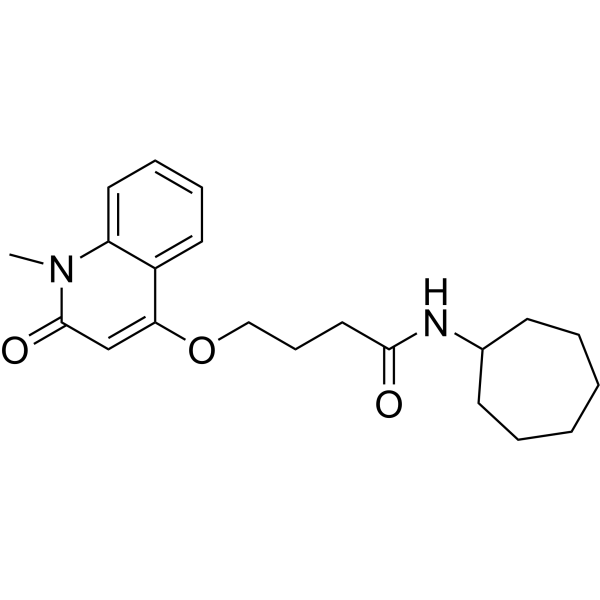 0 ImagesCat. No.: HY-157460CAS No.: 902563-50-2BRD4 Inhibitor-29 (SQ-17) is a BRD4 inhibitor, with an IC50 of <100 nM. BRD4 Inhibitor-29 shows antiproliferative effect against prostate cancer cells.
-
PROTAC BRD9 Degrader-8
 0 ImagesCat. No.: HY-162651CAS No.: 3081180-48-2PROTAC BRD9 Degrader-8 is a selective, orally active BRD9 PROTAC degrader with a DC50 of 16 pM.\nPROTAC BRD9 Degrader-8 induces cell cycle arrest at the G1 phase and promotes apoptosis. PROTAC BRD9 Degrader-8 can be used for research on acute myeloid leukemia and diffuse large B-cell lymphoma.

-
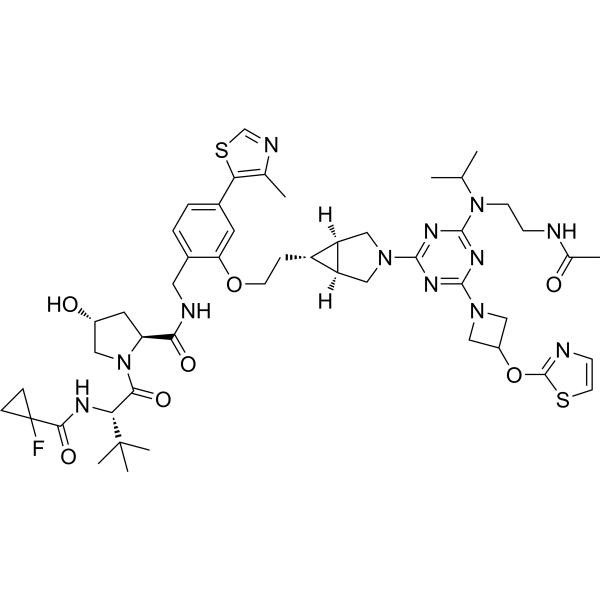
PROTAC BRD4-DCAF1 degrader-1
 0 ImagesCat. No.: HY-169151CAS No.: 3036944-87-0
-
ARV-771-Azobenzene
-PEG3-DBCO-PEG4-amide
 0 ImagesCat. No.: HY-189231ARV-771-Azobenzene is an azide-containing PROTAC-Linker conjugate for the construction of PROTAC-antibody conjugates (PACs), consisting of the BRD4 PROTAC ARV-771 (HY-100972) and an azobenzene linker cleavable by azoreductase. ARV-771-Azobenzene acts as a payload for conjugation with DBCO-modified antibodies. Conjugation of ARV-771-Azobenzene with DBCO-modified Sacituzumab generates the azoreductase-cleavable SAC-ARV-771 conjugate (ASA). Conjugation of ARV-771-Azobenzene with DBCO-modified IgG generates IgG-ARV-771. ARV-771-Azobenzene is applicable to studies on hypoxia-responsive antibody-PROTAC conjugates and triple-negative breast cancer.




