



Microtubule/Tubulin
Microtubules are a component of the cytoskeleton, found throughout the cytoplasm. These tubular polymers of tubulin can grow as long as 50 micrometres, with an average length of 25 µm, and are highly dynamic. The outer diameter of a microtubule is about 24 nm while the inner diameter is about 12 nm. Microtubules are found in eukaryotic cells and are formed by the polymerization of a dimer of two globular proteins, alpha and beta tubulin. Tubulin is one of several members of a small family of globular proteins. The tubulin superfamily includes five distinct families, the alpha-, beta-, gamma-, delta-, and epsilon-tubulins and a sixth family which is present only in kinetoplastid protozoa. The most common members of the tubulin family are α-tubulin and β-tubulin, the proteins that make up microtubules. Microtubules are very important in a number of cellular processes. They are involved in maintaining the structure of the cell.
All Product Categories
-
Microtubule/Tubulin Inhibitors
(812)
View all products
-
Microtubule/Tubulin Agonists
(2)
View all products
-
Microtubule/Tubulin Antagonist
(1)
View all products
-
Microtubule/Tubulin Activators
(21)
View all products
-
Microtubule/Tubulin Modulators
(20)
View all products
-
Microtubule/Tubulin Inducers
(5)
View all products
-
Microtubule/Tubulin Degraders
(3)
View all products
-
Microtubule/Tubulin Controls
(19)
View all products
-
Microtubule/Tubulin Ligands
(5)
View all products
-
Microtubule/Tubulin Related Products (1003)
Related Products (1003)

-
Antibodies (69)
-
Batabulin sodium
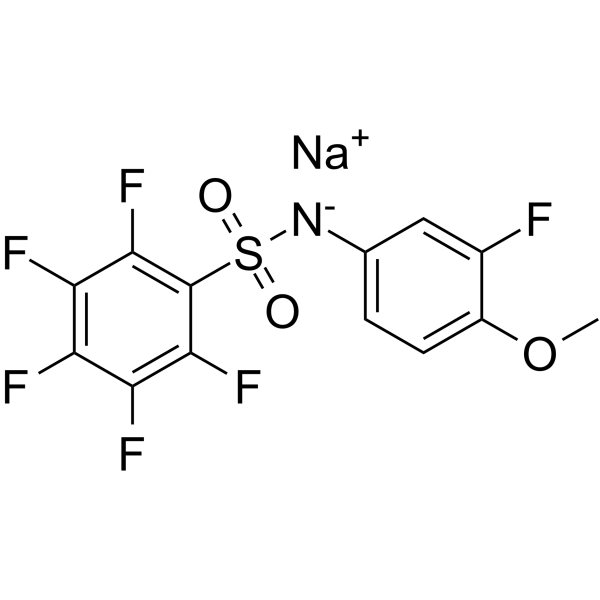 0 ImagesSynonyms: T138067 sodiumBatabulin sodium (T138067 sodium) is an antitumor agent, which binds covalently and selectively to a subset of the β-tubulin isotypes, thereby disrupting microtubule polymerization. Batabulin sodium affects cell morphology and leads to cell-cycle arrest ultimately induces apoptotic cell death.
-
N-Boc-dolaproine-OH dicyclohexylamine
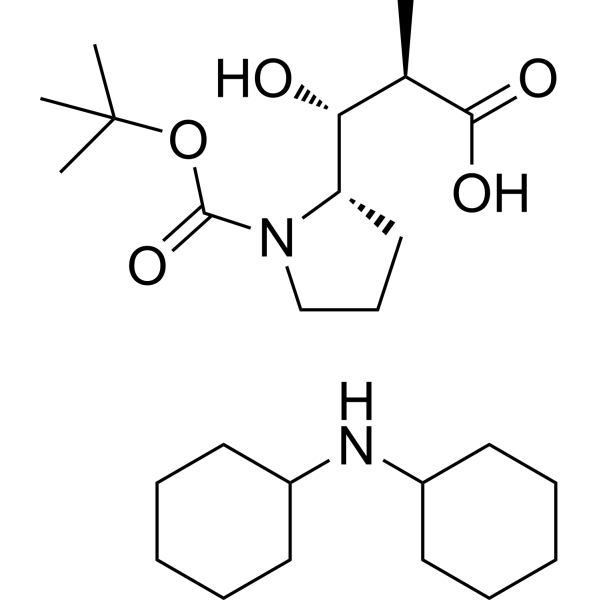 0 ImagesCat. No.: HY-42912ACAS No.: 1369427-40-6N-Boc-dolaproine-OH dicyclohexylamine is the amino acid residue of the pentapeptide Dolastatin 10 (HY-15580). Dolastatin 10 inhibits tubulin polymerization and mitosis and has anticancer activity.
-
Cy5-Paclitaxel
 0 ImagesCat. No.: HY-D2422BCy5-Paclitaxel is a fluorescently labeled drug probe formed by conjugating the fluorescent dye Cy5 (Cyanine 5) with the chemotherapeutic agent Paclitaxel, which is used to track the cellular uptake, subcellular distribution and drug delivery process of Paclitaxel. The Cy5 (Cyanine 5) fluorophore is covalently linked to Paclitaxel, possessing both fluorescent tracing function and the biological activities of Paclitaxel (promoting tubulin polymerization and arresting the cell cycle at the G2/M phase); after entering cells, Cy5 emits far-red fluorescence, enabling real-time monitoring of drug localization and release.

-
Fmoc-MMAF-OMe
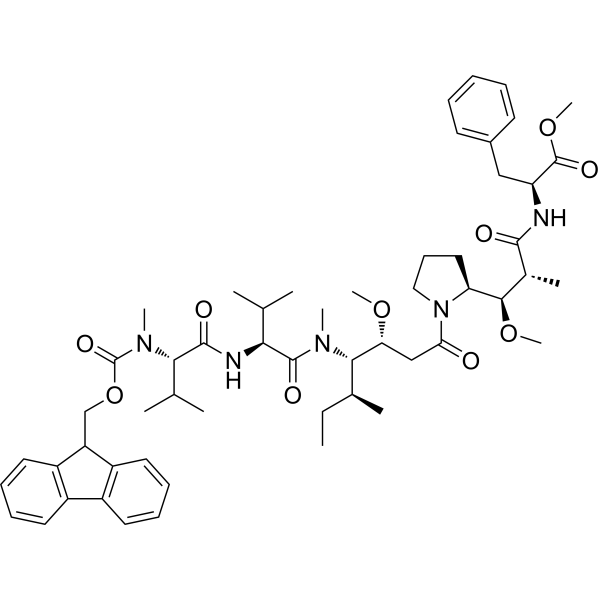 0 ImagesFmoc-MMAF-OMe is an anticancer agent and tubulin polymerization inhibitor with an Fmoc protecting group. The active ingredient of Fmoc-MMAF-OMe, MMAF (HY-15579), is the cytotoxic (ADC Cytotoxin) component of classic antibody drug conjugates (ADCs).
-
Demecolcine (Standard)
 0 ImagesDemecolcine (Standard) (Colcemid (Standard)) is the analytical standard of Demecolcine (HY-N0282). This product is intended for research and analytical applications. Demecolcine (Colcemid) is a potent mitotic inhibitor with an IC50 value of 2.4 μM for inhibition of tubulin polymerization. Demecolcine can interact with tubulin dimers to induce anti-mitotic action and inhibit microtubule growth. Demecolcine can be used for inflammatory disorders and cancer research.
-
Fenbendazole analog-1
 0 ImagesFenbendazole analog-1 (compound 9) is a 2-methoxycarbonylamino-derived antiparasitic compound and inhibits rat brain tubulin polymerization. Fenbendazole analog-1 inhibits the growth of the protozoa Giardia lamblia, Entamoeba histolytica, and the worm Trichinella spiralis.
-
Mebendazole (Standard)
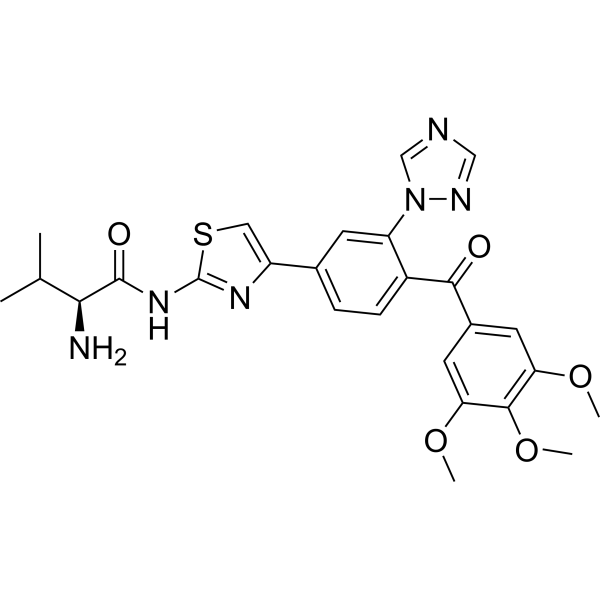
 0 ImagesMebendazole (Standard) is the analytical standard of Mebendazole. This product is intended for research and analytical applications. Mebendazole is a highly effective, broad-spectrum antihelmintic against nematode infestations. Mebendazole also exhibits inhibitory effect against glioblastoma multiforme (GBM), inhibits Hedgehog pathway and tubulin polymerization. Mebendazole is orally active and can cross CNS penetration.
-
VcMMAE-Eribulin
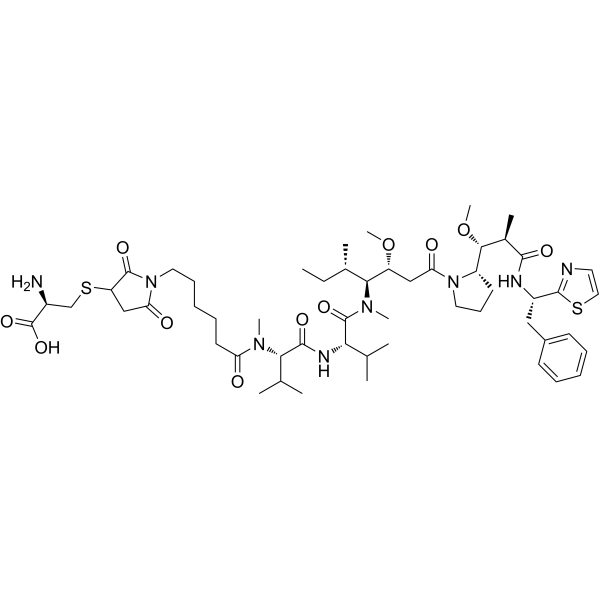
 0 ImagesSynonyms: SMP13432VcMMAE-Eribulin is a Drug-Linker Conjugates for ADC, which is composed of a linker and a toxic molecule MMAE (HY-15162) (Microtubule inhibitor) and Eribulin (HY-13442) (Microtubule inhibitor). VcMMAE-Eribulin can be used for ADC synthesis.

-
SB-216
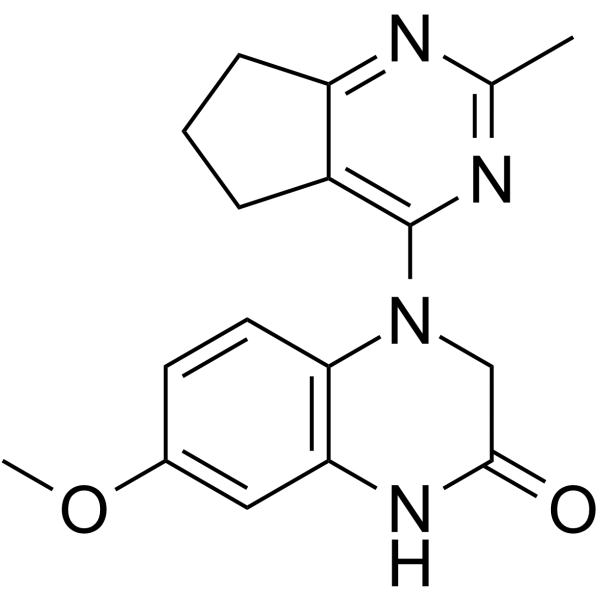 0 ImagesSB-216 is an BBB-penetrable tubulin polymerization inhibitor. SB-216 can inhibit the proliferation and migration, and induce apoptosis and cell cycle arrest of tumor cells. SB-216 has good in vivo metabolic stability and low toxicity, but its oral bioavailability is limited. SB-216 has antitumor activity and can be used in the research of tumors such as melanoma.
-
Aminobenzenesulfonic auristatin E TFA
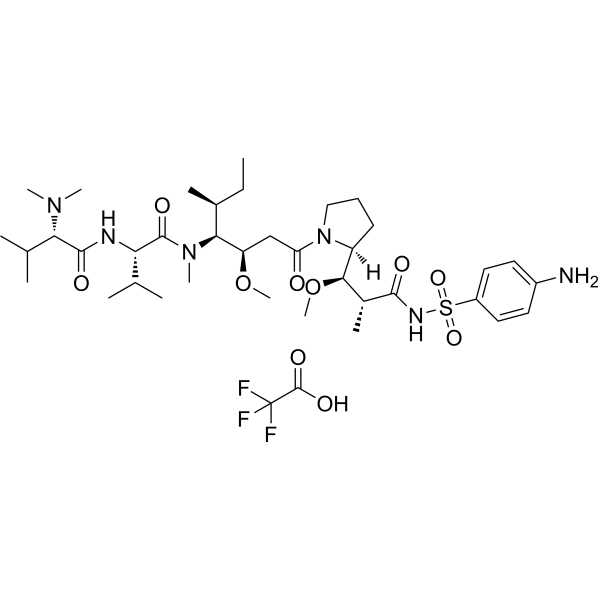 0 ImagesCat. No.: HY-145989APurity: 99.39%Aminobenzenesulfonic auristatin E TFA is a agent-linker conjugate for ADC. Aminobenzenesulfonic auristatin E TFA has potent antitumor activity by using Auristatin E (a cytotoxic tubulin modifier), linked via the ADC linker Aminobenzenesulfonic.
-
Vincristine-d3-1 sulfate
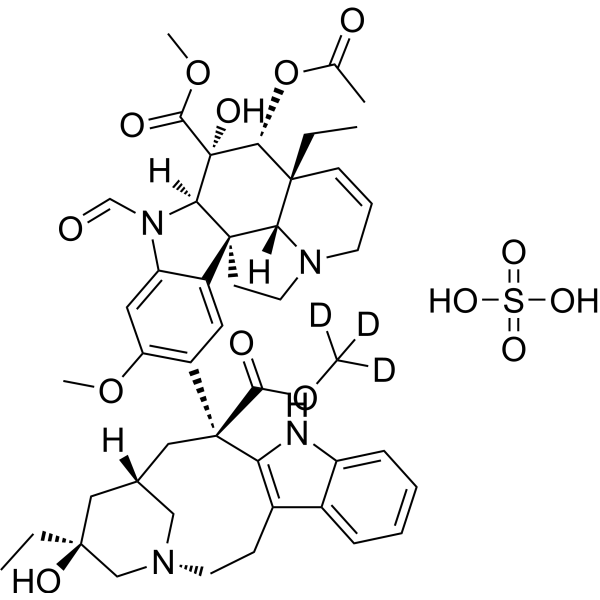 0 ImagesSynonyms: Leurocristine-d3-1 sulfate; NSC-67574-d3-1 sulfate; 22-Oxovincaleukoblastine-d3-1 sulfateVincristine-d3 sulfate is the deuterium labeled Vincristine sulfate. Vincristine-1 sulfate (Leurocristine; NSC-67574; 22-Oxovincaleukoblastine) is a microtubule inhibitor that disrupts microtubule polymerization by binding to β-tubulin (with a Ki of 85 nM in bovine), arrests the cell cycle and induces apoptosis. Vincristine-1 sulfate inhibits cell replication, tumor blood flow and the proliferation of various cancer cells, while triggering effects such as oxidative stress, inflammation, calcium overload, epithelial-mesenchymal transition and peripheral neuropathic pain. Vincristine-1 sulfate upregulates the expression of various transporters and nuclear receptors, and enriches gastric cancer stem-like cells. Vincristine-1 sulfate is used in research related to various tumors including acute lymphoblastic leukemia, lymphoma, melanoma, gastric cancer, solid tumors and sarcomas.
-
Vinorelbine-d3 ditartrate
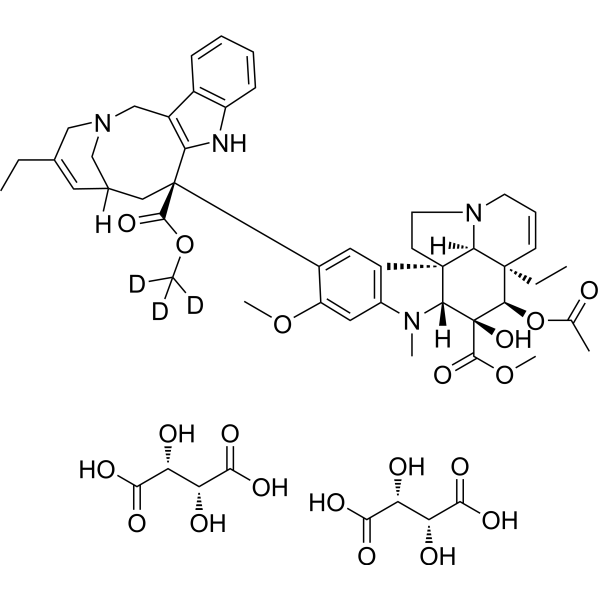 0 ImagesCat. No.: HY-12053ASPurity: 98.0%Synonyms: KW-2307-d3 ditartrate; Nor-5'-anhydrovinblastine-d3 ditartrateVinorelbine-d3 (ditartrate) is the deuterium labeled Vinorelbine ditartrate. Vinorelbine (ditartrate) is an anti-mitotic agent which inhibits the proliferation of Hela cells with IC50 of 1.25 nM.
-
Icafolin-methyl
 0 ImagesIcafolin-methyl is a herbicide and plant β-tubulin (Microtubule/Tubulin) inhibitor. Icafolin-methyl binds to the β-tubulin region of the Colchicine (HY-16569) binding site, thereby blocking the polymerization of plant tubulin. As a non-selective herbicide, Icafolin-methyl exhibits post-emergence activity against weeds in both cool-season and warm-season cropping systems, including resistant ryegrass and darnel biotypes. Icafolin-methyl can be used for herbicide research.
-
TAM557 TFA
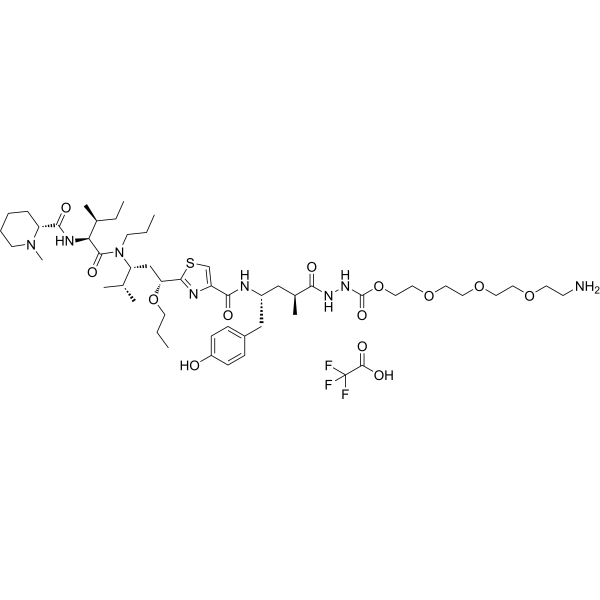 0 ImagesCat. No.: HY-160473APurity: 98.52%TAM557 TFA is a cytotoxic tubulysin compounds, which is modified to be used for conjugation to transport vehicles that are targeting molecules, such as proteins, peptides, small molecules or polymeric carriers which can carry a targeting principle.
-
Aminobenzenesulfonic auristatin E-d8
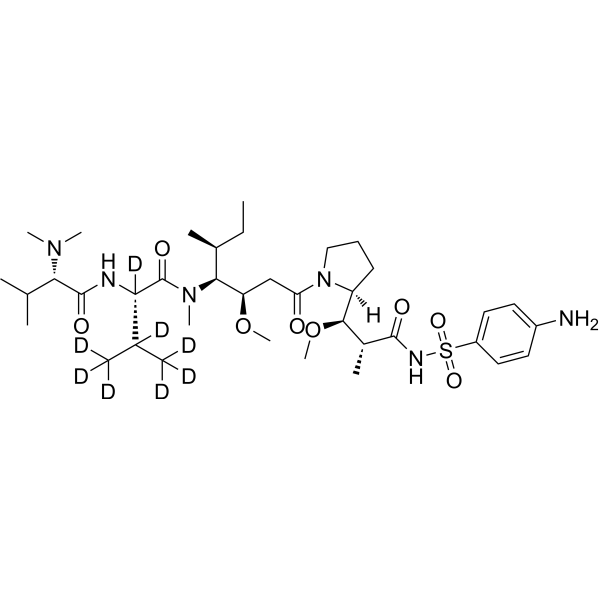 0 ImagesCat. No.: HY-145989SPurity: 98.02%Aminobenzenesulfonic auristatin E-d8 is the deuterium labeled Aminobenzenesulfonic auristatin E. Aminobenzenesulfonic auristatin E is a drug-linker conjugate for ADC. Aminobenzenesulfonic auristatin E has potent antitumor activity by using Auristatin E (a cytotoxic tubulin modifier), linked via the ADC linker Aminobenzenesulfonic.
-
DJ101
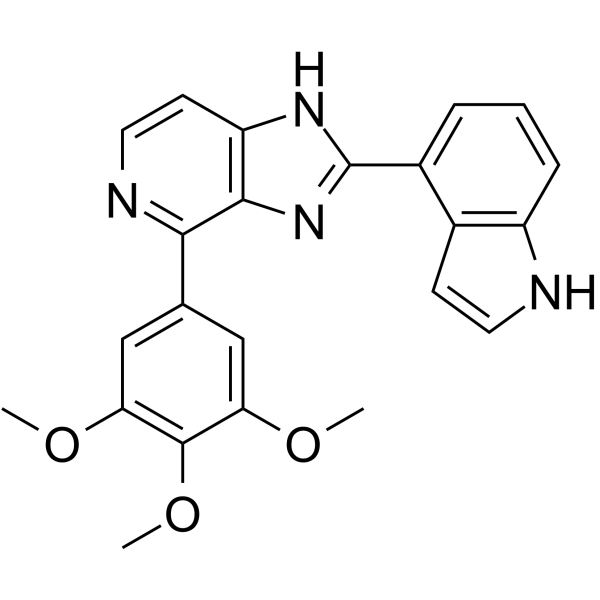 0 ImagesDJ101 is a potent and metabolically stable tubulin inhibitor. DJ101 targets the colchicine binding site and overcomes taxane resistance. DJ101 also inhibits melanoma tumor growth and lung metastasis. DJ101 can be used for prostate cancer research.




