



NF-κB
NF-κB regulates innate and adaptive immunity, inflammatory responses, immune-cell survival, activation, and differentiation[1]. Mechanistically, canonical NF-κB signaling depends on phosphorylation-induced proteasomal degradation of IκB proteins, releasing cytosolic NF-κB dimers for transcriptional control[2]. In inflammation models, NF-κB induces cytokines, chemokines, adhesion molecules, and inflammasome-related responses, linking pathway activation to chronic inflammatory disease and cancer research[1][3][4]. Compared with related isoforms, mammalian NF-κB includes RelA/p65, RelB, c-Rel, p50/NF-κB1, and p52/NF-κB2, and RelA loss causes embryonic lethality with liver apoptosis, whereas p50 loss produces immune-response defects without developmental abnormalities[2][5][6]. For experimental applications, NF-κB inhibitors, including IKK-targeting agents and BAY 11-7082, help test pathway dependence in inflammatory signaling, but broad pathway targeting requires careful interpretation because NF-κB also supports normal immune physiology[4][7].
References:
- [1]. Liu T, et al. NF-κB signaling in inflammation. Signal Transduct Target Ther. 2017;2:17023–. [Content Brief]
- [2]. Oeckinghaus A, et al. The NF-kappaB family of transcription factors and its regulation. Cold Spring Harb Perspect Biol. 2009 Oct;1(4):a000034. [Content Brief]
- [3]. Lawrence T. The nuclear factor NF-kappaB pathway in inflammation. Cold Spring Harb Perspect Biol. 2009 Dec;1(6):a001651. doi: 10.1101/cshperspect.a001651. Epub 2009 Oct 7. PMID: 20457564; PMCID: PMC2882124. et al. The nuclear factor NF-kappaB pathway in inflammation. Cold Spring Harb Perspect Biol. 2009 Dec;1(6):a001651. [Content Brief]
- [4]. Yu H, et al. Targeting NF-κB pathway for the therapy of diseases: mechanism and clinical study. Signal Transduct Target Ther. 2020 Sep 21;5(1):209. [Content Brief]
- [5]. Beg AA, et al. Embryonic lethality and liver degeneration in mice lacking the RelA component of NF-kappa B. Nature. 1995 Jul 13;376(6536):167-70. [Content Brief]
- [6]. Sha WC, et al. Targeted disruption of the p50 subunit of NF-kappa B leads to multifocal defects in immune responses. Cell. 1995 Jan 27;80(2):321-30. [Content Brief]
- [7]. Lee J, et al. BAY 11-7082 is a broad-spectrum inhibitor with anti-inflammatory activity against multiple targets. Mediators Inflamm. 2012;2012:416036. [Content Brief]
All Product Categories
-
NF-κB Inhibitors
(1212)
View all products
-
NF-κB Agonists
(4)
View all products
-
NF-κB Activators
(101)
View all products
-
NF-κB Modulators
(26)
View all products
-
NF-κB Inducers
(2)
View all products
-
NF-κB Degraders
(2)
View all products
-
NF-κB Controls
(6)
View all products
-
NF-κB Ligand
(1)
View all products
-
NF-κB Related Products (1455)
Related Products (1455)

-
Antibodies (24)
-
(E)-Caffeic acid phenethyl ester
 0 ImagesCat. No.: HY-W1058007CAS No.: 115610-29-2(E)-Caffeic acid phenethyl ester is an inhibitor of iNOS and NF-κB. (E)-Caffeic acid phenethyl ester blocks the activation of iNOS by inhibiting NF-κB, and suppresses iNOS promoter activity at the NF-κB site. (E)-Caffeic acid phenethyl ester inhibits nitric oxide production in activated macrophages. (E)-Caffeic acid phenethyl ester is applicable to anti-inflammatory research.
-
Ethacrynic acid-13C2,d5
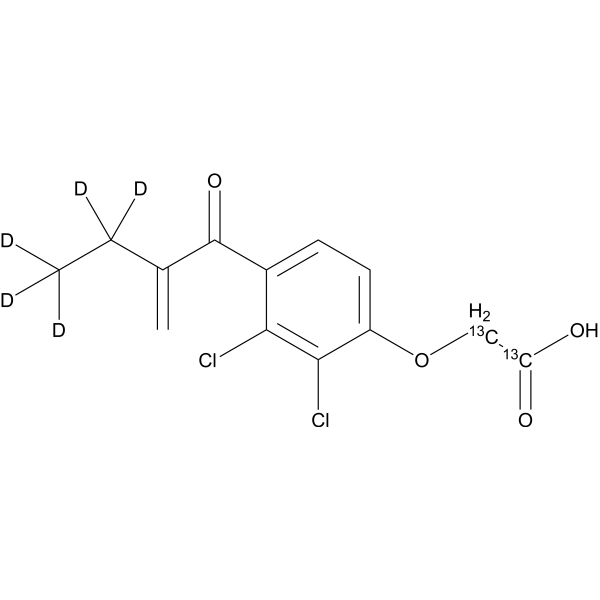 0 ImagesCat. No.: HY-B1640SCAS No.: 2806111-66-8Synonyms: Etacrynic acid-13C2,d5Ethacrynic acid-13C2,d5 is the deuterium and 13C labeled Ethacrynic acid.
-
9(R)-PAHSA
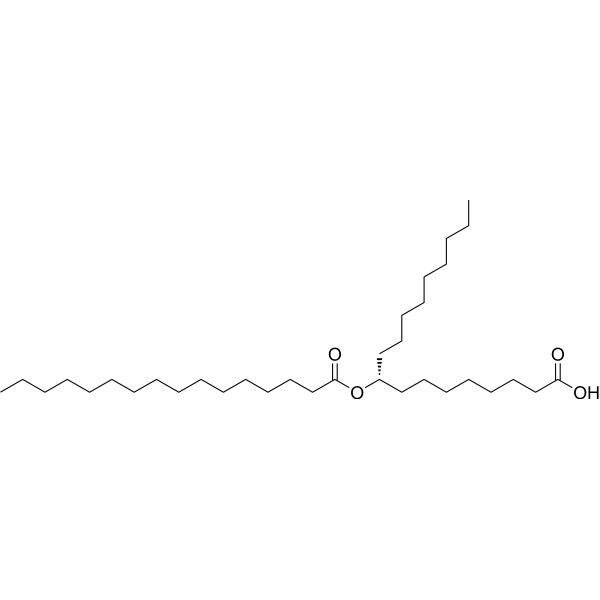 0 ImagesCat. No.: HY-124281CAS No.: 2097130-84-09(R)-PAHSA is a R-enantiomer of 9-PAHSA. 9-PAHSA is an orally available anti-inflammatory lipid that lowers blood sugar and reduces inflammation.
-
TML-6-d3
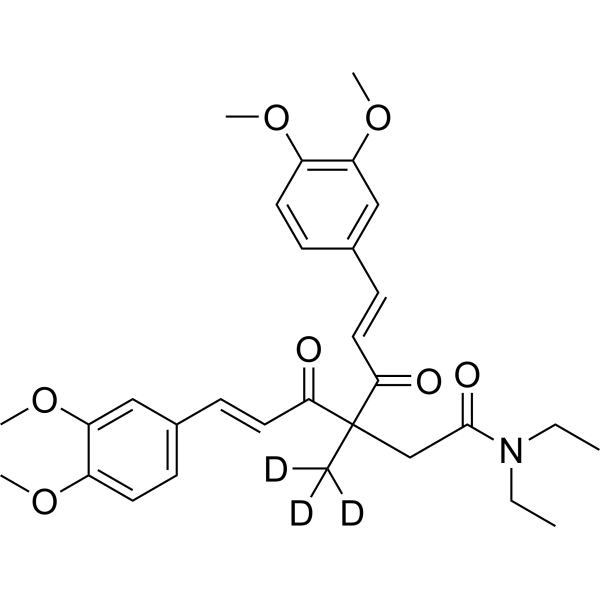 0 ImagesCat. No.: HY-137315SCAS No.: 2673270-28-3
-
Chikusetsusaponin IVa methyl ester
 0 ImagesCat. No.: HY-N17736CAS No.: 58546-61-5Synonyms: CMEChikusetsusaponin IVa methyl ester (CME) is a natural triterpenoid saponin compound. Chikusetsusaponin IVa methyl ester induces G0/G1 cell cycle arrest and apoptosis in colon cancer cells by inhibiting the Wnt/β-catenin signaling pathway. By inhibiting the NF-κB and AP-1 signaling pathways, Chikusetsusaponin IVa methyl ester significantly reduces the production of NO, PGE₂ and pro-inflammatory cytokines (TNF-α, IL-6, IL-1β), and downregulates the levels of iNOS and COX-2. Chikusetsusaponin IVa methyl ester can be used in researches on colorectal cancer and inflammation.
-
Cathelicidin-PY
 0 ImagesCat. No.: HY-P11183CAS No.: 1431866-92-0Cathelicidin-PY is an antimicrobial peptide exhibiting strong antimicrobial property. Cathelicidin-PY inhibits the activation of TLR4 inflammatory response pathways induced by lipopolysaccharide (LPS) (HY-D1056). Cathelicidin-PY possesses strong antimicrobial and anti-inflammatory activities and low cytotoxic ability against RAW 264.7 cells. Cathelicidin-PY can be used for antimicrobial and anti-inflammatory research.
-
MX107
 0 ImagesCat. No.: HY-123870CAS No.: 2170102-50-6MX107 is a selective and potent survivin inhibitor that suppresses triple-negative breast cancer (TNBC) cell proliferation. MX107 induces degradation of survivin and inhibitor-of-apoptosis proteins (IAPs), which inhibits nuclear factor κB (NF-κB) activation induced by DNA damage. MX107 enhances tumoricidal efficacy of genotoxic treatments synergized with chemotherapeutic drugs.

-
SHR-1806
 0 ImagesCat. No.: HY-P992462SHR-1806 is a OX40 agonist and a NF-κB activator, with antitumor activity. SHR-1806 mediates ADCC and CDC effects, enhances the function and expansion of effector T cells, suppresses regulatory T cells, and increases γ-interferon secretion. SHR-1806 exhibits typical pharmacokinetic characteristics and favorable safety profiles. SHR-1806 can be used in studies related to solid tumors and colon cancer.
-
Cupabimod sodium
 0 ImagesCat. No.: HY-177624ASynonyms: AMG0103 sodiumCupabimod sodium is a decoy oligodeoxynucleotide for transcription factor NF-κB.
-
TNF-α-IN-11
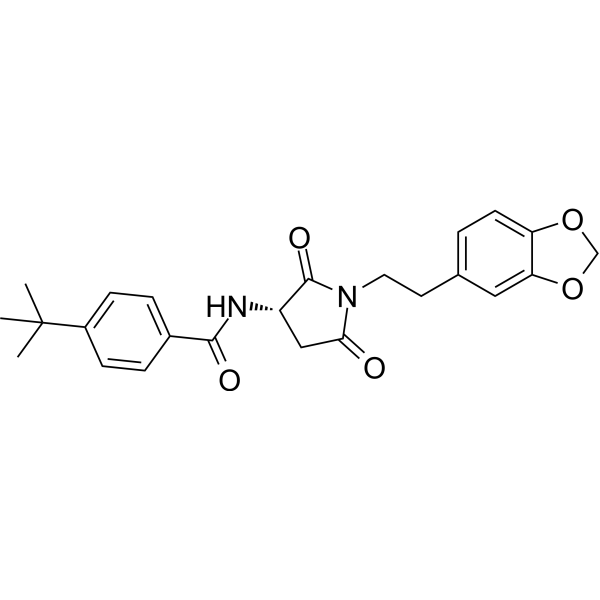 0 ImagesCat. No.: HY-149331CAS No.: 2945197-77-1TNF-α-IN-11 (Compound 10) is a TNF-α inhibitor with a KD value of 12.06 μM. TNF-α-IN-11 binds to TNF-α and blocks the activation of TNF-α-trigged caspase and NF-κB signaling pathway. TNF-α-IN-11 inhibits the phosphorylation of IκBα, as well as the nuclear translocation of NF κB p65. TNF-α-IN-11 can be used for research of TNF-α-mediated autoimmune diseases.
-
MAGL-IN-22
 0 ImagesCat. No.: HY-175270CAS No.: 2720674-71-3MAGL-IN-22 (Compound 40) is a reversible, competitive, selective and BBB-penetrable MAGL inhibitor with an IC50 of 0.34 μM for hMAGL. MAGL-IN-22 has significant antioxidant and anti-inflammatory activity, and activates the Nrf2 pathway and significantly inhibits NFκB-mediated inflammation, without inducing cytotoxic effects. MAGL-IN-22 can be used for neurodegenerative diseases, chronic pain and cancers research.
-
9-PAHSA (Standard)
 0 ImagesCat. No.: HY-120657RCAS No.: 1481636-31-0Flumethrin (Standard) is the analytical standard of Flumethrin. This product is intended for research and analytical applications. 9-PAHSA is an orally active endogenous GPR120 agonist (EC50=18 μM). 9-PAHSA significantly inhibits LPS-induced inflammatory responses by blocking the NF-κB pathway. 9-PAHSA induces adipocyte browning, enhances glucose uptake and reduces lipid accumulation, while improving mitochondrial function and the survival rate of steatotic hepatocytes. In terms of neuroprotection, 9-PAHSA regulates the expression of REST and BDNF in the prefrontal cortex of diabetic mice, and effectively prevents spatial working memory deficits and abnormal social behaviors. 9-PAHSA does not directly regulate insulin secretion or improve systemic insulin sensitivity, and possesses specific anti-inflammatory, metabolic regulatory and neuroprotective properties. 9-PAHSA can be used in the research of diabetes-related cognitive impairment, obesity and non-alcoholic fatty liver disease.
-
ADP-β-S
 0 ImagesCat. No.: HY-134353CAS No.: 35094-45-2Synonyms: Adenosine 5'-(β-thiodiphosphate)ADP-β-S (Adenosine 5'-(β-thiodiphosphate)) is a non-hydrolyzable ADP analog and a P2Y12 receptor agonist. ADP-β-S activates the P2Y12 receptor in microglia, thereby triggering downstream inflammatory signaling pathways. ADP-β-S activates P2Y purinergic receptors in rat pancreatic β cells and enhances glucose-induced insulin secretion. ADP-β-S can be used in the research of diseases such as inflammation and diabetes.
-
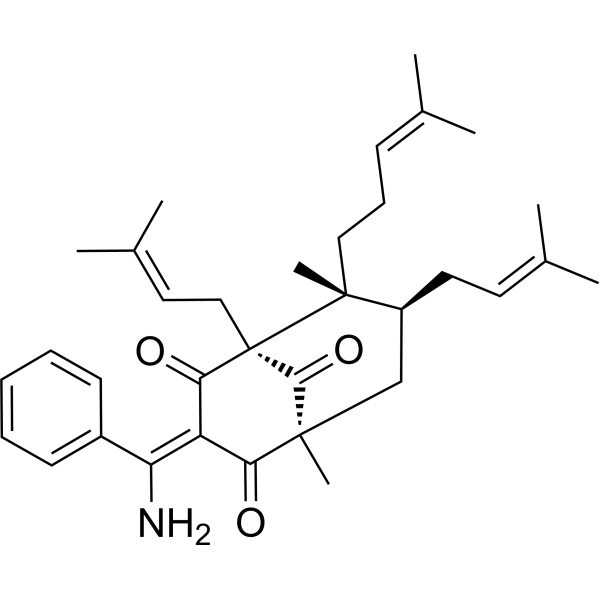
Picfeltarraenin IA (Standard)
 0 ImagesCat. No.: HY-N1474RCAS No.: 97230-47-2Picfeltarraenin IA (Standard) is the analytical standard of Picfeltarraenin IA (HY-N1474). This product is intended for research and analytical applications. Picfeltarraenin IA is an Acetylcholinesterase inhibitor. Picfeltarraenin IA can be extracted from the plant Picria fel-terrae Lour. Picfeltarraenin IA reduces the production of IL-8 and PGE2. Picfeltarraenin IA inhibits COX2 via the NF-κB pathway. Picfeltarraenin IA can be used in the research of respiratory system diseases.
-
Artemisinin B
 0 ImagesCat. No.: HY-125447CAS No.: 145941-07-7Artemisinin B is an orally active sesquiterpene natural product with anti-neuroinflammatory activity, which can be found in Artemisia annua Linn.. Artemisinin B suppresses the TLR4-MyD88-NF-κB signaling pathway by reducing the protein levels of TLR4 and MyD88, as well as inhibiting the mRNA expression of NF-κB p65. Artemisinin B reduces the expression of pro-inflammatory cytokines and attenuates synaptic loss, which can be used for the research of cognitive and behavioral impairments in Alzheimer's disease. Artemisinin B shows no cytotoxicity against human cardiomyocytes and exhibits very weak binding to hERG, suggesting its potential for cardioprotective property research.
-
Magnesium sulfate heptahydrate, for molecular biology
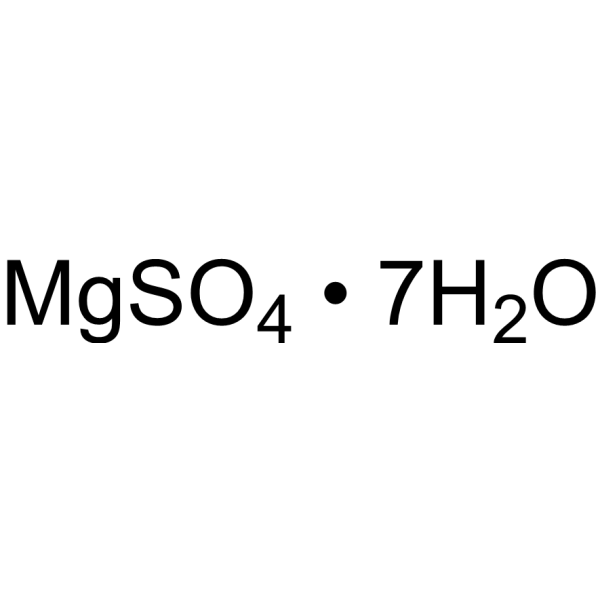 0 ImagesCat. No.: HY-W094477DCAS No.: 10034-99-8Synonyms: Epsom salts, for molecular biologyMagnesium sulfate heptahydrate (for molecular biology) is a molecular biology-grade form of Magnesium sulfate (HY-Y1267). Magnesium sulfate is a calcium antagonist and a potent L-type calcium channel inhibitor, as well as a uterine contraction inhibitor. Magnesium sulfate has anti-inflammatory, anticonvulsant, vasodilatory, and neuroprotective effects. Magnesium sulfate can be used in research on diseases such as preeclampsia/eclampsia.
-
(-)-γ-Cuparenol
 0 ImagesCat. No.: HY-N17413CAS No.: 1357469-94-3(-)-γ-Cuparenol is a sesquiterpene compound with an IC50 of 23.6 μg/mL against porcine Na+/K+-ATPase. (-)-γ-Cuparenol reduces phytohemagglutinin (PHA)-induced activation of NF-AT and NF-κB in Jurkat cells. (-)-γ-Cuparenol inhibits the growth of Gram-positive bacteria and some Gram-negative bacteria. (-)-γ-Cuparenol exhibits weak inhibitory activity against Candida albicans. (-)-γ-Cuparenol is applicable for research related to immunoregulation, cardiovascular diseases and bacterial infections.
-
18α-Glycyrrhetinic acid (Standard)
 0 Images18α-Glycyrrhetinic acid (Standard) is the analytical standard of 18α-Glycyrrhetinic acid. This product is intended for research and analytical applications. 18α-Glycyrrhetinic acid, a diet-derived compound, is an inhibitor of NF-kB and an activator of proteasome, which serves as pro-longevity and anti-aggregation factor in a multicellular organism. 18α-Glycyrrhetinic acid induces apoptosis.




