



NF-κB Inhibitor
-
NF-κB-IN-22
 0 ImagesCat. No.: HY-184964CAS No.: 3041997-77-4
NF-κB-IN-22 is an inhibitor targeting IKKβ, IκBα and NF-κB p65. NF-κB-IN-22 selectively inhibits the proliferation, migration and invasion of various cancer cells, arrests the cell cycle, and suppresses tumor growth in vivo, while exhibiting low toxicity to normal cells. NF-κB-IN-22 induces DNA damage, ROS production and apoptosis through endoplasmic reticulum stress and mitochondrial apoptotic pathways. NF-κB-IN-22 inhibits the phosphorylation of IKKβ, IκBα and NF-κB p65, blocks the NF-κB signaling pathway, and suppresses the nuclear translocation of NF-κB p65. NF-κB-IN-22 reverses the resistance to cisplatin (HY-17394). NF-κB-IN-22 can be used in research related to lung cancer, gastric cancer and liver cancer.
-
p53-MDM2-IN-3
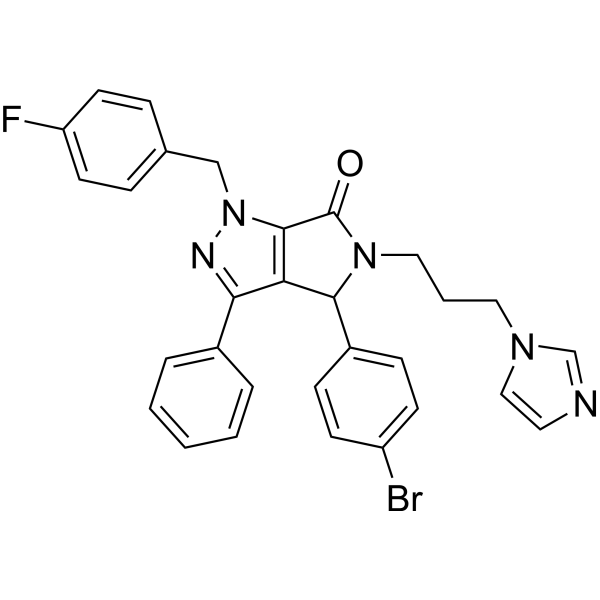 0 ImagesCat. No.: HY-121893CAS No.: 1542066-74-9
p53-MDM2-IN-3 (Compound 5s) is an orally active p53-MDM2 inhibitor with a Ki value of 0.25 μM. p53-MDM2-IN-3 exerts antitumor activity by inhibiting NF-κB pathway.
-
2,4,5-Trimethoxybenzoic acid (Standard)
 0 Images
2,4,5-Trimethoxybenzoic acid (Standard) is the analytical standard of 2,4,5-Trimethoxybenzoic acid (HY-Y0586). This product is intended for research and analytical applications. 2,4,5-Trimethoxybenzoic acid (Asaronic acid) is a compound identified in purple perilla extracts. 2,4,5-Trimethoxybenzoic acid inhibits LPS (HY-D1056)-induced inflammatory responses, inhibits the activation of NF-κB and STAT signaling pathways. 2,4,5-Trimethoxybenzoic acid inhibits M1 macrophage phenotype-mediated inflammation in diabetes.
-
(S)-(-)-Anatabine
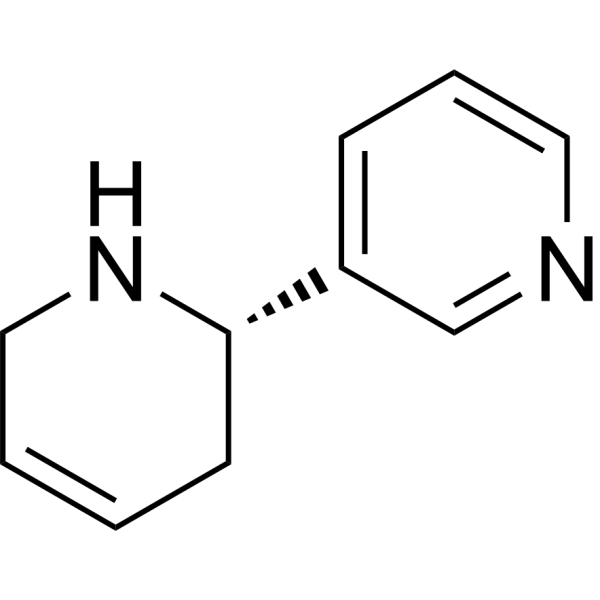 0 Images
(S)-(-)-Anatabine is an NFκB/BACE-1 inhibitor with blood-brain barrier penetration. (S)-(-)-Anatabine inhibits NFκB activation via phosphorylation of its p65 subunit. (S)-(-)-Anatabine inhibits BACE-1 transcription and reduces BACE-1 protein levels. (S)-(-)-Anatabine lowers production of Aβ1-40 and Aβ1-42 by reducing β-cleavage of amyloid precursor protein without affecting α-cleavage. (S)-(-)-Anatabine can be used for the research of Alzheimer's disease.
-
Amorfrutin A
 0 ImagesCat. No.: HY-130073CAS No.: 80489-90-3
-
9-PAHSA-d4
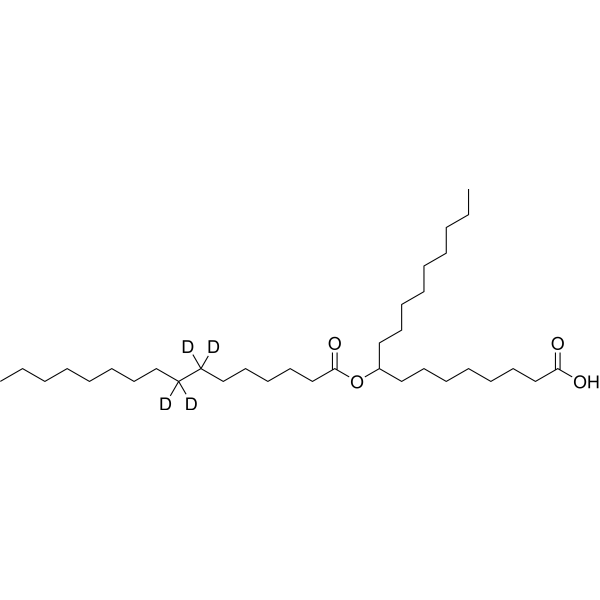 0 ImagesCat. No.: HY-120657SCAS No.: 2704278-85-1
9-PAHSA-d4 is the deuterium labeled 9-PAHSA. 9-PAHSA is an orally active endogenous GPR120 agonist (EC50=18 μM). 9-PAHSA significantly inhibits LPS-induced inflammatory responses by blocking the NF-κB pathway. 9-PAHSA induces adipocyte browning, enhances glucose uptake and reduces lipid accumulation, while improving mitochondrial function and the survival rate of steatotic hepatocytes. In terms of neuroprotection, 9-PAHSA regulates the expression of REST and BDNF in the prefrontal cortex of diabetic mice, and effectively prevents spatial working memory deficits and abnormal social behaviors. 9-PAHSA does not directly regulate insulin secretion or improve systemic insulin sensitivity, and possesses specific anti-inflammatory, metabolic regulatory and neuroprotective properties. 9-PAHSA can be used in the research of diabetes-related cognitive impairment, obesity and non-alcoholic fatty liver disease.

-
FCW34
 0 ImagesCat. No.: HY-189136CAS No.: 2086229-19-6
FCW34 is a cell-permeable, selective Sialyltransferase inhibitor. FCW34 inhibits α2,3-N-linked ST3GALIII (IC50 1.74 μM) and α2,6-N-linked ST6GALI (IC50 3.6 μM), reducing N-glycoprotein sialylation. FCW34 decreases cell migration ability by inhibiting the Talin/Integrin/FAK/Paxillin and Integrin/NFκB signaling pathways. FCW34 significantly inhibits tumor growth, reduces angiogenesis, and suppresses spontaneous lung metastasis in a nude mouse model of breast cancer. FCW34 can be used for research on breast cancer.
-
Gamma-glutamylcysteine ammonium
 0 ImagesCat. No.: HY-113402BSynonyms: γ-Glu-Cys ammonium
Gamma-glutamylcysteine ammonium (γ-Glu-Cys ammonium) is an orally active, blood-brain barrier permeable dipeptide. Gamma-glutamylcysteine ammonium activates AMPK, SIRT1, IL-4/STAT6, AC/cAMP/PI3K, IGF-1R/IRS1/PI3K, and Nrf2 signaling pathways; it inhibits NF-κB, JAK1/STAT1/3, MAPKs, cadmium-induced p38 MAPK, JNK, and PI3K/Akt signaling pathways. Gamma-glutamylcysteine ammonium regulates macrophage polarization, modulates the trafficking of CD36 and GLUT4, induces glutathione synthesis, improves metabolic dysfunction, reduces lipid deposition, ameliorates glucose homeostasis, inhibits apoptosis (Apoptosis), stabilizes mitochondria, suppresses lipid peroxidation, iron accumulation and ferroptosis (Ferroptosis), reduces ds-HMGB1 levels, reverses mechanical hyperalgesia, and alleviates hepatic lipid droplet formation. Gamma-glutamylcysteine ammonium is applicable to research related to inflammatory bowel disease, type 2 diabetes, cadmium-induced neurotoxicity, Alzheimer's disease, cerebral ischemia/reperfusion injury, neuropathy, and alcoholic liver disease.
-
Micheliolide (Standard)
 0 Images
Micheliolide is a sesquiterpene lactone with anti-cancer and anti-inflammatory effects, which is derived from Michelia compressa and Michelia champaca. Micheliolide can attenuate high glucose-stimulated NF-κB activation, IκBα degradation, and the expression of MCP-1, TGF-β1, and FN in mouse mesangial cells. Micheliolide inhibits LPS (HY-D1056)-induced activation of NF-κB and PI3K/Akt/p70S6K pathways to play an anti-inflammatory role. Micheliolide inhibits dextran sodium sulphate (DSS) (HY-116282)-induced inflammatory intestinal disease, colitis-associated cancer and rheumatic arthritis.
-
DHMEQ racemate
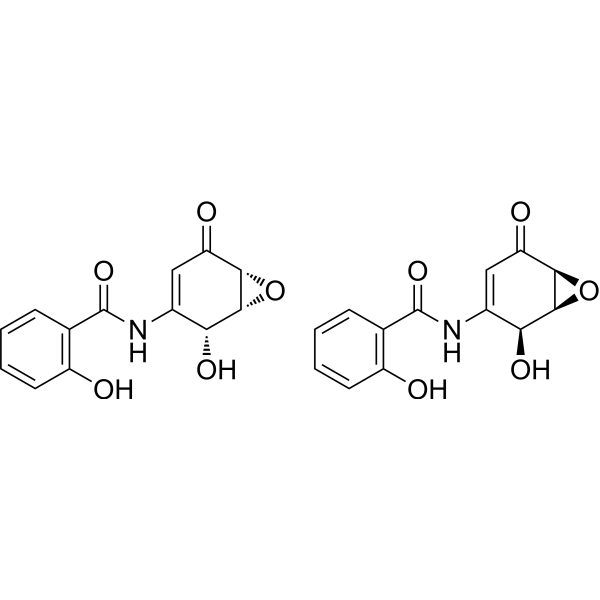 0 ImagesCat. No.: HY-14645BCAS No.: 287194-38-1Synonyms: rel-DHMEQ
DHMEQ racemate is a NF-κB inhibitor. DHMEQ racemate is less active than (-)-DHMEQ.
-
Hypaconitine (Standard)
 0 Images
Hypaconitine (Standard) is the analytical standard of Hypaconitine. This product is intended for research and analytical applications. Hypaconitine inhibits the KCNH2 current with an IC50 of 8.1 nM, and exhibits cardiotoxicity. Hypaconitine inhibits TGF-β1-induced epithelial-mesenchymal transition (EMT) in A549 cell through the inhibition of NF-κB nuclear translocation. Hypaconitine acts as the neuromuscular blocker. Hypaconitine is orally active.
-
Armepavine (Standard)
 0 Images
Armepavine (Standard) is the analytical standard of Armepavine. This product is intended for research and analytical applications. Armepavine, an active compound from Nelumbo nucifera, exerts not only anti-inflammatory effects on human peripheral blood mononuclear cells, but also immunosuppressive effects on T lymphocytes and on lupus nephritic mice. Armepavine inhibits TNF-α-induced MAPK and NF-κB signaling cascades.
-
Conessine dihydrobromide
 0 ImagesCat. No.: HY-107566ACAS No.: 5913-82-6
Conessine dihydrobromide is an orally active and BBB-penetrable selective histamine H3 receptor antagonist. The pKi values of Conessine dihydrobromide for rat and human H3 receptors are 7.61 and 8.27, respectively. Conessine dihydrobromide is an inhibitor of the multidrug efflux pump system in Pseudomonas aeruginosa and can enhance the activity of antibiotics. Conessine dihydrobromide has antimalarial activity. Conessine dihydrobromide can also be used in the research of muscle atrophy.
-
Rubusoside (Standard)
 0 Images
Rubusoside (Standard) is the analytical standard of Rubusoside. This product is intended for research and analytical applications. Rubusoside is a diterpene glycoside that is also a sweetener and solubilizer with anti-angiogenic, anti-cancer, anti-obesity, anti-allergic and anti-asthmatic effects. Rubusoside attenuates airway hyperresponsiveness and reduces inflammatory cells in bronchoalveolar lavage fluid (BALF), reducing OVA (HY-W250978)-induced airway inflammation. Rubusoside also prevents palmitic acid-induced lipotoxicity in pancreatic INS-1 cells, reduces the transport of human glucose transporters GLUT-1 and fructose GLUT-5, and inhibits NF-κB and α-amylase (α-amylase).
-
APX2014
 0 ImagesCat. No.: HY-120153CAS No.: 1415030-17-9
APX2014 is a Ref-1/APE1 inhibitor that inhibits Ref-1-induced transcription factor-DNA binding, thereby reducing the activation level of NF-κB and the expression of downstream pro-angiogenic targets. APX2014 blocks endothelial cell proliferation, lumen formation, migration and choroidal sprouting to exert anti-angiogenic activity. APX2014 activates the ISR pathway, promotes the death of pancreatic cancer cells and cancer-associated fibroblasts, and induces apoptosis in the absence of PRDX1. APX2014 inhibits the growth of pancreatic cancer spheroids, reduces the volume/weight of xenograft tumors, and decreases Ki-67 levels by targeting PRDX1. APX2014 can be used in research related to macular degeneration, retinopathy and pancreatic ductal adenocarcinoma.
-
Laquinimod (Standard)
 0 ImagesSynonyms: ABR-215062 (Standard)
Laquinimod (Standard) is the analytical standard of Laquinimod. This product is intended for research and analytical applications. Laquinimod (ABR-215062), an orally available carboxamide derivative, is a potent immunomodulator which prevents neurodegeneration and inflammation in the central nervous system. Laquinimod reduces astrocytic NF-κB activation to protect from Cuprizone-induced demyelination. Laquinimod has the potential for relapsing remitting (RR) and chronic progressive (CP) forms of multiple sclerosis (MS; RRMS or CPMS) as well as neurodegenerative diseases research.
-
GS143 (Standard)
 0 ImagesCat. No.: HY-110261RCAS No.: 916232-21-8
GS143 (Standard) is the analytical standard of GS143 (HY-110261). This product is intended for research and analytical applications. GS143 is a selec-tive IκBα ubiquitination inhibitor with an IC50 of 5.2 μM for SCFβTrCP1-mediated IκBα ubiquitylation. GS143 sup-presses NF-κB acti-va-tion and tran-scrip-tion of tar-get genes and does not inhibit proteasome activity. GS143 has anti-asthma effect.
-
7-Acetoxycoumarin
 0 ImagesCat. No.: HY-N20744CAS No.: 10387-49-2Synonyms: Acetylumbelliferone
7-Acetoxycoumarin (Acetylumbelliferone) is an anti-inflammatory inhibitor with antibacterial and amoebicidal activities. 7-Acetoxycoumarin reduces the phosphorylation levels of ERK, JNK, NF-κB and p38 MAPK. 7-Acetoxycoumarin downregulates the protein and mRNA expression levels of iNOS and COX-2. 7-Acetoxycoumarin inhibits the production of IL-1β, IL-6, TNF-α, NO and PG2. 7-Acetoxycoumarin reduces the degradation of IκBα. 7-Acetoxycoumarin can be used in studies related to amoebiasis and Bacillus lentus infection.
-
Sciadopitysin (Standard)
 0 Images
Sciadopitysin (Standard) is the analytical standard of Sciadopitysin. This product is intended for research and analytical applications. Sciadopitysin is a type of biflavonoids in leaves from ginkgo biloba. Sciadopitysi inhibits RANKL-induced osteoclastogenesis and bone loss by inhibiting NF-κB activation and reducing the expression of c-Fos and NFATc1.



