



PARP
poly ADP ribose polymerase
PARP is a family of proteins involved in a number of cellular processes involving mainly DNA repair and programmed cell death. The PARP family comprises 17 members. They have all very different structures and functions in the cell. PARP1, PARP2, VPARP (PARP4), Tankyrase-1 and -2 (PARP-5a or TNKS, and PARP-5b or TNKS2) have a confirmed PARP activity. Others include PARP3, PARP6, TIPARP (or PARP7), PARP8, PARP9, PARP10, PARP11, PARP12, PARP14, PARP15, and PARP16. PARP is found in the cell’s nucleus. The main role is to detect and signal single-strand DNA breaks (SSB) to the enzymatic machinery involved in the SSB repair.
PARP Isoform Specific Products
-
PARP
(303)
View all products
-
PARP1
(209)
View all products
-
PARP2
(83)
View all products
-
PARP3
(23)
View all products
-
PARP4
(11)
View all products
-
TNKS1/
PARP5A (41)View all products
-
TNKS2/
PARP5B (38)View all products
-
PARP7
(25)
View all products
-
PARP10
(20)
View all products
-
PARP14
(17)
View all products
-
PARP15
(14)
View all products
-
PARP12
(4)
View all products
-
PARP16
(3)
View all products
All Product Categories
-
PARP Inhibitors
(459)
View all products
-
PARP Agonists
(4)
View all products
-
PARP Activators
(111)
View all products
-
PARP Modulators
(12)
View all products
-
PARP Inducers
(20)
View all products
-
PARP Degraders
(24)
View all products
-
PARP Substrate
(1)
View all products
-
PARP Ligands
(4)
View all products
-
PARP Related Products (693)
Related Products (693)

-
Antibodies (11)
-
PARP Isoform Comparison
-
Pan-PDK degrader-1
 0 ImagesCat. No.: HY-184943Pan-PDK degrader-1 is a pan-PDK class PROTAC degrader that degrades PDK2, PDK3 and PDK4 with DC50 values of 9.2 nM, 9.9 nM and 11.5 nM, respectively. Pan-PDK degrader-1 recruits the mitochondrial protease HsClpP and induces selective pan-PDK degradation via HsClpP-mediated proteolysis. Pan-PDK degrader-1 reprograms mitochondrial metabolism toward oxidative phosphorylation, promoting ROS accumulation, mitochondrial permeability transition pore opening, endogenous mitochondrial apoptosis, calreticulin exposure and HMGB1 release. Pan-PDK degrader-1 upregulates cleaved Caspase-9, Caspase-3 and PARP. Pan-PDK degrader-1 inhibits primary and distal tumor growth via selective degradation of PDK in tumor tissues. Pan-PDK degrader-1 can be used for the research of breast cancer.
-
Apoptosis inducer 45
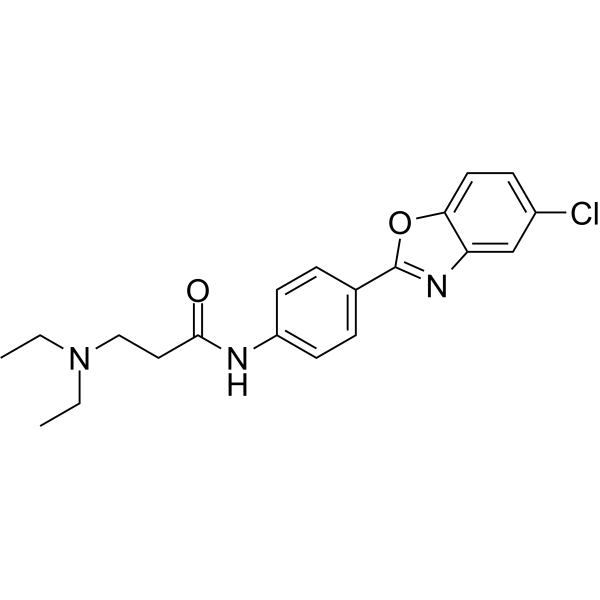
 0 ImagesCat. No.: HY-178099Apoptosis inducer 45 is an apoptosis inducer. Apoptosis inducer 45 is cytotoxically active against the MCF-7 cell line. Apoptosis inducer 45 elicits MCF-7 cell apoptosis via the mitochondrial pathway (increases the Bax/Bcl-2 ratio) by activating cleavage of caspase-9, thereby inducing the fragmentation of DNA repair protein PARP. Apoptosis inducer 45 also can induce caspase-8 cleavage, subsequently initiating cleavage of caspase-3 and its downstream protein PARP to culminate in the extrinsic apoptosis. Apoptosis inducer 45 can be used in the research of breast cancer.
-
TIPARP-IN-1
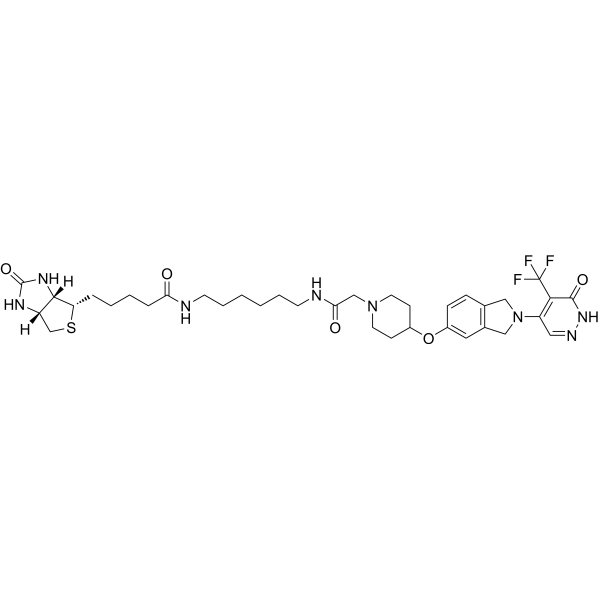
 0 ImagesCat. No.: HY-181027CAS No.: 3106183-96-1TIPARP-IN-1 (Compound 15) is a selective PARP7 (TIPARP) (2,3,7,8-Tetrachlorodiben-zo-p-dioxin(TCDD)-inducible PARP) inhibitor with an IC50 of 2.15 nM. TIPARP-IN-1 can restore IFN signaling pathway in tumors by inhibiting TIPARP. TIPARP-IN-1 selectively activates the anti-tumor immune response in the tumor microenvironment and avoids the production of systemic cytokines. TIPARP-IN-1 can be used for research of head and neck squamous cell carcinoma.
-
PARP7/HDACs-IN-1
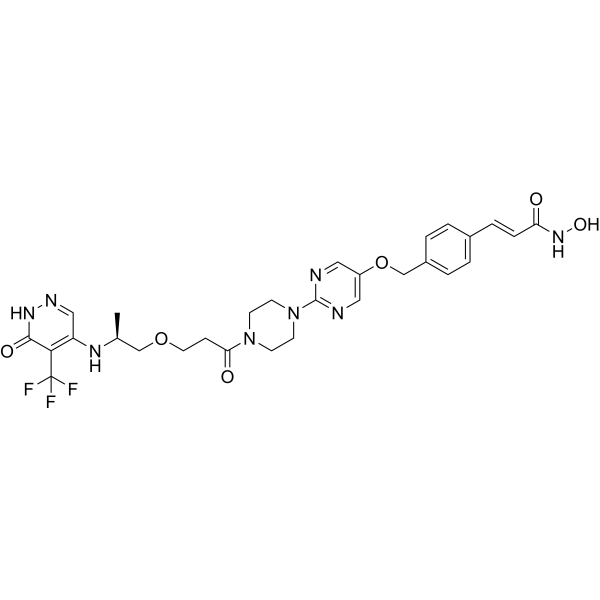 0 ImagesCat. No.: HY-162349CAS No.: 3030144-11-4PARP7/HDACs-IN-1 (compound 9l) is a dual-target inhibitor targeting PARP7/HDAC with anti-tumor activity. PARP7/HDACs-IN-1 inhibits different subtypes of PARPs and HDACs with IC50s of 83.3 nM (PARP1), 3.1 nM (PARP7), 35 nM (HDAC1), 30.3 nM (HDAC2), 35.4 nM (HDAC3), and 6.4 nM respectively. (HDAC6). br/.

-
PARP1-IN-37
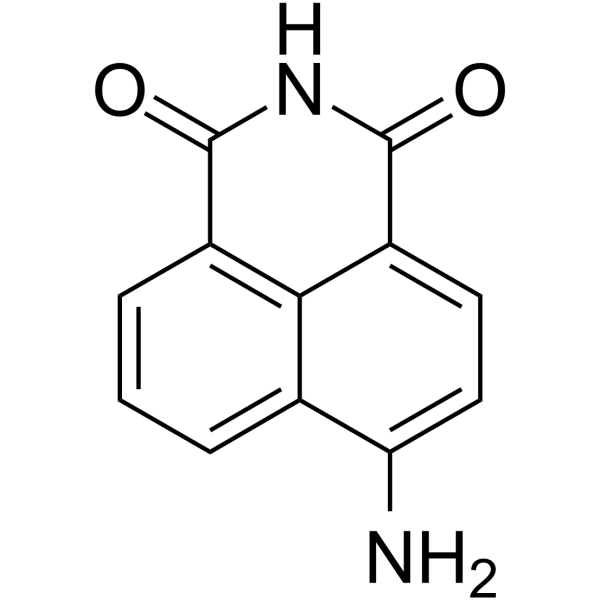
 0 ImagesCat. No.: HY-171543CAS No.: 952474-39-4PARP1-IN-37 (Compound 8) is an orally active and selective poly(ADP-ribose) polymerase 1 and 2 (PARP1/2) inhibitor with an IC50 value of 24 nM for PARP1. PARP1-IN-37 inhibits PARP activity in cells with an EC50 value of 3.7 μM. PARP1-IN-37 is promising for research of BRCA-mutated tumors, such as breast and ovarian cancers.
-
Telapristone acetate
 0 ImagesCat. No.: HY-16483CAS No.: 198414-31-2Synonyms: CDB-4124Telapristone acetate (CDB-4124) is a potent progesterone receptor (PR) modulator. Telapristone acetate inhibits the proliferation of ovarian cancer cells by inducing cell cycle arrest and apoptosis. Telapristone effectively inhibits the occurrence and development of spontaneous and chemically induced mammary tumors in rats. Telapristone acetate can be used for breast and ovarian cancer research.
-
Cathepsin-IN-5
 0 ImagesCat. No.: HY-182269CAS No.: 2475078-38-5Cathepsin-IN-5 is a cathepsin inhibitor with IC50 values of 6.2 μM and 81 nM for cathepsin L and cathepsin S. Cathepsin-IN-5 inhibits cancer cells proliferation, induces apoptosis, reduces growth of hepatocellular tumors in mouse models, and modulates expression of genes linked to cell death, cell proliferation, and cellular processes. Cathepsin-IN-5 can be used for the research of hepatocellular carcinoma.
-
Tankyrase-IN-3
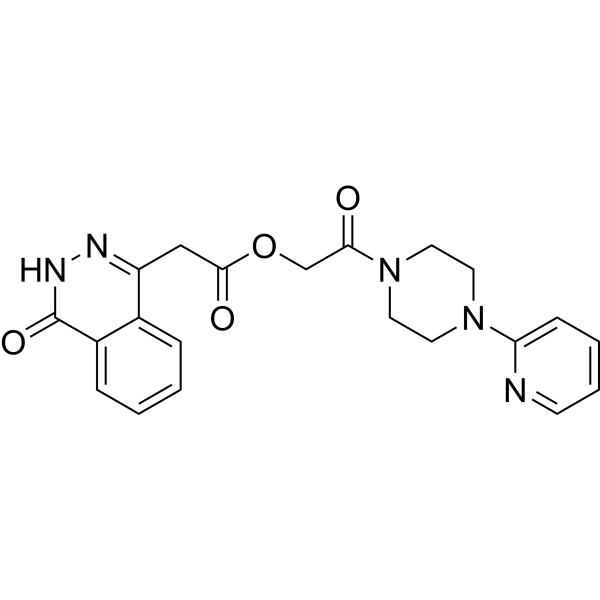 0 ImagesCat. No.: HY-152197CAS No.: 938893-79-9Tankyrase-IN-3 is a tankyrase 1 (TNKS1) inhibitor with an IC50 value of 22 nM. Tankyrase-IN-3 can be used for the research of cancer.
-
NDs-IN-1
 0 ImagesCat. No.: HY-158334CAS No.: 3033806-97-9(Neurodegenerative diseases) NDs-IN-1 (Compound 3g) inhibits the activities of key enzymes such as hBACE-1, hAChE and hMAO-B. NDs-IN-1 is a novel non-covalent multi-target inhibitor. NDs-IN-1 is mainly used in the study of neurodegenerative diseases.
-
PARP1-IN-57
 0 ImagesCat. No.: HY-184597CAS No.: 3081722-98-4

-
PARP1 degrader 1
 0 ImagesCat. No.: HY-180276PARP1 degrader 1 (Compound 2c) is a comparatively potent PARP1 HyT degrader (DC50: 618 nM for intracellular PARP-1). PARP1 degrader 1 is also a HyT-Olaparib (HY-10162) conjugate. PARP1 degrader 1 induces UPR/autophagy, thus facilitating the degradation of PARP-1. PARP1 Degrader 1 can be used in the research of cancer.
-
KU-0058948 hydrochloride
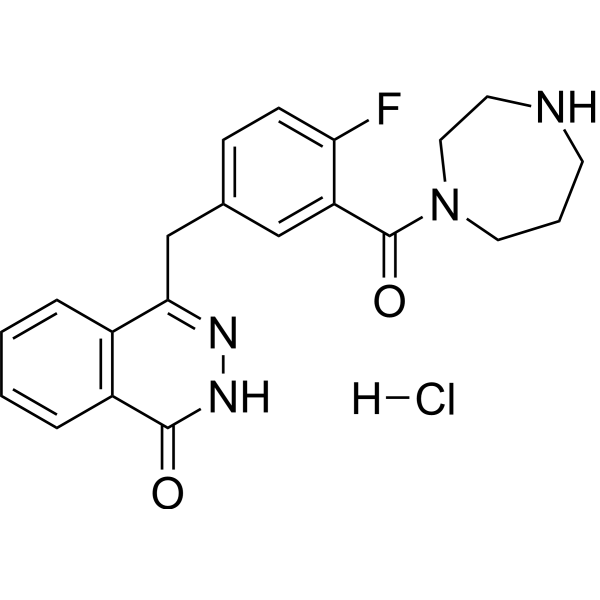 0 ImagesCat. No.: HY-136489ACAS No.: 2108829-86-1
-
IHMT-BMX-068
 0 ImagesCat. No.: HY-184005IHMT-BMX-068 is a BMX PROTAC degrader with a DC50 of 0.007 μM. IHMT-BMX-068 promotes ubiquitination and degradation of BMX. IHMT-BMX-068 increases the levels of cleaved PARP and cleaved Caspase-3, and induces Apoptosis. IHMT-BMX-068 exerts anti-cancer effects against prostate cancer. IHMT-BMX-068 can be used for the research of prostate cancer.
-
PARP1-IN-18
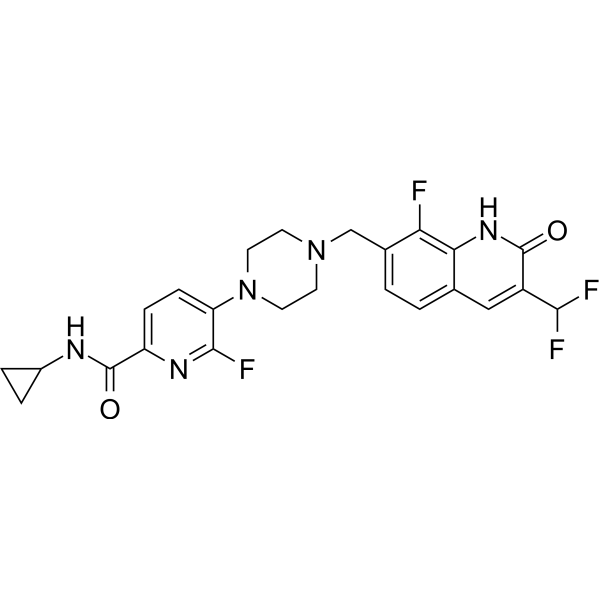 0 ImagesCat. No.: HY-162114CAS No.: 2958609-64-6PARP1-IN-18 (compound 25) is a potent PARP1 inhibitor with an IC50 value of 2.7 nM. PARP1-IN-18 has anticancer effects.
-
NSC-368262
 0 ImagesCat. No.: HY-120031CAS No.: 299421-08-2NSC-368262 is a STAT3 inhibitor. NSC-368262 selectively alkylates and covalently modifies STAT3 Cys468 at the DNA-binding interface of STAT3, blocks the DNA-binding activity of STAT3, and inhibits the phosphorylation of STAT3. NSC-368262 blocks the accumulation of activated STAT3 in the nucleus of cancer cells, induces PARP cleavage and apoptosis in cells, and inhibits tumor growth in mouse models. NSC-368262 can be used in research related to breast cancer and cervical cancer.




