PI3K
Phosphoinositide 3-kinase
PI3K (Phosphoinositide 3-kinase), via phosphorylation of the inositol lipid phosphatidylinositol 4,5-bisphosphate (PI(4,5)P2), forms the second messenger molecule phosphatidylinositol (3,4,5)-trisphosphate (PI(3,4,5)P3) which recruits and activates pleckstrin homology domain containing proteins, leading to downstream signalling events crucial for proliferation, survival and migration. Class I PI3K enzymes consist of four distinct catalytic isoforms, PI3Kα, PI3Kβ, PI3Kδ and PI3Kγ.
There are three major classes of PI3K enzymes, being class IA widely associated to cancer. Class IA PI3K are heterodimeric lipid kinases composed of a catalytic subunit (p110α, p110β, or p110δ; encoded by PIK3CA, PIK3CB, and PIK3CD genes, respectively) and a regulatory subunit (p85).
The PI3K pathway plays an important role in many biological processes, including cell cycle progression, cell growth, survival, actin rearrangement and migration, and intracellular vesicular transport.
PI3K Isoform Specific Products
-
PI3Kα
(240)
View all products
-
PI3Kβ
(165)
View all products
-
PI3Kγ
(185)
View all products
-
PI3Kδ
(205)
View all products
-
PI3KC2α
(8)
View all products
-
PI3KC2β
(12)
View all products
-
PI3KC2γ
(4)
View all products
-
Vps34
(25)
View all products
-
PI3K
(671)
View all products
-
PI3KC3
(1)
View all products
-
p120γ
(1)
View all products
All Product Categories
-
PI3K Inhibitors
(881)
View all products
-
PI3K Agonists
(9)
View all products
-
PI3K Antagonist
(1)
View all products
-
PI3K Activators
(133)
View all products
-
PI3K Modulators
(23)
View all products
-
PI3K Inducers
(3)
View all products
-
PI3K Degraders
(7)
View all products
-
PI3K Controls
(4)
View all products
-
PI3K Substrate
(1)
View all products
-
PI3K Ligands
(9)
View all products
-
PI3K Related Products (1133)
Related Products (1133)

-
Antibodies (16)
-
PI3K Signaling Pathway
-
PI3K Isoform Comparison

-
Liensinine perchlorate
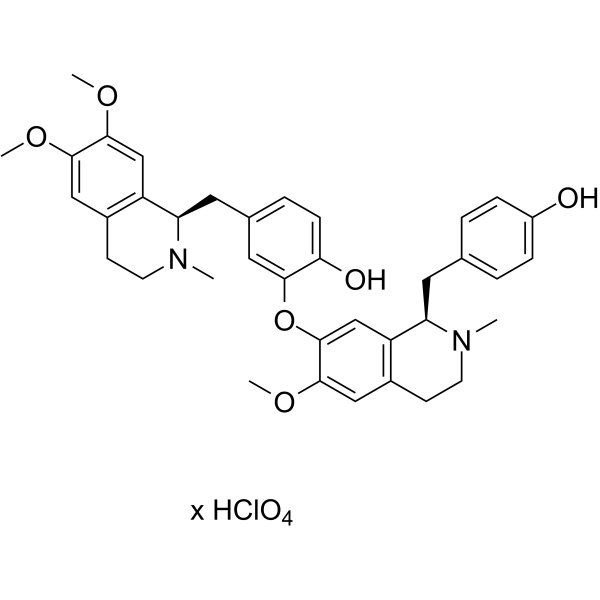 0 ImagesLiensinine perchlorate is a bisbenzylisoquinoline alkaloid. By inhibiting the PI3K/AKT and JNK/p38-MAPK signaling pathways, Liensinine perchlorate suppresses autophagy and apoptosis, clears Aβ, and exerts anti-inflammatory, antioxidant and neuroprotective effects. Liensinine perchlorate activates AMPK and inhibits the expression of HIF-1α and VEGF, thereby suppressing angiogenesis. Liensinine perchlorate exerts anti-tumor effects through ROS-mediated inhibition of the JAK2/STAT3 signaling pathway. Liensinine perchlorate can be used for the research of diseases such as Alzheimer's disease, hepatocellular carcinoma, osteosarcoma, sepsis-induced organ injury and stroke.
-
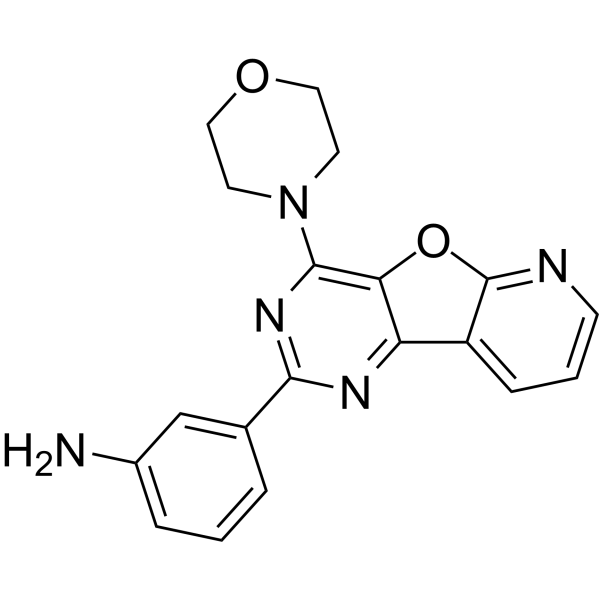
Sinigrin hydrate
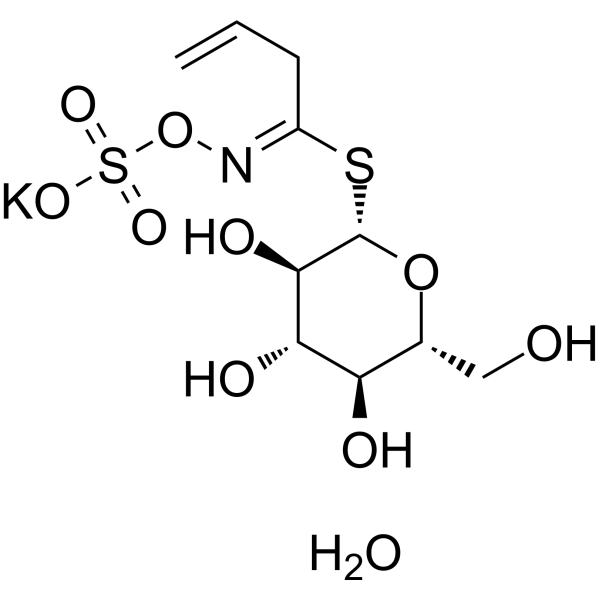 0 ImagesSynonyms: Allyl-glucosinolate hydrate; 2-Propenyl-glucosinolate hydrateSinigrin (Allyl-glucosinolate) hydrate is an orally active glucosinolate found in cruciferous plants. Sinigrin hydrate possesses multiple activities such as anti-cancer, antibacterial, antifungal, anti-inflammatory, antioxidant, and inhibition of fat synthesis. Sinigrin hydrate can be used in the research of tumors, inflammatory, and metabolic diseases.
-
Idelalisib-d5
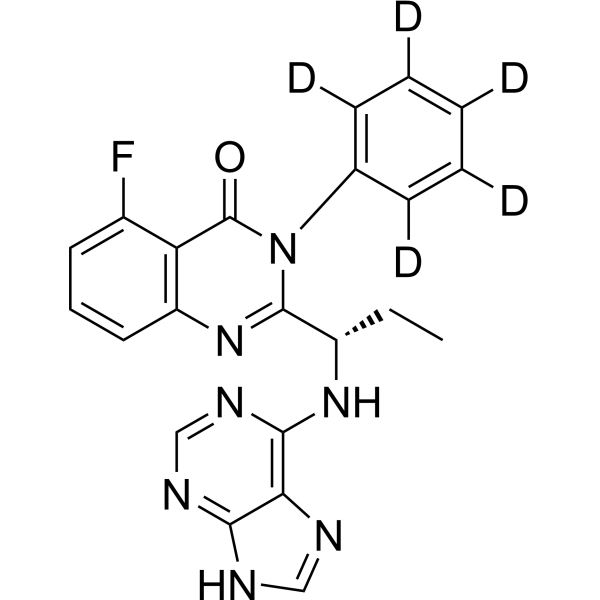 0 ImagesSynonyms: CAL-101 d5; GS-1101 d5Idelalisib-d5 is a deuterium labeled Idelalisib. Idelalisib is a highly selective and orally bioavailable p110δ inhibitor.

-
Taurolithocholic acid-d4
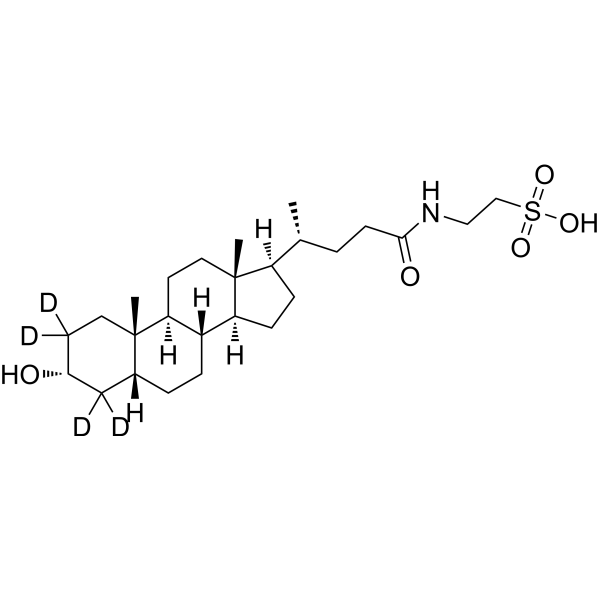 0 ImagesTaurolithocholic acid-d4 is deuterium labeled Taurolithocholic acid. Taurolithocholic acid is an orally active bile acid and antiviral agent. Taurolithocholic acid upregulates FADS2 by activating the TGR5-PI3K/AKT-SREBP2 signaling axis, inhibits SFTSV-induced ferroptosis, viral replication and viral entry of HBV/HDV, while reducing the release of IL-1β, lipid ROS and LDH. While exerting antiviral protective effects, Taurolithocholic acid also stimulates the recycling of hepatocellular membrane transporters, impairs canalicular bile acid secretion function, and induces hepatocyte cholestasis, apoptosis and acute hepatocellular injury. Taurolithocholic acid serves as an experimental model compound for hepatocellular cholestasis. At concentrations ≤200 μM, Taurolithocholic acid shows no cytotoxicity and does not activate the interferon pathway. Taurolithocholic acid not only protects mice from lethal SFTSV infection but also is suitable for studies related to severe fever with thrombocytopenia syndrome and cholestasis.
-
α-Linolenic acid-d14
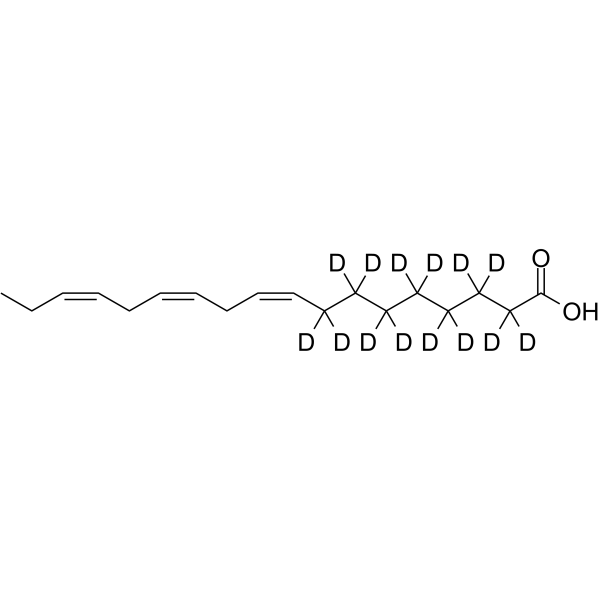 0 Imagesα-Linolenic acid-d14 is the deuterium labeled α-Linolenic acid. α-Linolenic acid, isolated from seed oils, is an essential fatty acid that cannot be synthesized by humans. α-Linolenic acid can affect the process of thrombotic through the modulation of PI3K/Akt signaling. α-Linolenic acid possess the anti-arrhythmic properties and is related to cardiovascular disease and cancer.
-
IMC-EB10
 0 ImagesCat. No.: HY-P991641Purity: 98%Synonyms: LY3012218IMC-EB10 (LY3012218) is an anti-FLT3 monoclonal antibody. IMC-EB10 binds to FLT3 with high affinity (Kd = 158 pM) and blocks the binding of FLT3 ligand to FLT3 (IC50 ≈ 10 nM), thereby inhibiting MAPK, STAT5, and PI3K/Akt signaling in leukemia cells. IMC-EB10 can enhance the anti-leukemic effect of Methotrexate (HY-14519) and inhibit leukemias expressing wild-type or ITD-mutated FLT3 receptors. IMC-EB10 prolongs the survival of acute lymphoblastic leukemia (ALL) cells and primary leukemia samples and reduces engraftment in non-obese diabetic/severe combined immunodeficiency patients. IMC-EB10 is indicated for leukemia research.
-
Quercetin-d3 hydrate
 0 ImagesCat. No.: HY-18085ASQuercetin-d3 hydrate is a deuterium labeled Quercetin hydrate (HY-18085A), a flavonoid which can stimulate recombinant SIRT1 and also a PI3K inhibitor with IC50s of 2.4 μM, 3.0 μM and 5.4 μM for PI3K γ, PI3K δ and PI3K β, respectively.
-
KHK-2898
 0 ImagesCat. No.: HY-P990610KHK-2898 is a monoclonal antibody targeting CD98, which binds to the extracellular domain of CD98 on the tumor cell membrane in a non-covalent antigen-specific mode. KHK-2898 can disrupt the heterodimeric complex formed by CD98 with LAT1 and xCT light chains, reduce the amino acid uptake capacity of tumor cells, block the PI3K/AKT/mTOR proliferative signaling cascade, and mediate antibody-dependent cytotoxicity. KHK-2898 can be used for cancer-related research. The isotype control of KHK-2898 can be found in Human IgG1 kappa, Isotype Control (HY-P99001).
-
LY294002 (Standard)
 0 ImagesLY294002 (Standard) is the analytical standard of LY294002. This product is intended for research and analytical applications. LY294002 is a broad-spectrum inhibitor of PI3K with IC50s of 0.5, 0.57, and 0.97 μM for PI3Kα, PI3Kδ and PI3Kβ, respectively. LY294002 also inhibits CK2 with an IC50 of 98 nM. LY294002 is a competitive DNA-PK inhibitor that binds reversibly to the kinase domain of DNA-PK with an IC50 of 1.4?μM. LY294002 is an apoptosis activator.
-
Copanlisib (Standard)
 0 ImagesSynonyms: BAY 80-6946 (Standard)Copanlisib (Standard) is the analytical standard of Copanlisib. This product is intended for research and analytical applications. Copanlisib (BAY 80-6946) is a potent, selective and ATP-competitive pan-class I PI3K inhibitor, with IC50s of 0.5 nM, 0.7 nM, 3.7 nM and 6.4 nM for PI3Kα, PI3Kδ, PI3Kβ and PI3Kγ, respectively. Copanlisib has more than 2,000-fold selectivity against other lipid and protein kinases, except for mTOR. Copanlisib has superior antitumor activity.
-
Duvelisib (Standard)
 0 ImagesSynonyms: IPI-145 (Standard); INK1197 (Standard)Duvelisib (Standard) is the analytical standard of Duvelisib. This product is intended for research and analytical applications. Duvelisib (IPI-145) is a selectivite p100δ inhibitor with IC50 of 2.5 nM, 27.4 nM, 85 nM and 1602 nM for p110δ, P110γ, p110β and p110α, respectively.
-
Dactolisib Tosylate (Standard)
 0 ImagesSynonyms: BEZ235 Tosylate (Standard); NVP-BEZ 235 Tosylate (Standard)Dactolisib (Tosylate) (Standard) is the analytical standard of Dactolisib (Tosylate). This product is intended for research and analytical applications. Dactolisib Tosylate (BEZ235 Tosylate) is a dual PI3K and mTOR kinase inhibitor with IC50 values of 4, 75, 7, 5 nM for PI3Kα, β, γ, δ, respectively. Dactolisib Tosylate (BEZ235 Tosylate) inhibits mTORC1 and mTORC2.