



Plasmodium
Plasmodium parasites invade erythrocytes to access nutrients and occupy a protected intracellular niche[1]. Mechanistically, P. falciparum merozoite invasion depends on ligand-receptor interactions and regulated microneme and rhoptry secretion[2]. The apicoplast supports blood-stage growth mainly through isoprenoid precursor biosynthesis, shown by chemical rescue of parasites lacking this organelle[3]. Apicoplast-derived isoprenoids also support GPI-anchor biosynthesis, egress, and invasion in P. falciparum[4]. Compared with related apicomplexan parasites, malaria parasites use conserved host-cell entry logic but species-specific ligand-receptor interactions[1]. For experimental applications, apicoplast translation inhibitors and aminoacyl-tRNA synthetase inhibitors provide tools to test delayed death, organelle maintenance, and parasite viability[5][6].
References:
- [1]. Cowman AF, et al. Invasion of red blood cells by malaria parasites. Cell. 2006 Feb 24;124(4):755-66. [Content Brief]
- [2]. Singh S, et al. Distinct external signals trigger sequential release of apical organelles during erythrocyte invasion by malaria parasites. PLoS Pathog. 2010 Feb 5;6(2):e1000746. [Content Brief]
- [3]. Yeh E, et al. Chemical rescue of malaria parasites lacking an apicoplast defines organelle function in blood-stage Plasmodium falciparum. PLoS Biol. 2011 Aug;9(8):e1001138. [Content Brief]
- [4]. Bulloch MS, et al. Apicoplast-derived isoprenoids are essential for biosynthesis of GPI protein anchors, and consequently for egress and invasion in Plasmodium falciparum. PLoS Pathog. 2024 Sep 6;20(9):e1012484. [Content Brief]
- [5]. Pasaje CF, et al. Selective inhibition of apicoplast tryptophanyl-tRNA synthetase causes delayed death in Plasmodium falciparum. Sci Rep. 2016 Jun 9;6:27531. [Content Brief]
- [6]. Herman JD, et al. The cytoplasmic prolyl-tRNA synthetase of the malaria parasite is a dual-stage target of febrifugine and its analogs. Sci Transl Med. 2015 May 20;7(288):288ra77. [Content Brief]
-
Plasmodium Related Products (265)
Related Products (265)

-
Antimalarial agent 9
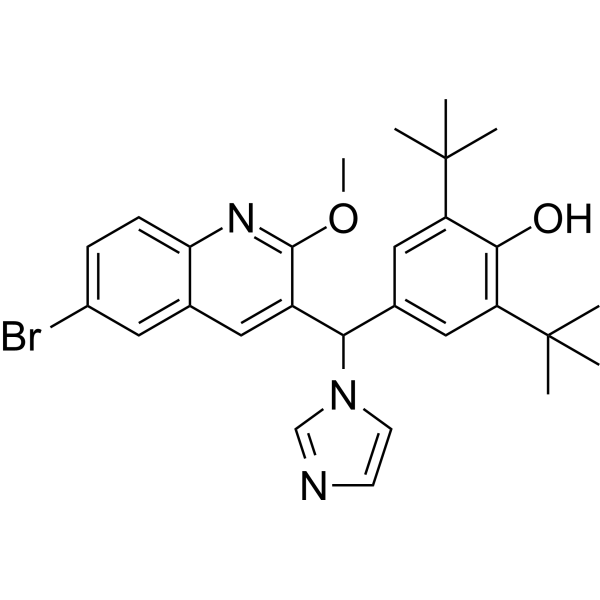 0 ImagesCat. No.: HY-115905CAS No.: 2914224-54-5Antimalarial agent 9 (Compound 11) is a potent antimalarial agent. Antimalarial agent 9 is a quinoline-imidazole derivative compound. Antimalarial agent 9 exhibits significant antimalarial efficacy in-vitro against both CQ-sensitive (IC50-0.14 μM) and MDR strain (IC50-0.41 μM) with minimal cytotoxicity and high selectivity.
-
Antimalarial agent 2
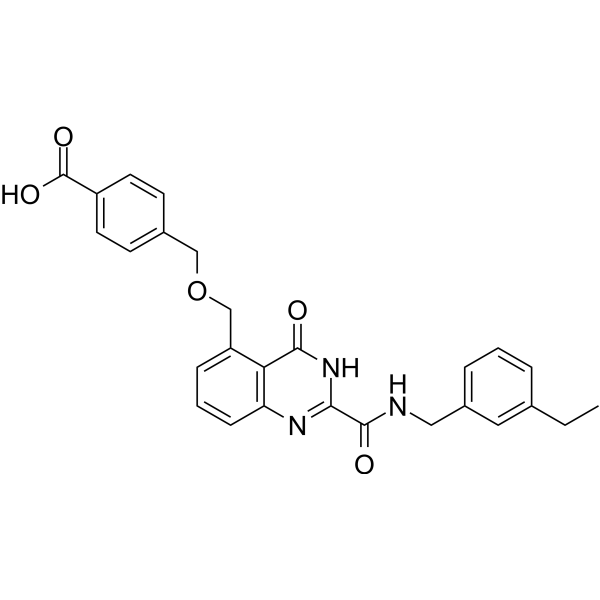 0 ImagesCat. No.: HY-115721CAS No.: 2829950-49-2Antimalarial agent 2 is a novel orally efficacious antimalarials that suggests a fast in vitro killing profile.
-
Miaosporone A
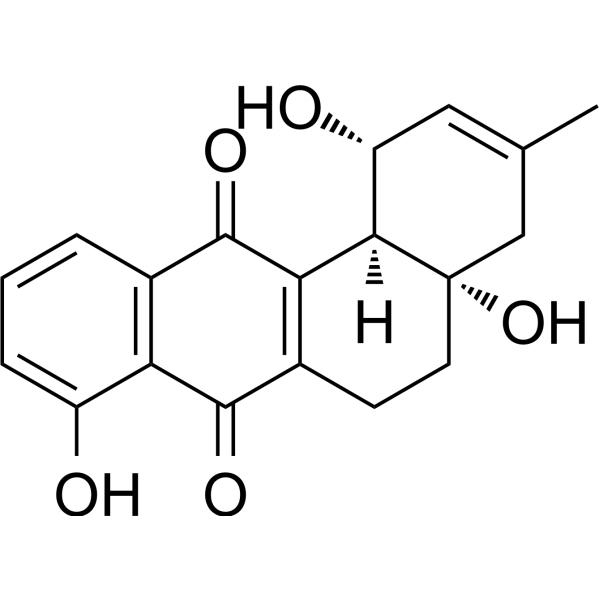 0 ImagesCat. No.: HY-145379CAS No.: 3039491-16-9Miaosporone A, an angucyclic quinone, exhibits antimalarial activity against Plasmodium falciparum K1 and antibacterial activity against Mycobacterium tuberculosis with respective IC50 values of 2.5 and 2.4 μM and displays cytotoxic activities against both cancerous (MCF-7 and NCI-H187) and nonmalignant (Vero) cells.
-
Haemanthamine hydrochloride
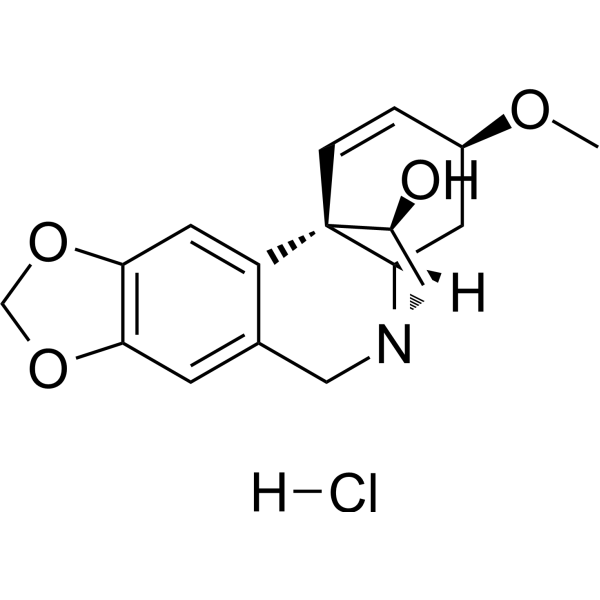 0 ImagesCat. No.: HY-114489BHaemanthamine hydrochloride is a crinine-type alkaloid isolated from the Amaryllidaceae plants with potent anticancer activity. Haemanthamine hydrochloride targets ribosomal that inhibits protein biosynthesis during the elongation stage of translation. Haemanthamine hydrochloride has pro-apoptotic, antioxidant, antiviral, antimalarial and anticonvulsant activities.
-
Antimalarial agent 17
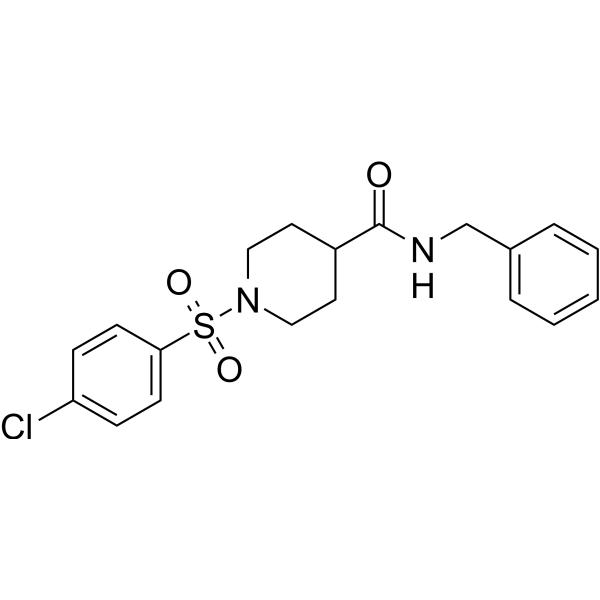 0 ImagesAntimalarial agent 17 is an antimalarial agent, also acts as a herbicide. Antimalarial agent 17 is photosystem II inhibitor, shows post-emergence herbicidal activity equal to commercial herbicides.
-
Deoxycaesaldekarin C
 0 ImagesDeoxycaesaldekarin C (Methyl vouacapenate) is a naturally occurring, orally active cassane furanoditerpene with antibacterial, antioxidant, antiplasmodial, and analgesic effects. Deoxycaesaldekarin C inhibits bacterial growth and lipid peroxidation, and scavenges free radicals. Deoxycaesaldekarin C exhibits weak antiplasmodial activity and shows analgesic activity in mouse in vivo models. Deoxycaesaldekarin C can be used in research related to pain, bacterial infections, and Plasmodium infections.
-
Sterekunthal B
 0 ImagesCat. No.: HY-N20619CAS No.: 475673-78-0Sterekunthal B is a naphthoquinone compound and antimalarial agent. Sterekunthal B can be isolated from plants of the Bignoniaceae family, including the root bark of Stereospermum colais. Sterekunthal B inhibits the growth of Chloroquine (HY-17589A)-sensitive Plasmodium falciparum strain PoW with an IC50 of 23.3 μg/mL. Sterekunthal B also inhibits the growth of Chloroquine-resistant Plasmodium falciparum strain Dd2 with an IC50 of 15.2 μg/mL. Sterekunthal B exhibits non-selective cytotoxicity toward endothelial cells. Sterekunthal B can be used in malaria-related research.
-
Antimalarial agent 63
 0 ImagesCat. No.: HY-184181CAS No.: 1596337-67-5Antimalarial agent 63 is an inhibitor of Plasmodium falciparum. Antimalarial agent 63 exhibits inhibitory activity against field isolates of Plasmodium falciparum and Plasmodium vivax. Antimalarial agent 63 shows an antagonistic interaction when used in combination with Proguanil (HY-B0806) against Plasmodium falciparum. Antimalarial agent 63 has low cytotoxicity to hepatocytes and a high selectivity index. Antimalarial agent 63 can be used in the research of malaria.
-
Purine phosphoribosyltransferase-IN-2
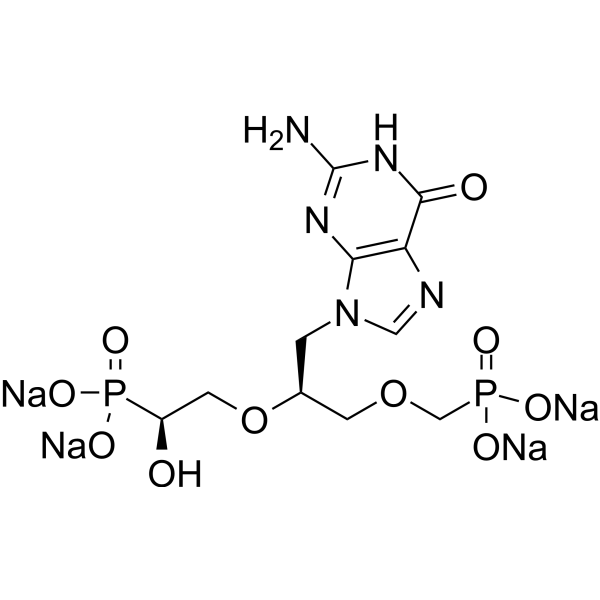 0 ImagesCat. No.: HY-144296CAS No.: 2784631-30-5Purine phosphoribosyltransferase-IN-2 is a potent inhibitor of the Plasmodium falciparum ((Pf)), Plasmodium vivax ((Pv)) and Trypanosoma brucei ((Tbr)) 6-oxopurine phosphoribosyltransferase (PRT), with Kis of 30, 20 and 2 nM, respectively.
-
UA2239
 0 ImagesCat. No.: HY-179656CAS No.: 2455422-89-4UA2239 is an antimalarial agent and acyclic nucleoside phosphonate. UA2239 disrupts the essential cGMP-dependent egress pathway by decreasing cGMP levels. UA2239 targets guanylyl cyclase α. UA2239 demonstrates rapid and irreversible inhibitory effects on Plasmodium parasites.
-
Antimalarial agent 7
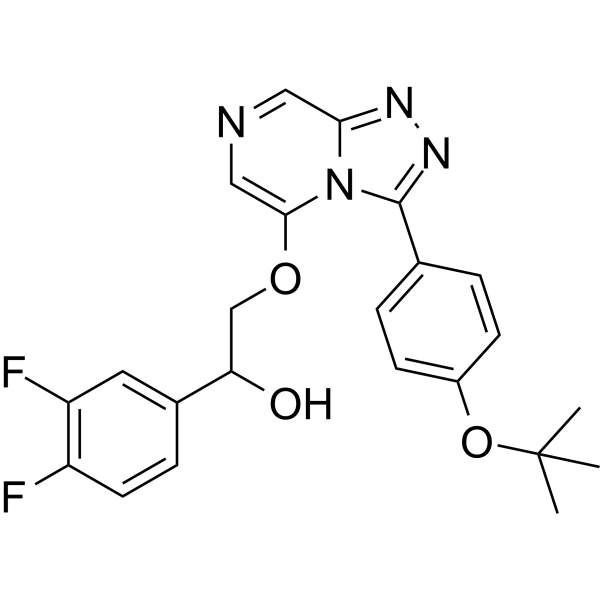 0 ImagesCat. No.: HY-145327CAS No.: 2756414-77-2Antimalarial agent 7 is a potent inhibitor of PfATP4. PfATP4 is an essential ion pump on the parasite surface. Antimalarial agent 7 has the potential for the research of human malaria parasite, Plasmodium falciparum.
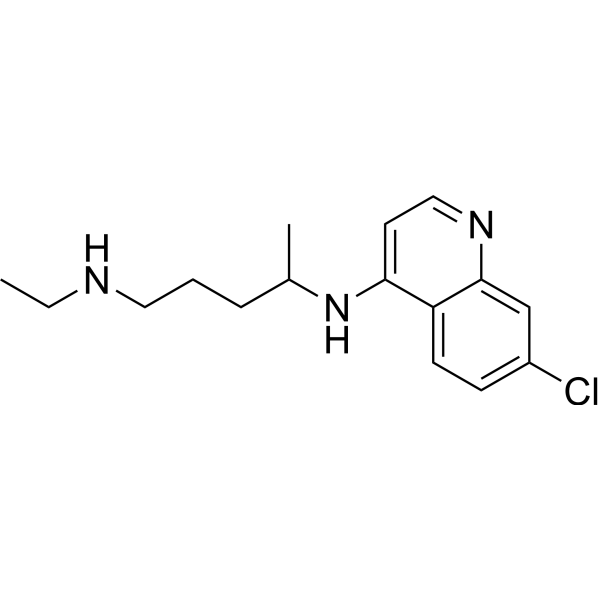
-
Quinine dihydrochloride (Standard)
 0 ImagesCat. No.: HY-D0143ARCAS No.: 60-93-5Quinine dihydrochloride (Standard) is the analytical standard of Quinine dihydrochloride (HY-D0143A). This product is intended for research and analytical applications. Quinine dihydrochloride is an orally active alkaloid extracted from cinchona bark, possessing various biological activities including antimalarial, antidengue virus (DENV), and anticancer properties. Quinine dihydrochloride is a potassium channel inhibitor that inhibits WT mouse Slo3 (KCa5.1) channel currents evoked by voltage pulses to +100 mV with an IC50 of 169 μM.
-
Chloroquine-d5 diphosphate
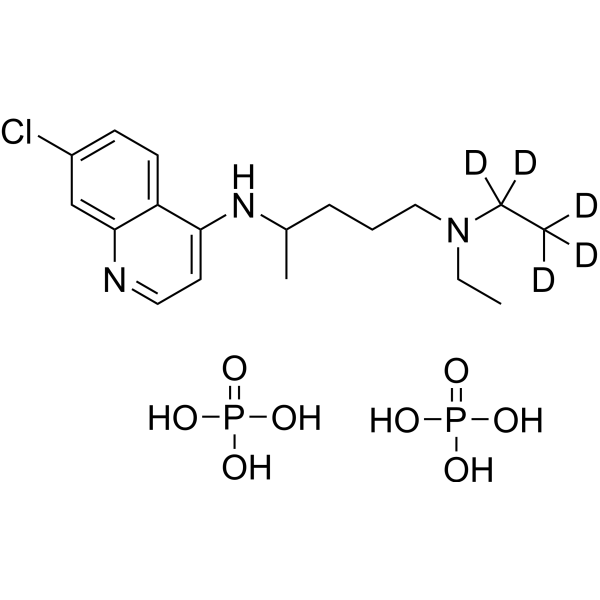 0 ImagesCat. No.: HY-17589SCAS No.: 1854126-42-3Chloroquine-d5 (diphosphate) is the deuterium labeled Chloroquine (phosphate). Chloroquine phosphate is an antimalarial and anti-inflammatory agent widely used to treat malaria and rheumatoid arthritis. Chloroquine phosphate is an autophagy and toll-like receptors (TLRs) inhibitor. Chloroquine phosphate is highly effective in the control of SARS-CoV-2 (COVID-19) infection in vitro (EC50=1.13 μM).
-
Cletoquine-d4
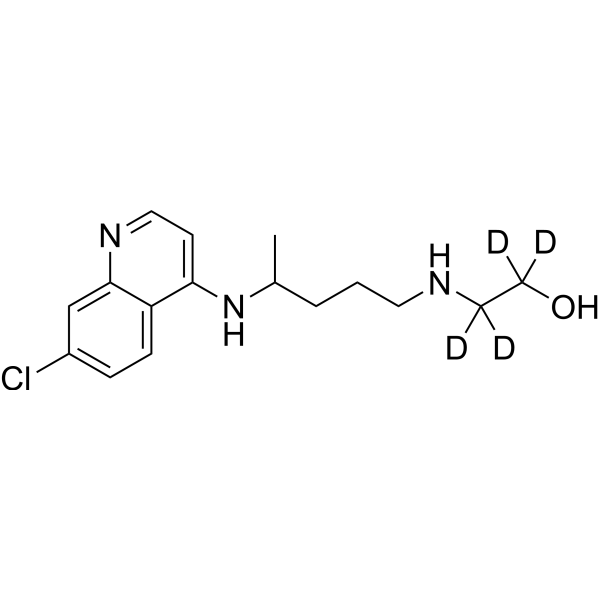 0 ImagesSynonyms: Desethylhydroxychloroquine-d4Cletoquine-d4 is deuterium labeled Cletoquine. Cletoquine (Desethylhydroxychloroquine) is a major active metabolite of Hydroxychloroquine. Cletoquine is produced in the liver by CYP2D6, CYP3A4, CYP3A5, and CYP2C8 isoenzymes. Cletoquine is also a Chloroquine derivative and has the ability to against the chikungunya virus (CHIKV). Cletoquine has antimalarial effects and has the potential for autoimmune diseases treatment.
-
19,20-Epoxycytochalasin C
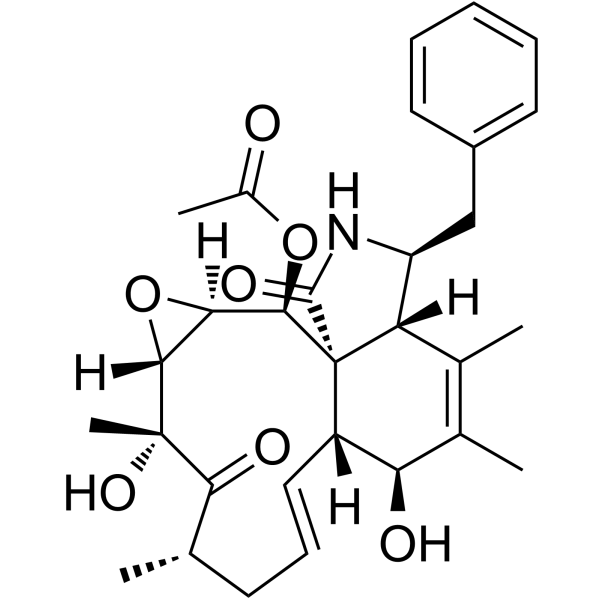 0 ImagesCat. No.: HY-N8385CAS No.: 189351-79-919,20-Epoxycytochalasin C, a cytochalasin, is a fungal metabolite from Nemania sp. 19,20-Epoxycytochalasin C shows potent in vitro antiplasmodial activity and phytotoxicity.
-
Butyrolactone V
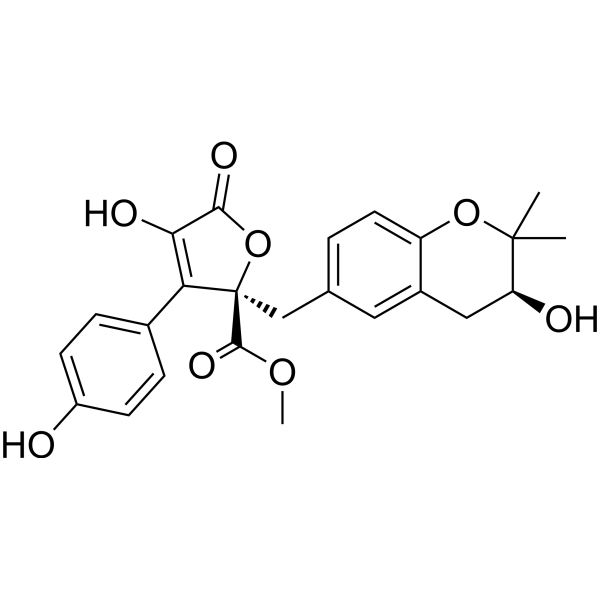 0 ImagesCat. No.: HY-N8383CAS No.: 1151509-01-1Butyrolactone V is a butanolide compound. Butyrolactone V shows antiplasmodial activity against Plasmodium falciparum K1 with an IC50 of 7.9 µg/ml.
-
Nitidanin
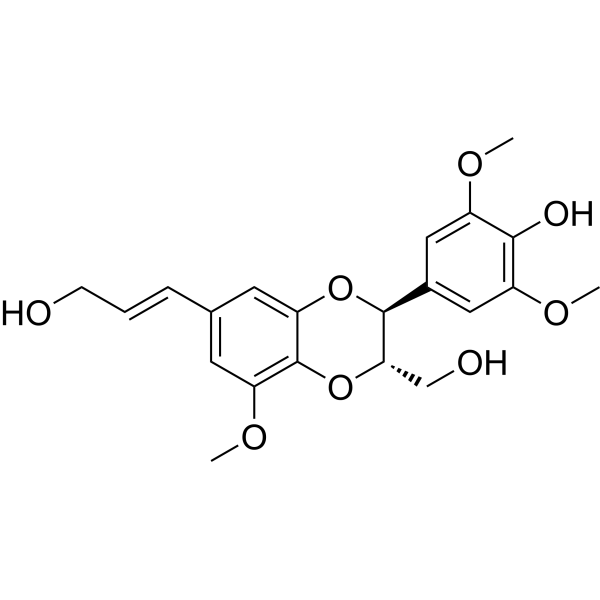 0 ImagesCat. No.: HY-120104CAS No.: 171674-89-8Synonyms: (±)-NitidaninNitidanin ((±)-Nitidanin) is an antimalarial and antiviral compound that can be isolated from the wood of Xanthoxylum nitidun D. C. Nitidanin is shows IC50 values of 21.2 and 18.4 μM for D6 and W2 clones of Plasmodium falciparum, respectively. Nitidanin can be used for the research of malaria and virus infection.
-
Asperaculane B
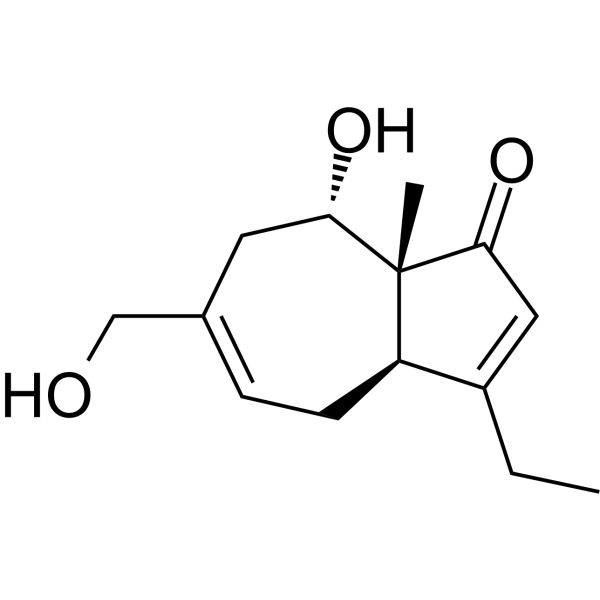 0 ImagesCat. No.: HY-N10190CAS No.: 2378379-27-0Asperaculane B is a fungal metabolite against P. falciparum transmission with an IC50 of 7.89 µM. Asperaculane B also inhibits the development of asexual P. falciparum with IC50 of 3 µM, and it is nontoxic to human cells.
-
Shinjulactone M
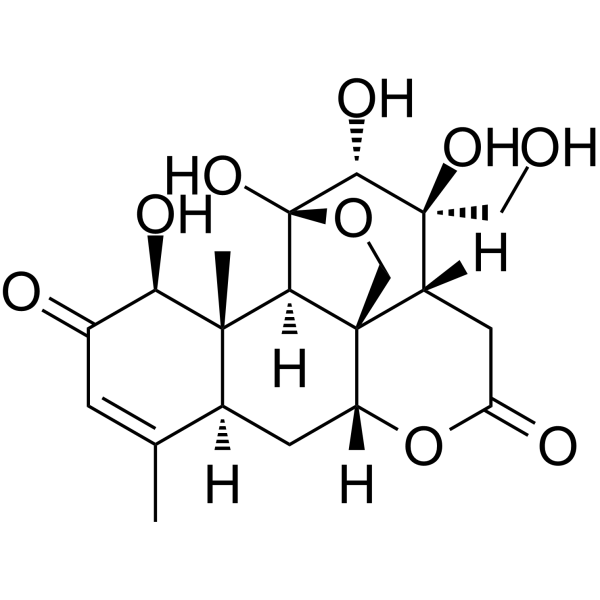 0 ImagesShinjulactone M is a quassinoid isolated from various parts of Ailanthus species. Ailanthus, an important genus of the Simaroubaceae family, can be used as an febrifuge (antimalarial) and anthelmintic, and is given for the research of chronic bronchitis, epilepsy and asthma.



