STAT Modulator
- 1
- 2
-
Fezakinumab
 0 ImagesSynonyms: ILV 094
Fezakinumab (ILV 094) is an anti-IL-22 monoclonal antibody. Fezakinumab inhibits IL-22 signal transduction, and regulates the JAK1/STAT3 pathway as well as apoptotic proteins. Fezakinumab alleviates airway remodeling, alveolar enlargement and inflammatory cell infiltration in lung tissues. Fezakinumab reduces the levels of neutrophils, lymphocytes, eosinophils and macrophages in lung tissues. Fezakinumab can be used in the research of chronic obstructive pulmonary disease and skin diseases.
-
Corynoline
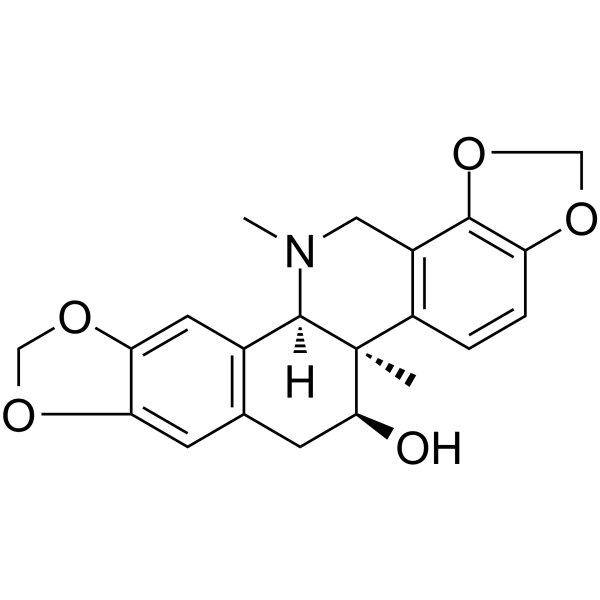 0 ImagesCorynoline is an orally active acetylcholinesterase (AChE) inhibitor with an IC50 of 30.6 μM. Corynoline exhibits multiple activities including anti-inflammatory, antinociceptive, antitumor and analgesic effects. Corynoline can be used in the research of diseases such as tumors and inflammatory pain.
-
Medrysone
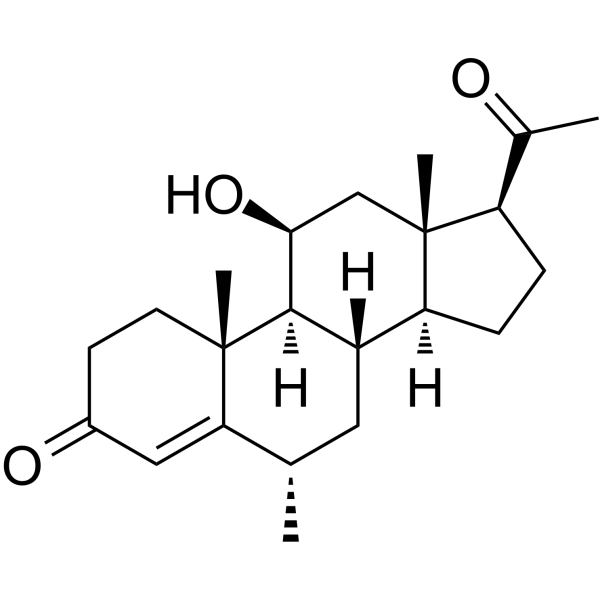 0 ImagesSynonyms: HMS; 6α-Methyl-11β-hydroxyprogesterone
Medrysone (HMS; 6α-Methyl-11β-hydroxyprogesterone) is a STAT6 modulator and M2 macrophage polarization inducer. Medrysone enhances IL-4-triggered STAT6 activation, upregulates the expression of M2 markers, and promotes the secretion of VEGF and CCL2. Medrysone also enhances the pro-migratory activity of M2-like macrophages toward endothelial cells. By regulating macrophage polarization and related repair pathways, Medrysone significantly promotes corneal wound repair in a rat mechanical injury model. Medrysone can be used for research related to corneal injury.
-
Clazakizumab
 0 ImagesSynonyms: ALD-518; BMS-945429
Clazakizumab (ALD-518; BMS-945429) is a monoclonal antibody inhibitor targeting IL-6 that binds to and blocks IL-6-mediated signaling (including trans-signaling), reducing STAT3 phosphorylation, innate immune cell infiltration, endothelial activation, and complement activation, thereby protecting the kidney from ischemia-reperfusion injury. Clazakizumab can be used in research on renal ischemia-reperfusion injury and obesity-related hypercoagulability.
-
AX-202
 0 ImagesReferencia número: HY-P991363Pureza: 98.91%
AX-202 is a humanized anti-S100A4 monoclonal antibody that neutralizes S100A4. AX-202 blocks downstream profibrotic and proinflammatory effects. AX-202 exerts antifibrotic effects in skin fibrosis. AX-202 induces regression of pre-established skin fibrosis. AX-202 modulates anti-inflammatory and antifibrotic transcriptional pathways. AX-202 inhibits STAT3 phosphorylation. AX-202 induces AMPK and CASQ1 expression. AX-202 modulates SSc-related transcriptional signatures. AX-202 reduces tenascin-C, a DAMP and endogenous TLR4 ligand. AX-202 can be used for the research of systemic sclerosis.
-
PROTAC SKP2 Degrader-1
 0 Images
PROTAC SKP2 Degrader-1 is a PROTAC degrader targeting SKP2, with a Kd value of 6.28 μM. PROTAC SKP2 Degrader-1 induces targeted degradation of SKP2 via the ubiquitin-proteasome system. PROTAC SKP2 Degrader-1 stabilizes the expression of SOCS1 and regulates the expression of immunoproteasomes through the JAK/STAT pathway, thereby inhibiting tumor cell proliferation. PROTAC SKP2 Degrader-1 is applicable for cancer-related research.
-
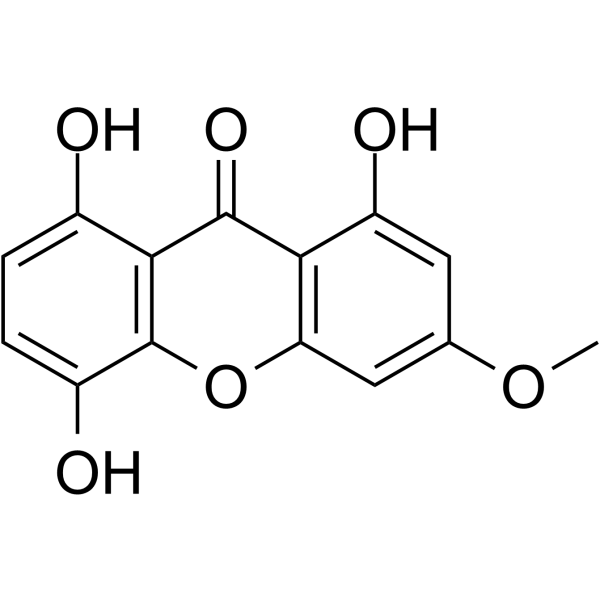
Bellidifolin
 0 Images
Bellidifolin is an orally active compound with antiproliferative, anti-inflammatory and antioxidant properties. Bellidifolin modulates key signaling pathways including STAT3, PI3K-Akt, mTOR and BRD4, and inhibits the viral protein R (Vpr). Bellidifolin induces cell cycle arrest and apoptosis, exerts significant antifibrotic effects, and protects the heart, liver and nervous system. Bellidifolin is applicable to the research of various diseases such as lung cancer, non-alcoholic fatty liver disease, myocardial hypertrophy and ischemic cranial nerve injury.
-
JAK2-IN-10
 0 ImagesReferencia número: HY-161684No. CAS: 3035735-18-0
JAK2-IN-10 is a selective JAK2 V617F inhibitor with an IC50 value of ≤10 nM. JAK2-IN-10 can be used for the research of myeloproliferative neoplasms and other related diseases.
-
Enniatin B
 0 Images
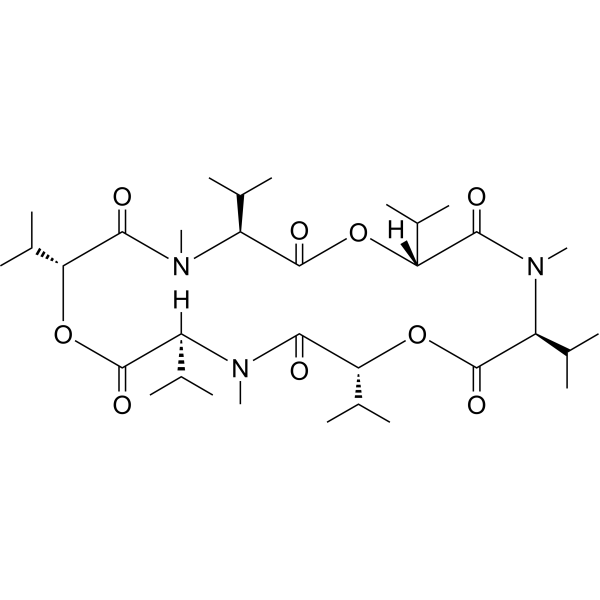
Enniatin B is a Fusarium mycotoxin that acts as an ionophore to form cation-selective membrane channels, disrupt ion homeostasis and mitochondrial function, inhibit cell proliferation, and induce apoptosis, while modulating ERK, p38 MAPK, and STAT3 signaling pathways. Enniatin B is used in research on atherosclerosis, hypercholesterolemia, cervical cancer, and colon adenocarcinoma.
-
MEAP
 0 ImagesReferencia número: HY-183628Synonyms: 2-(4-Morpholinoanilino-6-[(2-exo-norbornyl) amino)-purine
MEAP (2-(4-Morpholinoanilino-6-[(2-exo-norbornyl) amino)-purine) is a NEDD9-STAT3 modulator. MEAP disrupts NEDD9-STAT3 interaction, driving STAT3 Y705 dephosphorylation. MEAP induces G2/M phase arrest. MEAP can be used for the research of anaplastic thyroid cancer.
-
Pabgraminone C
 0 ImagesReferencia número: HY-184119No. CAS: 3061276-55-6Synonyms: IM502
Pabgraminone C (IM502) is a Fungal metabolite and PI3Kγ inhibitor with an IC50 of 61.7 nM against PI3Kγ. Pabgraminone C shifts the STAT signaling pathway in cells from an immunosuppressive STAT3/STAT6-dominant profile to an immunostimulatory STAT1/STAT2-dominant profile, driving cells toward a pro-inflammatory phenotype. Pabgraminone C reprograms cells from an immunosuppressive state to an immunostimulatory state, reversing their suppressive effect on anti-tumor immunity. Pabgraminone C inhibits established tumor growth and metastasis across multiple cancer types. Pabgraminone C overcomes resistance to PD-1 checkpoint blockade strategies. Pabgraminone C can be used in research related to liver cancer, melanoma, and colorectal cancer.
-
DM243
 0 ImagesReferencia número: HY-182273No. CAS: 3106606-59-8
DM243 is an EPAC1 activator and STAT3 modulator with an pIC50 of 4.769 for EPAC1. DM243 increases GTP-bound Rap1 levels in EPAC1-expressing cells. DM243 reduces IL-6/IL-6Rα-evoked STAT3 phosphorylation in endothelial cells. DM243 suppresses TGF-β1-induced fibroblast-to-myofibroblast transition, reducing α-smooth muscle actin and Collagen I levels in lung fibroblasts. DM243 exhibits minimal cytotoxicity in normal human lung fibroblasts.
-
(trans)-STAT6-IN-13
 0 ImagesReferencia número: HY-164216A
-
Anticancer agent 259
 0 ImagesReferencia número: HY-168730
Anticancer agent 259 (Compound 3g) is a Telmisartan (HY-13955)-based cell death modulator, that interfers with the STAT5 signaling pathway, enhances the sensitivity of drug-resistant cells to Imatinib (HY-15463) with SC50 of 1.5 μM.
-
Zn-DPA-maytansinoid conjugate 1
 0 ImagesReferencia número: HY-151559No. CAS: 3034629-04-1
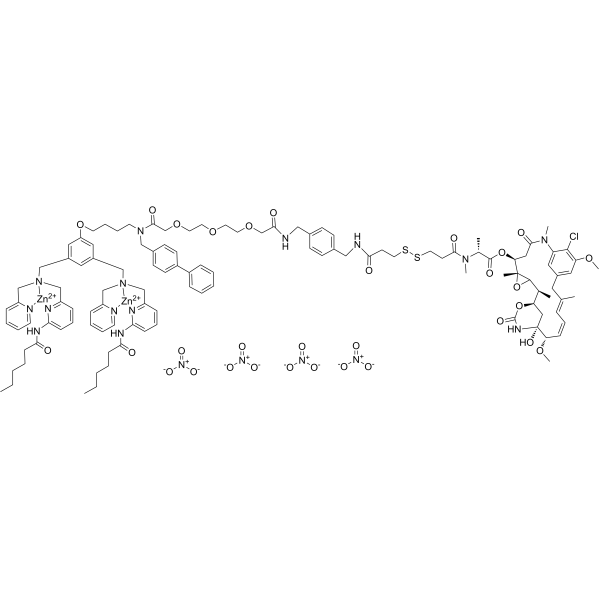
Zn-DPA-maytansinoid conjugate 1 is a small molecule-based maytansinoid conjugate targeting immune checkpoint. Zn-DPA-maytansinoid conjugate 1 induces lasting regression of tumor growth and rejuvenates tumor microenvironment (TME) to an "inflamed hot tumor" .
-
PTPN2/1-IN-4
 0 ImagesReferencia número: HY-178716No. CAS: 3093350-55-8
PTPN2/1-IN-4 (Compound WS35) is an orally active, dual-functional inhibitor of PTPN1 and PTPN2 with IC50s of 12.8 and 5.8 nM for PTPN1 and PTPN2, respectively. PTPN2/1-IN-4 modulates the IFNγ-JAK-STAT signaling pathway and significantly augments CD8+ T-cell tumor infiltration. PTPN2/1-IN-4 has potent anticancer activity, robustly inhibiting tumor growth both as a monotherapy and in combination with an anti-PD-1 antibody in B16-OVA syngeneic mouse models.
- 1
- 2