



Dengue Virus
DENV
Dengue virus (DENV) belongs to the Flaviviridae family and is a small enveloped virus with a single-stranded positive-sense RNA of about 11kb in length and a granular spherical shape. DENV contains 4 serotypes: DENV serotype 1, DENV-2, DENV-3 and DENV-4. Envelope Protein E, NS3, NS5, etc. are effective targets for DENV inhibitors, which work by blocking viral entry, inhibiting protein processing and replication, and interfering with RNA capping. NS4B inhibitors can also disrupt related effects and inhibit the formation of viral replication complexes.
References:
- [1]. Dengue Virus. Sciencedirect Topic.
- [2]. Chauhan N, et al. Dengue virus: pathogenesis and potential for small molecule inhibitors. Biosci Rep. 2024 Aug 28;44(8):BSR20240134. [Content Brief]
- [3]. Kiemel D, et al. Pan-serotype dengue virus inhibitor JNJ-A07 targets NS4A-2K-NS4B interaction with NS2B/NS3 and blocks replication organelle formation. Nat Commun. 2024 Jul 19;15(1):6080.x [Content Brief]
- [4]. Lee MF, et al. Molecular Mechanisms of Antiviral Agents against Dengue Virus. Viruses. 2023 Mar 8;15(3):705.x [Content Brief]
All Product Categories
-
Dengue Virus Related Products (174)
Related Products (174)

-
Quinine (Standard)
 0 ImagesQuinine (Standard) is the analytical standard of Quinine (HY-D0143). This product is intended for research and analytical applications. Quinineis an orally active alkaloid extracted from cinchona bark, possessing various biological activities including antimalarial, antidengue virus (DENV), and anticancer properties. Quinine is a potassium channel inhibitor that inhibits WT mouse Slo3 (KCa5.1) channel currents evoked by voltage pulses to +100 mV with an IC50 of 169 μM.
-
Anti-Dengue virus type 2 E protein DIII Antibody (DV2-96)
 0 ImagesCat. No.: HY-P991769Purity: 98.24%Anti-Dengue virus type 2 E protein DIII Antibody (DV2-96) reacts with sites along the lateral ridge of the DIII domain on the E protein of dengue virus serotype 2 (DENV-2). Anti-Dengue virus type 2 E protein DIII Antibody (DV2-96) against DENV-2 new Guinea C (NGC) infection in mice. Recommend Isotype Controls: Mouse IgG2c kappa, Isotype Control (HY-P99981).
-
FGI-106
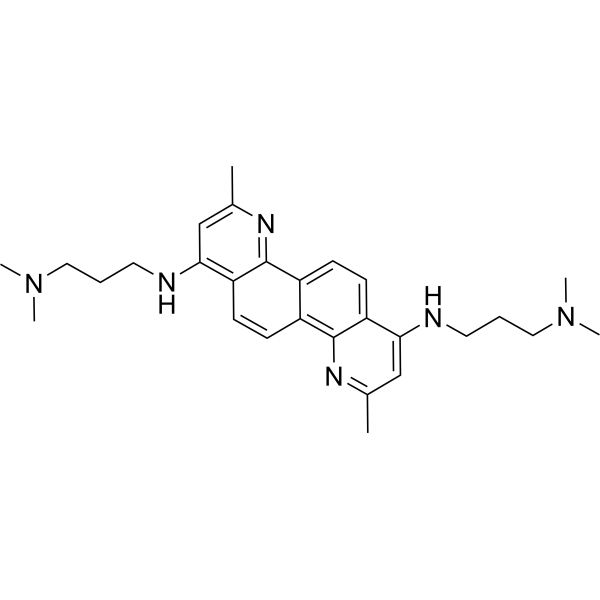 0 ImagesCat. No.: HY-124618CAS No.: 501081-38-5FGI-106 is a potent and broad-spectrum inhibitor with inhibitory activity against multiple viruses. FGI-106 is active against Ebola, Rift Valley and Dengue Fever viruses with EC50s of 100 nM, 800 nM and 400-900 nM, respectively. FGI-106 also inhibits non-hemorrhagic fever viruses HCV and HIV-1 with EC50s of 200 nM and 150 nM, respectively.
-
Quinine hemisulfate
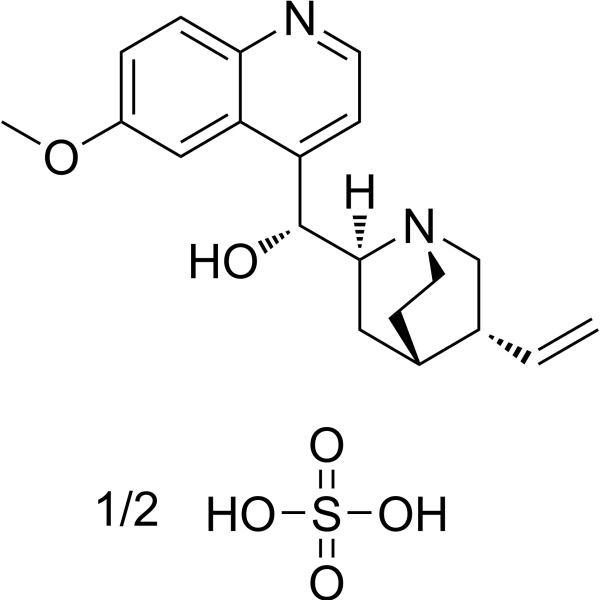 0 ImagesQuinine hemisulfate is an orally active alkaloid extracted from cinchona bark and can be used in anti-malarial studies. Quinine hemisulfate is a potassium channel inhibitor that inhibits WT mouse Slo3 (KCa5.1) channel currents evoked by voltage pulses to +100 mV with an IC50 of 169 μM.
-
ST-148
 0 ImagesCat. No.: HY-121663CAS No.: 400863-77-6ST-148 is a novel small molecule compound that has potent inhibitory effects against all four dengue virus serotypes. In the nonlethal AG129 mouse dengue virus infection model, ST-148 significantly reduced viremia and viral load in vital organs and tended to reduce plasma cytokine levels. Compound resistance was associated with the dengue virus capsid (C) gene, and the direct interaction of ST-148 with the C protein was presumed to be achieved through the protein's built-in fluorescence change in the presence of the compound. Therefore, ST-148 appears to interact with the dengue virus C protein and inhibit one or more unique steps of the viral replication cycle.
-
RYL-634
 0 ImagesCat. No.: HY-128660CAS No.: 2187352-99-2RYL-634 is a potent broad-spectrum antiviral agent. RYL-634 exerts its antiviral effect by inhibiting the activity of human dihydroorotate dehydrogenase (HsDHODH) and blocking the supply of pyrimidines required for viral replication. RYL-634 shows significant inhibition against many viruses, with the EC50 values against DENV, ZIKV, EV71, HCV and HIV are 7 nM, 20 nM, 4 nM, 5 nM and 13 nM respectively. RYL-634 can be used for the study of various virus infection-related diseases.
-
Virapinib
 0 ImagesVirapinib is a macropinocytosis inhibitor with antiviral activity. Virapinib exhibits broad-spectrum antiviral activity against SARS-CoV-2, monkeypox virus, tick-borne encephalitis virus, and Ebola pseudotyped vesicular stomatitis virus, and it enhances Dengue Virus infection. Virapinib blocks viral entry by inhibiting macropinocytosis, reduces syncytium formation in SARS-CoV-2-infected cells, and impairs cellular entry of SARS-CoV-2 variants. Virapinib upregulates the expression of genes related to sterol biosynthesis. Virapinib can be used in studies related to COVID-19, monkeypox, tick-borne encephalitis, and Ebola virus infection.
-
Fluoroneplanocin A-8N
 0 ImagesCat. No.: HY-179249Fluoroneplanocin A-8N (Compound 3a) is an inhibitor targeting SAH hydrolase (IC50 = 1.51 μM) and viral RNA polymerase. Fluoroneplanocin A-8N exhibits broad-spectrum anti-SARS-CoV-2 and dengue virus activity, with EC50 values of 12.2 and 37.4 μM respectively. Fluoroneplanocin A-8N has no cytotoxicity. Fluoroneplanocin A-8N can be used for anti-positive-strand viruses.
-
DENV-IN-12
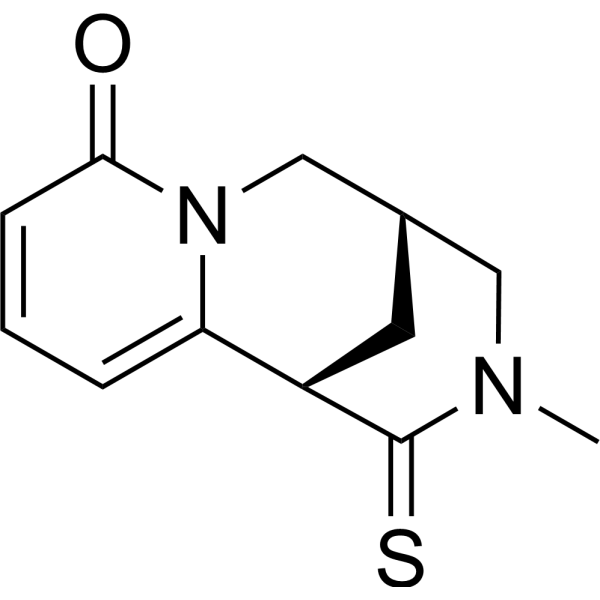 0 ImagesCat. No.: HY-157550CAS No.: 2581065-80-5DENV-IN-12 (Compound 6) is a derivative of N-methylcytisine thio, which inhibits DENV-1 and DENV-2. DENV-IN-12 displays robust antiviral activity against DENV-2, with EC50 values ranging from 0.002 to 0.005 μM in different cell lines.
-
Temephos-d12
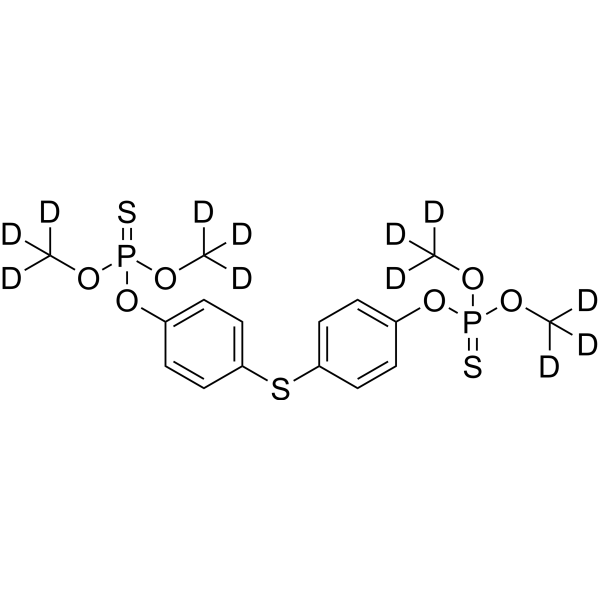 0 ImagesCat. No.: HY-B1120SCAS No.: 1219795-39-7Synonyms: Temefos-d12Temephos-d12 is the deuterium labeled Temephos. Temephos (Temefos) is an orally active, blood-brain barrier-permeable organophosphate insecticide and AChE inhibitor. By irreversibly inhibiting AChE to induce cholinergic overactivation, Temephos effectively blocks larval development of Aedes aegypti (yellow fever mosquito) and Aedes albopictus (Asian tiger mosquito), and is commonly used in studies related to Dengue Virus, Zika Virus and other relevant pathogens. Temephos exhibits genotoxicity and neurodevelopmental toxicity, and may also cause liver injury, reproductive system abnormalities and cholinergic poisoning symptoms in mammals. Temephos tends to accumulate in adipose tissues and aquatic organisms, and is excreted via feces after metabolism through oxidation and hydrolysis. Note that CYP-mediated metabolic detoxification may reduce the actual larvicidal efficacy of Temephos against some mosquito species. Temephos can be used in research related to dengue fever, Zika virus disease, chikungunya and dracunculiasis.
-
Hs-1
 0 ImagesCat. No.: HY-P5622CAS No.: 1799386-27-8Hs-1 is an antimicrobial peptide displays 80% protection against the dengue-2 virus .
-
OSL-95II
 0 ImagesCat. No.: HY-165485CAS No.: 946603-07-2OSL-95II is an antiviral agent. OSL-95II is a potent BVDV and WNV inhibitor. OSL-95II is a better inhibitor of HBV than SP169. OSL-95II inhibits dengue virus production.


-
Quinine sulfate hydrate (Standard)
 0 ImagesCat. No.: HY-W010668RCAS No.: 6119-70-6Quinine (sulfate hydrate) (Standard) is the analytical standard of Quinine (sulfate hydrate). This product is intended for research and analytical applications. Quinine sulfate hydrate (2:1:4) is an orally active alkaloid extracted from cinchona bark and can be used in anti-malarial studies. Quinine sulfate hydrate (2:1:4) is a potassium channel inhibitor that inhibits WT mouse Slo3 (KCa5.1) channel currents evoked by voltage pulses to +100?mV with an IC50 of 169 μM.
-
DENV-2/ZIKV-IN-1
 0 ImagesCat. No.: HY-161642DENV-2/ZIKV-IN-1 (Compd 16a) is a dual inhibitor of Dengue virus (DENV) and Zika virus (ZIKV) with EC50s of 1.4 and 2.4 μM, respectively.
-
DENV-IN-7
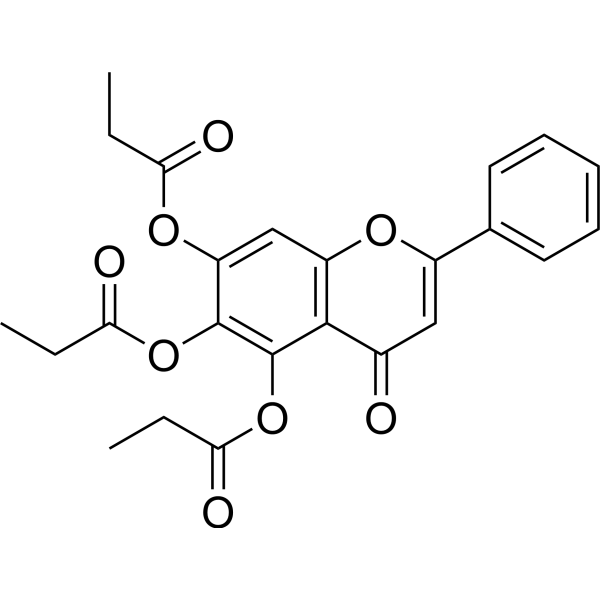 0 ImagesCat. No.: HY-152081CAS No.: 2499537-22-1DENV-IN-7, a flavone analog, is a dengue virus (DENV) inhibitor with an EC50 value of 70 nM. DENV-IN-7 has low toxicity against normal cell and anti-dengue activity.
-
Ribavirin 5'-triphosphate ammonium
 0 ImagesCat. No.: HY-134016BCAS No.: 332153-24-9Ribavirin 5'-triphosphate ammonium is an inhibitor of the dengue virus NS5 2'-O-methyltransferase NS5 domain (NS5MTaseDV) (IC50 = 101 μM; Kd = 55 μM). Ribavirin 5'-triphosphate ammonium blocks RNA cap methylation by competitively binding to the GTP-binding site of NS5MTaseDV, thereby inhibiting the viral mRNA 2'-O-methyltransferase activity. Ribavirin 5'-triphosphate ammonium can be used for research on dengue fever.
-
EPHA2/A4/GAK-IN-1
 0 ImagesCat. No.: HY-159174EPHA2/A4/GAK-IN-1 (compound 55) is a potent inhibitor of EPHA2/EPHA4 and GAK with KD values of 180.5 nM for EPHA2 and 19.2 nM for GAK, respectively. EPHA2/GAK-IN-1 shows an extrapolated half-life time of 4.6 h in a microsomal stability assay. EPHA2/GAK-IN-1 shows antiviral activity and prevents dengue virus infection of Huh7 liver cells.
-
Sirt1/CXCR3-IN-1
 0 ImagesCat. No.: HY-184899Sirt1/CXCR3-IN-1 is a dual Sirt1/CXCR3 inhibitor with an IC50 of 0.77 μM against Sirt1. Sirt1/CXCR3-IN-1 inhibits dengue virus replication, upregulates the expression of interferon-stimulated genes, and enhances the antiviral defense capacity of the host. Sirt1/CXCR3-IN-1 suppresses CXCR3-mediated T cell chemotaxis and cytokine release, thereby reducing immune activation and inflammatory responses. Sirt1/CXCR3-IN-1 is applicable to research related to dengue virus infection.



