



Necroptosis
Necroptosis is a form of regulated necrotic cell death mediated by receptor-interacting serine-threonine kinase 3 (RIPK3) and mixed lineage kinase domain-like (MLKL) and generally manifests with morphological features of necrosis. Necroptosis is characterized by early loss of plasma membrane integrity, leakage of intracellular contents, and organelle swelling. The cells dying through necroptosis lack the typical apoptotic characteristics, such as membrane blebbing, chromatin condensation, and intranucleosomal DNA cleavage into 180 bp DNA laddering, but may show TUNEL positivity.
Necroptosis triggers innate immune responses by rupturing dead cells and releasing intracellular components, it can be caused by Toll-like receptor (TLR)-3 and TLR-4 agonists, tumor necrosis factor (TNF), certain microbial infections, and T cell receptors. Necroptosis signaling is modulated by receptor-interacting protein kinase (RIPK) 1 when the activity of caspase-8 becomes compromised. Activated death receptors (DRs) cause the activation of receptor-interacting serine-threonine kinase 1 (RIPK1) and the RIPK1 kinase activity-dependent formation of an RIPK1-RIPK3-MLKL, which is complex II. RIPK3 phosphorylates MLKL, ultimately leading to necrosis through plasma membrane disruption and cell lysis.
All Product Categories
-
Necroptosis Related Products (176)
Related Products (176)

-
Topoisomerase I/II inhibitor 8
 0 ImagesCat. No.: HY-169509CAS No.: 355400-87-2Topoisomerase I/II Inhibitor 8 (Compound Ru7) is a dual catalytic inhibitor of Topoisomerase I/II, capable of inducing DNA damage and PARP-1 activation, which subsequently leads to the activation of RIPK1, RIPK3, and MLKL, ultimately triggering necroptosis. Topoisomerase I/II Inhibitor 8 demonstrates remarkable anticancer activity by effectively targeting the nuclei of cancer cells and inducing cell death through necroptosis, showing great clinical potential in circumventing drug resistance in cancer treatment.
-
Bcl-2-IN-23
 0 ImagesCat. No.: HY-176219Bcl-2-IN-23 (compound 5) is a selective inhibitor targeting Bcl-2. The IC50 of Bcl-2-IN-23 in HTB-140, HeLa and SW620 cells is 25.7-33.7 μM. Bcl-2-IN-23 can non-covalently competitively bind to Bcl-2 protein, significantly reduce its expression, and induce late apoptosis and necroptosis of cancer cells. Bcl-2-IN-23 enhances the sensitivity of cancer cells to apoptosis and reduces the release of IL-6 inflammatory factors by disrupting the Bcl-2-mediated mitochondrial apoptosis inhibition pathway. Bcl-2-IN-23 can be used for anti-apoptosis research of malignant tumors such as melanoma, cervical cancer, and colorectal cancer.
-
RIP1 kinase inhibitor 5
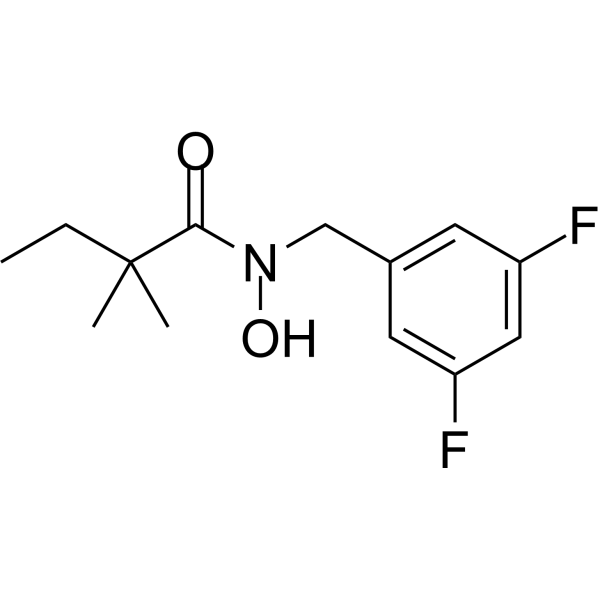 0 ImagesRIP1 kinase inhibitor 5 (example 1) is a potent inhibitor of RIP1, which is used as a checkpoint kinase to control tumor immunity. RIP1 kinase inhibitor 5 is similar with SIR1-365 (compound 13), which inhibits necrosis and iron death activity.
-
Multi-kinase-IN-4
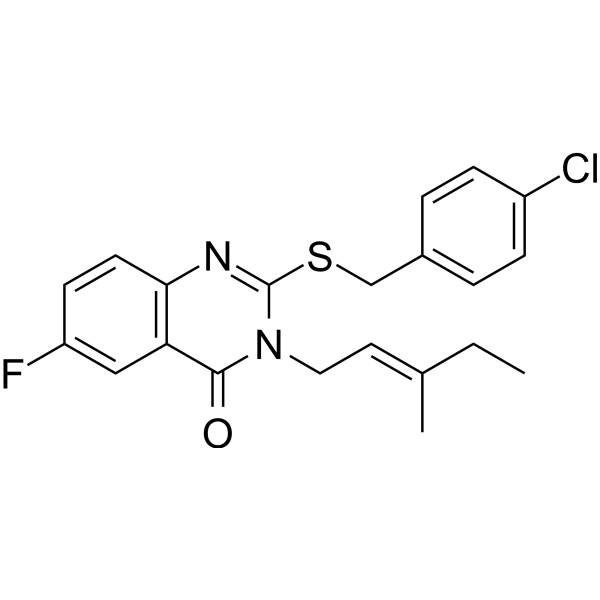 0 ImagesCat. No.: HY-149407Multi-kinase-IN-4 (compound 5d) is multi-targeted kinase inhibitor, including VEGFR2, EGFR, HER2, and CDK2, with IC50 values of 0.33, 0.22, 0.18 and 2.09 μM, respectively. Multi-kinase-IN-4 shows broad-spectrum anti-cancer activities against HepG2, MCF-7, MDA-231, and HeLa cell lines (IC50 = 1.94–7.1 µM), but exhibits lower toxicity in the WI-38 cells (IC50 = 40.85 µM). Multi-kinase-IN-4 induces apoptosis and arrests cell cycle at S phase in HepG2 cells. Multi-kinase-IN-4 has the potential for the research of cancer.
-
PROTAC IKKβ/NR4A1 degrader-1
 0 ImagesCat. No.: HY-179112CAS No.: 2826215-20-5PROTAC IKKβ/NR4A1 degrader-1 is a highly efficient and effective dual-PROTAC degrader targeting IKKβ and NR4A1. PROTAC IKKβ/NR4A1 degrader-1 can increase the levels of caspase 3 and cleaved caspase 3 proteins, while the necroptosis marker RIP kinase remained unchanged, indicating that it can induce apoptosis. PROTAC IKKβ/NR4A1 degrader-1 can be used for the study of Acute myeloid leukemia (AML). Red: IKKβ/NR4A1 ligand (HY-13067); Blue: E3 ligase CRBN ligand (HY-14658); Black: Linker (HY-79577).
-
Apoptosis/necroptosis inducer 1
 0 ImagesCat. No.: HY-181073Apoptosis/necroptosis inducer 1 is an orally active and brain-penetrant apoptosis and necroptosis inducer. Apoptosis/necroptosis inducer 1 induces mitochondria-dependent (intrinsic pathway) apoptosis. Apoptosis/necroptosis inducer 1 induces necroptosis by activating the TNF-α/NF-κB/MAPK signaling pathway. Apoptosis/necroptosis inducer 1 exhibits antiproliferative activity in glioblastoma cell lines and multiple solid tumor types. Apoptosis/necroptosis inducer 1 inhibits growth of orthotopic glioblastoma in animal models and improves survival rate. Apoptosis/necroptosis inducer 1 can be used for the research of glioblastoma.
-
RIPK1-IN-20
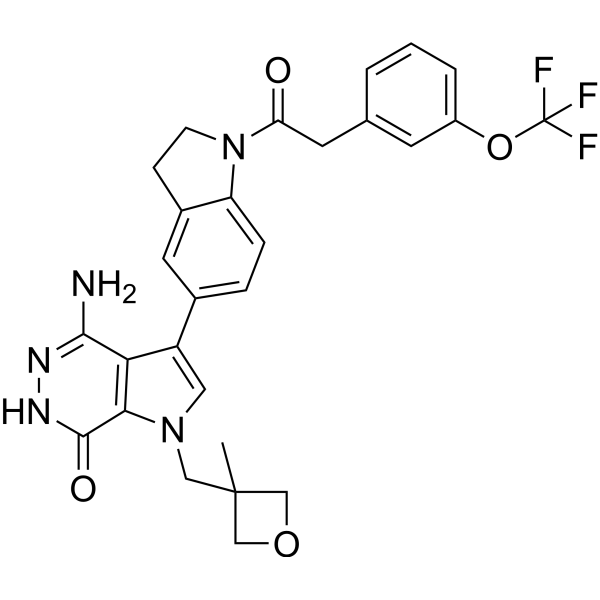 0 ImagesCat. No.: HY-162097CAS No.: 3026543-19-8RIPK1-IN-20 (compound 13c) has a favorable RIPK1 kinase inhibition activity with an IC50 value of 59.8 nM. RIPK1-IN-20 blocks TNFα-induced necroptosis in both human and murine cells (EC50=1.06–4.58 nM).
-
Zharp1-163
 0 ImagesCat. No.: HY-178163Zharp1-163 is a dual inhibitor of ferroptosis and necroptosis. Zharp1-163 effectively blocks ferroptosis by reducing reactive oxygen species (ROS) levels and inhibits necroptosis by potently and selectively targeting RIPK1 kinase activity (KD = 240 nM; IC50 = 406.1 nM). Zharp1-163 inhibits the cellular activation of RIPK1, RIPK3 and MLKL in response to necroptotic stimulation. Zharp1-163 markedly attenuates TNF-α (HY-P1875)-induced systemic inflammatory syndrome, including the prevention of TNF-α-induced mortality and hypothermia in mice. Zharp1-163 significantly alleviates acute kidney injury associated with both necroptosis and ferroptosis in models induced by Cisplatin (HY-17394) and ischemia-reperfusion. Zharp1-163 can be used for the study of diseases associated with cell death pathways, such as kidney disease.
-
RIPK3-IN-5
 0 ImagesCat. No.: HY-172909RIPK3-IN-5 (compound 32) is a potent RIPK3 inhibitor with an IC50 of 27 nM. RIPK3-IN-5 also inhibits necroptosis with an EC50 of 0.45 μM.
-
RIPK1-IN-34
 0 ImagesCat. No.: HY-178464CAS No.: 3065634-19-4RIPK1-IN-34 is a selective, brain-penetrant RIPK1 inhibitor (IC50 = 126.70 nM) with almost no inhibitory effect on RIPK3 (IC50 > 10, 000 nM). RIPK1-IN-34 offers substantial neuroprotection by inhibiting the phosphorylation of RIPK1, RIPK3, and mixed lineage kinase domain-like pseudokinase (MLKL) within the necroptosis pathway. RIPK1-IN-34 shows the neuroprotective effect in a rat middle cerebral artery occlusion (MCAO) model. RIPK1-IN-34 can be used for the study of anti-acute ischemic stroke (AIS).
-
PARP1/EZH2-IN-1
 0 ImagesCat. No.: HY-179386PARP1/EZH2-IN-1 is a selective PARP1 and EZH2 dual inhibitor. PARP1/EZH2-IN-1 has IC50s of 28 nM, 414 nM and 74 nM for PARP1, PARP2 and EZH2, respectively. PARP1/EZH2-IN-1 inhibits the proliferation and migration of TNBC cells (triple-negative breast Cancer cells). PARP1/EZH2-IN-1 induces PANoptosis (Apoptosis, Pyroptosis and Necroptosis), increases the level of reactive oxygen species (ROS), and activates related inflammatory pathways. PARP1/EZH2-IN-1 can be used in triple-negative breast cancer research.
-
RIPK1/RIPK3-PPI-IN-1
 0 ImagesCat. No.: HY-183564CAS No.: 2915280-95-2RIPK1/RIPK3-PPI-IN-1 is an orally active dual-target inhibitor of RIPK1/RIPK3, with a Kd value of 2.4 nM for RIPK1 and 24 nM for RIPK3. RIPK1/RIPK3-PPI-IN-1 inhibits the phosphorylation of RIPK1, RIPK3 and MLKL, thereby suppressing necroptosis. RIPK1/RIPK3-PPI-IN-1 restores body temperature, improves survival rate, and reduces IL-1β/IL-6 levels in serum and multiple organs of Mus musculus, thus alleviating TNF-α-induced systemic inflammatory response syndrome. RIPK1/RIPK3-PPI-IN-1 can be used in research related to systemic inflammatory response syndrome.
-
TNI-97
 0 ImagesCat. No.: HY-175030CAS No.: 2790425-52-2TNI-97 is a selective and orally active HDAC6 inhibitor, with an IC50 of 0.2 nM. TNI-97 potently inhibited TNBC cell MDA-MB-453 growth and clonogenicity. TNI-97 induces PANoptosis including apoptosis, necroptosis and pyroptosis in MDA-MB-453 cells. TNI-97 shows antitumor activity in the mice carrying the MDA-MB-453 xenograft or carrying murine-derived TNBC cell allografts. TNI-97 can be used for the study of triple-negative breast cancer.
-
p,p'-DDD-d8
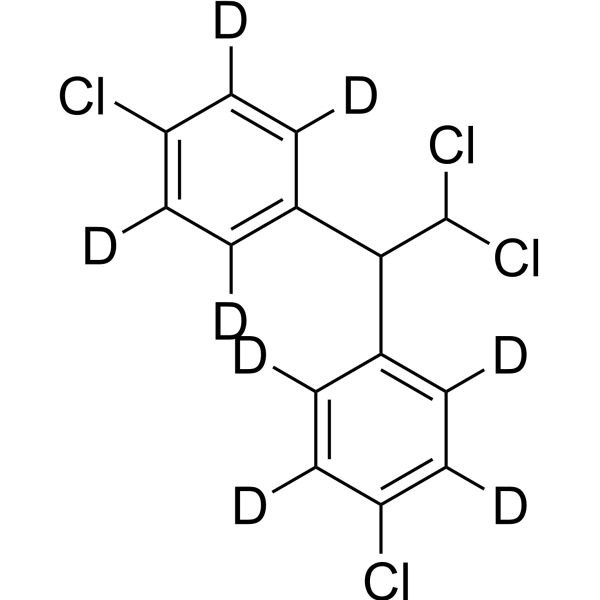 0 ImagesCat. No.: HY-B1984SCAS No.: 93952-20-6Synonyms: 4,4'-DDD-d8; p,p'-Dichlorodiphenyl dichloroethane-d8p,p'-DDD-d8 is the deuterium labeled p,p'-DDD[1]. p,p'-DDD (4,4’-DDD) is an organochlorine insecticide, a major metabolite of p,p'-DDT. p,p'-DDD is an agonist at estrogen receptor α(ERα) and ERβ. p,p'-DDD increases DNA damage, apoptosis and necrosis in peripheral blood. p,p'-DDD stimulates cell proliferation in SKBR3 cells. p,p'-DDD activates the AP-1 transcription factor. p,p'-DDD decreases sleep times of barbiturates and steroids in rats.
-
RIPK1-IN-38
 0 ImagesCat. No.: HY-179680CAS No.: 3092834-30-2RIPK1-IN-38 is an orally active RIPK1 inhibitor with an IC50 value of 27 nM. RIPK1-IN-38 can inhibit the phosphorylation of RIPK1 and its downstream signaling molecules RIPK3 and MLKL. RIPK1-IN-38 exhibits anti-necroptotic activity. RIPK1-IN-38 has excellent anti-inflammatory efficacy in both the SIRS model and GVHD model. RIPK1-IN-38 can be used for the research of inflammatory and immune-related diseases.
-
Glyphosate-13C,15N-1
 0 ImagesCat. No.: HY-B0863S5CAS No.: 2732154-65-1Glyphosate-13C,15N-1 is the 13C- and 15N-labeled Glyphosate (HY-B0863). Glyphosate, a non-selective systemic biocide with broad-spectrum activity, is an herbicidal derivative of the amino acid glycine. Glyphosate inhibits the enzymatic activity of the 5-endopyruvylshikimate 3-phosphate synthase (EPSPS) in the shikimic acid pathway, preventing the synthesis of the aromatic amino acids tyrosine, phenylalanine, and tryptophan. Glyphosate induces oxidative stress, neuroinflammation, and mitochondrial dysfunction, processes that lead to neuronal death by autophagia, necrosis, or apoptosis, as well as the appearance of behavioral and motor disorders.
-
LT-1339-553
 0 ImagesCat. No.: HY-184001CAS No.: 3078683-57-2LT-1339-553 is a selective, orally active RIPK1 inhibitor with IC50 values of 4.32, 95.74 and 84.33 nM against RIPK1, RIPK2 and RIPK3, respectively. LT-1339-553 exerts anti-necroptotic activity by inhibiting the AKT/PI3K/NF-κB pathway and the IL-17 pathway. LT-1339-553 reduces liver injury, inflammatory responses and collagen deposition. LT-1339-553 can be used in studies related to schistosomiasis-induced liver fibrosis.
-
Nec-34i
 0 ImagesCat. No.: HY-W674387CAS No.: 2212541-00-7Nec-34i is an inactive analog structurally similar to Nec-34 (HY-132203). Nec-34i has no effect on RIPK1 kinase activity and cannot inhibit necroptosis.
-
RIPK1-IN-12
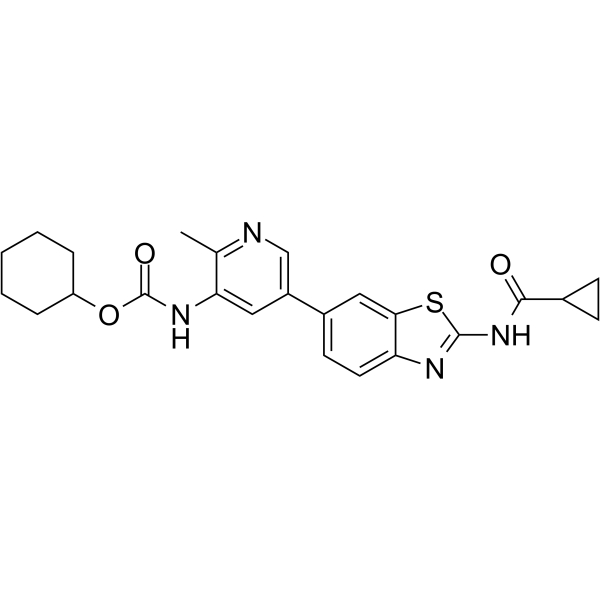 0 ImagesCat. No.: HY-144277CAS No.: 2173556-92-6RIPK1-IN-12 is a potent RIPK1 inhibitor. RIPK1-IN-12 inhibits necroptosis in both human and mouse cells, with EC50 values of 1.6 and 2.9 nM, respectively.
-
MCC1019
 0 ImagesCat. No.: HY-W162436CAS No.: 29115-34-2MCC1019 is a selective PLK1 PBD inhibitor with an IC50 of 16.4 μmol/L. MCC1019 inactivates the AKT signaling pathway in cancer cells, and induces Apoptosis, Necroptosis and Autophagy. MCC1019 exhibits anticancer activity against lung cancer and prostate cancer.



