



Diethyl-pythiDC
Based on 6 publication(s) in Google Scholar
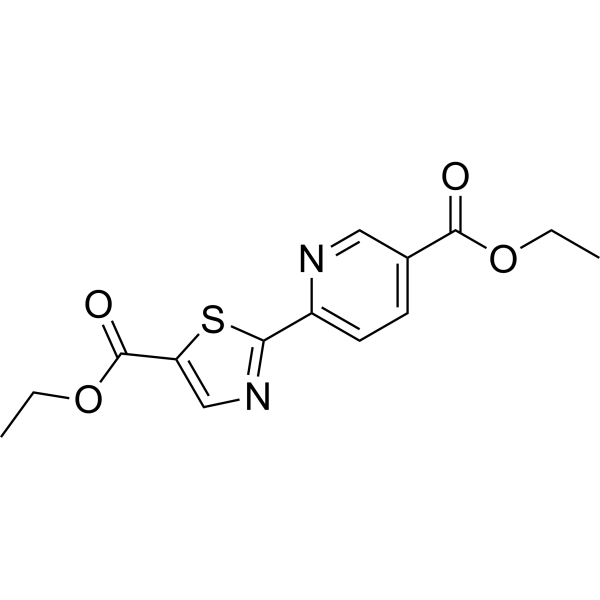
Diethyl-pythiDC is an inhibitor of collagen prolyl 4-hydroxylases (CP4Hs).
Nur für Forschungszwecke. Wir verkaufen nicht an Patienten.
- Reinheit : 99.79%
- CAS. Nr.: 1821370-70-0
- Formel: C14H14N2O4S
- Molecular Weight:306.34
-
Speicherung:Powder -20°C, 3 years , 4°C, 2 years ; In solvent -80°C, 2 years , -20°C, 1 year

To place orders, for customer services and technical support, please contact: MedChemExpress USA
Tel: 609-228-6898 E-mail: [email protected] [email protected]


-
 Biologische Aktivität
-
Chemical Information
-
Lösungsmittel & Löslichkeit
- Reinheit & Dokumentation
- Verweise
-
 Help & FAQs


-
HY-103070
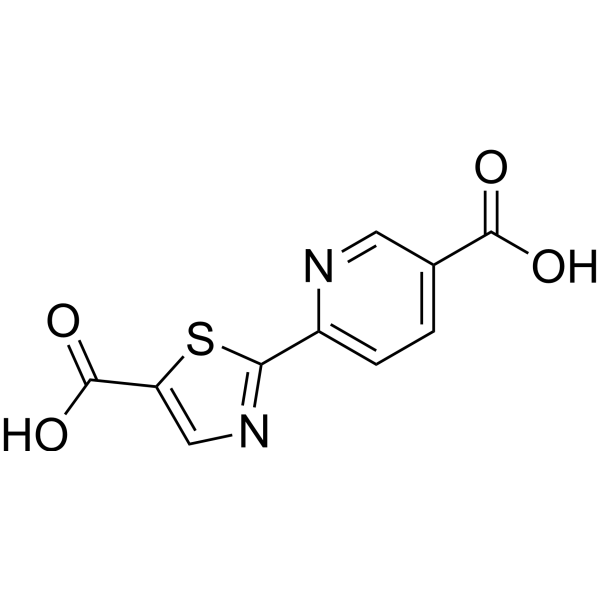
PythiDCCP4H1 Inhibitor -
HY-12305
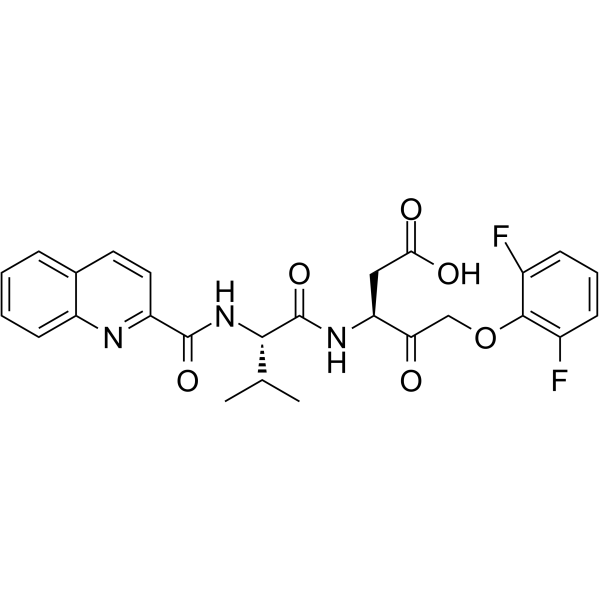
Q-VD-OPhPan-caspase Inhibitor -
HY-W016409
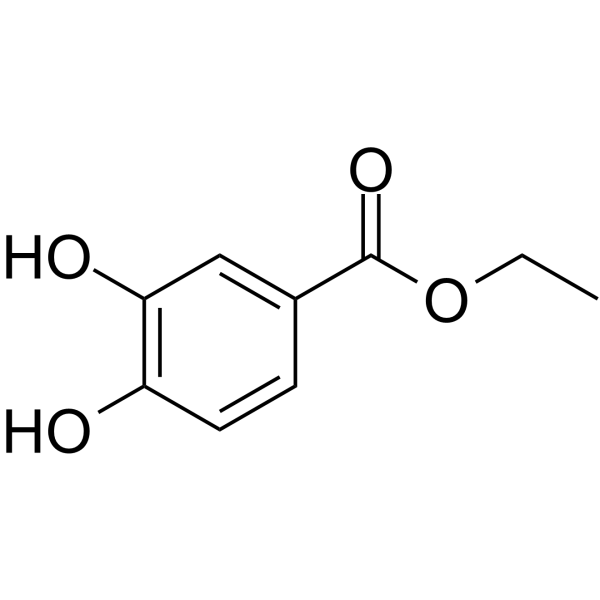
Ethyl 3,4-dihydroxybenzoateProlyl-hydroxylase Inhibitor -
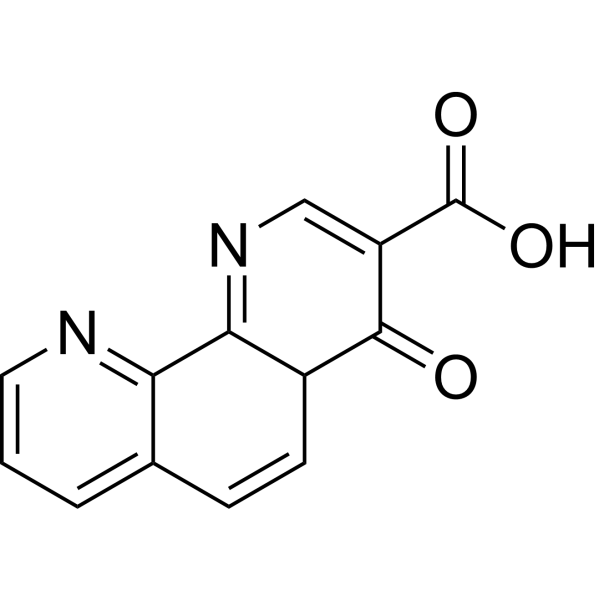
HY-121172
1,4-DPCAProlyl-4-hydroxylase Inhibitor -
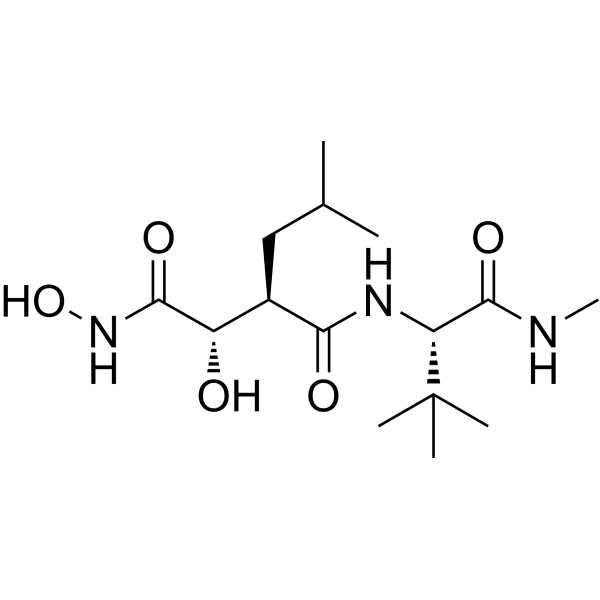
HY-12169
MarimastatMMP Inhibitor -
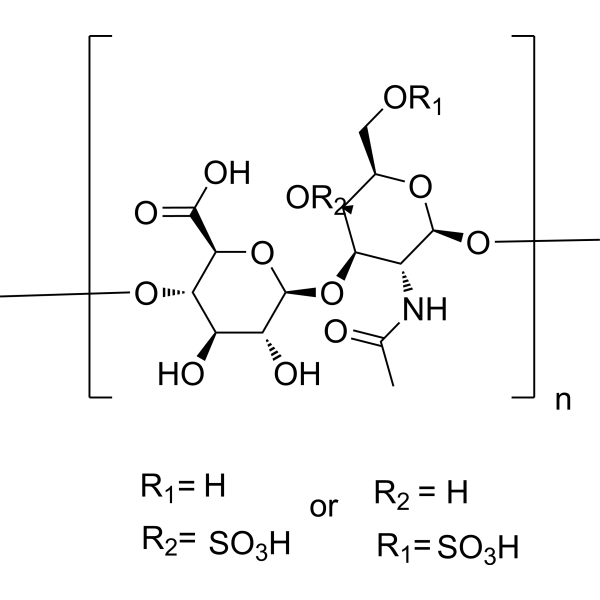
HY-B2162
Chondroitin sulfateGlycosaminoglycan -
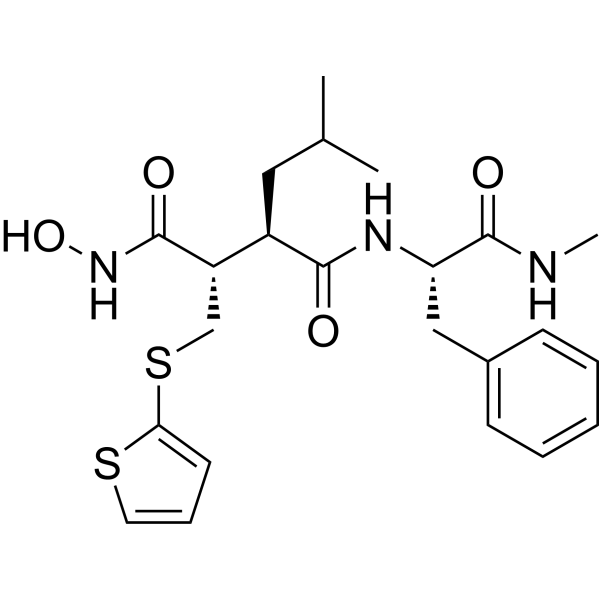
HY-13564
BatimastatMMP Inhibitor -
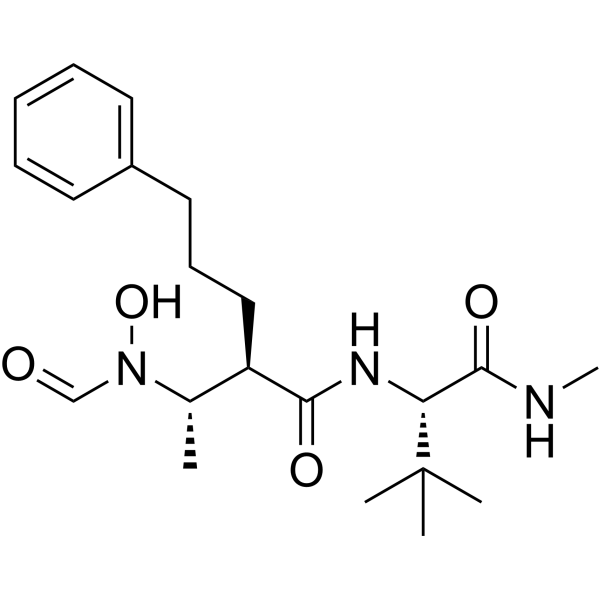
HY-19956
GI254023XADAM10/MMP9 Inhibitor -
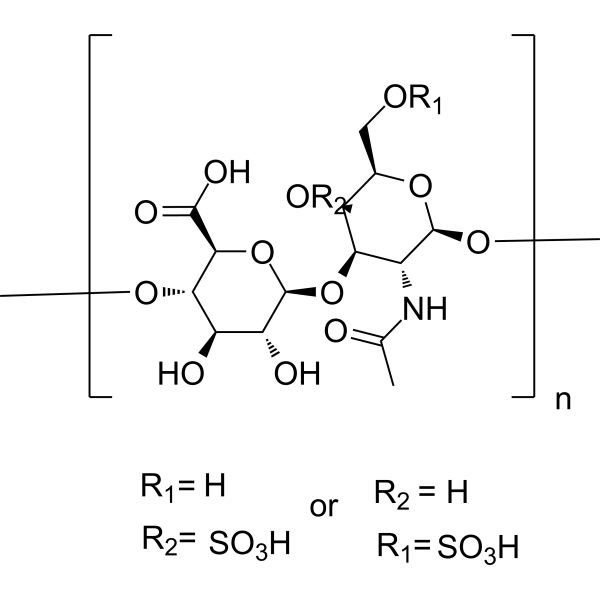
HY-B2162D
Chondroitin sulfate (from chicken)Sulfated Linear Polysaccharide -
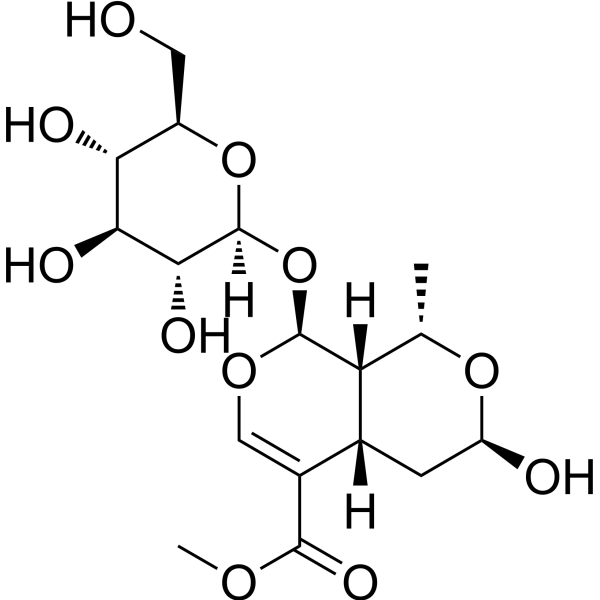
HY-N0532
MorronisidePyroptosis Inhibitor -
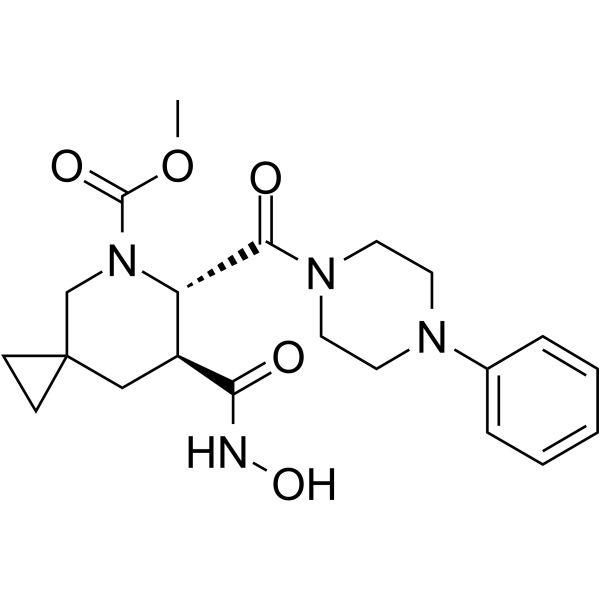
HY-10293
AderbasibADAM10/17 Inhibitor -
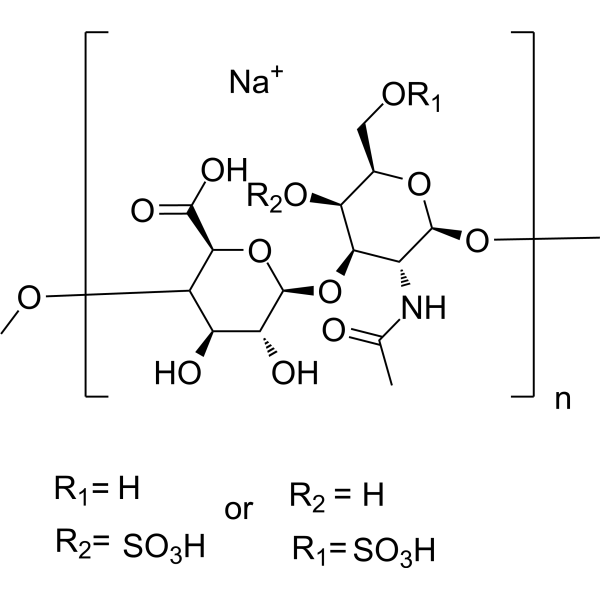
HY-B2162A
Chondroitin sulfate sodium (from shark cartilage)Glycosaminoglycan
Publications Citing Use of MedChemExpress (MCE) Diethyl-pythiDC
More

Biologische Aktivität
Beschreibung
IC50 & Target
CP4H[1]
In Vitro
Diethyl-pythiDC inhibits CP4H activity in cultured cells at concentrations that do not cause iron deficiency. MDA-MB-231 cells are treated with biheteroaryl dicarboxylates, and assayed for cytotoxicity and indicators of iron deficiency. None of the esterified biheteroaryl dicarboxylates exhibited cytotoxic activity at high micromolar concentrations. Cells treated with dihydroxybenzoate (EDHB demonstrate a strong iron-deficient phenotype. In contrast, cells treated with Diethyl-pythiDC (Diethyl pythiDC) appear to be normal at concentrations as high as 500 μM. Treatment with Diethyl-pythiDC and low levels of diethyl pyimDC does not affect the level of TfR, HIF-1α, or ferritin[1].
MedChemExpress (MCE) has not independently confirmed the accuracy of these methods. They are for reference only.


Chemical Information
-
CAS. Nr. 1821370-70-0
-
Appearance Solid
-
Molecular Weight 306.34
-
Formel C14H14N2O4S
-
Color Off-white to light yellow
-
SMILES
O=C(C1=CC=C(C2=NC=C(C(OCC)=O)S2)N=C1)OCC
-
Versand
Room temperature in continental US; may vary elsewhere.
-
Speicherung
Powder -20°C 3 years 4°C 2 years In solvent -80°C 2 years -20°C 1 year


Publications (6)
-
Journal Impact Factor
-
Most Recent
-
-
Transl Oncol
Collagen modifying enzyme P4HA1 is overexpressed and plays a role in lung adenocarcinoma. [Abstract]2021 Aug;14(8):101128. PMID: 34049151 -
-
bioRxiv
2025 Sep 17:2025.09.14.676157. PMID: 41000890 -
-


Lösungsmittel & Löslichkeit
In Vitro:
DMSO : 33.33 mg/mL (108.80 mM; Need ultrasonic; Hygroscopic DMSO has a significant impact on the solubility of product, please use newly opened DMSO)
Please refer to the solubility information to select the appropriate solvent. Once prepared, please aliquot and store the solution to prevent product inactivation from repeated freeze-thaw cycles.
Storage method and period of stock solution: -80°C, 2 years; -20°C, 1 year. When stored at -80°C, please use it within 2 years. When stored at -20°C, please use it within 1 year.
Please refer to the solubility information to select the appropriate solvent. Once prepared, please aliquot and store the solution to prevent product inactivation from repeated freeze-thaw cycles.
Storage method and period of stock solution: -80°C, 2 years; -20°C, 1 year. When stored at -80°C, please use it within 2 years. When stored at -20°C, please use it within 1 year.
Konzentration (Stammlösung) × Volumen (Stammlösung) = Konzentration (Ziellösung) × Volumen (Ziellösung)
In Vivo:
Select the appropriate dissolution method based on your experimental animal and administration route.
- For the following dissolution methods, please ensure to first prepare a clear stock solution using an In Vitro approach and then sequentially add co-solvents:
- To ensure reliable experimental results, the clarified stock solution can be appropriately stored based on storage conditions. As for the working solution for In Vivo experiments, it is recommended to prepare freshly and use it on the same day.
- The percentages shown for the solvents indicate their volumetric ratio in the final prepared solution. If precipitation or phase separation occurs during preparation, heat and/or sonication can be used to aid dissolution.
Add each solvent one by one: 10% DMSO 40% PEG300 5% Tween-80 45% Saline
Solubility: 2.5 mg/mL (8.16 mM); Suspended solution; Need ultrasonic
This protocol yields a suspended solution of 2.5 mg/mL. Suspended solution can be used for oral and intraperitoneal injection.
Taking 1 mL working solution as an example, add 100 μL DMSO stock solution (25.0 mg/mL) to 400 μL PEG300, and mix evenly; then add 50 μL Tween-80 and mix evenly; then add 450 μL Saline to adjust the volume to 1 mL.
Preparation of Saline: Dissolve 0.9 g sodium chloride in ddH₂O and dilute to 100 mL to obtain a clear Saline solution.
For the following dissolution methods, please prepare the working solution directly:
It is recommended to prepare fresh solutions and use them promptly within a short period of time.
The percentages shown for the solvents indicate their volumetric ratio in the final prepared solution. If precipitation or phase separation occurs during preparation, heat and/or sonication can be used to aid dissolution.
Add each solvent one by one: Corn Oil
Solubility: 33.33 mg/mL (108.80 mM); Clear solution; Need ultrasonic
In Vivo Dissolution Calculator
Please enter the basic information of animal experiments:
-
-
-
-
Recommended: Prepare an additional quantity of animals to account for potential losses during experiments.
Please enter your animal formula composition:
-
%DMSO +
Recommended: Keep the proportion of DMSO in working solution below 2% if your animal is weak.
-
%+
-
+%Tween-80 + +
-
%Saline +
The co-solvents required include: DMSO, . All of co-solvents are available by MedChemExpress (MCE). , Tween 80. All of co-solvents are available by MedChemExpress (MCE).
Working solution concentration: 0.22 mg/mL
Method for preparing stock solution: mg drug dissolved in μL DMSO. Stock solution concentration: mg/mL.
1. Take μL DMSO stock solution;
2. Add μL .
μL , mix evenly;
3. Then add μL Tween 80, mix evenly;
4. Then add μL
Please ensure that the stock solution in the first step is dissolved to a clear state, and add co-solvents in sequence. You can use ultrasonic heating (ultrasonic cleaner, recommended frequency 20-40 kHz), vortexing, etc. to assist dissolution.


Reinheit & Dokumentation
-
Data Sheet (273 KB)
-
SDS (251 KB)
- English - EN (251 KB)
- Français - FR (251 KB)
- Deutsch - DE (251 KB)
- Norwegian - NO (251 KB)
- Español - ES (251 KB)
- Swedish - SV (251 KB)
- Italian - IT (251 KB)
- Korean - KR (251 KB)
- Portuguese - PT (251 KB)
-
Handling Instructions (2659 KB)
Verweise


Complete Stock Solution Preparation Table
Please refer to the solubility information to select the appropriate solvent. Once prepared, please aliquot and store the solution to prevent product inactivation from repeated freeze-thaw cycles.
Storage method and period of stock solution: -80°C, 2 years; -20°C, 1 year. When stored at -80°C, please use it within 2 years. When stored at -20°C, please use it within 1 year.
| Optional Solvent | Concentration Solvent Mass | 1 mg | 5 mg | 10 mg | 25 mg |
|---|---|---|---|---|---|
| DMSO | 1 mM | 3.2643 mL | 16.3217 mL | 32.6435 mL | 81.6087 mL |
| 5 mM | 0.6529 mL | 3.2643 mL | 6.5287 mL | 16.3217 mL | |
| 10 mM | 0.3264 mL | 1.6322 mL | 3.2643 mL | 8.1609 mL | |
| 15 mM | 0.2176 mL | 1.0881 mL | 2.1762 mL | 5.4406 mL | |
| 20 mM | 0.1632 mL | 0.8161 mL | 1.6322 mL | 4.0804 mL | |
| 25 mM | 0.1306 mL | 0.6529 mL | 1.3057 mL | 3.2643 mL | |
| 30 mM | 0.1088 mL | 0.5441 mL | 1.0881 mL | 2.7203 mL | |
| 40 mM | 0.0816 mL | 0.4080 mL | 0.8161 mL | 2.0402 mL | |
| 50 mM | 0.0653 mL | 0.3264 mL | 0.6529 mL | 1.6322 mL | |
| 60 mM | 0.0544 mL | 0.2720 mL | 0.5441 mL | 1.3601 mL | |
| 80 mM | 0.0408 mL | 0.2040 mL | 0.4080 mL | 1.0201 mL | |
| 100 mM | 0.0326 mL | 0.1632 mL | 0.3264 mL | 0.8161 mL |


Diethyl-pythiDC Related Classifications
HY-103068 Related Classifications
 Powered by Bioz