



HDAC
Histone deacetylases
HDAC (Histone deacetylases) are a class of enzymes that remove acetyl groups (O=C-CH3) from an ε-N-acetyl lysine amino acid on ahistone, allowing the histones to wrap the DNA more tightly. This is important because DNA is wrapped around histones, and DNA expression is regulated by acetylation and de-acetylation. Its action is opposite to that of histone acetyltransferase. HDAC proteins are now also called lysine deacetylases (KDAC), to describe their function rather than their target, which also includes non-histone proteins. Together with the acetylpolyamine amidohydrolases and the acetoin utilization proteins, the histone deacetylases form an ancient protein superfamily known as the histone deacetylase superfamily.
Alle HDAC Isoform-spezifische Produkte anzeigen
-
HDAC
(391)
View all products
-
HDAC1
(317)
View all products
-
HDAC2
(211)
View all products
-
HDAC3
(204)
View all products
-
HDAC4
(72)
View all products
-
HDAC5
(56)
View all products
-
HDAC6
(335)
View all products
-
HDAC7
(53)
View all products
-
HDAC8
(188)
View all products
-
HDAC9
(41)
View all products
-
HDAC10
(67)
View all products
-
HDAC11
(71)
View all products
-
HD1
(3)
View all products
-
HD2
(4)
View all products
All Product Categories
-
HDAC Inhibitors
(780)
View all products
-
HDAC Antagonists
(3)
View all products
-
HDAC Activators
(14)
View all products
-
HDAC Modulators
(4)
View all products
-
HDAC MDM2 Inhibitor
(1)
View all products
-
HDAC Degraders
(44)
View all products
-
HDAC Controls
(4)
View all products
-
HDAC Substrates
(3)
View all products
-
HDAC Ligands
(14)
View all products
-
HDAC Verwandte Produkte (915)
Verwandte Produkte (915)

-
Antibodies (16)
-
HDAC Signalweg
-
HDAC Isoform Comparison
-
Rodin-B
 0 ImagesArt. -Nr.: HY-176867Rodin-B is a selective histone deacetylase (HDAC)-co-repressor of repressor element-1 silencing transcription factor (CoREST) complex inhibitor with an IC50 value of 0.50 μM for the CoREST complex, 0.27 μM for HDAC1, and 0.28 μM for HDAC2. Rodin-B increases the acetylation level of histone H3K9, upregulates the expression of neuron-related genes, thereby promoting the increase in dendritic spine density, the colocalization of synaptic proteins (SV2A and PSD95), and the improvement of hippocampal long-term potentiation (LTP), exerting synaptic protection and repair activity. Rodin-B is promising for research of neurodegenerative diseases related to synaptic dysfunction, especially Alzheimer’s disease.
-
PROTAC HDAC6 degrader 4
 0 ImagesArt. -Nr.: HY-172359PROTAC HDAC6 degrader 4 is a potent and selective HDAC6 PROTAC degrader with an IC50 of 0.295 μM. PROTAC HDAC6 degrader 4 bridges HDAC6 and the CRBN E3 ubiquitin ligase to form a ternary complex, thereby inducing the specific degradation of HDAC6 via the ubiquitin-proteasome system. PROTAC HDAC6 degrader 4 can be used in studies related to multiple myeloma.
-
J27644
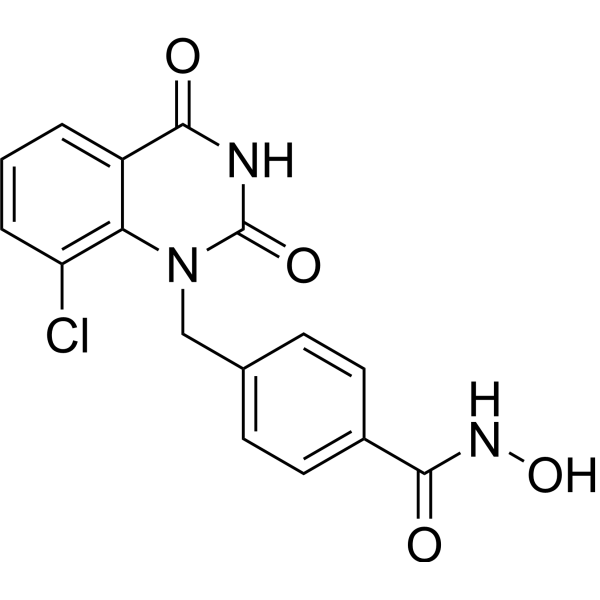 0 ImagesArt. -Nr.: HY-155699CAS. Nr.: 3033032-03-7J27644 is a potent HDAC inhibitor. J27644 mitigates TGF-β-induced pulmonary fibrosis.
-
Theophylline sodium acetate
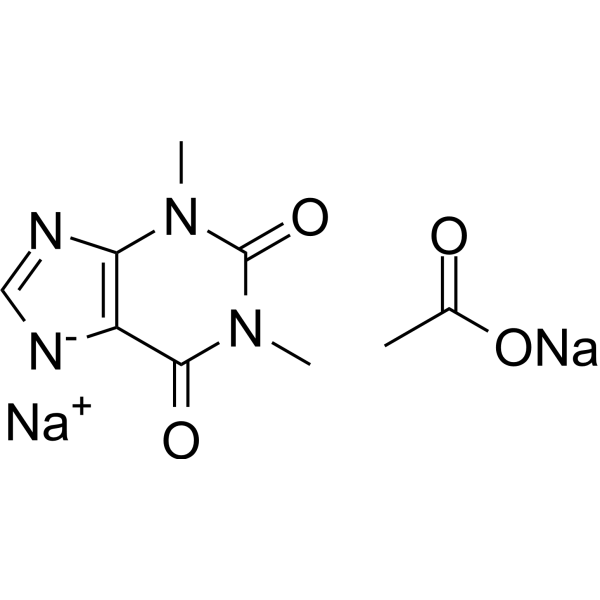 0 ImagesSynonyms: 1,3-Dimethylxanthine sodium acetate; Theo-24 sodium acetateTheophylline (1,3-Dimethylxanthine) sodium acetate is a potent phosphodiesterase (PDE) inhibitor, adenosine receptor antagonist, and histone deacetylase (HDAC) activator. Theophylline (1,3-Dimethylxanthine) sodium acetate inhibits PDE3 activity to relax airway smooth muscle. Theophylline (1,3-Dimethylxanthine) sodium acetate has anti-inflammatory activity by increase IL-10 and inhibit NF-κB into the nucleus. Theophylline (1,3-Dimethylxanthine) sodium acetate induces apoptosis. Theophylline (1,3-Dimethylxanthine) sodium acetate can be used for asthma and chronic obstructive pulmonary disease (COPD) research.
-
HDAC/BET-IN-1
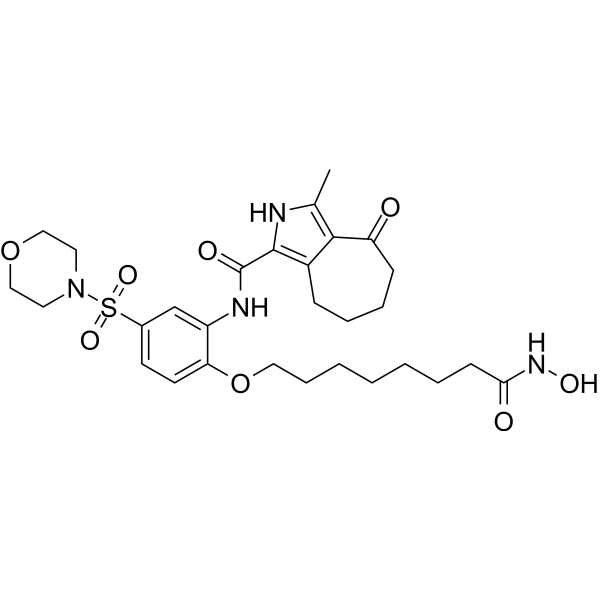 0 ImagesArt. -Nr.: HY-141844CAS. Nr.: 2757573-68-3
-
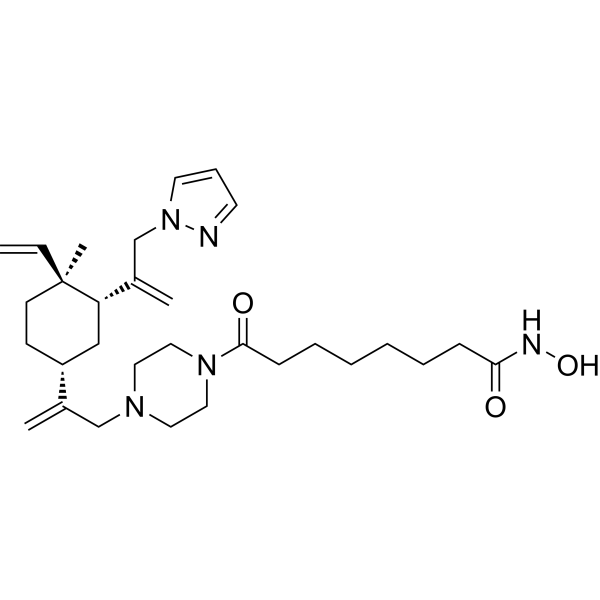
FLT3/HDAC-IN-2
 0 ImagesArt. -Nr.: HY-162906FLT3/HDAC-IN-2 is (compound 25h) a FLT3/HDAC dual inhibitor. FLT3/HDAC-IN-2 has antiproliferative activity against MOLM-13 cells. FLT3/HDAC-IN-2 can be used in acute myeloid leukemia research.

-
PROTAC HDAC6/ERα degrader 1
 0 ImagesArt. -Nr.: HY-187387CAS. Nr.: 3092711-76-4PROTAC HDAC6/ERα degrader 1 is a dual-target PROTAC that targets HDAC6/ERα, with DC50 values of 1.21 μM (HDAC6), 0.28 μM (ERα) in MCF-7 cells and 0.67 μM (HDAC6), 0.14 μM (ERα) in LCC2 cells, respectively. PROTAC HDAC6/ERα degrader 1 selectively degrades ERα and HDAC6 via the proteasomal pathway, inhibits the transcriptional activation of ERα and blocks the estrogen signaling pathway. PROTAC HDAC6/ERα degrader 1 inhibits the function of HDAC6, attenuates hormone responses, and disrupts autophagy-lysosome function. PROTAC HDAC6/ERα degrader 1 induces cell cycle arrest, apoptosis and ferroptosis, and exhibits antiproliferative activity in breast cancer cells. PROTAC HDAC6/ERα degrader 1 can be used for breast cancer research.
-
PIM-1/HDAC-IN-1
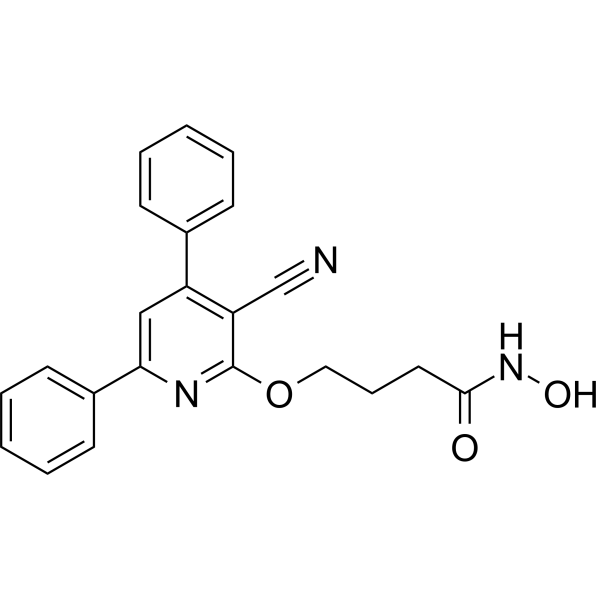 0 ImagesArt. -Nr.: HY-143233CAS. Nr.: 2897622-19-2PIM-1/HDAC-IN-1 (compound 4d) is a PIM-1 inhibitor, with an IC50 of 343.87 nM. PIM-1/HDAC-IN-1 has strong inhibitory activity and selectivity against HDAC 1 and HDAC 6, with IC50 values of 63.65 and 62.39 nM, respectively. PIM-1/HDAC-IN-1 exhibits apoptosis inducing potential in MCF-7 cell lines. PIM-1/HDAC-IN-1 shows pre-G1 apoptosis and cell cycle arrest at G2/M phase.
-
CS4
 0 ImagesArt. -Nr.: HY-159936CS4 is a selective HDAC inhibitor with the IC50 values of 38 nM, 12 nM, 5.8 μM, 19 μM and 61 μM against of HDAC1, HDAC6, HDAC8, HDAC4 and HDAC11, respectively. CS4 promotes α-tubulin and histone 3 acetylation. CS4 activates PPARγ and blocks glycolysis. CS4 induces cell cycle arrest at G2 phase and apoptosis, and shows anticancer effect both in vivo and in vitro.

-
HDAC-IN-50
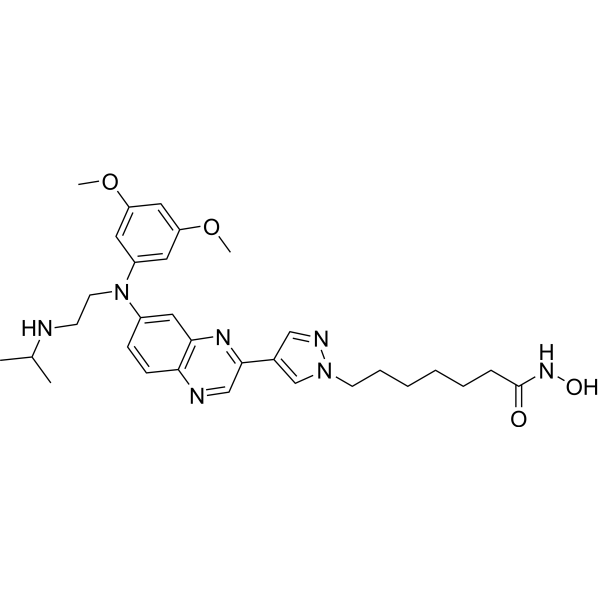 0 ImagesArt. -Nr.: HY-152146CAS. Nr.: 2653339-26-3HDAC-IN-50 is a potent and orally active FGFR and HDAC dual inhibitor with IC50 values of 0.18, 1.2, 0.46, 1.4, 1.3, 1.6, 2.6, 13 nM for FGFR1, FGFR2, FGFR3, FGFR4, HDAC1, HDAC2, HDAC6, HDAC8, respectively. HDAC-IN-50 induces Apoptosis and cell cycle arrest at G0/G1 phase. HDAC-IN-50 decreases the expression of pFGFR1, pERK, pSTAT3. HDAC-IN-50 shows anti-tumor activity.
-
NHNB
 0 ImagesArt. -Nr.: HY-115442CAS. Nr.: 106359-61-9NHNB is a selective HDAC8 inhibitor (IC50 = 66.0 μM) and Peptidoglycan N-acetylglucosamine (GlcNAc) deacetylases (PGNGdacs) inhibitor. NHNB shows antibacterial and bactericidal activity against B. anthracis and B. cereus. NHNB can be used for the research of acute myeloid leukemia, Bacillus anthracis infection, and Bacillus cereus infection.

-
HDAC6-IN-71
 0 ImagesArt. -Nr.: HY-180829CAS. Nr.: 3062867-16-4HDAC6-IN-71 (Compound 24) is a HDAC6 inhibitor with IC50 values for HDAC6 and HDAC1 of 13.68 and 443.12 nM respectively. HDAC6-IN-71 effectively inhibits the production of NO by mouse macrophages, with its IC50 being 2.31 μM. HDAC6-IN-71 inhibits the HDAC6-NF-κB signaling pathway, reduces the levels of phosphorylated IκB-α and IKK-α/β, and suppresses the expression of downstream inflammatory proteins COX-2 and iNOS. HDAC6-IN-71 significantly alleviates ulcerative colitis in mice.
-
HR488B
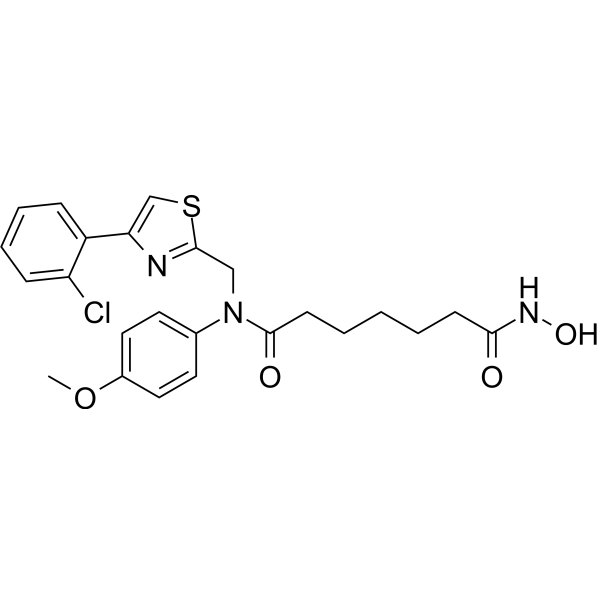 0 ImagesArt. -Nr.: HY-163090CAS. Nr.: 3038691-79-8HR488B is an efficient HDAC1 inhibitor. HR488B specifically suppressed the growth of CRC cells by inducing cell cycle G0/G1 arrest and apoptosis. HR488B causes mitochondrial dysfunction, reactive oxygen species (ROS) generation, and DNA damage accumulation.

-
HDAC6-IN-14
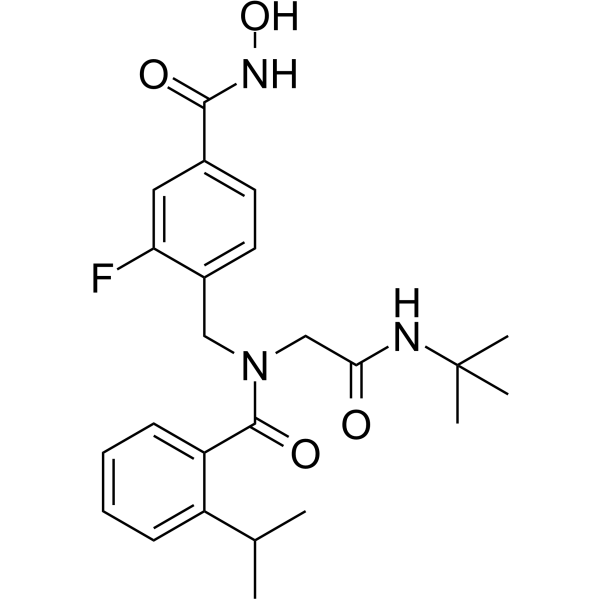 0 ImagesArt. -Nr.: HY-151896CAS. Nr.: 3023019-97-5
-
PRO-HD2
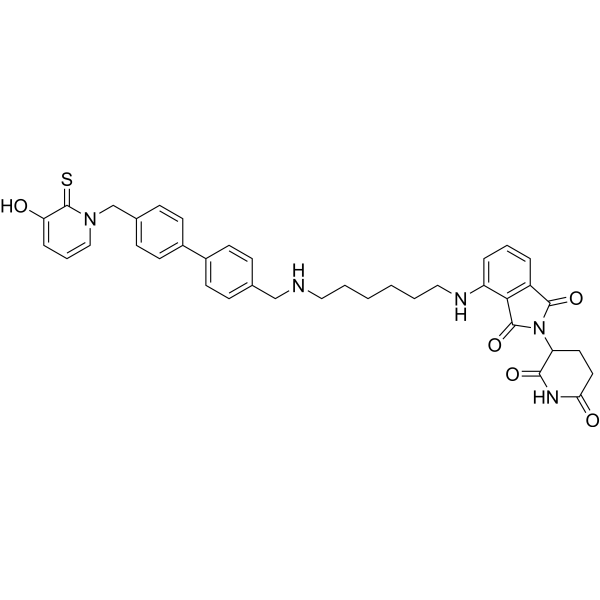 0 ImagesArt. -Nr.: HY-155397CAS. Nr.: 3126555-89-0PRO-HD2 is a HDAC6 PROTAC degrader. PRO-HD2 exerts antiproliferative activity in leukemia cells. PRO-HD2 can be used for leukemia research.




