



DC-Y13-27
Based on 7 publication(s) in Google Scholar
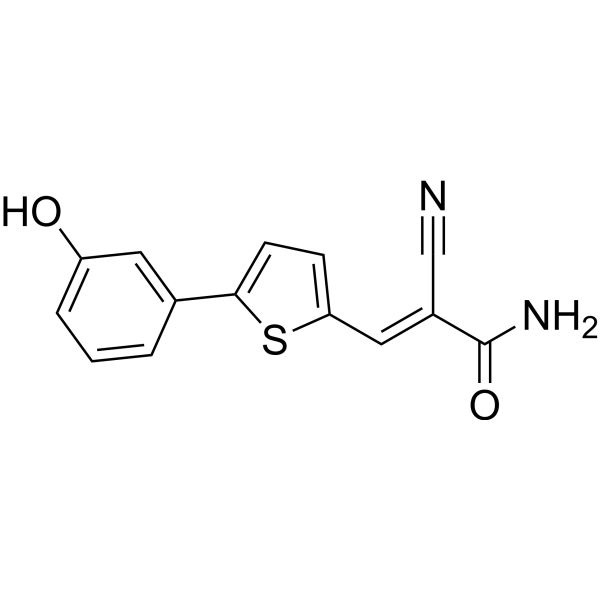
DC-Y13-27 is a DC-Y13 derivative and YTHDF2 inhibitor (KD: 37.9 μM). DC-Y13-27 inhibits YTHDF2, restores FOXO3 and TIMP1 protein levels, and reduces MMP1/3/7/9 expression. DC-Y13-27 induces Pyroptosis and increases IL-1β secretion. DC-Y13-27 reduces intervertebral disc degeneration and enhances the response to radiotherapy in colon cancer and melanoma. DC-Y13-27 has antitumor activity against breast cancer.
For research use only. We do not sell to patients.
- Purity : 98.56%
- Formula: C14H10N2O2S
- Molecular Weight:270.31
-
Storage:Powder -20°C, 3 years , 4°C, 2 years ; In solvent -80°C, 6 months , -20°C, 1 month

To place orders, for customer services and technical support, please contact: MedChemExpress USA
Tel: 609-228-6898 E-mail: [email protected] [email protected]


-
 Biological Activity
-
Chemical Information
-
Solvent & Solubility
- Protocols
- Purity & Documentation
- References
-
 Help & FAQs


-
HY-N0319
Salvianolic acid CCytochrome Inhibitor -

HY-173008
YTHDF2-IN-1YTHDF2 Inhibitor -
HY-134836
STM2457METTL3 Inhibitor -
HY-13750
EbselenVDCC Inhibitor -
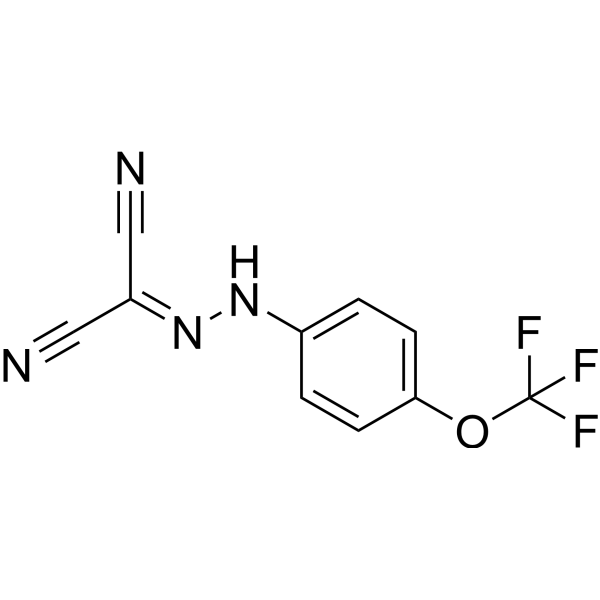
HY-100410
FCCPOXPHOS Uncoupler -
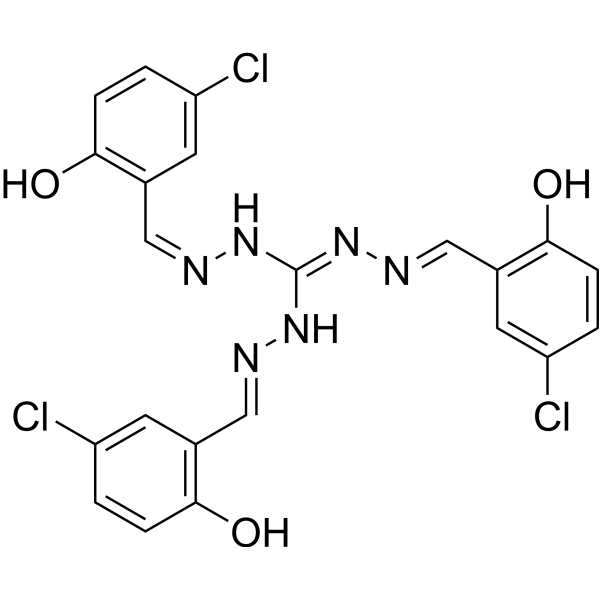
HY-153274
CWI1-2IGF2BP2 Inhibitor -
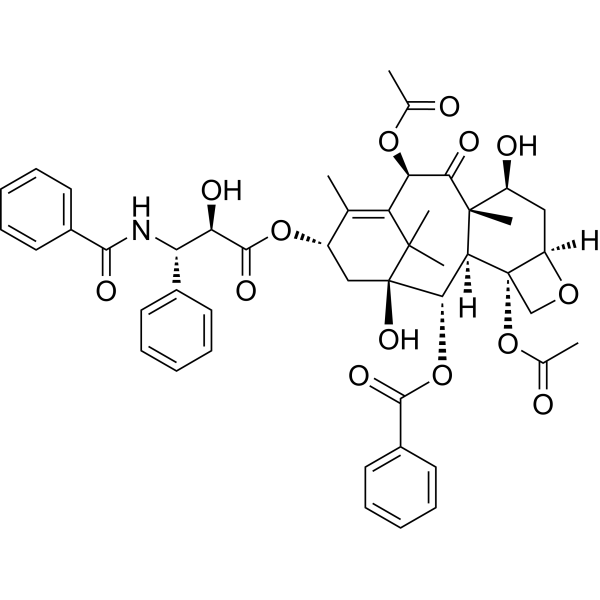
HY-B0015
PaclitaxelAntitumor Agent -
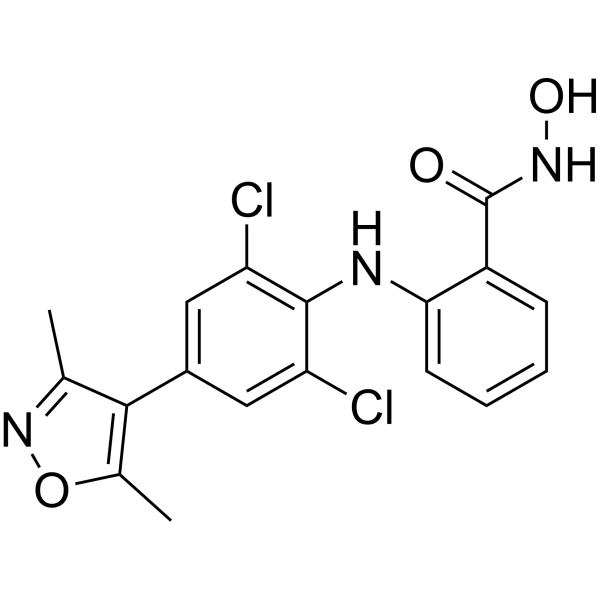
HY-127103
FB23-2FTO Inhibitor -
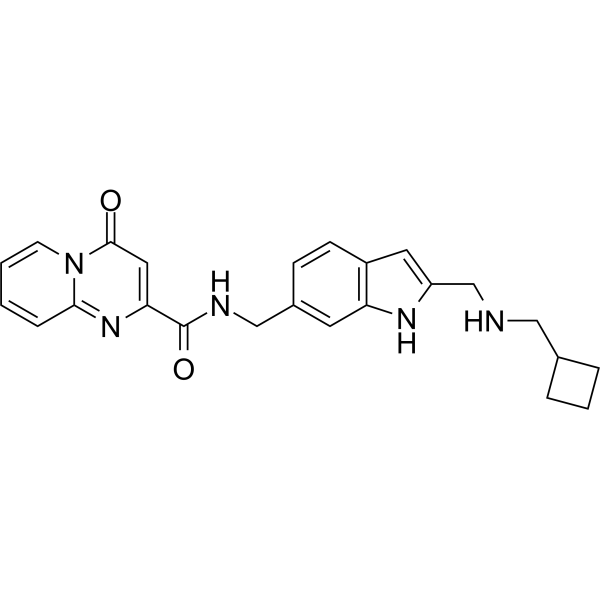
HY-156677
STC-15METTL3 Inhibitor -

HY-111770
2-Bromohexadecanoic acidPyroptosis Inhibitor -
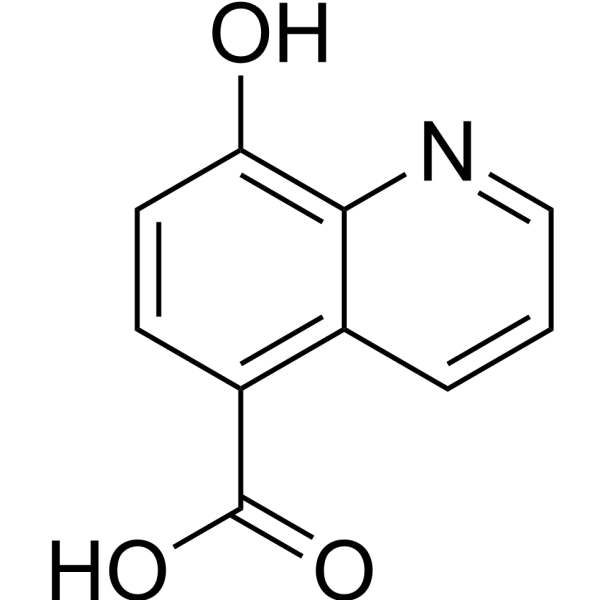
HY-12304
IOX12OG Oxygenases Inhibitor -
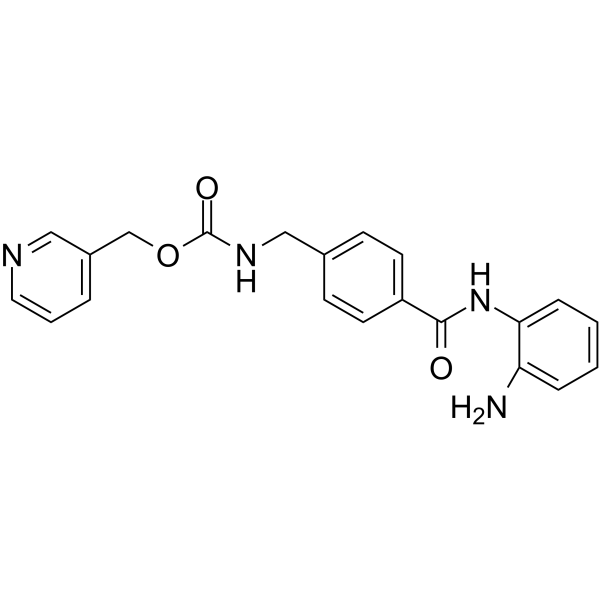
HY-12163
EntinostatHDAC Class I Inhibitor
Publications Citing Use of MedChemExpress (MCE) DC-Y13-27
More- Mol Cell. 2023 Dec 7;83(23):4334-4351.e7. [Abstract]
- Phytomedicine. 2026 Jul:156:158239. [Abstract]
- Diabetologia. 2025 Jun;68(6):1335-1351. [Abstract]
- Environ Int. 2024 Feb:184:108493. [Abstract]
- Int J Biol Macromol. 2026 Jun:367:152621. [Abstract]
- Cell Mol Life Sci. 2024 Dec 3;81(1):477. [Abstract]
- Hum Cell. 2026 Jul 24;39(8):114.
 Customer Validation & Images

-
Cell Imaging/Staining
-
WB
-
Bio/Physico-chemical Assay
-
In Vivo Efficacy Study


Biological Activity
Description
|
YTHDF2 37.9 μM (Kd) |
FOXO3 |
MMP-1 |
MMP3 |
MMP-7 |
MMP9 |
IL-1β |
In Vitro
DC-Y13-27 binds to YTHDF2 with a binding constant (KD) of 37.9 μM[1].
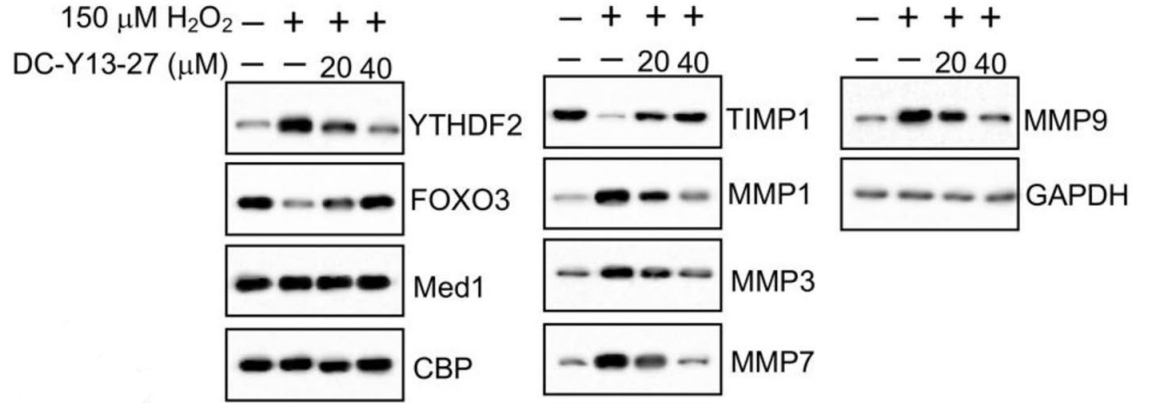
DC-Y13-27 (20-40 μM; 6 h) co-treated with H2O2 reduces YTHDF2 expression, restores FOXO3 and TIMP1 protein levels, and decreases MMP1/3/7/9 expression in NP and AF cells[2].
DC-Y13-27 (24 h) inhibits cell proliferation, increases LDH release and IL-1β secretion, and induces pyroptosis in MDA-MB-231 and BT-549 cells[3].
MedChemExpress (MCE) has not independently confirmed the accuracy of these methods. They are for reference only. Further protocols information, click here.
In Vivo
DC-Y13-27 (5 mg/kg; s.c.; every 5 days; 12 weeks) alleviates intervertebral disc degeneration in aged mice and H2O2-induced IDD models[2].
MedChemExpress (MCE) has not independently confirmed the accuracy of these methods. They are for reference only.
-
Animal Model:C57BL/6 mice (8 weeks old initially) with aged or H2O2-induced IDD[2].
-
Dosage:5 mg/kg
-
Administration:Subcutaneous injection near lumbar discs, every 5 days, for 12 weeks
-
Result:Reduced disc degeneration, increased FOXO3 and TIMP1 expression, and decreased MMP1/3/7/9 activity in IVD tissues.


Chemical Information
-
Appearance Solid
-
Molecular Weight 270.31
-
Formula C14H10N2O2S
-
Color Yellow to orange
-
SMILES
N#C/C(C(N)=O)=C\C1=CC=C(C2=CC(O)=CC=C2)S1
-
Shipping
Room temperature in continental US; may vary elsewhere.
-
Storage
Powder -20°C 3 years 4°C 2 years In solvent -80°C 6 months -20°C 1 month


Publications (7)
-
Journal Impact Factor
-
Most Recent
-
Mol Cell
EGFR promotes ALKBH5 nuclear retention to attenuate N6-methyladenosine and protect against ferroptosis in glioblastoma. [Abstract]2023 Dec 7;83(23):4334-4351.e7. PMID: 37979586 -
Phytomedicine
Dihydroartemisinin, a novel YTHDF2 inhibitor, alleviates rheumatoid arthritis by suppressing neutrophil extracellular traps via an autophagy-dependent pathway. [Abstract]2026 Jul:156:158239. PMID: 42068879 -
Diabetologia
MAP4K4 aggravates microvascular anomalies in diabetic retinopathy in a YTHDF2-dependent manner. [Abstract]2025 Jun;68(6):1335-1351. PMID: 40072537 -
Environ Int
HIF-1α/m6A/NF-κB/CCL3 axis-mediated immunosurveillance participates in low level benzene-related erythrohematopoietic development toxicity. [Abstract]2024 Feb:184:108493. PMID: 38350257 -
Int J Biol Macromol
Hypoxia-mediated epigenetic silencing of YTHDF2 promotes endometriosis progression via the NFE2L1-NF-κB axis. [Abstract]2026 Jun:367:152621. PMID: 42162597 -
Cell Mol Life Sci
YTHDF2-dependent m6A modification of FOXO3 mRNA mediates TIMP1 expression and contributes to intervertebral disc degeneration following ROS stimulation. [Abstract]2024 Dec 3;81(1):477. PMID: 39625652
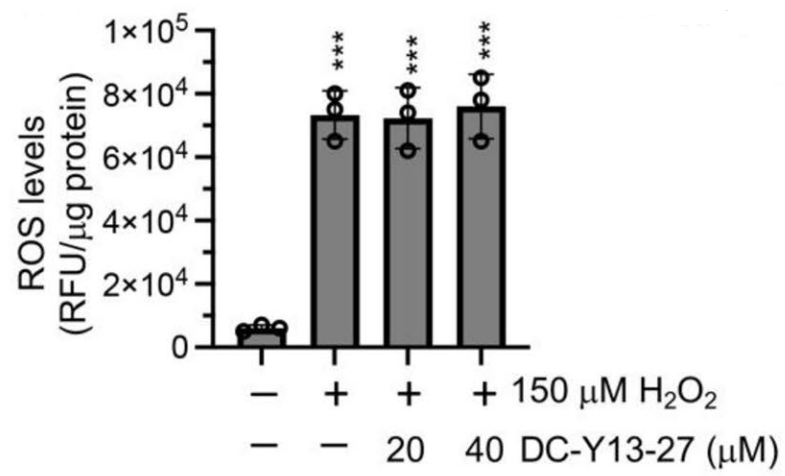
DC-Y13-27 purchased from MedChemExpress. Usage Cited in: Cell Mol Life Sci. 2024 Dec 3;81(1):477. [Abstract]
Changes in intracellular ROS levels in NP cells following treatment with H2O2 (0 and 150 µM) and DC-Y13-27 (0, 20, and 40 µM) for 6 h. ROS levels were quantified using DCFH-DA staining.
DC-Y13-27 purchased from MedChemExpress. Usage Cited in: Cell Mol Life Sci. 2024 Dec 3;81(1):477. [Abstract]
Protein expression levels of YTHDF2, FOXO3, Med1, CBP, TIMP1, MMP1, MMP3, MMP7, and MMP9 in NP cells after treatment with H2O2 and DC-Y13-27 (0-40 µM, 6 h).
DC-Y13-27 purchased from MedChemExpress. Usage Cited in: Cell Mol Life Sci. 2024 Dec 3;81(1):477. [Abstract]
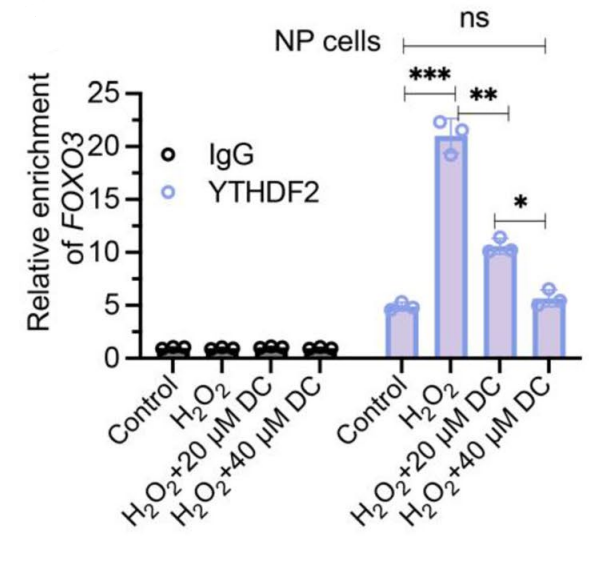
RIP assay to detect FOXO3 mRNA association with YTHDF2 in NP cells treated with H2O2 and DC-Y13-27 (0-40 µM, 6 h), using IgG and anti-YTHDF2 antibodies.
DC-Y13-27 purchased from MedChemExpress. Usage Cited in: Cell Mol Life Sci. 2024 Dec 3;81(1):477. [Abstract]
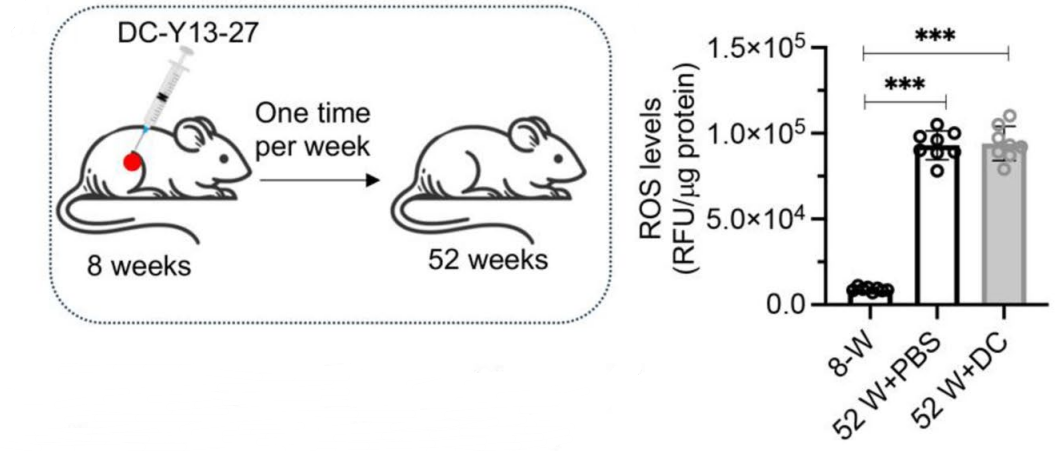
Schematic representation of DC-Y13-27 administration in aged mice. ROS levels in lumbar IVDs from young mice (8 weeks old), 52-week-old mice treated with PBS or DC-Y13-27 (5 mg/kg).
-


Solvent & Solubility
In Vitro:
DMSO : 100 mg/mL (369.95 mM; Need ultrasonic; Hygroscopic DMSO has a significant impact on the solubility of product, please use newly opened DMSO)
H2O : < 0.1 mg/mL (insoluble)
Please refer to the solubility information to select the appropriate solvent. Once prepared, please aliquot and store the solution to prevent product inactivation from repeated freeze-thaw cycles.
Storage method and period of stock solution: -80°C, 6 months; -20°C, 1 month. When stored at -80°C, please use it within 6 months. When stored at -20°C, please use it within 1 month.
Please refer to the solubility information to select the appropriate solvent. Once prepared, please aliquot and store the solution to prevent product inactivation from repeated freeze-thaw cycles.
Storage method and period of stock solution: -80°C, 6 months; -20°C, 1 month. When stored at -80°C, please use it within 6 months. When stored at -20°C, please use it within 1 month.
Concentration (start) × Volume (start) = Concentration (final) × Volume (final)
In Vivo:
Select the appropriate dissolution method based on your experimental animal and administration route.
- For the following dissolution methods, please ensure to first prepare a clear stock solution using an In Vitro approach and then sequentially add co-solvents:
- To ensure reliable experimental results, the clarified stock solution can be appropriately stored based on storage conditions. As for the working solution for In Vivo experiments, it is recommended to prepare freshly and use it on the same day.
- The percentages shown for the solvents indicate their volumetric ratio in the final prepared solution. If precipitation or phase separation occurs during preparation, heat and/or sonication can be used to aid dissolution.
Add each solvent one by one: 10% DMSO 40% PEG300 5% Tween-80 45% Saline
Solubility: 2.5 mg/mL (9.25 mM); Suspended solution; Need ultrasonic
This protocol yields a suspended solution of 2.5 mg/mL. Suspended solution can be used for oral and intraperitoneal injection.
Taking 1 mL working solution as an example, add 100 μL DMSO stock solution (25.0 mg/mL) to 400 μL PEG300, and mix evenly; then add 50 μL Tween-80 and mix evenly; then add 450 μL Saline to adjust the volume to 1 mL.
Preparation of Saline: Dissolve 0.9 g sodium chloride in ddH₂O and dilute to 100 mL to obtain a clear Saline solution.
In Vivo Dissolution Calculator
Please enter the basic information of animal experiments:
-
-
-
-
Recommended: Prepare an additional quantity of animals to account for potential losses during experiments.
Please enter your animal formula composition:
-
%DMSO +
Recommended: Keep the proportion of DMSO in working solution below 2% if your animal is weak.
-
%+
-
+%Tween-80 + +
-
%Saline +
The co-solvents required include: DMSO, . All of co-solvents are available by MedChemExpress (MCE). , Tween 80. All of co-solvents are available by MedChemExpress (MCE).
Working solution concentration: 0.22 mg/mL
Method for preparing stock solution: mg drug dissolved in μL DMSO. Stock solution concentration: mg/mL.
1. Take μL DMSO stock solution;
2. Add μL .
μL , mix evenly;
3. Then add μL Tween 80, mix evenly;
4. Then add μL
Please ensure that the stock solution in the first step is dissolved to a clear state, and add co-solvents in sequence. You can use ultrasonic heating (ultrasonic cleaner, recommended frequency 20-40 kHz), vortexing, etc. to assist dissolution.

Protocols
-
RNA extraction experimental
By lysing cells, releasing RNA, and removing impurities such as proteins and DNA, high-purity RNA products are finally obtained. The commonly used traditional method is the guanidine isothiocyanate/phenol/chloroform method (Trizol), which is suitable for a variety of animal materials including animal tissues, microorganisms, cultured cells, etc., and most plant materials.
-
Subcutaneous Cell-Line-Derived Xenograft
Subcutaneous cell-line-derived xenograft (CDX) models are established by implanting cultured human cancer cell lines into immunodeficient mice, where the injected cells form localized tumors that can be monitored in vivo as a measure of tumorigenic potential, growth kinetics, and treatment response. These models are widely used in oncology research because they allow reproducible tumor formation and enable comparative assessment of tumor growth between different cell lines or genetic manipulations in a controlled in vivo microenvironment. Subcutaneous implantation of cancer cells in immunodeficient mice is a standard approach for evaluating tumor growth behavior and therapeutic response across multiple cancer types, including prostate, esophageal, pancreatic, and colon cancer models.
-
Breast Cancer Modeling
Breast cancer is a heterogeneous cancer, and it has been distinguished into four subtypes: luminal A, luminal B, HER2-positive and basal-like. Molecular mutations, epigenetic alterations, hormone exposure and immune microenvironment are related to the progression of breast cancer.
-
Pyroptosis Solutions
Pyroptosis is a lytic inflammatory cell-death pathway executed by gasdermin pores, most classically through inflammasome-mediated activation of caspase-1, cleavage of gasdermin D, membrane pore formation, LDH release, and secretion of IL-1β and IL-18. The canonical pathway is commonly modeled by priming cells with an inflammatory signal such as LPS to induce pro-IL-1β and inflammasome components, followed by an activation signal such as ATP or nigericin to activate NLRP3, ASC speck formation, caspase-1 cleavage, GSDMD cleavage, cytokine release, and pyroptotic membrane rupture. The non-canonical pathway is triggered when cytosolic LPS activates mouse caspase-11 or human caspase-4/5, leading to GSDMD cleavage and pyroptosis, and this can secondarily activate NLRP3-dependent IL-1β release. Pyroptosis is linked to inflammatory injury, infection, cancer, liver disease, ocular disease, placental inflammation, and other disease phenotypes, but unresolved questions include which gasdermin fam


Purity & Documentation
-
Data Sheet (276 KB)
-
SDS (251 KB)
- English - EN (251 KB)
- Français - FR (251 KB)
- Deutsch - DE (251 KB)
- Norwegian - NO (251 KB)
- Español - ES (251 KB)
- Swedish - SV (251 KB)
- Italian - IT (251 KB)
- Korean - KR (251 KB)
- Portuguese - PT (251 KB)
-
Handling Instructions (2659 KB)
References
[1]. Wang L, et al. YTHDF2 inhibition potentiates radiotherapy antitumor efficacy. Cancer Cell. 2023 May 15:S1535-6108(23)00163-0. [Content Brief]
[2]. Wang F, et al. YTHDF2-dependent m6A modification of FOXO3 mRNA mediates TIMP1 expression and contributes to intervertebral disc degeneration following ROS stimulation. Cell Mol Life Sci. 2024 Dec 3;81(1):477. [Content Brief]
[3]. Shuai Y, et al. The N6-methyladenosine writer METTL3 promotes breast cancer progression through YTHDF2-dependent posttranscriptional silencing of GSDMD. Apoptosis. 2025 Feb;30(1-2):226-238. [Content Brief]


Complete Stock Solution Preparation Table
Please refer to the solubility information to select the appropriate solvent. Once prepared, please aliquot and store the solution to prevent product inactivation from repeated freeze-thaw cycles.
Storage method and period of stock solution: -80°C, 6 months; -20°C, 1 month. When stored at -80°C, please use it within 6 months. When stored at -20°C, please use it within 1 month.
| Optional Solvent | Concentration Solvent Mass | 1 mg | 5 mg | 10 mg | 25 mg |
|---|---|---|---|---|---|
| DMSO | 1 mM | 3.6995 mL | 18.4973 mL | 36.9946 mL | 92.4864 mL |
| 5 mM | 0.7399 mL | 3.6995 mL | 7.3989 mL | 18.4973 mL | |
| 10 mM | 0.3699 mL | 1.8497 mL | 3.6995 mL | 9.2486 mL | |
| 15 mM | 0.2466 mL | 1.2332 mL | 2.4663 mL | 6.1658 mL | |
| 20 mM | 0.1850 mL | 0.9249 mL | 1.8497 mL | 4.6243 mL | |
| 25 mM | 0.1480 mL | 0.7399 mL | 1.4798 mL | 3.6995 mL | |
| 30 mM | 0.1233 mL | 0.6166 mL | 1.2332 mL | 3.0829 mL | |
| 40 mM | 0.0925 mL | 0.4624 mL | 0.9249 mL | 2.3122 mL | |
| 50 mM | 0.0740 mL | 0.3699 mL | 0.7399 mL | 1.8497 mL | |
| 60 mM | 0.0617 mL | 0.3083 mL | 0.6166 mL | 1.5414 mL | |
| 80 mM | 0.0462 mL | 0.2312 mL | 0.4624 mL | 1.1561 mL | |
| 100 mM | 0.0370 mL | 0.1850 mL | 0.3699 mL | 0.9249 mL |


DC-Y13-27 Related Classifications
HY-154919 Related Classifications
 Powered by Bioz