



Colitis
-
Colitis (76)

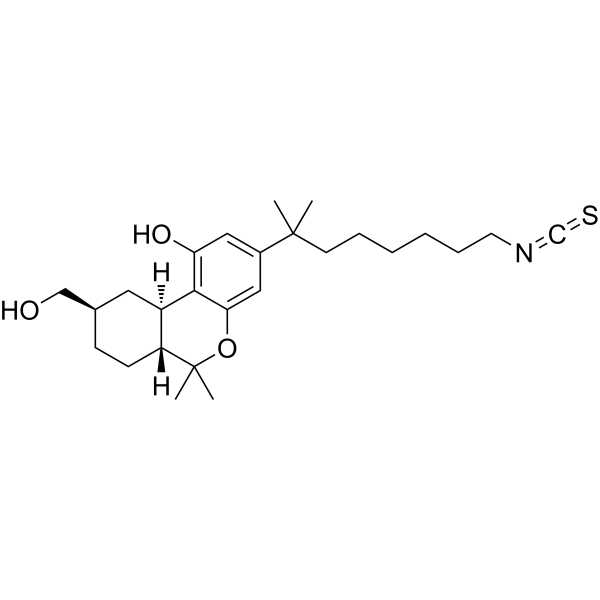
- Formula: C26H39NO3S
- Molecular Weight: 445.66
AM841 is a cannabinoid superagonist and a covalent, irreversible full agonist of CB1. AM841 can activate peripheral CB1 receptors to reduce excitatory neurotransmission and GI smooth muscle contractility, and inhibit synaptic transmission. AM841 is peripherally restricted at low doses in mice, with extremely low brain penetration, potently inhibits gastrointestinal motility, and can reverse acute stress-induced hyperaccelerated gastrointestinal transit; at high doses, it can produce the classic tetrad of central cannabinoid phenotypes (analgesia, catalepsy, hypothermia, decreased spontaneous activity). AM841 can improve intestinal inflammation in mouse colitis models. AM841 induces transient stress-induced hyperthermia. AM841 can be used for research on gastrointestinal motility disorders and colitis.
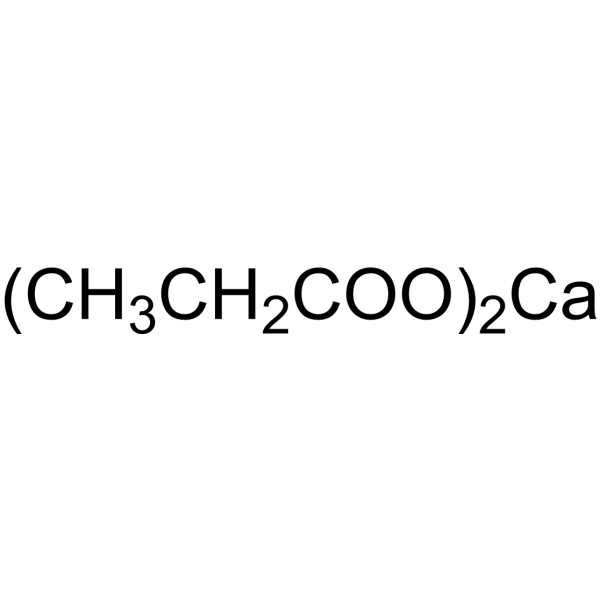
- Formula: C6H10CaO4
- Molecular Weight: 186.22
Calcium propionate, United States Pharmacopeia (USP) Reference Standard (Bioban-C (Pharmaceutical primary standard, USP)) is a calcium salt of Propionic acid with oral activity, which can be hydrolyzed into propionate and calcium ions. Calcium propionate, United States Pharmacopeia (USP) Reference Standard elevates intracellular ROS levels in tumor cells, depletes GSH, reduces mitochondrial membrane potential, and thereby induces tumor cell apoptosis. In mouse colitis models, Calcium propionate, United States Pharmacopeia (USP) Reference Standard modulates inflammatory factors such as IFN-γ, calprotectin, and Pglyrp3, ameliorating intestinal inflammation and metabolic disorders. In ruminants, Calcium propionate, United States Pharmacopeia (USP) Reference Standard serves as a gluconeogenic precursor, regulating rumen fermentation and microbial diversity; in high-fat diet rats, it alters gut microbiota composition and affects blood biochemical parameters. Calcium propionate, United States Pharmacopeia (USP) Reference Standard is commonly used as a food and feed additive, and is also used in research related to hypocalcemia, dyslipidemia, colitis, and lung cancer.
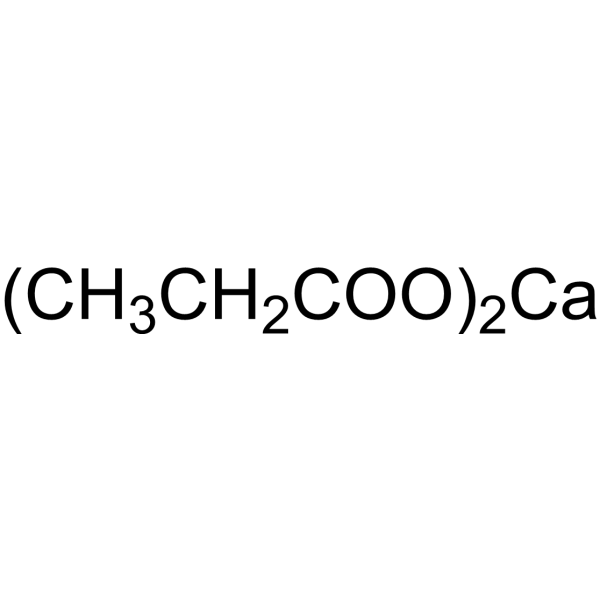
- Formula: C6H10CaO4
- Molecular Weight: 186.22
Calcium propionate, meets analytical specification of E282 (Bioban-C, meets analytical specification of E282) is a calcium salt of Propionic acid with oral activity, which can be hydrolyzed into propionate and calcium ions. Calcium propionate, meets analytical specification of E282 elevates intracellular ROS levels in tumor cells, depletes GSH, reduces mitochondrial membrane potential, and thereby induces tumor cell apoptosis. In mouse colitis models, Calcium propionate, meets analytical specification of E282 modulates inflammatory factors such as IFN-γ, calprotectin, and Pglyrp3, ameliorating intestinal inflammation and metabolic disorders. In ruminants, Calcium propionate, meets analytical specification of E282 serves as a gluconeogenic precursor, regulating rumen fermentation and microbial diversity; in high-fat diet rats, it alters gut microbiota composition and affects blood biochemical parameters. Calcium propionate, meets analytical specification of E282 is commonly used as a food and feed additive, and is also used in research related to hypocalcemia, dyslipidemia, colitis, and lung cancer.

- Formula: C21H34O4
- Molecular Weight: 350.49
10-Gingerol (Standard) is the analytical standard of 10-Gingerol (HY-N0448). This product is intended for research and analytical applications. 10-Gingerol is an AMPK agonist, which is found in the ginger oleoresin from fresh rhizome with anti-inflammatory, antioxidant and anti-proliferative activities. 10-Gingerol suppresses neointimal hyperplasia and inhibits vascular smooth muscle cell proliferation. 10-Gingerol exhibits substantial scavenging activities with an IC50 value of 10.47 μM against DPPH radical, an IC50 value of 1.68 μM against superoxide radical and an IC50 value of 1.35 μM against hydroxyl radical. 10-Gingerol inhibits the proliferation of MDA-MB-231 tumor cell line with an IC50 of 12.1 μM. 10-Gingerol suppresses the proliferation, migration, invasion, and induced apoptosis through targeting the PI3K/Akt signaling pathway in MDA-MB-231/IR cells. 10-Gingerol is promising for research of ulcerative colitis.

- Formula: C22H26F3N5O3
- Molecular Weight: 465.47
EP4 receptor agonist-4 is an orally active, selective EP4 receptor agonist, with a binding IC50 of 18 nM against human receptors, and agonistic EC50 values of 2.1 nM and 0.11 μM against human and murine receptors, respectively. EP4 receptor agonist-4 inhibits hERG channel activity with an IC50 of 10.2 μM. It can be used in the research of inflammatory bowel disease (colitis).

- Formula: C15H18O3
- Molecular Weight: 246.31
Ambrosin is an orally active NF-κβ and BACE1 inhibitor. Ambrosin reduces pro-inflammatory and nitrosative mediators, increases PPARγ levels, inhibits apoptosis (Apoptosis), enhances autophagy (Autophagy), and ameliorates oxidative stress. Ambrosin reduces Amyloid plaque deposition. Ambrosin improves lipopolysaccharide-induced memory impairment and colonic histopathological changes. Ambrosin can be used in research related to Alzheimer's disease and colitis.


- Formula: C24H21N3O5
- Molecular Weight: 431.44
NF-κB/STAT3/iNOS-IN-1 is a NF-κB/STAT3/iNOS inhibitor. NF-κB/STAT3/iNOS-IN-1 reduces the expression of inflammatory mediators TNF-α, IL-1β, IL-6, IL-8 and COX-2. NF-κB/STAT3/iNOS-IN-1 upregulates the expression of epithelial barrier-related proteins E-cadherin, Occludin and Zonula occludens-1. NF-κB/STAT3/iNOS-IN-1 alleviates disease severity and histopathological damage in mouse colitis models. NF-κB/STAT3/iNOS-IN-1 can be used for the research of inflammatory bowel disease (colitis).


- Formula: C21H34O4
- Molecular Weight: 350.49
(±)-10-Gingerol is the racemic form of 10-Gingerol (HY-N0448). 10-Gingerol is an AMPK agonist, which is found in the ginger oleoresin from fresh rhizome with anti-inflammatory, antioxidant and anti-proliferative activities. 10-Gingerol suppresses neointimal hyperplasia and inhibits vascular smooth muscle cell proliferation. 10-Gingerol exhibits substantial scavenging activities with an IC50 value of 10.47 μM against DPPH radical, an IC50 value of 1.68 μM against superoxide radical and an IC50 value of 1.35 μM against hydroxyl radical. 10-Gingerol inhibits the proliferation of MDA-MB-231 tumor cell line with an IC50 of 12.1 μM. 10-Gingerol suppresses the proliferation, migration, invasion, and induced apoptosis through targeting the PI3K/Akt signaling pathway in MDA-MB-231/IR cells. 10-Gingerol can be used in research on various common cancers such as ovarian cancer and colon cancer, as well as colitis and neurodegenerative diseases.

- Formula: C41H78NO8P
- Molecular Weight: 744.03
DOPE GMP is DOPE (HY-112005) produced by using GMP guidelines. GMP small molecules works appropriately as an auxiliary reagent for cell therapy manufacture. DOPE (Dioleoylphosphatidylethanolamine; 1,2-Dioleoyl-sn-glycero-3-phosphoethanolamine) is an orally active inhibitor of ferroptosis with anti-inflammatory and intestinal barrier maintenance activities. DOPE regulates the expression of ACSL4, SLC7A11 and GPX4 to restore the redox system balance, thereby reducing the levels of lipid peroxides, iron ions and intestinal inflammatory factors (IL-1β and IL-6). DOPE promotes the migration and proliferation of intestinal epithelial cells and increases the level of tight junction proteins; it also destabilizes endosomal membranes, mediates the conjugation of RVG peptides with mesenchymal stem cell-derived exosomes to enhance brain targeting. DOPE can be applied to research related to neonatal necrotizing enterocolitis and Alzheimer's disease.

- Formula: C19H34N2O
- Molecular Weight: 306.49
5-Norbornene-2-methylamine-C10-NH2 is a Keap1-targeting hydrophobic tag (HyT)-linker conjugates, containing a HyT (HY-W022007) and a linker (HY-W014831). 5-Norbornene-2-methylamine-C10-NH2 can be used for synthesis of NBE5 (HY-181907).

- Formula: C50H73N3O4
- Molecular Weight: 780.13
NBE5 is an orally active hydrophobic tag-targeting (Hyt) degrader (HyTTD) that targets Keap1. NBE5 mimics protein misfolding and recruits the molecular chaperone Hsp90, while achieving targeted degradation of Keap1 through both the ubiquitin-proteasome system and the autophagy-lysosome system. Consequently, NBE5 relieves the inhibition of the transcription factor Nrf2 by Keap1, potently activates the Nrf2-mediated endogenous antioxidant pathway, and upregulates the expression of downstream antioxidant proteins such as HO-1 and GCLM. NBE5 effectively alleviates oxidative stress and inflammatory damage, and exhibits excellent in vivo activity in a mouse model of acute colitis induced by DSS (HY-116282C).
NBE5 consists of a hydrophobic tag (HY-W022007), a Keap1-Nrf2 ligand (HY-14909), and a linker (HY-W014831).

- Formula: C29H28N4O4
- Molecular Weight: 496.56
S1PR1/S1PR5 agonist-1 (Compound 19) is an orally active S1PR1 and S1PR5 agonist with EC50 values of 40.0 and 22.9 nM, respectively. S1PR1/S1PR5 agonist-1 binds to key residues of S1PR1 to mediate agonistic activity. S1PR1/S1PR5 agonist-1 alleviates colitis pathological changes in DSS-induced mouse models and exerts minimal effects on mouse heart rate. S1PR1/S1PR5 agonist-1 can be used for the research of inflammatory bowel disease.

- Formula: C32H52O4
- Molecular Weight: 500.75
24-O-Acetyllycoclavanol (compound 1) is a triterpenoid anti-inflammatory agent that selectively targets the NF-κB and ERK1/2 signaling pathways. It exerts its anti-inflammatory activity by inhibiting lipopolysaccharide (LPS)-induced inducible nitric oxide synthase (iNOS) and COX-2 expression, reducing the production of inflammatory mediators such as nitric oxide (NO), IL-1β, and IL-8. 24-O-Acetyllycoclavanol can be used in research related to inflammatory bowel disease (IBD). 24-O-Acetyllycoclavanol can be biologically isolated from the ethyl acetate extract of Lycopodium clavatum.

- Formula: C18H13NO5
- Molecular Weight: 323.30
HDAC6-IN-71 (Compound 24) is a HDAC6 inhibitor with IC50 values for HDAC6 and HDAC1 of 13.68 and 443.12 nM respectively. HDAC6-IN-71 effectively inhibits the production of NO by mouse macrophages, with its IC50 being 2.31 μM. HDAC6-IN-71 inhibits the HDAC6-NF-κB signaling pathway, reduces the levels of phosphorylated IκB-α and IKK-α/β, and suppresses the expression of downstream inflammatory proteins COX-2 and iNOS. HDAC6-IN-71 significantly alleviates ulcerative colitis in mice.

- Formula: C36H48F2N2O2
- Molecular Weight: 578.78
HDAC3 degrader-1 (Compound Z8) is a selective HDAC3 degrader with a DC50 of 2.42 μM. HDAC3 degrader-1 has almost no effect on HDAC1, HDAC2, and HDAC6. HDAC3 degrader-1 inhibits the activation of the NLRP3 inflammasome and reduces the secretion of IL-1β and caspase-1. HDAC3 degrader-1 shows significant efficacy in septic shock and colitis models. HDAC3 degrader-1 can be used in anti-inflammatory research.

- Formula: C26H24ClN7O2S
- Molecular Weight: 534.03
NIK-IN-3 is a potent and orally active NF-κB-inducing kinase (NIK) inhibitor with an IC50 of 5.2 nM. NIK-IN-3 suppresses non-canonical NF-κB pathway activation and inhibits the secretion of pro-inflammatory cytokines, such as TNF-α, IL-6, IL-1β and chemokine CXCL12. NIK-IN-3 shows significant anti-inflammatory effects in LPS (HY-D1056)-induced sepsis mice model and DSS (HY-116282)-induced colitis model. NIK-IN-3 can be used for the research of inflammation, such as colitis.

- Formula: C19H15NO4
- Molecular Weight: 321.33

- Formula: C28H45NO8
- Molecular Weight: 523.66
N-Cholyl-L-aspartic acid (AspCA) is a N-cholyl Amino Acid (HY-168761) derivative. N-Cholyl-L-aspartic acid can be used for the study of inflammatory bowel disease (IBD).



