1009 Results for "

G2

" in MedChemExpress (MCE) Product Catalog:
Products (1009)

1009 Results for "G2" in MCE Product Catalog:

5
5 Cited Publications
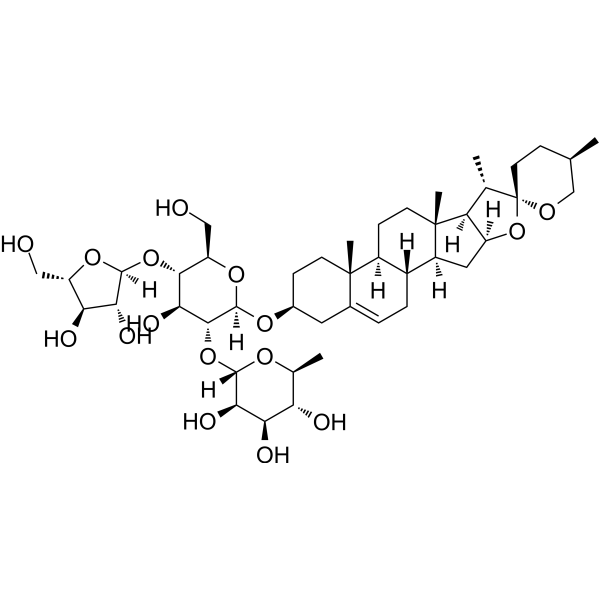
Cat. No.: HY-N0047
CAS No.: 50773-41-6
Polyphyllin I is a bioactive constituent extracted from Paris polyphylla, has strong anti-tumor activity. Polyphyllin I is an activator of the JNK signaling pathway and is an inhibitor of PDK1/Akt/mTOR signaling. Polyphyllin I induces autophagy, G2/M phase arrest and apoptosis [2] .
loading...
    loading...
4
4 Cited Publications
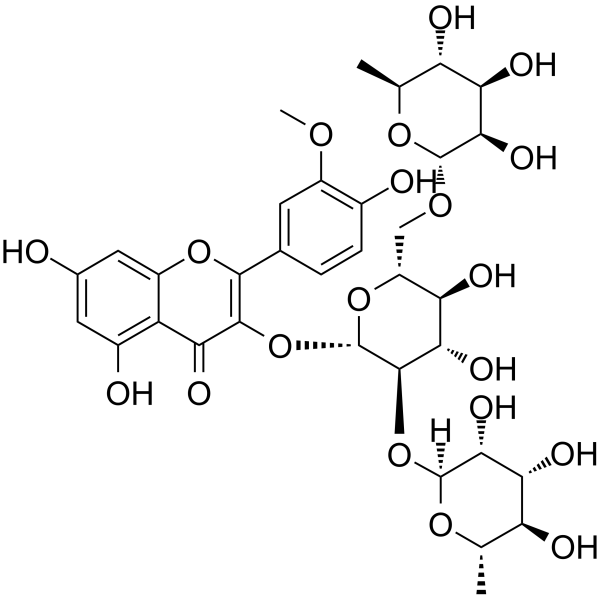
Cat. No.: HY-N0712
CAS No.: 104472-68-6
Typhaneoside is an orally active activator of PI3K/Akt/mTOR and farnesoid X receptor. Typhaneoside promotes the activation of AMPK and Caspase-3, induces apoptosis, ferroptosis, autophagy, ROS accumulation, cell cycle arrest at the G2/M phase, and reduces cancer cell viability. Typhaneoside improves glucose and lipid metabolism, alleviates inflammatory responses, oxidative stress and hepatic lipid accumulation, and exerts hepatoprotective effects. Typhaneoside can be used in research related to heart failure after myocardial infarction, acute myeloid leukemia, non-alcoholic fatty liver disease and neurological disorders [2] .
loading...
    loading...
4
4 Cited Publications
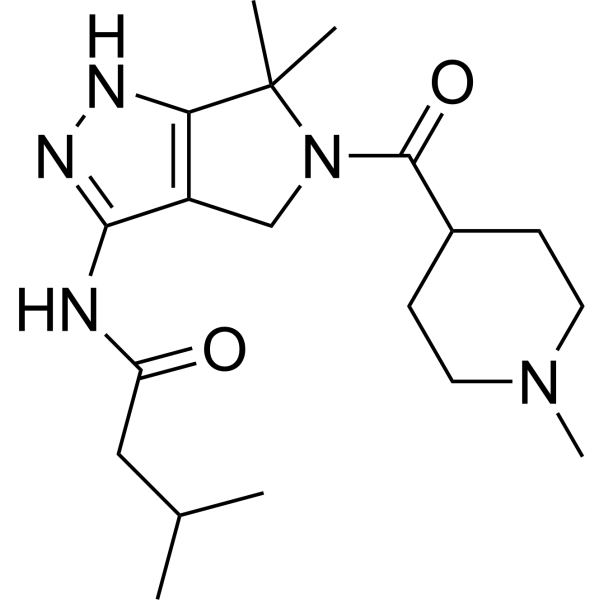
Cat. No.: HY-11001
CAS No.: 718630-59-2
Purity:  99.25%
Target:  

CDK Caspase Apoptosis GSK-3

Research Areas:  

Cancer

PHA-793887 is a CDK inhibitor (with IC50 values of 8 nM for Cdk2, 60 nM for Cdk1, 62 nM for Cdk4, 138 nM for Cdk9). PHA-793887 inhibits purified GSK3β (IC50 79 nM). PHA-793887 reduces the phosphorylation level of nucleophosmin/cdc6, induces G1/G2/M phase arrest, and triggers Apoptosis by activating Caspase-3. PHA-793887 exhibits anticancer activity against leukemia. PHA-793887 can be used in research related to acute leukemia, chronic myeloid leukemia, and advanced/metastatic solid tumors [2] .
loading...
    loading...
3
3 Cited Publications
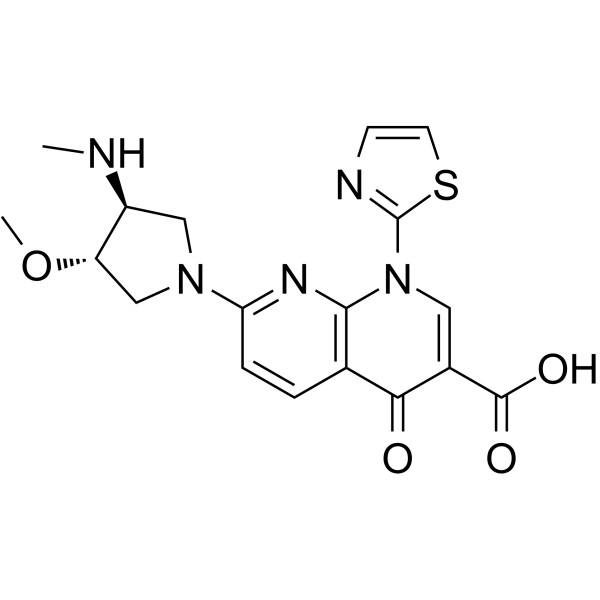
Cat. No.: HY-10534
CAS No.: 175414-77-4
Purity:  99.26%
Synonyms: SNS-595; Vosaroxin; AG 7352
Target:  

Topoisomerase Apoptosis

Research Areas:  

Cancer

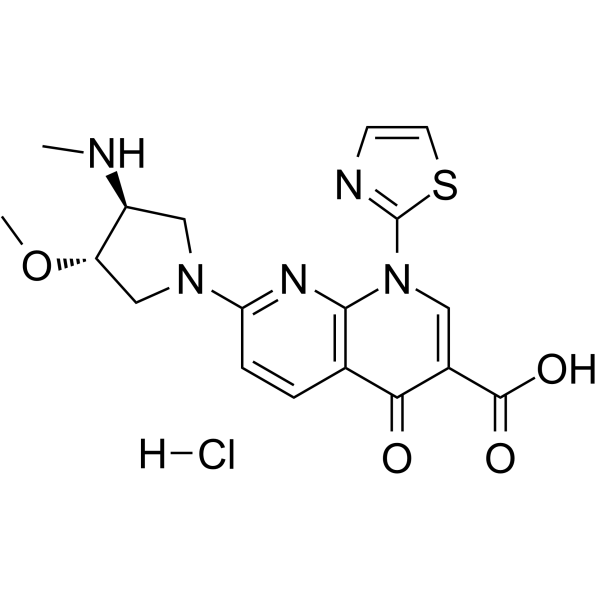
Voreloxin (SNS-595; Vosaroxin; AG 7352) is a first-in-class topoisomerase II inhibitor that intercalates DNA and induces site-selective DNA DSB, G2 arrest, and apoptosis.
loading...
    loading...
3
3 Cited Publications
Cat. No.: HY-16518
CAS No.: 175519-16-1
Synonyms: SNS-595 Hydrochloride; Vosaroxin Hydrochloride; AG 7352 Hydrochloride
Target:  

Topoisomerase Apoptosis

Research Areas:  

Cancer

Voreloxin Hydrochloride is a first-in-class topoisomerase II inhibitor that intercalates DNA and induces site-selective DNA DSB, G2 arrest, and apoptosis.
loading...
    loading...
3
3 Cited Publications
Cat. No.: HY-100789
CAS No.: 1312471-39-8
Purity:  99.90%
Research Areas:  

Cancer

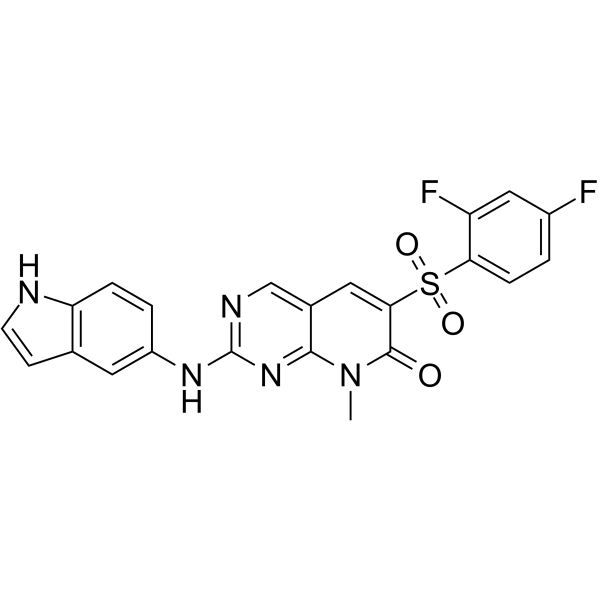
ON1231320 is a highly specific polo like kinase 2 (PLK2) inhibitor with an IC50 of 0.31 μM. ON1231320 blocks tumor cell cycle progression in the G2/M phase in mitosis, causing apoptotic cell death. ON1231320, an arylsulfonyl pyrido-pyrimidinone, has antitumor activity [2].
loading...
    loading...
3
3 Cited Publications
Cat. No.: HY-126020
CAS No.: 2290527-07-8
Purity:  99.90%
Target:  

DNA/RNA Synthesis RAD51

Research Areas:  

Cancer

Bractoppin is a potent and selective agent-like inhibitor of phosphopeptide recognition by the human BRCA1 tandem(t) BRCT domain (binding IC50: 74 nM). Bractoppin diminishes BRCA1 recruitment to DNA breaks, in turn suppressing damage-induced G2 arrest and assembly of the recombinase, RAD51. Bractoppin preferentially inhibits BRCA1 tBRCT-dependent steps in the DNA damage response .
loading...
    loading...
3
3 Cited Publications
Cat. No.: HY-139604
CAS No.: 2623158-64-3
Purity:  99.56%
Target:  

MARK Apoptosis

Research Areas:  

Cancer

PCC0208017 is a microtubule affinity regulating kinases (MARK3/MARK4) inhibitor with IC50s of 1.8 and 2.01 nM, respectively. PCC0208017 has much lower inhibitory activity against MARK1 and MARK2, with IC50s of 31.4 and 33.7 nM, respectively. PCC0208017 suppresses glioma progression in vitro and in vivo. PCC0208017 disrupts microtubule dynamics and induces G2/M phase cell cycle arrest and cell apoptosis. PCC0208017 demonstrates robust antitumor activity in vivo and displays good BBB permeability .
loading...
    loading...
3
3 Cited Publications
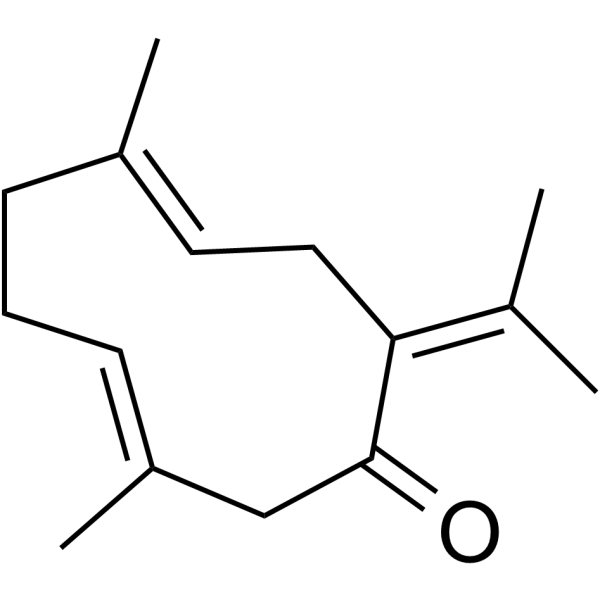
Cat. No.: HY-N0440
CAS No.: 6902-91-6
Germacrone is a sesquiterpene compound with multiple biological activities. Germacrone inhibits the H1N1 and H3N2 influenza A virus and the influenza B virus. Germacrone blocks the progressionof arthritis by regulating Th1/Th2 balance and inhibiting NF-κB signaling. Germacrone can arrest the cell cycle at G0/G1 and G2/M phases and induce apoptosis in breast cancer cells. Germacrone inhibits 5α-reductase and has anti-androgenic effect. Germacrone has neuroprotective functions and can be used for the study of traumatic brain injury (TBI). Germacrone also has antioxidant activity [2] .
loading...
    loading...
3
3 Cited Publications
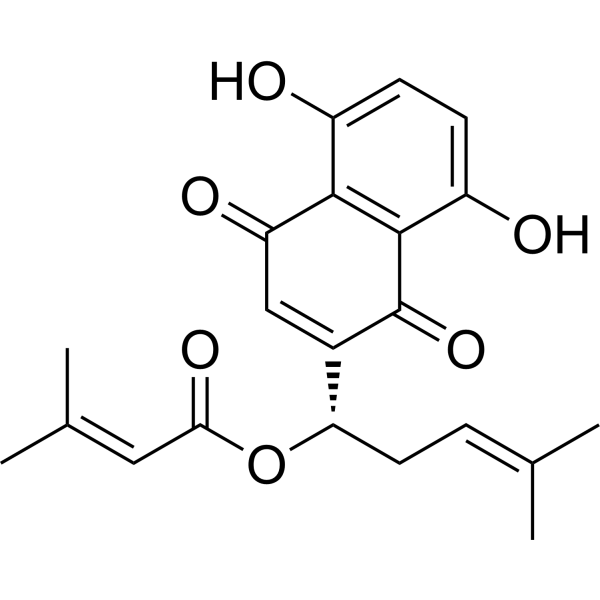
Cat. No.: HY-N5112A
CAS No.: 34539-65-6
Synonyms: Arnebin 1
β,β-Dimethylacrylalkannin (Arnebin 1) is an orally active FGFR1 inhibitor (IC50=2.5 μM) and the main active component of Lithospermum erythrorhizon. β,β-Dimethylacrylalkannin blocks downstream signaling by binding to the ATP pocket of FGFR1, and regulates the CDK1/Cdc25C pathway and ROS-JNK axis, thereby inducing G2/M phase arrest, necrosis and apoptosis in cancer cells, and inhibiting tumor proliferation. β,β-Dimethylacrylalkannin also acts as a colistin adjuvant to disrupt the cell membrane of Gram-negative bacteria. β,β-Dimethylacrylalkannin exhibits significant tumor-inhibitory effects with no obvious toxicity in PDX models, but chronic exposure to high doses may alter the relative lung/liver weights of rats, while acute exposure to high doses causes responses such as reduced motor activity. β,β-Dimethylacrylalkannin finds wide application in studies related to hepatocellular carcinoma, colorectal cancer, colistin-resistant bacterial infections, hepatitis and psoriasis [2] .
loading...
    loading...
3
3 Cited Publications
Cat. No.: HY-P74628
Purity:  ≥ 95%, as determined by reducing SDS-PAGE.
Synonyms: PLA2G2A; Non-Pancreatic Secretory Phospholipase A2; Prev. PLA2B; Phospholipase A2; Prev. PLA2L; RASF-A; Phosphatidylcholine 2-Acylhydrolase 2A; PLA2S; Phospholipase A2, Membrane Associated; PLAS1; Group IIA Phospholipase A2; SPLA2; GIIC SPLA2; MOM1; Phosp
Species:  
Mouse
Source:  
P. pastoris
loading...
    loading...
2
2 Cited Publications
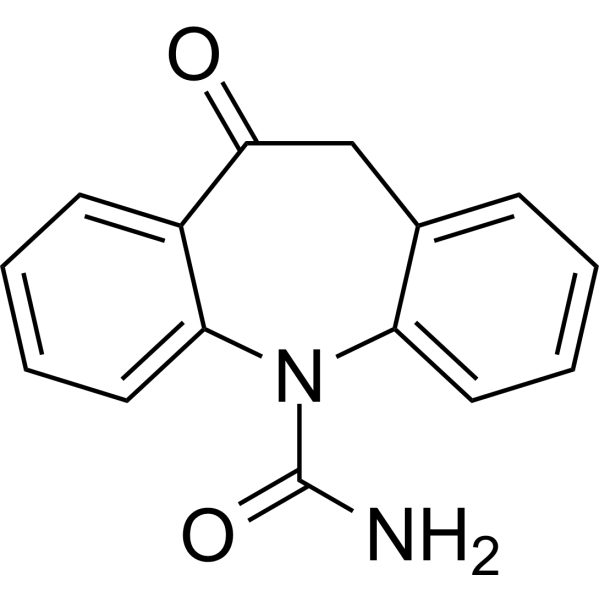
Cat. No.: HY-B0114
CAS No.: 28721-07-5
Synonyms: GP 47680
Research Areas:  

Neurological Disease Cancer

Oxcarbazepine is a sodium channel blocker . Oxcarbazepine significantly inhibits glioblastoma cell growth and induces apoptosis or G2/M arrest in glioblastoma cell lines [2]. Anti-cancer and anticonvulsant effects [2] .
loading...
    loading...
2
2 Cited Publications
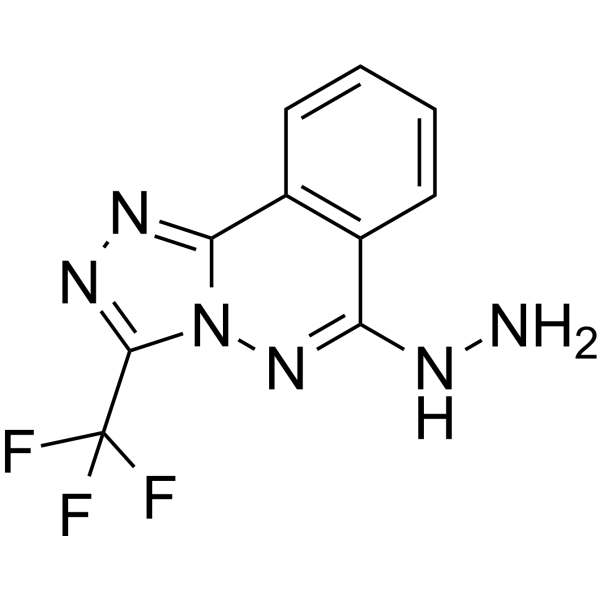
Cat. No.: HY-147895
CAS No.: 56173-05-8
Purity:  ≥98.0%
Research Areas:  

Cancer

PCAF-IN-2 (compound 17) is a potent PCAF inhibitor with an IC50 value of 5.31 µM. PCAF-IN-2 shows anti-tumour activity. CAF-IN-2 induces apoptosis and arrest the cell cycle at the G2/M phase .
loading...
    loading...
2
2 Cited Publications
Cat. No.: HY-W127705
CAS No.: 4213-45-0
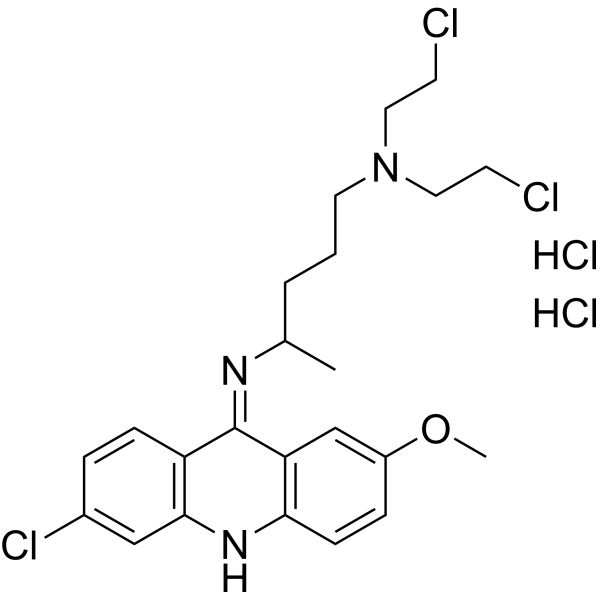
Quinacrine mustard dihydrochloride is a fluorochrome. Quinacrine mustard dihydrochloride as a polycyclic aromatic agent can be used as mutagenic agent induces the mutants of bacteria. Quinacrine mustard dihydrochloride induces cell cycle arrest at G2/M-phase. Quinacrine mustard dihydrochloride has the potential for the research of plant, animal, or human chromosomes [2] .
loading...
    loading...
2
2 Cited Publications
Cat. No.: HY-18643
CAS No.: 1002789-86-7
Research Areas:  

Cancer

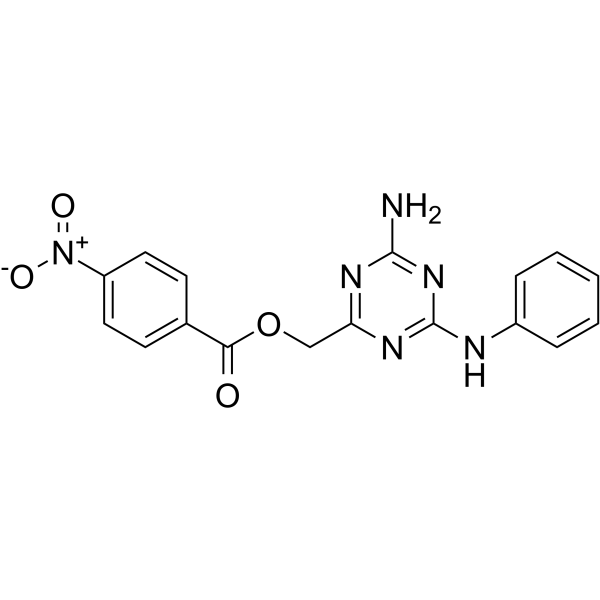
TZ9 is a selective Rad6 inhibitor. TZ9 inhibits Rad6B-induced histone H2A ubiquitination, downregulates intracellular β-catenin, induces G2-M arrest and apoptosis, and inhibits the proliferation and migration of metastatic human breast cancer cells .
loading...
    loading...
2
2 Cited Publications
Cat. No.: HY-N2369
CAS No.: 476-32-4
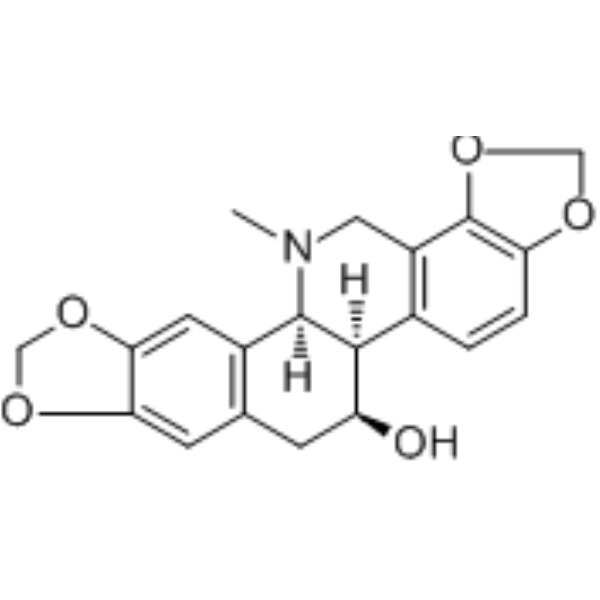
Chelidonine, an isoquinoline alkaloid, can be isolated from Chelidonium majus L.. Chelidonine causes G2/M arrest and induces caspase-dependent and caspase-independent apoptosis, and prevents cell cycle progression of stem cells in Dugesia japonica. Chelidonine has cytotoxic activity against melanoma cell lines. with anticancer and antiviral activity [2] .
loading...
    loading...
2
2 Cited Publications
Cat. No.: HY-17583
CAS No.: 126-07-8
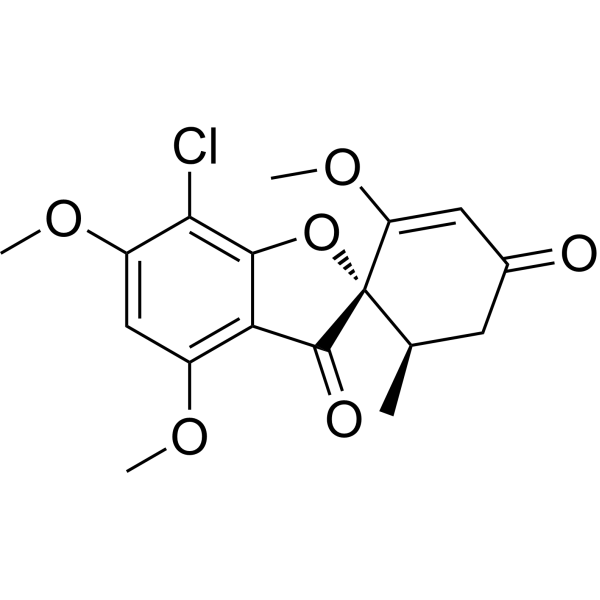
Griseofulvin is an orally active antifungal antibiotic with antitumor activity. Griseofulvin induces apoptosis and G2/M cell cycle arrest in cancer cells. Griseofulvin also has cardiovascular modulatory activity, reducing angina pectoris, relieving hand artery spasm associated with onychomycosis, and peripheral vascular diseases such as shoulder-hand syndrome [2] .
loading...
    loading...
2
2 Cited Publications
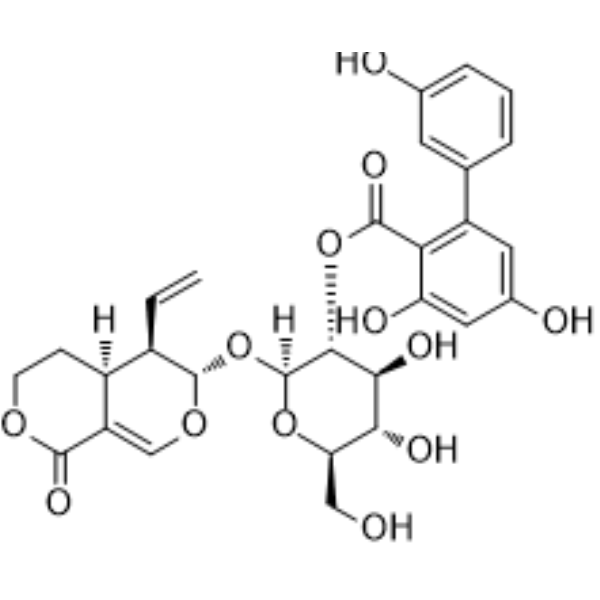
Cat. No.: HY-N2447
CAS No.: 21018-84-8
Amarogentin is a secoiridoid glycoside that is mainly extracted from Swertia and Gentiana roots. Amarogentin exhibits many biological effects, including anti-oxidative, anti-tumour, and anti-diabetic activities. Amarogentin exerts hepatoprotective and immunomodulatory effects. Amarogentin promotes apoptosis, arrests G2/M cell cycle and downregulates of PI3K/Akt/mTOR signalling pathways. Amarogentin exerts beneficial vasculo-metabolic effect by activating AMPK [2] .
loading...
    loading...
2
2 Cited Publications
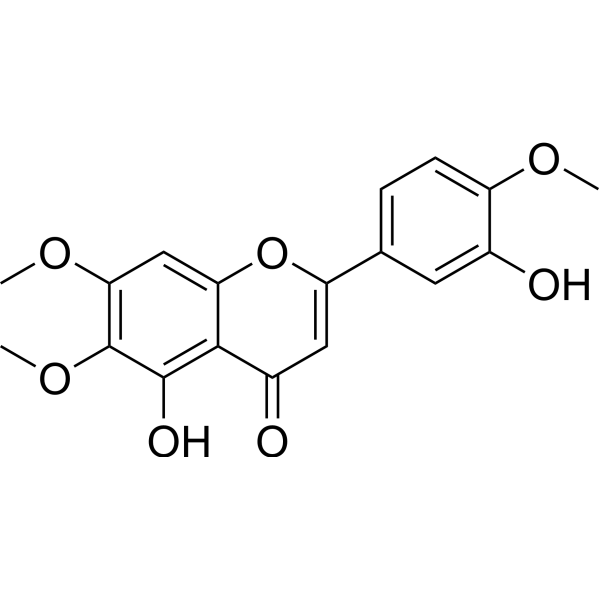
Cat. No.: HY-N2374
CAS No.: 855-96-9
Eupatorin is an orally active flavonoid with antiproliferative and vasodilatory properties. Eupatorin downregulates the expression levels of NF-κB, MMP9, IL-1β and TNF-α. Eupatorin induces apoptosis, G2/M phase cell cycle arrest, and reactive oxygen species (ROS) production. Eupatorin modulates the activities of muscarinic receptors and β-adrenergic receptors; inhibits sarcoplasmic reticulum calcium release and calcium channels; and activates the NO/sGC/cGMP pathway, indomethacin-sensitive pathway, and potassium channel pathway. Eupatorin exerts cytotoxic effects on cancer cell lines, and is metabolized by CYP1A1 and CYP1 family enzymes to form metabolites with antiproliferative activity. Eupatorin can be used in research related to breast cancer, hypertension, and leukemia [2] .
loading...
    loading...
2
2 Cited Publications
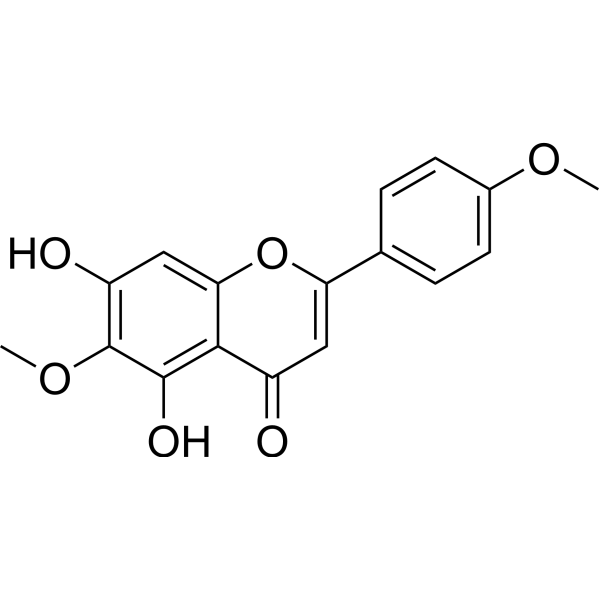
Cat. No.: HY-N0493
CAS No.: 520-12-7
Pectolinarigenin is an orally active dual inhibitor of COX-2/5-LOX with anti-inflammatory, antioxidant, antitumor and neuroprotective activities. Pectolinarigenin exerts neuroprotective and anti-inflammatory effects on astrocyte inflammation via the NFκB and MAPK pathways. Pectolinarigenin inhibits LPS-induced phosphorylation of ERK1/2, N-FκB and p38MAPK, directly inhibits the enzymatic activity or binding of COX-2, 5-LOX and HIF-1α, and reduces the level of XIAP. Pectolinarigenin modifies Keap1 to promote nuclear accumulation of Nrf2, induces ARE-mediated antioxidant enzyme expression, and possesses direct free radical scavenging activity. Pectolinarigenin reduces the release of NO, proinflammatory mediators and leukotrienes, and increases the level of IL-10. Pectolinarigenin induces G2/M cell cycle arrest, apoptosis (Apoptosis) and autophagy (Autophagy) via the PI3K/AKT/mTOR signaling pathway. Pectolinarigenin reduces renal crystal deposition and inhibits melanin synthesis. Pectolinarigenin inhibits inflammation and alleviates allergy in mouse models of inflammation. Pectolinarigenin alleviates renal injury, inflammation and oxidative stress in mice by inhibiting HIF-1α activity. Pectolinarigenin can be used for the research of neurodegenerative diseases, inflammatory/allergic diseases, calcium oxalate nephrocalcinosis, gastric cancer, melasma, post-inflammatory diseases and chloasma [2] .
loading...
    loading...

