2438 Results for "

decrease

" in MedChemExpress (MCE) Product Catalog:
Products (2438)

2438 Results for "decrease" in MCE Product Catalog:

Cat. No.: HY-181876
CAS No.: 3124701-00-1
Target:  

FXR

Research Areas:  

Metabolic Disease

F44-S101 is an orally active, potent, and selective gut-restricted FXR antagonist with an IC50 of 0.48 μM and lipid-lowering activity. F44-S101 selectively antagonizes intestinal FXR, feedback-activates hepatic FXR, promotes cholesterol metabolism and reduces lipid accumulation. F44-S101 decreases total cholesterol, triglyceride and low-density lipoprotein cholesterol levels. F44-S101 can be used in studies related to hyperlipidemia .
loading...
    loading...
Cat. No.: HY-182485
CAS No.: 3414-47-9
Research Areas:  

Others

U-11634 is an orally active dopamine β-hydroxylase noncompetitive inhibitor, with rat LD50 values of 1197 mg/kg (subcutaneous) and 524 mg/kg (oral). U-11634 blocks conversion of dopamine to norepinephrine and reduces norepinephrine levels in brain. U-11634 decreases food intake and spontaneous motor activity via dietary inclusion. U-11634 induces thyroid toxicity and inhibits pregnancy. U-11634 inhibits deciduomata formation in intact and steroid-treated rats, with no reversal by progesterone or oestradiol. U-11634 can be used for pregnancy .
loading...
    loading...
Cat. No.: HY-183328
Target:  

MNK Bcl-2 Family

Research Areas:  

Cancer

MNK1/2-IN-11 is a potent, selective and orally active MNK1/2 inhibitor with MNK1 IC50 of 1.2 nM, MNK2 IC50 of 1.3 nM. MNK1/2-IN-11 reduces eukaryotic translation initiation factor 4E phosphorylation, decreases Mcl-1 and Cyclin D1 expression. MNK1/2-IN-11 inhibits tumor growth in mouse CT26 colorectal tumor models. MNK1/2-IN-11 can be used for the research of colorectal cancer .
loading...
    loading...
Cat. No.: HY-183404
CAS No.: 72807-01-3
Target:  

Serotonin Transporter

Research Areas:  

Neurological Disease

Wy 25093 is a selective serotonin (5-HT) uptake transporter inhibitor. Wy 25093 regulates the turnover and metabolism of central 5-HT, enhances postsynaptic 5-HT actions and 5-hydroxytryptophan-induced behavioral syndrome. Wy 25093 induces ipsilateral and contralateral circling behavior in rats, reduces the turnover rate of striatal dopamine, decreases the level of 5-hydroxyindole-3-acetic acid in the brain, and long-term administration reduces brain 5-HT levels. Wy 25093 can be used in research related to depression .
loading...
    loading...
Cat. No.: HY-183611
Research Areas:  

Infection

LPZ-51 is a Vibrio β-lactam resistance sensor kinase (VbrK) inhibitor with a Ki value of 1.09 μM. LPZ-51 inhibits blaA gene expression at the transcriptional level by blocking the kinase activity of VbrK, reduces β-lactamase synthesis, and does not affect bacterial growth. LPZ-51 acts synergistically with β-lactam antibiotics. LPZ-51 decreases bacterial load, alleviates intestinal inflammation, and improves survival rate in zebrafish infection models. LPZ-51 can be used in studies related to Vibrio parahaemolyticus infection .
loading...
    loading...
Cat. No.: HY-187646
CAS No.: 2231259-57-5
Target:  

Drug Derivative

Research Areas:  

Cancer

IACS-9439-Cl is a derivative of IACS-9439. IACS-9439 is an orally active and selective colony-stimulating factor 1 receptor (CSF1R) inhibitor with a Kd of 1 nM. IACS-9439-Cl reduces the population of tumor-associated macrophages. IACS-9439-Cl promotes the polarization of macrophages toward the M1 anti-tumor phenotype and decreases the M2 pro-tumor phenotype, thereby exerting a tumor growth inhibitory effect. IACS-9439-Cl can be used in cancer-related research .
loading...
    loading...
Cat. No.: HY-189247
Target:  

Apoptosis NF-κB VEGFR

Research Areas:  

Cancer

PRDX3-IN-1 is an orally active antagonist targeting mitochondrial PRDX3 (Kd=0.514 μM), where PRDX3 is a marker of ferroptosis. PRDX3-IN-1 causes PRDX3 inactivation and disrupts mitochondrial redox homeostasis, inducing apoptosis, ROS accumulation, and a decrease in mitochondrial membrane potential. PRDX3-IN-1 inhibits cell migration and invasion, and downregulates NF-κB and VEGF signaling pathways. PRDX3-IN-1 can be used for research on non-small cell lung cancer .
loading...
    loading...
Cat. No.: HY-189501
CAS No.: 2569295-47-0
Research Areas:  

Others

MiZax5 is a zaxinone mimic and plant growth regulator (PGR) that negatively regulates strigolactone (SL) biosynthesis and release and promotes plant growth. MiZax5 downregulates the expression of SL biosynthesis-related genes D27, CCD7, CCD8, and carlactone oxidase, thereby reducing SL levels in rice roots and root exudates and further decreasing seed germination and emergence of the root parasitic plant Striga hermonthica. MiZax5 simultaneously promotes rice root growth and improves growth- and yield-related traits in various crops, making it useful for research related to plant growth regulation .
loading...
    loading...
Cat. No.: HY-189674
Target:  

Adrenergic Receptor

Research Areas:  

Inflammation/Immunology

β2-adrenoceptor agonist 1 is a β2-adrenoceptor agonist with an EC50 of 7 pM. β2-adrenoceptor agonist 1 induces cAMP accumulation and airway/tracheal smooth muscle relaxation. β2-adrenoceptor agonist 1 inhibits inflammatory cell activity, reduces inflammatory cytokine production, and decreases mast cell infiltration. β2-adrenoceptor agonist 1 can be used for asthma research .
loading...
    loading...
Cat. No.: HY-B0678R
CAS No.: 1665-48-1
Synonyms: AHR438 (Standard); NSC170959 (Standard)
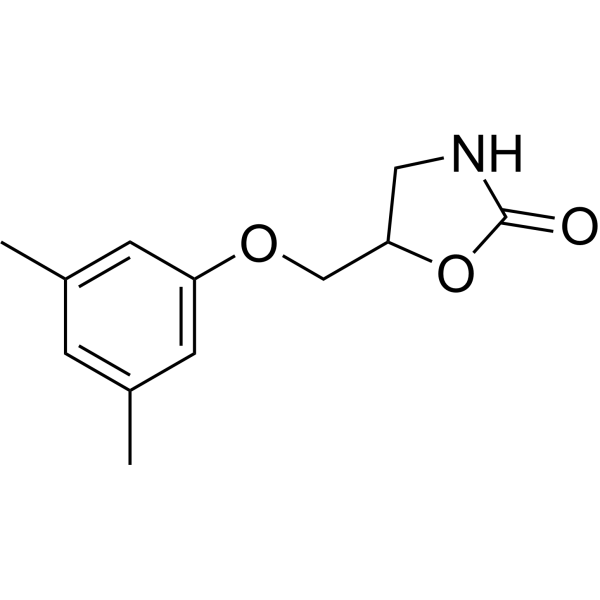
Metaxalone (Standard) is the analytical standard of Metaxalone. This product is intended for research and analytical applications. Metaxalone (AHR438; NSC170959) is an FDA-approved muscle relaxant. Metaxalone acts mainly on the central nervous system and achieves muscle relaxation by inhibiting polysynaptic reflex arcs. In addition, Metaxalone is an inhibitor of MAO-A, which has anti-inflammatory and antioxidant effects. Metaxalone inhibits IL-1β-induced inflammatory phenotype, modulates NF-κB and other related signaling pathways, and decreases MAO-A expression and activity in IL-1β-treated microglia .
loading...
    loading...
Cat. No.: HY-D1555
CAS No.: 2692677-77-1
Synonyms: Cy7 DBCO
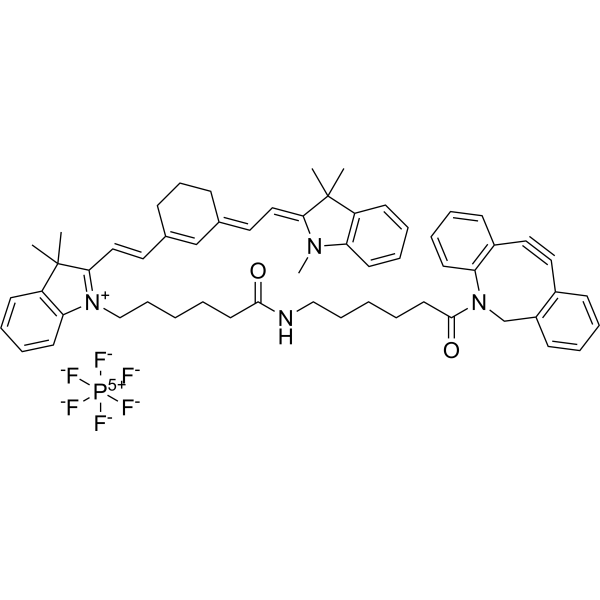
Cyanine7 DBCO (Cy7 DBCO) is a near-infrared fluorescent dye and an efficient bio-orthogonal quencher. Cyanine7 DBCO is formed by covalent connection of the near-infrared fluorescent dye Cy7 and the dibenzocyclooctyne (DBCO) functional group. After reacting with N3-Cy5-COOH, the fluorescence of Cy5 decreases by 90% within 90 minutes, and rapid signal attenuation can be observed within 2-5 minutes. Cyanine7 DBCO can be used for the study of deep tissue imaging and receptor-targeted therapeutic strategies .
loading...
    loading...
Cat. No.: HY-D2062
CAS No.: 1448146-89-1
ATTO 740 NHS ester is a near-infrared fluorescent dye and a multimodal fluorescence/photoacoustic contrast agent with excellent near-infrared emission properties and extremely high photostability. The photoacoustic signal of ATTO 740 NHS ester shows no significant decrease after continuous irradiation with a 750 nm laser for 30 min, making it suitable for in vivo fluorescence imaging and photoacoustic contrast imaging. When conjugated with the cystine knot peptide R01, ATTO 740 NHS ester enables precise detection of integrin αvβ6-positive cells and tumors in nude mouse xenograft models .
loading...
    loading...
Cat. No.: HY-N1346R
CAS No.: 301-19-9
Robinin (Standard) is the analytical standard of Robinin. This product is intended for research and analytical applications. Robinin is a flavonoid that can be extracted from the leaves of purple cowpea, inhibiting TGF-β, TLR4/NF-κB and TLR2-PI3k-AKT signaling pathways. Robinin exerts anti-inflammatory and anti-tumor effects. The combination of Robinin and Methotrexate (HY-14519) reduces inflammation in experimental arthritis, Robinin can decrease the Doxorubicin (HY-15142A) induced cardiac toxicity effect .
loading...
    loading...
Cat. No.: HY-N19615
CAS No.: 134859-90-8
Isoeucommin A is a lignan compound. Isoeucommin A activates the Nrf2/HO-1 pathway and induces phosphorylation of GSK-3β. Isoeucommin A reduces the levels of pro-inflammatory cytokines TNF-α, IL-1β and IL-6, decreases the oxidative stress marker MDA, increases the antioxidants SOD and GSH, and alleviates oxidative stress in mesangial cells. Isoeucommin A alleviates renal tissue injury, improves impaired renal function and enhances the viability of renal tubular epithelial cells in diabetic nephropathy models. Isoeucommin A can be used in the research of diabetic nephropathy .
loading...
    loading...
Cat. No.: HY-N20733
CAS No.: 69687-69-0
Bruceoside B is a PI3K/Akt/NF-κB inhibitor . Bruceoside B reduces LPS (HY-D1056)-induced nitric oxide release and the secretion of TNF-α, IL-6 and IL-1β, and decreases the activation level of apoptosis. Bruceoside B inhibits the replication, coat protein accumulation and local lesion formation of tobacco mosaic virus (TMV), and enhances the anti-infection ability of plants. Bruceoside B can be used in studies related to acute lung injury and tobacco mosaic virus infection .
loading...
    loading...
Cat. No.: HY-N20748
CAS No.: 121817-37-6
Lansiumamide B is a cinnamamide alkaloid, Antifungal agent and Insecticide. Lansiumamide B is isolated from the seeds of Clausena lansium. Lansiumamide B inhibits the phosphorylation of p38 MAPK, and decreases the protein and mRNA levels of TNF-α. Lansiumamide B induces abnormal mycelial growth, cell content leakage and cell wall degradation in Rhizoctonia solani. Lansiumamide B causes the death of early 4th-instar larvae of Aedes albopictus. Lansiumamide B exhibits anticonvulsant effects in epileptic rat models. Lansiumamide B can be used in studies related to plant fungal diseases .
loading...
    loading...
Cat. No.: HY-N21727
CAS No.: 1094030-07-5
3-Hydroxyhericenone F is a neuroprotective agent. Hydroxyhericenone F protects cells against NaN3-induced toxicity, ultrastructural changes, and alterations in mitochondrial respiratory chain complexes. 3-Hydroxyhericenone F decreases intracellular ROS and calcium levels, increases mitochondrial membrane potential and ATP levels, attenuates NaN3 -induced changes in apoptosis-related proteins, and protects neuronal cells from endoplasmic reticulum stress-dependent cell death. 3-Hydroxyhericenone F can be used in research related to cancer, Alzheimer's disease, and neurodegenerative diseases .
loading...
    loading...
Cat. No.: HY-N3807S
Enniatin B1- 13C34 is the 13C-labeled Enniatin B1 (HY-N3807). Enniatin B1 is a Fusarium mycotoxin. Enniatin B1 inhibits acyl-CoA: cholesterol acyltransferase (ACAT) activity with an IC50 of 73 μM in an enzyme assay using rat liver microsomes . Enniatin B1 crosss the blood-brain barrier . Enniatin B1 decreases the activation of ERK (p44/p42). Enniatin B1 inhibits moderately TNF-α-induced NF-κB activation .
loading...
    loading...
Cat. No.: HY-N4189
CAS No.: 17278-28-3
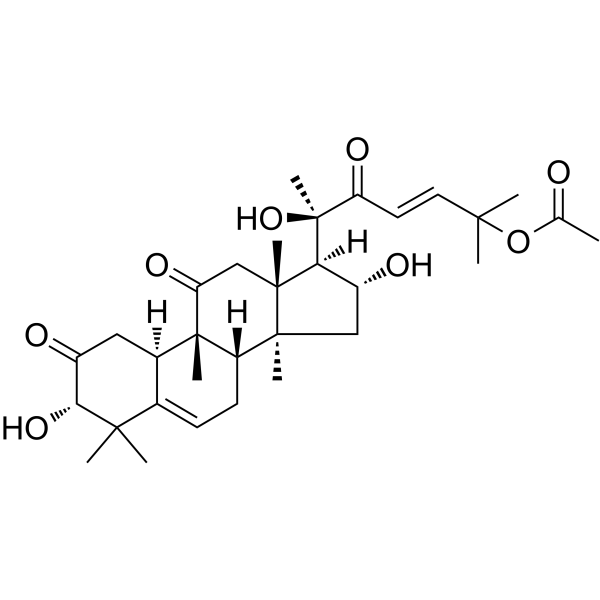
Isocucurbitacin B is a natural terpenoid compound found in Pedicellus Melo. Isocucurbitacin B can inhibit the PI3K/AKT, MAPK, and STAT3 signaling pathways and downregulate CAV1 expression. Isocucurbitacin B can inhbit cancer cell proliferation, migration and invision. Isocucurbitacin B can induce apoptosis and cause G2/M phase arrest. Isocucurbitacin B can decrease intracellular cholesterol and PH levels and increase intracellular calcium levels. Isocucurbitacin B can be used for the research of cancer, such as glioma [1][2].

loading...
    loading...
Cat. No.: HY-N6801
CAS No.: 23282-20-4
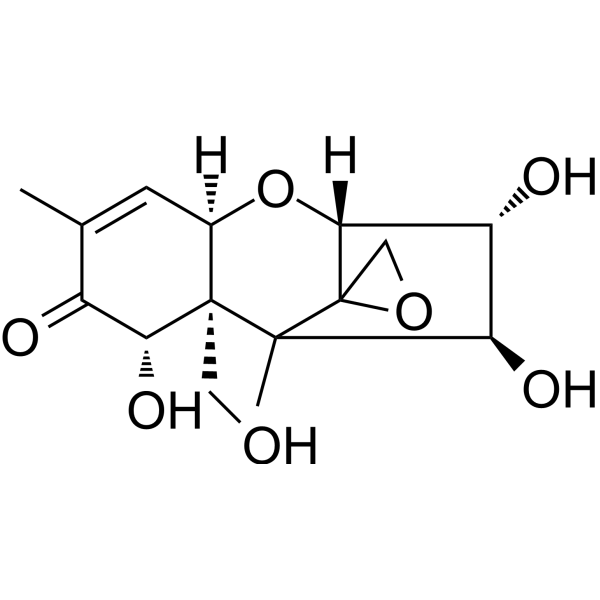
Nivalenol, a trichothecene mycotoxin that can be produced by Fusarium graminearum, is a fungal metabolite present in agricultural product. Nivalenol modulates apoptotic pathway, cell cycle regulation, Bax, ERK, caspase-3, and poly-ADP-ribose synthase activity in macrophages. Nivalenol inhibits ribosomal peptidyltransferase site, protein synthesis, DNA synthesis, and cell proliferation. Nivalenol induces late-stage apoptotic morphological changes, reduces cellular metabolism, and decreases cell proliferation in erythroleukemia cells. Nivalenol induces lymphocyte apoptosis in murine thymus, spleen, and Peyer's patches. Nivalenol can be used for the research of erythroleukemia .
loading...
    loading...

