1. Search Result
Search Result
Results for "

Fibroblast

" in MedChemExpress (MCE) Product Catalog:

768

Inhibitors & Agonists

2

Screening Libraries

12

Fluorescent Dye

26

Biochemical Assay Reagents

88

Peptides

3

MCE Kits

32

Inhibitory Antibodies

126

Natural
Products

162

Recombinant Proteins

18

Isotope-Labeled Compounds

40

Antibodies

1

Click Chemistry

40

Oligonucleotides

1

GMP Molecules

Cat. No. Product Name Target Research Area
  • HY-13948
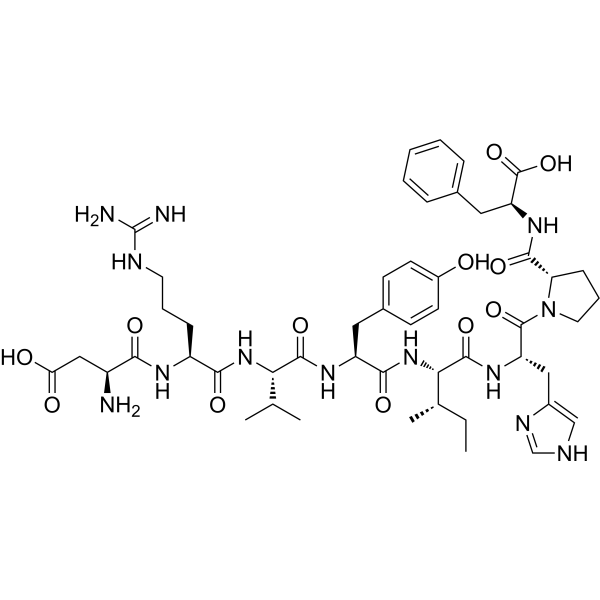
    Angiotensin II human
    Maximum Cited Publications
    222 Publications Verification

    Angiotensin II; Ang II; DRVYIHPF

    Angiotensin Receptor Apoptosis Cardiovascular Disease Infection Metabolic Disease Inflammation/Immunology Cancer
    Angiotensin II (Angiotensin II) is a vasoconstrictor and a major bioactive peptide of the renin/angiotensin system. Angiotensin II human plays a central role in regulating human blood pressure, which is mainly mediated by interactions between Angiotensin II and the G-protein-coupled receptors (GPCRs) Angiotensin II type 1 receptor (AT1R) and Angiotensin II type 2 receptor (AT2R). Angiotensin II human stimulates sympathetic nervous stimulation, increases aldosterone biosynthesis and renal actions. Angiotensin II human induces growth of vascular smooth muscle cells, increases collagen type I and III synthesis in fibroblasts, leading to thickening of the vascular wall and myocardium, and fibrosis. Angiotensin II human also induces apoptosis. Angiotensin II induces capillary formation from endothelial cells via the LOX-1 dependent redox-sensitive pathway .
  • HY-13948A
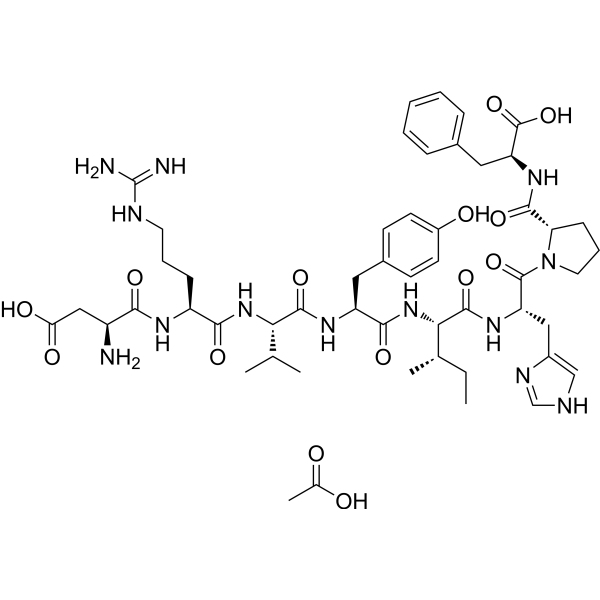
    Angiotensin II human acetate
    Maximum Cited Publications
    222 Publications Verification

    Angiotensin II acetate; Ang II acetate; DRVYIHPF acetate

    Angiotensin Receptor Apoptosis Cardiovascular Disease Infection Metabolic Disease Inflammation/Immunology Cancer
    Angiotensin II human (Angiotensin II) acetate is a vasoconstrictor and a major bioactive peptide of the renin/angiotensin system. Angiotensin II human acetate plays a central role in regulating human blood pressure, which is mainly mediated by interactions between Angiotensin II and the G-protein-coupled receptors (GPCRs) Angiotensin II type 1 receptor (AT1R) and Angiotensin II type 2 receptor (AT2R). Angiotensin II human acetate stimulates sympathetic nervous stimulation, increases aldosterone biosynthesis and renal actions. Angiotensin II human acetate induces growth of vascular smooth muscle cells, increases collagen type I and III synthesis in fibroblasts, leading to thickening of the vascular wall and myocardium, and fibrosis. Angiotensin II human acetate also induces apoptosis. Angiotensin II human acetate induces capillary formation from endothelial cells via the LOX-1 dependent redox-sensitive pathway .
  • HY-P0063
    Copper tripeptide
    1 Publications Verification

    GHK-Cu

    Biochemical Assay Reagents Inflammation/Immunology
    Copper tripeptide (GHK-Cu) is a tripeptide. During wound healing, Copper tripeptide may be freed from existing extracellular proteins via proteolysis and serves as a chemoattractant for inflammatory and endothelial cells. Copper tripeptide has been shown to increase messenger RNA production for collagen, elastin, proteoglycans, and glycosaminoglycans in fibroblasts. Copper tripeptide is a natural modulator of multiple cllular pathways in skin regeneration .
  • HY-P3503

    BMN 111

    FGFR Others
    Vosoritide (BMN 111) is a modified recombinant CNP (C-type natriuretic peptide) analogue, binds to NPR-B (natriuretic peptide receptor type B) and reduces the activity of FGFR3 (fibroblast growth factor receptor 3). Vosoritide can be used in achondroplasia and dwarfism research .
  • HY-A0299

    Tripeptide 29

    Peptides Inflammation/Immunology
    H-Gly-Pro-Hyp-OH is a collagen-derived peptide and also a dipeptidyl peptidase-4 inhibitor.\nH-Gly-Pro-Hyp-OH inhibits the activity of dipeptidyl peptidase-4 in vitro. H-Gly-Pro-Hyp-OH binds to the DNA-binding site of the JUN/FOS complex, blocks the formation of the DNA-JUN/FOS complex, and inhibits transcriptional activity. H-Gly-Pro-Hyp-OH is applicable to research related to skin photoaging, UVB-induced skin aging/photoaging, and thrombosis .
  • HY-P10944

    NNS309

    FAP Inflammation/Immunology Cancer
    Unlabeled FXX489 (NNS309) is a fibroblast activation protein (FAP)-targeting ligand. Unlabeled FXX489 can be labeled with 68Ga and 177Lu and shows anticancer effects. Unlabeled FXX489 can be used for the study of pancreatic ductal adenocarcinoma (PDAC), non-small cell lung cancer (NSCLC), breast cancer (BC), and colorectal cancer (CRC) .
  • HY-P4860
    Adropin (34-76) (human, mouse, rat)
    1 Publications Verification

    Akt Gli JNK PKA Metabolic Disease
    Adropin (34-76) is a secretory domain of Adropin. Adropin (34-76) can inhibit cAMP level and glucose production in hepatocytes, and has a hypoglycemic effect. Adropin (34-76) plays an antifibrotic role by inhibiting the GLI1 signaling pathway .
  • HY-P10945

    Radionuclide-Drug Conjugates (RDCs) FAP Cancer
    FAP targeting peptide for FXX489 is the polypeptide part of Unlabeled FXX489 (HY-P10944). Unlabeled FXX489 is a fibroblast activation protein (FAP)-targeting ligand .
  • HY-P3281

    FGFR Neurological Disease
    FGL peptide is a fibroblast growth factor receptor (FGFR) modulator and blood-brain barrier-penetrant. FGL peptide activates NCAM-FGFR and FGFR1 signaling pathways. FGL peptide alters expression of apoptosis, signal transduction and metabolism regulator genes in traumatic brain injury contexts. FGL peptide can be used for the research of traumatic brain injury .
  • HY-P3466

    Bacterial Fungal Infection Inflammation/Immunology
    Nisin Z is an antimicrobial and anti-inflammatory peptide. Nisin Z is effective against Gram-positive bacteria and fungi, such as C. albicans .
  • HY-W337672

    Prolylhydroxyproline; Pro-Hyp

    Biochemical Assay Reagents Others
    H-Pro-Hyp-OH is a collagen peptide composed of proline (Pro) and hydroxyproline (Hyp). H-Pro-Hyp-OH can be used in research on slowing down facial aging .
  • HY-P10728

    RXFP Receptor ERK Cardiovascular Disease Inflammation/Immunology
    B7-33 is a single-chain relaxin mimetic and a selective relaxin receptor 1 (RXFP1) agonist. B7-33 phosphorylates ERK1/2 without inducing activation of the cAMP signaling pathway. B7-33 exhibits anti-fibrotic and cardioprotective activities. B7-33 can be used in the research of vascular diseases such as cardiomyopathy, myocardial infarction and fibrosis .
  • HY-P5225

    PGC-1α Others
    Acetyl hexapeptide-38 is a tissue repair promoter that targets fibroblasts in the dermis of the skin. It works by promoting collagen synthesis in the dermis and thickening of subcutaneous fat. Acetyl hexapeptide-38 can activate the skin repair mechanism, increase the collagen content in the dermis, improve the skin tissue structure, and has the activity of promoting local tissue repair. Acetyl hexapeptide-38 can be used in the field of cosmetic medicine to repair congenital soft tissue defects, reduce tear grooves and nasolabial folds, eliminate postoperative scars, and conduct micro-plastic surgery of skin tissue .
  • HY-13948B
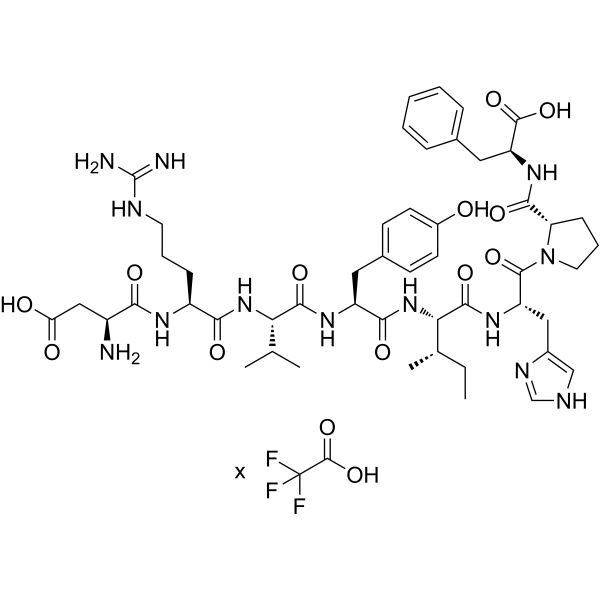
    Angiotensin II human TFA
    Maximum Cited Publications
    222 Publications Verification

    Angiotensin II TFA; Ang II TFA; DRVYIHPF TFA

    Angiotensin Receptor Apoptosis Cardiovascular Disease Metabolic Disease Cancer
    Angiotensin II human (Angiotensin II) TFA is a vasoconstrictor and a major bioactive peptide of the renin/angiotensin system. Angiotensin II human TFA plays a central role in regulating human blood pressure, which is mainly mediated by interactions between Angiotensin II and the G-protein-coupled receptors (GPCRs) Angiotensin II type 1 receptor (AT1R) and Angiotensin II type 2 receptor (AT2R). Angiotensin II human TFA stimulates sympathetic nervous stimulation, increases aldosterone biosynthesis and renal actions. Angiotensin II human TFA induces growth of vascular smooth muscle cells, increases collagen type I and III synthesis in fibroblasts, leading to thickening of the vascular wall and myocardium, and fibrosis. Angiotensin II human TFA also induces apoptosis. Angiotensin II human TFA induces capillary formation from endothelial cells via the LOX-1 dependent redox-sensitive pathway .
  • HY-P1116
    PBP10
    1 Publications Verification

    Bacterial Reactive Oxygen Species (ROS) Interleukin Related Infection Inflammation/Immunology
    PBP10 is a decapeptide. PBP10 selectively binds to lipoteichoic acid (LTA), lipopolysaccharide (LPS) and phosphatidylinositol-4,5-bisphosphate (PIP2). PBP10 penetrates cell membranes and possesses bactericidal, anti-inflammatory, cell motility-inhibiting and actin assembly-regulating activities. PBP10 is applicable to relevant research on bacterial infections, microbe-induced inflammation, skin and soft tissue infections, as well as sepsis .
  • HY-P1290
    PKA Inhibitor Fragment (6-22) amide
    5 Publications Verification

    PKI-(6-22)-amide

    PKA Neurological Disease
    PKA Inhibitor Fragment (6-22) amide is a highly potent and specific competitive inhibitor of PKA, with Ki values of 1.7 nM and 1.6 nM against human and bovine PKA catalytic subunits, respectively. The IC50 of PKA Inhibitor Fragment (6-22) amide targeting bovine PKA is 8.6 nM. PKA Inhibitor Fragment (6-22) amide effectively abolishes PKA activity in mouse brain and spinal cord, and exerts in vivo efficacy via intracerebroventricular administration. PKA Inhibitor Fragment (6-22) amide significantly reverses low-dose morphine analgesic tolerance in mice and blocks photoaffinity labeling of cAMP-dependent protein kinase. PKA Inhibitor Fragment (6-22) amide can be applied to research in fields related to the mechanism of morphine analgesic tolerance and skin wound healing .
  • HY-P5557

    Bacterial Necroptosis Infection Inflammation/Immunology
    TP4 (Nile tilapia piscidin) is an orally active amphipathic α-helical cationic antimicrobial peptide. TP4 (Nile tilapia piscidin) exerts broad-spectrum bactericidal activity against Gram-positive and Gram-negative bacteria by disrupting cell membrane structures, and also exhibits certain hemolytic activity. TP4 (Nile tilapia piscidin) regulates the innate immune system and enhances the expression of lysozymes, cytokines and antioxidant enzymes to resist bacterial infection. TP4 (Nile tilapia piscidin) also stimulates the proliferation of keratinocytes and fibroblasts, and significantly promotes the healing of wounds infected with MRSA. TP4 (Nile tilapia piscidin) can be used in research related to bacterial infection, peritonitis, wound healing and other fields .
  • HY-P0308

    Drug Intermediate Cardiovascular Disease
    [Glu1]-Fibrinopeptide B is derived from fibrinopeptide B amino acid residues 1-14. Human fibrinopeptide B (hFpB), a thrombin-derived proteolytic cleavage product of the fibrinogen B beta-chain, to stimulate neutrophils (PMN), monocytes, and fibroblasts.
  • HY-P2096

    Reactive Oxygen Species (ROS) ATM/ATR MDM-2/p53 MMP Keap1-Nrf2 HSP Inflammation/Immunology
    Hexapeptide-11 is an anti-aging peptide that can protect fibroblasts from premature cell senescence mediated by oxidative stress. Hexapeptide-11 is also a potential stimulator of hyaluronic acid in keratinocytes, and can enhance skin barrier function by upregulating the expression of HAS2 and EGR3, and downregulating the expression of HYAL2. Hexapeptide-11 can also improve skin elasticity .
  • HY-P10131

    Radionuclide-Drug Conjugates (RDCs) FAP Cancer
    3BP-3940 is a highly potent and selective peptide inhibitor of FAP that targets cancer-associated fibroblasts (CAFs) in the tumor microenvironment. 3BP-3940 can be labeled with radionuclides (such as Ga-68) for precise tumor imaging or Lu-177 for the development of targeted anticancer technologies. 3BP-3940 accumulates in tumor lesions and can be used to diagnose and inhibit various solid cancers and CAFs-related diseases .
  • HY-P3601

    FGF basic (1-24)

    Bacterial HBV Infection Inflammation/Immunology
    Brain Derived Basic Fibroblast Growth Factor (1-24) (FGF basic 1-24) is a synthetic peptide, shows anti-bacterial and anti-HBV activities. Brain Derived Basic Fibroblast Growth Factor (1-24) can be used in infection disease and immune disease research .
  • HY-P5232

    Collagen Metabolic Disease
    Tetrapeptide-21 is a bioactive peptide composed of four amino acids. Tetrapeptide-21 effectively enhances the vitality of human dermal fibroblasts. Tetrapeptide-21 upregulates the expression of key extracellular matrix (ECM) genes and promotes the synthesis of ECM proteins (such as type I collagen, hyaluronic acid synthase 1, and fibronectin). Tetrapeptide-21 has the efficacy of anti-wrinkle and improving skin elasticity, and has been reported to be used as a cosmetic ingredient .
  • HY-P3441A

    FAP Cancer
    3BP-4089 TFA is a highly efficient fibroblast activation protein (FAP) targeting peptide. 3BP-4089 TFA is often conjugated with radionuclides for tumor diagnosis and research .
  • HY-P3136

    TRV120055

    Angiotensin Receptor ERK Cardiovascular Disease
    TRV055 (TRV120055) is a G protein-biased agonist of angiotensin II type 1 receptors (AT1Rs). TRV120055 induces fibroblast proliferation, overexpression of collagen I and α-SMA, and stress fibre formation in human cardiac fibroblasts. TRV055 activates AT1 receptor/Gαq-mediated signaling pathways, upregulates TGF-β1 and p-ERK1/2. TRV055 induces collagen secretion in adult rat myofibroblasts at a level comparable to Ang II. TRV055 can be used to study the role of G protein-biased signaling of AT1Rs in regulating fibrotic responses [1]
  • HY-P4566

    Pro-Val

    Dipeptidyl Peptidase Others
    H-Pro-Val-OH is a deprotonation dipeptide containing proline, which can catalyze the Michael addition reaction of acetone to trans-β-nitrostyrene. H-Pro Val OH can also serve as a substrate for fibroblast enzymes and prolinase, and has potential applications in biochemical analysis .
  • HY-P3513

    ERK MMP Neurological Disease
    β-Neo-Endorphin is an endogenous opioid peptide. β-Neo-Endorphin is a hypothalamic “big” Leu-enkephalin of porcine origin. β-Neo-Endorphin shows activation of the Erk1/2, MMP-2 and MMP-9 .
  • HY-P3524

    Peptides Others
    GRGESP is a collagen gel contraction inhibitor. GRGESP inhibits the spreading of human fibroblasts inside collagen gels and markedly decreased gel contraction. GRGDSP can be used for the research of connective tissue morphogenesis .
  • HY-P3136A

    TRV120055 hydrochloride

    Angiotensin Receptor Cardiovascular Disease
    TRV055 (TRV120055) (hydrochloride) is a G protein-biased agonist of angiotensin II type 1 receptors (AT1Rs). TRV120055 induces fibroblast proliferation, overexpression of collagen I and α-SMA, and stress fibre formation in human cardiac fibroblasts. TRV055 activates AT1 receptor/Gαq-mediated signaling pathways, upregulates TGF-β1 and p-ERK1/2. TRV055 induces collagen secretion in adult rat myofibroblasts at a level comparable to Ang II. TRV055 can be used to study the role of G protein-biased signaling of AT1Rs in regulating fibrotic responses [1]
  • HY-P4550

    Endogenous Metabolite Metabolic Disease
    H-Hyp-Gly-OH is a dipeptide containing hydroxyproline and glycine. H-Hyp-Gly-OH promotes the growth of mouse primary fibroblasts on collagen gel. H-Hyp-Gly-OH has potential applications in improving skin by ingesting hydrolyzed collagen. H-Hyp-Gly-OH can be used for metabolic research .
  • HY-103544

    JNK Interleukin Related Bombesin Receptor Inflammation/Immunology Cancer
    [D-Arg1,D-Phe5,D-Trp7,9,Leu11]-Substance P, a Substance P derivative, is a biased agonist toward neuropeptide and chemokine receptors. [D-Arg1,D-Phe5,D-Trp7,9,Leu11]-Substance P activates G12. [D-Arg1,D-Phe5,D-Trp7,9,Leu11]-Substance P binds to IL-8 and GRP receptors. [D-Arg1,D-Phe5,D-Trp7,9,Leu11]-Substance P inhibits ERK-2 activation, activates JNK activity. [D-Arg1,D-Phe5,D-Trp7,9,Leu11]-Substance P stimulates an increase in neutrophil migration and Ca 2+ mobilization. [D-Arg1,D-Phe5,D-Trp7,9,Leu11]-Substance P is also a bombesin antagonist, and inhibits the growth of small cell lung cancer
  • HY-P10862

    Exosomes Virus Protease Infection Cancer
    AH-D peptide is a brain-penetrant antiviral agent disrupting highly curved lipid membranes. AH-D peptide exhibits broad-spectrum antiviral activity against ZIKV, Dengue virus, Chikungunya virus, yellow fever virus and Japanese encephalitis virus, with
    IC50
    values of 11.9, 12.5, 35.7, 206 and 136 nM, respectively. AH-D peptide reduces the viral load in the brain, suppresses inflammation, protects neurons, and does not damage the blood brain barrier. AH-D peptide restores antitumor immunity by decreasing circulating PD-L1 + exosomes, reducing intratumoral immunosuppressive cells (regulatory T cells, myeloid-derived suppressor cells), and enhancing T cell function. AH-D peptide inhibits membrane-enveloped viruses and cancer cell metastasis in vivo. AH-D peptide exhibits no immunogenicity and has negligible effects on normal tissues. AH-D peptide can be used for research in Zika virus and other mosquito-borne viruses, cancer immunotherapy and metastasis .
  • HY-P10143

    Ac-Pro-Leu-Gly-[(S)-2-mercapto-4-methyl-pentanoyl]-Leu-Gly-OEt

    MMP Others
    MMP-2/MMP-9 Substrate (Ac-Pro-Leu-Gly-[(S)-2-mercapto-4-methyl-pentanoyl]-Leu-Gly-OEt) is a synthetic chromogenic polypeptide substrate whose core structure mimics the cleavage sites of MMP-2 and MMP-9 (gelatinase A and B) in collagen. After being hydrolyzed by collagenase, MMP-2/MMP-9 Substrate reacts with 4,4'-dithiodipyridine or Ellman's Reagent via its thiol fragment to produce a product with ultraviolet absorption properties .
  • HY-P4859

    Pyr-Gly-OH; H-Pyr-Gly-OH

    Peptides Others
    Pyr-Gly is an inhibitory peptide. Pyr-Gly inhibits proliferation of retinal pigment epithelium (RPE) cells and fibroblasts .
  • HY-P3441

    FAP Cancer
    3BP-4089 is a highly efficient fibroblast activation protein (FAP) targeting peptide. 3BP-4089 is often conjugated with radionuclides for tumor diagnosis and research .
  • HY-P5257

    CG-EDP3

    Peptides Others
    Oligopeptide-24 (CG-EDP3) is a 13 amino acids biomimetic peptide with skin repair effect. Oligopeptide-24 upregulates expression of elastin and hyaluronic acid, and increases fibroblast activity. Oligopeptide-24 can be used in cosmetics as an anti-wrinkle and firming agent .
  • HY-164725

    Radionuclide-Drug Conjugates (RDCs) FAP Cancer
    FAPI-mFS is an irreversible fibroblast activation protein (FAP) inhibitor, that enhances the uptake and retention time in cancer cells through its covalent binding property for FAP. FAPI-mFS can be used for cancer imaging the therapy, when labeled with radioactive 68Ga or 177Lu . FAPI-mFS can be used for the synthesis/research of Radionuclide-Drug Conjugates (RDCs).
  • HY-P11211

    Antibiotic Bacterial Infection
    D2A21, a cecropin peptide, demonstrates a minimum cidal concentration of 21.69 μg/mL against Chlamydia trachomatis .
  • HY-P4836A

    Parasite Infection
    LL-37 FK-13 TFA is the TFA salt form of LL-37 FK-13 (HY-P4836). LL-37 FK-13 TFA is an antimicrobial agent, that inhibits Trichomonas vaginalis. LL-37 FK-13 TFA exhibits minimal hemolytic effects on human erythrocytes and low cytotoxicity to human fibroblasts .
  • HY-P5261

    KP1

    Peptides Metabolic Disease
    SA1-III(KP1) is a bioactive peptide withanti-agingeffect and has been reported used as a cosmetic ingredient .
  • HY-P11170

    Fungal Infection
    D-Cateslytin is an antimicrobial peptide that exhibits potent inhibition activity against Candida albicans (MIC = 2.9 μM). D-Cateslytin can rapidly enter C. albicans, and shows no cytotoxicity to human gingival fibroblasts, and is stable in saliva. D-Cateslytin can be used for research on Candida albicans related diseases, such as oral candidosis .
  • HY-P10613

    Amyloid-β Neurological Disease
    RERMS are bioactive peptides produced from the active regions of amyloid-β and A4 protein precursors that promote fibroblast growth and can be used in the study of neurodegenerative diseases .
  • HY-P5206

    Bacterial Infection
    Garvicin KS, GakB is a peptide at sizes of 34 amino acids to form bacteriocin garvicin KS (GarKS), with other 2 peptides, GakA, and GakC. Garvicin KS, GakB inhibits fibroblast viability and proliferation. Garvicin KS, GakB with GakA, is a potent combination with good peptide stability, antimicrobial efficacy, and fibroblast viability/proliferation effects. Garvicin KS peptides inhibit MSSA with MIC values in the order GakB >GakC >GakA .
  • HY-P5205

    Bacterial Infection
    Garvicin KS, GakA is a peptide at sizes of 34 amino acids to form bacteriocin garvicin KS (GarKS), with other 2 peptides, GakB, and GakC. Garvicin KS, GakA inhibits fibroblast viability and proliferation. Garvicin KS, GakA with GakB, is a potent combination with good peptide stability, antimicrobial efficacy, and fibroblast viability/proliferation effects. Garvicin KS peptides inhibit MSSA with MIC values in the order GakB >GakC >GakA .
  • HY-P11254

    Radionuclide-Drug Conjugates (RDCs) Cancer
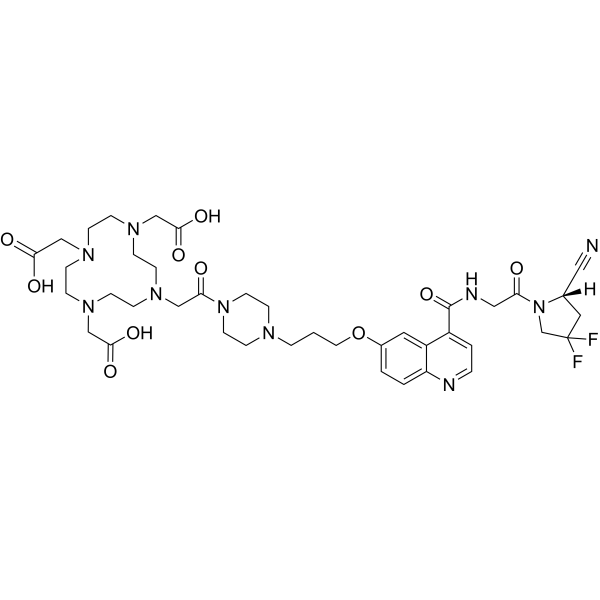
    DOTA-FAPT is a novel targeting FAP tracer. DOTA-FAPT can be radiolabeled with gallium-68 and lutetium-177. DOTA-FAPT can be used for PET imaging studies of cancer-associated fibroblasts .
  • HY-P10945B

    Radionuclide-Drug Conjugates (RDCs) FAP Cancer
    Cys-FAP targeting peptide for FXX489 TFA is the polypeptide part of Unlabeled FXX489 (HY-P10944). Unlabeled FXX489 is a fibroblast activation protein (FAP)-targeting ligand .
  • HY-P4553

    Amino Acid Derivatives Others
    H-Met-Pro-OH is a dipeptide containing methionine and proline. H-Met-Pro-OH is a substrate for aminopeptidase P (APP) and skin fibroblast prolidase .
  • HY-P4553A

    Amino Acid Derivatives Others
    H-Met-Pro-OH acetate is a dipeptide containing methionine and proline. H-Met-Pro-OH acetate serves as a substrate for aminopeptidase P (APP) and skin fibroblast prolinase .
  • HY-159771

    FAP Cancer
    FAP6-19 is a fibroblast activation protein (FAP) targeting radioligand with a Kd of 18.2 nM. FAP6-19 selectively delivers therapeutic radioactive nuclides (such as 177Lu) to the tumor site by targeting the overexpressed FAP protein in the tumor microenvironment, achieving precise killing of cancer cells while minimizing radiation damage to healthy tissues. FAP6-19 exhibits extremely high total cellular uptake and good intracellular retention ability in HT1080 cells. After being labeled with 111In, FAP6-19 produced extremely high tumor/kidney and tumor/liver dose ratios in the mouse model with 4T1 tumors. FAP6-19 can be used in the research of solid tumors expressing FAP.
  • HY-W092110

    Angiotensin-converting Enzyme (ACE) Cardiovascular Disease
    Phe-Tyr is an ACE inhibitor. Phe-Tyr can be isolated from wakame. Phe-Tyr exhibits mild concentration-dependent toxicity to fibroblasts. Phe-Tyr can be used in studies related to hypertension and cardiovascular diseases .
  • HY-P4836

    Parasite Infection
    LL-37 FK-13 is an antimicrobial agent, that inhibits Trichomonas vaginalis. LL-37 FK-13 exhibits slight hemolytic effects on human erythrocytes and low cytotoxicity to human fibroblasts .

Inquiry Online

Your information is safe with us. * Required Fields.

Salutation


Country or Region *

Applicant Name *


Organization Name *

Department *


Email Address *


Product Name *

Cat. No.


Requested quantity *

Phone Number *


Remarks

Inquiry Online

Inquiry Information

Product Name:
Cat. No.:
Quantity:
MCE Japan Authorized Agent:

