815 Results for "

cell structure

" in MedChemExpress (MCE) Product Catalog:
Products (815)

815 Results for "cell structure" in MCE Product Catalog:

582
582 Publications Verification
Cat. No.: HY-D1056
Synonyms: LPS, from Escherichia coli (O55:B5)
Lipopolysaccharides, from E. coli O55:B5 (LPS, from Escherichia coli (O55:B5)) are endotoxins and TLR4 activators extracted from Escherichia coli (E. coli O55:B5) and are classified as S (smooth) type LPS. Lipopolysaccharides, from E. coli O55:B5 possess the typical three-part structure: O-antigen, core oligosaccharide, and lipid A. Lipopolysaccharides, from E. coli O55:B5 activate TLR-4 in immune cells, exhibit high pyrogenicity, and demonstrate dose and serotype specificity. Lipopolysaccharides, from E. coli O55:B5 can be widely used to induce cellular inflammation and establish animal models related to inflammation .
It is recommended to prepare a solution with concentration ≥2 mg/mL. Vortex thoroughly for more than 10 minutes. Due to the adsorption characteristics of LPS, silanized container or low adsorption centrifuge tubes should be used for aliquoting and storage, and mix thoroughly before use.
loading...
    loading...
68
68 Cited Publications
Cat. No.: HY-108718
CAS No.: 49863-47-0
Synonyms: Geneticin; Antibiotic G-418
Domaines de recherche:  

Infection

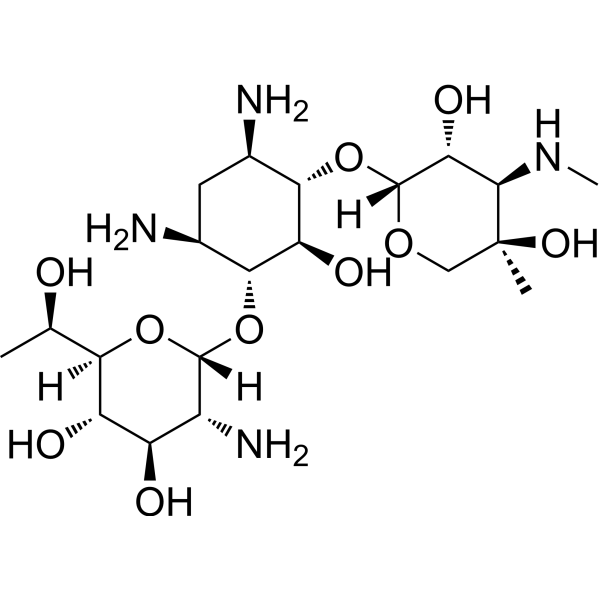
G-418 (Geneticin) is an aminoglycoside antibiotic with a structure similar to gentamicin. It is toxic to both eukaryotic and prokaryotic cells and works by interfering with protein synthesis .
loading...
    loading...
26
26 Cited Publications
Cat. No.: HY-129047E
CAS No.: 9002-07-7
Target:  

Ser/Thr Protease

Domaines de recherche:  

Others

Trypsin, porcine pancreas (Cell culture grade) is a serine protease that hydrolyzes proteins at the carboxyl side of lysine or arginine residues. Trypsin, porcine pancreas (Cell culture grade) exhibits excellent protein digestibility for α-lactalbumin and β-casein. Trypsin, porcine pancreas (Cell culture grade) removes cellular components while preserving extracellular matrix structures to achieve uniform decellularization of porcine pancreas .
loading...
    loading...
25
25 Cited Publications
Cat. No.: HY-103466
CAS No.: 162112-35-8
Pureté:  99.94%
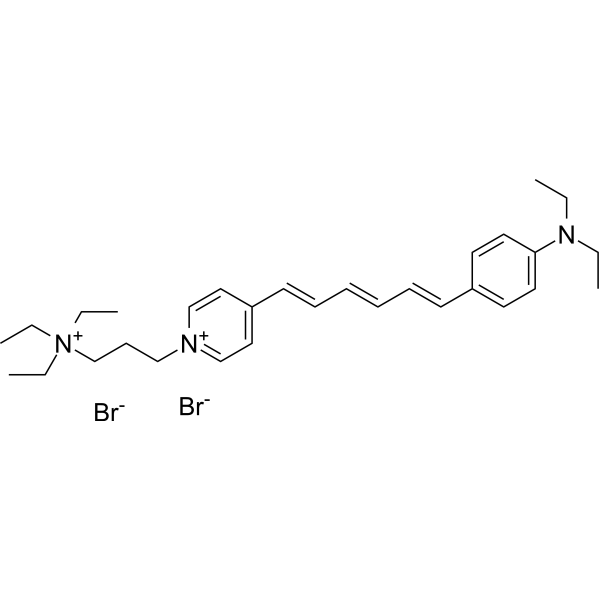
FM4-64 is a very lipophilic, water-soluble styrene dyes, can specifically bind to cell membranes and inner membrane organelles to produce fluorescence. FM4-64 is widely used in endocytic and exospic membrane structure markers.
loading...
    loading...
23
23 Cited Publications
Cat. No.: HY-15558
CAS No.: 23491-44-3
Pureté:  99.11%
Synonyms: bisBenzimide H 33258; H 33258
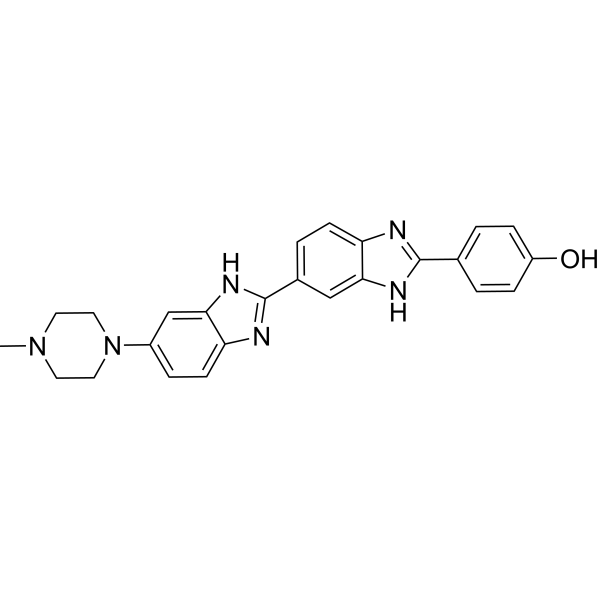
Hoechst 33258 is a blue to blue-green fluorescent live cell dye that can label DNA. Hoechst 33258 can specifically bind to the minor groove of DNA (and tends to bind to A/T-rich DNA), resulting in a significant increase in fluorescence intensity. Hoechst 33258 can cross the cell membrane and cause changes in DNA structure, such as G2/M phase arrest. Hoechst 33258 can bind to live or fixed cells, and the fluorescence intensity increases with increasing solution pH. As a DNA-specific probe, Hoechst 33258 can be used to detect DNA content, analyze cell cycle, etc. The excitation wavelength of Hoechst 33258 is 350-365 nm, and the emission wavelength is 460-490 nm .
loading...
    loading...
18
18 Cited Publications
Cat. No.: HY-D1300
CAS No.: 231946-72-8
Synonyms: LysoTracker Red DND-99
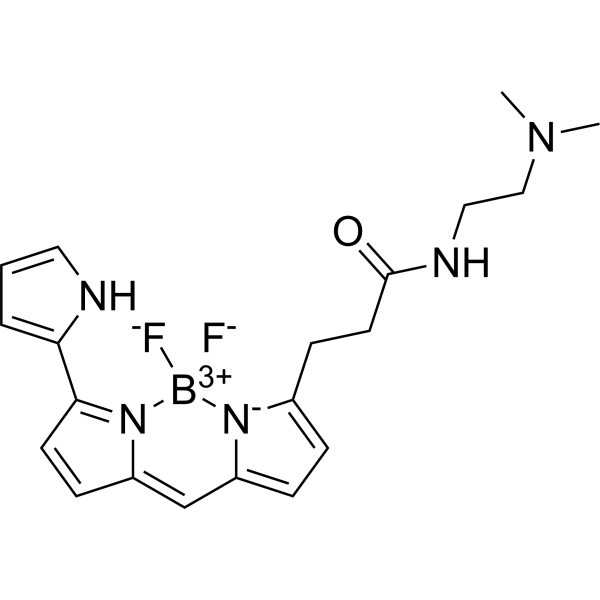
LysoTracker Red is a Red fluorescently labeled lysosomal probe with a maximum excitation/emission wavelength of 577/590 nm. The structure is composed of a fluorescein group and linked weak bases, which can freely cross the cell membrane and gather on spherical organelles. It is suitable for observing the internal biosynthesis and related pathogenesis of lysosomes .
loading...
    loading...
13
13 Cited Publications
Cat. No.: HY-B1248
CAS No.: 55-56-1
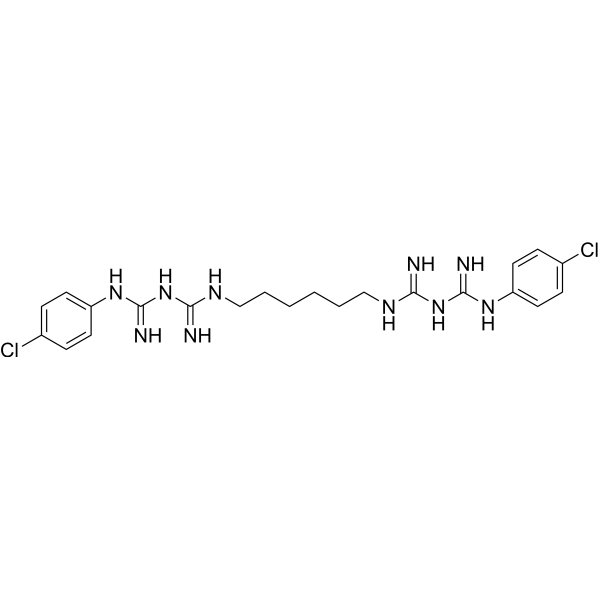
Chlorhexidine is a orally active cationic antimicrobial agent that targets microbial cell membranes. Chlorhexidine binds to cell membrane phospholipids non-specifically, destroys membrane structure and induces leakage of cell contents. Chlorhexidine has broad-spectrum bactericidal activity against both Gram-positive and Gram-negative bacteria. Chlorhexidine can interfere with membrane permeability, cause protein precipitation and energy metabolism disorders, such as rapid inhibition of microbial growth and induction of cell death (necrosis or apoptosis) .
loading...
    loading...
13
13 Cited Publications
Cat. No.: HY-B1145
CAS No.: 3697-42-5
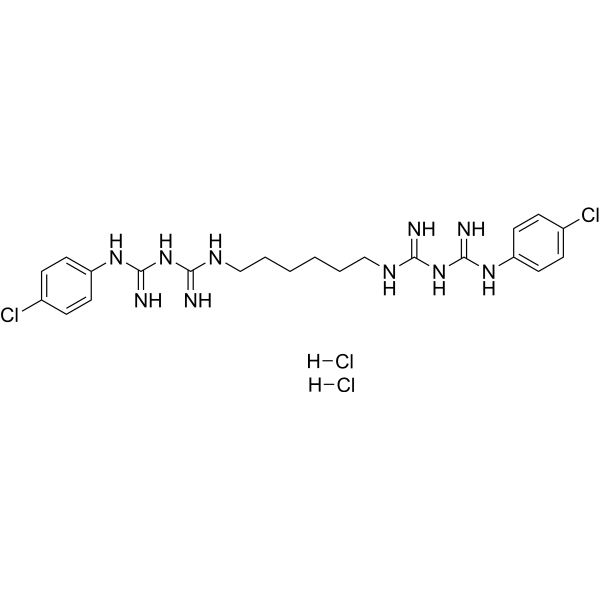
Chlorhexidine dihydrochloride is a orally active cationic antimicrobial agent that targets microbial cell membranes. Chlorhexidine dihydrochloride binds to cell membrane phospholipids non-specifically, destroys membrane structure and induces leakage of cell contents. Chlorhexidine dihydrochloride has broad-spectrum bactericidal activity against both Gram-positive and Gram-negative bacteria. Chlorhexidine dihydrochloride can interfere with membrane permeability, cause protein precipitation and energy metabolism disorders, such as rapid inhibition of microbial growth and induction of cell death (necrosis or apoptosis) .
loading...
    loading...
13
13 Cited Publications
Cat. No.: HY-W013699
CAS No.: 56-95-1
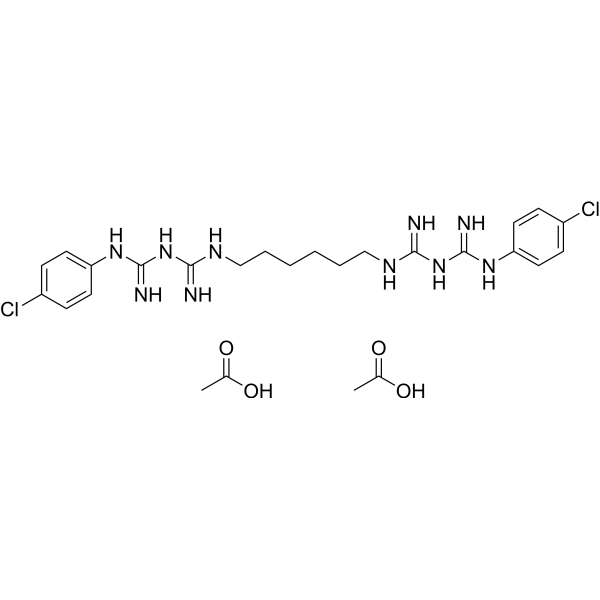
Chlorhexidine diacetate is a orally active cationic antimicrobial agent that targets microbial cell membranes. Chlorhexidine diacetate binds to cell membrane phospholipids non-specifically, destroys membrane structure and induces leakage of cell contents. Chlorhexidine diacetate has broad-spectrum bactericidal activity against both Gram-positive and Gram-negative bacteria. Chlorhexidine diacetate can interfere with membrane permeability, cause protein precipitation and energy metabolism disorders, such as rapid inhibition of microbial growth and induction of cell death (necrosis or apoptosis) .
loading...
    loading...
13
13 Cited Publications
Cat. No.: HY-B0608
CAS No.: 18472-51-0
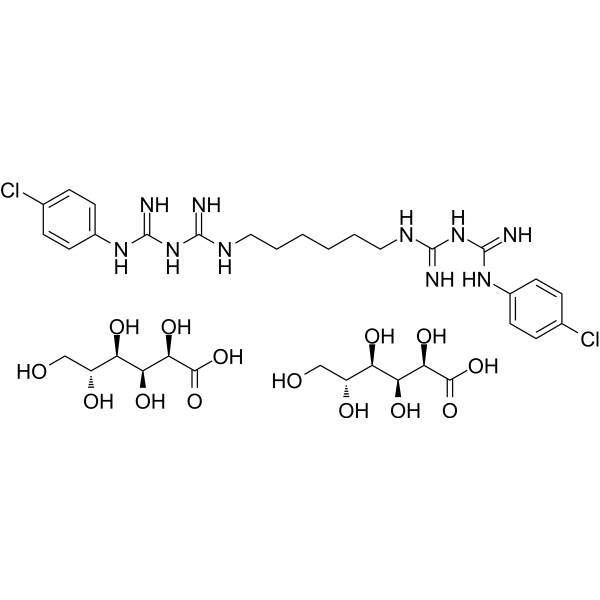
Chlorhexidine digluconate (20% in water) is a orally active cationic antimicrobial agent that targets microbial cell membranes. Chlorhexidine digluconate (20% in water) binds to cell membrane phospholipids non-specifically, destroys membrane structure and induces leakage of cell contents. Chlorhexidine digluconate (20% in water) has broad-spectrum bactericidal activity against both Gram-positive and Gram-negative bacteria. Chlorhexidine digluconate (20% in water) can interfere with membrane permeability, cause protein precipitation and energy metabolism disorders, such as rapid inhibition of microbial growth and induction of cell death (necrosis or apoptosis) .
loading...
    loading...
12
12 Cited Publications
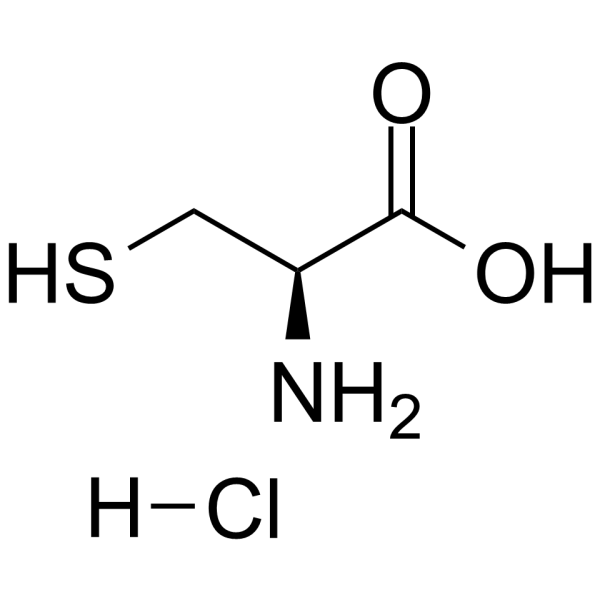
Cat. No.: HY-Y0337A
CAS No.: 52-89-1
L-Cysteine hydrochloride is an orally active conditionally essential amino acid, which acts as a precursor for biologically active molecules such as hydrogen sulphide (H2S), glutathione and taurine. L-Cysteine hydrochloride suppresses ghrelin and reduces appetite in rodents. L-Cysteine hydrochloride inhibits Aspergillus flavus growth and AFB synthesis by disrupting cell structure and antioxidant system balance. L-Cysteine hydrochloride enhances relaxant responses of rat aortic rings to NO and reduces responses to endothelium-derived relaxing factor (EDRF) .
loading...
    loading...
11
11 Cited Publications
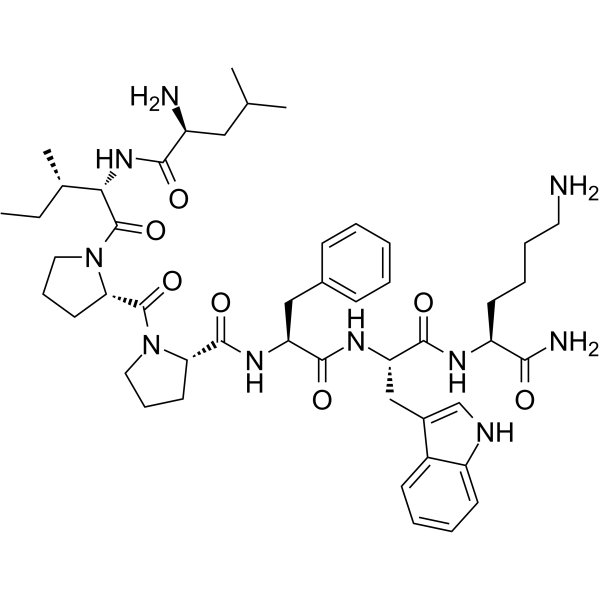
Cat. No.: HY-P1902
CAS No.: 115722-23-1
Cardiotoxin Analog (CTX) IV (6-12) is a membrane active peptide that specifically targets negatively charged phospholipid membranes (such as phosphatidylserine and phosphatidylinositol). Cardiotoxin Analog (CTX) IV (6-12) was discovered in the venom of the Taiwan cobra. Cardiotoxin Analog (CTX) IV (6-12) is a chemically synthesized snake venom cardiotoxin that binds to cell membranes and embeds into lipid bilayers through hydrophobic interactions and electrostatic attraction, thereby destroying the stability of membrane structure. Cardiotoxin Analog (CTX) IV (6-12) can induce membrane lipid disorder and cell lysis, exhibiting hemolysis and cytotoxicity .
loading...
    loading...
11
11 Cited Publications
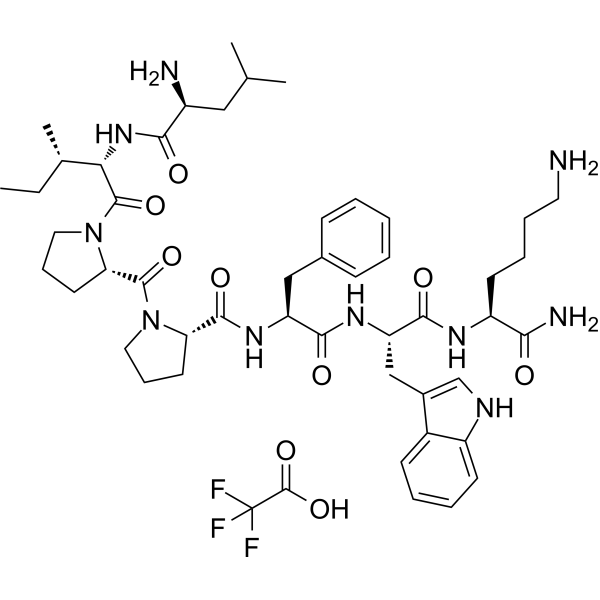
Cat. No.: HY-P1902A
CAS No.: 2918768-05-3
Cardiotoxin Analog (CTX) IV (6-12) TFA is a membrane active peptide that specifically targets negatively charged phospholipid membranes (such as phosphatidylserine and phosphatidylinositol). Cardiotoxin Analog (CTX) IV (6-12) TFA was discovered in the venom of the Taiwan cobra. Cardiotoxin Analog (CTX) IV (6-12) TFA is a chemically synthesized snake venom cardiotoxin that binds to cell membranes and embeds into lipid bilayers through hydrophobic interactions and electrostatic attraction, thereby destroying the stability of membrane structure. Cardiotoxin Analog (CTX) IV (6-12) TFA can induce membrane lipid disorder and cell lysis, exhibiting hemolysis and cytotoxicity .
loading...
    loading...
11
11 Cited Publications
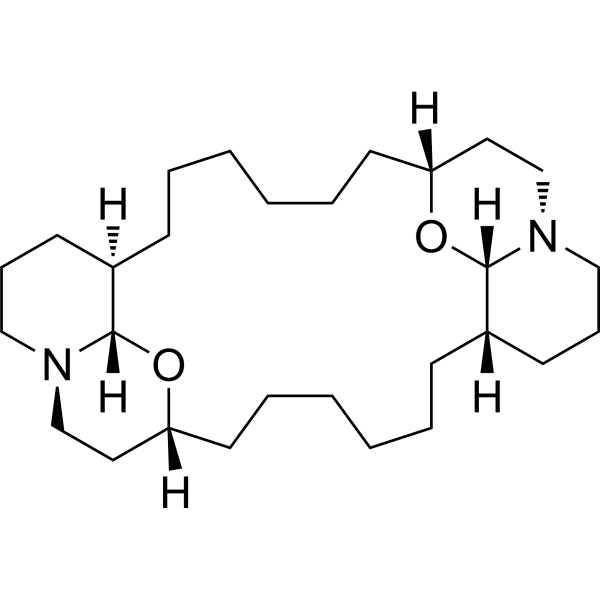
Cat. No.: HY-103312
CAS No.: 88903-69-9
Pureté:  ≥99.0%
Synonyms: (-)-Xestospongin C
Xestospongin C ((-)-Xestospongin C) is a selective, reversible inositol 1,4,5-trisphosphate receptor (IP3R) inhibitor. Xestospongin C acts as an inhibitor of the sarcoplasmic/endoplasmic reticulum Ca 2+ ATPase (SERCA) pump of internal stores. Xestospongin C blocks IP3-induced Ca 2+ release from cerebellar microsomes with an IC50 of 358 nM. Xestospongin C is a valuable tool for investigating the structure and function of IP3Rs and Ca 2+ signaling in neuronal and nonneuronal cells .
loading...
    loading...
10
10 Cited Publications
Cat. No.: HY-14776
CAS No.: 865311-47-3
Pureté:  99.87%
Synonyms: CX-3543
Target:  

DNA/RNA Synthesis

Domaines de recherche:  

Cancer

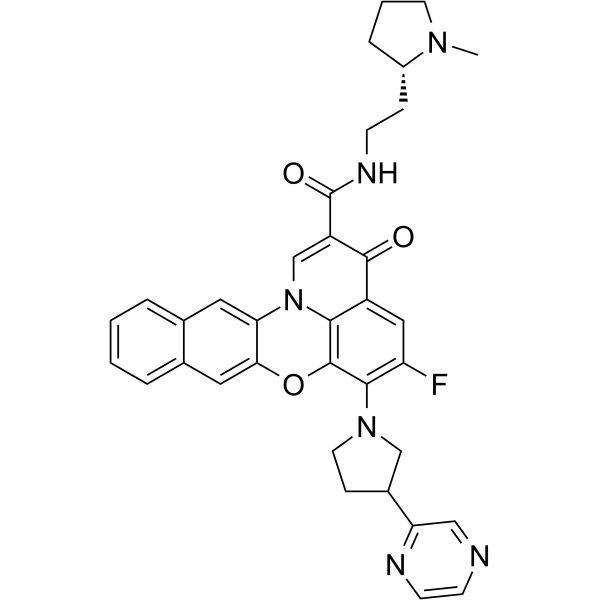
Quarfloxin (CX-3543), a fluoroquinolone derivative with antineoplastic activity, targets and inhibits RNA pol I activity, with IC50 values in the nanomolar range in neuroblastoma cells. Quarfloxin disrupts the interaction between the nucleolin protein and a G-quadruplex DNA structure in the ribosomal DNA (rDNA) template .
loading...
    loading...
10
10 Cited Publications
Cat. No.: HY-W112938
CAS No.: 92739-63-4
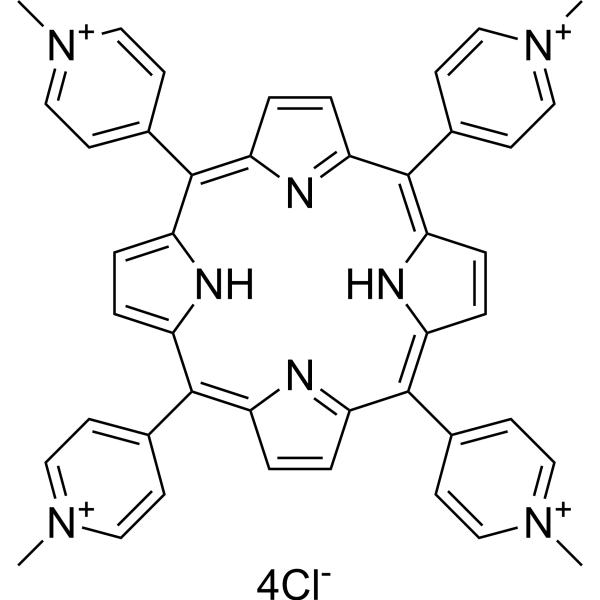
TMPyP tetrachloride is a quadruplex-specific ligand. TMPyP tetrachloride inhibits the interaction between G-quadruplexes and IGF-1. TMPyP tetrachloride is a telomerase inhibitor and inhibits cancer cells proliferation. TMPyP tetrachloride is also a stabilizer of nucleic acid secondary structure and an acetylcholinesterase inhibitor. Besides, TMPyP tetrachloride has antiviral activity against SARS-CoV-2 .
loading...
    loading...
10
10 Cited Publications
Cat. No.: HY-108477
CAS No.: 36951-72-1
Pureté:  ≥98.0%
Synonyms: TMP 1363
Domaines de recherche:  

Cancer

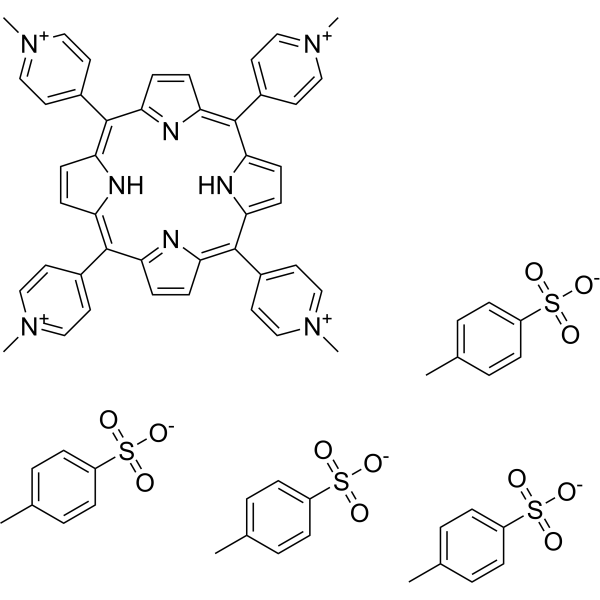
TMPyP4 tosylate (TMP 1363) is a quadruplex-specific ligand. TMPyP4 tosylate inhibits the interaction between G-quadruplexes and IGF-1. TMPyP4 tosylate is a telomerase inhibitor and inhibits cancer cells proliferation. TMPyP4 tosylate is also a stabilizer of nucleic acid secondary structure and an acetylcholinesterase inhibitor. Besides, TMPyP4 tosylate has antiviral activity against SARS-CoV-2 .
loading...
    loading...
8
8 Cited Publications
Cat. No.: HY-P99977

Target:  

Inhibitory Antibodies

Domaines de recherche:  

Inflammation/Immunology

Mouse IgG1 kappa, Isotype Control is a negative control reagent/isotype control for mouse-derived IgG1κ antibodies. Mouse IgG1 kappa, Isotype Control, by maintaining the same immunoglobulin structure (including isotype, light chain, etc.) as the specific mouse IgG1κ subtype primary antibody, eliminates false positive signals caused by non-specific binding in immunological experiments, thus playing a core role in verifying the specificity of the experiment. Mouse IgG1 kappa, Isotype Control can be applied to immunolocalization experiments in the field of cell biology, such as immunofluorescence staining and immunohistochemistry, assisting in research on protein subcellular localization and cell structure analysis, ensuring the reliability of experimental results .
loading...
    loading...
8
8 Cited Publications
Cat. No.: HY-D1434
CAS No.: 149838-22-2
FM1-43 is a very lipophilic, water-soluble styrene dyes, can specifically bind to cell membranes and inner membrane organelles to produce fluorescence. FM1-43 is widely used in endocytic and exospic membrane structure markers.
loading...
    loading...
6
6 Cited Publications
Cat. No.: HY-D1056A1
Synonyms: LPS, from Escherichia coli (O111:B4)
Lipopolysaccharides, from E. coli O111:B4 (LPS, from Escherichia coli (O111:B4)) are endotoxins and TLR4 activators extracted from Escherichia coli (E. coli O111:B4) and are classified as S (smooth) type LPS. Lipopolysaccharides (LPS), from E. coli O111:B4 possess the typical three-part structure: O-antigen, R3-type core oligosaccharide, and lipid A. Lipopolysaccharides (LPS), from E. coli O111:B4 activate TLR-4 in immune cells and can cause significant gastric diseases. Lipopolysaccharides (LPS), from E. coli O111:B4 can be used to induce cellular inflammation and establish animal models related to inflammation .
It is recommended to prepare a solution with concentration ≥2 mg/mL. Vortex thoroughly for more than 10 minutes. Due to the adsorption characteristics of LPS, silanized container or low adsorption centrifuge tubes should be used for aliquoting and storage, and mix thoroughly before use.
loading...
    loading...

