



3457 Results for "

neuronal cytoplasmic components

" in MedChemExpress (MCE) Product Catalog:
Products (3457)

3457 Results for "neuronal cytoplasmic components" in MCE Product Catalog:

301
301 Publications Verification
Cat. No.: HY-K0501

MCE qPCR Master Mix is provided as a simple-to-use, stabilized 2× formulation that includes all components for qPCR except sample DNA, primers and water. The 100 rxns is defined as the base specification. All larger sizes correspond to incremental volumes of this base.

loading...
    loading...
178
178 Cited Publications
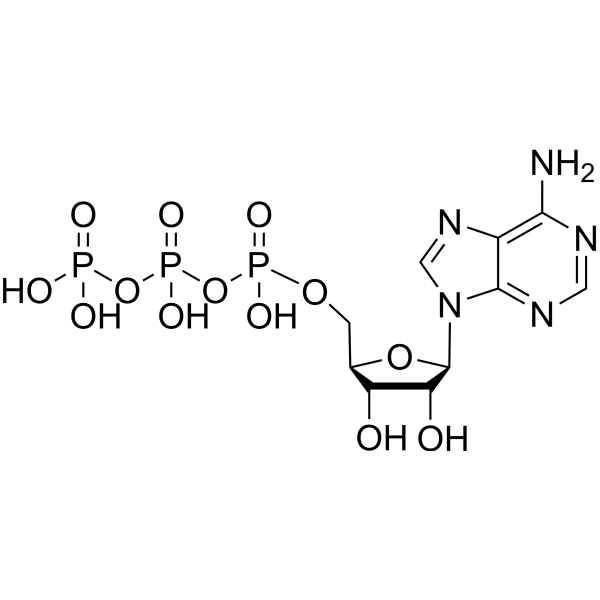
Cat. No.: HY-B2176
CAS No.: 56-65-5
Synonyms: Adenosine 5'-triphosphate
ATP (Adenosine 5'-triphosphate) is a central component of energy storage and metabolism in vivo. ATP provides the metabolic energy to drive metabolic pumps and serves as a coenzyme in cells. ATP is an important endogenous signaling molecule in immunity and inflammation. ATP can activate the NLRP3 inflammasome and induce IL-1β and chemokines secretion. ATP has anti-bacterial infection effects and can protect mice against bacterial infection in mice .
loading...
    loading...
178
178 Cited Publications
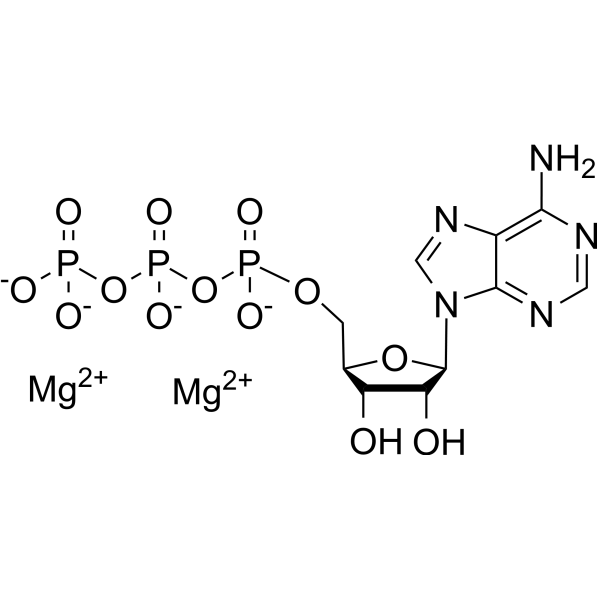
Cat. No.: HY-B2176B
CAS No.: 74804-12-9
Synonyms: Adenosine 5'-triphosphate dimagnesium
ATP (Adenosine 5'-triphosphate) dimagnesium is a central component of energy storage and metabolism in vivo. ATP dimagnesium provides the metabolic energy to drive metabolic pumps and serves as a coenzyme in cells. ATP dimagnesium is an important endogenous signaling molecule in immunity and inflammation. ATP dimagnesium can activate the NLRP3 inflammasome and induce IL-1β and chemokines secretion. ATP dimagnesium has anti-bacterial infection effects and can protect mice against bacterial infection in mice .
loading...
    loading...
178
178 Cited Publications
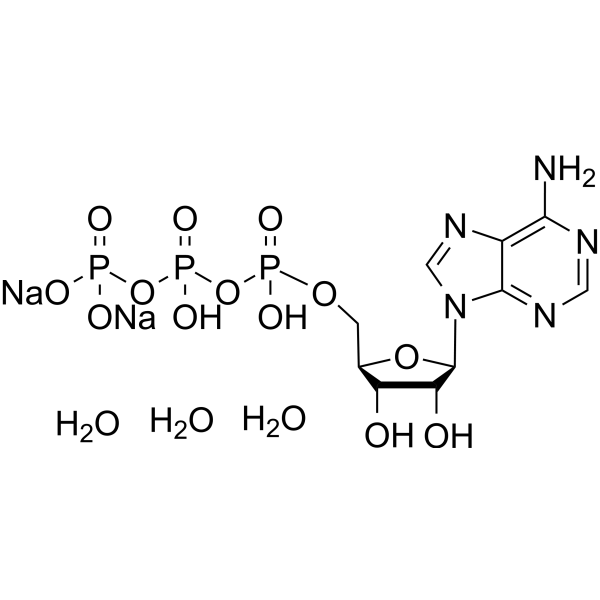
Cat. No.: HY-B2176A
CAS No.: 51963-61-2
Synonyms: Adenosine-5'-triphosphate disodium trihydrate
ATP (Adenosine 5'-triphosphate) disodium trihydrate is a central component of energy storage and metabolism in vivo. ATP disodium trihydrate provides the metabolic energy to drive metabolic pumps and serves as a coenzyme in cells. ATP disodium trihydrate is an important endogenous signaling molecule in immunity and inflammation. ATP disodium trihydrate can activate the NLRP3 inflammasome and induce IL-1β and chemokines secretion. ATP disodium trihydrate has anti-bacterial infection effects and can protect mice against bacterial infection in mice .
loading...
    loading...
175
175 Cited Publications
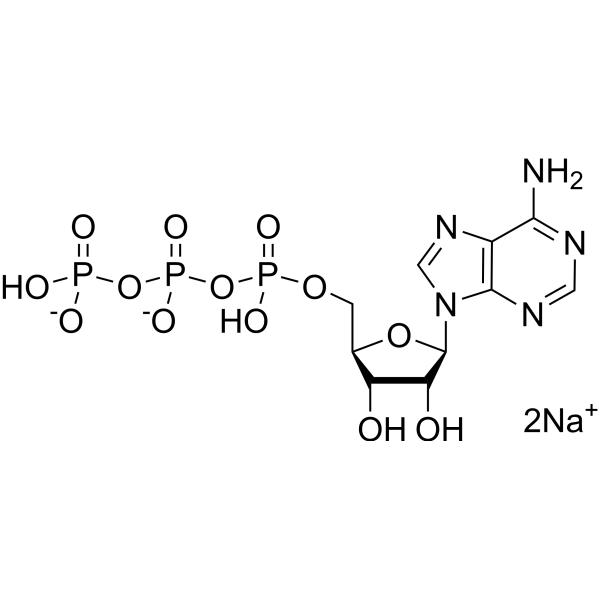
Cat. No.: HY-B0345A
CAS No.: 987-65-5
Synonyms: Adenosine 5'-triphosphate disodium salt; Disodium adenosine triphosphate
ATP disodium salt (Adenosine 5'-triphosphate disodium salt) is a central component of energy storage and metabolism in vivo, provides the metabolic energy to drive metabolic pumps and serves as a coenzyme in cells. ATP disodium salt is an important endogenous signaling molecule in immunity and inflammation .
loading...
    loading...
171
171 Cited Publications
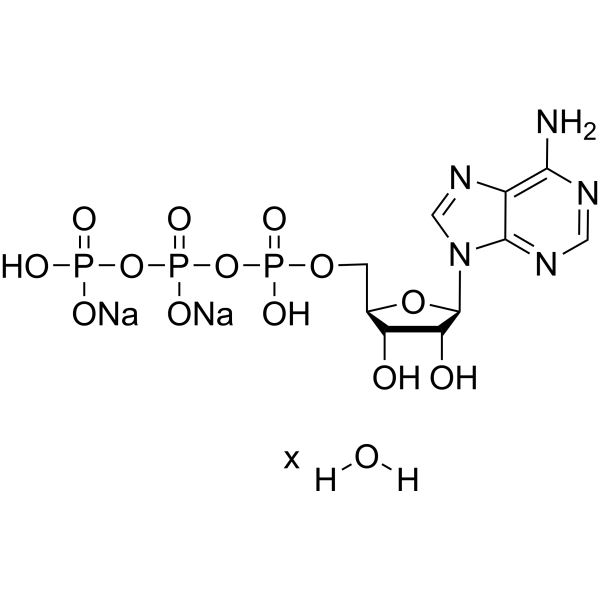
Cat. No.: HY-W010735
CAS No.: 34369-07-8
Synonyms: Adenosine 5'-triphosphate disodium salt hydrate
ATP (Adenosine 5'-triphosphate) disodium salt hydrate is a central component of energy storage and metabolism in vivo. ATP disodium salt hydrate provides the metabolic energy to drive metabolic pumps and serves as a coenzyme in cells. ATP disodium salt hydrate is an important endogenous signaling molecule in immunity and inflammation. ATP disodium salt hydrate can activate the NLRP3 inflammasome and induce IL-1β and chemokines secretion. ATP disodium salt hydrate has anti-bacterial infection effects and can protect mice against bacterial infection in mice .
loading...
    loading...
168
168 Cited Publications
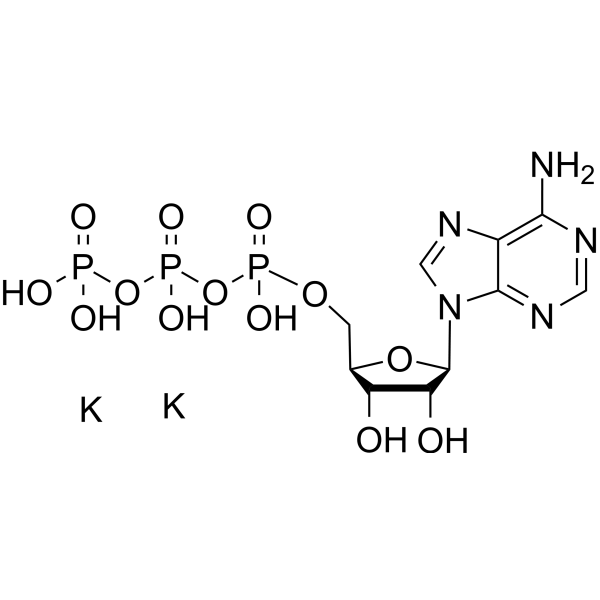
Cat. No.: HY-B2176C
CAS No.: 42373-41-1
Synonyms: Adenosine 5'-triphosphate dipotassium
ATP (Adenosine 5'-triphosphate) dipotassium is a central component of energy storage and metabolism in vivo. ATP dipotassium provides the metabolic energy to drive metabolic pumps and serves as a coenzyme in cells. ATP dipotassium is an important endogenous signaling molecule in immunity and inflammation. ATP dipotassium can activate the NLRP3 inflammasome and induce IL-1β and chemokines secretion. ATP dipotassium has anti-bacterial infection effects and can protect mice against bacterial infection in mice .
loading...
    loading...
168
168 Cited Publications
Cat. No.: HY-B2176E
CAS No.: 1476-84-2
Synonyms: Adenosine 5'-triphosphate magnesium
ATP (Adenosine 5'-triphosphate) magnesium is a central component of energy storage and metabolism in vivo. ATP magnesium provides the metabolic energy to drive metabolic pumps and serves as a coenzyme in cells. ATP magnesium is an important endogenous signaling molecule in immunity and inflammation. ATP magnesium can activate the NLRP3 inflammasome and induce IL-1β and chemokines secretion. ATP magnesium has anti-bacterial infection effects and can protect mice against bacterial infection in mice .
loading...
    loading...
168
168 Cited Publications
Cat. No.: HY-B2176I
CAS No.: 987-65-5
Synonyms: Adenosine 5'-triphosphate disodium salt, 100 mM Solution, PCR Grade
ATP (Adenosine 5'-triphosphate) disodium salt, 100 mM Solution, PCR Grade is a central component of energy storage and metabolism in vivo. ATP disodium salt, 100 mM Solution, PCR Grade provides the metabolic energy to drive metabolic pumps and serves as a coenzyme in cells. ATP disodium salt, 100 mM Solution, PCR Grade is an important endogenous signaling molecule in immunity and inflammation. ATP disodium salt, 100 mM Solution, PCR Grade can activate the NLRP3 inflammasome and induce IL-1β and chemokines secretion. ATP disodium salt, 100 mM Solution, PCR Grade has anti-bacterial infection effects and can protect mice against bacterial infection in mice .
loading...
    loading...
114
114 Cited Publications
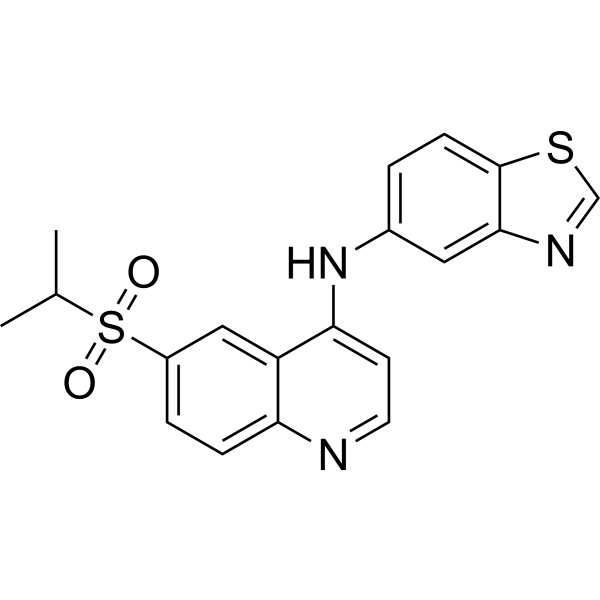
Cat. No.: HY-101872
CAS No.: 1346546-69-7
Purity:  99.80%
Target:  

RIP kinase

Research Areas:  

Inflammation/Immunology

GSK-872 is a RIPK3 inhibitor, which binds RIP3 kinase domain with an IC50 of 1.8 nM, and inhibits kinase activity with an IC50 of 1.3 nM. GSK-872 decreases the RIPK3-mediated necroptosis and subsequent cytoplasmic translocation and expression of HMGB1, as well as ameliorates brain edema and neurological deficits in early brain injury .
loading...
    loading...
114
114 Cited Publications
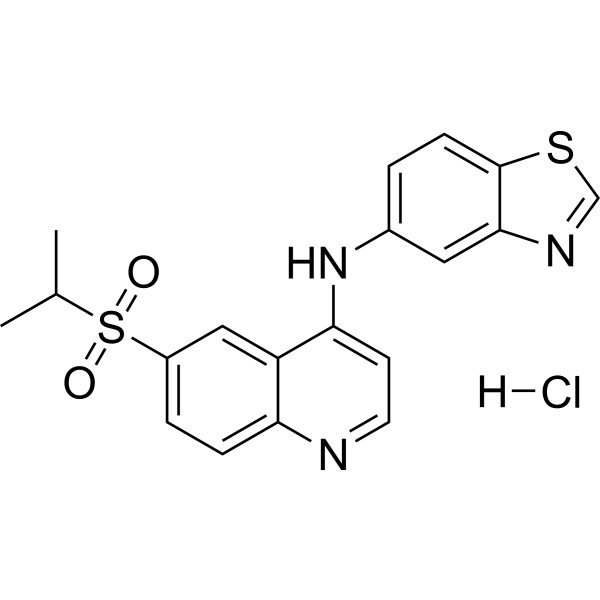
Cat. No.: HY-101872A
CAS No.: 2703752-81-0
Purity:  99.21%
Target:  

RIP kinase

Research Areas:  

Inflammation/Immunology

GSK-872 hydrochloride is a RIPK3 inhibitor, which binds RIP3 kinase domain with an IC50 of 1.8 nM, and inhibits kinase activity with an IC50 of 1.3 nM. GSK-872 hydrochloride decreases the RIPK3-mediated necroptosis and subsequent cytoplasmic translocation and expression of HMGB1, as well as ameliorates brain edema and neurological deficits in early brain injury .
loading...
    loading...
104
104 Cited Publications
Cat. No.: HY-N6682
CAS No.: 22144-77-0
Synonyms: Zygosporin A; NSC 209835
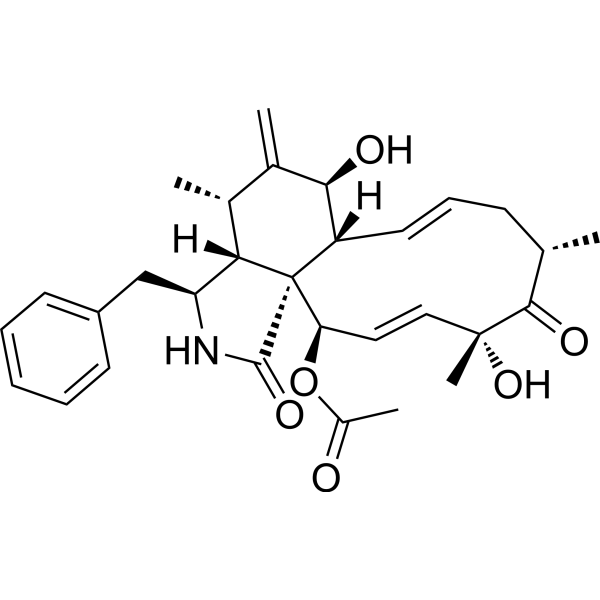
Cytochalasin D (Zygosporin A) is a potent actin polymerization inhibitor, could be derived from fungus. Cytochalasin D has cell-permeable activity. Cytochalasin D inhibits the G-actin–cofilin interaction by binding to G-actin. Cytochalasin D also inhibits the binding of cofilin to F-actin and decreases the rate of both actin polymerization and depolymerization in living cells. Cytochalasin D can reduce exosome release, in turn reducing the amount of survivin present in the tumour environment. Cytochalasin D induces phosphorylation and cytoplasmic retention of Yap .
loading...
    loading...
102
102 Cited Publications
Cat. No.: HY-P1061
CAS No.: 867021-83-8
Target:  

STAT Amyloid-β

Research Areas:  

Neurological Disease

Colivelin is a brain penetrant neuroprotective peptide and a potent activator of STAT3, suppresses neuronal death by activating STAT3 in vitro . Colivelin exhibits long-term beneficial effects against neurotoxicity, Aβ deposition, neuronal apoptosis, and synaptic plasticity deficits in neurodegenerative disease . Colivelin has the potential for the treatment of alzheimer's disease and ischemic brain injury
loading...
    loading...
102
102 Cited Publications
Cat. No.: HY-P1061A
CAS No.: 2803948-60-7
Target:  

STAT Amyloid-β Apoptosis

Research Areas:  

Neurological Disease

Colivelin TFA is a brain penetrant neuroprotective peptide and a potent activator of STAT3, suppresses neuronal death by activating STAT3 in vitro . Colivelin TFA exhibits long-term beneficial effects against neurotoxicity, Aβ deposition, neuronal apoptosis, and synaptic plasticity deficits in neurodegenerative disease . Colivelin TFA has the potential for the treatment of alzheimer's disease and ischemic brain injury .
loading...
    loading...
95
95 Cited Publications
Cat. No.: HY-N0322
CAS No.: 57-88-5
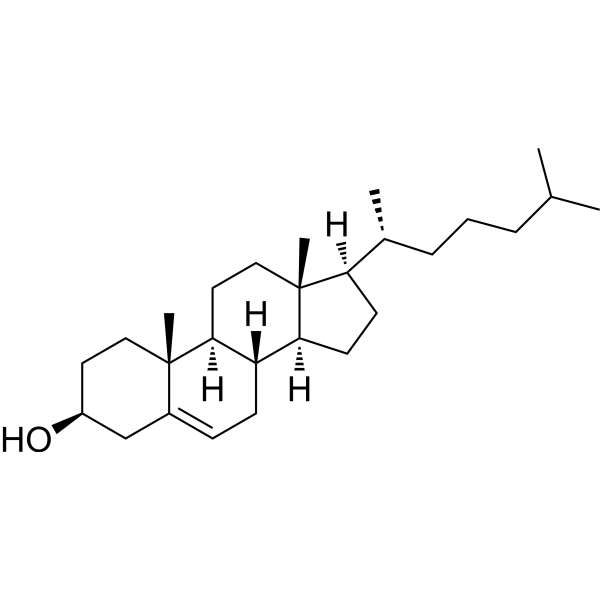
Cholesterol (from animal) is the major sterol in mammals. It is making up 20-25% of structural component of the plasma membrane. Plasma membranes are highly permeable to water but relatively impermeable to ions and protons. Cholesterol (from animal) plays an important role in determining the fluidity and permeability characteristics of the membrane as well as the function of both the transporters and signaling proteins . Cholesterol (from animal) is also an endogenous estrogen-related receptor α (ERRα) agonist .
loading...
    loading...
87
87 Cited Publications
Cat. No.: HY-10448
CAS No.: 404-86-4
Purity:  99.79%
Synonyms: (E)-Capsaicin
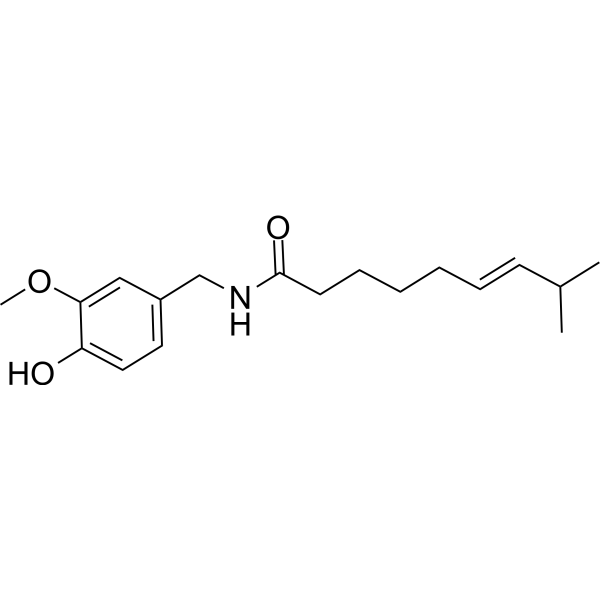
Capsaicin ((E)-Capsaicin), an active component of chili peppers, is a TRPV1 agonist. Capsaicin induces a nociceptive response by binding to its receptors. Capsaicin has analgesic effects on neurological disorders. Capsaicin has antioxidant, anti-inflammatory, anti-cancer effects .
loading...
    loading...
74
74 Cited Publications
Cat. No.: HY-N0822
CAS No.: 517-89-5
Synonyms: C.I. 75535; Isoarnebin 4
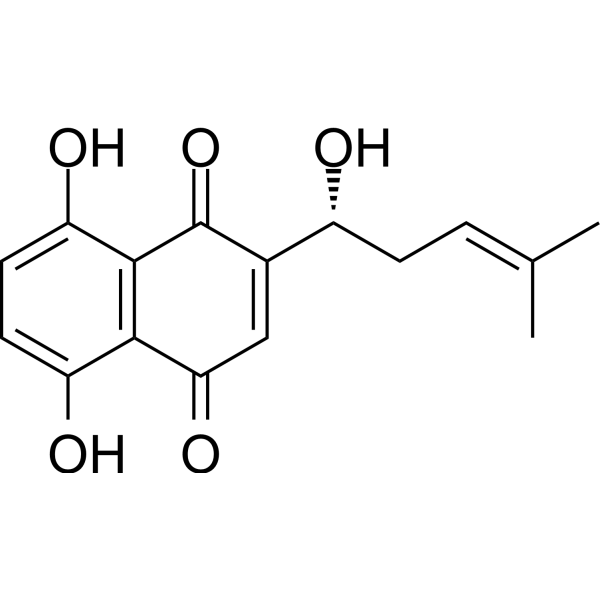
Shikonin is a major component of a Chinese herbal medicine named zicao. Shikonin is a potent TMEM16A chloride channel inhibitor with an IC50 of 6.5 μM . Shikonin is a specific pyruvate kinase M2 (PKM2) inhibitor and can also inhibit TNF-α and NF-κB pathway . Shikonin decreases exosome secretion through the inhibition of glycolysis . Shikonin inhibits AIM2 inflammasome activation .
loading...
    loading...
72
72 Cited Publications
Cat. No.: HY-13443
CAS No.: 141758-74-9
Purity:  99.95%
Synonyms: Exenatide
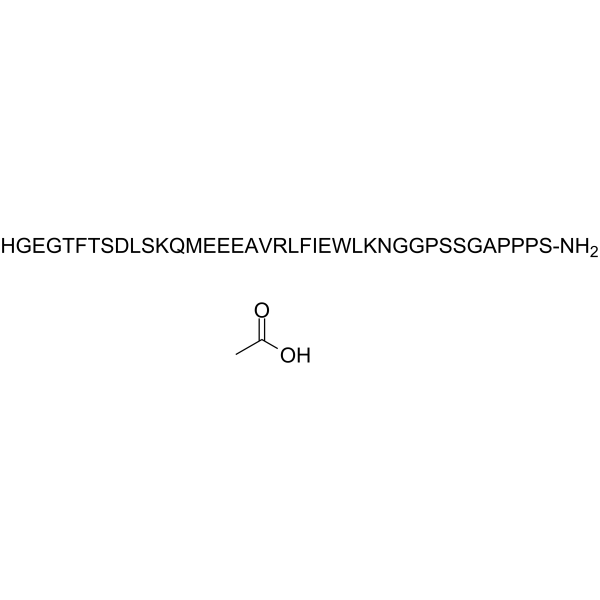
Exendin‑4 (Exenatide) is an orally active, blood-brain barrier-permeable glucagon-like peptide-1 receptor (GLP‑1 receptor) agonist that resists degradation mediated by dipeptidyl peptidase IV. Exendin‑4 mediates multiple glucose-regulating effects, including stimulation of glucose-dependent insulin secretion, inhibition of glucagon production, increase in β-cell mass, delay of gastric emptying, reduction of food intake, improvement of peripheral insulin sensitivity, and restoration of normal islet structure. Exendin‑4 inhibits oxidative stress, alleviates inflammatory responses, and reduces neuronal apoptosis. Exendin‑4 reduces the aggregation level of mutant huntingtin, improves motor function, prolongs survival time, and regulates the expression levels of leptin and ghrelin. Exendin‑4 can be used in research related to type 2 diabetes, acute ischemic stroke, and Huntington's disease .
loading...
    loading...
72
72 Cited Publications
Cat. No.: HY-13443A
CAS No.: 914454-01-6
Purity:  99.91%
Synonyms: Exenatide acetate
Exendin-4 acetate (Exenatide acetate) is an orally active, blood-brain barrier-permeable glucagon-like peptide-1 receptor (GLP‑1 receptor) agonist that resists degradation mediated by dipeptidyl peptidase IV. Exendin-4 acetate mediates multiple glucose-regulating effects, including stimulation of glucose-dependent insulin secretion, inhibition of glucagon production, increase in β-cell mass, delay of gastric emptying, reduction of food intake, improvement of peripheral insulin sensitivity, and restoration of normal islet structure. Exendin-4 acetate inhibits oxidative stress, alleviates inflammatory responses, and reduces neuronal apoptosis. Exendin-4 acetate reduces the aggregation level of mutant huntingtin, improves motor function, prolongs survival time, and regulates the expression levels of leptin and ghrelin. Exendin-4 acetate can be used in research related to type 2 diabetes, acute ischemic stroke, and Huntington's disease .
loading...
    loading...
71
71 Cited Publications
Cat. No.: HY-B1618
CAS No.: 50-22-6
Synonyms: 17-Deoxycortisol; 11β,21-Dihydroxyprogesterone; Kendall's compound B
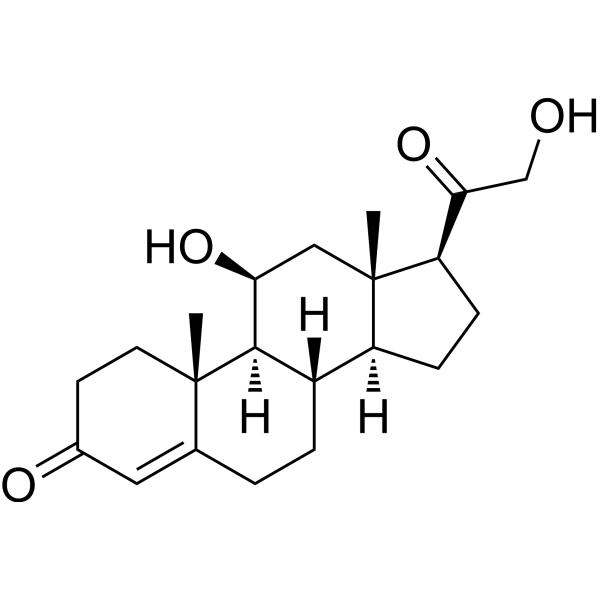
Corticosterone (17-Deoxycortisol) is an orally active and adrenal cortex-produced glucocorticoid, which plays an important role in regulating neuronal functions of the limbic system (including hippocampus, prefrontal cortex, and amygdala). Corticosterone increases the Rab-mediated AMPAR membrane traffic via SGK-induced phosphorylation of GDI. Corticosterone also interferes with the maturation of dendritic cells and shows a good immunosuppressive effect .
loading...
    loading...

