4 Results for "

pelvic infections

" in MedChemExpress (MCE) Product Catalog:
Products (4)

4 Results for "pelvic infections" in MCE Product Catalog:

1
1 Cited Publications
Cat. No.: HY-15781
CAS No.: 92478-27-8
Purity:  ≥98.0%
Target:  

Bacterial

Research Areas:  

Infection

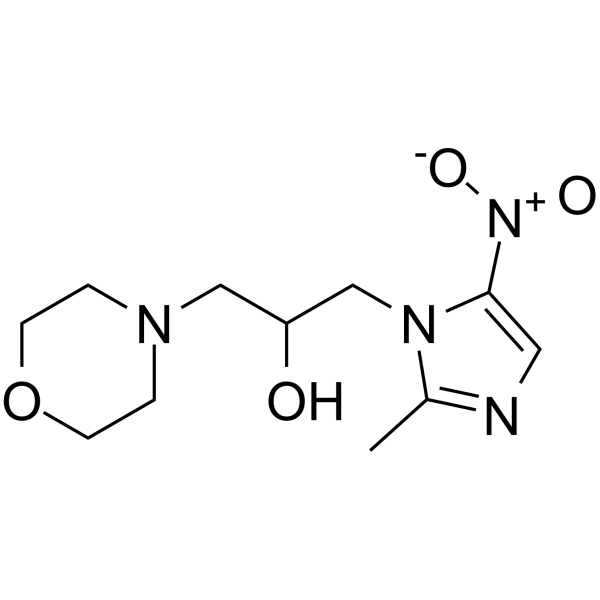
Morinidazole is an orally active and 5-nitroimidazole antimicrobial agent that undergoes extensive metabolism in humans via N +-glucuronidation and sulfation. Morinidazole can be used for bacterial infections research including appendicitis and pelvic inflammatory disease (PID) caused by anaerobic bacteria .
loading...
    loading...
Cat. No.: HY-W561907
CAS No.: 85960-17-4
Target:  

Antibiotic Bacterial

Research Areas:  

Infection

IMipenem and cilastatin sodium is a broad-spectrum Carbapenem Antibiotic combination. Imipenem (HY-B1369A) is a Carbapenem antibiotic. IMipenem demonstrates excellent activity against gram-positive and gram-negative aerobic and anaerobic organisms. Cilastatin (HY-A0166) is a renal Dehydropeptidase inhibitor that inhibits the metabolism of Imipenem by renal brush-border enzymes, thus increasing imipenem concentrations in urine .
loading...
    loading...
Cat. No.: HY-15781A
CAS No.: 898230-59-6
Purity:  ≥98.0%
Target:  

Bacterial

Research Areas:  

Infection

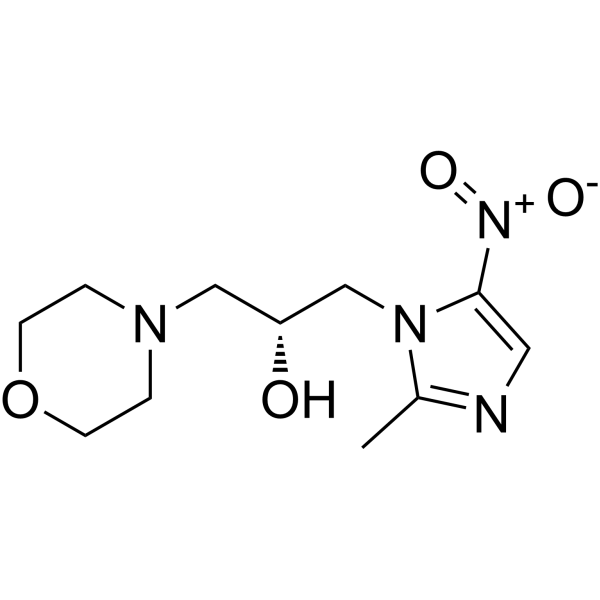
(R)-Morinidazole is an orally active and 5-nitroimidazole antimicrobial agent that undergoes extensive metabolism in humans via N +-glucuronidation and sulfation. (R)-Morinidazole can be used for bacterial infections research including appendicitis and pelvic inflammatory disease (PID) caused by anaerobic bacteria .
loading...
    loading...
Cat. No.: HY-15781R
CAS No.: 92478-27-8
Research Areas:  

Infection

Morinidazole (Standard) is the analytical standard of Morinidazole. This product is intended for research and analytical applications. Morinidazole is an orally active and 5-nitroimidazole antimicrobial agent that undergoes extensive metabolism in humans via N+-glucuronidation and sulfation. Morinidazole can be used for bacterial infections research including appendicitis and pelvic inflammatory disease (PID) caused by anaerobic bacteria .
loading...
    loading...

