228 Results for "

vesicles

" in MedChemExpress (MCE) Product Catalog:
Products (228)

228 Results for "vesicles" in MCE Product Catalog:

25
25 Publications Verification
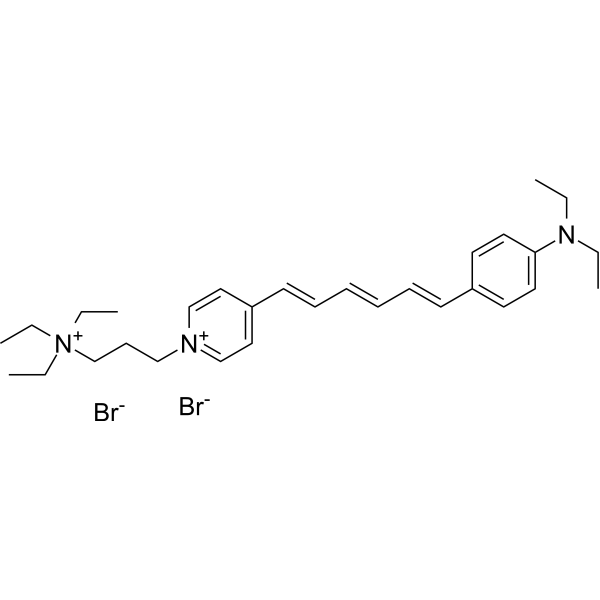
Cat. No.: HY-103466
CAS No.: 162112-35-8
Purity:  99.94%
FM4-64 is a very lipophilic, water-soluble styrene dyes, can specifically bind to cell membranes and inner membrane organelles to produce fluorescence. FM4-64 is widely used in endocytic and exospic membrane structure markers.
loading...
    loading...
22
22 Cited Publications
Cat. No.: HY-W099571
CAS No.: 4485-12-5
Synonyms: Stearic acid lithium; Lithium octadecanoate
Lithium stearate (Stearic acid (lithium)) is a compound that forms vesicles in reaction with silver nitrate, thereby changing the reaction kinetics of the nucleation and self-assembly process of silver stearate. It has the activity that even in the presence of excess silver nitrate, only about 80% can be converted into silver stearate and the residual lithium stearate will inhibit the growth process of silver stearate crystals, thereby producing silver stearate crystals that are much smaller than those obtained from sodium stearate, providing an opportunity to further control the self-assembly and crystal growth of silver stearate.
loading...
    loading...
18
18 Cited Publications
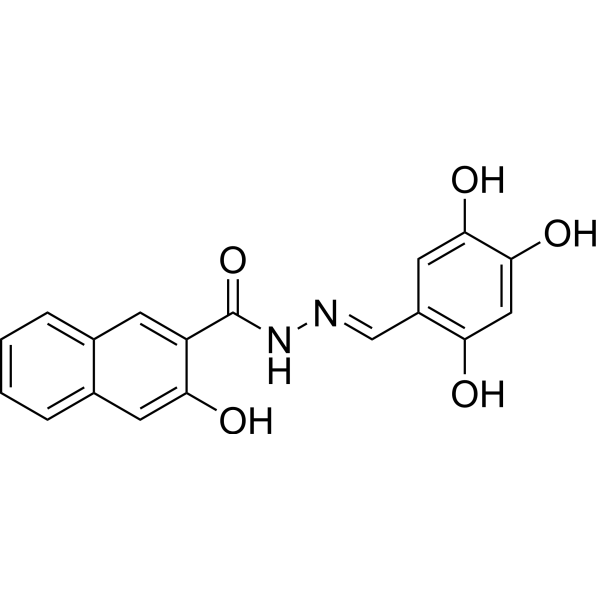
Cat. No.: HY-13863
CAS No.: 1256493-34-1
Purity:  99.11%
Synonyms: Dyngo-4a
Target:  

Dynamin

Research Areas:  

Neurological Disease

Hydroxy Dynasore (Dyngo-4a), a structural mimetic analog of Dynasore (HY-15304), is an improved, less cytotoxic and versatile dynamin inhibitor with IC50 values ​​of 0.38 μM and 2.3 μM for brain recombinant dynamin I and recombinant mouse dynamin II, respectively. Hydroxy Dynasore inhibits dynamin-dependent transferrin endocytosis with an IC50 of 5.7 μM.
loading...
    loading...
15
15 Cited Publications
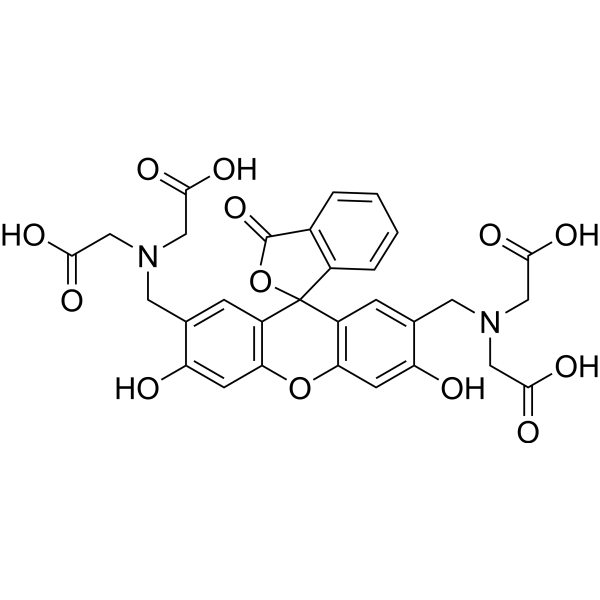
Cat. No.: HY-D0040
CAS No.: 1461-15-0
Synonyms: Fluorexon
Calcein is a fluorescent dye and self-quenching probe, used as an indicator of lipid vesicle leakage, and also as a complexometric indicator for titration of calcium ions with EDTA, and for fluorometric determination of calcium. Calcein cannot directly cross the intact cell membrane of a living cell, unlike Calcein-AM (HY-D0041) which is cell-permeable. Calcein can also be used as a model drug for evaluating efficiency and bioavailability of drug delivery systems .
loading...
    loading...
4
4 Cited Publications
Cat. No.: HY-15435
CAS No.: 75621-03-3
Purity:  99.91%
Research Areas:  

Others

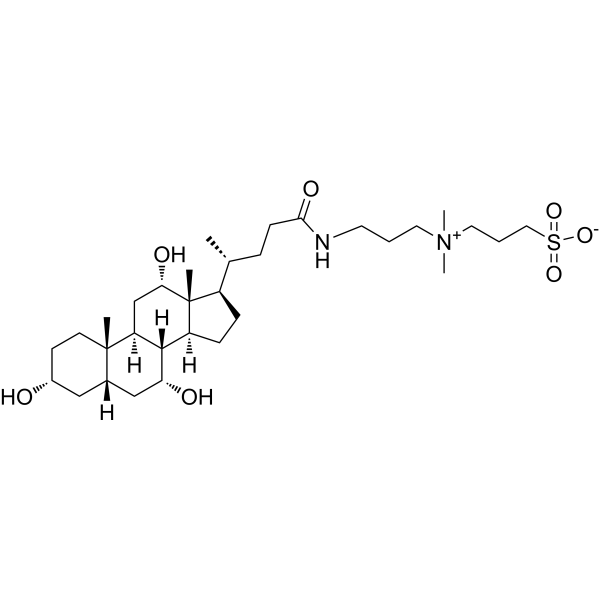
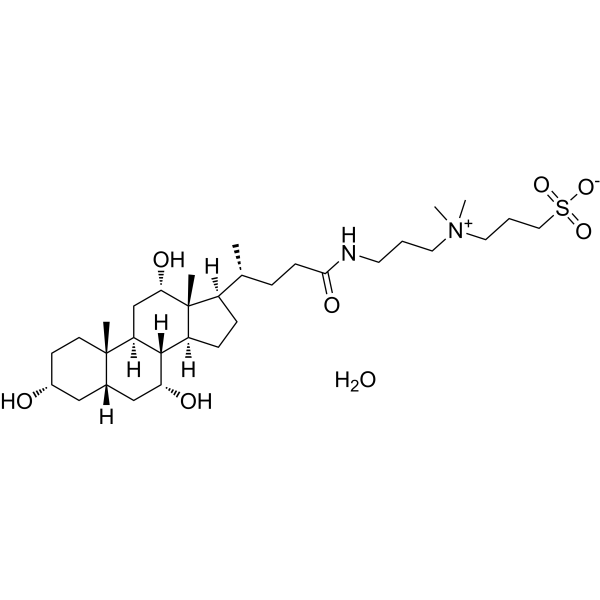
CHAPS is a cholic acid-derived, sulfobetaine-type zwitterionic detergent and micelle-forming agent. CHAPS exhibits properties of weak cationic or nonionic surfactants in different solution systems, undergoes micellization, and forms small, loose hydrophilic aggregates that are temperature-dependent. CHAPS stabilizes mononucleosomes under different ionic strengths, reduces nucleosome sequence specificity, promotes sliding of histone cores along DNA, solubilizes Tamm-Horsfall protein to reduce its interference with urinary exosome isolation, and maintains vesicle structure and the activity of related proteins at the same time. CHAPS is used to recover native folded fusion proteins, enhance the binding capacity of GST fusion proteins, and restore GST enzyme activity. However, CHAPS cannot refold proteins denatured by urea, guanidine hydrochloride or heat, nor can it construct the structure of intrinsically disordered proteins. CHAPS is commonly used in research on the separation and purification of membrane proteins .
loading...
    loading...
4
4 Cited Publications
Cat. No.: HY-111548
CAS No.: 2351882-11-4
Purity:  98.61%
Target:  

Microtubule/Tubulin

Research Areas:  

Others

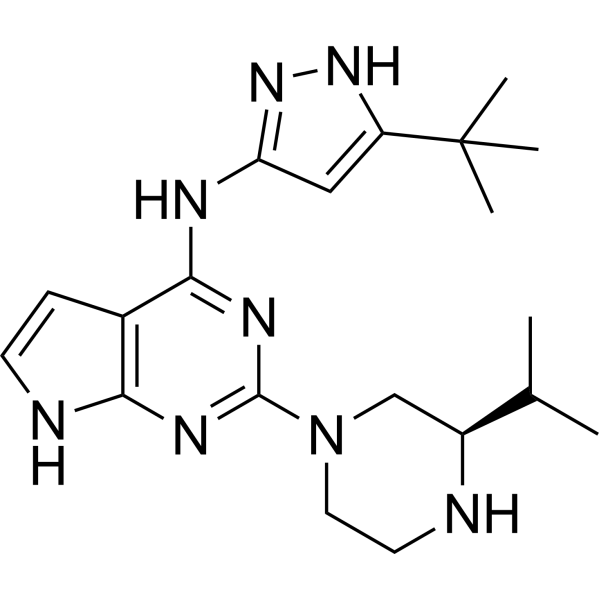
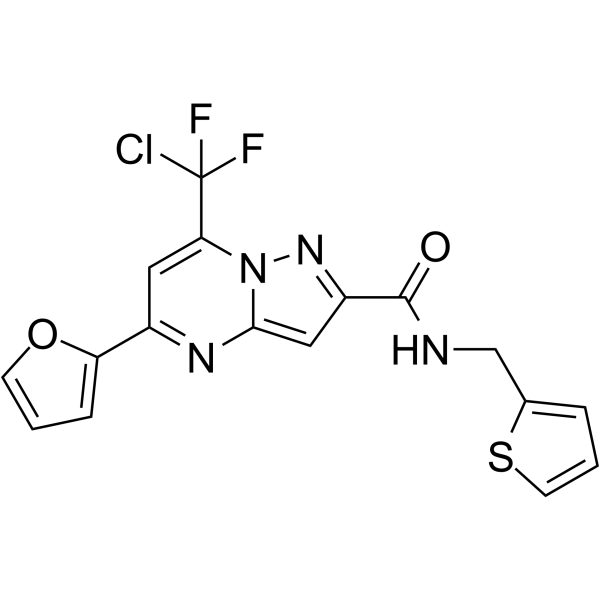
Spastazoline is a selective spastin (a microtubule-severing AAA protein) inhibitor, with an IC50 of 99 nM for Human spastin. Spastazoline can be used for cell division- and intracellular vesicle transport-related research .
loading...
    loading...
4
4 Cited Publications
Cat. No.: HY-100811
CAS No.: 18000-24-3
Purity:  99.86%
Synonyms: 7-CKA
Target:  

iGluR

Research Areas:  

Neurological Disease

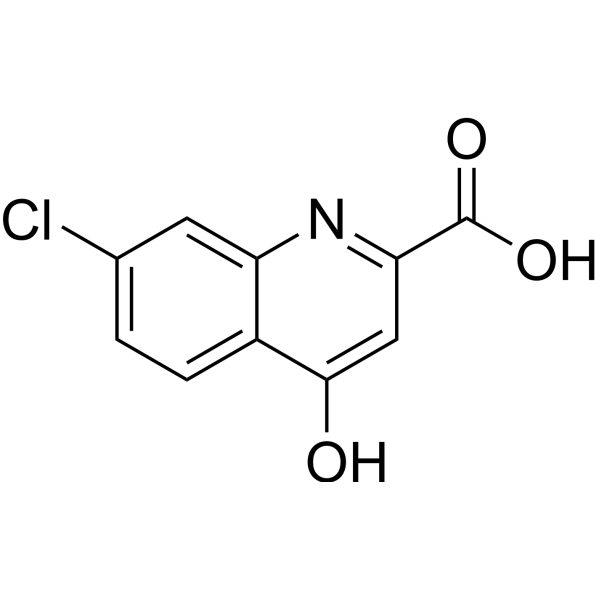
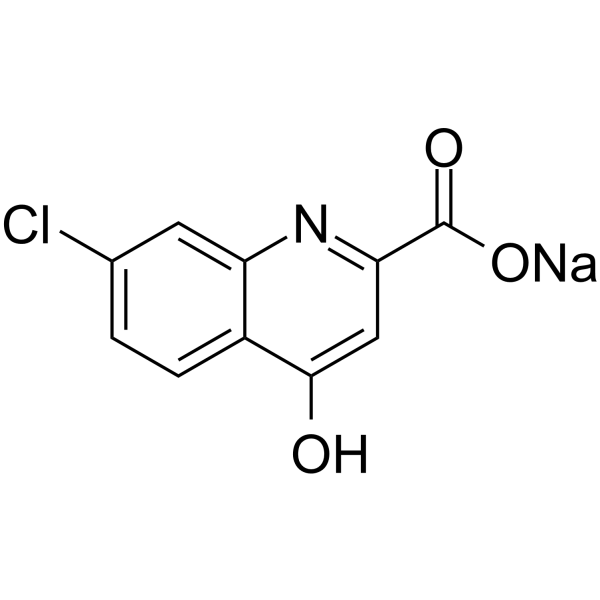
7-Chlorokynurenic acid (7-CKA) is a potent and selective antagonist of the glycine B coagonist site of the N-methyl-D-aspartate (NMDA) receptor (IC50=0.56 μM). 7-Chlorokynurenic acid is also a potent inhibitor of the reuptake of glutamate into synaptic vesicles with a Ki of 0.59 μM. 7-Chlorokynurenic acid has potent antinociceptive actions after neuraxial delivery .
loading...
    loading...
4
4 Cited Publications
Cat. No.: HY-100811A
CAS No.: 1263094-00-3
Purity:  99.79%
Synonyms: 7-CKA sodium salt
Target:  

iGluR

Research Areas:  

Neurological Disease

7-Chlorokynurenic acid sodium salt (7-CKA sodium salt) is a potent and selective antagonist of the glycine B coagonist site of the N-methyl-D-aspartate (NMDA) receptor (IC50=0.56 μM). 7-Chlorokynurenic acid sodium salt is also a potent inhibitor of the reuptake of glutamate into synaptic vesicles with a Ki of 0.59 μM. 7-Chlorokynurenic acid sodium salt has potent antinociceptive actions after neuraxial delivery .
loading...
    loading...
4
4 Cited Publications
Cat. No.: HY-15435A
CAS No.: 331717-45-4
Purity:  ≥98.0%
CHAPS hydrate is a cholic acid-derived, sulfobetaine-type zwitterionic detergent and micelle-forming agent. CHAPS hydrate exhibits properties of weak cationic or nonionic surfactants in different solution systems, undergoes micellization, and forms small, loose hydrophilic aggregates that are temperature-dependent. CHAPS hydrate stabilizes mononucleosomes under different ionic strengths, reduces nucleosome sequence specificity, promotes sliding of histone cores along DNA, solubilizes Tamm‑Horsfall protein to reduce its interference with urinary exosome isolation, and maintains vesicle structure and the activity of related proteins at the same time. CHAPS hydrate is used to recover native folded fusion proteins, enhance the binding capacity of GST fusion proteins, and restore GST enzyme activity. However, CHAPS hydrate cannot refold proteins denatured by urea, guanidine hydrochloride or heat, nor can it construct the structure of intrinsically disordered proteins. CHAPS hydrate is commonly used in research on the separation and purification of membrane proteins .
loading...
    loading...
3
3 Cited Publications
Cat. No.: HY-120821
CAS No.: 1839524-44-5
Purity:  99.17%
Synonyms: ES2
Target:  

Exosomes

Research Areas:  

Others

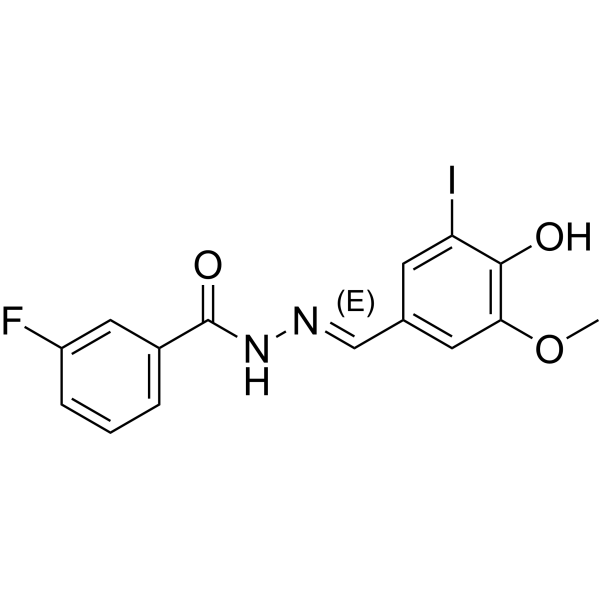
Endosidin-2 (ES2) is a selective inhibitor targeting the conserved exosome subunit EXO70. Endosidin-2 binds to the C-terminal domain of EXO70, inhibiting exocytosis and endosomal recycling, while promoting vacuolar trafficking in plant cells. Endosidin-2 interferes with the EXO70-mediated vesicle-to-plasma membrane anchoring process, leading to abnormal aggregation of auxin transporters (such as PIN2) in the cytoplasm and redirected to vacuolar degradation, while causing abnormal Golgi structure (such as cup-shaped or ring-shaped vesicles cisternae formation). Endosidin-2 can inhibit exocytosis in plant and mammalian cells and is mainly used to study the dynamic regulation of membrane trafficking (such as polar growth, vesicle sorting) .
loading...
    loading...
3
3 Cited Publications
Cat. No.: HY-N7056
CAS No.: 2657-25-2
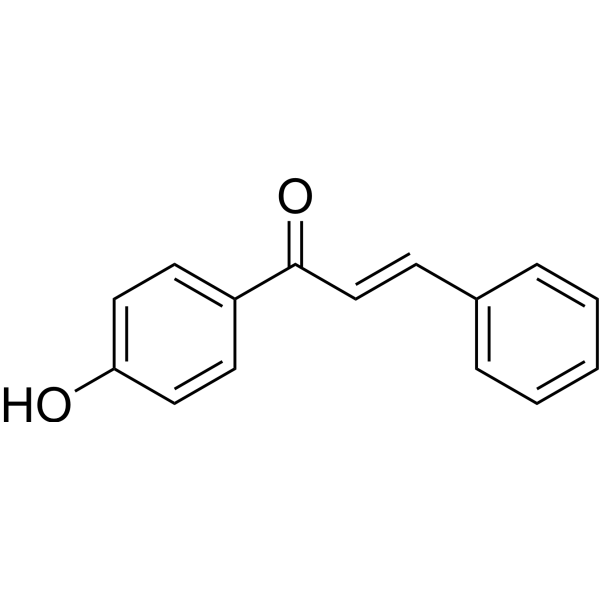
4'-Hydroxychalcone is a chalcone isolated from licorice root, with hepatoprotective activity. 4'-Hydroxychalcone inhibits TNFα-induced NF-κB activation via proteasome inhibition. 4'-Hydroxychalcone induces a rapid potassium release from mitochondrial vesicles and causes deterioration of respiratory control and oxidative phosphorylation of isolated rat liver mitochondria .
loading...
    loading...
3
3 Cited Publications
Cat. No.: HY-107588
CAS No.: 916734-43-5
Purity:  99.94%
Target:  

Integrin

Research Areas:  

Cardiovascular Disease

TC-I 15 (TC-I-15) is a type of allosteric collagen-binding integrin α2β1 inhibitor, and it also inhibits α1β1 and α11β1. TC-I 15 inhibits platelet adhesion to collagen and thrombus deposition. TC-I 15 prevents the formation of a pre-metastatic microenvironment by inhibiting the uptake of cancer-associated fibroblast (CAF) extracellular vesicles (EVs) by lung fibroblasts, which reduces the metastasis of salivary gland adenocystic carcinoma (SACC) to the lungs in mouse models, .
loading...
    loading...
3
3 Cited Publications
Cat. No.: HY-113225B
CAS No.: 103192-46-7
Synonyms: GTP tritris solution (100 mM)
Research Areas:  

Cancer

Guanosine triphosphate tritris (GTP tritris) (100 mM) serves as a vital enhancer of myogenic cell differentiation and plays a critical role in modulating miRNA-myogenic regulator factors. It also facilitates the release of exosomes enriched with guanosine and guanosine-derived molecules, and is regarded as an activated precursor for RNA synthesis. In mitochondrial function, GTP participates in the import of proteins into the matrix, which is essential for various regulated pathways, and is involved in initiating peptide synthesis through the binding of formylmethionyl-tRNA to the ribosome, as well as polypeptide chain elongation. Additionally, GTP acts as a phosphate and pyrophosphate carrier that channels chemical energy into specific biosynthetic pathways. It activates signal transducing G proteins that regulate cellular processes such as proliferation and differentiation, and its hydrolysis by small GTPases, including Ras and Rho, is integral to both proliferation and apoptosis. Furthermore, the small GTPase Rab is instrumental in vesicle docking, fusion, and formation. Beyond signal transduction, GTP is an energy-rich precursor in the enzymatic biosynthesis of DNA and RNA.
loading...
    loading...
2
2 Cited Publications
Cat. No.: HY-B0106
CAS No.: 102767-28-2
Synonyms: UCB L059
Target:  

DNA Methyltransferase

Research Areas:  

Neurological Disease Cancer

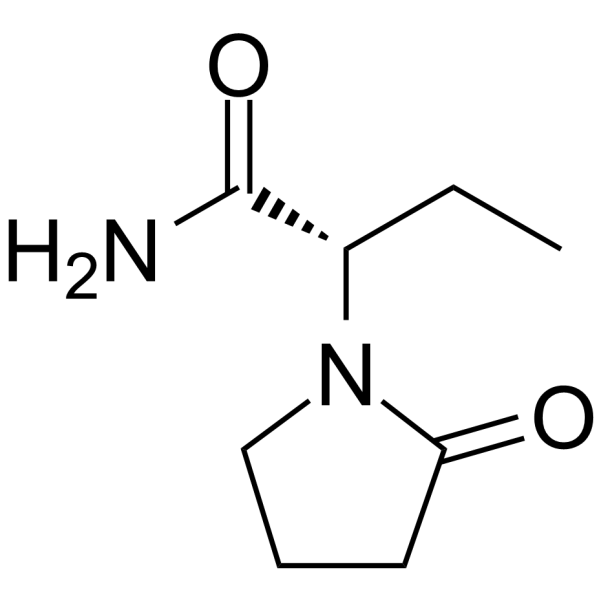
Levetiracetam, an antiepileptic agent, binds the synaptic vesicle protein SV2A. Levetiracetam enhances Temozolomide effect on glioblastoma stem cell proliferation and apoptosis. Levetiracetam modulates HDAC levels ultimately silencing MGMT, thus increasing Temozolomide effectiveness. A chemosensitizer agent .
loading...
    loading...
2
2 Cited Publications
Cat. No.: HY-156237
CAS No.: 1243063-73-1
Purity:  99.88%
Target:  

Autophagy

Research Areas:  

Others

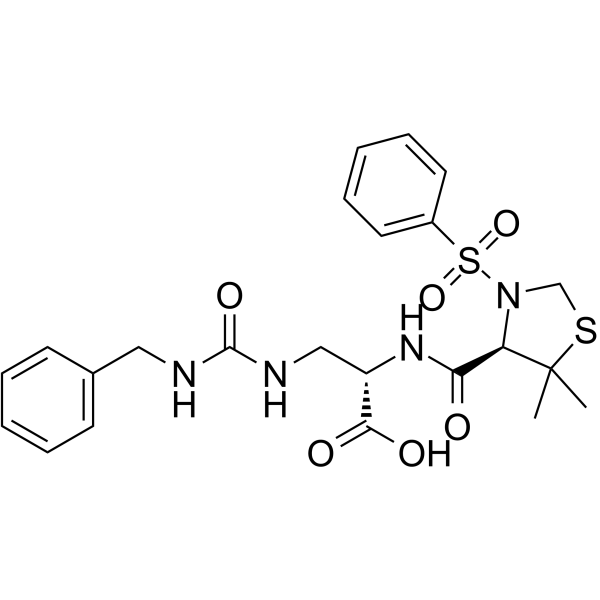
Beclin1-ATG14L interaction inhibitor 1 (com 19) is a selective Beclin1-ATG14L interaction inhibitor. This protein interaction mechanism specifically targets complex I of the lipid kinase VPS34 without affecting complex II. Because the integrity of VPS34 complex II depends on the Beclin 1-UVRAG interaction. Beclin1-ATG14L interaction inhibitor 1 can disrupt the formation of VPS34 complex I and inhibit autophagy, but does not affect complex II-related vesicle transport .
loading...
    loading...
2
2 Cited Publications
Cat. No.: HY-134884
CAS No.: 2230911-59-6
Purity:  99.80%
Synonyms: PD-1/PD-L1-IN-8
Target:  

PD-1/PD-L1

Research Areas:  

Cancer

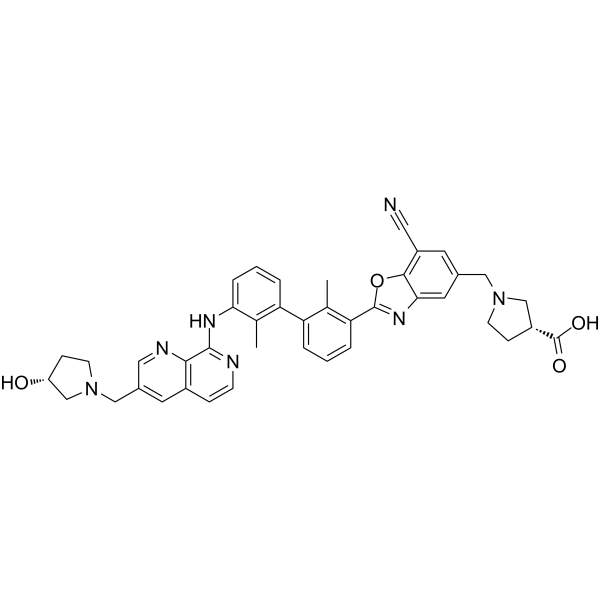
INCB086550 is a potent, oral, small-molecule PD-L1 inhibitor with IC50s value of 3.1, 4.9 and 1.9 nM for human, cynomolgus, and rat, respectively. INCB086550 promotes the dimerization of cell-surface PD-L1 and induces PD-L1 entry into Golgi vesicles then traffick to the nucleus. INCB086550 can be used for multiple cancers research .
loading...
    loading...
2
2 Cited Publications
Cat. No.: HY-128200
CAS No.: 108985-27-9
Purity:  99.84%
Synonyms: PQS
Target:  

Bacterial

Research Areas:  

Infection Inflammation/Immunology

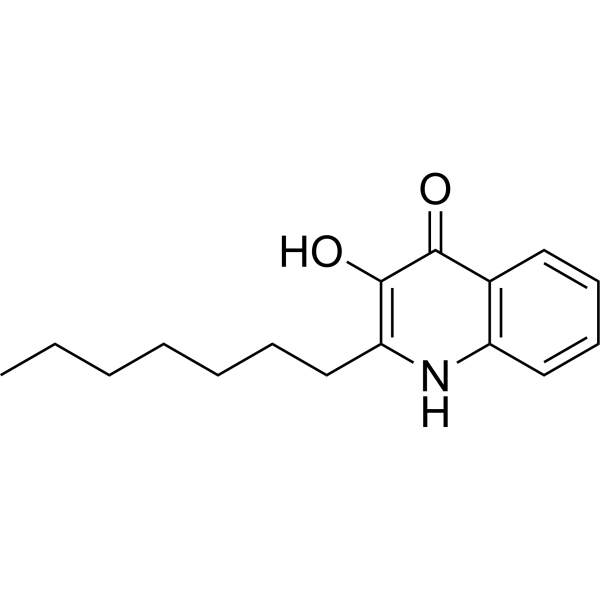
Pseudomonas quinolone signal (PQS) is a quorum-sensing signaling molecule produced by Pseudomonas aeruginosa. The synthesis of Pseudomonas quinolone signal relies on the las quorum-sensing system, and its biological activity is associated with the rhl system. Pseudomonas quinolone signal regulates the expression of the virulence gene lasB. Additionally, Pseudomonas quinolone signal plays roles in iron acquisition, cytotoxicity, outer-membrane vesicle biogenesis, and host immune modulation .
loading...
    loading...
2
2 Cited Publications
Cat. No.: HY-13321
CAS No.: 442666-98-0
Purity:  99.53%
Target:  

HCV

Research Areas:  

Infection

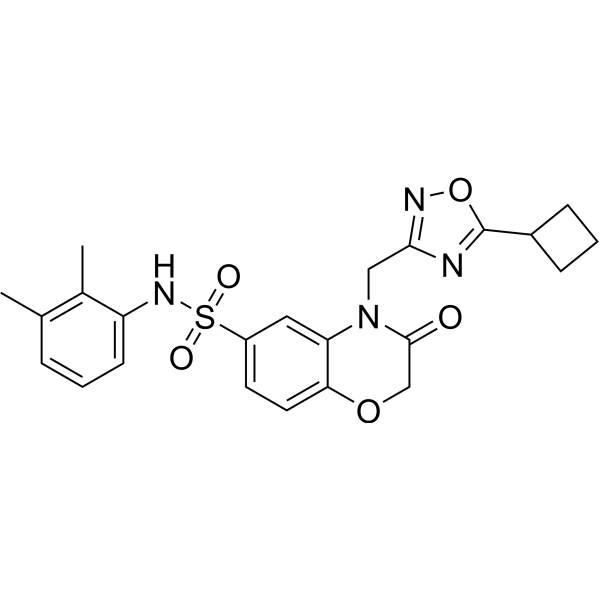
Anguizole is an HCV NS4B inhibitor. Anguizole interacts with NS4B-AH2, inhibits AH2 lipid vesicle aggregation, disrupts NS4B dimerization/multimerization and impairs NS4B-NS5A interaction. Anguizole exhibits little host cell toxicity. Anguizole can be used for the research of HCV infection .
loading...
    loading...
1
1 Cited Publications
Cat. No.: HY-B0979
CAS No.: 134-63-4
Synonyms: α-Lobeline hydrochloride; L-Lobeline hydrochloride
Lobeline (α-Lobeline) hydrochloride is a brain-penetrant nicotinic receptor agonist. Lobeline hydrochloride increases dopamine (DA) release by inhibiting DA uptake into synaptic vesicles, and altering presynaptic DA storage. Lobeline hydrochloride is effective in smoking cessation .
loading...
    loading...
1
1 Cited Publications
Cat. No.: HY-112257
CAS No.: 1010396-29-8
Purity:  99.93%
Target:  

Androgen Receptor

Research Areas:  

Metabolic Disease

S-23 is an orally active selective androgen receptor modulator (SARM) with a Ki of 1.7 nM. S-23 induces androgen receptor (AR)-mediated transcriptional activation in CV-1 cells. S-23 increases prostate, seminal vesicle, and levator ani muscle weights in castrated rats .
loading...
    loading...

