



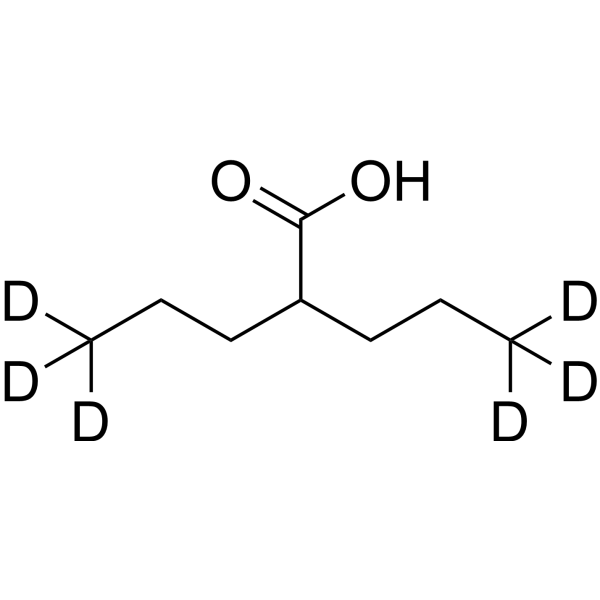
Valproic acid-d4
Based on 1 publication(s) in Google Scholar
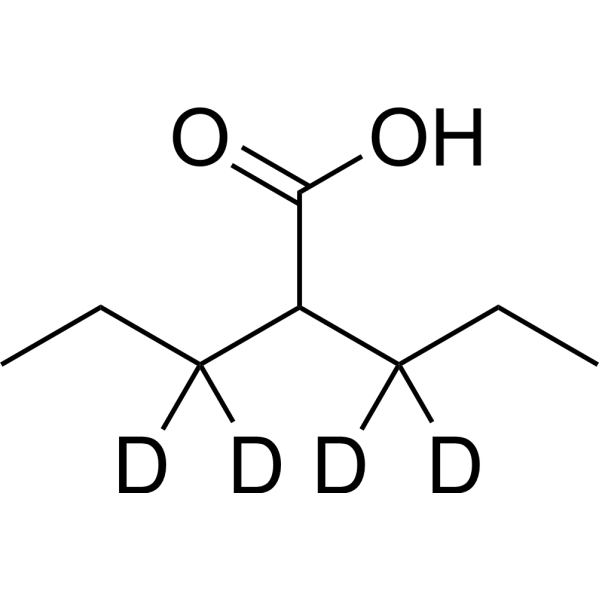
Valproic acid-d4 is the deuterium labeled Valproic acid. Valproic acid (VPA; 2-Propylpentanoic Acid) is an HDAC inhibitor, with IC50 in the range of 0.5 and 2 mM, also inhibits HDAC1 (IC50, 400 μM), and induces proteasomal degradation of HDAC2. Valproic acid activates Notch1 signaling and inhibits proliferation in small cell lung cancer (SCLC) cells. Valproic acid sodium salt is used in the treatment of epilepsy, bipolar disorder and prevention of migraine headaches.
For research use only. We do not sell to patients.
- Purity : 98.0%
- CAS No.: 87745-17-3
- Formula: C8H12D4O2
- Molecular Weight:148.24
-
Storage:Pure form -20°C, 3 years ; In solvent -80°C, 6 months , -20°C, 1 month

To place orders, for customer services and technical support, please contact: MedChemExpress USA
Tel: 609-228-6898 E-mail: [email protected] [email protected]


-
 Biological Activity
-
Chemical Information
-
Solvent & Solubility
- Protocols
- Purity & Documentation
- References
-
 Help & FAQs


-
HY-10585S2
Valproic acid-d15Stable Isotope -
HY-13755
SulforaphaneKeap1/Nrf2/ARE Inducer -
HY-B0350A
Sodium butyrateHDAC Inhibitor -
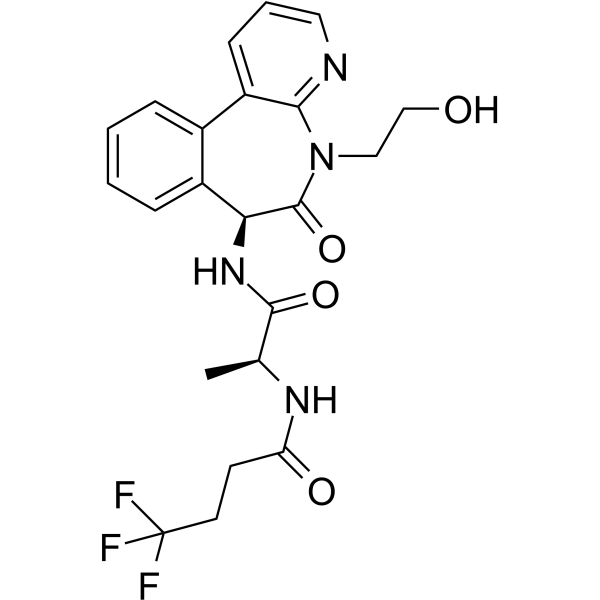
HY-12449
CrenigacestatNotch/γ-secretase Inhibitor -
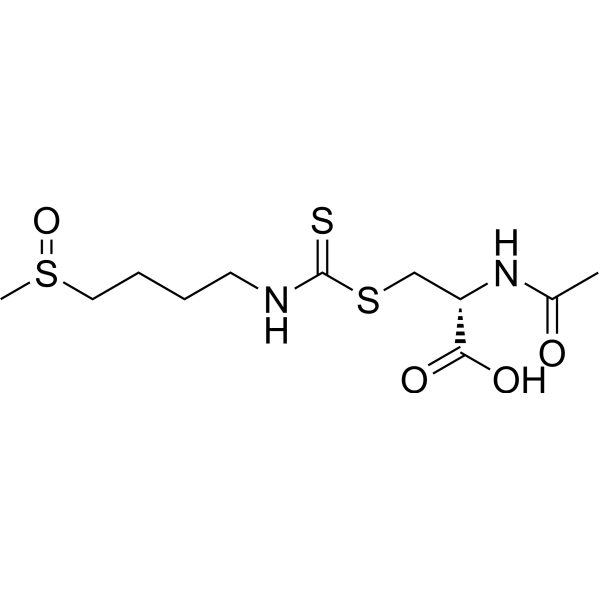
HY-132242
DL-Sulforaphane N-acetyl-L-cysteineHDAC Inhibitor -
HY-10585S1
Valproic acid-d6Stable Isotope -
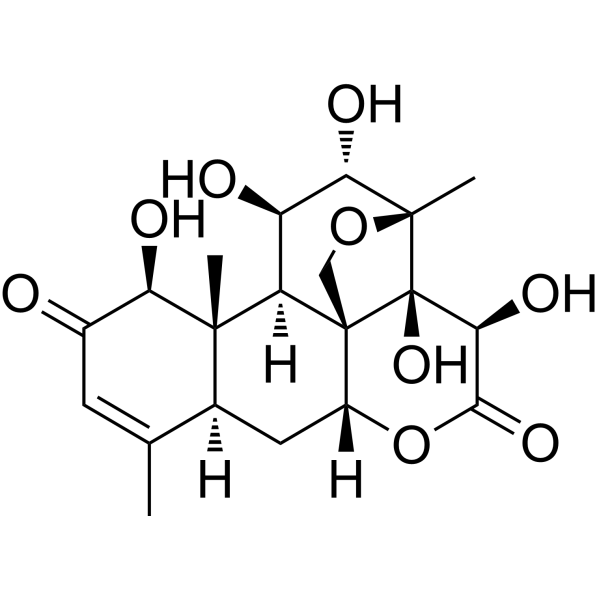
HY-N3014
Bruceine DApoptosis Inducer -
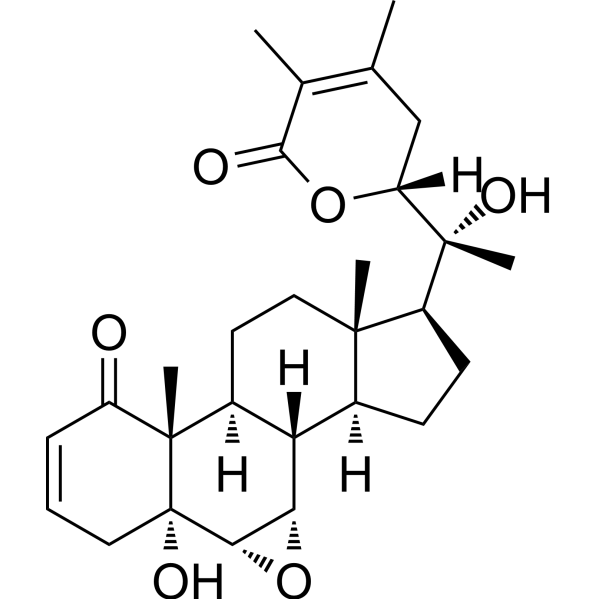
HY-N7028
Withanolide ANeuroprotectIve Agent -
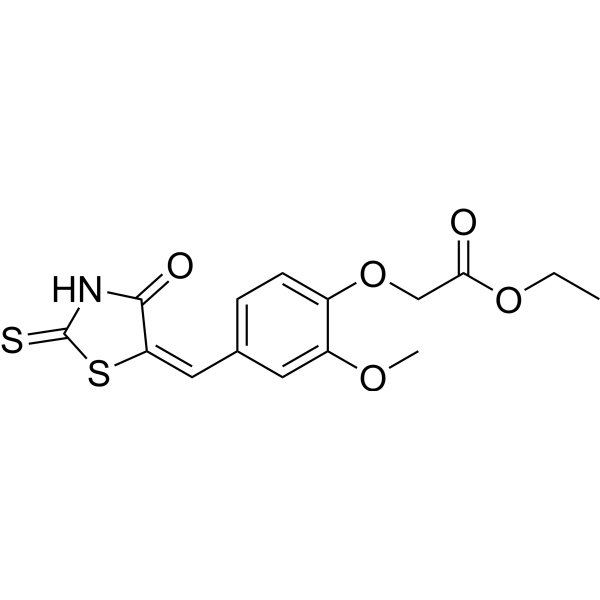
HY-100431
IMR-1Notch Inhibitor -

HY-132242R
DL-Sulforaphane N-acetyl-L-cysteine (Standard)HDAC Inhibitor -

HY-N7028R
Withanolide A (Standard)NeuroprotectIve Agent -

HY-B0350AG
Sodium butyrate (GMP)HDAC Inhibitor
Publications Citing Use of MedChemExpress (MCE) Valproic acid-d4
MoreAll Endogenous Metabolite Isoforms
More

Biological Activity
Description
In Vitro
Stable heavy isotopes of hydrogen, carbon, and other elements have been incorporated into drug molecules, largely as tracers for quantitation during the drug development process. Deuteration has gained attention because of its potential to affect the pharmacokinetic and metabolic profiles of drugs[1].
MedChemExpress (MCE) has not independently confirmed the accuracy of these methods. They are for reference only. Further protocols information, click here.
Application
1. This compound can be used as a tracer
2. This compound can be used as an internal standard for quantitative analysis by NMR, GC-MS, or LC-MS.


Chemical Information
-
CAS No. 87745-17-3
-
Unlabeled CAS 99-66-1
-
Appearance Liquid
-
Molecular Weight 148.24
-
Formula C8H12D4O2
-
Color Colorless to light yellow
-
SMILES
CCC([2H])([2H])C(C(O)=O)C([2H])([2H])CC
-
Synonyms
VPA-d4; 2-Propylpentanoic acid-d4
-
Shipping
Room temperature in continental US; may vary elsewhere.
-
Storage
Pure form -20°C 3 years In solvent -80°C 6 months -20°C 1 month


Publications (1)
-
Journal Impact Factor
-
Most Recent
-
FASEB J
Salvianolic acid A promotes bone-fracture healing via balancing osteoblast and osteoclast differentiation. [Abstract]2025 Jan 31;39(2):e70364. PMID: 39878631


Solvent & Solubility
In Vitro:
DMSO : 100 mg/mL (674.58 mM; Need ultrasonic; Hygroscopic DMSO has a significant impact on the solubility of product, please use newly opened DMSO)
Please refer to the solubility information to select the appropriate solvent. Once prepared, please aliquot and store the solution to prevent product inactivation from repeated freeze-thaw cycles.
Storage method and period of stock solution: -80°C, 6 months; -20°C, 1 month. When stored at -80°C, please use it within 6 months. When stored at -20°C, please use it within 1 month.
Please refer to the solubility information to select the appropriate solvent. Once prepared, please aliquot and store the solution to prevent product inactivation from repeated freeze-thaw cycles.
Storage method and period of stock solution: -80°C, 6 months; -20°C, 1 month. When stored at -80°C, please use it within 6 months. When stored at -20°C, please use it within 1 month.
Concentration (start) × Volume (start) = Concentration (final) × Volume (final)

Protocols
-
Cell Cytotoxicity Assay
Cytotoxicity assays are usually based on the assessment of cell membrane damage, which can also be indirectly detected by measuring cell viability. Detection methods include MTT assay, CKK-8 assay, LDH assay and ATP assay, etc.
-
Notch Pathway Solutions
The Notch pathway is a contact-dependent signaling pathway that controls cell-fate decisions, differentiation, proliferation, and tissue patterning through interactions between membrane-bound Notch receptors and membrane-bound ligands on neighboring cells. Canonical Notch signaling is activated when ligand engagement triggers proteolytic release of the Notch intracellular domain, which enters the nucleus and regulates transcription together with DNA-binding transcriptional complexes. In the canonical mechanism, ligand-dependent Notch activation leads to release of the intracellular Notch domain, and presenilin-dependent γ-secretase activity is required for production of the active intracellular signaling fragment. The released intracellular domain functions as a nuclear signal that converts Notch receptor activation at the membrane into transcriptional regulation of target programs such as HES/HEY-family genes and other context-dependent downstream targets. The literature links Notch p
-
Cell Viability Determination by MTT Colorimetric Assay
The following protocol uses the MTT colorimetric assay as a classic literature-established method for assessing cell viability/metabolic activity in cultured mammalian cells. MTT[3-(4,5-dimethylthiazol-2-yl)-2,5-diphenyltetrazolium bromide] is reduced by metabolically active cells to a colored formazan product; the amount of formazan is quantified spectrophotometrically and provides an indirect measure of metabolically active viable cells. Importantly, MTT reduction reflects cellular oxidoreductase/metabolic activity rather than an absolute direct count of living cells, so changes in cellular metabolism can alter the signal independently of cell number.


Purity & Documentation
-
Data Sheet (277 KB)
-
SDS (557 KB)
- English - EN (557 KB)
- Français - FR (557 KB)
- Deutsch - DE (557 KB)
- Norwegian - NO (557 KB)
- Español - ES (557 KB)
- Swedish - SV (557 KB)
- Italian - IT (557 KB)
- Korean - KR (557 KB)
- Portuguese - PT (557 KB)
-
Handling Instructions (2659 KB)
References
[1]. Russak EM, et al. Impact of Deuterium Substitution on the Pharmacokinetics of Pharmaceuticals. Ann Pharmacother. 2019;53(2):211-216. [Content Brief]
[2]. Valproic acid, et al. Histone deacetylase is a direct target of valproic acid, a potent anticonvulsant, mood stabilizer, and teratogen. J Biol Chem. 2001 Sep 28;276(39):36734-41. [Content Brief]
[3]. Han BR, et al. Valproic acid inhibits the growth of HeLa cervical cancer cells via caspase-dependent apoptosis. Oncol Rep. 2013 Dec;30(6):2999-3005. [Content Brief]
[4]. Zhang ZH, et al. Valproic acid inhibits tumor angiogenesis in mice transplanted with Kasumi 1 leukemia cells. Mol Med Rep. 2013 Nov 28. [Content Brief]
[5]. Cohen OS, et al. Acute prenatal exposure to a moderate dose of valproic acid increases social behavior and alters gene expression in rats. Int J Dev Neurosci. 2013 Dec;31(8):740-50. [Content Brief]
[6]. Avery LB, et al. Valproic Acid Is a Novel Activator of AMP-Activated Protein Kinase and Decreases Liver Mass, Hepatic Fat Accumulation, and Serum Glucose in Obese Mice. Mol Pharmacol. 2014 Jan;85(1):1-10. [Content Brief]
[7]. Platta CS, et al. Valproic acid induces Notch1 signaling in small cell lung cancer cells. J Surg Res. 2008 Jul;148(1):31-7. [Content Brief]


Complete Stock Solution Preparation Table
Please refer to the solubility information to select the appropriate solvent. Once prepared, please aliquot and store the solution to prevent product inactivation from repeated freeze-thaw cycles.
Storage method and period of stock solution: -80°C, 6 months; -20°C, 1 month. When stored at -80°C, please use it within 6 months. When stored at -20°C, please use it within 1 month.
| Optional Solvent | Concentration Solvent Mass | 1 mg | 5 mg | 10 mg | 25 mg |
|---|---|---|---|---|---|
| DMSO | 1 mM | 6.7458 mL | 33.7291 mL | 67.4582 mL | 168.6454 mL |
| 5 mM | 1.3492 mL | 6.7458 mL | 13.4916 mL | 33.7291 mL | |
| 10 mM | 0.6746 mL | 3.3729 mL | 6.7458 mL | 16.8645 mL | |
| 15 mM | 0.4497 mL | 2.2486 mL | 4.4972 mL | 11.2430 mL | |
| 20 mM | 0.3373 mL | 1.6865 mL | 3.3729 mL | 8.4323 mL | |
| 25 mM | 0.2698 mL | 1.3492 mL | 2.6983 mL | 6.7458 mL | |
| 30 mM | 0.2249 mL | 1.1243 mL | 2.2486 mL | 5.6215 mL | |
| 40 mM | 0.1686 mL | 0.8432 mL | 1.6865 mL | 4.2161 mL | |
| 50 mM | 0.1349 mL | 0.6746 mL | 1.3492 mL | 3.3729 mL | |
| 60 mM | 0.1124 mL | 0.5622 mL | 1.1243 mL | 2.8108 mL | |
| 80 mM | 0.0843 mL | 0.4216 mL | 0.8432 mL | 2.1081 mL | |
| 100 mM | 0.0675 mL | 0.3373 mL | 0.6746 mL | 1.6865 mL |


Valproic acid-d4 Related Classifications
HY-10585S Related Classifications
 Powered by Bioz