



Apoptosis Inducer
-
Phellopterin (Standard)
 0 Images
Phellopterin (Standard) is the analytical standard of Phellopterin. Phellopterin, an orally active furocoumarin with multiple biological activities. Phellopterin is a partial agonist of the central benzodiazepine receptors. Phellopterin exerts anti-inflammatory effects by upregulating SIRT1, downregulating ICAM-1 (reducing chronic inflammation, aiding diabetic ulcer healing), inhibiting STAT3 phosphorylation (easing atopic dermatitis inflammation), regulating Akt/PKC pathways (lowering TNF-α-induced VCAM-1 to block monocyte adhesion), and inhibiting TLR4/NF-κB pathway and macrophage M2 polarization (alleviating colitis-related cancers). Phellopterin suppresses ovarian cancer progression via inhibiting the PU.1/CLEC5A/PI3K-AKT loop (inducing cell cycle arrest, apoptosis, DNA damage). Phellopterin alleviates murine diabetes by promoting adipocyte differentiation and increasing PPARγ. Phellopterin also has anti-HSV-1 activity. Phellopterin can be used for studying anti-inflammation, anti-cancer (e.g., ovarian cancer, colitis cancer), blood glucose lowering, anti-diabetes, and anti-virus.
-
Ketorolac hydrochloride
 0 ImagesCat. No.: HY-B0580DCAS No.: 218934-99-7Synonyms: RS37619 hydrochloride
Ketorolac (RS37619) hydrochloride is a non-steroidal anti-inflammatory drug (NSAID), acting as a nonselective COX inhibitor, with IC50s of 20 nM for COX-1 and 120 nM for COX-2. Ketorolac hydrochloride tromethamine is used as 0.5% ophthalmic solution for the research of allergic conjunctivitis, cystoid macular edema, intraoperative miosis, and postoperative ocular inflammation and pain. Ketorolac hydrochloride tromethamine is also a DDX3 inhibitor that can be used for cancer research.
-
Polyporenic acid C (Standard)
 0 Images
Polyporenic acid C (Standard) is an analytical standard of Polyporenic acid C (HY-N2993). This product is intended for research and analytical applications. Polyporenic acid C is a lanostane-type triterpenoid. Polyporenic acid C can be isolated from Poria cocos. Polyporenic acid C causes the cleavage of caspase-8 and caspase-3, as well as the cleavage of PARP. Polyporenic acid C reduces the phosphorylation level of Akt (Ser473), increases the phosphorylation of PTEN and p53 (Ser15), and activates JNK. Polyporenic acid C induces Apoptosis. Polyporenic acid C shows anticancer activity against non-small cell lung cancer.
-
Isocucurbitacin B
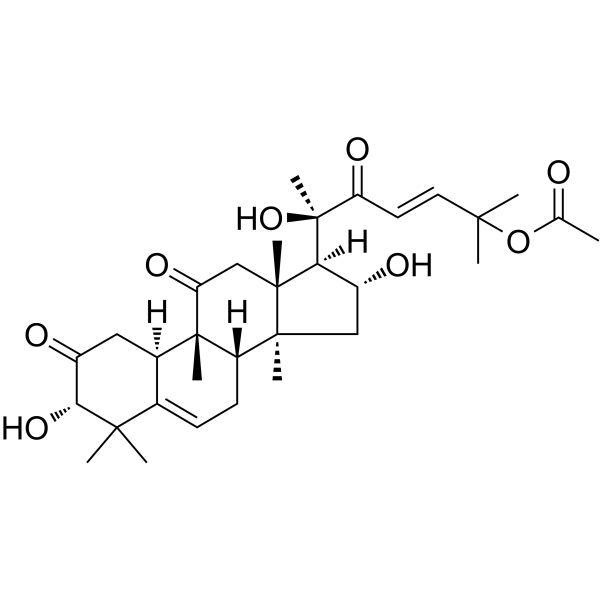 0 Images
Isocucurbitacin B is a natural terpenoid compound found in Pedicellus Melo. Isocucurbitacin B can inhibit the PI3K/AKT, MAPK, and STAT3 signaling pathways and downregulate CAV1 expression. Isocucurbitacin B can inhbit cancer cell proliferation, migration and invision. Isocucurbitacin B can induce apoptosis and cause G2/M phase arrest. Isocucurbitacin B can decrease intracellular cholesterol and PH levels and increase intracellular calcium levels. Isocucurbitacin B can be used for the research of cancer, such as glioma[1][2].
-
Etalocib (Standard)
 0 ImagesSynonyms: LY293111 (Standard); VML 295 (Standard)
Etalocib (Standard) is the analytical standard of Etalocib. This product is intended for research and analytical applications. Etalocib (LY293111), an orally active leukotriene B4 receptor antagonist, inhibits the binding of [3H]LTB4, with a Ki of 25 nM. Etalocib (LY293111) prevents LTB4-induced calcium mobilization with an lC50 of 20 nM. Etalocib (LY293111) induces apoptosis.
-
H-Phe(4-SO3H)-OH
 0 ImagesCat. No.: HY-W550859CAS No.: 34023-49-9Synonyms: 4-Sulfo-L-phenylalanine
-
Vandetanib (Standard)
 0 ImagesSynonyms: ZD6474 (Standard)
Vandetanib (Standard) is the analytical standard of Vandetanib. This product is intended for research and analytical applications. Vandetanib (D6474) is a potent, orally active inhibitor of VEGFR2/KDR tyrosine kinase activity (IC50=40 nM). Vandetanib also has activity versus the tyrosine kinase activity of VEGFR3/FLT4 (IC50=110 nM) and EGFR/HER1 (IC50=500 nM).
-
Ibuprofen L-lysine (Standard)
 0 ImagesSynonyms: (±)-Ibuprofen L-lysine (Standard)
Ibuprofen (L-lysine) (Standard) is the analytical standard of Ibuprofen (L-lysine). This product is intended for research and analytical applications. Ibuprofen ((±)-Ibuprofen) L-lysine is a potent orally active, selective COX-1 inhibitor with an IC50 value of 13 μM. Ibuprofen L-lysine inhibits cell proliferation, angiogenesis, and induces cell apoptosis. Ibuprofen L-lysine is a nonsteroidal anti-inflammatory agent and a nitric oxide (NO) donor. Ibuprofen L-lysine can be used in the research of pain, swelling, inflammation, infection, immunology, cancers.
-
Thalidomide-4-OH (Standard)
 0 ImagesCat. No.: HY-103596RCAS No.: 5054-59-1Synonyms: Cereblon ligand 2 (Standard); E3 ligase Ligand 2 (Standard)
Thalidomide-4-OH (Standard) is the analytical standard of Thalidomide-4-OH (HY-103596). This product is intended for research and analytical applications. Thalidomide-4-OH (Cereblon ligand 2) is the Thalidomide-based Cereblon ligand used in the recruitment of CRBN protein. Thalidomide-4-OH (Cereblon ligand 2) can be connected to the ligand for protein by a linker to form PROTACs.

-
(Rac)-Norcantharidin (Standard)
 0 Images
(Rac)-Norcantharidin (Standard) is the analytical standard of (Rac)-Norcantharidin (HY-N0585). This product is intended for research and analytical applications. (Rac)-Norcantharidin ((Rac)-NCTD) is the racemic form of Norcantharidin. Norcantharidin is a demethylated derivative of Cantharidin (HY-N0209) and has antitumor activity.
-
Tomatine (Standard)
 0 ImagesSynonyms: α-Tomatine (Standard); Lycopersicin (Standard); Tomatin (Standard)
Tomatine is a glycoalkaloid, found in the tomato plant (Lycopersicon esculentum Mill.). Tomatine elicits neurotoxicity in RIP1 kinase and caspase-independent manner. Tomatine promotes the upregulation of nuclear apoptosis inducing factor (AIF) in neuroblastoma cells. Tomatine also inhibits 20S proteasome activity.
-
CI-1040 (Standard)
 0 ImagesCat. No.: HY-50295RCAS No.: 212631-79-3Synonyms: PD 184352 (Standard)
-
BPR1K653 hydrochloride
 0 ImagesCat. No.: HY-120534CAS No.: 1192754-07-6
BPR1K653 hydrochloride is a pan-Aurora kinase inhibitor, with an IC50 of 124.0 nM against Aurora-A and an IC50 of 45.0 nM against Aurora-B. BPR1K653 hydrochloride induces endoreduplication, apoptosis and antiproliferative activity in cancer cells. BPR1K653 hydrochloride can be used in research related to colon cancer and multidrug-resistant cancers.
-
Bromuconazole
 0 ImagesCat. No.: HY-W715812CAS No.: 116255-48-2
Bromuconazole is a triazole fungicide with oral efficacy and blood-brain barrier permeability. Bromuconazole protects crops from various fungal contaminations. Bromuconazole exhibits cytotoxicity against a variety of cancer cells, induces G0/G1 cell cycle arrest and inhibits DNA synthesis in cancer cells, and triggers cytoskeletal structural disorder, genotoxic damage, apoptotic (apoptosis) cell death, and mitochondrial membrane depolarization. Bromuconazole activates caspase-3, induces excessive production of ROS, p53 and Bax, lipid peroxidation, increased activities of SOD and CAT, and downregulates Bcl-2. By upregulating p-ERK1/2 and p-JNK, Bromuconazole disrupts the MAPK signaling pathway, impairs the cellular stress response of human trophoblast cells and endometrial cells, and damages the implantation process. Bromuconazole is applicable to research related to glioma, colon cancer, reproductive injury (implantation dysfunction), and cardiac dysfunction.
-
CDRI-97/78
 0 ImagesCat. No.: HY-108053CAS No.: 372960-05-9
-
Mivebresib (Standard)
 0 ImagesSynonyms: ABBV-075 (Standard)
-
TPP2a bromide
 0 ImagesCat. No.: HY-122802CAS No.: 1838592-80-5
TPP2a bromide is a thioredoxin reductase (TrxR) inhibitor with an IC50 value of 1.16 μM, and also acts as a TrxR-specific fluorescent probe with environment-sensitive fluorescence. TPP2a bromide selectively forms covalent interactions with subcellular mitochondrial TrxR, thereby modifying its Sec498 residue. TPP2a bromide can increase the level of reactive oxygen species (ROS) in cells and induce mitochondrial apoptosis in cancer cells. TPP2a bromide exhibits enhanced cytotoxicity against cancer cell lines. TPP2a bromide can be used in research related to cervical cancer, lung cancer, etc.
-
Sodium propionate-13C-1
 0 ImagesCat. No.: HY-B1773AS1CAS No.: 83587-76-2
Sodium propionate-13C-1 is the 13C-labeled Propionate sodium (HY-B1773A). Sodium propionate is an orally active short-chain fatty acid. Sodium propionate can be produced by intestinal bacteria from the metabolism of dietary fiber. Sodium propionate increases PPAR-γ, inhibits NF-κB activation, and reduces COX-2 expression and NO production. Sodium propionate also induces Apoptosis and Autophagy. Sodium propionate reduces HSV-1-induced keratitis. Sodium propionate has anticancer effects against glioblastoma. Sodium propionate exhibits neuroprotective, antioxidant, and anti-inflammatory activities. Sodium propionate can be used in the research of spinal cord injury and Alzheimer's disease.
-
PP121 (Standard)
 0 ImagesCat. No.: HY-10372RCAS No.: 1092788-83-4



