



Caspase 9
Caspase 9 plays a central role in the mitochondrial, or intrinsic, apoptotic pathway, where cytochrome c release promotes apoptosome formation with Apaf-1 and procaspase-9[1]. Mechanistically, activated caspase 9 cleaves and activates effector caspases 3 and 7, linking mitochondrial dysfunction to proteolytic cell death execution[1][2]. In disease models, diminished Apaf-1 activity reduced cytochrome c-dependent caspase activation in ovarian cancer cell lines, while ischemic hippocampal neurons showed caspase 9 activation before neuronal death[2][3]. Compared with caspase 8 in the extrinsic pathway, caspase 9 primarily mediates the intrinsic route to caspase 3 activation in ischemic neurons and TNFR-mediated hepatocyte apoptosis[3][4]. For experimental applications, Apaf-1 ligands inhibited apoptosome-mediated procaspase-9 activation and reduced apoptotic phenotypes in mitochondrial apoptosis models[5].
References:
- [1]. Allan LA, et al. Apoptosis and autophagy: Regulation of caspase-9 by phosphorylation. FEBS J. 2009 Nov;276(21):6063-73. [Content Brief]
- [2]. Wolf BB, et al. Defective cytochrome c-dependent caspase activation in ovarian cancer cell lines due to diminished or absent apoptotic protease activating factor-1 activity. J Biol Chem. 2001 Sep 7;276(36):34244-51. [Content Brief]
- [3]. Cao G, et al. Cloning and characterization of rat caspase-9: implications for a role in mediating caspase-3 activation and hippocampal cell death after transient cerebral ischemia. J Cereb Blood Flow Metab. 2002 May;22(5):534-46. [Content Brief]
- [4]. Imao M, et al. Differential caspase-9-dependent signaling pathway between tumor necrosis factor receptor- and Fas-mediated hepatocyte apoptosis in mice. Liver Int. 2006 Feb;26(1):137-46. [Content Brief]
- [5]. Malet G, et al. Small molecule inhibitors of Apaf-1-related caspase- 3/-9 activation that control mitochondrial-dependent apoptosis. Cell Death Differ. 2006 Sep;13(9):1523-32. [Content Brief]
-
Caspase 9 Related Products (197)
Related Products (197)

-
Antibodies (2)
-
Topo I/II-IN-2
 0 ImagesCat. No.: HY-170912Topo I/II-IN-2 (Compound 3g) is an inhibitor of Topo I and Topo II. Topo I/II-IN-2 inhibits NCI-H446 cells and NCI-H1048 cells with IC50s of 1.30 μM and 1.42 μM, respectively. Topo I/II-IN-2 induces mitochondrial Apoptosis, mitochondrial dysfunction and activity generation. Topo I/II-IN-2 inhibits the PI3K/Akt/mTOR pathway. Topo I/II-IN-2 prevents SCLC (small cell lung cancer) cell proliferation, invasion, and migration in vitro. .
-
28-Deoxonimbolide
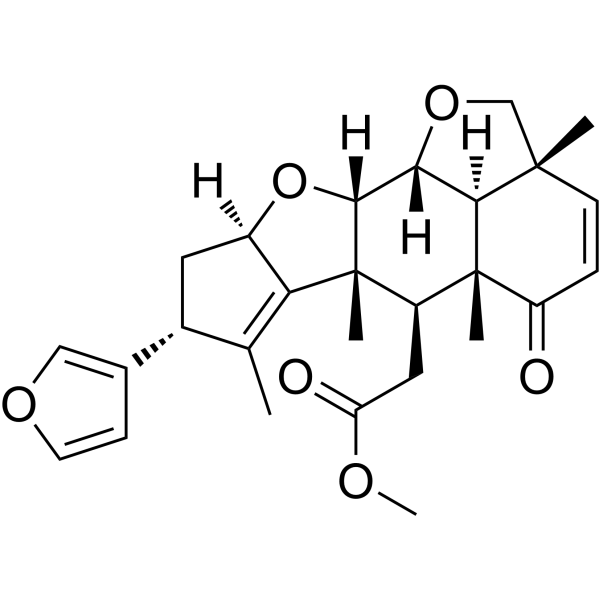 0 ImagesCat. No.: HY-N1710CAS No.: 126005-94-528-Deoxonimbolide is a Nimbin (HY-N3187) type limonoid, that can be isolated from Azadirachta indica seed extracts. 28-Deoxonimbolide shows anticancer activity. 28-Deoxonimbolide induces apoptotic cell death in HL60 cells via both the mitochondrial- and the death receptor-mediated pathways.
-
SP-6-27
 0 ImagesCat. No.: HY-136893CAS No.: 1384170-58-4SP-6-27 is a tubulin depolymerizing agent that binds to the colchicine site of β-tubulin. SP-6-27 induces G2/M cell cycle arrest in ovarian cancer cells. SP-6-27 enhances intrinsic apoptosis in ovarian cancer cells through upregulation of Bax, Apaf-1, caspase-6, caspase-9, and caspase-3. SP-6-27 reduces ovarian cancer cell migration. SP-6-27 inhibits capillary tube formation by human umbilical vein endothelial cells. SP-6-27 shows minimum cytotoxicity to normal ovarian epithelia. SP-6-27 shows enhanced cytotoxicity in chemo-sensitive/resistant ovarian cancer cells when combined with Cisplatin (HY-17394). SP-6-27 can be used for the research of ovarian cancer.
-
Swerchirin
 0 ImagesSwerchirin is an orally active, plant-derived xanthone that acts as an inhibitor of the Raf/MEK/ERK signaling pathway. Swerchirin downregulates the expression of phosphorylated MEK and phosphorylated ERK, induces mitochondrial apoptosis and cell cycle arrest, regulates Bcl-2 family proteins, triggers cytochrome c release, activates caspases, and drives PARP cleavage. Swerchirin reduces blood glucose levels in rat models under fasting, fed, glucose-loaded conditions, and following treatment with Tolbutamide (HY-B0401). Swerchirin can be used in research related to ovarian cancer, liver injury, and diabetes.
-
GUT-70
 0 ImagesCat. No.: HY-120923CAS No.: 161633-75-6GUT-70, a tricyclic coumarin, is a Hsp90 inhibitor. GUT-70 activates the caspase 2, 3, 8 and 9, and induces the apoptosis in leukemic cells. GUT-70 inhibits HIV-1 replication in chronically infected cells via suppression of the NF-κB pathway. GUT-70 can be used for the study of leukemic, mantle cell lymphoma (MCL) and HIV-1 infection.
-
GEA 3162 hydrochloride
 0 ImagesCat. No.: HY-120314AGEA 3162 hydrochloride is an orally active compound that acts as a NO/ONOO⁻ donor. GEA 3162 hydrochloride significantly inhibits the activation of human polymorphonuclear leukocytes (PMNs) through the cGMP pathway, inhibits the release of inflammatory mediators, and exerts anti-inflammatory and protective effects. GEA 3162 hydrochloride induces apoptosis of neutrophils and bone marrow cells by activating caspase-2/3/8/9 through the ONOO⁻ pathway. GEA 3162 hydrochloride has a bidirectional effect in the rat gastric ulcer model: at low doses, it significantly reduces gastric mucosal damage, while at high doses, it aggravates the ulcer area. GEA 3162 hydrochloride can be used for research on inflammatory conditions such as gastric ulcers.
-
PI3K/mTOR-IN-17
 0 ImagesCat. No.: HY-174855PI3K/mTOR-IN-17 is a dual PI3K and mTOR inhibitor with IC50 values of 1.21 μM (PI3K), and 0.21 μM (mTOR). PI3K/mTOR-IN-17 induces cells caspase-mediated apoptosis by arresting their growth in the G1-phase. PI3K/mTOR-IN-17 upregulates the levels of caspases-3, 7, 8, and 9, p53 expression and Bax/Bcl-2 ratio. PI3K/mTOR-IN-17 suppresses the PI3K/mTOR signaling pathway. PI3K/mTOR-IN-17 can be used for research of cancer, such as non-small cell lung cancer (NSCLC).
-
MAHS-3
 0 ImagesCat. No.: HY-187513MAHS-3 is a thymidylate synthase (TS) and dihydrofolate reductase (DHFR) inhibitor, with IC50 values of 5.279 μM and 52.60 μM against human targets, respectively. MAHS-3 exhibits broad-spectrum antiproliferative activity against cancer cells, induces cell cycle arrest, activates endogenous caspase-dependent apoptosis, reduces MMP levels, inhibits cell migration, increases intracellular NO levels, and promotes autophagy activity. MAHS-3 can be used in cancer-related research.
-
ICD inducer-2
 0 ImagesCat. No.: HY-181673CAS No.: 3069681-35-9ICD inducer-2 is a immunogenic cell death inducer. ICD inducer-2 binds to the colchicine binding site on tubulin to inhibit tubulin polymerization. ICD inducer-2 exhibits broad-spectrum antiproliferative activity across multiple cancer cell lines. ICD inducer-2 inhibits cells migration, causes G2/M phase and induces apoptosis. ICD inducer-2 promotes infiltration of CD4+ and CD8+ T cells into the tumor microenvironment. ICD inducer-2 downregulates antiapoptotic protein Bcl-2, upregulates proapoptotic proteins Bax and Bim-1, and increases cleaved caspase 3, cleaved caspase 9, and cleaved PARP levels. ICD inducer-2 overcomes paclitaxel resistance in xenograft models and achieves tumor growth inhibition. ICD inducer-2 can be used for the research of cancer, such as lung carcinoma.
-
RR-171
 0 ImagesCat. No.: HY-P11935CAS No.: 2410535-57-6RR-171 is an amino acid polypeptide and an inhibitor of the Wnt signaling pathway. RR-171 reduces the expression levels of Wnt-1, GSK3β and β-catenin. RR-171 induces apoptosis (Apoptosis) in pancreatic cancer cells, which is characterized by an increased Bax/Bcl-2 ratio, activation of Caspase-3/7/9, and increased Cleaved-PARP; this pro-apoptotic effect can be partially reversed by Z-VAD-FMK (HY-16658B). RR-171 also induces pyroptosis (Pyroptosis) in pancreatic cancer cells, which is manifested by activation of the NLRP-3 inflammasome, activation of Caspase-1, cleavage of GSDMD, upregulation of IL-1β and IL-18, and increased LDH release; this pro-pyroptotic effect can be partially reversed by VX-765 (HY-13205). RR-171 inhibits the viability, proliferation and colony formation of pancreatic cancer cells, with low cytotoxicity against normal cells. RR-171 downregulates the expression of Ki-67 and PCNA in tumor tissues in vivo, with favorable biosafety. RR-171 can be used in studies related to pancreatic cancer.
-
MTAAAR
 0 ImagesCat. No.: HY-P12337MTAAAR is a polypeptide obtained from the enzymatic hydrolysis of C-phycocyanin (HY-D1025) and possesses neuroprotective activity. MTAAAR enhances the activities of antioxidant enzymes SOD, CAT, and GSH-Px, reduces ROS, inhibits apoptosis and acetylcholinesterase (AChE) activity in brain tissue, and decreases protein carbonyl content. In the MPTP (HY-W114750)-induced zebrafish Parkinson's disease model, MTAAAR exhibits antioxidant effects, inhibits autophagy and apoptosis, reverses the loss of dopaminergic neurons and cerebral blood vessels, and alleviates motor deficits. MTAAAR can be used for research on Parkinson's disease.
-
Apoptosis inducer 50
 0 ImagesCat. No.: HY-179052Apoptosis inducer 50 (Compound 5e) is an apoptosis inducer as well as an autophagy inducer agent. Apoptosis inducer 50 exhibits potent and selective anti-cancer activity against triple-negative breast cancer cells and metastatic colon cancer cells. Apoptosis inducer 50 upregulates the expression of pro-apoptotic proteins (Bax, Bim, cleaved Caspase-9) and downregulates the expression of the anti-apoptotic protein (BCL-XL). Apoptosis inducer 50 upregulates key autophagy markers such as Beclin-1 and ATG5, and enhances the conversion of LC3-I to LC3-II., Apoptosis inducer 50 arrests cancer cells in the G1/S phase by upregulating the expression of p21 and p27 while downregulating Cyclin D1. Apoptosis inducer 50 increases the level of ROS.
-
Jolkinolide B (Standard)
 0 ImagesCat. No.: HY-N0732RCAS No.: 37905-08-1Jolkinolide B (Standard) is the analytical standard of Jolkinolide B (HY-N0732). This product is intended for research and analytical applications. Jolkinolide B is a bioactive diterpene isolated from the roots of Euphorbia fischeriana Steud with oral activity. Jolkinolide B downregulates XIAP, cIAP1, cIAP2, and phosphorylated Akt, upregulates Smac, activates caspase-3 and caspase-9, and inhibits NF-κB, TGFβ/smad3 and JAK/STAT3 pathways. Jolkinolide B exerts comprehensive biological effects including inducing cancer cell apoptosis, suppressing inflammatory responses, improving lung function, alleviating hepatic steatosis and eliminating intracellular Mycobacterium tuberculosis. Jolkinolide B can be used for the research of leukemia, histiocytic lymphoma, asthma, metabolic dysfunction-associated steatotic liver disease and tuberculosis.
-
KTt-45
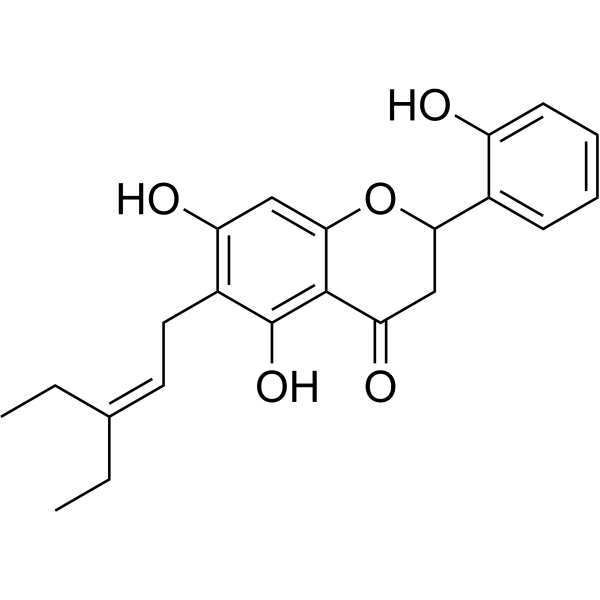 0 ImagesCat. No.: HY-161076CAS No.: 2244987-60-6KTt-45 is a T-type calcium channel blocker. KTt-45 has anticancer effect by inducing apoptosis on HeLa cervical cancer cell line.
-
Ganoderic acid Mk
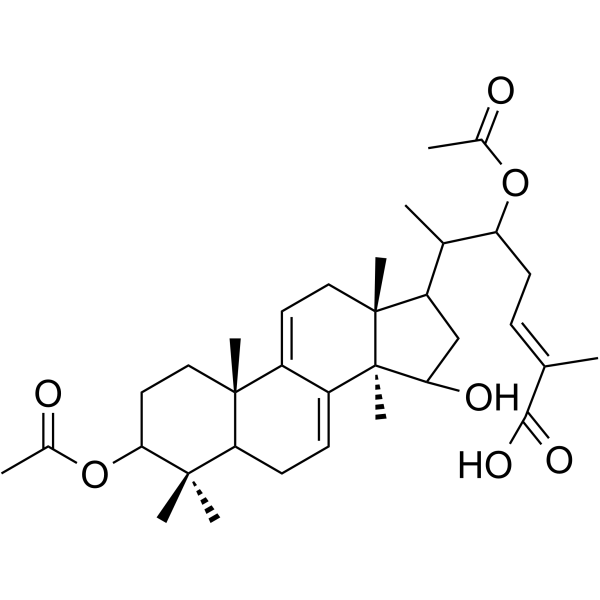 0 ImagesCat. No.: HY-N11643CAS No.: 110024-14-1Synonyms: GA-MkGanoderic acid Mk (GA-Mk) is a triterpenoid acid, that can be isolated from the mycelia of Ganoderma lucidum. Ganoderic acid Mk is efficiently anti-proliferative and can induce apoptosis of HeLa cells by mitochondria-mediated pathway. Ganoderic acid Mk can be used for cervical cancer research.
-
Sodium acetate trihydrate, United States Pharmacopeia (USP) Reference Standard
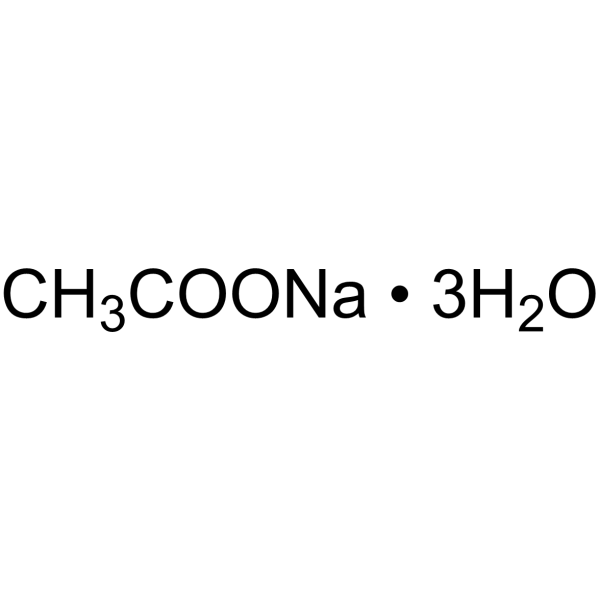 0 ImagesSynonyms: Sodium acetate trihydrate (Pharmaceutical primary standard, USP)Sodium acetate trihydrate, United States Pharmacopeia (USP) Reference Standard (Sodium acetate trihydrate (Pharmaceutical primary standard, USP)) is a carboxylic acid and short-chain fatty acid (SCFAs). Sodium acetate trihydrate activates AMPK, increases ROS, cleaved caspase 9, PPARα, downregulates SREBP-1c, ChREBP expression. Sodium acetate trihydrate exhibits antifungal activity against Saccharomyces cerevisiae W303-1A. Sodium acetate trihydrate regulates energy metabolism. Sodium acetate trihydrate has anticancer activity against gastric cancer. Sodium acetate trihydrate induces writhing reaction and ulcerative colitis. Sodium acetate trihydrate can be used in the researches for gastric cancer, ulcerative colitis, hepatic steatosis, and pain.
-
Clausenidin
 0 ImagesCat. No.: HY-N16771CAS No.: 28384-44-3Clausenidin is a selective inhibitor targeting apoptosis-related pathways, including the mitochondrial pathway and death receptor pathway, and vascular endothelial growth factor (VEGF). Clausenidin induces mitochondrial membrane depolarization by activating caspase-3, caspase-8 and caspase-9, upregulating the pro-apoptotic protein Bax and downregulating the anti-apoptotic protein Bcl-2. Clausenidin also inhibits VEGF expression and blocks angiogenesis, exerting anti-tumor activity. Clausenidin has inhibitory effects against Mycobacterium tuberculosis (MIC=200 μg/mL). Clausenidin can induce apoptosis in liver cancer cells, arrest the cell cycle in the G2/M phase, and inhibit tumor angiogenesis. Clausenidin can be used in the research of malignant tumors such as liver cancer.
-
Apoptosis inducer 30
 0 ImagesCat. No.: HY-168589Apoptosis inducer 30 (Compound 15a) is an anticancer agent. Apoptosis inducer 30 induces MCF-7 cells apoptosis through mitochondrial pathway. Apoptosis inducer 30 induces intracellular reactive oxygen species levels and decreases mitochondrial membrane potential, and blocks the cell cycle in the G0/G1 phase. Apoptosis inducer 30 inhibits cell growth, with an IC50 value of 0.32 μM against MCF-7 cells, and inhibits tumor growth in a mouse model of breast cancer.
-
Isosilybin B (Standard)
 0 ImagesCat. No.: HY-N7045RCAS No.: 142796-22-3Isosilybin B (Standard) is the analytical standard of Isosilybin B (HY-N7045). This product is intended for research and analytical applications. Isosilybin B is a flavonolignan. Isosilybin B can be isolated from Silybum marianum. Isosilybin B can regulate cell cycle-related proteins (e.g., reduce cyclins (D3, D1, A, E), Cdk4, Cdk2, Cdc25A), and activate Caspases (Caspase-9 and Caspase-3). Isosilybin B can promote Apoptosis, reduce androgen receptor (AR) and PSA. Isosilybin B has anticancer activity against prostate cancer.
-
MAHS-4
 0 ImagesCat. No.: HY-187514MAHS-4 is an inhibitor of thymidylate synthase (TS) and dihydrofolate reductase (DHFR), with IC50 values of 1.918 μM and 83.53 μM, respectively. MAHS-4 inhibits thymidylate biosynthesis, reduces tetrahydrofolate pool maintenance, and interferes with extracellular matrix remodeling. MAHS-4 induces G2/M phase cell cycle arrest, activates endogenous caspase-dependent apoptosis, decreases MMP protein levels, inhibits cell migration, increases intracellular NO levels, and promotes autophagy activity. MAHS-4 is applicable for cancer-related research.




