



HDAC
Histone deacetylases
HDAC Isoform Specific Products
-
HDAC
(386)
View all products
-
HDAC1
(316)
View all products
-
HDAC2
(211)
View all products
-
HDAC3
(203)
View all products
-
HDAC4
(72)
View all products
-
HDAC5
(56)
View all products
-
HDAC6
(332)
View all products
-
HDAC7
(53)
View all products
-
HDAC8
(186)
View all products
-
HDAC9
(41)
View all products
-
HDAC10
(66)
View all products
-
HDAC11
(71)
View all products
-
HD1
(3)
View all products
-
HD2
(4)
View all products
All Product Categories
-
HDAC Inhibitors
(775)
View all products
-
HDAC Antagonists
(3)
View all products
-
HDAC Activators
(14)
View all products
-
HDAC Modulators
(4)
View all products
-
HDAC MDM2 Inhibitor
(1)
View all products
-
HDAC Degraders
(43)
View all products
-
HDAC Controls
(4)
View all products
-
HDAC Substrates
(3)
View all products
-
HDAC Ligands
(11)
View all products
-
HDAC Related Products (906)
Related Products (906)

-
Antibodies (16)
-
HDAC Signaling Pathway
-
HDAC Isoform Comparison
-
FNDR-20123 free base
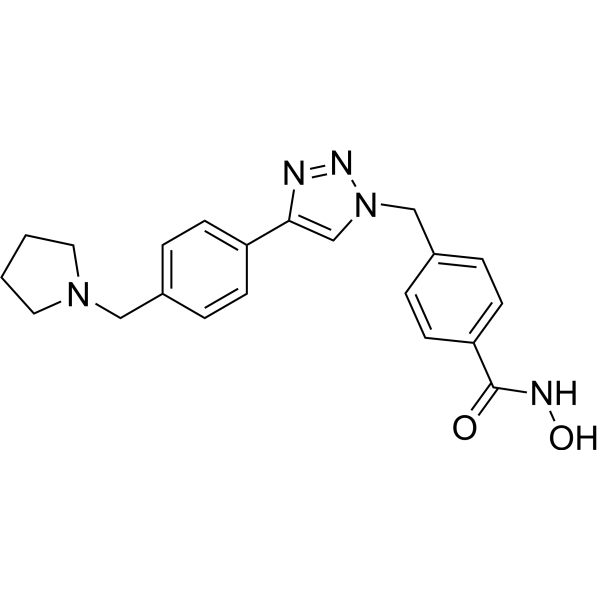 0 ImagesCat. No.: HY-131708CAS No.: 1267502-34-0FNDR-20123 free base is a safe, first-in-class, and orally active anti-malarial HDAC inhibitor with IC50s of 31 nM and 3 nM for Plasmodium and human HDAC, respectively. FNDR-20123 free base exerts anti-malarial activity against Plasmodium falciparum asexual stage (IC50=41 nM) and sexual blood stage (IC50=190 nM for male gametocytes). FNDR-20123 free base inhibits HDAC1, HDAC2, HDAC3, HDAC6, and HDAC8 (IC50=25, 29, 2, 11, and 282 nM, respectively) and inhibits Class III HDAC isoforms at nanomolar concentrations.
 -
loading...Please select quantityGet Quote
August 31
-
Please select quantity
August 31
Get Quote
loading... -
-
ROCK/HDAC-IN-2
 0 ImagesCat. No.: HY-172177ROCK/HDAC-IN-2 (Compound C-9) is a ROCK/HDAC inhibitor, with IC50 values of 0.185 µM, 0.8 µM, and 0.7 µM for HDAC6, ROCK1, and ROCK2, respectively. ROCK/HDAC-IN-2 can induce apoptosis and changes in mitochondrial membrane potential in cancer cells, demonstrating significant antitumor activity. ROCK/HDAC-IN-2 can be used in the research of pancreatic ductal adenocarcinoma (PDAC) and triple-negative breast cancer (TNBC).
 -
loading...Please select quantityGet Quote
August 31
-
Please select quantity
August 31
Get Quote
loading... -
-
Theophylline (sodium glycinate)
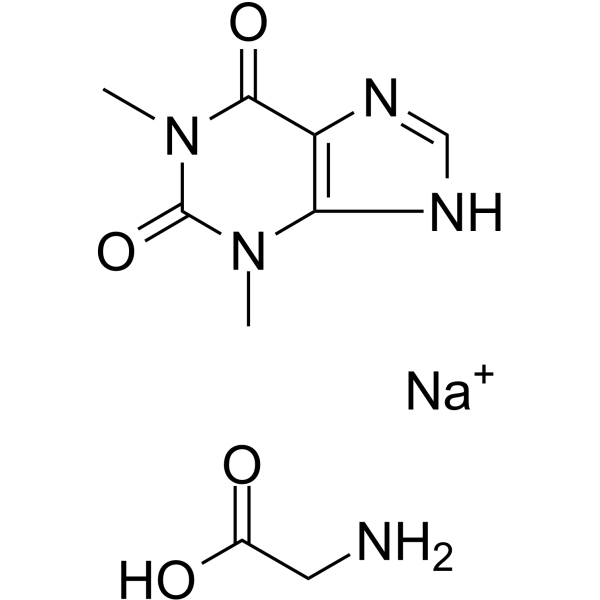 0 ImagesSynonyms: 1,3-Dimethylxanthine (sodium glycinate); Theo-24 (sodium glycinate)Theophylline (1,3-Dimethylxanthine) sodium glycinate is a potent phosphodiesterase (PDE) inhibitor, adenosine receptor antagonist, and histone deacetylase (HDAC) activator. Theophylline sodium glycinate inhibits PDE3 activity to relax airway smooth muscle. Theophylline sodium glycinate has anti-inflammatory activity by increase IL-10 and inhibit NF-κB into the nucleus. Theophylline sodium glycinate induces apoptosis. Theophylline sodium glycinate can be used for asthma and chronic obstructive pulmonary disease (COPD) research.
 -
loading...Please select quantityGet Quote
August 31
-
Please select quantity
August 31
Get Quote
loading... -
-
Tubastatin A TFA
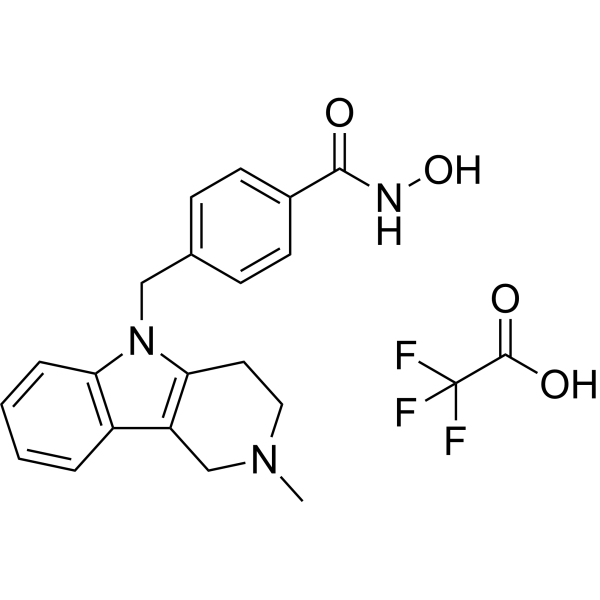 0 ImagesCat. No.: HY-13271BCAS No.: 1239262-52-2Synonyms: TSA TFATubastatin A (TSA) TFA is a potent and selective?HDAC6?inhibitor with?IC50?of 15 nM in a cell-free assay, and is selective (1000-fold more) against all other isozymes except HDAC8 (57-fold more). Tubastatin A TFA also inhibits HDAC10 and metallo-β-lactamase domain-containing protein?2 (MBLAC2).
 -
loading...Please select quantityGet Quote
August 31
-
Please select quantity
August 31
Get Quote
loading... -
-
MAO A/HDAC-IN-1
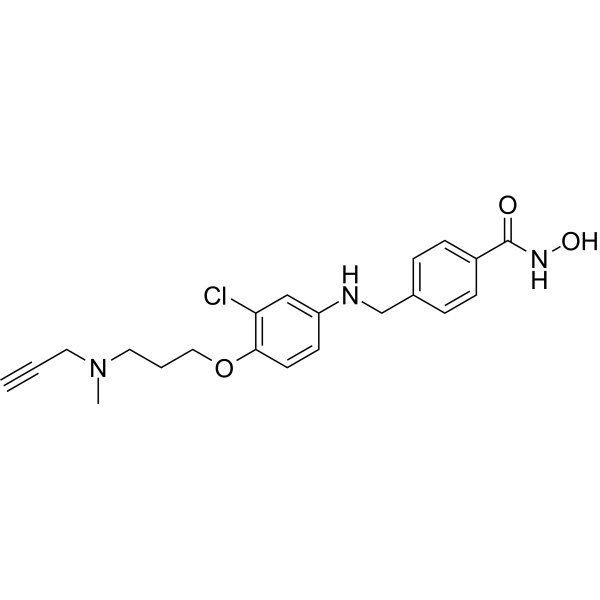 0 ImagesCat. No.: HY-142706CAS No.: 3031466-56-2MAO A/HDAC-IN-1 is a dual?inhibitor?of monoamine oxidase A (MAO A) and HDAC. MAO A/HDAC-IN-1 can be used for glioma research. MAO A/HDAC-IN-1 is a click chemistry reagent, it contains an Alkyne group and can undergo copper-catalyzed azide-alkyne cycloaddition (CuAAc) with molecules containing Azide groups.
 -
loading...Please select quantityGet Quote
August 31
-
Please select quantity
August 31
Get Quote
loading... -
- MC4343
-
loading...Please select quantityGet Quote
August 31
-
Please select quantity
August 31
Get Quote
loading... -
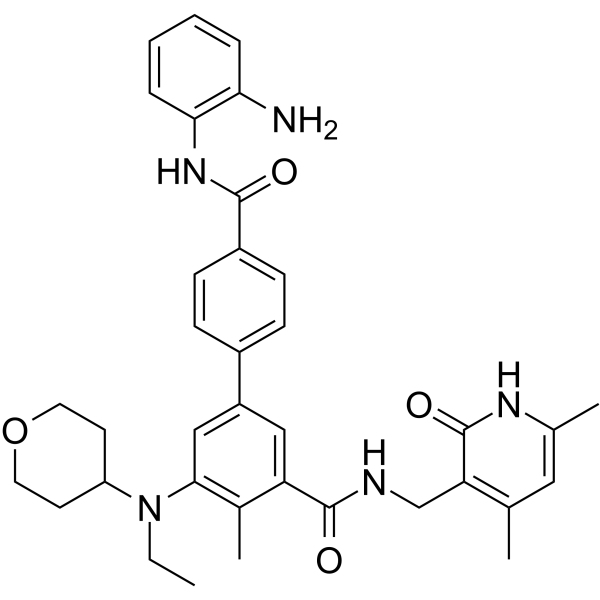
- HDAC8 ligand 2
-
loading...Please select quantityGet Quote
August 31
-
Please select quantity
August 31
Get Quote
loading... -

-
HDAC6-IN-6
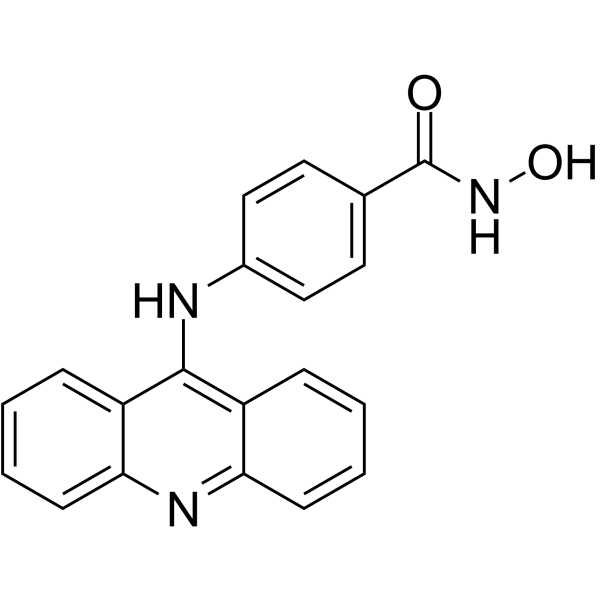 0 ImagesCat. No.: HY-146679CAS No.: 2413603-10-6HDAC6-IN-6 (compound 6a) is a potent and BBB-penetrated HDAC6 inhibitor, with an IC50 of 0.025 μM. HDAC6-IN-6 exhibits strong inhibitory activity against Aβ1-42 self-aggregation and AChE, with IC50 values of 3.0 and 0.72 μM. HDAC6-IN-6 can enhance neurite outgrowth without significant neurotoxicity.
 -
loading...Please select quantityGet Quote
August 31
-
Please select quantity
August 31
Get Quote
loading... -
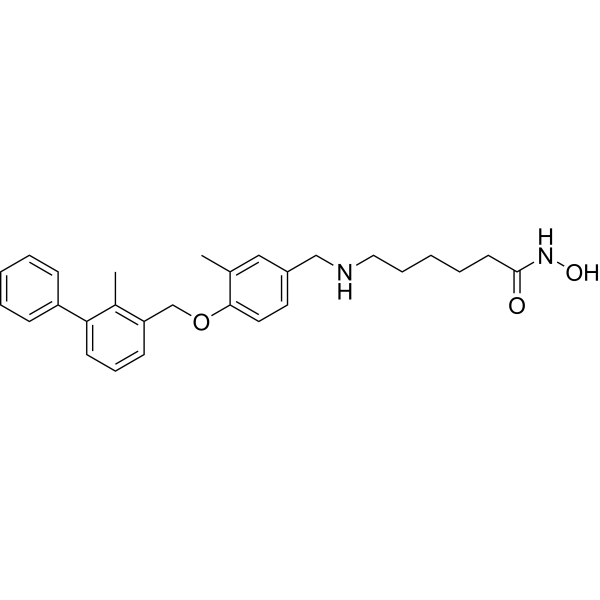
- SP-2-225
-
loading...Please select quantityGet Quote
August 31
-
Please select quantity
August 31
Get Quote
loading... -
-
Bocodepsin hydrochloride
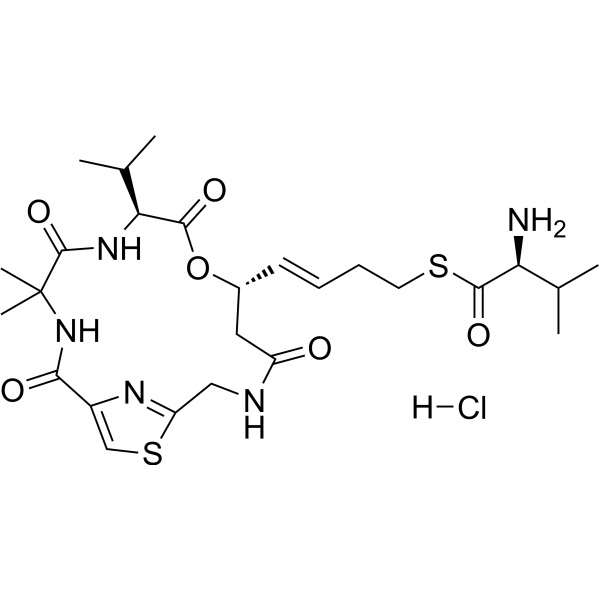 0 ImagesCat. No.: HY-156602ACAS No.: 1834513-66-4Synonyms: OKI-179 hydrochlorideBocodepsin hydrochloride (OKI-179) is an orally active and selective HDAC inhibitor, with antitumor activity. Bocodepsin hydrochloride can be used for suppression on solid tumor and hematologic malignancies.
 -
loading...Please select quantityGet Quote
August 31
-
Please select quantity
August 31
Get Quote
loading... -
-
Valproic acid-d7 sodium
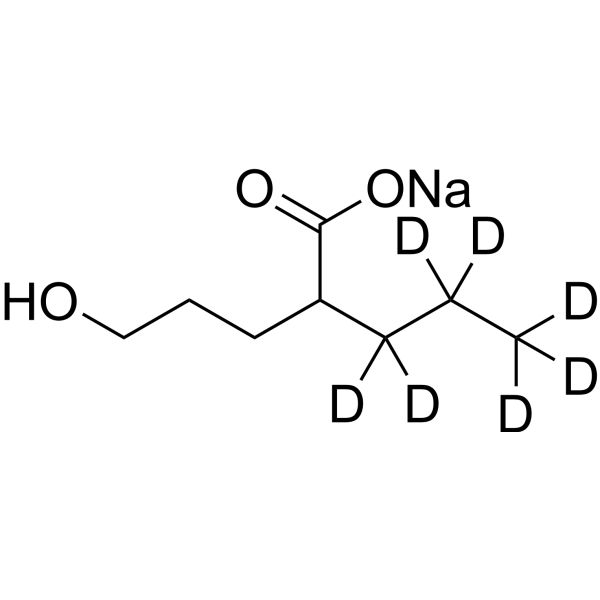 0 ImagesCat. No.: HY-10585ASCAS No.: 1189994-89-5Synonyms: Sodium Valproate-d7; VPA-d7 sodium; 2-Propylpentanoic acid-d7 sodiumValproic acid-d7 (sodium) is the deuterium labeled Valproic acid (sodium salt). Valproic acid sodium salt (Sodium Valproate) is an HDAC inhibitor, with IC50 in the range of 0.5 and 2 mM, also inhibits HDAC1 (IC50, 400 μM), and induces proteasomal degradation of HDAC2. Valproic acid sodium salt activates Notch1 signaling and inhibits proliferation in small cell lung cancer (SCLC) cells. Valproic acid sodium salt is used in the treatment of epilepsy, bipolar disorder and prevention of migraine headaches.
 -
loading...Please select quantityGet Quote
August 31
-
Please select quantity
August 31
Get Quote
loading... -
-
HDAC-IN-5
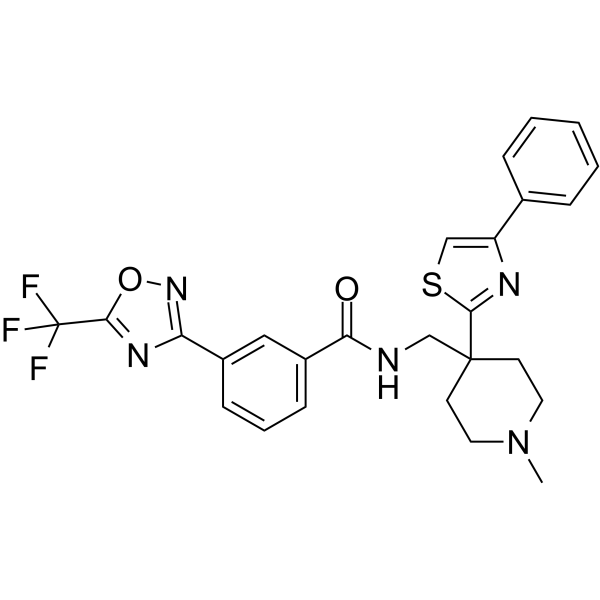 0 ImagesCat. No.: HY-18362CAS No.: 1314890-51-1HDAC-IN-5 is a histone deacetylase (HDAC) inhibitor.
 -
loading...Please select quantityGet Quote
August 31
-
Please select quantity
August 31
Get Quote
loading... -
- HDAC6 degrader-6
-
loading...Please select quantityGet Quote
August 31
-
Please select quantity
August 31
Get Quote
loading... -

-
HDAC1-IN-13
 0 ImagesCat. No.: HY-183150CAS No.: 3053289-22-5HDAC1-IN-13 is an orally active HDAC1 inhibitor with IC50 values of 91, 185, 170, and 280 nM against HDAC1, HDAC2, HDAC3, and HDAC10, respectively, and shows no activity against HDAC4, HDAC5, HDAC6, HDAC7, and HDAC9. HDAC1-IN-13 induces extrinsic apoptosis by activating the caspase-8 pathway and triggers G0/G1 cell cycle arrest. HDAC1-IN-13 can be used for the research of leukemia.
 -
loading...Please select quantityGet Quote
August 31
-
Please select quantity
August 31
Get Quote
loading... -
-
PB118
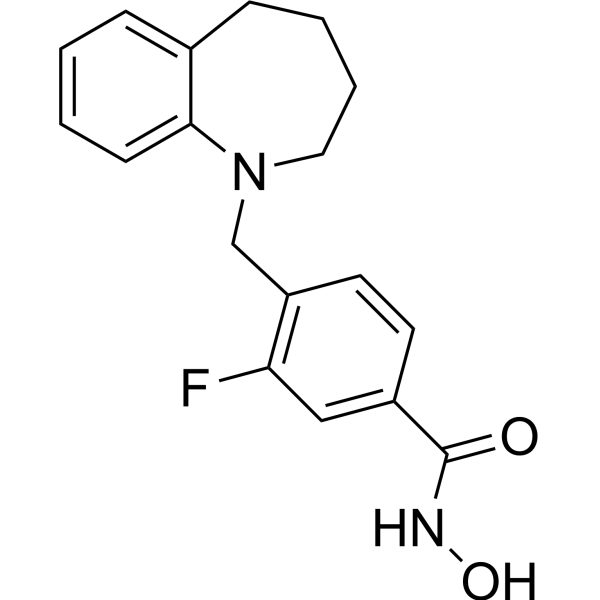 0 ImagesCat. No.: HY-162027PB118 is a potent inhibitor of HDAC6 that plays an important role in the pathophysiology of Alzheimer's disease.
 -
loading...Please select quantityGet Quote
August 31
-
Please select quantity
August 31
Get Quote
loading... -
-
Hsp110/HDAC6-IN-1
 0 ImagesCat. No.: HY-183985Hsp110/HDAC6-IN-1 is an orally active Hsp110/HDAC6 dual inhibitor. Hsp110/HDAC6-IN-1 disrupts Hsp110-STAT3 protein-protein interaction, suppresses HDAC6 enzymatic activity, and suppresses STAT3 signaling pathway. Hsp110/HDAC6-IN-1 inhibits abnormal proliferation and migration of human pulmonary arterial endothelial cells, and suppresses pulmonary vascular remodeling in rats. Hsp110/HDAC6-IN-1 can be used for the research of pulmonary arterial hypertension.
 -
loading...Please select quantityGet Quote
August 31
-
Please select quantity
August 31
Get Quote
loading... -
-
JPS035
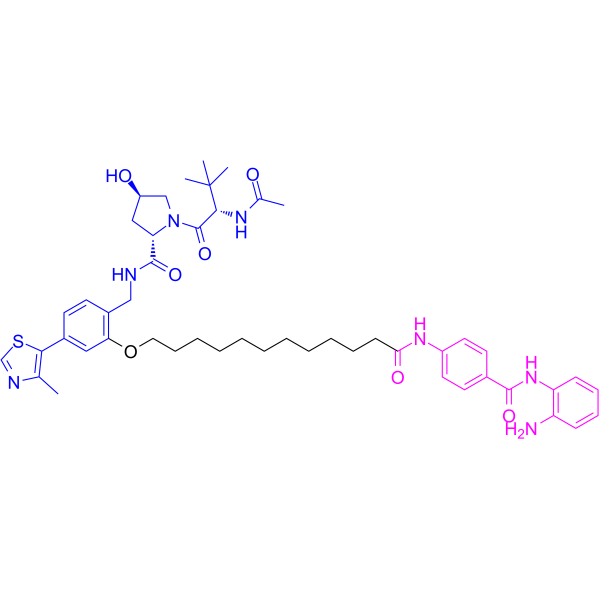 0 ImagesCat. No.: HY-145818CAS No.: 2669785-84-4JPS035 is a HDAC1, HDAC2 and HDAC3 PROTAC degrader, with a DC50 value of 3.58 μM against HDAC1 and 1.38 μM against HDAC3. JPS035 recruits the VHL E3 ligase to mediate the ubiquitination and degradation of HDAC1, HDAC2 and HDAC3. JPS035 increases the acetylation level of histone H3 lysine 56 and regulates global gene expression. JPS035 can be used in colon cancer-related research.
 -
loading...Please select quantityGet Quote
August 31
-
Please select quantity
August 31
Get Quote
loading... -
- HDAC6-IN-56
-
loading...Please select quantityGet Quote
August 31
-
Please select quantity
August 31
Get Quote
loading... -

- HDAC6-IN-17
-
loading...Please select quantityGet Quote
August 31
-
Please select quantity
August 31
Get Quote
loading... -
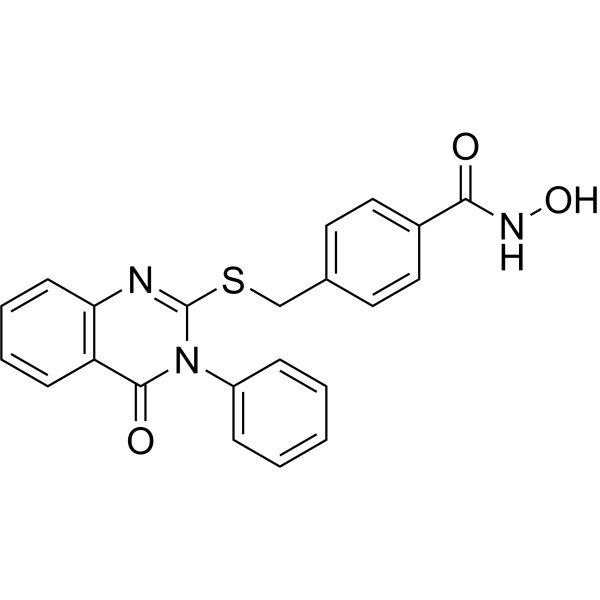
- HDAC6 ligand-5
-
loading...Please select quantityGet Quote
August 31
-
Please select quantity
August 31
Get Quote
loading... -

No matching results
No matching results
No matching results
No matching results
No matching results
No matching results
No matching results
No matching results
No matching results
No matching results

TCR, GPCR and HDAC II interaction: Diverse agonists act through G-protein-coupled receptors (GPCRs) to activate the PKC-PKD axis, CaMK, Rho, or MHC binding to antigens stimulates TCR to activate PKD, leading to phosphorylation of class II HDACs. Phospho-HDACs dissociate from MEF2, bind 14-3-3, and are exported to the cytoplasm through a CRM1-dependent mechanism. CRM1 is inhibited by leptomycin B (LMB). Release of MEF2 from class II HDACs allows p300 to dock on MEF2 and stimulate gene expression. Dephosphorylation of class II HDACs in the cytoplasm enables reentry into the nucleus[1].
TLR: TLR signaling is initiated by ligand binding to receptors. The recruitment of TLR domain-containing adaptor protein MyD88 is repressed by HDAC6, whereas NF-κB and MTA-1 can be negatively regulated by HDAC1/2/3 and HDAC2, respectively. Acetylation by HATs enhance MKP-1 which inhibits p38-mediated inflammatory responses, while HDAC1/2/3 inhibits MKP-1 activity. HDAC1 and HDAC8 repress, whereas HDAC6 promotes, IRF function in response to viral challenge. HDAC11 inhibits IL-10 expression and HDAC1 and HDAC2 represses IFNγ-dependent activation of the CIITA transcription factor, thus affecting antigen presentation[2][3].
IRNAR: IFN-α/β induce activation of the type I IFN receptor and then bring the receptor-associated JAKs into proximity. JAK adds phosphates to the receptor. STATs bind to the phosphates and then phosphorylated by JAKs to form a dimer, leading to nuclear translocation and gene expression. HDACs positively regulate STATs and PZLF to promote antiviral responses and IFN-induced gene expression[2][3].
Cell cycle: In G1 phase, HDAC, Retinoblastoma protein (RB), E2F and polypeptide (DP) form a repressor complex. HDAC acts on surrounding chromatin, causing it to adopt a closed chromatin conformation, and transcription is repressed. Prior to the G1-S transition, phosphorylation of RB by CDKs dissociates the repressor complex. Transcription factors (TFs) gain access to their binding sites and, together with the now unmasked E2F activation domain. E2F is then free to activate transcription by contacting basal factors or by contacting histone acetyltransferases, such as CBP, that can alter chromatin structure[4].
The function of non-histone proteins is also regulated by HATs/HDACs. p53: HDAC1 impairs the function of p53. p53 is acetylated under conditions of stress or HDAC inhibition by its cofactor CREB binding protein (CBP) and the transcription of genes involved in differentiation is activated. HSP90: HSP90 is a chaperone that complexes with other chaperones, such as p23, to maintain correct conformational folding of its client proteins. HDAC6 deacetylates HSP90. Inhibition of HDAC6 would result in hyperacetylated HSP90, which would be unable to interact with its co-chaperones and properly lead to misfolded client proteins being targeted for degradation via the ubiquitin-proteasome system[5][6].
Reference:
[1]. Vega RB, et al. Protein kinases C and D mediate agonist-dependent cardiac hypertrophy through nuclear export of histone deacetylase 5.Mol Cell Biol. 2004 Oct;24(19):8374-85.
[2]. Shakespear MR, et al. Histone deacetylases as regulators of inflammation and immunity. Trends Immunol. 2011 Jul;32(7):335-43.
[3]. Suliman BA, et al. HDACi: molecular mechanisms and therapeutic implications in the innate immune system.Immunol Cell Biol. 2012 Jan;90(1):23-32.
[4]. Brehm A, et al. Retinoblastoma protein meets chromatin.Trends Biochem Sci. 1999 Apr;24(4):142-5.
[5]. Butler R, et al. Histone deacetylase inhibitors as therapeutics for polyglutamine disorders.Nat Rev Neurosci. 2006 Oct;7(10):784-96
[6]. Minucci S, et al. Histone deacetylase inhibitors and the promise of epigenetic (and more) treatments for cancer.Nat Rev Cancer. 2006 Jan;6(1):38-51.
Your Search Returned No Results.
Sorry. There is currently no product that acts on isoform Bcl-2, Bcl-W and Bim together.Please
try each isoform separately.



