



HDAC
Histone deacetylases
HDAC (Histone deacetylases) are a class of enzymes that remove acetyl groups (O=C-CH3) from an ε-N-acetyl lysine amino acid on ahistone, allowing the histones to wrap the DNA more tightly. This is important because DNA is wrapped around histones, and DNA expression is regulated by acetylation and de-acetylation. Its action is opposite to that of histone acetyltransferase. HDAC proteins are now also called lysine deacetylases (KDAC), to describe their function rather than their target, which also includes non-histone proteins. Together with the acetylpolyamine amidohydrolases and the acetoin utilization proteins, the histone deacetylases form an ancient protein superfamily known as the histone deacetylase superfamily.
HDAC Isoform Specific Products
-
HDAC
(386)
View all products
-
HDAC1
(316)
View all products
-
HDAC2
(211)
View all products
-
HDAC3
(203)
View all products
-
HDAC4
(72)
View all products
-
HDAC5
(56)
View all products
-
HDAC6
(332)
View all products
-
HDAC7
(53)
View all products
-
HDAC8
(187)
View all products
-
HDAC9
(41)
View all products
-
HDAC10
(66)
View all products
-
HDAC11
(71)
View all products
-
HD1
(3)
View all products
-
HD2
(4)
View all products
All Product Categories
-
HDAC Inhibitors
(775)
View all products
-
HDAC Antagonists
(3)
View all products
-
HDAC Activators
(14)
View all products
-
HDAC Modulators
(4)
View all products
-
HDAC MDM2 Inhibitor
(1)
View all products
-
HDAC Degraders
(43)
View all products
-
HDAC Controls
(4)
View all products
-
HDAC Substrates
(3)
View all products
-
HDAC Ligands
(12)
View all products
-
HDAC Related Products (907)
Related Products (907)

-
Antibodies (16)
-
HDAC Signaling Pathway
-
HDAC Isoform Comparison
-
FLT3/HDAC-IN-1
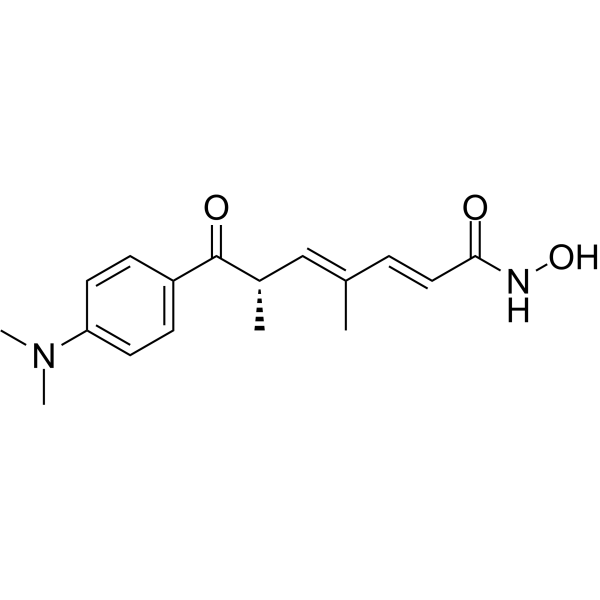
 0 ImagesCat. No.: HY-169076FLT3/HDAC-IN-1 is a dual inhibitor of FLT3/HDAC, with IC50 values of 30.4, 52.4, and 14.7 nM for FLT3, HDAC1, and HDAC3, respectively. FLT3/HDAC-IN-1 can induce apoptosis in MV-4-11 cells and has anti-proliferative effects on FLT3 mutant-transformed BaF3 cells. FLT3/HDAC-IN-1 is being researched for its potential in treating hard-to-treat solid tumors and hematological malignancies.

-
HDAC6/8/BRPF1-IN-1
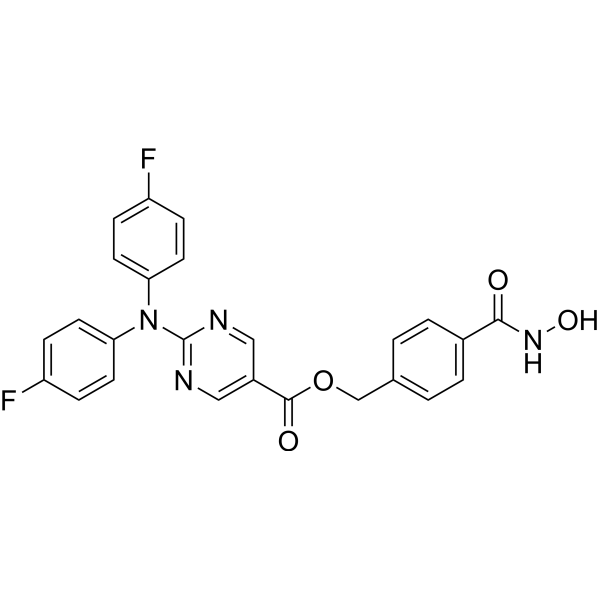
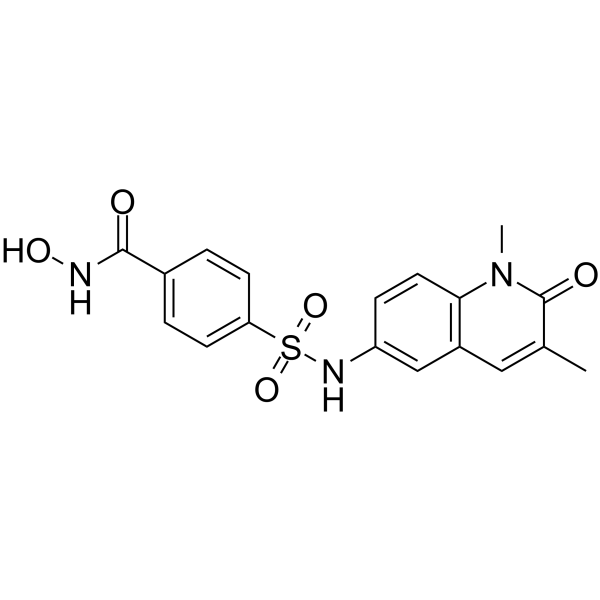 0 ImagesCat. No.: HY-151364CAS No.: 2484255-65-2HDAC6/8/BRPF1-IN-1 is a dual inhibitor of both HDAC6/8 and the bromodomain and PHD finger containing protein 1 (BRPF1). HDAC6/8/BRPF1-IN-1 has inhibitory activity for HDAC1, HDAC6 and HDAC8 with IC50 values of 797 nM, 344 nM and 908 nM, respectively. HDAC6/8/BRPF1-IN-1 has inhibitory activity for BRPF1 with an Kd value of 175.2 nM. HDAC6/8/BRPF1-IN-1 can be used for the research of cancer.
-
HDAC6 ligand-9
 0 ImagesCat. No.: HY-184550CAS No.: 1206627-01-1HDAC6 ligand-9 (Compound 1a) is a ligands for target protein for PROTAC. HDAC6 ligand-9 can be used to synthesize PROTAC HDAC6 degrader-4 (HY-123971).
-
HDAC6-IN-53
 0 ImagesCat. No.: HY-173184CAS No.: 3081880-03-4HDAC6-IN-53 (Compound W28) is an inhibitor targeting histone deacetylase 6 (HDAC6) with an IC50 of 19.65 nM. HDAC6-IN-53 exerts the activity of inhibiting the phenotype of idiopathic pulmonary fibrosis (IPF) by suppressing the collagen expression induced by TGF-β1, and it has demonstrated a good therapeutic effect in a mouse model of pulmonary fibrosis induced by Bleomycin (HY-17565A). HDAC6-IN-53 can be used in the research of idiopathic pulmonary fibrosis and other related pulmonary fibrosis diseases.
-
JPS016
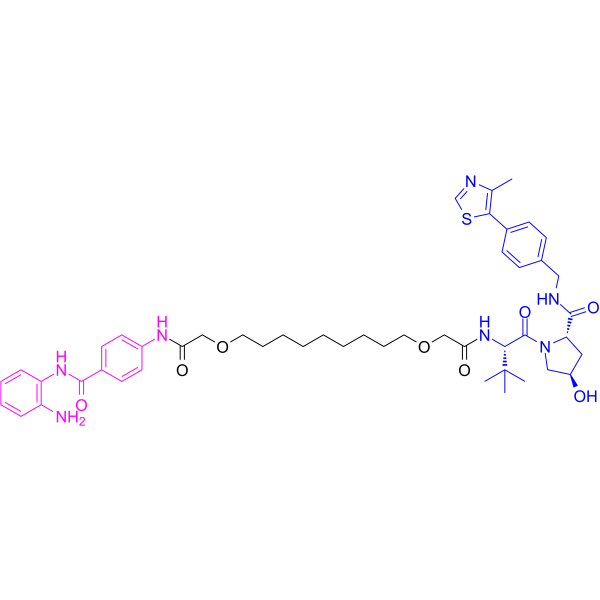 0 ImagesCat. No.: HY-145816CAS No.: 2669785-77-5JPS016 is a class I histone deacetylase (HDAC) PROTAC inhibitor. JPS016 recruits the VHL E3 ligase (Ligands for E3 Ligase) to mediate the ubiquitination and proteasomal degradation of HDAC1, HDAC2 and HDAC3. JPS016 reduces the viability of colon cancer cells and induces Apoptosis. JPS016 activates the PINK1/Parkin mitochondrial Autophagy pathway, enhances cardiomyocyte viability, alleviates mitochondrial damage, and reduces mitochondrial ROS production in cells. JPS016 is applicable to research related to colon cancer and sepsis cardiomyopathy.
-
HDAC2-IN-4
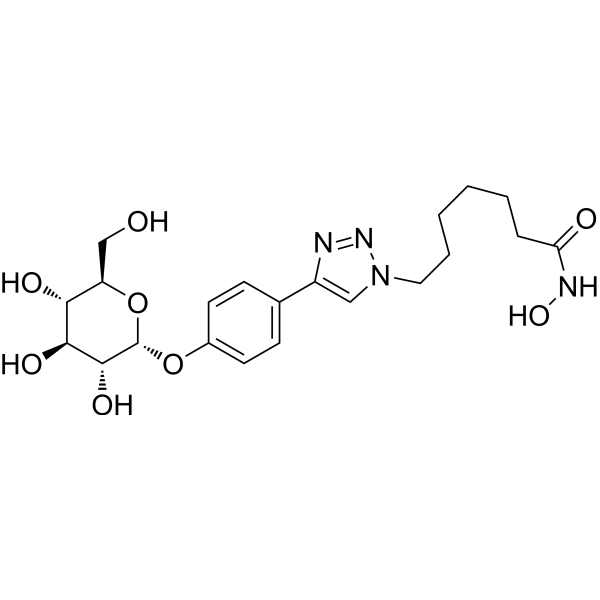
 0 ImagesCat. No.: HY-187813HDAC2-IN-4 is a HDAC2 inhibitor with an IC50 of 4.2 nM against human HDAC2. HDAC2-IN-4 binds to the active site of HDAC2 via hydrogen bonding and hydrophobic interactions, forming a thermodynamically stable and kinetically compatible protein-ligand complex to inhibit enzymatic activity. HDAC2-IN-4 inhibits cancer cell proliferation and exhibits low toxicity to normal cells. HDAC2-IN-4 can be used in studies related to human endocervical adenocarcinoma and Burkitt lymphoma.
-
HDAC-IN-56
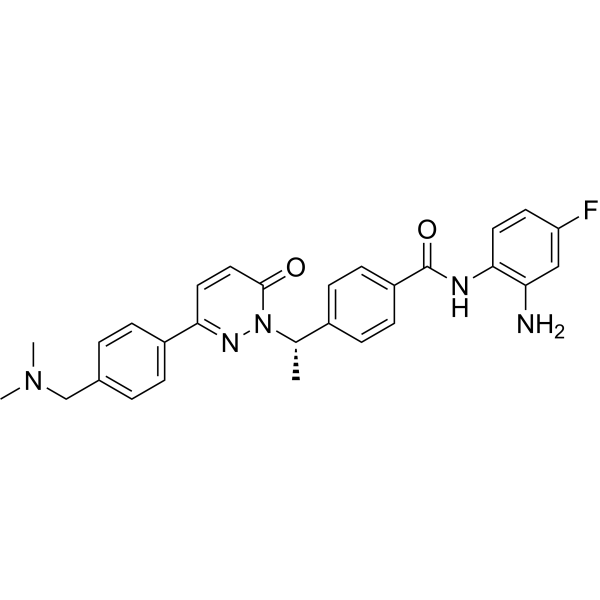 0 ImagesCat. No.: HY-154855CAS No.: 2814571-89-4HDAC-IN-56 ((S)-17b) is an orally active class I histone deacetylase (HDAC) inhibitor with IC50 values of 56.0 ± 6.0, 90.0 ± 5.9, 422.2 ± 105.1, >10000 nM for HDAC1, HDAC2, HDAC3, and HDAC4-11, respectively. HDAC-IN-56 has potent inhibitory activity while strongly increasing intracellular levels of acetylhistone H3 and P21 and effectively inducing G1 cell cycle arrest and apoptosis.HDAC-IN-56 has antitumor activity .
-
HDAC-IN-79
 0 ImagesCat. No.: HY-162910HDAC-IN-79 (compound 4) is an orally active dual xanthine oxidase-HDAC inhibitor (Xanthine oxidase: IC50=6.6 nM; HDAC1: IC50=134 nM; HDAC2: IC50=284 nM; HDAC3: IC50=173 nM; HDAC6: IC50=1.32 nM;), with significant in vivo anti-hyperuricemia and anti-tumor activities. HDAC-IN-79 is the most potent cell growth inhibitor (IC50=0.706 μM) of leukemia HL60 cells, induces apoptosis and autophagy, and can regulate the expression levels of signature biomarkers associated with intracellular HDAC inhibition.
-
HDAC-IN-73
 0 ImagesCat. No.: HY-161688CAS No.: 2323571-16-8HDAC-IN-73 (compound P-503) is a histone deacetylase (HDAC) inhibitor. HDAC-IN-73 shows IC50s values of 0.17, 0.49 µM for HDAC1 and HDAC6, respectively. Notably, HDAC-IN-73's inhibitory potency against HDAC6 is heightened, exhibiting a 9-fold greater efficacy than PsA (HY-N2150) (IC50=3.9 μM). HDAC-IN-73 shows potent antiproliferative activity, induces apoptosis, and causes cell cycle arrest at G2 / M phase. HDAC-IN-73 has the potential to be used for the research of cancer such as colon cancer .
-
HDAC6-IN-48
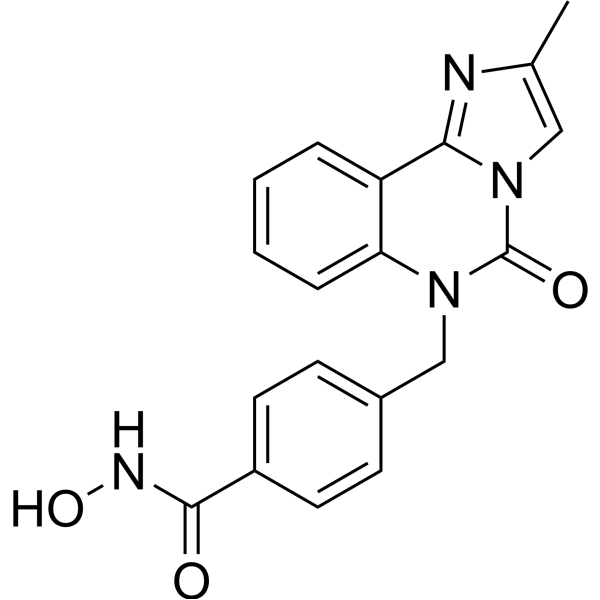
 0 ImagesCat. No.: HY-163894CAS No.: 3052111-12-0
-
IHCH-3064
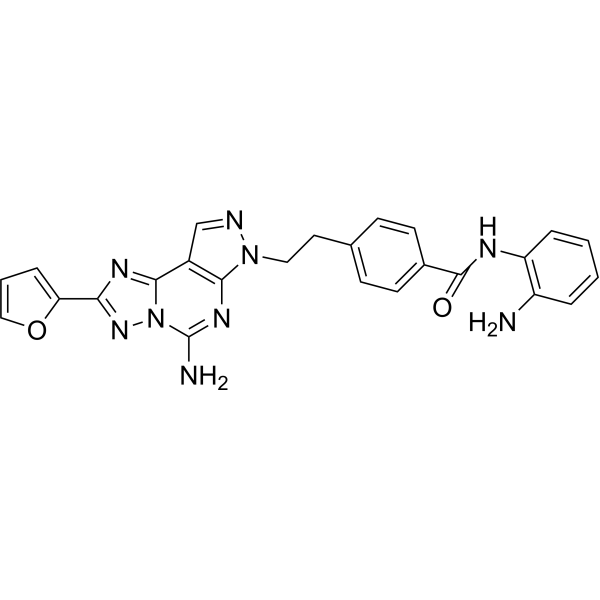 0 ImagesCat. No.: HY-145406CAS No.: 2420562-65-6IHCH-3064 is a dual-acting compounds targeting Adenosine A2A Receptor and HDAC. IHCH-3064 exhibits potent binding to A2AR (Ki=2.2 nM) and selective inhibition of HDAC1 (IC50=80.2 nM), with good antiproliferative activity against tumor cell lines in vitro. IHCH-3064 is a tumor immunotherapeutic agent.
-
HDAC6-IN-77
 0 ImagesCat. No.: HY-181942CAS No.: 3126891-54-8HDAC6-IN-77 is a highly selective HDAC6 inhibitor with an IC50 of 7.0 nM.HDAC6-IN-77 induces neurite outgrowth.HDAC6-IN-77 exerts neuroprotective activity.HDAC6-IN-77 shows no significant toxicity on dopaminergic cells.HDAC6-IN-77 can be used for the research of Alzheimer's disease.
-
HDAC-IN-96
 0 ImagesCat. No.: HY-177768CAS No.: 3055552-13-8HDAC-IN-96 (Compound 3f) is a selective HDAC1/2 inhibitor with IC50 values of 457.1 and 433.7 nM. HDAC-IN-96 has strong inhibitory activity against multiple hematological tumor cells (RS4;11, K562, RPMI-8226, U266), with IC50 values ranging from 2.11 to 5.35 μM. HDAC-IN-96 can induce cancer cells apoptosis and S phase arrest. HDAC-IN-96 can be used for the research of cancer, such as acute lymphoblastic leukemia.
-
HDAC6-IN-50
 0 ImagesCat. No.: HY-169157CAS No.: 3060094-56-3HDAC6-IN-50 (Compound 4) is a potent HDAC6 inhibitor with an IC50 of 35 nM. HDAC6-IN-50 can be used for the study of Parkinson's disease (PD) and Alzheimer's disease (AD) research.
-
ITF5924
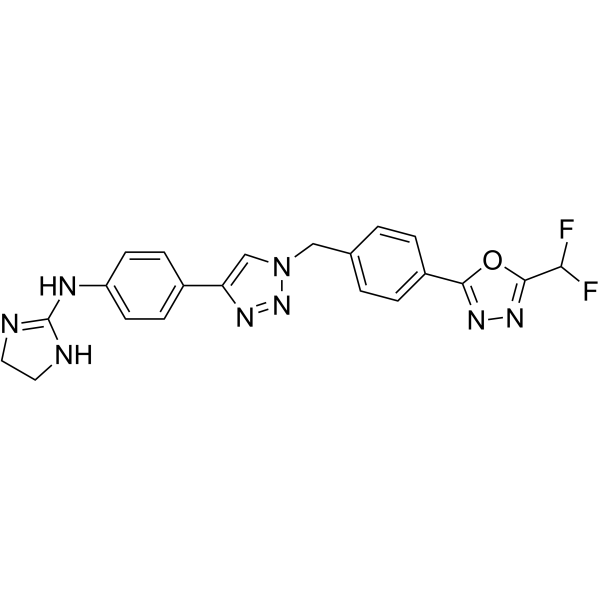 0 ImagesCat. No.: HY-161306CAS No.: 2760854-72-4ITF5924 (compound 1) is a potent and highly selective HDAC6 inhibitor with an IC50 of 7.7 nM. ITF5924 shows greater than 104-fold selectivity for HDAC6 over all other HDAC subtypes. ITF5924 containing a difluoromethyl-1,3,4-oxadiazole (DFMO) moiety is slow-binding substrate analog of HDAC6 that undergo an enzyme-catalyzed ring opening reaction, forming a tight and long-lived enzyme-inhibitor complex.




