MMP
Matrix metalloproteinases
MMPs (Matrix metalloproteinases) are zinc-dependent endopeptidases. The MMPs belong to a larger family of proteases known as the metzincin superfamily. MMPs are capable of degrading all kinds of extracellular matrix proteins, but also can process a number of bioactive molecules. They are known to be involved in the cleavage of cell surface receptors, the release of apoptotic ligands and chemokine/cytokine inactivation. MMPs are also thought to play a major role on cell behaviors such as cell proliferation, migration, differentiation, angiogenesis, apoptosis, and host defense. MMP-2 and MMP-9 are thought to be important in metastasis. MMP-1 is thought to be important in rheumatoid arthritis and osteoarthritis. Recent data suggests active role of MMPs in the pathogenesis of Aortic Aneurysm. Excess MMPs degrade the structural proteins of the aortic wall. Disregulation of the balance between MMPs and TIMPs is also a characteristic of acute and chronic cardiovascular diseases.
MMP Isoform Specific Products
-
MMP-1
(63)
View all products
-
MMP-2
(145)
View all products
-
MMP-3
(56)
View all products
-
MMP-8
(30)
View all products
-
MMP-9
(183)
View all products
-
MMP-13
(54)
View all products
-
MMP-14
(23)
View all products
-
MMP-17
(3)
View all products
-
ADAM10
(9)
View all products
-
ADAM17
(10)
View all products
-
MMP-7
(22)
View all products
-
MMP-12
(18)
View all products
-
MMP-10
(8)
View all products
-
MMP
(436)
View all products
-
ADAM8
(1)
View all products
-
MMP-19
(1)
View all products
All Product Categories
-
MMP Inhibitors
(592)
View all products
-
MMP Agonists
(2)
View all products
-
MMP Antagonist
(1)
View all products
-
MMP Activators
(35)
View all products
-
MMP Modulators
(3)
View all products
-
MMP Chemicals
(2)
View all products
-
MMP Inducers
(13)
View all products
-
MMP Degrader
(1)
View all products
-
MMP Controls
(5)
View all products
-
MMP Substrates
(14)
View all products
-
MMP Ligands
(3)
View all products
-
Matrix Metalloproteinases Proteins
(41)
View all products
-
MMP-1 Proteins
(2)
View all products
-
MMP-2 Proteins
(7)
View all products
-
MMP-3 Proteins
(2)
View all products
-
MMP-7 Proteins
(2)
View all products
-
MMP-10 Proteins
(1)
View all products
-
MMP-12 Proteins
(2)
View all products
-
MMP-8 Proteins
(7)
View all products
-
MMP-9 Proteins
(11)
View all products
-
MMP-13 Proteins
(1)
View all products
-
MMP-14 Proteins
(1)
View all products
-
ADAM8 Proteins
(4)
View all products
-
ADAM10 Proteins
(1)
View all products
-
ADAM17/TACE Proteins
(3)
View all products
-
MMP Related Products (790)
Related Products (790)

-
Recombinant Proteins (49)
-
Antibodies (15)
-
MMP Isoform Comparison
-
TP0628103 TFA
 0 ImagesTP0628103 TFA is a potent and highly selective MMP-7 inhibitor with an IC50 of 0.17 nM. TP0628103 TFA undergoes structural optimization via molecular isoelectric point shifting, which reduces organic anion transporter (OAT)-mediated clearance, while maintaining potent MMP-7 inhibitory activity and enhancing MMP subtype selectivity. TP0628103 TFA is applicable for research on the regulatory mechanisms of MMP-7-related matrix metalloproteinases.
-
PDZ1i
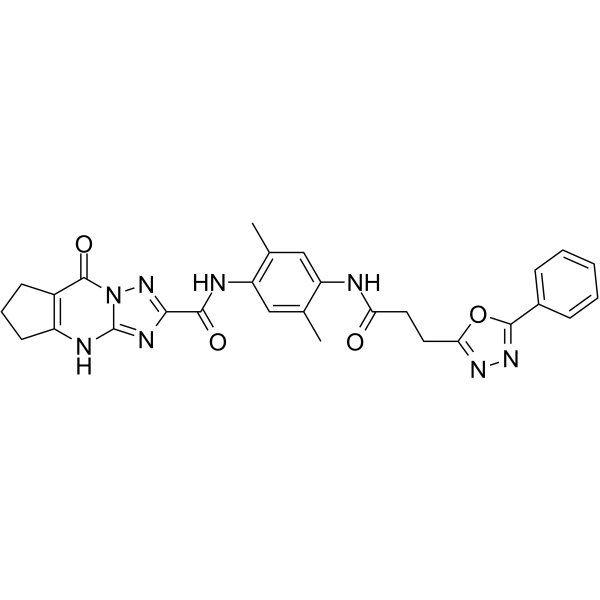 0 ImagesSynonyms: 113B7PDZ1i (113B7) is a inhibitor of MDA-9/Syntenin, with selective binding to the PDZ1 domain. PDZ1i inhibits radiation-induced invasion of glioblastoma (GBM) cells, radiosensitizes GBM cells, and impairs GBM-related signaling pathways (including Src/EphA2, EGFRvIII/FAK, and NF-κB). PDZ1i reduces radiation-induced secretion of invasion-related proteases (MMP-2, MMP-9, ADAM9). PDZ1i shows anti-tumor effects in nude mice bearing intracranial U1242-luc xenografts or GBM xenografts. PDZ1i can be used for the study of glioblastoma (GBM), breast cancer and prostate cancer.
-
H-Gly-Pro-Hyp-OH
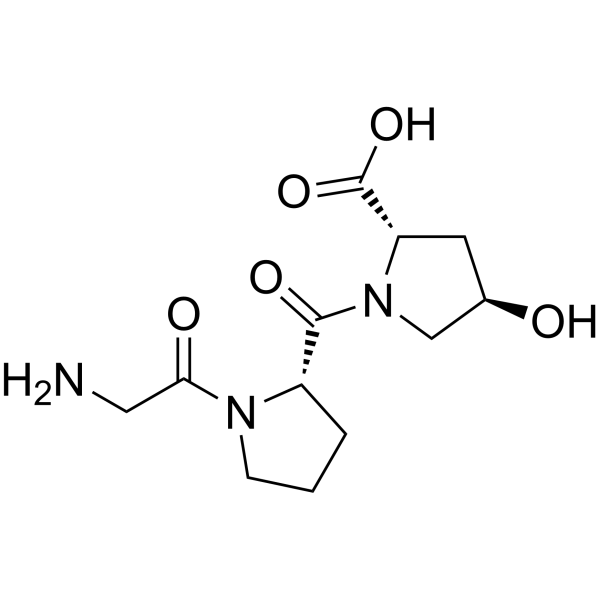 0 ImagesH-Gly-Pro-Hyp-OH is a collagen-derived peptide and also a dipeptidyl peptidase-4 inhibitor.\nH-Gly-Pro-Hyp-OH inhibits the activity of dipeptidyl peptidase-4 in vitro. H-Gly-Pro-Hyp-OH binds to the DNA-binding site of the JUN/FOS complex, blocks the formation of the DNA-JUN/FOS complex, and inhibits transcriptional activity. H-Gly-Pro-Hyp-OH is applicable to research related to skin photoaging, UVB-induced skin aging/photoaging, and thrombosis.
-
Avenanthramide C
 0 ImagesAvenanthramide C is an orally active polyphenolic compound that penetrates the blood-brain barrier. Avenanthramide C is derived from oats. Avenanthramide C inhibits NF-κB nuclear translocation and inhibits the phosphorylation of PI3K, PLCγ1, Lyn, Syk, and Akt. Avenanthramide C inhibits the expression and activity of MMP-9 and inhibits MAPK phosphorylation. Avenanthramide C scavenges DPPH radicals, reduces intracellular ROS, and inhibits pro-inflammatory cytokine release and adhesion molecule expression. Avenanthramide C inhibits cell degranulation. Avenanthramide C attenuates active systemic anaphylaxis and inhibits passive cutaneous anaphylaxis. Avenanthramide C ameliorates PHZ-induced blood stasis. Avenanthramide C inhibits neuroinflammation, restores long-term potentiation, and improves recognition and spatial memory in Alzheimer's disease models. Avenanthramide C can be used for research on allergic inflammation, thrombosis, atherosclerosis, and Alzheimer's disease.
-
Indinavir
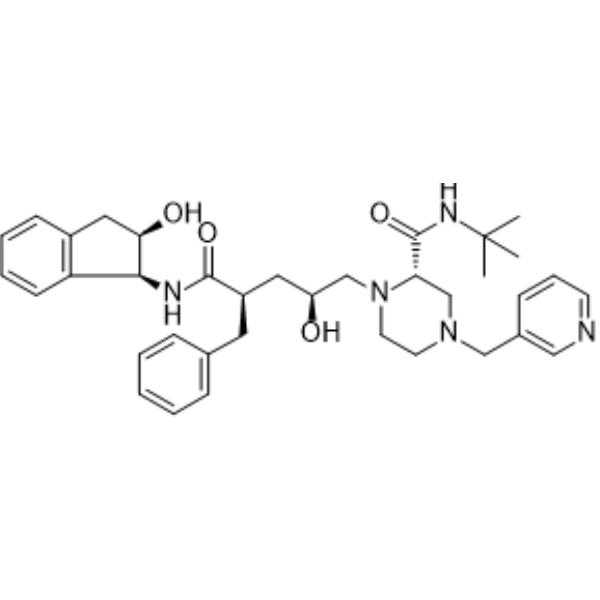 0 ImagesSynonyms: MK-639 free base; L-735524 free baseIndinavir (MK-639 free base) is an orally active and selective HIV-1 protease inhibitor with a Ki of 0.54 nM for PR. Indinavir exhibits anticancer activity by inhibiting the activation of MMPs-2 hydrolysis, anti-angiogenesis and inducing apoptosis. Indinavir is also a SARS-CoV 3CLpro inhibitor.
-
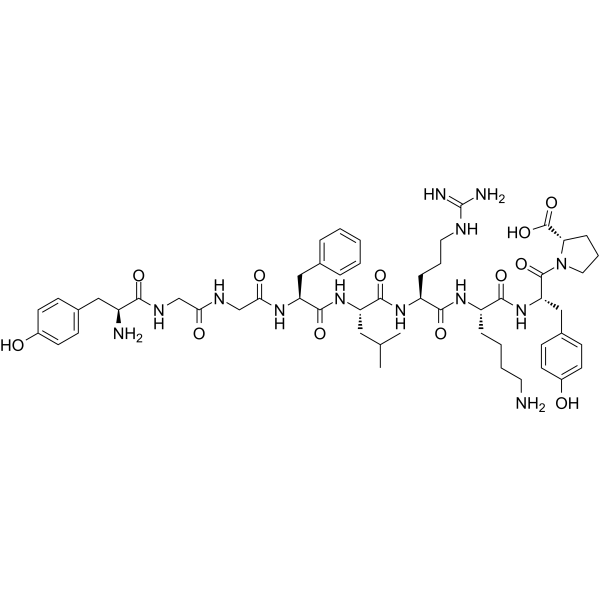
Highly purified Type II collagen, from chick sternal cartilage
 0 ImagesCat. No.: HY-NP113Purity: 99.00%Synonyms: Chick Type II collagen, immunization gradeHighly purified Type II collagen, from chick sternal cartilage (Chick Type II collagen, immunization grade) is an immune grade collagen derived from chick sternal cartilage, which can stimulate the animal's immune system to produce specific antibodies against this collagen. Collagen is also a substrate for hydrolysis by MMPs.
-
PT109
 0 ImagesPT109 is an orally active, blood-brain barrier permeable multi-kinase inhibitor. By inhibiting PTBP1, PT109 promotes the switch of pyruvate kinase isoform from PKM2 to PKM1, thereby effectively inhibiting the proliferation and migration of glioblastoma multiforme and inducing its reprogramming into oligodendrocytes. PT109 also targets and regulates key signaling molecules such as JNK, SGK1, GSK3β to exert neuroprotective effects including promoting neurogenesis, inducing synapse formation and alleviating neuroinflammation. In Alzheimer's disease models, PT109 exhibits significant efficacy in improving spatial learning ability, along with excellent in vivo pharmacokinetic properties. PT109 can be used to investigate metabolic reprogramming of glioblastoma multiforme and neuroprotective mechanisms of Alzheimer's disease.
-
PPNDS tetrasodium
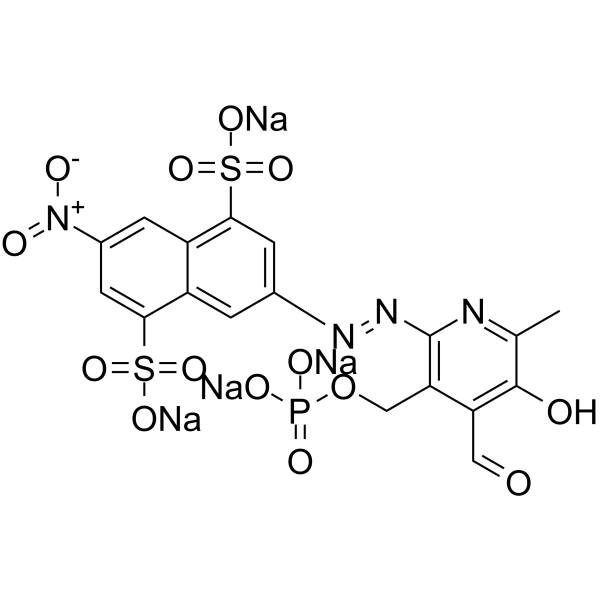 0 ImagesCat. No.: HY-108675CAS No.: 1021868-77-8PPNDS tetrasodium is a selective and competitive meprin β inhibitor (IC50: 80 nM, Ki: 8 nM), and also inhibits ADAM10 (IC50: 1.2 μM). PPNDS tetrasodium is also a P2X1 receptor antagonist. PPNDS is an agonist for the ATP receptor of Paramecium. PPNDS tetrasodium potently inhibits polymerases from viruses. PPNDS tetrasodium can be used in the research of infection and cancers.
-
PLGLAG
 0 ImagesPLGLAG is a peptide that serves as the linker in activatable cell-penetrating peptides (ACPPs) and can be used in cancer research.
-
Astragaloside IV (Standard)
 0 ImagesAstragaloside IV (Standard) is the analytical standard of Astragaloside IV. This product is intended for research and analytical applications. Astragaloside IV, an active component isolated from Astragalus membranaceus, suppresses the activation of ERK1/2 and JNK, and downregulates matrix metalloproteases (MMP)-2, (MMP)-9 in MDA-MB-231 breast cancer cells.
-
Triolein-d5
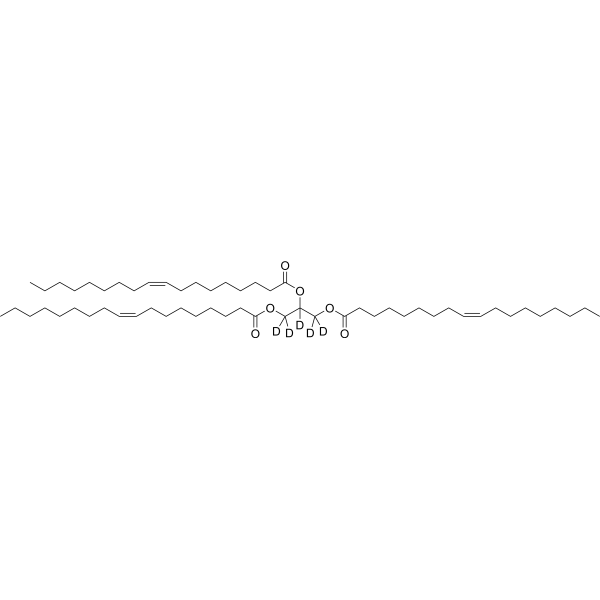 0 ImagesCat. No.: HY-N1981S1CAS No.: 60892-83-3Triolein-d5 is the deuterium labeled Triolein. Triolein is a symmetrical triacylglycerol, reduces MMP-1 upregulation, with strong antioxidant and anti-inflammatory properties.
-
Levamlodipine
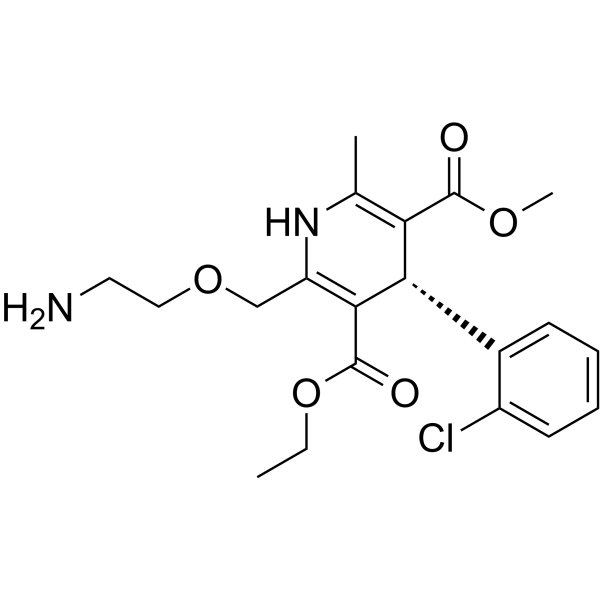 0 ImagesSynonyms: (S)-Amlodipine; LevoamlodipineLevamlodipine ((S)-Amlodipine; Levoamlodipin) is an orally active L-type calcium channel blocker and MMP-9 modulator with high permeability and retention properties. Levamlodipine significantly enhances plaque stability and improves lipid profiles by reducing blood pressure, decreasing systolic blood pressure variability, and inhibiting MMP-9 expression in atherosclerotic plaques. Levamlodipine not only alleviates cardiac and aortic hypertrophy and prevents renal atrophy, but also produces synergistic effects in blood pressure reduction and organ protection when combined with bisoprolol (HY-129029). Levamlodipine exerts no significant inhibitory effect on abdominal aortic intimal hyperplasia. When excessively accumulated in the epidermis, Levamlodipine may induce changes in keratin structure, impair the skin barrier and trigger inflammation; long-term use further exacerbates skin irritation caused by local administration. Levamlodipine can be used in research related to hypertension and atherosclerosis.
-
Homoeriodictyol
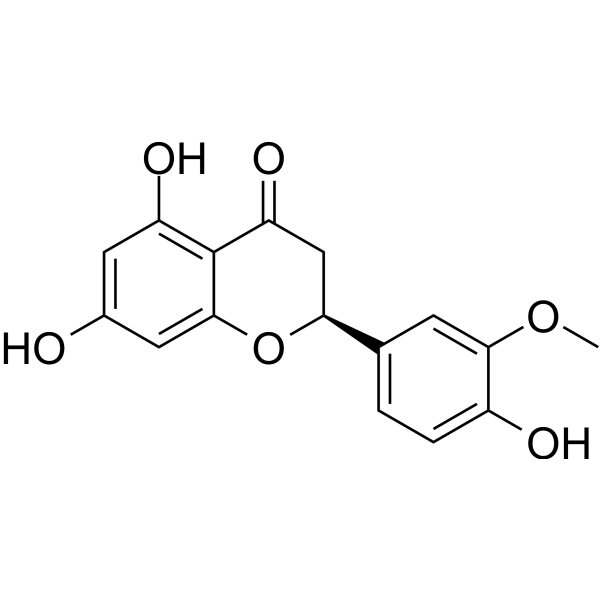 0 ImagesHomoeriodictyol is an orally active, bitter-tasting flavanone that can penetrate the blood-brain barrier. Homoeriodictyol enhances synaptic-related protein expression through NCOA4-mediated ferritin autophagy. Homoeriodictyol improves memory impairment in mice by inhibiting the NLRP3 inflammasome. Homoeriodictyol protects human endothelial cells from oxidative damage by activating Nrf2 and inhibiting mitochondrial dysfunction. Homoeriodictyol enhances ROS activity and induces apoptosis, exhibiting anticancer effects. Homoeriodictyol inhibits the survival and migration of androgen-resistant prostate cancer cells in vitro. Homoeriodictyol exerts antinociceptive activity in mice in vivo.
-
Methacrylated Type I collagen
 0 ImagesCat. No.: HY-158225Synonyms: Col1MAMethacrylated Type I collagen (Col1MA) is a methacrylated tissue engineering scaffold material that retains the basic properties of natural collagen. Methacrylated Type I collagen needs to self-assemble into fibrous hydrogel under the action of photoinitiator LAP (HY-44076), and target bioactive adhesion sites, play an inherent supporting role for tissue cells and biodegradable activity.
Application: cell culture, biological 3D printing, tissue engineering, etc.