



MAO-A
Monoamine oxidase A (MAO-A) is a mitochondrial flavin-dependent enzyme that catalyzes the oxidative deamination of monoamine neurotransmitters and thereby regulates neurotransmitter homeostasis in the nervous system and peripheral tissues[1]. Mechanistically, MAO-A metabolizes serotonin and norepinephrine and contributes to dopamine turnover, generating aldehydes, ammonia, and hydrogen peroxide as metabolic by-products that influence cellular redox status and downstream biological responses[1][2]. Through its control of monoamine catabolism, MAO-A participates in neuropsychiatric and neurodegenerative pathways and has therefore become an important molecular target in neuroscience and drug discovery research[2][3]. In disease-related experimental systems, altered MAO activity has been associated with oxidative stress and tissue dysfunction, while pharmacological inhibition of MAO can modify neurotransmitter metabolism and related physiological outcomes[2][4]. Compared with the closely related isoform MAO-B, MAO-A shows higher substrate preference for serotonin and norepinephrine, whereas MAO-B preferentially metabolizes phenylethylamine and contributes differently to monoamine turnover, making isoform selectivity a critical consideration in experimental design and therapeutic development[3][5]. For experimental applications, selective MAO-A inhibitors such as clorgyline and moclobemide are widely used to investigate monoamine signaling, neurotransmitter metabolism, and MAO-dependent biological mechanisms, while reversible and irreversible inhibitor classes provide complementary pharmacological tools for mechanistic studies[4][2].
References:
- [1]. Wang CC, et al. Monoamine oxidases in development. Cell Mol Life Sci. 2013 Feb;70(4):599-630. [Content Brief]
- [2]. Manzoor S, et al. A comprehensive review of monoamine oxidase inhibitors as Anti-Alzheimer's disease agents: A review. Eur J Med Chem. 2020;206:112787.
- [3]. Ribeiro LV, et al. Monoamine Oxidase Inhibitors in Drug Discovery Against Parkinson's Disease: An Update. Pharmaceuticals (Basel). 2025;18(10):1526.
- [4]. Lighezan R, et al. Monoamine oxidase inhibition improves vascular function in mammary arteries from nondiabetic and diabetic patients with coronary heart disease. Can J Physiol Pharmacol. 2016;94(10):1040-1047.
- [5]. Brannan T, et al. In vivo comparison of the effects of inhibition of MAO-A versus MAO-B on striatal L-DOPA and dopamine metabolism. J Neural Transm Park Dis Dement Sect. 1995;10(2-3):79-89. [Content Brief]
All Product Categories
-
MAO-A Related Products (139)
Related Products (139)

-
hMAO-B-IN-5
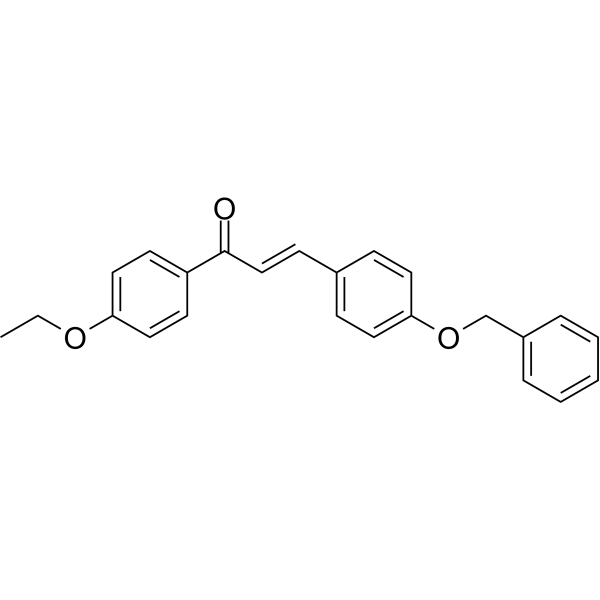 0 ImageshMAO-B-IN-5 (Compound B15) is a potent, selective and reversible human monoamine oxidase-B (hMAO-B) inhibitor with an IC50 of 120 nM and a Ki of 33 nM. hMAO-B-IN-5 can be used in the research of neurodegenerative diseases.
-
MAO-B-IN-15
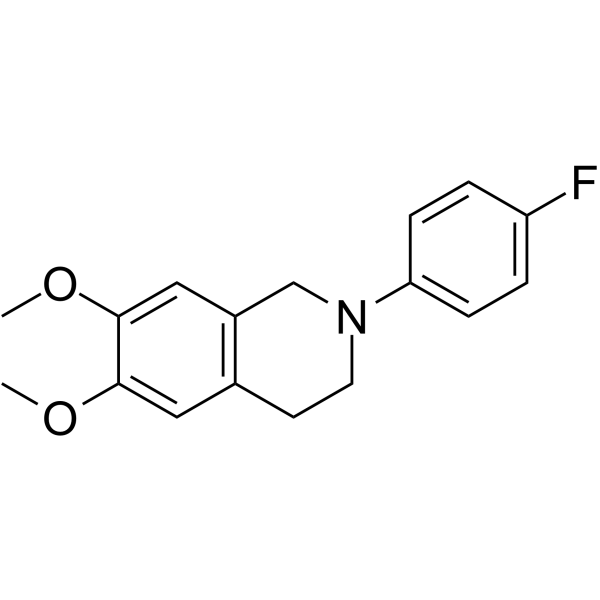 0 ImagesCat. No.: HY-151209CAS No.: 2032436-79-4MAO-B-IN-15 is a selective MAO-B inhibitor (IC50: 13.5 μM) that forms π-π interaction with Tyr 326 residue. MAO-B-IN-15 can be used in the research of Parkinson’s disease.
-
Desoxypeganine hydrochloride
 0 ImagesCat. No.: HY-108048ACAS No.: 61939-05-7Synonyms: Deoxypeganine hydrochloride; Deoxyvasicine hydrochlorideDesoxypeganine (Deoxypeganine) hydrochloride, an alkaloid, is a potent and orally active cholinesterase (BChE and AChE) and selective MAO-A inhibitor, with IC50 values of 2, 17, and 2 μM, respectively. Desoxypeganine hydrochloride can be used for alcohol abuse research.
-
MAO-A-IN-4
 0 ImagesCat. No.: HY-181110MAO-A-IN-4 is a highly selective and reversible inhibitor of monoamine oxidase A (MAO-A), with an IC50 of 0.06 μM against hMAO-A. MAO-A-IN-4 exhibits anti-inflammatory, antioxidant, neuroprotective, and antidepressant activities. MAO-A-IN-4 possesses favorable ADME properties and is suitable for research related to depression.
-
Monoamine Oxidase B inhibitor 2
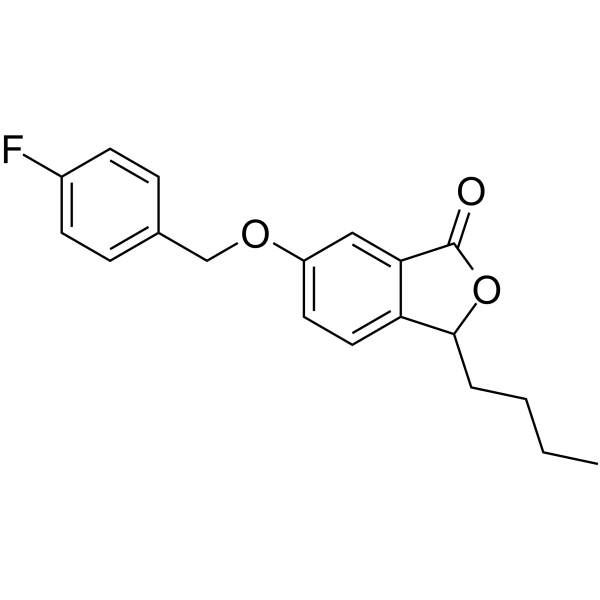 0 ImagesCat. No.: HY-143245CAS No.: 2807477-26-3Monoamine Oxidase B inhibitor 2 is a potent, reversible, orally active and selective monoamine oxidase B (MAO-B) inhibitor with an IC50 of 1.33 nM. Monoamine Oxidase B inhibitor 2 has antioxidant and anti-neuroinflammatory activities. Monoamine Oxidase B inhibitor 2 can across the blood-brain barrier (BBB), and can be used for Parkinson’s disease study.

-
LSD1-IN-10
 0 ImagesCat. No.: HY-136878CAS No.: 1235864-15-9LSD1-IN-10 is a LSD1/MAO inhibitor with LSD1 IC50 of 5 nM, MAO-A IC50 of 16 μM, and MAO-B IC50 of 7.4 μM. LSD1-IN-10 suppresses enzymatic activity of LSD1, MAO-A, and MAO-B. LSD1-IN-10 can be used for the research of cancer, alzheimer's disease, parkinson's disease, huntington's disease.
-
Monoamine Oxidase B inhibitor 1
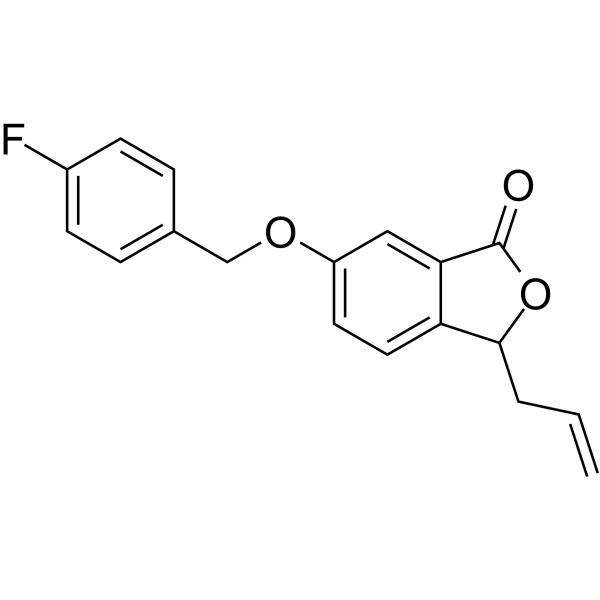 0 ImagesCat. No.: HY-143244CAS No.: 2807477-70-7Monoamine Oxidase B inhibitor 1 is a potent, reversible, orally active and selective monoamine oxidase B (MAO-B) inhibitor with an IC50 of 0.02 nM. Monoamine Oxidase B inhibitor 1 has antioxidant and anti-neuroinflammatory activities. Monoamine Oxidase B inhibitor 1 can across the blood-brain barrier (BBB), and can be used for Parkinson’s disease study.
-
MAO-A/SERT-IN-1
 0 ImagesCat. No.: HY-168021CAS No.: 3001361-38-9MAO-A/SERT-IN-1 is an inhibitor of MAO-A/serotonin transporter (SERT). MAO-A/SERT-IN-1 can reduce SERT-mediated reuptake of 5-HT and has neuroprotective effects in cell inhibition models. MAO-A/SERT-IN-1 can improve depressive behavior in zebrafish and mice.
-
Tetrindole hydrochloride
 0 ImagesCat. No.: HY-101169ACAS No.: 135991-95-6Tetrindole hydrochloride is a selective inhibitor of monoamine oxidase A (MAO A). Tetrindole hydrochloride inhibits rat brain mitochondrial MAO A in a competitive manner with a Ki value of 0.4 μM and inhibits MAO B with a Ki of 110 μM. Tetrindole hydrochloride has antidepressant activity.
-
AChE/MAO-IN-2
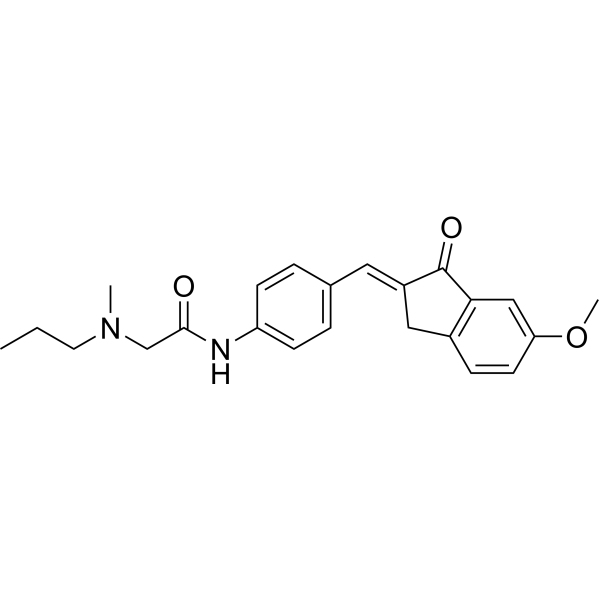 0 ImagesCat. No.: HY-152110Dual AChE-MAO B-IN-5, indanone derivative, is a potent dual AChE/MAO-B inhibitior with IC50 values of 0.0224, 0.0412, and 0.1116 μM for AChE, MAO-B and MAO-A, respectively. Dual AChE-MAO B-IN-5 has antioxidant activity and prevents β-amyloid plaque aggregation. Dual AChE-MAO B-IN-5 can be used for Alzheimer’s disease (AD) research.
-
MAO-A-IN-2
 0 ImagesCat. No.: HY-174833CAS No.: 1627618-37-4MAO-A-IN-2 (Compound 4l) is a selective monoamine oxidase A (MAO-A) inhibitor with an IC50 value of 0.4 μM. MAO-A-IN-2 reduces the degradation of monoamine neurotransmitters (e.g., serotonin, norepinephrine). MAO-A-IN-2 is promising for research of neurological diseases related to monoamine neurotransmitter imbalance such as depression and anxiety disorders.
-
COMT-IN-1
 0 ImagesCat. No.: HY-162760CAS No.: 2987884-27-3COMT-IN-1 (compound C12), a nitrophenolic analogue, is an orally active dopamine metabolic enzyme catechol-O-methyltransferase (COMT) inhibitor with IC50s of 0.37 μM, 95.58 μM and 58.82 μM for COMT, MAO-A and MAO-B, respectively. COMT-IN-1 exhibits chelation with a variety of metal ions. COMT-IN-1 exhibits good BBB permeability. COMT-IN-1 improves dopamine levels and ameliorates MPTP (HY-15608)-induced Parkinson's disease (PD) symptoms in mice.
-
Pirlindole mesylate
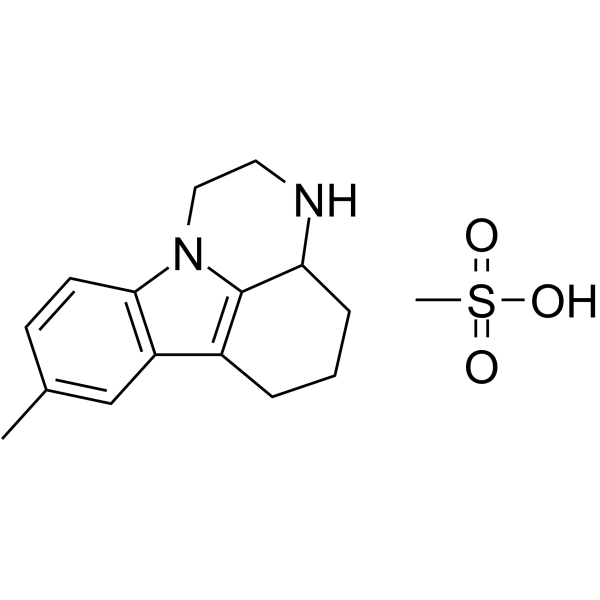 0 ImagesCat. No.: HY-100679ACAS No.: 207572-66-5Pirlindole mesylate is an orally active, selective and reversible MAO-A inhibitor with an IC50 value of 250 nM. Pirlindole mesylate inhibits genomic replication of Enterovirus species B and D, and exhibits moderate activity against enterovirus species A. Pirlindole mesylate inhibits MAO-A-mediated monoamine metabolism, promotes adult hippocampal neurogenesis, rescues stress-induced dendritic atrophy of hippocampal granule neurons, reverses behavioral effects associated with chronic mild stress, and also possesses anticonvulsant, analgesic, local anesthetic, hypotensive, antiplatelet aggregation and antispasmodic activities. Pirlindole mesylate shows no detectable mutagenic, clastogenic or carcinogenic properties. Pirlindole mesylate can be used in research related to depression and enterovirus infections.
-
AChE/BChE/MAO-A-IN-2
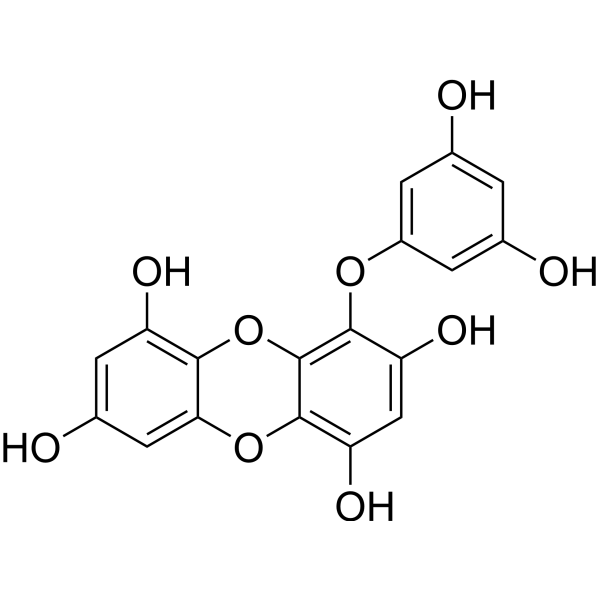
 0 ImagesCat. No.: HY-184159AChE/BChE/MAO-A-IN-2 is an AChE, BChE, and MAO-A inhibitor with IC50 values of 104.28 nM, 23.04 nM, and 215.50 nM, respectively. AChE/BChE/MAO-A-IN-2 exhibits selective antiproliferative activity against cancer cells and low toxicity toward normal cells. AChE/BChE/MAO-A-IN-2 can be used for the research of alzheimer's disease, neuroblastoma.

-
LSD1-IN-16
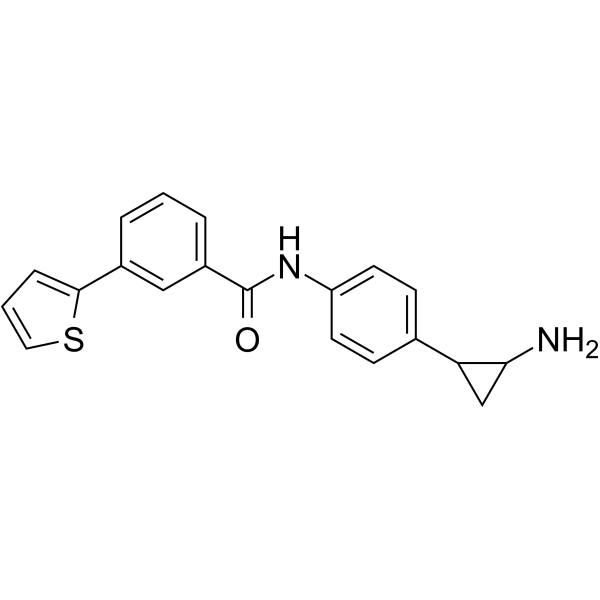 0 ImagesCat. No.: HY-144757CAS No.: 3033060-68-0LSD1-IN-16 (compound 4b) is a potent LSD1 inhibitor. LSD1-IN-16 can inhibit LSD1-CoREST, MAO-A and MAO-B, with IC50 values of 0.015, 0.024, and 0.366 μM, respectively. LSD1-IN-16 displays cell growth arrest in prostate cancer LNCaP cells, with an IC50 of 15.2 μM.
-
AChE-IN-82
 0 ImagesCat. No.: HY-170938AChE-IN-82 (compound 49) is an acetylcholinesterase (AChE) inhibitor. AChE-IN-82 inhibits eeAChE, eqBChE, hMAO-A, hMAO-B, and BACE-1 with IC50s of 0.072, 9.81, 14.52, 0.024, 2.42 μM, respectively. AChE-IN-82 inhibits COX-1, COX-2 and 5-LOX with IC50s of 60.41, 0.187, 0.18 μM, respectively. AChE-IN-82 shows an excellent neuroprotective effect by significantly reducing oxidative stress induced by H2 O2.
-
MDL 72392
 0 ImagesCat. No.: HY-182727CAS No.: 85278-68-8MDL 72392 is a selective irreversible monoamine oxidase A (MAO-A) inhibitor. MDL 72392 inhibits MAO-A. MDL 72392 is formed by decarboxylation of the bioprecursor amino acid MDL 72394 via aromatic L-amino acid decarboxylase. MDL 72392 can be used in melatonin biosynthesis research.



