



- Signaling Pathways
- NF-κB
- NF-κB
NF-κB
Nuclear factor-κB; Nuclear factor-kappaB
NF-κB Isoform Specific Products
All Product Categories
-
NF-κB Inhibitors
(1612)
View all products
-
NF-κB Agonists
(6)
View all products
-
NF-κB Antagonist
(1)
View all products
-
NF-κB Activators
(145)
View all products
-
NF-κB Modulators
(34)
View all products
-
NF-κB Inducers
(3)
View all products
-
NF-κB Degraders
(4)
View all products
-
NF-κB Controls
(7)
View all products
-
NF-κB Ligands
(2)
View all products
-
NF-κB Related Products (1948)
Related Products (1948)

-
Antibodies (32)
-
NF-κB Signaling Pathway
-
NF-κB Isoform Comparison
-
Glycoursodeoxycholic acid 3-sulfate
 0 ImagesCat. No.: HY-48813CAS No.: 133429-88-6Glycoursodeoxycholic acid 3-sulfate is a glycine-conjugated sulfated bile acid 3-sulfate, which is produced by SULT2A1-mediated sulfation of glycoursodeoxycholic acid (HY-N1424) in the liver. Glycoursodeoxycholic acid 3-sulfate attenuates the anti-inflammatory effect of glycoursodeoxycholic acid and impairs the inhibitory effect on the IL-17 and NF-κB signaling pathways. Glycoursodeoxycholic acid 3-sulfate shows a significant correlation with aortic flow velocity and BNP in patients with aortic stenosis. Glycoursodeoxycholic acid 3-sulfate is mainly used in related studies such as quantitative analysis, quality control and biochemical experiments; it often serves as a reagent for metabolomics analysis and can also be applied to research related to aortic stenosis.
 -
loading...Please select quantityGet Quote
August 31
-
Please select quantity
August 31
Get Quote
loading... -
-
IKK 16 (Standard)
 0 ImagesIKK 16 (Standard) is the analytical standard of IKK 16. This product is intended for research and analytical applications. IKK 16 hydrochloride is an orally active IKK inhibitor. IKK 16 hydrochloride shows IC50s of 40 nM, 70 nM, 200 nM, and 50 nM for IKK2, IKK complex, IKK1, and LRRK 2, respectively. IKK 16 hydrochloride is also a pan-PKD inhibitor, inhibiting PKD1, PKD2, and PKD3 with IC50s of 153.9, 115, and 99.7 nM, respectively. IKK 16 hydrochloride is also an ABCB1 inhibitor, interfering with the binding of ABCB1 to its substrates. IKK 16 hydrochloride protects against LPS (HY-D1056)-induced multiple organ dysfunction by reducing the acute inflammatory response induced by endotoxin exposure. IKK 16 hydrochloride can restore renal function and alleviate fibrosis in acute kidney injury. IKK 16 hydrochloride attenuates cardiac dysfunction associated with polymicrobial sepsis in mice with type 2 diabetes mellitus (T2DM) by inhibiting the NF-κB pathway.
 -
loading...Please select quantityGet Quote
August 31
-
Please select quantity
August 31
Get Quote
loading... -
-
Emavusertib maleate
 0 ImagesCat. No.: HY-135317ECAS No.: 2376399-39-0Synonyms: CA-4948 maleateEmavusertib maleate (CA-4948 maleate) is the maleate salt form of Emavusertib (HY-135317). Emavusertib maleate is an orally active inhibitor for IRAK4 (IC50=57 nM) and FLT3. Emavusertib maleate inhibits NF-κB and MyD88 signaling pathways, reduces the generation of pro-inflammatory cytokines like IL-6 and IL-10, thereby exhibiting anti-inflammatory and anti-proliferative activities against cancer cells, leading to cell apoptosis. Emavusertib maleate exhibits antitumor activity in mouse model.
 -
loading...Please select quantityGet Quote
August 31
-
Please select quantity
August 31
Get Quote
loading... -
-
Cornuside (Standard)
 0 ImagesCat. No.: HY-N0631RCAS No.: 131189-57-6Cornuside (Standard) is the analytical standard of Cornuside (HY-N0631). This product is intended for research and analytical applications. Cornuside is an iridoid glycoside with anti-allergic, anti-inflammatory, and neuroprotective activities. Cornuside exerts anti-allergic activity by downregulating the p38 MAPK, JNK, and NF-κB signaling pathways, and inhibits IgE-mediated histamine release from mast cells. Cornuside improves cognitive impairment in mice by inhibiting BACE1 activity (IC50 = 55.84 μg/mL) and enhancing ChAT activity. Cornuside inhibits LPS (HY-D1056)-induced inflammatory mediators, including iNOS, COX-2, PGE2, TNF-α, IL-6, and IL-1β, by suppressing NF-κB activation.
 -
loading...Please select quantityGet Quote
August 31
-
Please select quantity
August 31
Get Quote
loading... -
-
TAK-243 (Standard)
 0 ImagesCat. No.: HY-100487RCAS No.: 1450833-55-2Synonyms: MLN7243 (Standard)TAK-243 (Standard) is the analytical standard of TAK-243 (HY-100487). This product is intended for research and analytical applications. TAK-243 (MLN7243) is a first-in-class, selective ubiquitin activating enzyme, UAE (UBA1) inhibitor (IC50=1 nM), which blocks ubiquitin conjugation, disrupting monoubiquitin signaling as well as global protein ubiquitination. TAK-243 (MLN7243) induces endoplasmic reticulum (ER) stress, abrogates NF-κB pathway activation and promotes apoptosis.
 -
loading...Please select quantityGet Quote
August 31
-
Please select quantity
August 31
Get Quote
loading... -
-
Triflusal (Standard)
 0 ImagesTriflusal (Standard) is the analytical standard of Triflusal (HY-B0531). This product is intended for research and analytical applications. Triflusal is an orally bioavailable, blood-brain barrier-permeable dual Cyclooxygenase-1 (COX-1)/cAMP phosphodiesterase inhibitor. Triflusal inhibits platelet aggregation, NF-κB activation, iNOS activity, and prostaglandin synthesis in ischaemic tissue. Triflusal stimulates neutrophil nitric oxide production, eNOS protein expression, and cNOS activity. Triflusal alleviates cerebral ischemic injury in rats and ameliorates pathological lesions and related gene expression in transgenic Alzheimer’s disease models. Triflusal can be used for the research of thromboembolic/ischemic cardiovascular and cerebrovascular diseases, and Alzheimer’s disease.
 -
loading...Please select quantityGet Quote
August 31
-
Please select quantity
August 31
Get Quote
loading... -
-
Tabersonine hydrochloride
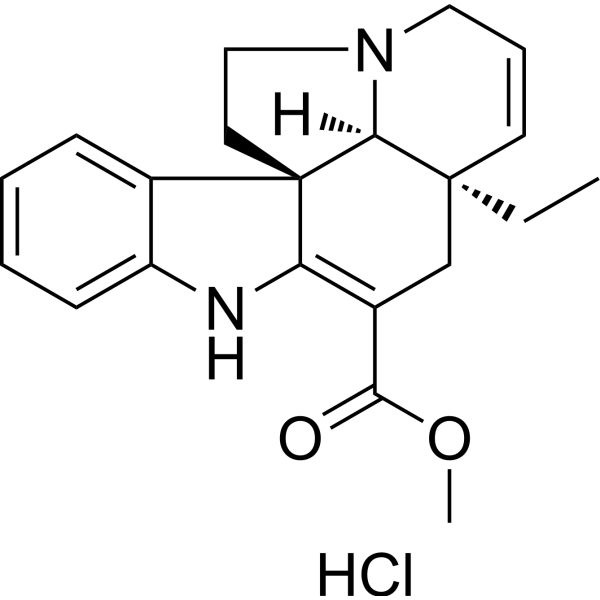 0 ImagesTabersonine hydrochloride is a selective, orally active NLRP3 inhibitor. Tabersonine hydrochloride directly binds to the NACHT domain of NLRP3, inhibiting its ATPase activity and oligomerization, thereby blocking ASC spot formation and caspase-1 activation, and reducing the release of pro-inflammatory cytokines such as IL-1β. Tabersonine hydrochloride also inhibits K63-linked ubiquitination of TRAF6, blocking NF-κB, PI3K/Akt, and p38 MAPK signaling pathways. Tabersonine hydrochloride can inhibit inflammatory responses, induce apoptosis of liver cancer cells through mitochondrial pathways and death receptor pathways, reduce mitochondrial membrane potential, promote cytochrome c release, and activate caspase proteins. Tabersonine hydrochloride is mainly used in the study of NLRP3-driven inflammatory diseases (such as acute lung injury, sepsis, peritonitis) and tumors such as liver cancer.
 -
loading...Please select quantityGet Quote
August 31
-
Please select quantity
August 31
Get Quote
loading... -
-
Licoflavanone
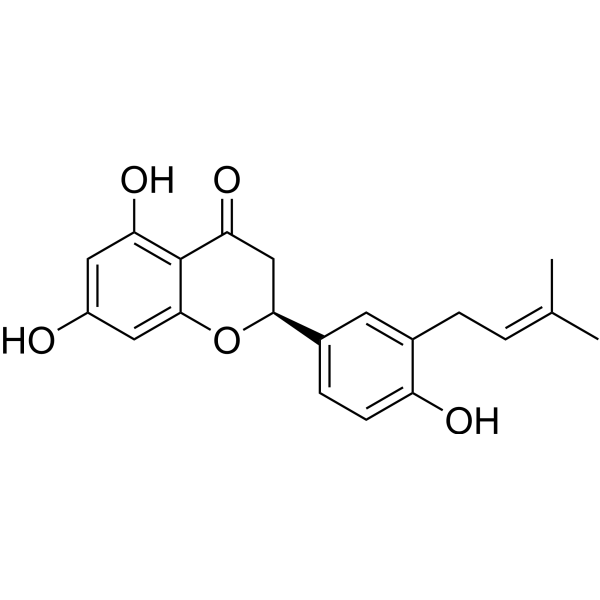 0 ImagesCat. No.: HY-N10133CAS No.: 119240-82-3Synonyms: 3′-PrenylnaringeninLicoflavanone (3′-Prenylnaringenin) is a flavanone with antioxidant, anti-inflammatory and anticancer activities. Licoflavanone can be isolated from the leaf extract of Glycyrrhiza glabra. Licoflavanone downregulates the mTOR/PI3K/AKT signaling pathway to inhibit the proliferation, migration and invasion of cancer cells, while activates Bax, Bad and multiple caspase enzymes to induce apoptosis. Its anti-inflammatory effect is manifested by reducing the nuclear translocation of NF-κB, decreasing the phosphorylation levels of p38, JNK and ERK1/2, thereby inhibiting the expression of nitric oxide, proinflammatory cytokines, COX-2 and iNOS. Licoflavanone is used in studies on nasopharyngeal carcinoma and related mechanisms.
 -
loading...Please select quantityGet Quote
August 31
-
Please select quantity
August 31
Get Quote
loading... -
-
Acenocoumarol (Standard)
 0 ImagesAcenocoumarol (Standard) is the analytical standard of Acenocoumarol. This product is intended for research and analytical applications. Acenocoumarol is an anticoagulant that functions as a Vitamin K antagonist. Acenocoumarol inhibits MAPK/ERK/JNK signaling pathway, reduces the nuclear translocation of NF-κB p65, activates Akt/GSK3β signaling pathway. Acenocoumarol induces apoptosis in cell A549, arrests cell cycle at S phase.
 -
loading...Please select quantityGet Quote
August 31
-
Please select quantity
August 31
Get Quote
loading... -
-
2,4,6-Trihydroxybenzaldehyde (Standard)
 0 Images2,4,6-Trihydroxybenzaldehyde is an orally active NF- B inhibitor. 2,4,6-Trihydroxybenzaldehyde shows anti-tumor activity, anti-cancer cell proliferative activity and anti-obesity activity.
 -
loading...Please select quantityGet Quote
August 31
-
Please select quantity
August 31
Get Quote
loading... -
-
Sulindac (Standard)
 0 ImagesSynonyms: MK-231 (Standard)Sulindac (Standard) is the analytical standard of Sulindac. This product is intended for research and analytical applications. Sulindac (MK-231) is an orally active nonsteroidal anti-inflammatory agent. Sulindac also is an immunomodulatory agent. Sulindac can be used for the research of arthritis of the spine, gouty arthritis and kinds of cancer including colorectal cancer (CRC) and lung cancer.
 -
loading...Please select quantityGet Quote
August 31
-
Please select quantity
August 31
Get Quote
loading... -
-
Tylophorinidine
 0 ImagesCat. No.: HY-W709923CAS No.: 32523-69-6Tylophorinidine is a natural phenanthroindolizidine alkaloid present in Tylophora ovata, and exhibits NFκB inhibitory activity. Tylophorinidine suppresses the cell viability of 3D co-culture spheroids derived from triple-negative breast cancer cells. Tylophorinidine is used in related research on triple-negative breast cancer.
 -
loading...Please select quantityGet Quote
August 31
-
Please select quantity
August 31
Get Quote
loading... -
-
LasB-IN-1
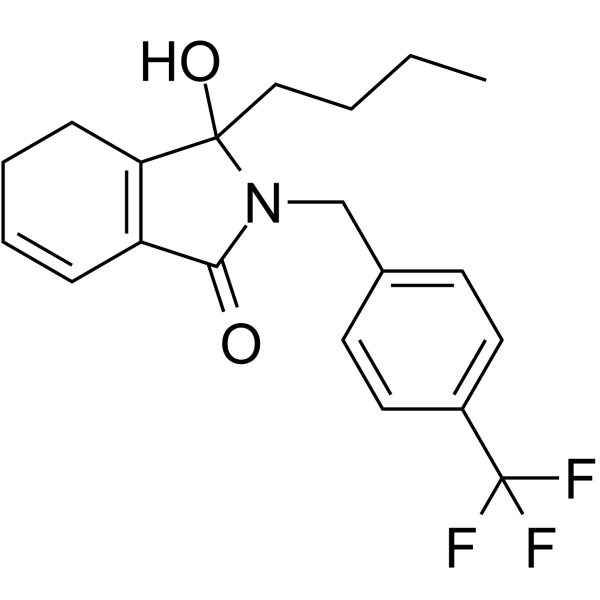 0 ImagesCat. No.: HY-163030LasB-IN-1 (compound 5f) is a potent and orally active inhibitor of LasB (IC50 = 8.7 μM). LasB-IN-1 effectively attenuates elastase production and biofilm formation by P. aeruginosa while alleviating the inflammatory response through downregulating MAPK and NF-κB pathways. LasB-IN-1 is potential to be a novel anti-infective candidate against drug-resistant infections.
 -
loading...Please select quantityGet Quote
August 31
-
Please select quantity
August 31
Get Quote
loading... -
-
Hederacoside C (Standard)
 0 ImagesSynonyms: Kalopanaxsaponin B (Standard)Hederacoside C (Standard) is the analytical standard of Hederacoside C. This product is intended for research and analytical applications. Hederacoside C (Kalopanaxsaponin B) is an ingredient that can be obtained mainly from ivy leaves. Hederacoside C mediates inflammation by inhibiting activation of MAPK/NF-κB and its downstream signaling pathway. Hederacoside C has anti-inflammatory and antibacterial activity.
 -
loading...Please select quantityGet Quote
August 31
-
Please select quantity
August 31
Get Quote
loading... -
-
N-(p-Coumaroyl) Serotonin (Standard)
 0 ImagesCat. No.: HY-129440RCAS No.: 68573-24-0N-(p-Coumaroyl) Serotonin (Standard) is the analytical standard of N-(p-Coumaroyl) Serotonin (HY-129440). This product is intended for research and analytical applications. N-(p-Coumaroyl) Serotonin is an orally active polyphenol found in safflower seeds with potent anti-inflammatory, antioxidant, and antitumor activities. N-(p-Coumaroyl) Serotonin suppresses NF‑κB, TLR4/MyD88 and MAPK signaling, activates NQO1/HO‑1 pathways, and inhibits pro‑inflammatory cytokines, iNOS and COX‑2 and ROS production. N-(p-Coumaroyl) Serotonin induces S‑phase arrest and apoptosis in glioblastoma cells, reduces atherosclerotic lesions, and alleviates renal and vascular injuries. N-(p-Coumaroyl) Serotonin acts as a vasodilator, regulates calcium dynamics. N-(p-Coumaroyl) Serotonin can be used for the research of neurodegenerative diseases, atherosclerosis, glioblastoma, and acute renal failure.
 -
loading...Please select quantityGet Quote
August 31
-
Please select quantity
August 31
Get Quote
loading... -
-
Pulegone (Standard)
 0 ImagesPulegone (Standard) is the analytical standard of Pulegone (HY-N1500). This product is intended for research and analytical applications. Pulegone is a monoterpene ketone compound widely present in the essential oils of many plants. Pulegone can also be used as a bird repellent. Pulegone has multiple activities such as anti-inflammatory, antibacterial, antifungal, and anti-hyperalgesic effects. Pulegone is particularly effective against bacteria of the Salmonella species.
 -
loading...Please select quantityGet Quote
August 31
-
Please select quantity
August 31
Get Quote
loading... -
-
Ruberythric acid
 0 ImagesCat. No.: HY-W718178CAS No.: 152-84-1Ruberythric acid is a natural product found in madder (Rubia tinctorum). Acid treatment induces hydrolysis of Ruberythric acid, producing pentose-containing sugar residues and alizarin. Ruberythric acid inhibits stimulus-induced phosphorylation of IKK, IκBα and p65 in the NF-κB pathway, regulates tight junction integrity, suppresses stimulus-induced MLCK activation and myosin light chain phosphorylation, reduces tight junction disruption associated with cytoskeletal contraction, alleviates stimulus-induced increase in intestinal permeability, and prevents stimulus-induced redistribution of tight junction proteins. Ruberythric acid forms red salts when dissolved in alkali and can be used as a dye. Ruberythric acid is applicable to research related to inflammatory bowel disease.
 -
loading...Please select quantityGet Quote
August 31
-
Please select quantity
August 31
Get Quote
loading... -
-
4-Octylphenol
 0 Images4-Octylphenol is a hormone disruptor that has gender-specific effects on male reproductive cells, significantly reducing the mitotic index and the number of spermatogonia. 4-Octylphenol can cause inflammatory damage to fish gills by activating the complement system through the C3a/C3aR axis and the C5a/C5aR1 axis, this leads to complement activation and causes immune suppression due to the imbalance between Th1/Th2 cells and regulatory T cells (Treg)/Th17 cells, as well as inflammatory damage via the Toll-like receptor 7 (Toll-like Receptor (TLR))/IκBα/NF-κB pathway.
 -
loading...Please select quantityGet Quote
August 31
-
Please select quantity
August 31
Get Quote
loading... -
-
Sodium propionate-13C-1
 0 ImagesCat. No.: HY-B1773AS1CAS No.: 83587-76-2Sodium propionate-13C-1 is the 13C-labeled Propionate sodium (HY-B1773A). Sodium propionate is an orally active short-chain fatty acid. Sodium propionate can be produced by intestinal bacteria from the metabolism of dietary fiber. Sodium propionate increases PPAR-γ, inhibits NF-κB activation, and reduces COX-2 expression and NO production. Sodium propionate also induces Apoptosis and Autophagy. Sodium propionate reduces HSV-1-induced keratitis. Sodium propionate has anticancer effects against glioblastoma. Sodium propionate exhibits neuroprotective, antioxidant, and anti-inflammatory activities. Sodium propionate can be used in the research of spinal cord injury and Alzheimer's disease.
 -
loading...Please select quantityGet Quote
August 31
-
Please select quantity
August 31
Get Quote
loading... -
-
NF-κB-IN-22
 0 ImagesCat. No.: HY-184964CAS No.: 3041997-77-4NF-κB-IN-22 is an inhibitor targeting IKKβ, IκBα and NF-κB p65. NF-κB-IN-22 selectively inhibits the proliferation, migration and invasion of various cancer cells, arrests the cell cycle, and suppresses tumor growth in vivo, while exhibiting low toxicity to normal cells. NF-κB-IN-22 induces DNA damage, ROS production and apoptosis through endoplasmic reticulum stress and mitochondrial apoptotic pathways. NF-κB-IN-22 inhibits the phosphorylation of IKKβ, IκBα and NF-κB p65, blocks the NF-κB signaling pathway, and suppresses the nuclear translocation of NF-κB p65. NF-κB-IN-22 reverses the resistance to cisplatin (HY-17394). NF-κB-IN-22 can be used in research related to lung cancer, gastric cancer and liver cancer.
 -
loading...Please select quantityGet Quote
August 31
-
Please select quantity
August 31
Get Quote
loading... -
No matching results
No matching results
No matching results
No matching results
No matching results
No matching results
No matching results
No matching results
No matching results
No matching results

NF-κB transcription factors are critical regulators of immunity, stress responses, apoptosis and differentiation. In mammals, there are five members of the transcription factor NF-κB family: RELA (p65), RELB and c-REL, and the precursor proteins NF-κB1 (p105) and NF-κB2 (p100), which are processed into p50 and p52, respectively. NF-κB transcription factors bind as dimers to κB sites in promoters and enhancers of a variety of genes and induce or repress transcription. NF-κB activation occurs via two major signaling pathways: the canonical and the non-canonical NF-κB signaling pathways[1].
The canonical NF-κB pathway is triggered by signals from a large variety of immune receptors, such as TNFR, TLR, and IL-1R, which activate TAK1. TAK1 then activates IκB kinase (IKK) complex, composed of catalytic (IKKα and IKKβ) and regulatory (NEMO) subunits, via phosphorylation of IKKβ. Upon stimulation, the IKK complex, largely through IKKβ, phosphorylates members of the inhibitor of κB (IκB) family, such as IκBα and the IκB-like molecule p105, which sequester NF-κB members in the cytoplasm. IκBα associates with dimers of p50 and members of the REL family (RELA or c-REL), whereas p105 associates with p50 or REL (RELA or c-REL). Upon phosphorylation by IKK, IκBα and p105 are degradated in the proteasome, resulting in the nuclear translocation of canonical NF-κB family members, which bind to specific DNA elements, in the form of various dimeric complexes, including RELA-p50, c-REL-p50, and p50-p50. Atypical, IKK-independent pathways of NF-κB induction also provide mechanisms to integrate parallel signaling pathways to increase NF-κB activity, such as hypoxia, UV and genotoxic stress.
The non-canonical NF-κB pathway is induced by certain TNF superfamily members, such as CD40L, BAFF and lymphotoxin-β (LT-β), which stimulates the recruitment of TRAF2, TRAF3, cIAP1/2 to the receptor complex. Activated cIAP mediates K48 ubiquitylation and proteasomal degradation of TRAF3, resulting in stabilization and accumulation of the NFκB-inducing kinase (NIK). NIK phosphorylates and activates IKKα, which in turn phosphorylates p100, triggering p100 processing, and leading to the generation of p52 and the nuclear translocation of p52 and RELB[2][3].
Reference:
[1]. Oeckinghaus A, et al. The NF-kappaB family of transcription factors and its regulation.Cold Spring Harb Perspect Biol. 2009 Oct;1(4):a000034.
[2]. Taniguchi K, et al. NF-κB, inflammation, immunity and cancer: coming of age. Nat Rev Immunol. 2018 May;18(5):309-324.
[3]. Perkins ND,et al. Integrating cell-signalling pathways with NF-kappaB and IKK function. Nat Rev Mol Cell Biol. 2007 Jan;8(1):49-62.
Your Search Returned No Results.
Sorry. There is currently no product that acts on isoform Bcl-2, Bcl-W and Bim together.Please
try each isoform separately.



