



PI3K
Phosphoinositide 3-kinase
PI3K (Phosphoinositide 3-kinase), via phosphorylation of the inositol lipid phosphatidylinositol 4,5-bisphosphate (PI(4,5)P2), forms the second messenger molecule phosphatidylinositol (3,4,5)-trisphosphate (PI(3,4,5)P3) which recruits and activates pleckstrin homology domain containing proteins, leading to downstream signalling events crucial for proliferation, survival and migration. Class I PI3K enzymes consist of four distinct catalytic isoforms, PI3Kα, PI3Kβ, PI3Kδ and PI3Kγ.
There are three major classes of PI3K enzymes, being class IA widely associated to cancer. Class IA PI3K are heterodimeric lipid kinases composed of a catalytic subunit (p110α, p110β, or p110δ; encoded by PIK3CA, PIK3CB, and PIK3CD genes, respectively) and a regulatory subunit (p85).
The PI3K pathway plays an important role in many biological processes, including cell cycle progression, cell growth, survival, actin rearrangement and migration, and intracellular vesicular transport.
PI3K Isoform Specific Products
-
PI3Kα
(236)
View all products
-
PI3Kβ
(162)
View all products
-
PI3Kγ
(182)
View all products
-
PI3Kδ
(202)
View all products
-
PI3KC2α
(8)
View all products
-
PI3KC2β
(12)
View all products
-
PI3KC2γ
(4)
View all products
-
Vps34
(25)
View all products
-
PI3K
(665)
View all products
-
PI3KC3
(1)
View all products
-
p120γ
(1)
View all products
All Product Categories
-
PI3K Inhibitors
(869)
View all products
-
PI3K Agonists
(9)
View all products
-
PI3K Antagonist
(1)
View all products
-
PI3K Activators
(131)
View all products
-
PI3K Modulators
(23)
View all products
-
PI3K Inducers
(3)
View all products
-
PI3K Degraders
(7)
View all products
-
PI3K Controls
(4)
View all products
-
PI3K Substrate
(1)
View all products
-
PI3K Ligands
(9)
View all products
-
PI3K Produits associés (1119)
Produits associés (1119)

-
Anticorps (16)
-
Voie de signalisation PI3K
-
PI3K Isoform Comparison
-
FAK-IN-22
 0 ImagesCat. No.: HY-168718CAS No.: 2703920-02-7FAK-IN-22 (Compound 26) is an inhibitor of FAK, JAK3, and Aurora B, with IC50 values of 50.94 nM, 9.99 nM, and 0.49 nM, respectively, effectively inhibiting tumor occurrence and metastasis in pancreatic ductal adenocarcinoma (PDAC). FAK-IN-22 effectively inhibits the proliferation of PANC-1 cells, with an IC50 value of 0.15 μM. FAK-IN-22 induces apoptosis and G2/M phase arrest in PANC-1 cells by inhibiting the FAK/PI3K/Akt signaling pathway.
-
JRN73958
 0 ImagesCat. No.: HY-182236CAS No.: 171773-95-8Synonyms: Reduced scytoneminJRN73958 (Reduced scytonemin) is a PI3K/Akt, MAPK, and NF-κB inhibitor found in Nostoc commune. JRN73958 inhibits nitric oxide production, induce reactive oxygen species (ROS) generation, and lead to autophagy. JRN73958 decreases LPS (HY-D1056)/IFNγ-induced PI3K/Akt, MAPK, and NF-κB activity. JRN73958 can be used for the research of leukemia.
-
Sorafenib-d3 tosylate
 0 ImagesCat. No.: HY-10201S4CAS No.: 1333386-17-6Synonyms: Donafenib tosylate; Bay 43-9006-d3 tosylateSorafenib-d3 (Donafenib) tosylate is the deuterated-labeled Sorafenib tosylate (HY-10201A). Sorafenib (Bay 43-9006) tosylate is a potent oral active multikinase inhibitor. Sorafenib blocks autophosphorylation and activity of receptor tyrosine kinases (VEGFR-2, VEGFR-3) and RAF family kinases, thereby suppressing the RAF/MEK/ERK and PI3K/Akt pathways, inhibiting STAT3 phosphorylation, and selectively inhibiting the MAPK pathway in cancer cells. Sorafenib tosylate induces cell cycle arrest, autophagy, apoptosis, and PARP cleavage, reduces Bcl-2, Bcl-XL, cyclin D1 levels, and activates Bak and Bax. Sorafenib tosylate inhibits tumor growth and metastasis in mouse and rat models. Sorafenib tosylate can be used for cancer research, such as colon, breast, non-small-cell lung cancer (NSCLC), ovarian, pancreatic, melanoma, colorectal and hepatocellular carcinoma.
-
LT-1339-553
 0 ImagesCat. No.: HY-184001CAS No.: 3078683-57-2LT-1339-553 is a selective, orally active RIPK1 inhibitor with IC50 values of 4.32, 95.74 and 84.33 nM against RIPK1, RIPK2 and RIPK3, respectively. LT-1339-553 exerts anti-necroptotic activity by inhibiting the AKT/PI3K/NF-κB pathway and the IL-17 pathway. LT-1339-553 reduces liver injury, inflammatory responses and collagen deposition. LT-1339-553 can be used in studies related to schistosomiasis-induced liver fibrosis.

-
SOS1-IN-27
 0 ImagesCat. No.: HY-184423SOS1-IN-27 is a potent, selective allosteric SOS1 inhibitor with a KD of 14 nM and SOS1-KRAS binding IC50 of 1.6 nM. SOS1-IN-27 disrupts SOS1-KRAS interaction, inhibits MAPK/PI3K signaling, induces G1 arrest and tumor cell apoptosis. SOS1-IN-27 serves as a valuable tool compound for pan-KRAS-driven colorectal cancer studies.
-
LASSBio-2337
 0 ImagesCat. No.: HY-181710LASSBio-2337 is a dual pan-PI3K/mTOR inhibitor with an mTOR IC50 of 5.8 μM.LASSBio-2337 functionally modulates mTOR and all PI3K isoforms.LASSBio-2337 acts as a cytotoxic agent in leukemia cells, including multidrug-resistant populations.LASSBio-2337 spares nontumor human peripheral blood mononuclear cells.LASSBio-2337 displays moderate PAMPA-GIT permeability.LASSBio-2337 shows low metabolic stability in rat liver microsomes.LASSBio-2337 is aqueous insoluble.LASSBio-2337 can be used for the research of acute lymphoblastic leukemia, chronic myelogenous leukemia, breast cancer.
-
PI3K-IN-51
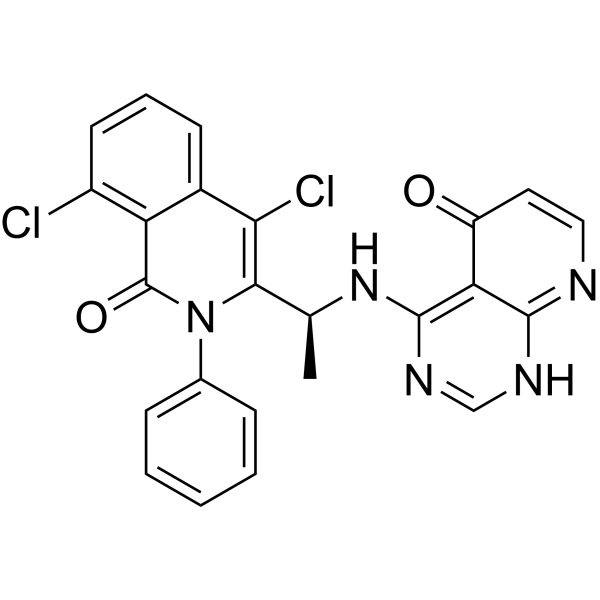 0 ImagesCat. No.: HY-160418CAS No.: 2055765-77-8
-
PI3K/HDAC-IN-2
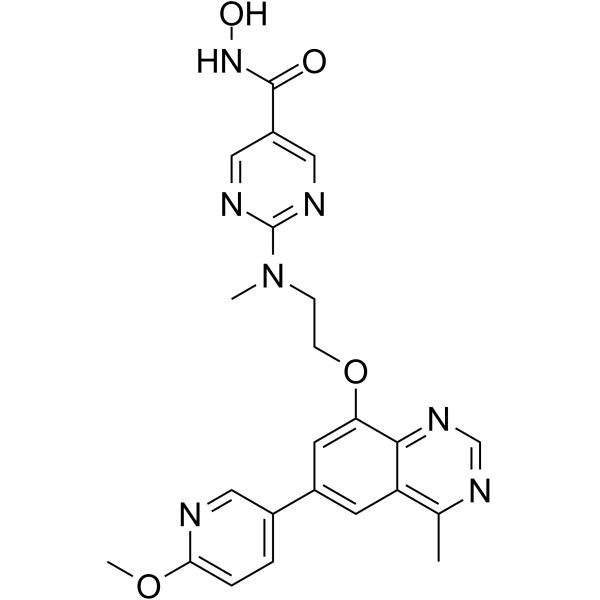 0 ImagesCat. No.: HY-146159CAS No.: 2361418-65-5PI3K/HDAC-IN-2 is a potent dual PI3K/HDAC inhibitor with IC50s of 226 nM, 279 nM, 467 nM, 29 nM for PI3Kα, PI3Kβ, PI3Kγ, PI3Kδ, respectively, and IC50s of 1.3 nM, 3.4 nM, 972 nM, 17 nM, 12 nM for HDAC1, HDAC2, HDC4, HDAC6, HDAC8, respectively. PI3K/HDAC-IN-2 exhibits PI3Kδ and class I and IIb HDAC selectivity. PI3K/HDAC-IN-2 has remarkable anticancer effects.
-
KIM-161
 0 ImagesCat. No.: HY-172964CAS No.: 2559686-28-9KIM-161 is a PIK3CA inhibitor. KIM-161 has significant antiproliferative activity with IC50 values of 1.428 and 1.562 µM against PI3KCA mutant breast cancer MCF7 and T47D cells, respectively. KIM-161 induces apoptosis and cell cycle arrest by inhibiting the PI3K/AKT/mTOR signaling pathway and inducing ROS production. KIM-161 can be used to study breast cancer and its PI3KCA mutant subtypes.
-
PI3K/mTOR Inhibitor-3
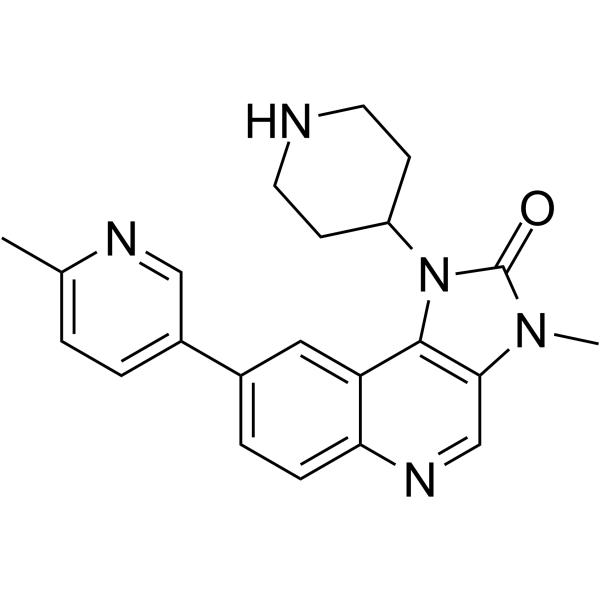 0 ImagesCat. No.: HY-141476CAS No.: 1363338-53-7
-
PI3Kα-IN-31
 0 ImagesCat. No.: HY-182946CAS No.: 3115133-30-4PI3Kα-IN-31 is an orally active and selective PI3Kα inhibitor. PI3Kα-IN-31 shows potent preference for mutant PI3Kα over wild-type PI3Kα. PI3Kα-IN-31 exerts antiproliferative effects in PI3Kα-mutant cancer cells. PI3Kα-IN-31 suppresses tumor growth in xenograft models. PI3Kα-IN-31 can be used for the research of breast cancer.
-
Pabgraminone C
 0 ImagesCat. No.: HY-184119CAS No.: 3061276-55-6Synonyms: IM502Pabgraminone C (IM502) is a Fungal metabolite and PI3Kγ inhibitor with an IC50 of 61.7 nM against PI3Kγ. Pabgraminone C shifts the STAT signaling pathway in cells from an immunosuppressive STAT3/STAT6-dominant profile to an immunostimulatory STAT1/STAT2-dominant profile, driving cells toward a pro-inflammatory phenotype. Pabgraminone C reprograms cells from an immunosuppressive state to an immunostimulatory state, reversing their suppressive effect on anti-tumor immunity. Pabgraminone C inhibits established tumor growth and metastasis across multiple cancer types. Pabgraminone C overcomes resistance to PD-1 checkpoint blockade strategies. Pabgraminone C can be used in research related to liver cancer, melanoma, and colorectal cancer.
-
PI3Kα-IN-5
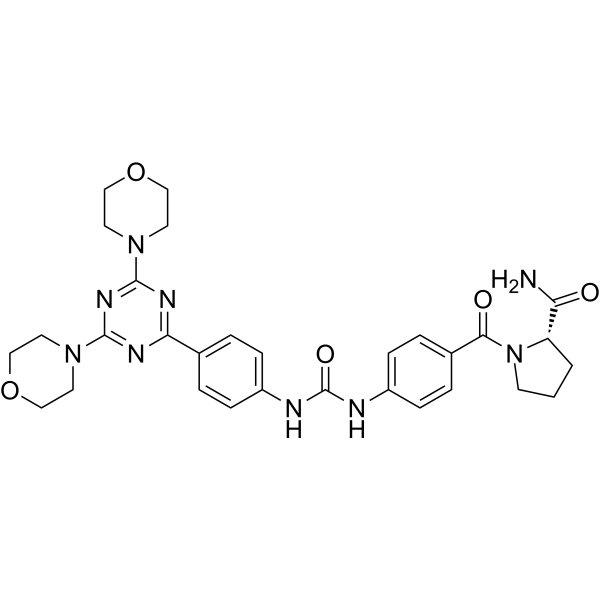 0 ImagesCat. No.: HY-144295CAS No.: 2237953-19-2PI3Kα-IN-5 (compound 6 ab) is a potent PI3Kα/mTOR inhibitor, with an IC50 of 0.7 nM and 3.3 nM, respectively. PI3Kα-IN-5 can be used for the research of colorectal cancer.
-
PI3Kα-IN-29
 0 ImagesCat. No.: HY-179623PI3Kα-IN-29 is a potent, orally active and selective PI3Kα with an IC50 of 2.5 nM. PI3Kα-IN-29 exhibits >400-fold selectivity over PI3Kβ/δ/γ/mTOR. PI3Kα-IN-29 selectively degrades the H1047R mutant p110α protein and inhibits PI3Kα kinase activity. PI3Kα-IN-29 suppresses PI3K/AKT/mTOR signaling, induces G1 arrest, and inhibits migration. PI3Kα-IN-29 inhibits tumor growth in a T47 mouse model. PI3Kα-IN-29 can be used for the research of breast cancer.
-
CRI9
 0 ImagesCat. No.: HY-168609CRI9 inhibits the c-MET/PI3K/Akt/mTOR pathway, suppressing the growth of liver cancer cells. CRI9 shows strong cytotoxicity against HCC cells, inducing apoptosis.
-
SU-11752
 0 ImagesCat. No.: HY-114923CAS No.: 688036-19-3SU-11752 is an inhibitor for DNA-dependent protein kinase (DNA-PK) with an IC50 of 0.13 μM. SU-11752 inhibits PI3K p110γ kinase with IC50 of 1.1 μM. SU-11752 binds competitively for ATP-site in DNA-PK, results in inhibition of intracellular DNA double-strand break repair and increases the sensitivity of cells to radiotherapy.
-
AZD-7648 (GMP)
 0 ImagesCat. No.: HY-111783GCAS No.: 2230820-11-6AZD-7648 (GMP) is AZD-7648 (HY-111783) produced by using GMP guidelines. GMP small molecules works appropriately as an auxiliary reagent for cell therapy manufacture. AZD-7648 is a potent, orally active, selective DNA-PK inhibitor with an IC50 of 0.6 nM. AZD-7648 induces apoptosis and shows antitumor activity.
-
PF-376304
 0 ImagesCat. No.: HY-107387CAS No.: 851757-93-2PF-376304 is an orally active non-specific class I phosphoinositide 3-kinase (PI3K) inhibitor with an IC50 of 0.197 μM against PI3Kγ. PF-376304 induces dose-dependent glucose and lipid metabolic disorders in rats, causes rapid death at high doses, and leads to metabolic abnormalities that are self-reversible at low doses. PF-376304 is applicable to the research of metabolic and inflammatory diseases.
-
Flupentixol dihydrochloride (Standard)
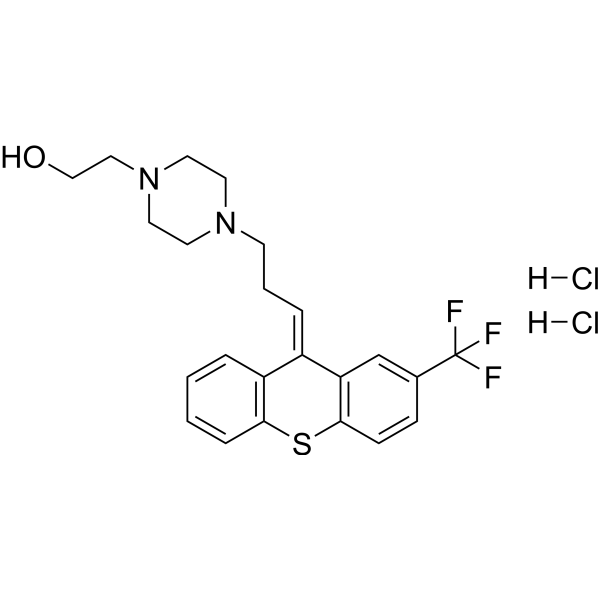 0 ImagesCat. No.: HY-15856BRCAS No.: 2413-38-9Synonyms: Flupenthixol dihydrochloride (Standard)Flupentixol (dihydrochloride) (Standard) is the analytical standard of Flupentixol (dihydrochloride). This product is intended for research and analytical applications. Flupentixol is an orally active D1/D2 dopamine receptor antagonist and new PI3K inhibitor (PI3Kα IC50=127 nM). Flupentixol shows anti-proliferative activity to cancer cells and induces apoptosis. Flupentixol can also be used in schizophrenia, anxiolytic and depressive research.




