



TNF Receptor
Tumor Necrosis Factor Receptor; TNFR
Tumor necrosis factor (TNF) is a major mediator of apoptosis as well as inflammation and immunity, and it has been implicated in the pathogenesis of a wide spectrum of human diseases, including sepsis, diabetes, cancer, osteoporosis, multiple sclerosis, rheumatoid arthritis, and inflammatory bowel diseases.
TNF-α is a 17-kDa protein consisting of 157 amino acids that is a homotrimer in solution. In humans, the gene is mapped to chromosome 6. Its bioactivity is mainly regulated by soluble TNF-α–binding receptors. TNF-α is mainly produced by activated macrophages, T lymphocytes, and natural killer cells. Lower expression is known for a variety of other cells, including fibroblasts, smooth muscle cells, and tumor cells. In cells, TNF-α is synthesized as pro-TNF (26 kDa), which is membrane-bound and is released upon cleavage of its pro domain by TNF-converting enzyme (TACE).
Many of the TNF-induced cellular responses are mediated by either one of the two TNF receptors, TNF-R1 and TNF-R2, both of which belong to the TNF receptor super-family. In response to TNF treatment, the transcription factor NF-κB and MAP kinases, including ERK, p38 and JNK, are activated in most types of cells and, in some cases, apoptosis or necrosis could also be induced. However, induction of apoptosis or necrosis is mainly achieved through TNFR1, which is also known as a death receptor. Activation of the NF-κB and MAPKs plays an important role in the induction of many cytokines and immune-regulatory proteins and is pivotal for many inflammatory responses.
TNF Receptor Isoform Specific Products
-
TNF Receptor
(701)
View all products
-
TNFRSF1A/
CD120a (8)View all products
-
TNFRSF3/
CD18 (1)View all products
-
TNFRSF4
(5)
View all products
-
TNFRSF5/
CD40 (142)View all products
-
TNFRSF6/
Fas/ (2)CD95 View all products
-
TNFRSF7/
CD27 (2)View all products
-
TNFRSF8/
CD30 (3)View all products
-
TNFRSF9/
4-1BB/ (3)CD137 View all products
-
TNFRSF10B/
DR5/ (1)CD262 View all products
-
TNFRSF12A/
TWEAK (5)View all products
-
TNFRSF16/
NGF Receptor/ (1)CD271 View all products
-
TNFRSF18/
GITR/ (6)CD357 View all products
All Product Categories
-
TNF Receptor Inhibitors
(903)
View all products
-
TNF Receptor Agonists
(35)
View all products
-
TNF Receptor Antagonists
(25)
View all products
-
TNF Receptor Activators
(80)
View all products
-
TNF Receptor Modulators
(8)
View all products
-
TNF Receptor Inducers
(11)
View all products
-
TNF Receptor Controls
(4)
View all products
-
TNF Receptor Ligands
(2)
View all products
-
TNF Receptor Superfamily Proteins
(282)
View all products
-
TNF Receptor Related Products (1268)
Related Products (1268)

-
Recombinant Proteins (282)
-
Antibodies (23)
-
TNF Receptor Signaling Pathway
-
TNF Receptor Isoform Comparison
-
ONO-AE2-227
 0 ImagesCat. No.: HY-10952CAS No.: 357605-73-3ONO-AE2-227 is an orally active EP4 receptor antagonist. ONO-AE2-227 blocks PGE2-mediated EP4 signaling by competitively antagonizing PGE2-induced cAMP elevation, and binds to EP4/EP3 with mouse Ki values of 2.7/21 nM. ONO-AE2-227 reduces aberrant crypt foci and intestinal polyp development, and inhibits intestinal polyp formation. ONO-AE2-227 enhances LPS-induced TNF-alpha release from human alveolar macrophages by blocking endogenous PGE2, blocks PGE2-induced ICAM-1 expression and leukocyte-endothelial adhesion, and attenuates PGE2-induced monocyte adhesion to brain endothelial cells. ONO-AE2-227 can be used for research on colon cancer.
-
Dichotomine C
 0 ImagesCat. No.: HY-N15708CAS No.: 755036-45-4Synonyms: (R)-(-)-Dichotomine CDichotomine C ((R)-(-)-Dichotomine C) is a β-carboline-type alkaloid with antiallergic effects. Dichotomine C inhibits the release of β-hexosaminidase in RBL-2H3 cells with an IC50 of 62 μM. Dichotomine C inhibits the releases of antigen-IgE-mediated TNF-α and IL-4 in RBL-2H3 cells with IC50s of 19 μM and 15 μM, respectively. Dichotomine C can be used for the study of type I allergic reactions.
-
ONO-4007
 0 ImagesCat. No.: HY-105188ACAS No.: 152646-95-2ONO-4007 is an antitumor lipid A analogue. ONO-4007 exhibits strong antitumor activity in several animal models via intratumoral production of tumor necrosis factor-alpha production (TNF-α). ONO-4007 can be used for the research of cancer.
-
Trifolirhizin (Standard)
 0 ImagesTrifolirhizin (Standard) is the analytical standard of Trifolirhizin. This product is intended for research and analytical applications. Trifolirhizin is a pterocarpan flavonoid isolated from the roots of Sophora flavescens. Trifolirhizin possesses potent tyrosinase inhibitory activity with an IC50 of 506 μM. Trifolirhizin exhibits potential anti-inflammatory and anticancer activities.
-
DN203316
 0 ImagesCat. No.: HY-162963CAS No.: 2982696-04-6Synonyms: PPARδ agonist 11DN203316 (PPARδ agonist 11) is a potent, selective, orally active PPARδ agonist (EC50 = 20 nM) with high selectivity over PPARα and PPARγ. DN203316 suppresses NF-κB-mediated inflammatory signaling, inhibits ferroptosis by upregulating xCT and GPX4, and attenuates STING-TBK1-IRF3-driven fibrogenic responses. DN203316 is useful for research on inflammatory disorders, metabolic dysfunction-associated steatohepatitis (MASH), and liver fibrosis.
-
2-O-Methylatromentin
 0 ImagesCat. No.: HY-N15570CAS No.: 121254-55-52-O-Methylatromentin is an anti-neuroinflammatory agent. 2-O-Methylatromentin shows inhibitory activity on the production of pro-inflammatory cytokines TNF-α, IL-6 and IL-1β in Lipopolysaccharides (HY-D1056) (LPS) -induced BV-2 microglial cells. 2-O-Methylatromentin can be used for the study of neuroinflammatory related diseases.
-
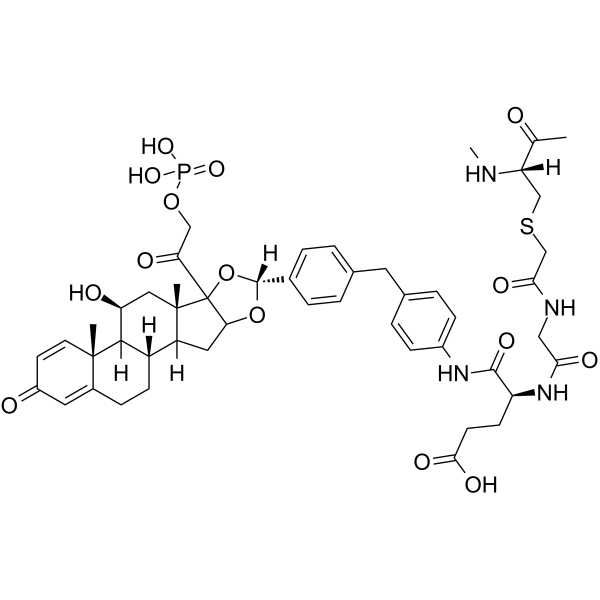
BIIB036
 0 ImagesCat. No.: HY-P991433
-
Anti-CD30L Antibody
 0 ImagesCat. No.: HY-P991909
-
CSF1R-IN-27
 0 ImagesCat. No.: HY-183569CAS No.: 3034296-91-5CSF1R-IN-27 is a CSF1R inhibitor with oral effectiveness, kinome-wide selective profile, low cellular cytotoxicity, and CSF1R IC50 values of 19 nM, 88 nM, 173 nM, 797 nM, 1448 nM, and >3000 nM. CSF1R-IN-27 suppresses M-CSF-induced phosphorylation of CSF1R, AKT, and ERK in macrophages, and inhibits hepatic p-CSF1R/p-AKT/p-ERK signaling. CSF1R-IN-27 reduces serum transaminase levels, improves hepatic histopathology, alleviates inflammatory cell infiltration, and decreases circulating TNF-α and IL-6 levels. CSF1R-IN-27 can be used for the research of acute liver injury.

-
NLRP3-IN-96
 0 ImagesCat. No.: HY-189652CAS No.: 3113161-60-4NLRP3-IN-96 is a blood-brain barrier-penetrant NLRP3 inhibitor with a human Kd value of 556 nM. NLRP3-IN-96 inhibits NLRP3 inflammasome activation, suppresses IL-1β release and reduces NLRP3 expression, and inhibits TNF-α production through an NLRP3-independent pathway. NLRP3-IN-96 can be used for research on neuropathic pain.
-
SYLQDSVPDSFQD
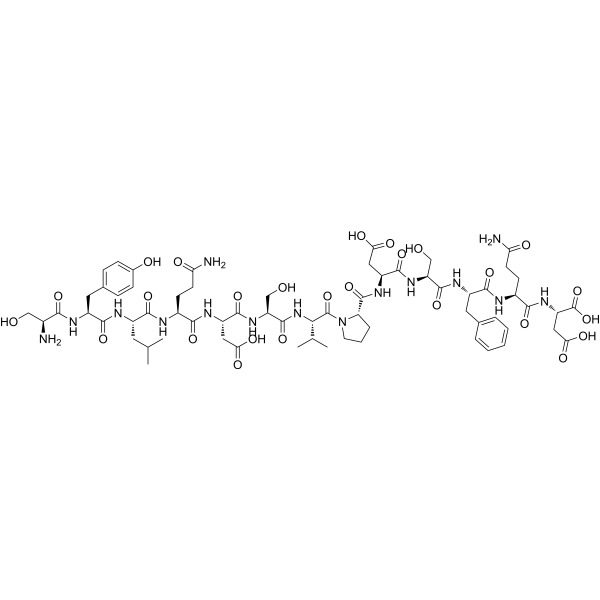 0 ImagesCat. No.: HY-P3639CAS No.: 320341-56-8SYLQDSVPDSFQD, anchor-modified for high-affinity binding to DR4, is a DR4-restricted MHC class II peptide Tyrosinase.
-
JAK05
 0 ImagesCat. No.: HY-170586JAK05 exhibits inhibitory activity against Helicobacter pylori, inhibits strains J63, J196 and J107 with MIC of 3-5 µg/mL. JAK05 exhibits binding affinity to H+/K+-ATPase, COX-1/2, TNF-α and PGE2, reveals antioxidant and anti-inflammatory activities. JAK05 exhibits anti-ulcer activity in rat ethanol-induced gastric ulcer models.
-
Isoquinoline-15N
 0 ImagesCat. No.: HY-W012732S2CAS No.: 769101-49-7Isoquinoline-15N is the 15N-labeled Isoquinoline (HY-W012732). Isoquinoline is an analog of pyridine. Isoquinoline-based alkaloids, such as p-tolyl bisisoquinoline, phthaloyl isoquinoline, and naphthyl isoquinoline, exhibit anticancer activity. Berberine, an isoquinoline alkaloid, exerts anti-inflammatory effects in diabetic mice by downregulating the gene expression ratios of pro-/anti-inflammatory and Th1/Th2 cytokines. Additionally, some isoquinoline-based compounds also possess antidepressant, antibacterial, antimalarial, and anti-HIV activities.
-
MR2938
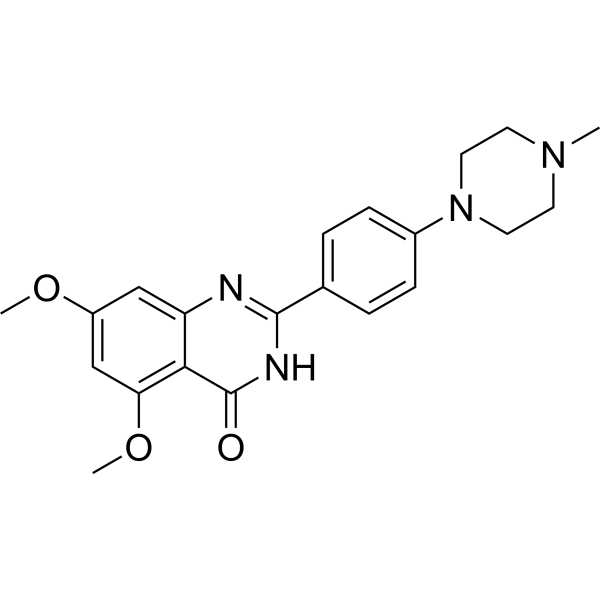 0 ImagesCat. No.: HY-149087CAS No.: 1044870-65-6
-
RNP-11
 0 ImagesCat. No.: HY-187563RNP-11 is a selective COX-2 inhibitor with an IC50 of 42.85 μg/mL against human COX-2, and also acts as a bactericide and anti-inflammatory agent. RNP-11 inhibits the production of pro-inflammatory cytokines (IL-6, TNF-α, IL-1β, disrupts bacterial cell membranes and induces bacterial cell death. RNP-11 exhibits activity against strains of Staphylococcus and Enterococcus, including Methicillin (HY-121544)-resistant Staphylococcus aureus and Vancomycin (HY-B0671)-resistant Enterococcus faecium. RNP-11 reduces the load of Staphylococcus aureus, exerting dual effects of pathogen clearance and inflammatory response alleviation in a mouse skin infection model,. RNP-11 can be used in research related to infections caused by Staphylococcus, Staphylococcus aureus and Enterococcus faecium.
-
Citronellol-d3
 0 ImagesCat. No.: HY-W010201S1Synonyms: (±)-Citronelloll-d3; (±)-β-Citronelloll-d3Citronellol-d3 ( (±)-Citronelloll-d3) is the deuterium labeled Citronellol (HY-W010201). Citronellol ((±)-Citronellol) is an orally active inducer of apoptosis. Citronellol can prevent oxidative stress, mitochondrial dysfunction, and apoptosis in the SH-SY5Y cell Parkinson's disease model induced by 6-OHDA by regulating the ROS-NO, MAPK/ERK, and PI3K/Akt signaling pathways. Citronellol can induce necroptosis in human lung cancer cells through the TNF-α pathway and accumulation of ROS. Citronellol can reduce the levels of LC-3 and p62 to regulate the autophagy pathway, inhibit oxidative stress and neuroinflammation, and thus have neuroprotective effects on Parkinson's rats. Citronellol exhibits anti-fungal activity against Trichophyton rubrum by inhibiting ergosterol synthesis.
-
LY 303511 dihydrochloride
 0 ImagesCat. No.: HY-15643BCAS No.: 854127-90-5LY 303511 dihydrochloride is a structural analogue of LY294002. LY 303511 dihydrochloride does not inhibit PI3K. LY 303511 dihydrochloride enhances TRAIL sensitivity of SHEP-1 neuroblastoma cells. LY 303511 dihydrochloride reversibly blocks K+ currents (IC50=64.6±9.1 μM) in MIN6 insulinoma cells.
-
1-(3-Carboxypropyl)-3,7-dimethylxanthine
 0 Images1-(3-Carboxypropyl)-3,7-dimethylxanthine is the major circulating oxidative carboxylation metabolite of Pentoxifylline (HY-B0715). 1-(3-Carboxypropyl)-3,7-dimethylxanthine protects fibrosarcoma cells against the cytotoxic effect of TNF-α.




