



Mitochondrial Metabolism
Mitochondria use multiple carbon fuels to produce ATP and metabolites, including pyruvate, which is generated from glycolysis; amino acids such as glutamine; and fatty acids. These carbon fuels feed into the TCA cycle in the mitochondrial matrix to generate the reducing equivalents NADH and FADH2, which deliver their electrons to the electron transport chain. Mitochondria are complex organelles that play an important role in many facets of cellular function, from metabolism to immune regulation and cell death. Mitochondria are actively involved in a wide variety of cellular processes and molecular interactions, such as calcium buffering, lipid flux, and intracellular signaling. It is increasingly recognized that mitochondrial dysfunction is a hallmark of many diseases such as obesity/diabetes, cancer, cardiovascular and neurodegenerative diseases. Mitochondrial metabolism is a key determinant of tumor progression by impacting on functions such as epithelial-to-mesenchymal transition. Mitochondrial metabolism and derived oncometabolites shape the epigenetic landscape to alter aggressiveness features of cancer cells. Changes in mitochondrial metabolism are relevant for the survival of tumors in response to therapy.
All Product Categories
-
Mitochondrial Metabolism Related Products (635)
Related Products (635)

-
Antibodies (52)
-
Related Compound Screening Libraries (2)
-
Buforin IIb
 0 ImagesCat. No.: HY-P12127CAS No.: 233273-63-7Synonyms: BF2-BBuforin IIb (BF2-B) is an anticancer peptide, as well as an Antibacterial and Antifungal agent. Buforin IIb is derived from histone H2A. Buforin IIb activates SAPK/JNK and p38 MAPK. Buforin IIb induces mitochondria-dependent Apoptosis. Buforin IIb achieves selective targeting by interacting with gangliosides on the surface of cancer cells, and can penetrate cancer cell membranes without causing damage. Buforin IIb exhibits antibacterial activity against Gram-negative bacteria, Gram-positive bacteria and fungi. Buforin IIb can be used in the research of cervical cancer, as well as cancers including leukemia, central nervous system cancer, ovarian cancer, breast cancer, melanoma, colon cancer, non-small cell lung cancer, renal cancer and prostate cancer.
-
Pizotifen hydrochloride
 0 ImagesCat. No.: HY-B0115BCAS No.: 73391-87-4Synonyms: Pizotyline hydrochloride; BC-105 hydrochloridePizotifen hydrochloride (Pizotyline hydrochloride) is a 5-HT2 receptor antagonist. Pizotifen hydrochloride inhibits the Wnt/β-catenin-EMT signaling pathway and induces mitochondria-mediated Apoptosis. Pizotifen hydrochloride causes transient ERK1/2 phosphorylation and restores ATP. Pizotifen hydrochloride blocks Serotonin (HY-B1473A)-mediated platelet activation, inhibits Serotonin-enhanced ADP-induced platelet aggregation, and prolongs carotid artery occlusion and tail bleeding time. Pizotifen hydrochloride exhibits anticancer activity against gastric cancer and colon cancer. Pizotifen hydrochloride exerts neuroprotective effects in the striatum of R6/2 mice. Pizotifen hydrochloride can be used for research on gastric cancer, colon cancer, Huntington's disease, metastasis, and thromboembolic diseases.
-
3-Methylglutaric acid (Standard)
 0 ImagesCat. No.: HY-113410RCAS No.: 626-51-73-Methylglutaric acid (Standard) is the analytical standard of 3-Methylglutaric acid (HY-113410). This product is intended for research and analytical applications. 3-Methylglutaric acid is a non-selective inhibitor of mitochondrial function and Na+, K+-ATPase, with an inhibition rate of 30% on rat cortical synaptosomal Na+, K+-ATPase. 3-Methylglutaric acid can induce reactive oxygen species (ROS) generation, thereby causing oxidative damage and inhibiting mitochondrial redox potential and ion pump function of cell membranes. 3-Methylglutaric acid can be used to study the neuropathological mechanisms of metabolic diseases and the role of oxidative stress-mediated neuronal damage in neurodegeneration.
-
(E)-Ethyl p-methoxycinnamate (Standard)
 0 Images(E)-Ethyl p-methoxycinnamate (Standard) is the analytical standard of (E)-Ethyl p-methoxycinnamate. This product is intended for research and analytical applications. (E)-Ethyl p-methoxycinnamate is a natural product found in Kaempferia galangal with anti-inflammatory, anti-neoplastic and anti-microbial effects. (E)-Ethyl p-methoxycinnamate inhibits COX-1 and COX-2 in vitro with IC50s of 1.12 and 0.83 μM, respectively.
-
Aurora kinase/ALK-IN-1
 0 ImagesCat. No.: HY-183767Aurora kinase/ALK-IN-1 is a dual Aurora A kinase and ALK inhibitor with IC50 values of 0.296 μM and 0.332 μM, respectively. Aurora kinase/ALK-IN-1 induces G2/M cell cycle arrest, triggers mitochondrial apoptosis, elevates intracellular reactive oxygen species (ROS) levels, and inhibits ALDH1 activity. Aurora kinase/ALK-IN-1 demonstrates cytotoxicity and tumor selectivity. Aurora kinase/ALK-IN-1 can be used for the research of anaplastic large cell lymphoma.
-
BJH-86
 0 ImagesCat. No.: HY-178987CAS No.: 3067849-10-6BJH-86 is a soluble mitochondrial complex 1 inhibitor (oxygen consumption rate inhibition IC50 = 5 μM). BJH-86 exhibits weak inhibitory activity against phosphodiesterase 10A (PDE10A) (IC50 >10 μM). BJH-86 can reduce cellular oxygen consumption and inhibit cancer cell proliferation. BJH-86 can be used for the research of cancer, such as lung cancer.
-
PI3K/mTOR-IN-19
 0 ImagesCat. No.: HY-179155PI3K/mTOR-IN-19 is an orally active, potent, selective PI3K (IC50 = 4.23 nM) and mTOR (IC50 = 2.3 nM) inhibitor. PI3K/mTOR-IN-19 significantly inhibits Eca109 cell viability and induces apoptosis. PI3K/mTOR-IN-19 causes G0/G1 cell cycle arrest, decreased mitochondrial membrane potential, and demonstrates marked telomerase inhibitory activity. PI3K/mTOR-IN-19 modulates the expression of key apoptotic regulators (Bcl-2, Bax, and p53) and downregulates the PI3K/Akt/mTOR signaling pathway. PI3K/mTOR-IN-19 can be used for the study of esophageal cancer.

-
TrxR1-IN-B19
 0 ImagesCat. No.: HY-120914CAS No.: 170950-29-5Synonyms: GO-Y015TrxR1-IN-B19 (GO-Y015) is a Curcumin (HY-N0005) derivative and TrxR1 inhibitor. TrxR1-IN-B19 inhibits de novo selenoprotein synthesis, suppresses SeP and GPx expression, and impairs selenium incorporation into Sec-tRNA[Sec]. TrxR1-IN-B19 induces Nrf2 accumulation through Keap1 cysteine modification, HO-1 expression, GSH synthesis, ROS accumulation, ER stress, mitochondrial dysfunction, Apoptosis, and G2/M phase arrest. TrxR1-IN-B19 improves glucose tolerance and insulin sensitivity, lowers blood glucose, inhibits tumor growth, and reduces arsenic accumulation. TrxR1-IN-B19 can be used for research on type 2 diabetes, arsenite-induced toxicity, and gastric cancer.
-
Ferroptosis/apoptosis inducer-5
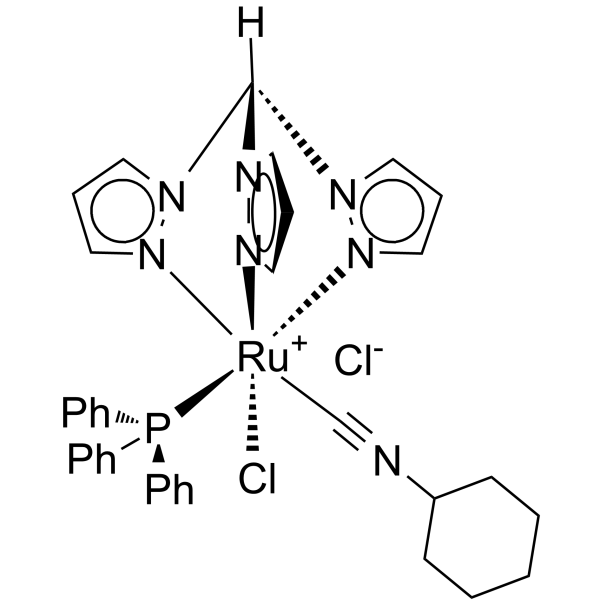
 0 ImagesCat. No.: HY-183791ACAS No.: 2243423-32-5Ferroptosis/apoptosis inducer-5 is an orally active inducer of Ferroptosis and Apoptosis. Ferroptosis/apoptosis inducer-5 downregulates GPX4, upregulates ACSL4, promotes ROS production, activates the Caspase cascade, induces Mitochondrial dysfunction, and alters the Bcl-2/Bax balance. Ferroptosis/apoptosis inducer-5 significantly inhibits tumor growth in a pancreatic cancer xenograft mouse model. Ferroptosis/apoptosis inducer-5 can be used for the research of pancreatic cancer.

-
Oltipraz metabolite M2
 0 ImagesCat. No.: HY-134998CAS No.: 84201-40-1Oltipraz metabolite M2, an active metabolite of Oltipraz (HY-12519), is an orally active HIF-1α inhibitor. Oltipraz metabolite M2 increases mitochondrial fuel oxidation and inhibits lipogenesis in the liver by dually activating AMPK in high-fat diet (HFD)-fed mice. Oltipraz metabolite M2 can be used for hepatic steatosis and steatohepatitis research.
-
Antiproliferative agent-12
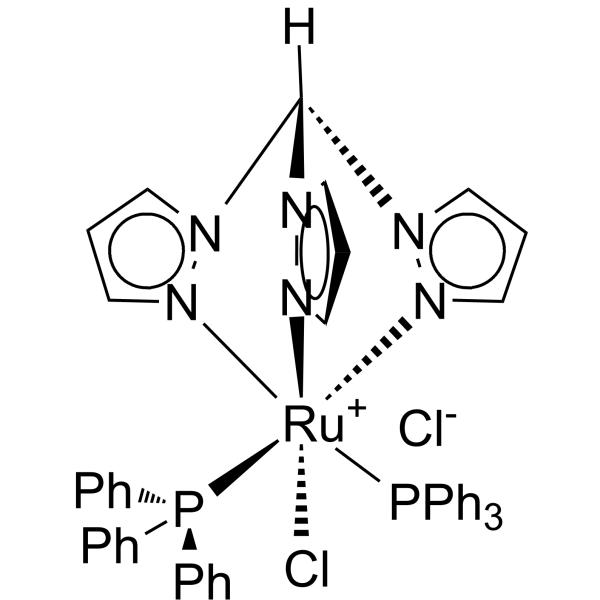 0 ImagesCat. No.: HY-150969CAS No.: 362589-95-5Antiproliferative agent-10 (compound 1) is an anti-tumour ruthenium(II)-tris-pyrazolylmethane complex that inhibits the growth of cancer cells by inhibiting mitochondrial calcium uptake.
-
Rotenone-d3
 0 ImagesCat. No.: HY-B1756SCAS No.: 82092-80-6
-
Ro 23-7553
 0 ImagesCat. No.: HY-106396CAS No.: 118694-43-2Ro 23-7553 is a mitochondrial inhibitor. Ro 23-7553 promotes chondrocyte differentiation at physiological concentrations, while supraphysiological concentrations inhibit both proliferation and differentiation. Ro 23-7553 can be used for the study of cancer.
-
d-KLA Peptide-d30
 0 ImagesCat. No.: HY-P10285SSynonyms: D-(KLAKLAK)2-d30d-KLA Peptide (D-(KLAKLAK)2)-d30 is the deuterium labeled d-KLA Peptide (HY-P10285). d-KLA Peptide, KLA peptide (HY-P5345) isomer, is a pro-apoptosis peptide. d-KLA Peptide can specifically target mitochondria and induce apoptosis by destroying the mitochondrial membrane. d-KLA Peptide increases caspase 3/7 activity, exerts proapoptotic activity and enhances antitumor efficacy in mouse melanoma models.
-
KRAS G13D-IN-2
 0 ImagesCat. No.: HY-179452KRAS G13D-IN-2 (compound 8B) is a potent orally active KRAS G13D inhibitor with IC50 values of 1.95 μM (HCT-116G13D) and 2.16 μM (HCT-15G13D). KRAS G13D-IN-2 induces G1-phase arrest and mitochondrial membrane depolarization. KRAS G13D-IN-2 induces senescence through CDK6/TWIST1 inhibition. KRAS G13D-IN-2 inhibits tumor growth in murine models. KRAS G13D-IN-2 can be used for KRASG13D-mutant colorectal cancer research.
-
OXPHOS-IN-2
 0 ImagesCat. No.: HY-176284OXPHOS-IN-2 is an orally active OXPHOS inhibitor. OXPHOS-IN-2 exhibits potent inhibitory activity in PC9 (IC50 = 12.3 nM) and Bxpc-3 cells (IC50 = 250 nM in glucose medium, IC50 = 17.5 nM in galactose medium). OXPHOS-IN-2 decreases the NADH/NAD+ ratio and reduces ATP levels. OXPHOS-IN-2 induces tumor cells apoptosis by activating reactive oxygen species (ROS) and downregulating the level of Nrf2. OXPHOS-IN-2 can be used for research on cancer such as non-small cell lung cancer and pancreatic cancer.
-
SSR180575
 0 ImagesCat. No.: HY-W436366CAS No.: 220448-02-2SSR180575 is a specific and potent peripheral benzodiazepine receptor ligand. SSR180575 irreversibly and specifically binds with high affinity on rat heart mitochondria (Kd = 1.95 nM). SSR180575 can be used in the research of cardiovascular diseases.




