



Reactive Oxygen Species (ROS) Inducer
-
CDK6-IN-2
 0 ImagesCat. No.: HY-181483
CDK6-IN-2 is a CDK6 covalent inhibitor with an IC50 of 0.013 μM. CDK6-IN-2 inhibits the proliferation and migration of triple-negative breast cancer cells, and induces cell cycle arrest and apoptosis. CDK6-IN-2 induces ROS accumulation and mitochondrial damage through cellular metabolic reprogramming. CDK6-IN-2 exhibits anti-tumor activity and can be used for the research of triple-negative breast cancer.
-
20-5,14-HEDE-d2-2
 0 ImagesCat. No.: HY-160099S2Synonyms: WIT003-d2-2
20-5,14-HEDE-d2 (WIT003-d2) is the deuterated-labeled 20-5,14-HEDE (HY-160099). 20-5,14-HEDE (WIT003) is an analog of 20-HETE. 20-5,14-HEDE activates PI3K/Akt signaling pathway, thereby exhibiting anti-apoptotic and cell survival promoting effects. 20-5,14-HEDE is the agonist for 20-HETE that increases intracellular Ca2+ concentrations, thereby enhancing vasoconstriction.
-
PROTAC Tubulin degrader-2
 0 ImagesCat. No.: HY-181143
PROTAC Tubulin degrader-2 is a cereblon (CRBN)-dependent α/β-tubulin PROTAC degrader with DC50 values of 1.73 μM and 1.38 μM. PROTAC Tubulin degrader-2 can inhibit cancer cells proliferation and migration. PROTAC Tubulin degrader-2 can induce G2/M arrest, apoptosis, ROS accumulation. PROTAC Tubulin degrader-2 can be used for the research of cancer, such as non-small-cell lung cancer.
-
Antibacterial agent 207
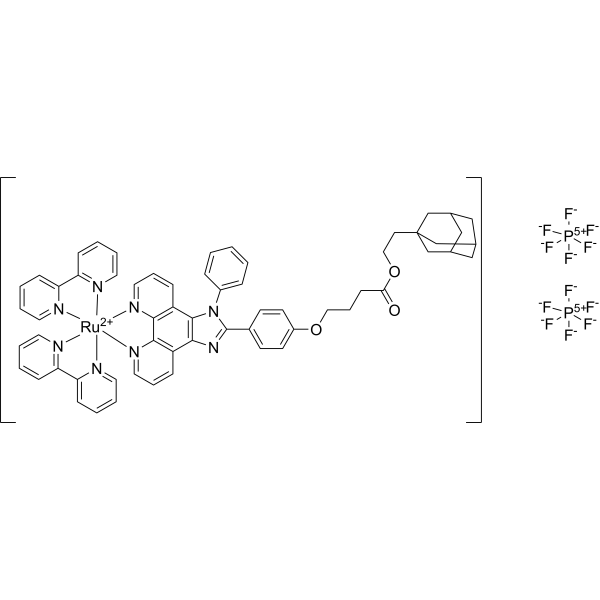 0 ImagesCat. No.: HY-162451
Antibacterial agent 207 (Compound Ru1) has antibacterial activity against S. aureus (MIC: 1 μg/mL), and low resistance frequencies. Antibacterial agent 207 destroys the bacterial cell membrane, promote production of ROS in bacteria.
-
CHNQD-01426
 0 ImagesCat. No.: HY-177268CAS No.: 2673232-30-7
CHNQD-01426 (Compound 4a) is an anticancer agent. CHNQD-01426 has cytotoxic activities against cancer cells. CHNQD-01426 significantly inhibits hepatocellular carcinoma cells proliferation via arresting S and G2/M phase cell cycle and induces apoptosis by inducing ROS production and elevating apoptosis-related proteins expression. CHNQD-01426 potently inhibits tumor growth in HepG2 xenograft mice model.
-
IKKβ-IN-7
 0 ImagesCat. No.: HY-181837CAS No.: 3117527-92-8
IKKβ-IN-7 is an IKKβ inhibitor with an IC50 value of 9.44 μM. IKKβ-IN-7 induces DNA damage, S-phase cell cycle arrest, ROS accumulation, mitochondrial membrane potential loss, and apoptosis. IKKβ-IN-7 inhibits phosphorylation of p65 and IκBα, suppresses p65 nuclear translocation, and regulates NF-κB-controlled genes. IKKβ-IN-7 suppresses tumor growth in xenograft models and shows activity against colorectal cancer with low normal cell cytotoxicity. IKKβ-IN-7 can be used for the research of colorectal cancer.
-
Nitrovin
 0 ImagesCat. No.: HY-W504391CAS No.: 804-36-4Synonyms: Difurazon
Nitrovin (Difurazon) is an orally active inhibitor of thioredoxin reductase 1 (TrxR1) with both antibacterial and anticancer activities. Nitrovin induces ROS generation and endoplasmic reticulum stress by targeting and inhibiting TrxR1, which in turn induces cytoplasmic vacuolation, activates MAPK, and inhibits Alix. Nitrovin induces paraptosis-like non-apoptotic cell death, thereby exerting significant cytotoxicity against cancer cells. Nitrovin is used for research on glioblastoma, liver cancer, and bacterial infections.
-
Anticancer agent 42
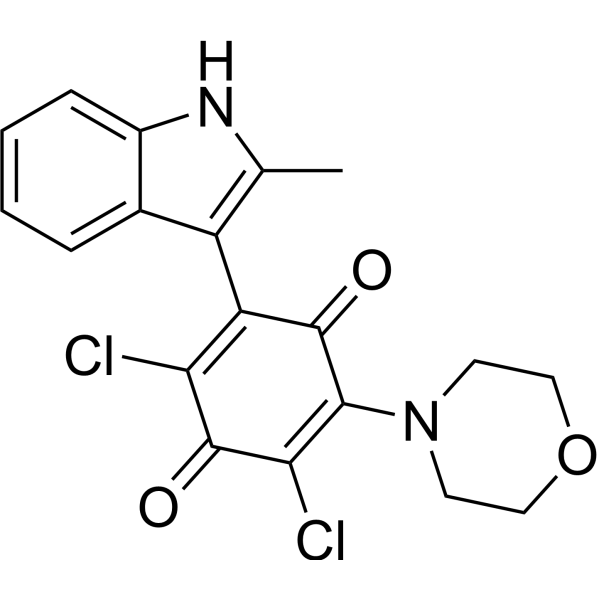 0 ImagesCat. No.: HY-146516CAS No.: 2687265-18-3
Anticancer agent 42 (compound 10d) is an orally active anticancer agent, and shows a potent antitumor activity against MDA-MB-231 cell with an IC50 of 0.07 μM. Anticancer agent 42 can exert its anticancer activity by activating apoptotic pathway and p53 expression. Anticancer agent 42 can be used to study metastatic breast cancer.
-
CAIX/XII/NAMPT-IN-1
 0 ImagesCat. No.: HY-181350
CAIX/XII/NAMPT-IN-1 is a triple inhibitor of carbonic anhydrase IX/XII and nicotinamide phosphoribosyltransferase (NAMPT) with a hCA IX Ki of 78.1 nM, hCA XII Ki of 64.4 nM, and hNAMPT IC50 of 168 nM. CAIX/XII/NAMPT-IN-1 induces apoptosis, ROS accumulation, suppresses ERK/AKT signaling, inhibits DNA synthesis, and causes mitochondrial dysfunction. CAIX/XII/NAMPT-IN-1 exerts antiproliferative effects against multiple cancer cells under normoxic and hypoxic conditions. CAIX/XII/NAMPT-IN-1 can be used for the research of cancer, such as renal carcinoma, glioblastoma and colorectal cancer.
-
Calcium propionate, meets analytical specification of E282
 0 Images
Calcium propionate, meets analytical specification of E282 (Bioban-C, meets analytical specification of E282) is a calcium salt of Propionic acid with oral activity, which can be hydrolyzed into propionate and calcium ions. Calcium propionate, meets analytical specification of E282 elevates intracellular ROS levels in tumor cells, depletes GSH, reduces mitochondrial membrane potential, and thereby induces tumor cell apoptosis. In mouse colitis models, Calcium propionate, meets analytical specification of E282 modulates inflammatory factors such as IFN-γ, calprotectin, and Pglyrp3, ameliorating intestinal inflammation and metabolic disorders. In ruminants, Calcium propionate, meets analytical specification of E282 serves as a gluconeogenic precursor, regulating rumen fermentation and microbial diversity; in high-fat diet rats, it alters gut microbiota composition and affects blood biochemical parameters. Calcium propionate, meets analytical specification of E282 is commonly used as a food and feed additive, and is also used in research related to hypocalcemia, dyslipidemia, colitis, and lung cancer.
-
QD 232
 0 ImagesCat. No.: HY-120825CAS No.: 1527467-32-8
QD 232 is a quinazolinedione-based ROS inducer and an apoptosis inducer with cytotoxicity and redox regulatory activity. QD 232 promotes ROS accumulation, activates the NRF2-mediated oxidative stress response and unfolded protein response pathways, and upregulates downstream antioxidant and stress response genes. QD 232 inhibits mtDNA transcription driven by HSP2 and LSP promoters, and impairs mitochondrial oxidative phosphorylation function. QD 232 induces apoptosis of pancreatic ductal adenocarcinoma cells and exerts cytotoxicity against gemcitabine (HY-17026)-resistant pancreatic ductal adenocarcinoma cells. QD 232 delays tumor growth in a mouse pancreatic cancer xenograft model.
-
Pegtarazimod TFA
 0 ImagesCat. No.: HY-P10868ASynonyms: RLS-0071 TFA
Pegtarazimod TFA (RLS-0071 TFA) is a dual-target anti-inflammatory peptide that exerts its effects by simultaneously regulating the complement system and neutrophil-associated inflammatory pathways. Pegtarazimod TFA reduces ROS production both in vitro and in vivo, and decreases the level of neutrophil elastase, a marker of neutrophil extracellular traps (NETs), in vivo, thereby alleviating inflammatory responses. Pegtarazimod TFA significantly improves the survival rate of mice in multiple in vivo models of acute graft-versus-host disease (aGVHD). Pegtarazimod TFA inhibits the activation of the C1 complex, reduces the herpes zoster-like spread of herpes simplex virus type 1 skin infection, and improves the survival rate of infected mice. Pegtarazimod TFA can be used in research related to acute graft-versus-host disease, acute pulmonary diseases, and skin herpes simplex virus type 1 infection.
-
JRN73958
 0 ImagesCat. No.: HY-182236CAS No.: 171773-95-8Synonyms: Reduced scytonemin
JRN73958 (Reduced scytonemin) is a PI3K/Akt, MAPK, and NF-κB inhibitor found in Nostoc commune. JRN73958 inhibits nitric oxide production, induce reactive oxygen species (ROS) generation, and lead to autophagy. JRN73958 decreases LPS (HY-D1056)/IFNγ-induced PI3K/Akt, MAPK, and NF-κB activity. JRN73958 can be used for the research of leukemia.
-
IR-251
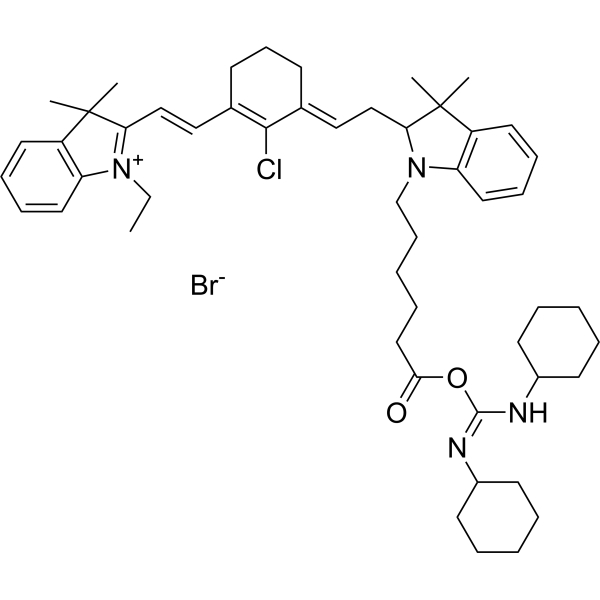 0 ImagesCat. No.: HY-155062
IR-251 is a mitochondrion-targeting NIR fluorescent probe. IR-251 targets mitochondria via OATPs and causes mitochondrial damage in tumor cells. IR-251 IR-251 induced ROS overproduction by inhibiting PPARγ, and then inhibiting the β-catenin signaling pathway and downstream protein molecules related to the cell cycle and metastasis. IR-251 inhibits tumor proliferation and metastasis.
-
Lenoremycin
 0 ImagesCat. No.: HY-129694CAS No.: 51257-84-2Synonyms: Ro 21-6150; Antibiotic A-130-A
Lenoremycin (Ro 21-6150) is a microbial metabolite. Lenoremycin decreases β-catenin and cyclin D1 proteins levels. Lenoremycin decreases cancer stem cells (CSCs) populations via inducing reactive oxygen species production.
-
PB1-3
 0 ImagesCat. No.: HY-189384CAS No.: 113062-58-1
PB1-3 is an orally active CDK4/CDK6 inhibitor with selective antiproliferative activity against 4T1 and MCF-7 breast cancer cells. PB1-3 directly binds to CDK4 and CDK6, downregulates total protein expression, reduces Rb phosphorylation, and induces G0/G1 phase arrest. PB1-3 induces ROS accumulation, mitochondrial membrane potential collapse, initiation of mitochondria-mediated intrinsic apoptosis, upregulation of the Bax/Bcl-2 ratio, and activation of cleaved caspase-3. PB1-3 inhibits tumor growth in a 4T1 orthotopic syngeneic mouse model. PB1-3 can be used for research related to triple-negative breast cancer.
-
HBT-CUR
 0 ImagesCat. No.: HY-189294CAS No.: 2894038-40-3
HBT-CUR is a lysosome-targeted and polarity-responsive tumor photosensitizer. HBT-CUR generates singlet oxygen under light irradiation. HBT-CUR induces photodynamic apoptosis through oxidative stress. As a polarity-sensitive NIR fluorescent probe, HBT-CUR distinguishes tumor cells and tissues from normal ones. HBT-CUR enables tumor-specific in vivo fluorescence imaging with rapid response and long-lasting duration. HBT-CUR is used for breast cancer research.
-
Anticancer agent 15
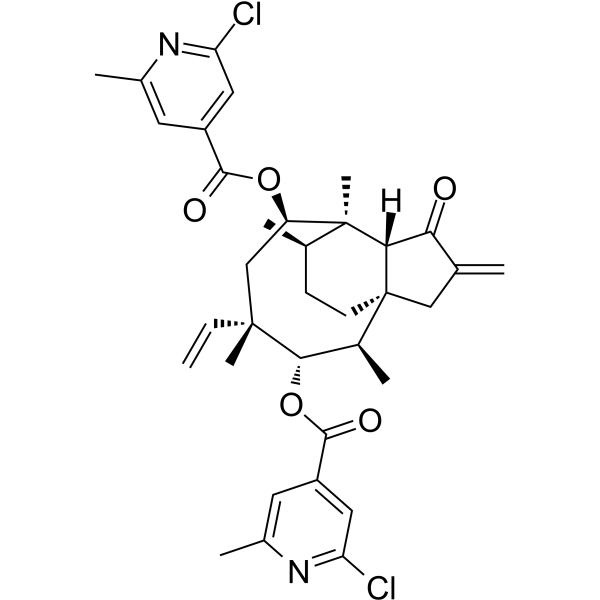 0 ImagesCat. No.: HY-139860CAS No.: 2710312-73-3
Anticancer agent 15 is capable of significantly increasing the cellular level of ROS and inducing melanoma cancer cell death via necroptosis.
-
Nirtetralin
 0 ImagesCat. No.: HY-187042CAS No.: 50656-78-5
Nirtetralin is a lignan. Nirtetralin can be isolated from Phyllanthus urinaria, Phyllanthus virgatus Forst. f., and Phyllanthus niruri L. Nirtetralin undergoes metabolic activation to generate active intermediates, such as nitroalkene ions and nitroso compounds, which can form DNA adducts and induce DNA damage. Nirtetralin induces ROS production in cells. Nirtetralin blocks the epithelial-mesenchymal transition process of cancer cells by altering the expression of related markers. Nirtetralin inhibits the production of HBsAg and HBeAg. Nirtetralin exhibits anticancer activity against oral squamous cell carcinoma. Nirtetralin can be used in studies of oral squamous cell carcinoma and hepatitis B virus infection.
-
GPX4-IN-21
 0 ImagesCat. No.: HY-180199CAS No.: 3014384-72-3
GPX4-IN-21 (Compound 4d) is a selective glutathione peroxidase 4 (GPX4) inhibitor. GPX4-IN-21 can induce ferroptosis and downregulate the ferroptosis-related proteins SLC7A11, SLC11A2 and GPX4 levels. GPX4-IN-21 can induce ROS and MDA accumulation GPX4-IN-21 exhibits potent anti-proliferative activity. GPX4-IN-21 can be used for the research of cancer, such as melanoma.



