



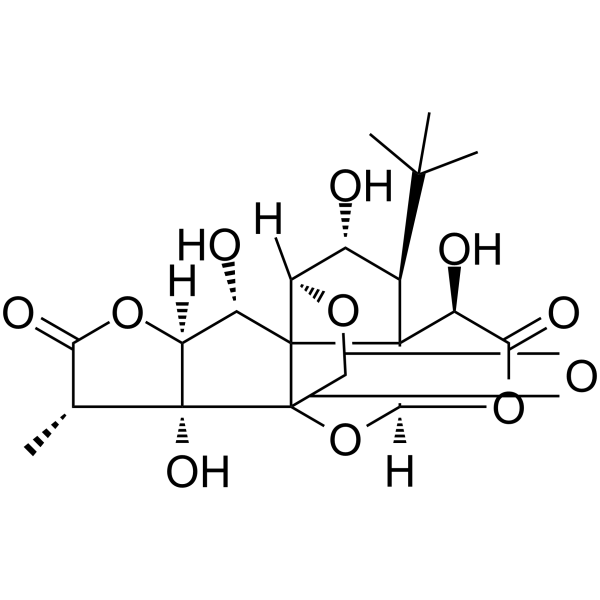
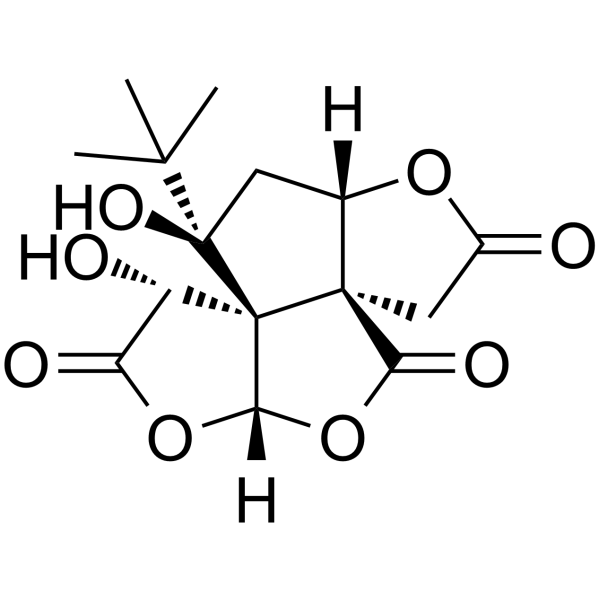
Ginkgolide C
Based on 2 publication(s) in Google Scholar
Ginkgolide C is a flavone isolated from Ginkgo biloba leaves, possessing multiple biological functions, such as decreasing platelet aggregation and ameliorating Alzheimer disease.
Nur für Forschungszwecke. Wir verkaufen nicht an Patienten.
- Reinheit: 99.67%
- CAS. Nr.: 15291-76-6
- Formel: C20H24O11
- Molecular Weight:440.40
-
Speicherung:Powder -20°C, 3 years , 4°C, 2 years ; In solvent -80°C, 2 years , -20°C, 1 year

To place orders, for customer services and technical support, please contact: MedChemExpress USA
Tel: 609-228-6898 E-mail: [email protected] [email protected]


-
 Biologische Aktivität
-
Chemical Information
-
Lösungsmittel & Löslichkeit
- Protokoll
- Reinheit & Dokumentation
- Verweise
-
 Help & FAQs



![[6]-Gingerol](https://file.medchemexpress.com/product_pic/hy-14615.gif)
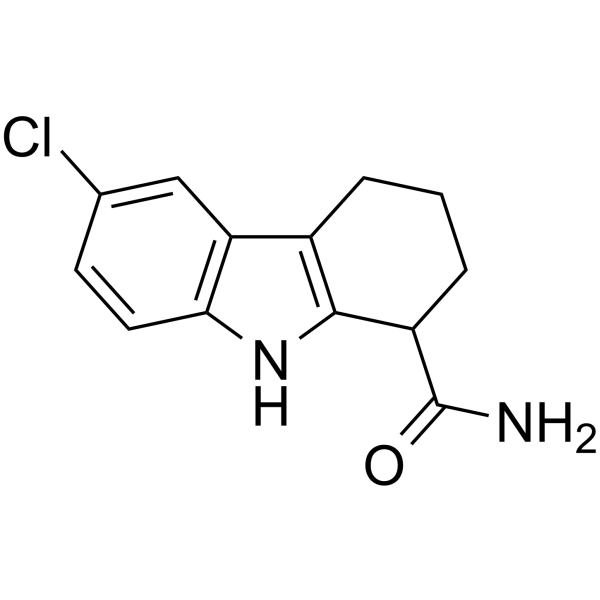
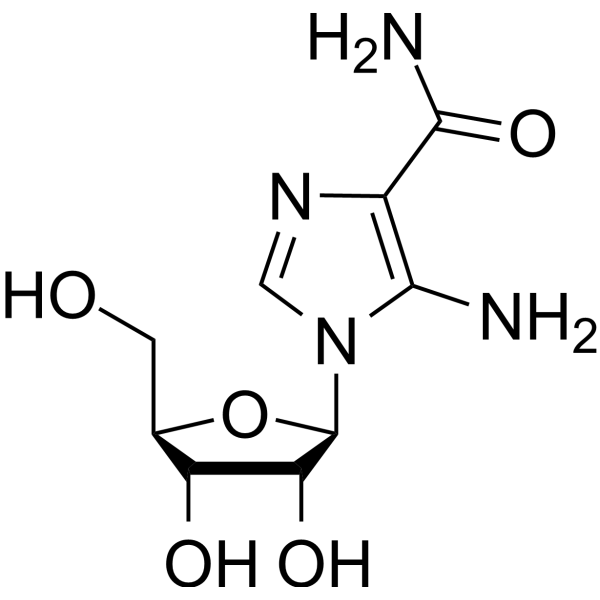
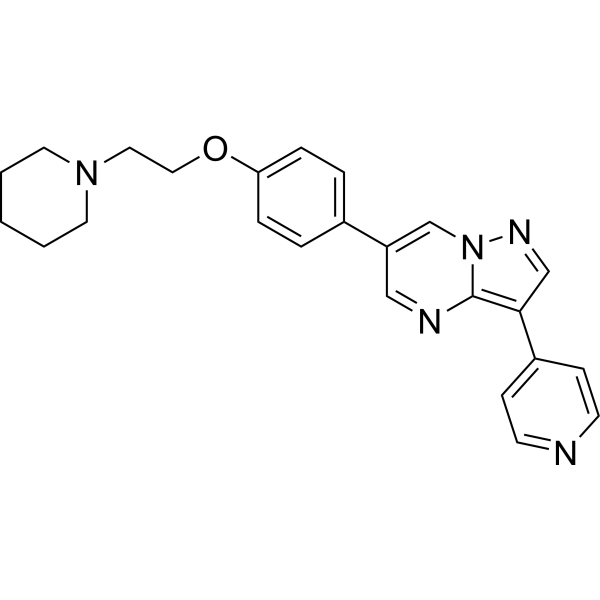
Publications Citing Use of MedChemExpress (MCE) Ginkgolide C
MoreAlle AMPK Isoform-spezifische Produkte anzeigen
MoreAlle Endogenous Metabolite Isoform-spezifische Produkte anzeigen
More

Biologische Aktivität
|
AMPK |
MMP-9 |
Sirtuin |
Ginkgolide C (3-100 μM) has no significant effect on 3T3-L1 cell viability, but suppresses adipogenesis in 3T3-L1 cells followling 24 h treatment. Ginkgolide C (10-100 μM) significantly suppresses lipid accumulation compared with the control group and also significantly promotes glycerol release in 3T3-L1 adipocytes. Ginkgolide C suppresses PPAR-α and PPAR-γ expression and decreases C/EBPα, C/EBPβ, and SREBP-1c expression in differentiated 3T3-L1 adipocytes. In addition, Ginkgolide C (3-100 μM) suppress adipogenesis-related protein (FAS, LPL, and aP2) and mRNA expression in a dose-dependent manner in differentiated 3T3-L1 adipocytes. Ginkgolide C (3-100 μM) also significantly promotes Sirt1 production and increases phosphorylation of AMPKα and ACC-1 in a concentration-dependent manner[1]. Ginkgolide C (1, 10, 50, 100, 500 mM) significantly reduces the collagen (10 mg/mL)-stimulated rat platelet aggregation in a dose-dependent manner. Ginkgolide C (50, 100 mM) causes pro-MMP-9 (92-kDa) to form an activated MMP-9 (86-kDa) in collagen-stimulated platelets[2].
MedChemExpress (MCE) has not independently confirmed the accuracy of these methods. They are for reference only.


Chemical Information
-
CAS. Nr. 15291-76-6
-
Appearance Solid
-
Molecular Weight 440.40
-
Formel C20H24O11
-
Color White to off-white
-
SMILES
O=C1[C@H](O)[C@]23C4([C@H](O5)[C@H](O)[C@H]3C(C)(C)C)[C@H](O)[C@@]6([H])[C@@]([C@H](C)C(O6)=O)(O)[C@]4(C5=O)O[C@]2([H])O1
-
Synonyms
BN-52022
-
Structure Classification
-
Initial Source
-
Versand
Room temperature in continental US; may vary elsewhere.
-
Speicherung
Powder -20°C 3 years 4°C 2 years In solvent -80°C 2 years -20°C 1 year


Publications (2)
-
Journal Impact Factor
-
Most Recent
-
Adv Healthc Mater
Designed Liquid Crystalline Nanoassemblies From Clinically Validated Polyunsaturated Lipids for Combined Antioxidant, Anti-Apoptotic, and Neurotrophic Treatments. [Abstract]2026 Jun;15(21):e05595. PMID: 41937329 -
Inflammation
Ginkgolide C attenuated Western diet-induced non-alcoholic fatty liver disease via increasing AMPK activation. [Abstract]2025 Apr;48(2):770-782. PMID: 38954260


Lösungsmittel & Löslichkeit
DMSO : 200 mg/mL (454.13 mM; Need ultrasonic; Hygroscopic DMSO has a significant impact on the solubility of product, please use newly opened DMSO)
Please refer to the solubility information to select the appropriate solvent. Once prepared, please aliquot and store the solution to prevent product inactivation from repeated freeze-thaw cycles.
Storage method and period of stock solution: -80°C, 2 years; -20°C, 1 year. When stored at -80°C, please use it within 2 years. When stored at -20°C, please use it within 1 year.
Please refer to the solubility information to select the appropriate solvent. Once prepared, please aliquot and store the solution to prevent product inactivation from repeated freeze-thaw cycles.
Storage method and period of stock solution: -80°C, 2 years; -20°C, 1 year. When stored at -80°C, please use it within 2 years. When stored at -20°C, please use it within 1 year.
Konzentration (Stammlösung) × Volumen (Stammlösung) = Konzentration (Ziellösung) × Volumen (Ziellösung)
Select the appropriate dissolution method based on your experimental animal and administration route.
- For the following dissolution methods, please ensure to first prepare a clear stock solution using an In Vitro approach and then sequentially add co-solvents:
- To ensure reliable experimental results, the clarified stock solution can be appropriately stored based on storage conditions. As for the working solution for In Vivo experiments, it is recommended to prepare freshly and use it on the same day.
- The percentages shown for the solvents indicate their volumetric ratio in the final prepared solution. If precipitation or phase separation occurs during preparation, heat and/or sonication can be used to aid dissolution.
Add each solvent one by one: 10% DMSO 40% PEG300 5% Tween-80 45% Saline
Solubility: ≥ 2.5 mg/mL (5.68 mM); Clear solution
This protocol yields a clear solution of ≥ 2.5 mg/mL (saturation unknown).
Taking 1 mL working solution as an example, add 100 μL DMSO stock solution (25.0 mg/mL) to 400 μL PEG300, and mix evenly; then add 50 μL Tween-80 and mix evenly; then add 450 μL Saline to adjust the volume to 1 mL.
Preparation of Saline: Dissolve 0.9 g sodium chloride in ddH₂O and dilute to 100 mL to obtain a clear Saline solution.
Add each solvent one by one: 10% DMSO 90% (20% SBE-β-CD in Saline)
Solubility: ≥ 2.5 mg/mL (5.68 mM); Clear solution
This protocol yields a clear solution of ≥ 2.5 mg/mL (saturation unknown).
Taking 1 mL working solution as an example, add 100 μL DMSO stock solution (25.0 mg/mL) to 900 μL 20% SBE-β-CD in Saline, and mix evenly.
Preparation of 20% SBE-β-CD in Saline (4°C, storage for one week): 2 g SBE-β-CD powder is dissolved in 10 mL Saline, completely dissolve until clear.
Please enter the basic information of animal experiments:
-
-
-
-
Recommended: Prepare an additional quantity of animals to account for potential losses during experiments.
Please enter your animal formula composition:
-
%DMSO +
Recommended: Keep the proportion of DMSO in working solution below 2% if your animal is weak.
-
%+
-
+%Tween-80 + +
-
%Saline +
The co-solvents required include: DMSO, . All of co-solvents are available by MedChemExpress (MCE). , Tween 80. All of co-solvents are available by MedChemExpress (MCE).
Working solution concentration: 0.22 mg/mL
Method for preparing stock solution: mg drug dissolved in μL DMSO. Stock solution concentration: mg/mL.
1. Take μL DMSO stock solution;
2. Add μL .
μL , mix evenly;
3. Then add μL Tween 80, mix evenly;
4. Then add μL
Please ensure that the stock solution in the first step is dissolved to a clear state, and add co-solvents in sequence. You can use ultrasonic heating (ultrasonic cleaner, recommended frequency 20-40 kHz), vortexing, etc. to assist dissolution.

Protokoll
3T3-L1 cells are treated with various concentrations of ginkgolide C in 96-well plates for 24 h. Cell viability is analyzed by the MTT assay. The culture medium is removed, and the cells are incubated with 100 μL MTT solution (5 mg/mL) for 4 h at 37°C. After plates are washed, isopropanol is added to dissolve formazone crystals, followed by absorbance detection with a spectrophotometer at 570 nm[1].
MedChemExpress (MCE) has not independently confirmed the accuracy of these methods. They are for reference only.


Reinheit & Dokumentation
-
Data Sheet (280 KB)
-
SDS (396 KB)
- English - EN (396 KB)
- Français - FR (396 KB)
- Deutsch - DE (396 KB)
- Norwegian - NO (396 KB)
- Español - ES (396 KB)
- Swedish - SV (396 KB)
- Italian - IT (396 KB)
- Korean - KR (396 KB)
- Portuguese - PT (396 KB)
-
Handling Instructions (2659 KB)
Verweise
[1]. Liou CJ, et al. Ginkgolide C Suppresses Adipogenesis in 3T3-L1 Adipocytes via the AMPK Signaling Pathway. Evid Based Complement Alternat Med. 2015;2015:298635. [Content Brief]
[2]. Ginkgolide C, et al. Ginkgolide C inhibits platelet aggregation in cAMP- and cGMP-dependent manner by activating MMP-9. Biol Pharm Bull. 2007 Dec;30(12):2340-4. [Content Brief]


Complete Stock Solution Preparation Table
Please refer to the solubility information to select the appropriate solvent. Once prepared, please aliquot and store the solution to prevent product inactivation from repeated freeze-thaw cycles.
Storage method and period of stock solution: -80°C, 2 years; -20°C, 1 year. When stored at -80°C, please use it within 2 years. When stored at -20°C, please use it within 1 year.
| Optional Solvent | Concentration Solvent Mass | 1 mg | 5 mg | 10 mg | 25 mg |
|---|---|---|---|---|---|
| DMSO | 1 mM | 2.2707 mL | 11.3533 mL | 22.7066 mL | 56.7666 mL |
| 5 mM | 0.4541 mL | 2.2707 mL | 4.5413 mL | 11.3533 mL | |
| 10 mM | 0.2271 mL | 1.1353 mL | 2.2707 mL | 5.6767 mL | |
| 15 mM | 0.1514 mL | 0.7569 mL | 1.5138 mL | 3.7844 mL | |
| 20 mM | 0.1135 mL | 0.5677 mL | 1.1353 mL | 2.8383 mL | |
| 25 mM | 0.0908 mL | 0.4541 mL | 0.9083 mL | 2.2707 mL | |
| 30 mM | 0.0757 mL | 0.3784 mL | 0.7569 mL | 1.8922 mL | |
| 40 mM | 0.0568 mL | 0.2838 mL | 0.5677 mL | 1.4192 mL | |
| 50 mM | 0.0454 mL | 0.2271 mL | 0.4541 mL | 1.1353 mL | |
| 60 mM | 0.0378 mL | 0.1892 mL | 0.3784 mL | 0.9461 mL | |
| 80 mM | 0.0284 mL | 0.1419 mL | 0.2838 mL | 0.7096 mL | |
| 100 mM | 0.0227 mL | 0.1135 mL | 0.2271 mL | 0.5677 mL |


Ginkgolide C Related Classifications
HY-N0785 Related Classifications
 Powered by Bioz