



DB04760
Based on 1 publication(s) in Google Scholar
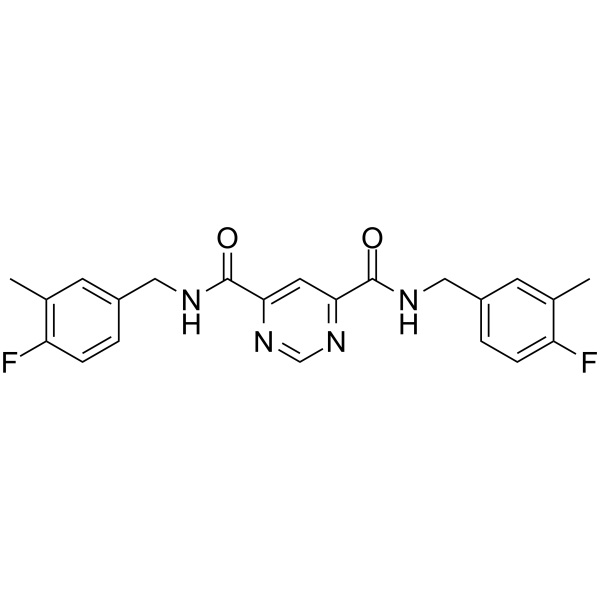
DB04760 (compound 4) is a potent, highly selective, non-zinc-chelating MMP-13 inhibitor with an IC50 of 8 nM. DB04760 significantly reduces paclitaxel neurotoxicity and has anticancer activity.
For research use only. We do not sell to patients.
- Purity : 99.18%
- CAS No.: 544678-85-5
- Formula: C22H20F2N4O2
- Molecular Weight:410.42
-
Storage:Powder -20°C, 3 years , 4°C, 2 years ; In solvent -80°C, 2 years , -20°C, 1 year

To place orders, for customer services and technical support, please contact: MedChemExpress USA
Tel: 609-228-6898 E-mail: [email protected] [email protected]


-
 Biological Activity
-
Chemical Information
-
Solvent & Solubility
- Protocols
- Purity & Documentation
- References
-
 Help & FAQs


-
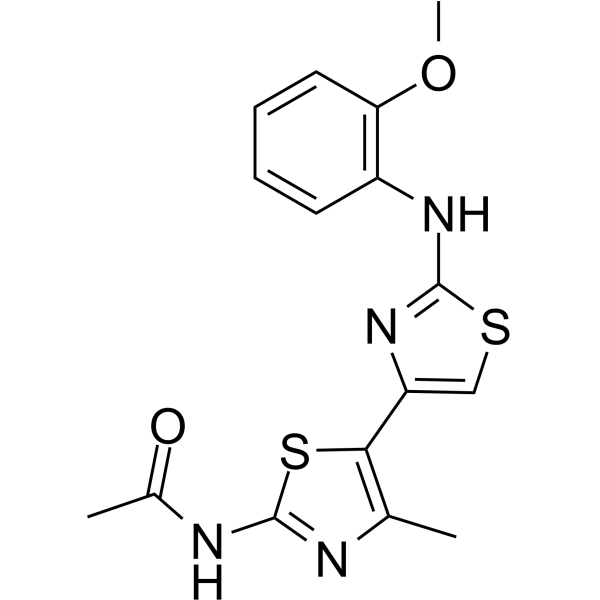
HY-103482
JNJ0966MMP-9 Inhibitor -
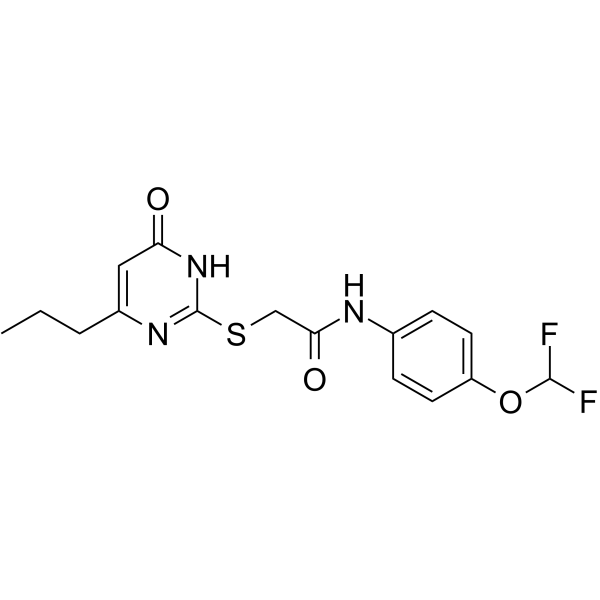
HY-135232
MMP-9-IN-1MMP-9 Inhibitor -
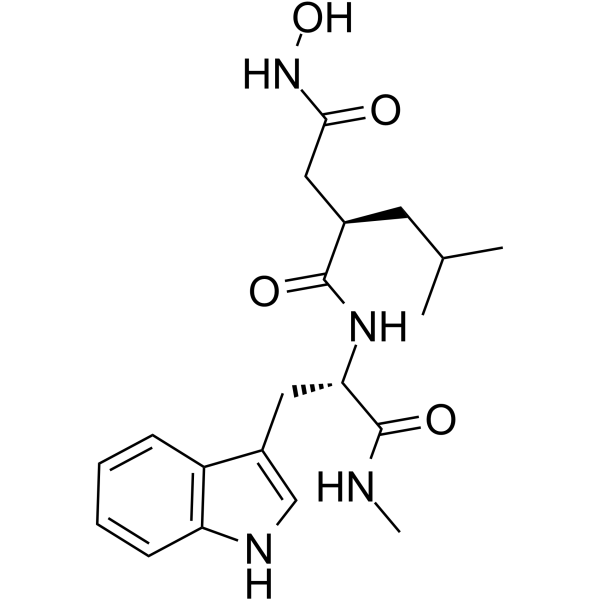
HY-15768
IlomastatMMP Inhibitor -
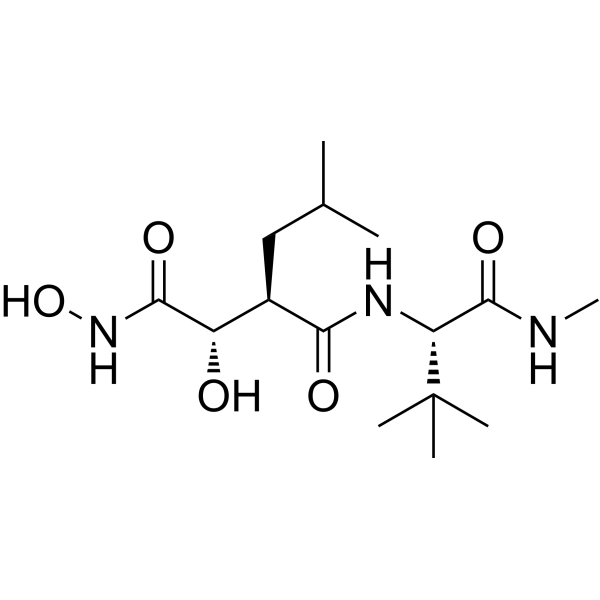
HY-12169
MarimastatMMP Inhibitor -
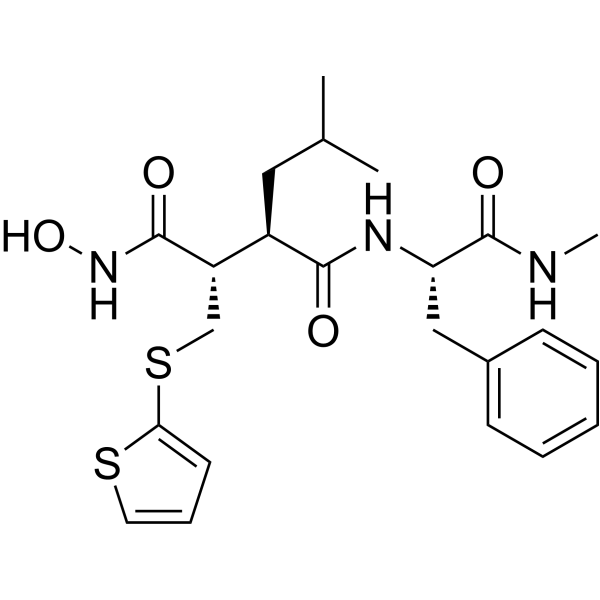
HY-13564
BatimastatMMP Inhibitor -
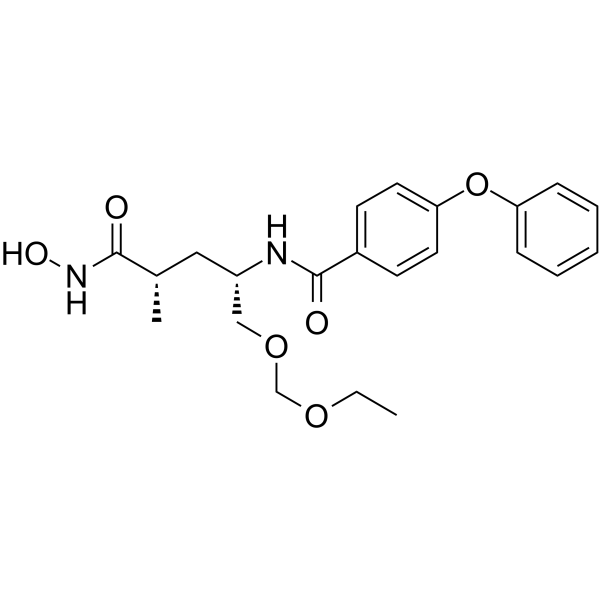
HY-107637
ONO-4817MMP Inhibitor -
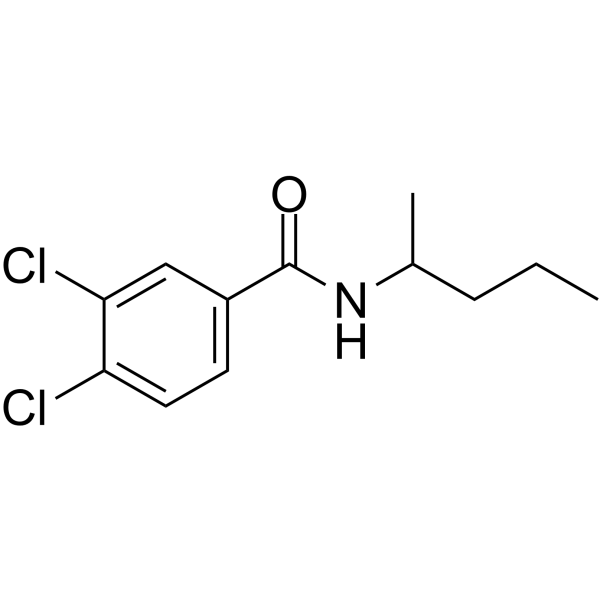
HY-15827
NSC 405020MMP14 Inhibitor -
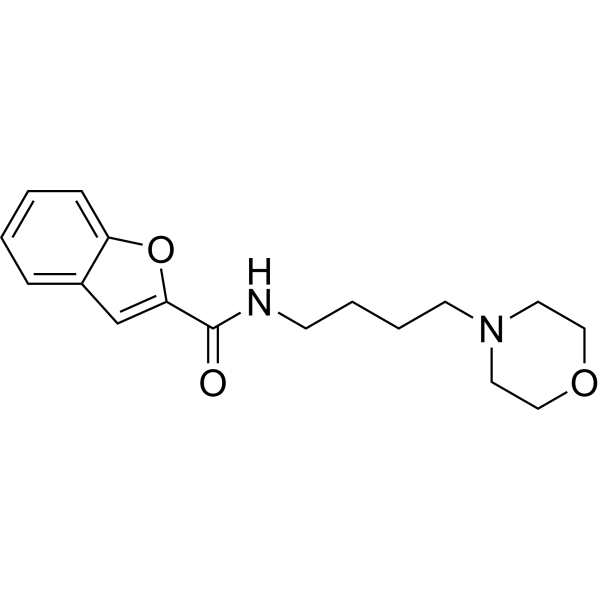
HY-100359
CL-82198MMP-13 Inhibitor -
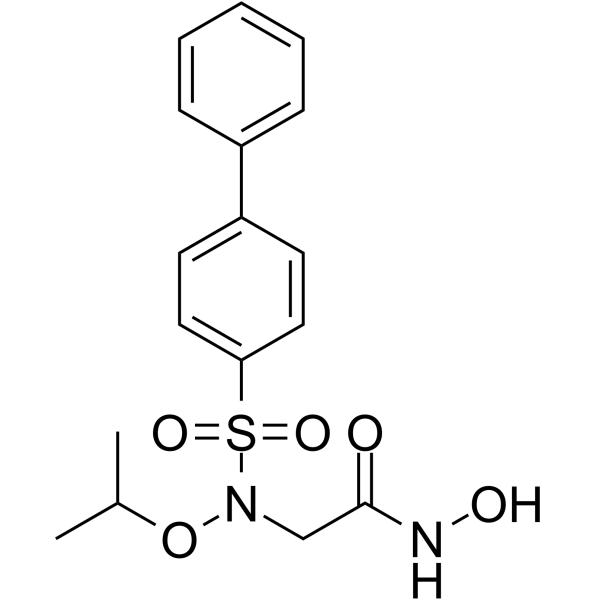
HY-103444
ARP-100MMP-2 Inhibitor -
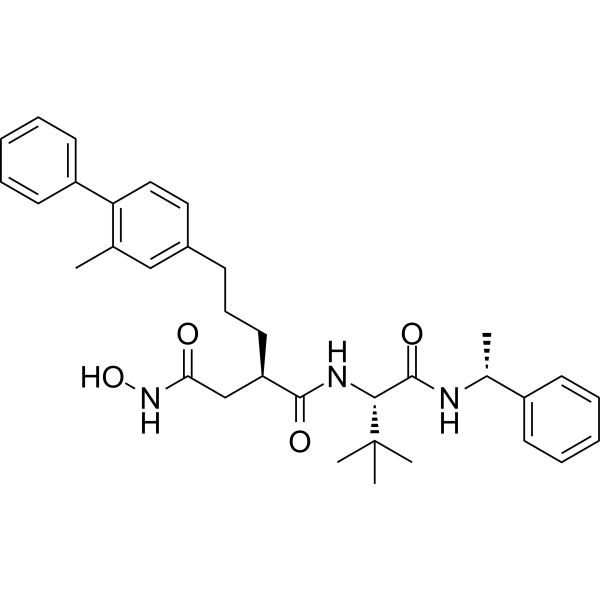
HY-107394
UK 356618MMP-3 Inhibitor -
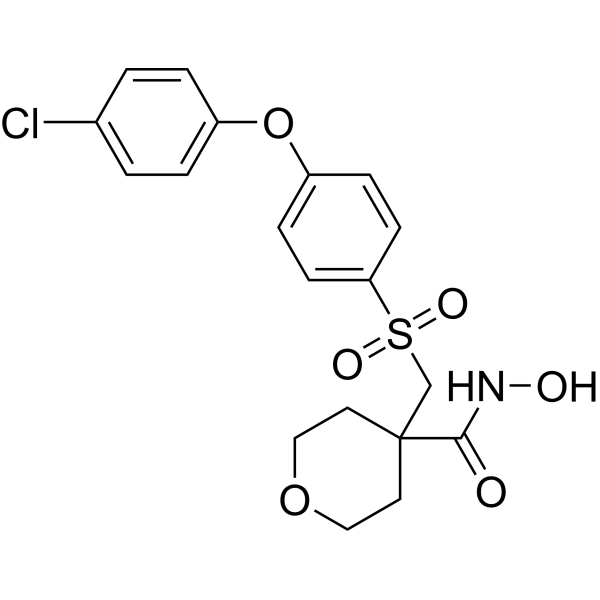
HY-10398
CTS-1027MMP Inhibitor -
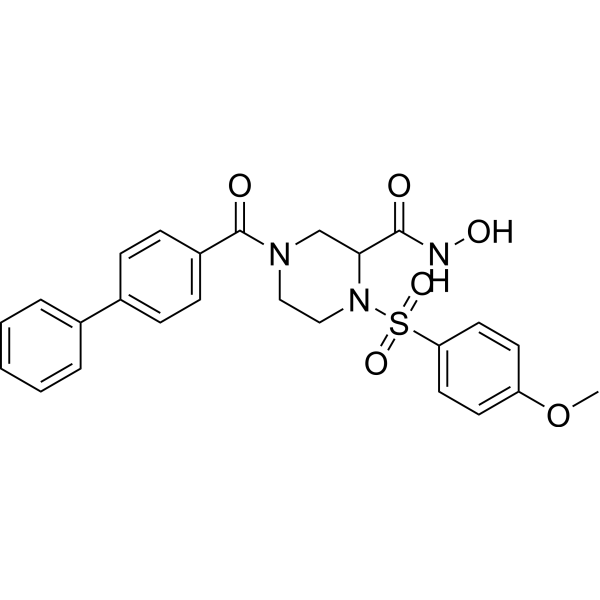
HY-128026
MMP-9/MMP-13 Inhibitor IMMP-9/MMP-13 Inhibitor
Publications Citing Use of MedChemExpress (MCE) DB04760
More

Biological Activity
Description
IC50 & Target
[1]|
MMP-13 8 nM (IC50) |


Chemical Information
-
CAS No. 544678-85-5
-
Appearance Solid
-
Molecular Weight 410.42
-
Formula C22H20F2N4O2
-
Color Light yellow to yellow
-
SMILES
FC1=C(C=C(C=C1)CNC(C2=CC(C(NCC3=CC=C(C(C)=C3)F)=O)=NC=N2)=O)C
-
Shipping
Room temperature in continental US; may vary elsewhere.
-
Storage
Powder -20°C 3 years 4°C 2 years In solvent -80°C 2 years -20°C 1 year


Publications (1)
-
Journal Impact Factor
-
Most Recent
-
Cell Stem Cell
Osteoprogenitor-GMP crosstalk underpins solid tumor-induced systemic immunosuppression and persists after tumor removal. [Abstract]2023 May 4;30(5):648-664.e8. PMID: 37146584


Solvent & Solubility
In Vitro:
DMSO : 100 mg/mL (243.65 mM; Need ultrasonic; Hygroscopic DMSO has a significant impact on the solubility of product, please use newly opened DMSO)
Please refer to the solubility information to select the appropriate solvent. Once prepared, please aliquot and store the solution to prevent product inactivation from repeated freeze-thaw cycles.
Storage method and period of stock solution: -80°C, 2 years; -20°C, 1 year. When stored at -80°C, please use it within 2 years. When stored at -20°C, please use it within 1 year.
Please refer to the solubility information to select the appropriate solvent. Once prepared, please aliquot and store the solution to prevent product inactivation from repeated freeze-thaw cycles.
Storage method and period of stock solution: -80°C, 2 years; -20°C, 1 year. When stored at -80°C, please use it within 2 years. When stored at -20°C, please use it within 1 year.
Concentration (start) × Volume (start) = Concentration (final) × Volume (final)
In Vivo:
Select the appropriate dissolution method based on your experimental animal and administration route.
- For the following dissolution methods, please ensure to first prepare a clear stock solution using an In Vitro approach and then sequentially add co-solvents:
- To ensure reliable experimental results, the clarified stock solution can be appropriately stored based on storage conditions. As for the working solution for In Vivo experiments, it is recommended to prepare freshly and use it on the same day.
- The percentages shown for the solvents indicate their volumetric ratio in the final prepared solution. If precipitation or phase separation occurs during preparation, heat and/or sonication can be used to aid dissolution.
In Vivo Dissolution Calculator
Please enter the basic information of animal experiments:
-
-
-
-
Recommended: Prepare an additional quantity of animals to account for potential losses during experiments.
Please enter your animal formula composition:
-
%DMSO +
Recommended: Keep the proportion of DMSO in working solution below 2% if your animal is weak.
-
%+
-
+%Tween-80 + +
-
%Saline +
The co-solvents required include: DMSO, . All of co-solvents are available by MedChemExpress (MCE). , Tween 80. All of co-solvents are available by MedChemExpress (MCE).
Working solution concentration: 0.22 mg/mL
Method for preparing stock solution: mg drug dissolved in μL DMSO. Stock solution concentration: mg/mL.
1. Take μL DMSO stock solution;
2. Add μL .
μL , mix evenly;
3. Then add μL Tween 80, mix evenly;
4. Then add μL
Please ensure that the stock solution in the first step is dissolved to a clear state, and add co-solvents in sequence. You can use ultrasonic heating (ultrasonic cleaner, recommended frequency 20-40 kHz), vortexing, etc. to assist dissolution.


Purity & Documentation
-
Data Sheet (270 KB)
-
SDS (393 KB)
- English - EN (393 KB)
- Français - FR (393 KB)
- Deutsch - DE (393 KB)
- Norwegian - NO (393 KB)
- Español - ES (393 KB)
- Swedish - SV (393 KB)
- Italian - IT (393 KB)
- Korean - KR (393 KB)
- Portuguese - PT (393 KB)
-
Handling Instructions (2659 KB)
References
[1]. Engel CK, et al. Structural basis for the highly selective inhibition of MMP-13. Chem Biol. 2005 Feb;12(2):181-9. [Content Brief]
[2]. Thomas S. Lisse, et al. Paclitaxel-induced epithelial damage and ectopic MMP-13 expression promotes neurotoxicity in zebrafish. Proc Natl Acad Sci U S A. 2016 Apr 12; 113(15): E2189–E2198. [Content Brief]


Complete Stock Solution Preparation Table
Please refer to the solubility information to select the appropriate solvent. Once prepared, please aliquot and store the solution to prevent product inactivation from repeated freeze-thaw cycles.
Storage method and period of stock solution: -80°C, 2 years; -20°C, 1 year. When stored at -80°C, please use it within 2 years. When stored at -20°C, please use it within 1 year.
| Optional Solvent | Concentration Solvent Mass | 1 mg | 5 mg | 10 mg | 25 mg |
|---|---|---|---|---|---|
| DMSO | 1 mM | 2.4365 mL | 12.1826 mL | 24.3653 mL | 60.9132 mL |
| 5 mM | 0.4873 mL | 2.4365 mL | 4.8731 mL | 12.1826 mL | |
| 10 mM | 0.2437 mL | 1.2183 mL | 2.4365 mL | 6.0913 mL | |
| 15 mM | 0.1624 mL | 0.8122 mL | 1.6244 mL | 4.0609 mL | |
| 20 mM | 0.1218 mL | 0.6091 mL | 1.2183 mL | 3.0457 mL | |
| 25 mM | 0.0975 mL | 0.4873 mL | 0.9746 mL | 2.4365 mL | |
| 30 mM | 0.0812 mL | 0.4061 mL | 0.8122 mL | 2.0304 mL | |
| 40 mM | 0.0609 mL | 0.3046 mL | 0.6091 mL | 1.5228 mL | |
| 50 mM | 0.0487 mL | 0.2437 mL | 0.4873 mL | 1.2183 mL | |
| 60 mM | 0.0406 mL | 0.2030 mL | 0.4061 mL | 1.0152 mL | |
| 80 mM | 0.0305 mL | 0.1523 mL | 0.3046 mL | 0.7614 mL | |
| 100 mM | 0.0244 mL | 0.1218 mL | 0.2437 mL | 0.6091 mL |


DB04760 Related Classifications
HY-125166 Related Classifications
 Powered by Bioz