



Oxatomide

Based on 1 Customer Validation
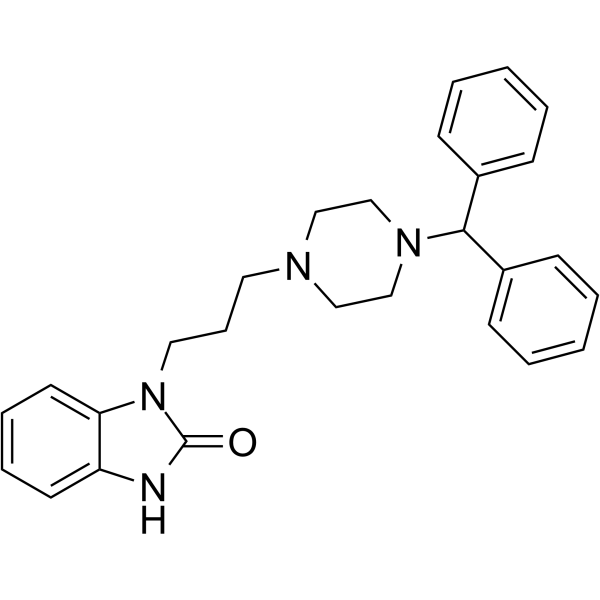
Oxatomide (KW-4354) is an orally active dual antagonist of the H1-histamine receptor and the P2X7 receptor, as well as an inhibitor of serotonin. Oxatomide possesses antihistaminic, antiallergic and anti-inflammatory activities. Oxatomide can be used in the research of allergic diseases.
For research use only. We do not sell to patients.
- Purity : 98.11%
- CAS No.: 60607-34-3
- Formula: C27H30N4O
- Molecular Weight:426.55
-
Storage:Powder -20°C, 3 years , 4°C, 2 years ; In solvent -80°C, 2 years , -20°C, 1 year

To place orders, for customer services and technical support, please contact: MedChemExpress USA
Tel: 609-228-6898 E-mail: [email protected] [email protected]


-
 Biological Activity
-
Chemical Information
-
Solvent & Solubility
- Protocols
- Purity & Documentation
- References
-
 Help & FAQs


-
HY-10052
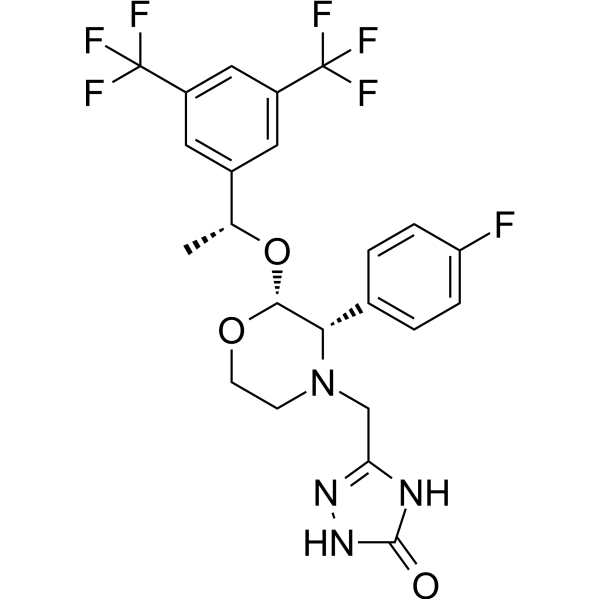
AprepitantNeurokinin 1 Receptor Antagonist -
HY-10409
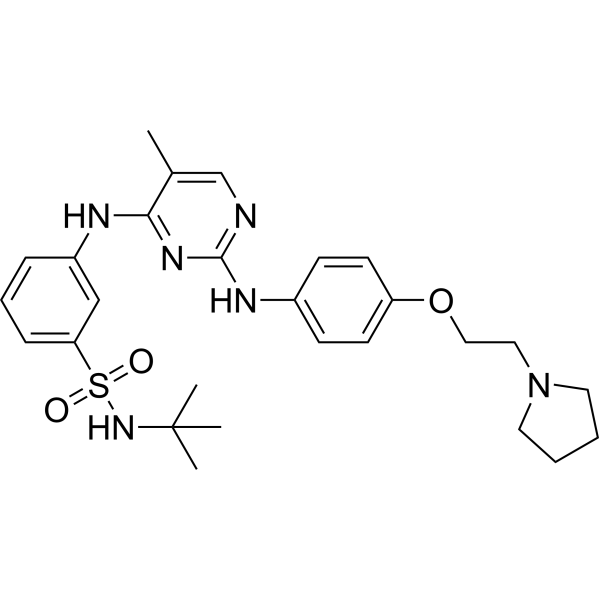
FedratinibJAK2 Inhibitor -
HY-17492
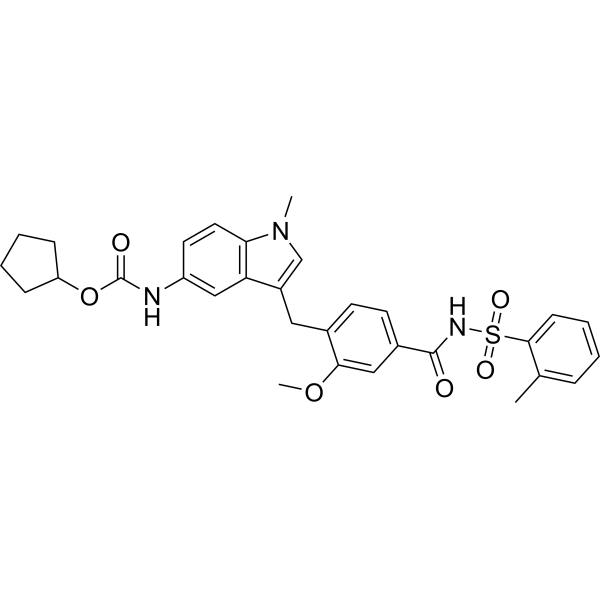
ZafirlukastLeukotriene Receptor Antagonist -

HY-123205R
Oxatomide (Standard)Standard of Oxatomide -
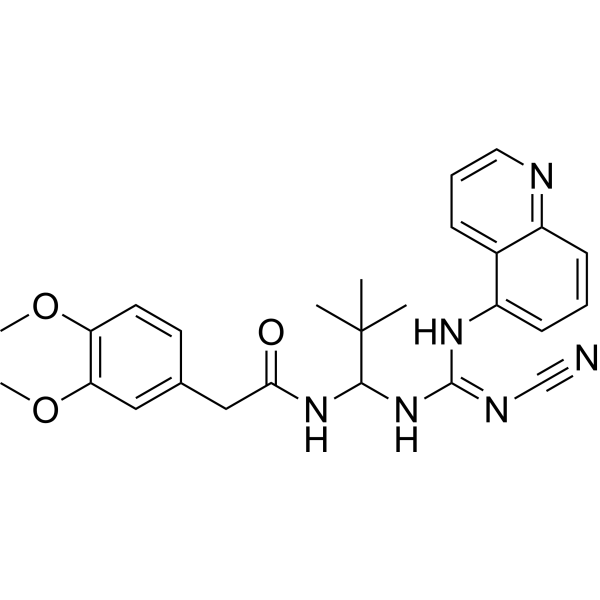
HY-50697
A-740003P2X Receptor Antagonist -
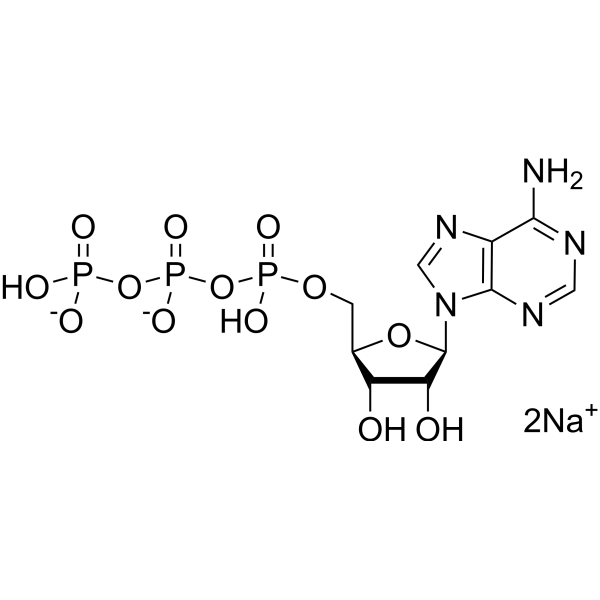
HY-B0345A
ATP disodium saltEndogenous Metabolite -

HY-B2176I
ATP disodium salt, 100 mM Solution, PCR GradeEndogenous Metabolite -
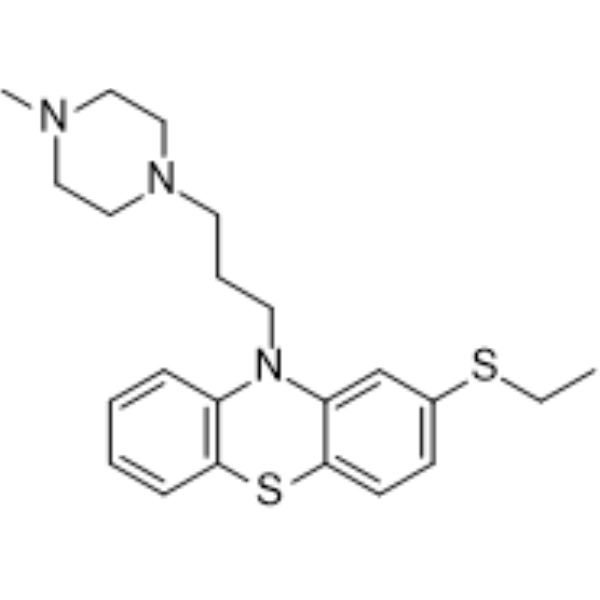
HY-B1794
ThiethylperazineD2/H1 Antagonist -
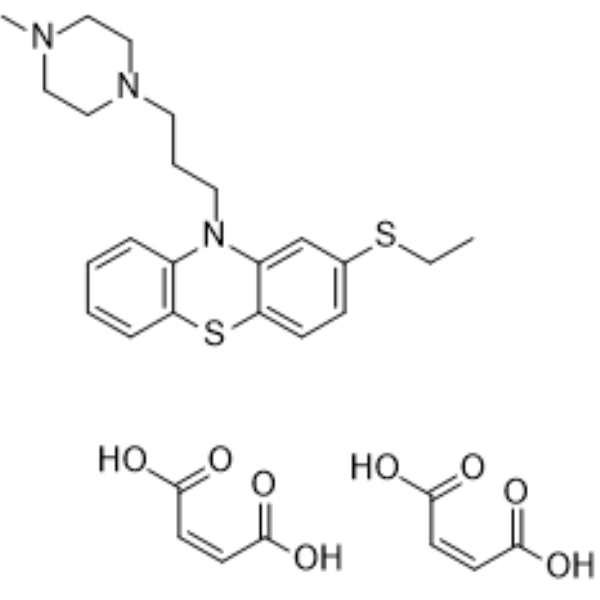
HY-B1794A
Thiethylperazine dimaleateAnti-emetic Agent -
HY-B1213
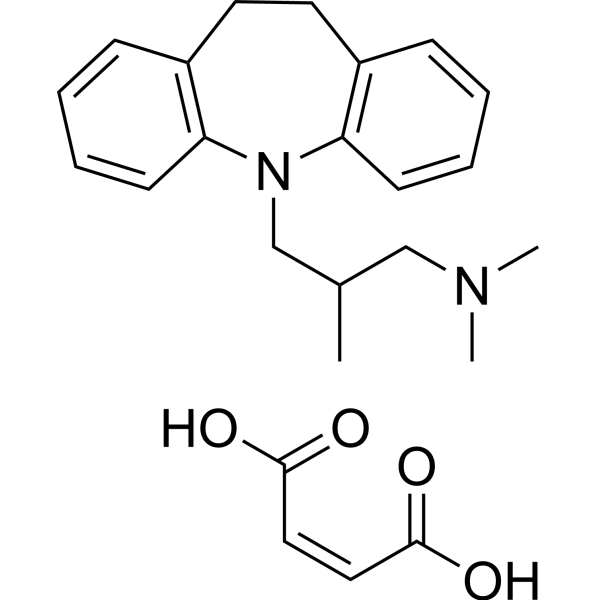
Trimipramine maleate5-HT Receptor Antagonist -

HY-B0345AR
ATP disodium (Standard)Endogenous Metabolite -
HY-N5025
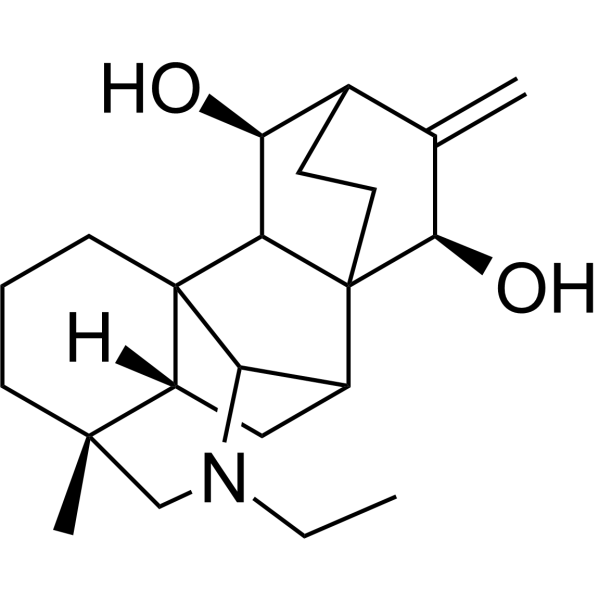
Bullatine AP2X7 Antagonist


Biological Activity
Description
IC50 & Target
[1]|
P2X7 Receptor |
H1 Receptor |
serotonin |
COX-2 |
Cellular Effect
|
Cell Line

|
Type | Value | Description | References |
|---|---|---|---|---|
| Hepatocyte | EC50 |
0.4 μM
Compound: Oxatomide
|
Activation of PXR in human cryopreserved hepatocytes assessed as induction of CYP3A4
Activation of PXR in human cryopreserved hepatocytes assessed as induction of CYP3A4
|
[PMID: 20966043] |
| HepG2 | EC50 |
25.1 μM
Compound: Oxatomide
|
Activation of rat PXR expressed in human HepG2 cells after 24 hrs by luciferase reporter gene based luminescent analysis
Activation of rat PXR expressed in human HepG2 cells after 24 hrs by luciferase reporter gene based luminescent analysis
|
[PMID: 20966043] |
| HepG2 | EC50 |
3.5 μM
Compound: Oxatomide
|
Activation of human PXR expressed in human HepG2 (DPX-2) cells assessed as induction of CYP3A4 after 24 hrs by luminescent analysis
Activation of human PXR expressed in human HepG2 (DPX-2) cells assessed as induction of CYP3A4 after 24 hrs by luminescent analysis
|
[PMID: 20966043] |
| HepG2 | EC50 |
7.1 μM
Compound: Oxatomide
|
Activation of human PXR expressed in human HepG2 (DPX-2) cells after 24 hrs by luciferase reporter gene based luminescent analysis
Activation of human PXR expressed in human HepG2 (DPX-2) cells after 24 hrs by luciferase reporter gene based luminescent analysis
|
[PMID: 20966043] |
In Vitro
Oxatomide (1-30 μM; 0-60 s) inhibits the elevation of [Ca2+]i induced by 1 mM ATP in N18TG2 cells, with an IC50 of 3.37 μM[1].
Oxatomide (10 μM; pre-treatment) inhibits the phosphorylation of ERK and p38 MAPK induced by ATP in N18TG2 cells[1].
Oxatomide (10 μM; pre-treatment) inhibits the upregulation of COX-2 and MIP-2 mRNA and the secretion of MIP-2 induced by BzATP in J774 macrophages[1].
Oxatomide (0-30 μM; 0-48 h) can promote the apoptosis of peripheral blood eosinophils and inhibit the survival induced by IL-5[2].
Oxatomide (0.1-10 μM; 15 min) inhibits the immunological release of histamine and LTC4 in human basophils[3].
Oxatomide (0.1-10 μM; 15 min) inhibits the release of histamine, tryptase and PGD2 after stimulation by anti-IgE or anti-FcεRI in human skin mast cells[3].
MedChemExpress (MCE) has not independently confirmed the accuracy of these methods. They are for reference only.
In Vivo
MedChemExpress (MCE) has not independently confirmed the accuracy of these methods. They are for reference only.
-
Animal Model:Healthy chinchillas (350-600 g) with immune-mediated otitis media model[4]
-
Dosage:5, 10 and 30 mg/kg
-
Administration:Oral gavage; 5 days and 2 weeks
-
Result:Alleviated the experimental otitis media with effusion at doses of 10 and 30 mg/kg.
Significantly reduced the mean LTD4 concentration in middle ear effusion at dose of 30 mg/kg.
Was rapidly absorbed and transported to the middle ear by oral administration.
Clinical Trial
| NCT Number | Sponsor | Condition | Start Date |
Phase
|
|---|---|---|---|---|
| NCT01329991 | Plexxikon| | 2011-05 | PHASE1 |


Chemical Information
-
CAS No. 60607-34-3
-
Appearance Solid
-
Molecular Weight 426.55
-
Formula C27H30N4O
-
Color White to off-white
-
SMILES
O=C1NC2=CC=CC=C2N1CCCN3CCN(C(C4=CC=CC=C4)C5=CC=CC=C5)CC3
-
Synonyms
KW-4354
-
Shipping
Room temperature in continental US; may vary elsewhere.
-
Storage
Powder -20°C 3 years 4°C 2 years In solvent -80°C 2 years -20°C 1 year


Solvent & Solubility
In Vitro:
DMSO : 250 mg/mL (586.10 mM; Need ultrasonic; Hygroscopic DMSO has a significant impact on the solubility of product, please use newly opened DMSO)
Please refer to the solubility information to select the appropriate solvent. Once prepared, please aliquot and store the solution to prevent product inactivation from repeated freeze-thaw cycles.
Storage method and period of stock solution: -80°C, 2 years; -20°C, 1 year. When stored at -80°C, please use it within 2 years. When stored at -20°C, please use it within 1 year.
Please refer to the solubility information to select the appropriate solvent. Once prepared, please aliquot and store the solution to prevent product inactivation from repeated freeze-thaw cycles.
Storage method and period of stock solution: -80°C, 2 years; -20°C, 1 year. When stored at -80°C, please use it within 2 years. When stored at -20°C, please use it within 1 year.
Concentration (start) × Volume (start) = Concentration (final) × Volume (final)
In Vivo:
Select the appropriate dissolution method based on your experimental animal and administration route.
- For the following dissolution methods, please ensure to first prepare a clear stock solution using an In Vitro approach and then sequentially add co-solvents:
- To ensure reliable experimental results, the clarified stock solution can be appropriately stored based on storage conditions. As for the working solution for In Vivo experiments, it is recommended to prepare freshly and use it on the same day.
- The percentages shown for the solvents indicate their volumetric ratio in the final prepared solution. If precipitation or phase separation occurs during preparation, heat and/or sonication can be used to aid dissolution.
Add each solvent one by one: 10% DMSO 40% PEG300 5% Tween-80 45% Saline
Solubility: ≥ 2.08 mg/mL (4.88 mM); Clear solution
This protocol yields a clear solution of ≥ 2.08 mg/mL (saturation unknown).
Taking 1 mL working solution as an example, add 100 μL DMSO stock solution (20.8 mg/mL) to 400 μL PEG300, and mix evenly; then add 50 μL Tween-80 and mix evenly; then add 450 μL Saline to adjust the volume to 1 mL.
Preparation of Saline: Dissolve 0.9 g sodium chloride in ddH₂O and dilute to 100 mL to obtain a clear Saline solution.
Add each solvent one by one: 10% DMSO 90% (20% SBE-β-CD in Saline)
Solubility: ≥ 2.08 mg/mL (4.88 mM); Clear solution
This protocol yields a clear solution of ≥ 2.08 mg/mL (saturation unknown).
Taking 1 mL working solution as an example, add 100 μL DMSO stock solution (20.8 mg/mL) to 900 μL 20% SBE-β-CD in Saline, and mix evenly.
Preparation of 20% SBE-β-CD in Saline (4°C, storage for one week): 2 g SBE-β-CD powder is dissolved in 10 mL Saline, completely dissolve until clear.
In Vivo Dissolution Calculator
Please enter the basic information of animal experiments:
-
-
-
-
Recommended: Prepare an additional quantity of animals to account for potential losses during experiments.
Please enter your animal formula composition:
-
%DMSO +
Recommended: Keep the proportion of DMSO in working solution below 2% if your animal is weak.
-
%+
-
+%Tween-80 + +
-
%Saline +
The co-solvents required include: DMSO, . All of co-solvents are available by MedChemExpress (MCE). , Tween 80. All of co-solvents are available by MedChemExpress (MCE).
Working solution concentration: 0.22 mg/mL
Method for preparing stock solution: mg drug dissolved in μL DMSO. Stock solution concentration: mg/mL.
1. Take μL DMSO stock solution;
2. Add μL .
μL , mix evenly;
3. Then add μL Tween 80, mix evenly;
4. Then add μL
Please ensure that the stock solution in the first step is dissolved to a clear state, and add co-solvents in sequence. You can use ultrasonic heating (ultrasonic cleaner, recommended frequency 20-40 kHz), vortexing, etc. to assist dissolution.


Purity & Documentation
-
Data Sheet (277 KB)
-
SDS (392 KB)
- English - EN (392 KB)
- Français - FR (392 KB)
- Deutsch - DE (392 KB)
- Norwegian - NO (392 KB)
- Español - ES (392 KB)
- Swedish - SV (392 KB)
- Italian - IT (392 KB)
- Korean - KR (392 KB)
- Portuguese - PT (392 KB)
-
Handling Instructions (2659 KB)
References
[1]. Kazuki Yoshida, et al. P2X7 receptor antagonist activity of the anti-allergic agent oxatomide. Eur J Pharmacol. 2015 Nov 15;767:41-51. [Content Brief]
[2]. Domae M, et al. The antiallergic drug oxatomide promotes human eosinophil apoptosis and suppresses IL-5-induced eosinophil survival. J Allergy Clin Immunol. 2003 Mar;111(3):567-72. [Content Brief]
[3]. Patella V, et al. Oxatomide inhibits the release of proinflammatory mediators from human basophils and mast cells. Int Arch Allergy Immunol. 1996 Sep;111(1):23-9. [Content Brief]
[4]. Tanaka T,et al. Effect of oxatomide on otitis media with effusion--an experimental study. Acta Otolaryngol. 1995 Jul;115(4):532-8. [Content Brief]


Complete Stock Solution Preparation Table
Please refer to the solubility information to select the appropriate solvent. Once prepared, please aliquot and store the solution to prevent product inactivation from repeated freeze-thaw cycles.
Storage method and period of stock solution: -80°C, 2 years; -20°C, 1 year. When stored at -80°C, please use it within 2 years. When stored at -20°C, please use it within 1 year.
| Optional Solvent | Concentration Solvent Mass | 1 mg | 5 mg | 10 mg | 25 mg |
|---|---|---|---|---|---|
| DMSO | 1 mM | 2.3444 mL | 11.7220 mL | 23.4439 mL | 58.6098 mL |
| 5 mM | 0.4689 mL | 2.3444 mL | 4.6888 mL | 11.7220 mL | |
| 10 mM | 0.2344 mL | 1.1722 mL | 2.3444 mL | 5.8610 mL | |
| 15 mM | 0.1563 mL | 0.7815 mL | 1.5629 mL | 3.9073 mL | |
| 20 mM | 0.1172 mL | 0.5861 mL | 1.1722 mL | 2.9305 mL | |
| 25 mM | 0.0938 mL | 0.4689 mL | 0.9378 mL | 2.3444 mL | |
| 30 mM | 0.0781 mL | 0.3907 mL | 0.7815 mL | 1.9537 mL | |
| 40 mM | 0.0586 mL | 0.2930 mL | 0.5861 mL | 1.4652 mL | |
| 50 mM | 0.0469 mL | 0.2344 mL | 0.4689 mL | 1.1722 mL | |
| 60 mM | 0.0391 mL | 0.1954 mL | 0.3907 mL | 0.9768 mL | |
| 80 mM | 0.0293 mL | 0.1465 mL | 0.2930 mL | 0.7326 mL | |
| 100 mM | 0.0234 mL | 0.1172 mL | 0.2344 mL | 0.5861 mL |


Oxatomide Related Classifications
HY-123205 Related Classifications
 Powered by Bioz
Keywords
- Oxatomide
- 60607-34-3
- KW-4354
- KW4354
- KW 4354
- Histamine Receptor
- P2X Receptor
- 5-HT Receptor
- Apoptosis
- PERK
- p38 MAPK
- COX
- P2X7
- anti-allergic
- antihistamine
- ATP
- Ca2+
- serotonin
- H1-histamine
- immune-mediated otitis media model
- N18TG2 cells
- J774 macrophages
- peripheral blood eosinophils
- human basophils
- human skin mast cells
- Inhibitor
- inhibitor
- inhibit