



Plerixafor solution
Based on 103 publication(s) in Google Scholar
Plerixafor solution (AMD 3100 solution; JM3100 solution; SID791 solution) is a CXCR4 antagonist and a CXCR7 allosteric agonist; Plerixafor solution disrupts stem cell retention in the bone marrow by blocking the SDF-1α/CXCL12‑CXCR4 signaling pathway and inhibiting chemokine-mediated receptor internalization, mobilizing peripheral blood leukocytes, neutrophils, endothelial progenitor cells, and B cells; Plerixafor solution alleviates Silicon dioxide (HY-W019831)-induced pulmonary inflammation and fibrosis, inhibits corneal neovascularization and CXCL12-induced cell migration, and simultaneously suppresses ischemia-induced inflammatory responses, reduces blood-brain barrier permeability, attenuates cerebral edema, and reduces infarct volume. Plerixafor solution can be used in research related to liver fibrosis, silicosis, colorectal cancer, and ischemic stroke.
Para uso exclusivo en investigación. No vendemos a pacientes.
- No. CAS: 110078-46-1
- Fòrmula: C28H54N8
- Peso molecular:502.78
-
Almacenamiento:
Please store the product under the recommended conditions in the Certificate of Analysis.


To place orders, for customer services and technical support, please contact: MedChemExpress USA
Tel: 609-228-6898 E-mail: [email protected] [email protected]
Other In-stock Forms of Plerixafor solution


-
 Actividad biológica
-
Chemical Information
- Protocolo
- Pureza y Documentación
- Referencias
-
 Help & FAQs




Actividad biológica
Descripciòn
|
CXCR4 |
CXCR7 |
Cellular Effect
|
Cell Line

|
Type | Value | Description | References |
|---|---|---|---|---|
| MT4 | EC50 |
0.011 μM
|
Inhibition of cytopathic effect of HIV-1 NL4.3 in MT-4 cells assessed as viable cell quantification by tetrazolium-based colorimetric method after 5 days.
Inhibition of cytopathic effect of HIV-1 NL4.3 in MT-4 cells assessed as viable cell quantification by tetrazolium-based colorimetric method after 5 days.
|
25640878 |
In Vitro
Plerixafor solution (10-1000 ng/mL; 24 h) reduces VEGF and MMP-9 protein expression in SW480 colorectal cancer cells in a dose-dependent manner[7].
Plerixafor solution (10-1000 ng/mL; 24 h) downregulates MMP-9 mRNA in SW480 colorectal cancer cells, and the reported relative optical density expression of MMP-9 is 17.58%[7].
Plerixafor solution (0.5 µg/mL; 30 min) inhibits SDF-1-induced invasion of 4T1 cells through Matrigel by 70%[9].
Plerixafor solution (10-1000 ng/mL; pretreatment for 15 min; migration for 3 h) inhibits CXCL12-induced chemotactic migration of SW480 colorectal cancer cells, with 1000 ng/mL producing an inhibition rate of 62.37%[7].
Plerixafor solution (500 ng/mL; 0-12 h) transiently depletes intracellular SDF-1α at 2 h in human bone marrow MSC (M1/hPL) and recovers by 4 h, whereas CXCR4 expression remains unchanged within 8 h[1].
Plerixafor solution (500 ng/mL; 4 h) almost completely antagonizes SDF-1α (100 ng/mL)-stimulated Transwell migration of human CD34+ HPCs[1].
Plerixafor solution (300 nM; 30 min-1 h) acts as a CXCR4 antagonist in U2OS EGFP-CXCR4 cells, inhibiting SDF-1α-induced CXCR4 translocation[2].
Plerixafor solution (0-20 μg/mL; 1-2 h) reduces CXCR4-mediated C6-AMD liposome uptake in HSC-T6 cells at 10 and 20 μg/mL[2].
Plerixafor solution (62.5 μg/mL; 6-24 h) reduces P-p38 expression by 29% in TGFβ-activated HSC-T6 cells[2].
Plerixafor solution (0.2 µg/mL; 30 min) inhibits SDF-1-induced CXCR4 internalization in U2OS cells[9].
Plerixafor solution (0.6 µg/mL; 1 h) reduces CXCR4-mediated DOX-AMD-DNG uptake in 4T1 cells[9].
Plerixafor solution (20 µM-1 h) inhibits the binding of the anti-CXCR4 antibody 12G5 to Jurkat cells by 90%[11].
Plerixafor solution (15 min) inhibits CXCL12-induced calcium signaling in U87.CXCR4 cells with an IC50 of 0.120 µM[11].
MedChemExpress (MCE) has not independently confirmed the accuracy of these methods. They are for reference only.
-
Cell Line:U2OS cells stably expressing EGFP-CXCR4
-
Concentration:300 nM (free Plerixafor solution); 10 nM (SDF-1α)
-
Incubation Time:30 min; 1 h
-
Result:Produced a diffuse green fluorescence pattern at 300 nM, indicating inhibition of SDF-1α-induced CXCR4 translocation to endosomes.
-
Cell Line:HSC-T6 rat hepatic stellate cells
-
Concentration:8, 16, 31, 62, 125, 250, 500, and 1000 μg/mL (free Plerixafor solution)
-
Incubation Time:24 h
-
Result:HSC-T6 cells retained high viability at 8, 16, 31, and 62 μg/mL and showed reduced viability at 125, 250, 500, and 1000 μg/mL.
Liposomal formulation showed higher cell viability at matched concentrations.
-
Cell Line:TGFβ-activated HSC-T6 cells
-
Concentration:62.5 μg/mL (free Plerixafor solution); 10 ng/mL (TGFβ)
-
Incubation Time:24 h exposure
-
Result:Induced 13.9% late apoptosis (Q1-UR) in TGFβ-activated HSC-T6 cells.
-
Cell Line:TGFβ-activated HSC-T6 cells
-
Concentration:62.5 μg/mL (free Plerixafor solution); 2 ng/mL (TGFβ)
-
Incubation Time:24 h exposure; 6 h (TGFβ)
-
Result:Reduced P-p38 expression by 29% in TGFβ-activated HSC-T6 cells compared with untreated activated cells.
-
Cell Line:SW480 human colorectal cancer cells
-
Concentration:10, 100, 1000 ng/mL
-
Incubation Time:2 h (exposure); 24, 48, 72 h (MTT)
-
Result:Proliferation rate of CXCL12-stimulated SW480 cells was reduced to 6.10 at 10 ng/mL, 4.49 at 100 ng/mL, and 3.58 at 1000 ng/mL after 72 h.
-
Cell Line:SW480 human colorectal cancer cells
-
Concentration:10, 100, 1000 ng/mL
-
Incubation Time:24 h
-
Result:SW480 invasion was reduced, with A590 values of 0.656 at 10 ng/mL, 0.505 at 100 ng/mL, and 0.158 at 1000 ng/mL.
Inhibition rates were 7.57% at 10 ng/mL, 28.43% at 100 ng/mL, and 77.23% at 1000 ng/mL.
-
Cell Line:SW480 human colorectal cancer cells
-
Concentration:10, 100, 1000 ng/mL
-
Incubation Time:15 min (pretreatment); 3 h (migration assay)
-
Result:CXCL12-induced chemotactic migration of SW480 cells was reduced in a dose-dependent manner.
Inhibition rates were 5.24% at 10 ng/mL, 47.27% at 100 ng/mL, and 62.37% at 1000 ng/mL.
-
Cell Line:SW480 human colorectal cancer cells
-
Concentration:10, 100, 1000 ng/mL
-
Incubation Time:24 h
-
Result:After 24 h, MMP-9 and VEGF protein expression were reduced in a dose-dependent manner in SW480 cells.
MMP-2 protein was not described as reduced.
-
Cell Line:SW480 human colorectal cancer cells
-
Concentration:10, 100, 1000 ng/mL
-
Incubation Time:24 h
-
Result:After 24 h, RT-PCR showed downregulation of MMP-9 mRNA in SW480 cells at 100 and 1000 ng/mL.
MMP-2 and VEGF mRNAs were not downregulated.
Densitometric analysis reported relative expression decreased to 17.58% for MMP-9 and 39.44% for VEGF compared with controls.
-
Cell Line:4T1 cells
-
Concentration:0.5 µg/mL (30 min preincubation); 20 nM (SDF-1)
-
Incubation Time:30 min (preincubation); 24 h (invasion)
-
Result:Inhibited 4T1 cell invasion through Matrigel by 70%.
In Vivo
Plerixafor solution (200 μg/day; subcutaneous injection; continuous infusion) aggravates chronic CCl4-induced liver fibrosis and increases circulating and intrahepatic neutrophils[4].
Plerixafor solution (100 μg; intraperitoneal injection; single administration; 12 hours after CCl4 administration) does not attenuate liver injury and increases intrahepatic neutrophils at 36 hours[4].
Plerixafor solution (5 mg/kg/day; subcutaneous injection into the vastus lateralis muscle; once daily for 4 weeks of continuous observation) promotes neointima formation and endothelialization at the aneurysm neck after flow diverter implantation in New Zealand white rabbits[10].
Plerixafor solution (2.5 mg/kg; intraperitoneal injection; once daily; 7 days) mobilizes circulating EPCs but does not reduce alkali burn-induced corneal neovascularization in C57BL/6 mice[6].
Plerixafor solution (5 mg/kg; intraperitoneal injection; administered once on day 5) improves fracture healing in a delayed femoral osteotomy healing model in female Wistar rats after VEGF exposure, increasing the RUST score, bone volume, trabecular thickness, and bone formation while reducing fibrous tissue[3].
Plerixafor solution (200 μg dissolved in 100 μL PBS; intraperitoneal injection; once weekly; administered 12 hours after the last CCl4 injection) does not alter chronic CCl4-induced fibrosis or intrahepatic inflammatory cell content[4].
MedChemExpress (MCE) has not independently confirmed the accuracy of these methods. They are for reference only.
-
Animal Model:Wistar (female, ex-breeder, 380-600 g)[3]
-
Dosage:5 mg/kg
-
Administration:i.p.; once on day 5
-
Result:The mobilized group formed CFU-Fs in 6 of 8 individual cultures; no CFUs were isolated from non-mobilized control blood.
Mean CFU-F/mL was 2.9 in the mobilized group versus no CFUs in controls.
-
Animal Model:Wistar (female, 12-14 weeks old, 230-300 g)[3]
-
Dosage:5 mg/kg
-
Administration:i.p.; once on day 5
-
Result:RUST score was 9.63 in the VEGF group versus 7.71 in controls.
MicroCT bone volume was 5.22 µm3 versus 4.31 µm3; trabecular thickness was 0.05 mm versus 0.04 mm; tissue volume was 10.03 µm3 versus 9.23 µm3; trabecular separation was 0.08 mm versus 0.07 mm; trabecular number was 10.99 1/µm versus 14.09 1/µm; total porosity was 47.48% versus 46.21%.
Histomorphometry bone was 55.1% versus 39.1%; cartilage was 40.9% versus 43.1%; fibrous tissue was 0.3% versus 15.3%; vascular tissue was 3.9% versus 2.4%; combined bone and cartilage was 96% versus 82.3%.
-
Animal Model:C57Bl/6 (male)[4]
-
Dosage:200 μg/day
-
Administration:s.c.; continuous infusion
-
Result:Circulating leukocytes were 12×106/mL versus 5×10⁶/mL in oil controls, with an increase in circulating neutrophils.
Intrahepatic CD45+ cells were 2.4×10⁶/g versus 1.4×10⁶/g, with an increase in intrahepatic neutrophils.
Did not induce an injury response.
-
Animal Model:C57Bl/6 (male)[4]
-
Dosage:200 μg/day
-
Administration:s.c.; continuous infusion
-
Result:Increased hepatic collagen content and fibrosis by Sirius red staining and increased hepatic α-SMA staining.
Collagen 1α1 and α-SMA transcript levels were increased approximately 2-fold.
Circulating leukocytes were 13×106/mL versus 6×10⁶/mL in CCl4 alone, with increased circulating neutrophils.
Intrahepatic CD45+ cells were 4×10⁶/g versus 2.5×10⁶/g in CCl4 alone, with increased total intrahepatic neutrophils.
-
Animal Model:C57Bl/6 (male)[4]
-
Dosage:200 μg in 100 μL PBS
-
Administration:i.p.; once weekly; 12 hours after last CCl4 injection
-
Result:Did not change the extent of fibrosis by Sirius red staining or the absolute number of intrahepatic CD45+ inflammatory cells.
-
Animal Model:C57Bl/6 (male)[4]
-
Dosage:100 μg
-
Administration:i.p.; once; 12 hours after CCl4 administration
-
Result:Serum ALT and AST were not different from control.
Histological necrosis score showed a trend toward increase at 36 hours.
Intrahepatic CD45+ cells showed a trend toward increase at 36 and 72 hours.
Intrahepatic neutrophils at 36 hours were 15×105 versus 5×10⁵ cells/g.
LSK hematopoietic stem cells increased in the liver at 36 hours.
-
Animal Model:C57BL/6 (male, 10-12 weeks old)[5]
-
Dosage:5 mg/kg
-
Administration:intraperitoneal; once daily; 1 week (days 1-7 after crystalline silica exposure)
-
Result:Reduced inflammatory cell infiltration and alveolar wall thickening at days 7 and 14 and delayed nodule formation.
Pathology scores were lower than in CS-exposed mice on days 7, 14, and 28.
Prevented CS-induced weight loss, with body weight gradually recovering and returning to the original level by day 28.
Reduced lung CXCR4 and CXCL12 expression at day 28 by immunohistochemistry and reduced CXCR4 expression at day 7 by Western blotting.
Reduced MPO expression/neutrophil infiltration in lung tissue on days 7, 14, and 28 and reduced NET formation (MPO+citH3+ cells) at day 28.
Reduced the number and size of peribronchial B-lymphoid aggregates and reduced CD45R+ B cells in lung tissue at day 28.
Increased peripheral blood CD19+ B cells at days 7 and 14.
Proliferating B cells were not detected in lung tissue, and Ki67 was absent in lymphoid aggregates.
Reduced collagen deposition by Masson staining and lowered Ashcroft fibrosis scores on days 7, 14, and 28.
Reduced collagen I and α-SMA expression in lung tissue at days 14 and 28.
Reduced lung infiltration of CD45+collagen I+CXCR4+ circulating fibrocytes on days 7 and 28.
-
Animal Model:C57BL/6 (male, 8 weeks old)[6]
-
Dosage:1 g/L solution, 5 µL per subconjunctival injection
-
Administration:subconjunctival injection; once daily; 7 days
-
Result:Microvascular density was 7.6 vessels per 0.034 mm2 at 7 days and 11.7 vessels per 0.034 mm2 at 14 days.
PMN counts were 12.4 at 7 days and 10.0 at 14 days.
EPC number was 0.05 at baseline, 0.07 at 0.5 hours, 0.06 at 1 hour, 0.07 at 6 hours, 0.06 at 1 day, 0.07 at 4 days, and 0.06 at 7 days.
Inflammatory index decreased at 5, 7, 10, and 14 days relative to the other groups.
VEGFR2 and CD34 immunohistochemical positive index was lower at 7 and 14 days than in the other groups.
-
Animal Model:C57BL/6 (male, 8 weeks old)[6]
-
Dosage:2.5 mg/kg per day
-
Administration:intraperitoneal injection; once daily; 7 days
-
Result:Microvascular density was 13.2 vessels per 0.034 mm2 at 7 days and 16.8 vessels per 0.034 mm2 at 14 days.
PMN counts were 16.2 at 7 days and 15.0 at 14 days.
EPC number was 0.05 at baseline, 0.11 at 0.5 hours, 0.25 at 1 hour, 0.27 at 6 hours, 0.36 at 1 day, 0.23 at 4 days, and 0.12 at 7 days.
VEGFR2 and CD34 immunohistochemical positive index was higher than in the other three groups at 7 days and higher than in the subconjunctival group at 14 days.
Corneal inflammation index and neovascular density did not differ from controls, with no inhibition of angiogenesis.
-
Animal Model:New Zealand White (male, 10-12 months, 3-3.5 kg)[10]
-
Dosage:5 mg/kg/day
-
Administration:s.c. at vastus lateralis; daily; 4 weeks (qPCR cohort)
-
Result:At 2 and 4 weeks after flow-diverter implantation, more endothelial-like cells were in the neointima than in the control group; at 4 weeks, the endothelial-like cell count ratio was 92:60.
Hard tissue sections and Masson trichrome staining showed that the neointima was more intact and thicker than in the control group.
At 4 weeks, neointimal mRNA levels of Tie2, KDR, and VE-cadherin were higher than in controls; CD34 mRNA did not differ between groups.
-
Animal Model:CD-1 (adult male, 25-30 g)[12]
-
Dosage:1 mg/kg/day
-
Administration:i.p.; daily for 3 consecutive days starting immediately after MCAO
-
Result:Infarct volume by cresyl violet staining was lower at 72 hours after MCAO.
Brain water content was reduced at 48 and 72 hours.
Neurological deficit score improved at 72 hours.
MPO-positive cells in the ipsilateral lesion cortex and basal ganglia were reduced at 48 and 72 hours.
MPO activity in the ischemic hemisphere was reduced at 48 and 72 hours.
MPO protein was mildly attenuated.
TNF-α and IL-6 mRNA levels were reduced at 24 hours.
TNF-α and IL-6 protein levels were reduced at 48 hours.
IFN-γ protein was reduced at 48 hours.
CD40L, IL-1α, and IL-1β mRNA/protein levels were not changed.
IgG leakage at 3 days after MCAO was alleviated.
Evans blue extravasation ratio was lower than in saline-treated MCAO mice.
Occludin/ZO-1 tight-junction disruption and relative gap formation were reduced.
- Collagen: Sirius Red Staining
- Scratch/Wound-Healing Migration Assay
- Cell migration
- Neural Crest/Neuronal Cell Migration Explant Assay
- Connective Tissue: Masson's Trichrome/Collagen Trichrome Staining
- Research Protocol for Inflammation-related Diseases
- Liver Histomorphometry
- Fibrosis/Collagen Morphometry
- Zigmond Chamber Chemotaxis Assay
- Under-Agarose Cell Migration Assay
- Transwell/Boyden Chamber Migration Assay
- 3D Collagen/Hydrogel Matrix Migration Assay
- Transepithelial/transendothelial electrical resistance assay
- Cell-Exclusion Zone Migration Assay
- Dunn/Insall Chamber Chemotaxis Assay


Chemical Information
-
No. CAS 110078-46-1
-
Peso molecular 502.78
-
Fòrmula C28H54N8
-
SMILES
C1(CN2CCCNCCNCCCNCC2)=CC=C(CN3CCNCCCNCCNCCC3)C=C1
-
Synonyms
AMD 3100 solution; JM3100 solution; SID791 solution
-
Envío
Room temperature in continental US; may vary elsewhere.
-
Almacenamiento
Please store the product under the recommended conditions in the Certificate of Analysis.


Publications (103)
-
Journal Impact Factor
-
Most Recent
-
Immunity
Small-molecule CBP/p300 histone acetyltransferase inhibition mobilizes leukocytes from the bone marrow via the endocrine stress response. [Abstract]2024 Feb 13;57(2):364-378.e9. PMID: 38301651 -
-
Cell Mol Immunol
2020 Mar;17(3):283-299. PMID: 31320730
Plerixafor solution purchased from MedChemExpress. Usage Cited in: Cell Mol Immunol. 2020 Mar;17(3):283-299. [Abstract]
ELISA of IL-1β in supernatants of BV2 cells stimulated with gp120 LAV (0.5 μg/mL) for 24 h in the presence of increasing doses of a CXCR4-specific inhibitor (AMD3100, 0.1-10 μM; prestimulated with 30 min-2 h).
-
Bioact Mater
Phosphorylation inhibition of protein-tyrosine phosphatase 1B tyrosine-152 induces bone regeneration coupled with angiogenesis for bone tissue engineering. [Abstract]2021 Jan 7;6(7):2039-2057. PMID: 33511306
Plerixafor solution purchased from MedChemExpress. Usage Cited in: Bioact Mater. 2021 Jan 7;6(7):2039-2057. [Abstract]
Western blot analysis of the expression of CXCR4, integrin αvβ3, p-Jak2, Jak2, p-FAK, FAK, p-STAT3 and STAT3 in MSCs (pretreated with a CXCR4 inhibitor (AMD3100; 20 μM; pretreated with 1 h) and an integrin αvβ3 inhibitor (cyclo(-RGDfK))) after the addition of 152RM for 24 h.
-
Cell Stem Cell
2026 Apr 2;33(4):660-675.e5. PMID: 41895281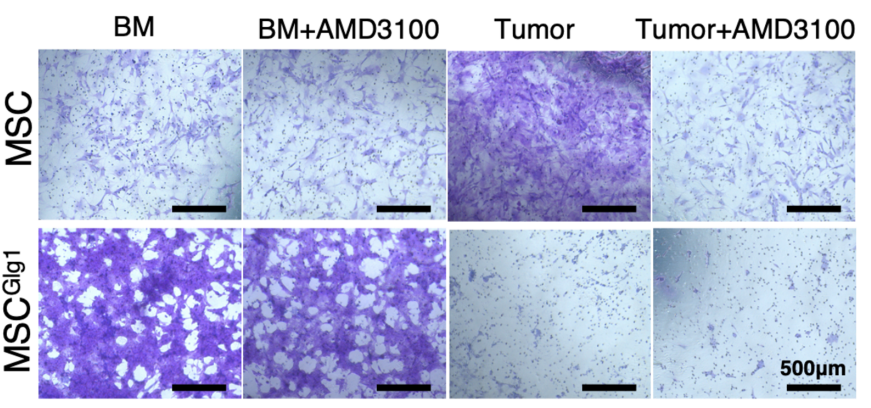
Plerixafor solution purchased from MedChemExpress. Usage Cited in: Cell Stem Cell. 2026 Apr 2;33(4):660-675.e5. [Abstract]
Crystal violet staining of migrated MSCs in Transwell chambers. Scale bars, 500 μm. The results showed that MSCGlg1migration toward primary BM cells was unaffected by the CXCR4 antagonist Plerixafor (AMD3100, 5 μM; 24 h). In contrast, Plerixafor (AMD3100) markedly inhibited the migration of unmodified MSCs toward tumor-conditioned medium.
-
Nat Cell Biol
Trafficking circuit of CD8+ T cells between the intestine and bone marrow governs antitumour immunity. [Abstract]2024 Aug;26(8):1346-1358. PMID: 39039181 -
-
Bone Res
A RANKL+/CXCR4+ B cell population accumulates in bone marrow and causes age-related osteoporosis in mice. [Abstract]2026 May 18;14(1):53. PMID: 42151112
Plerixafor solution purchased from MedChemExpress. Usage Cited in: Bone Res. 2026 May 18;14(1):53. [Abstract]
FACS-sorted RCBs (RANKL+B220hiIgM+) from 3- and 24-month-old mice were treated with vehicle or 50 μM Plerixafor for 2 h, then cultured in transwell plates coated with BdMPCs from 15-month-old WT or P-cKO mice, treated with vehicle or Plerixafor for 6 h, and stained with crystal violet. Plerixafor, a CXCR4 antagonist, effectively inhibited the age- and genotype-enhanced migration of RCBs toward bone-derived MPCs. Bar = 100 μm.

Plerixafor solution purchased from MedChemExpress. Usage Cited in: Bone Res. 2026 May 18;14(1):53. [Abstract]
Representative images showing ROSAmTmG mouse-derived tdTomato+ cells (red) in metaphysis of tibiae from NSG mice treated with vehicle or Plerixafor (5 mg/kg; i.p.; once daily for 12 days), and the number of tdTomato+ cells. The results showed that the Plerixafor-treated recipients had significantly fewer tdTomato+ RCBs than the vehicle-treated recipients. Bar = 50 μm.
-
Bone Res
Neonatal bone marrow interstitial fluid supports expansion and osteogenic ability of human bone marrow mesenchymal stromal cells. [Abstract]2025 Dec 15;13(1):102. PMID: 41392038
Plerixafor solution purchased from MedChemExpress. Usage Cited in: Bone Res. 2025 Dec 15;13(1):102. [Abstract]
Representative images and quantification data of migratory hBMSCs in the Transwell culture (see the Materials and Methods section for details). rhCXCL12, recombinant human CXCL12 protein; Plerixafor (AMD3100), the CXCR4 antagonist. Scale bar, 100 μm. The results showed that the administration of the CXCR4 antagonist Plerixafor (AMD3100, 50 nmol/L; 24 h) eliminated the increased migratory ability of NBIF-fed hBMSCs.
-
-
-
-
Nat Commun
2025 Dec 7;16(1):10945. PMID: 41354661 -
J Nanobiotechnology
CXCR4-engineered fibroblast membrane nanovesicles for Photothermal-enhanced ferroptotic therapy through chemokine-navigated tumor homing. [Abstract]2025 Dec 30;24(1):102. PMID: 41462305
Plerixafor solution purchased from MedChemExpress. Usage Cited in: J Nanobiotechnology. 2025 Dec 30;24(1):102. [Abstract]
In vivo IR780 distribution in MDA-MB-468 tumor-bearing mice at different time points after i.v. injection of FbM@IR NPs, FbM@IR NPs + Plerixafor (3.1 mg/kg; i.p.; single dose), FbM@IR NPs + LIT-927 and CTR-FbM@IR NPs. (Green dashed circles indicate tumor sites).

Plerixafor solution purchased from MedChemExpress. Usage Cited in: J Nanobiotechnology. 2025 Dec 30;24(1):102. [Abstract]
In vivo IR780 distribution in KYSE-30 tumor-bearing mice at different time points after i.v. injection of FbM@IR NPs, FbM@IR NPs + Plerixafor (3.1 mg/kg; i.p.; single dose), FbM@IR NPs + LIT-927 and CTR-FbM@IR NPs. (Green dashed circles indicate tumor sites).
-
J Nanobiotechnology
The bone marrow mesenchymal stem cells derived migrasomes induced by Titania nanotubes surface serve as chemotaxis effect for osteogenesis. [Abstract]2025 Aug 29;23(1):592. PMID: 40877924 -
Theranostics
CXCL12-mediated HOXB5 overexpression facilitates Colorectal Cancer metastasis through transactivating CXCR4 and ITGB3. [Abstract]2021 Jan 1;11(6):2612-2633. PMID: 33456563
Plerixafor solution purchased from MedChemExpress. Usage Cited in: Theranostics. 2021 Jan 1;11(6):2612-2633. [Abstract]
Caco-2 cells are incubated with vehicle or AMD3100 (1 µg/ml, 24 hours) after lentivirus transfection (LV-HOXB5), then Western blotting assays are conducted to measure the protein levels of CXCL12, HOXB5, CXCR4, p-ERK and p-ETS1 in the indicated cell lines.

Plerixafor solution purchased from MedChemExpress. Usage Cited in: Theranostics. 2021 Jan 1;11(6):2612-2633. [Abstract]
Transwell assays indicated that AMD3100 treatment (1 µg/ml, 24 hours) significantly decreases the migration and invasion of Caco-2-HOXB5 cells.
-
Adv Sci (Weinh)
Nanoparticle-Mediated CXCL12-CXCR4 Inhibition Reprograms Macrophages and Suppresses Gastric Carcinoma. [Abstract]2025 Aug;12(30):e00225. PMID: 40536774 -
Cell Rep Med
Augment proteasome inhibitor efficacy activates CD8+ T cell-mediated antitumor immunity in breast cancer. [Abstract]2025 Jul 15;6(7):102211. PMID: 40609539 -
Biomaterials
Engineered cell membrane vesicles loaded with lysosomophilic drug for acute myeloid leukemia therapy via organ-cell-organelle cascade-targeting. [Abstract]2025 Jun:317:123091. PMID: 39778270 -
Research (Wash D C)
High Mobility Group Protein B1 Promotes Interferon Regulatory Factor 1 SUMOylation to Prime Trained Immunity of Circulating Monocytes and Aggravate the Progressive Synovial Inflammation in Knee Osteoarthritis. [Abstract]2026 May 14:9:1243. PMID: 42146764 -
-
Cardiovasc Res
Periaortic lymphatic vessels protect against thoracic aortic dissection through mobilizing immune response. [Abstract]2025 Nov 11:cvaf215. PMID: 41213294 -
-
Cell Death Dis
TREM2 deficiency in microglia accelerates photoreceptor cell death and immune cell infiltration following retinal detachment. [Abstract]2023 Mar 28;14(3):219. PMID: 36977680 -
Cell Death Dis
PGK1 contributes to tumorigenesis and sorafenib resistance of renal clear cell carcinoma via activating CXCR4/ERK signaling pathway and accelerating glycolysis. [Abstract]2022 Feb 4;13(2):118. PMID: 35121728
Plerixafor solution purchased from MedChemExpress. Usage Cited in: Cell Death Dis. 2022 Feb 4;13(2):118. [Abstract]
PGK1 induced the CXCR4-mediated phosphorylation of AKT (p-AKT) and ERK (p-ERK), and blockade of CXCR4 signaling by AMD3100 (48 h) treatment did not alter cellular PGK1 expression in KIRC cells.
-
Cell Death Dis
Hepatitis B virus X protein promotes the stem-like properties of OV6+ cancer cells in hepatocellular carcinoma. [Abstract]2017 Jan 19;8(1):e2560. PMID: 28102846 -
Cancer Lett
CXCR4 inhibitor, AMD3100, down-regulates PARP1 expression and Synergizes with olaparib causing severe DNA damage in BRCA-proficient triple-negative breast cancer. [Abstract]2022 Oct 7;551:215944. PMID: 36209974
Plerixafor solution purchased from MedChemExpress. Usage Cited in: Cancer Lett. 2022 Oct 7;551:215944. [Abstract]
Viability of cells treated with combinations different concentrations of AMD3100 and Olaparib for 24 h.

Plerixafor solution purchased from MedChemExpress. Usage Cited in: Cancer Lett. 2022 Oct 7;551:215944. [Abstract]
Immunohistochemical staining of proliferation-related protein, Ki-67, in breast cancer after treatment with control, AMD3100 (2.5 mg/kg), Olaparib, or a combination of AMD3100 and Olaparib.
-
J Immunother Cancer
2024 Dec 4;12(12):e009629. PMID: 39631847 -
Int J Biol Sci
SDF-1 in Mammary Fibroblasts of Bovine with Mastitis Induces EMT and Inflammatory Response of Epithelial Cells. [Abstract]2017 May 5;13(5):604-614. PMID: 28539833
Plerixafor solution purchased from MedChemExpress. Usage Cited in: Int J Biol Sci. 2017 May 5;13(5):604-614. [Abstract]
Epithelial cells with or without AMD3100 pretreatment are cultured in conditioned medium (CM) from LPS-treated NFs or LTA-treated NFs for 3 days, and the secretion of TNF-α in the supernatant of culture is detected by ELISA. Epithelial cells cultured in MSM are used as control. Both LPS-treated NFs and LTA-treated NFs enhanced the section of TNF-α by epithelial cells compared with control. Pretreatment of epithelial cells with AMD3100 significantly attenuates the increase of TNF-α.
-
Phytomedicine
Wikstrol B reactivates latent human immunodeficiency virus (HIV-1) via the nuclear factor-κB (NF-κB) pathway. [Abstract]2025 Jun:141:156667. PMID: 40233507 -
-
Acta Pharmacol Sin
Lung memory B cells ameliorate Alzheimer's disease-like pathology in 5×FAD mice through the CXCL12-CXCR4 axis. [Abstract]2025 Oct 17. PMID: 41107404 -
Cell Death Discov
CXCL12 alone is enough to Reprogram Normal Fibroblasts into Cancer-Associated Fibroblasts. [Abstract]2025 Apr 8;11(1):156. PMID: 40199862 -
Acta Biomater
Chemotactic recruitment of genetically engineered cell membrane-camouflaged metal-organic framework nanoparticles for ischemic osteonecrosis treatment. [Abstract]2024 Sep 1:185:410-428. PMID: 39029641 -
Acta Biomater
Nanoparticle-mediated blockade of CXCL12/CXCR4 signaling enhances glioblastoma immunotherapy: Monitoring early responses with MRI radiomics. [Abstract]2024 Mar 15:177:414-430. PMID: 38360292 -
-
J Transl Med
BM-MSCs display altered gene expression profiles in B-cell acute lymphoblastic leukemia niches and exert pro-proliferative effects via overexpression of IFI6. [Abstract]2023 Sep 5;21(1):593. PMID: 37670388 -
Oncogene
PDGFR-induced autocrine SDF-1 signaling in cancer cells promotes metastasis in advanced skin carcinoma. [Abstract]2019 Jun;38(25):5021-5037. PMID: 30874597
Plerixafor solution purchased from MedChemExpress. Usage Cited in: Oncogene. 2019 Jun;38(25):5021-5037. [Abstract]
IF staining of the tumor tissue sections showed decreased Ki67 and a reversal of EMT markers indicated by increased E-cadherin and decreased N-cadherin expression in the AMD3100 (5 mg/kg or 3.5 mg/kg) treated groups.

Plerixafor solution purchased from MedChemExpress. Usage Cited in: Oncogene. 2019 Jun;38(25):5021-5037. [Abstract]
Additional EMT-related proteins (Snail and Slug) are downregulated by AMD3100 (5 mg/kg or 3.5 mg/kg) in tumor samples from both diet groups, as quantified by immunoblotting.
-
Leukemia
Distinct stromal cell populations define the B-cell acute lymphoblastic leukemia microenvironment. [Abstract]2025 Aug 15. PMID: 40817406
Plerixafor solution purchased from MedChemExpress. Usage Cited in: Leukemia. 2025 Aug 15. [Abstract]
Effect of cytokine signaling blockade on ALL cell survival in co-culture with stromal populations. ALL cells were co-cultured with early mesenchymal progenitors, adipogenic progenitors, or cultured alone. Cell survival was assessed after treatment with blocking antibodies against IL7, Osteopontin, or the CXCR4 inhibitor Plerixafor (1 nM; 7 days), Mouse IgG1 kappa, Isotype Control (1 ug/mL; 7 days).
-
Int J Nanomedicine
Co-Delivery Nanomicelles for Potentiating TNBC Immunotherapy by Synergetically Reshaping CAFs-Mediated Tumor Stroma and Reprogramming Immunosuppressive Microenvironment. [Abstract]2023 Jul 31:18:4329-4346. PMID: 37545872 -
Fertil Steril
Protein kinase CK2 participates in estrogen-mediated endothelial progenitor cell homing to endometriotic lesions through stromal cells in a stromal cell-derived factor-1- CXCR4-dependent manner. [Abstract]2020 May;113(5):1067-1079.e5. PMID: 32386617 -
Biochem Pharmacol
Targeting the CXCR7 pathway with TC14012 to inhibit endothelial necroptosis and lung cancer metastasis. [Abstract]2025 Jun:236:116852. PMID: 40049294 -
Cell Mol Life Sci
Crosstalk between purinergic receptor P2Y11 and chemokine receptor CXCR7 is regulated by CXCR4 in human macrophages. [Abstract]2024 Mar 13;81(1):132. PMID: 38472446 -
J Mater Chem B
Alginate-aker injectable composite hydrogels promoted irregular bone regeneration through stem cell recruitment and osteogenic differentiation. [Abstract]2018 Apr 7;6(13):1951-1964. PMID: 32254361 -
RSC Adv
A multi-stage computational pipeline and in vitro validation for the discovery of small-molecule translation inhibitors targeting the bacterial ribosome. [Abstract]2026 Apr 7;16(20):18359-18373. PMID: 41953617 -
Drug Des Devel Ther
Inhibition of CXCR4 in Spinal Cord and DRG with AMD3100 Attenuates Colon-Bladder Cross-Organ Sensitization. [Abstract]2022 Jan 6;16:67-81. PMID: 35023903 -
Cells
Extracellular Vesicles Derived from Bone Marrow in an Early Stage of Ionizing Radiation Damage Are Able to Induce Bystander Responses in the Bone Marrow. [Abstract]2022 Jan 4;11(1):155. PMID: 35011718 -
Cells
2019 Jul 22;8(7):761. PMID: 31336612 -
-
Int Immunopharmacol
Apelin-13 regulated thrombotic inflammation and induced homing of EPCs to promote the dissolution and recanalization of deep vein thrombosis. [Abstract]2026 Jan 15:169:115969. PMID: 41391282 -
Int Immunopharmacol
Isoferulic acid regulates CXCL12/CXCR4-mediated apoptosis and autophagy in podocyte and mice with STZ-induced diabetic nephropathy. [Abstract]2025 Jan 10:144:113707. PMID: 39616856 -
Biomolecules
2024 Sep 25;14(10):1206. PMID: 39456139 -
Int J Mol Sci
PIEZO1 Promotes the Migration of Endothelial Cells via Enhancing CXCR4 Expression under Simulated Microgravity. [Abstract]2024 Jul 1;25(13):7254. PMID: 39000362 -
Int J Mol Sci
Multiplex Detection of Fluorescent Chemokine Binding to CXC Chemokine Receptors by NanoBRET. [Abstract]2024 May 4;25(9):5018. PMID: 38732237 -
Int J Mol Sci
Inhibition of Cxcr4 Disrupts Mouse Embryonic Palatal Mesenchymal Cell Migration and Induces Cleft Palate Occurrence. [Abstract]2023 Aug 13;24(16):12740. PMID: 37628919 -
Invest Ophthalmol Vis Sci
CXCR4-Mediated Chemokine Signaling Orchestrates the Progression of Conjunctival Melanocytic Lesions. [Abstract]2025 Aug 1;66(11):23. PMID: 40778698 -
Mol Med Rep
AMD3100 and SDF‑1 regulate cellular functions of endothelial progenitor cells and accelerate endothelial regeneration in a rat carotid artery injury model. [Abstract]2020 Oct;22(4):3201-3212. PMID: 32945467 -
J Cell Mol Med
Stromal Cell Derived Factor-1 Promotes Hepatic Insulin Resistance via Inhibiting Hepatocyte Lipophagy. [Abstract]2025 Jan;29(2):e70352. PMID: 39855896 -
Cell Signal
2020 Feb;66:109488. PMID: 31785332 -
J Periodontol
Stromal cell-derived factor-1 regulates expression of vascular endothelial growth factor and osteopontin after tooth extraction. [Abstract]2025 Jul 8. PMID: 40627767 -
ACS Infect Dis
Bcl-2 Antagonist Obatoclax Reactivates Latent HIV-1 via the NF-κB Pathway and Induces Latent Reservoir Cell Apoptosis in Latently Infected Cells. [Abstract]2023 Nov 10;9(11):2105-2118. PMID: 37796279 -
Transl Stroke Res
SDF-1α/CXCR4 Pathway Mediates Hemodynamics-Induced Formation of Intracranial Aneurysm by Modulating the Phenotypic Transformation of Vascular Smooth Muscle Cells. [Abstract]2022 Apr;13(2):276-286. PMID: 34173205 -
-
Cell Transplant
Effects of Low-Intensity Pulsed Ultrasound on the Migration and Homing of Human Amnion-Derived Mesenchymal Stem Cells to Ovaries in Rats With Premature Ovarian Insufficiency. [Abstract]2022 Jan-Dec;31:9636897221129171. PMID: 36282038 -
Br J Haematol
CXCR4 antagonists disrupt leukaemia-meningeal cell adhesion and attenuate chemoresistance. [Abstract]2023 May;201(3):459-469. PMID: 36535585 -
Stem Cells Int
IL-1 β Pretreatment Improves the Efficacy of Mesenchymal Stem Cells on Acute Liver Failure by Enhancing CXCR4 Expression. [Abstract]2020 Jul 7:2020:1498315. PMID: 32724311 -
Andrology
Saxagliptin alleviates erectile dysfunction through increasing stromal cell-derived factor-1 in diabetes mellitus. [Abstract]2023 Feb;11(2):295-306. PMID: 36113503 -
J Diabetes Complications
Plerixafor stimulates adhesive activity and endothelial regeneration of endothelial progenitor cells via elevating CXCR7 expression. [Abstract]2020 Oct;34(10):107654. PMID: 32741660 -
Kaohsiung J Med Sci
MiR-32-5p promoted epithelial-to-mesenchymal transition of oral squamous cell carcinoma cells via regulating the KLF2/CXCR4 pathway. [Abstract]2022 Feb;38(2):120-128. PMID: 34741382 -
J Steroid Biochem Mol Biol
The ERβ-CXCL19/CXCR4-NFκB pathway is critical in mediating the E2-induced inflammation response in the orange-spotted grouper (Epinephelus coioides). [Abstract]2021 Sep:212:105926. PMID: 34091027 -
Cell Tissue Res
M2 macrophages promote vasculogenesis during retinal neovascularization by regulating bone marrow-derived cells via SDF-1/VEGF. [Abstract]2020 Jun;380(3):469-486. PMID: 31989253 -
Brain Behav
Repetitive Transcranial Magnetic Stimulation Improves Cognitive Impairment via the Regulation of White Matter Injury in Rats With Ischemic Stroke. [Abstract]2025 Dec;15(12):e71117. PMID: 41355332 -
PLoS One
CXCR4 inhibition with AMD3100 attenuates amphetamine induced locomotor activity in adolescent Long Evans male rats. [Abstract]2021 Mar 1;16(3):e0247707. PMID: 33647040 -
Virology
Generation and evaluation of an EcoHIV mouse model to study HIV-1 integration and expression. [Abstract]2026 Jun 4:623:110991. PMID: 42320113 -
Biochem Biophys Res Commun
Assessing the effect and related mechanism of naringenin on the proliferation, osteogenic differentiation and endothelial differentiation of human periodontal ligament stem cells. [Abstract]2021 Jan 1:534:337-342. PMID: 33250176 -
Cell Physiol Biochem
MicroRNA-381 Favors Repair of Nerve Injury Through Regulation of the SDF-1/CXCR4 Signaling Pathway via LRRC4 in Acute Cerebral Ischemia after Cerebral Lymphatic Blockage. [Abstract]2018;46(3):890-906. PMID: 29669322
Plerixafor solution purchased from MedChemExpress. Usage Cited in: Cell Physiol Biochem. 2018;46(3):890-906. [Abstract]
The protein expression of LRRC4, SDF-1, CXCR4, ERK, Slit2 and VEGF in the brain tissue of rats is determined by Western blotting.
-
Exp Ther Med
Repetitive transcranial magnetic stimulation increases neurological function and endogenous neural stem cell migration via the SDF-1α/CXCR4 axis after cerebral infarction in rats. [Abstract]2021 Sep;22(3):1037. PMID: 34373723 -
Oncol Lett
Targeting CXC motif chemokine receptor 4 inhibits the proliferation, migration and angiogenesis of lung cancer cells. [Abstract]2018 Sep;16(3):3976-3982. PMID: 30128017 -
-
-
bioRxiv
Dietary fructose promotes MASH/HCC progression through enhanced intestinal HIF-2α-dependent iron absorption. [Abstract]2026 Jun 11:2026.06.07.729655. PMID: 42327230 -
-
Res Sq
2026 May 20:rs.3.rs-9499667. PMID: 42239782 -
-
-
-
-
-
-
-
-
-
-
Stem Cell Res Ther
Important role of the SDF-1/CXCR4 axis in the homing of systemically transplanted human amnion-derived mesenchymal stem cells (hAD-MSCs) to ovaries in rats with chemotherapy-induced premature ovarian insufficiency (POI). [Abstract]2022 Feb 23;13(1):79. PMID: 35197118 -
-
J Oncol
Exosomes Derived from RM-1 Cells Promote the Recruitment of MDSCs into Tumor Microenvironment by Upregulating CXCR4 via TLR2/NF- κ B Pathway. [Abstract]2021 Oct 8:2021:5584406. PMID: 34659412 -
-
-
-
Biomed Pharmacother
Bone marrow mesenchymal stem cells in microenvironment transform into cancer-associated fibroblasts to promote the progression of B-cell acute lymphoblastic leukemia. [Abstract]2020 Oct:130:110610. PMID: 34321159 -
-
BMC Complement Altern Med
Baicalin promotes apoptosis and inhibits proliferation and migration of hypoxia-induced pulmonary artery smooth muscle cells by up-regulating A2a receptor via the SDF-1/CXCR4 signaling pathway. [Abstract]2018 Dec 12;18(1):330. PMID: 30541517 -


Pureza y Documentación


Referencias

Calculators
Concentration (start) × Volume (start) = Concentration (final) × Volume (final)


Plerixafor solution Related Classifications
HY-FL10046 Related Classifications
 Powered by Bioz
Keywords
- Plerixafor solution
- 110078-46-1
- AMD 3100 solution
- JM3100 solution
- SID791 solution
- CXCR
- CXC chemokine receptors
- C-X-C motif chemokine receptors
- CXCR4
- CXCR7
- SDF-1α/CXCL12
- bone marrow
- chemokine-induced receptor internalization
- corneal neovascularization
- fibrosis
- ischemic stroke
- pulmonary inflammation
- stem cell retention
- Inhibitor
- inhibitor
- inhibit