



Prinomastat
Based on 4 publication(s) in Google Scholar
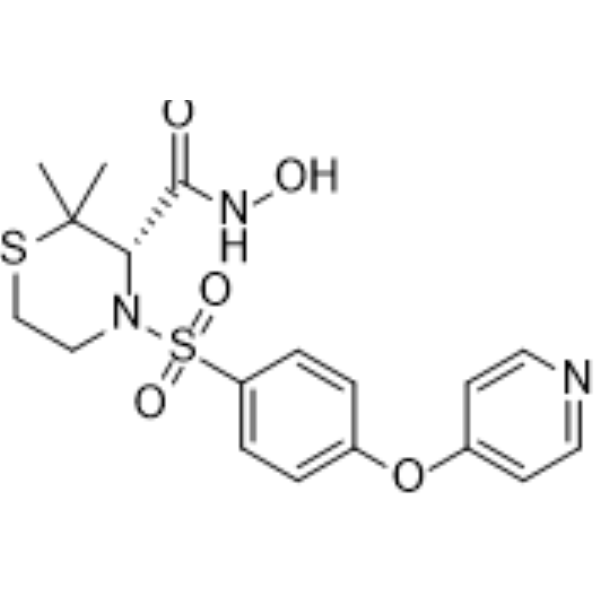
Prinomastat (AG3340) is a broad spectrum, potent, orally active metalloproteinase (MMP) inhibitor with IC50s of 79, 6.3 and 5.0 nM for MMP-1, MMP-3 and MMP-9, respectively. Prinomastat inhibits MMP-2, MMP-3, MMP-13 and MMP-9 with Kis of 0.05 nM, 0.3 nM, 0.03 nM and 0.26 nM, respectively. Prinomastat crosses blood-brain barrier. Antitumor avtivity.
연구목적의 판매만을 진행합니다. 환자를 대상으로 한 판매는 하지 않습니다.
- Purity : 98.41%
- CAS No.: 192329-42-3
- 화학식: C18H21N3O5S2
- 분자량:423.51
-
보관:Powder -20°C, 3 years , 4°C, 2 years ; In solvent -80°C, 6 months , -20°C, 1 month

To place orders, for customer services and technical support, please contact: MedChemExpress USA
Tel: 609-228-6898 E-mail: [email protected] [email protected]


-
 Biological Activity
-
Chemical Information
-
용액&용해도
- Protocol
- 순도&문서
- References
-
 Help & FAQs


-
HY-12169
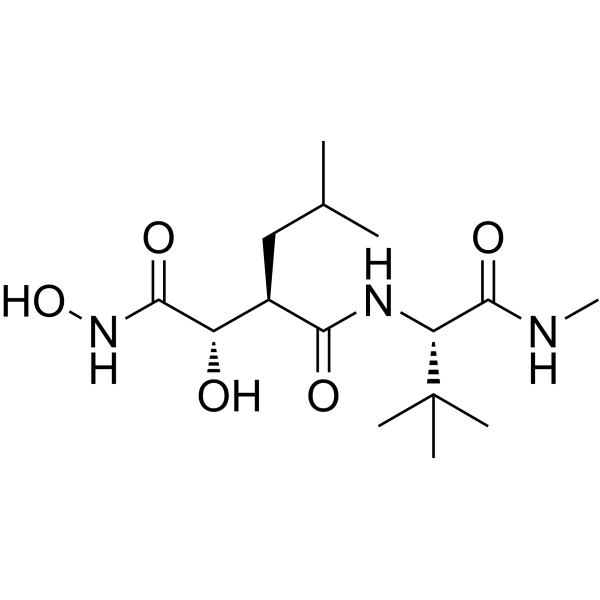
MarimastatMMP Inhibitor -
HY-13564
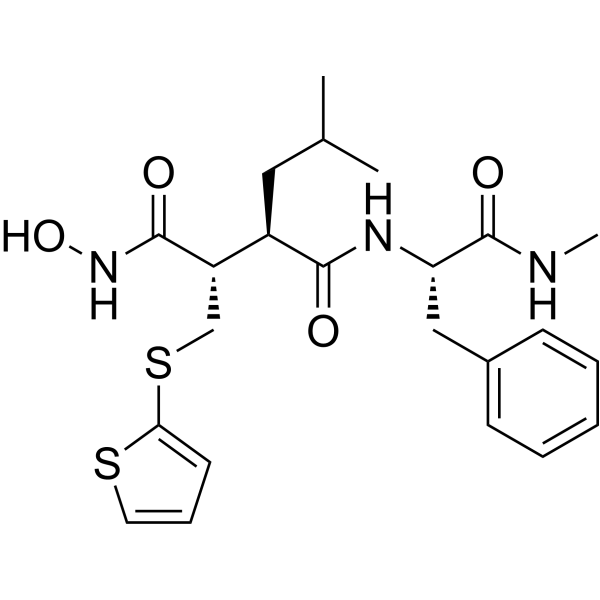
BatimastatMMP Inhibitor -
HY-15768
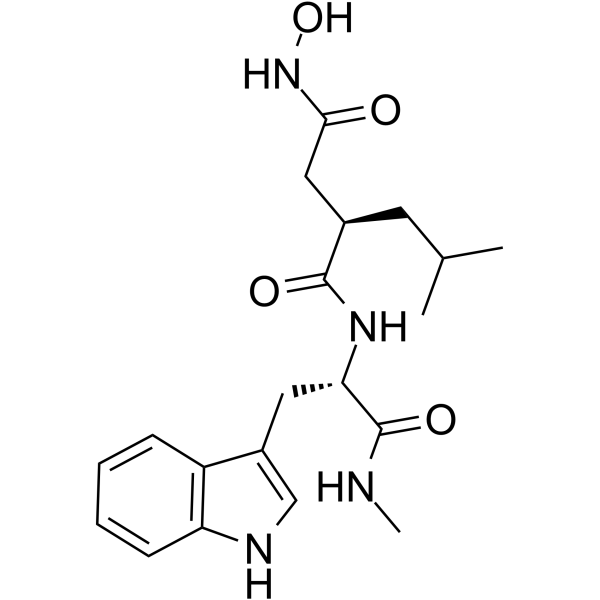
IlomastatMMP Inhibitor -
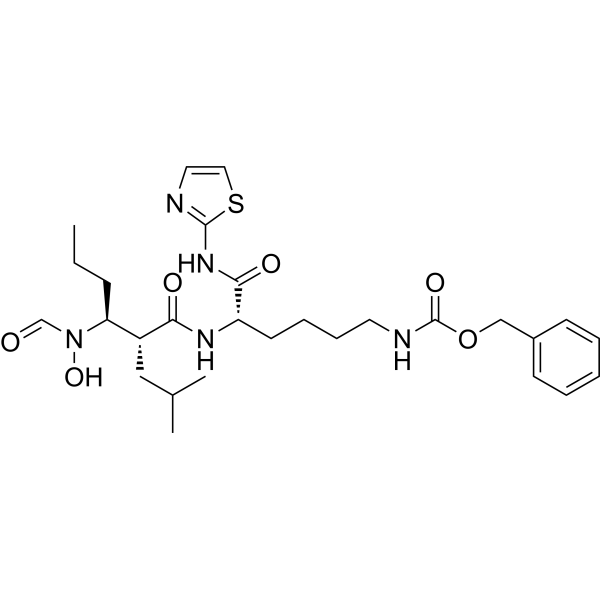
HY-115670
GW280264XADAM10/17 Inhibitor -
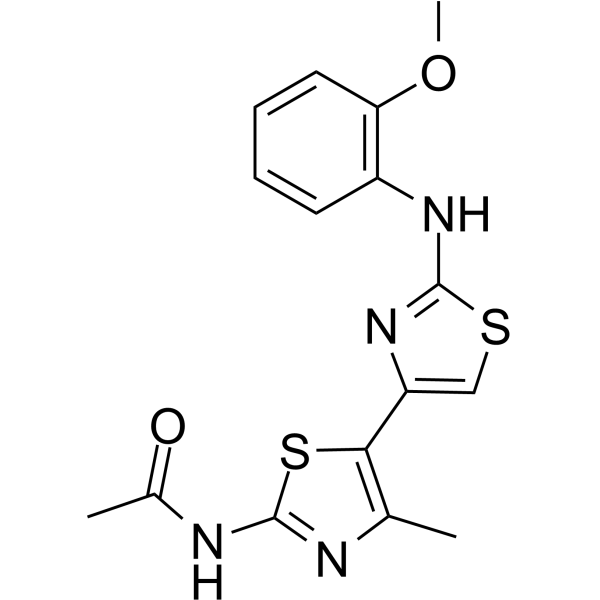
HY-103482
JNJ0966MMP-9 Inhibitor -
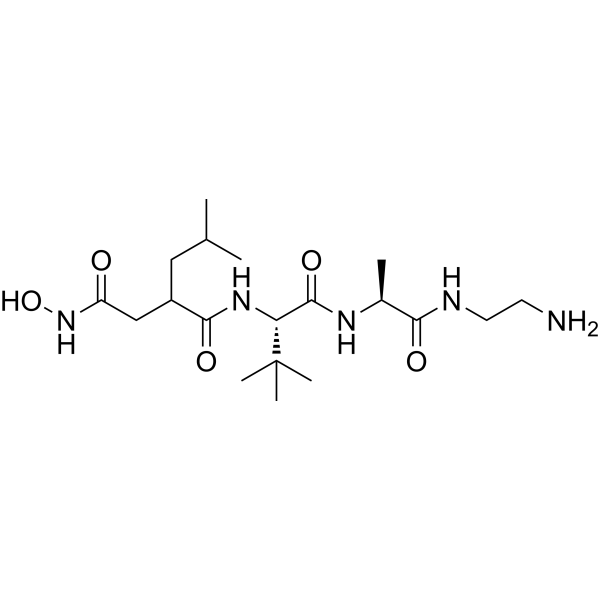
HY-100211
TAPI-2MMP/TACE/ADAM Inhibitor -
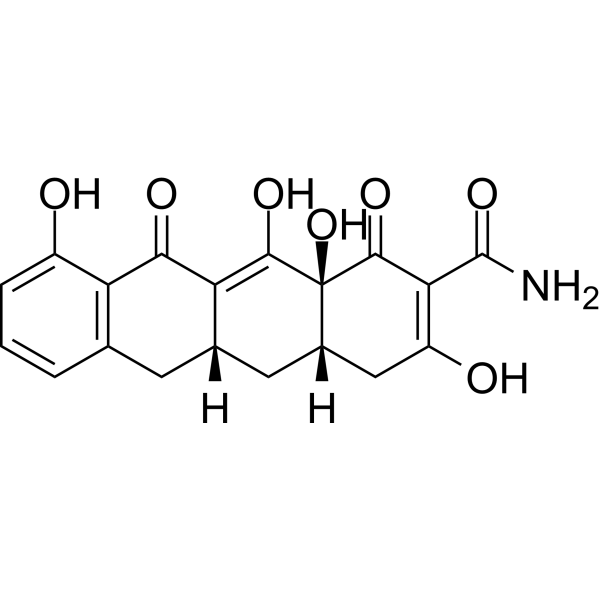
HY-13648
IncyclinideMMP Inhibitor -
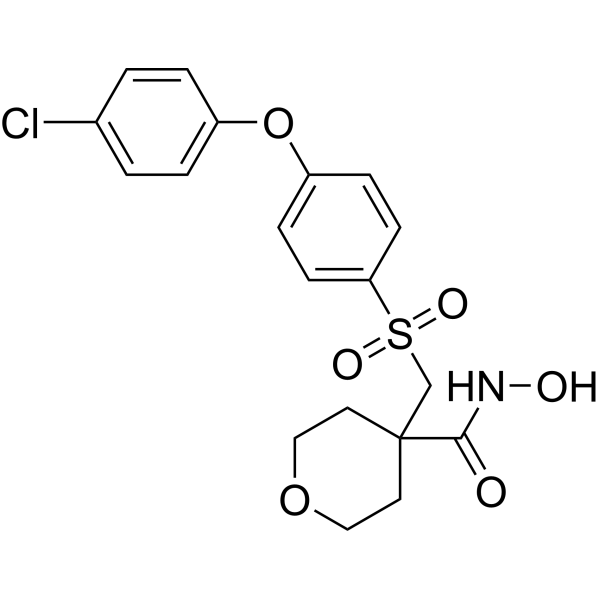
HY-10398
CTS-1027MMP Inhibitor -
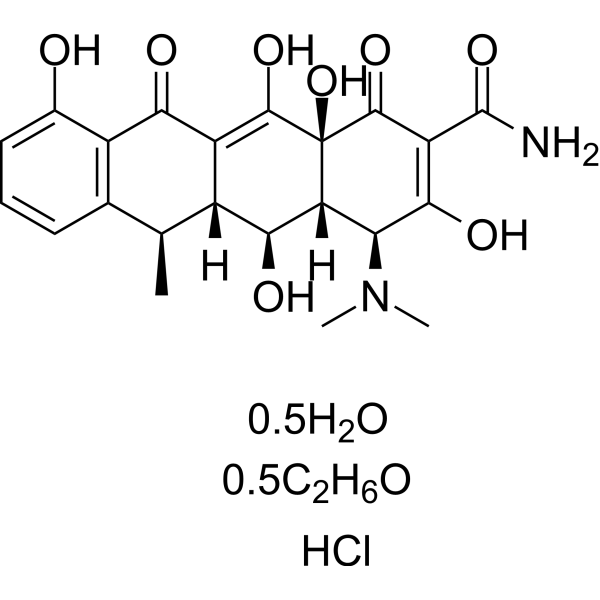
HY-N0565B
Doxycycline hyclateMMP Inhibitor -
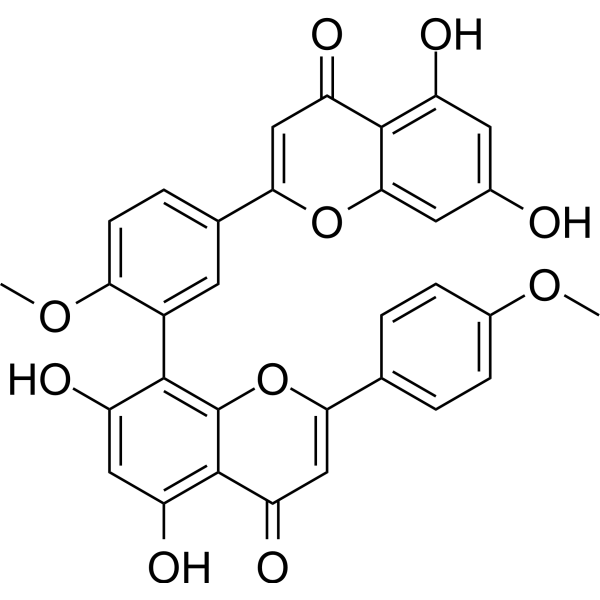
HY-N2117
Isoginkgetinpre-mRNA Splicing Inhibitor -

HY-12169R
Marimastat (Standard)MMP Inhibitor -

HY-N0565BR
Doxycycline hyclate (Standard)Reference Standard
Publications Citing Use of MedChemExpress (MCE) Prinomastat
More

Biological Activity
제품 설명
|
MMP-9 5 nM (IC50) |
MMP-9 0.26 nM (Ki) |
MMP-2 0.05 nM (Ki) |
MMP-1 79 nM (IC50) |
MMP-3 6..3 nM (IC50) |
MMP-3 0.3 nM (Ki) |
collagenases 3 0.03 nM (Ki) |
Cellular Effect
|
Cell Line

|
Type | Value | Description | References |
|---|---|---|---|---|
| A549 | IC50 |
>500 μM
Compound: Prinomastat
|
Antiproliferative activity against human A549 cells assessed as reduction in cell viability incubated for 48 hrs by MTT assay
Antiproliferative activity against human A549 cells assessed as reduction in cell viability incubated for 48 hrs by MTT assay
|
[PMID: 31415980] |
| HL-60 | IC50 |
>500 μM
Compound: Prinomastat
|
Antiproliferative activity against human HL60 cells assessed as reduction in cell viability incubated for 48 hrs by MTT assay
Antiproliferative activity against human HL60 cells assessed as reduction in cell viability incubated for 48 hrs by MTT assay
|
[PMID: 31415980] |
| HUVEC | IC50 |
>500 μM
Compound: Prinomastat
|
Cytotoxicity against HUVEC assessed as reduction in cell viability incubated for 48 hrs by MTT assay
Cytotoxicity against HUVEC assessed as reduction in cell viability incubated for 48 hrs by MTT assay
|
[PMID: 31415980] |
| K562 | IC50 |
>500 μM
Compound: Prinomastat
|
Antiproliferative activity against human K562 cells assessed as reduction in cell viability incubated for 48 hrs by MTT assay
Antiproliferative activity against human K562 cells assessed as reduction in cell viability incubated for 48 hrs by MTT assay
|
[PMID: 31415980] |
| KG-1 | IC50 |
>500 μM
Compound: Prinomastat
|
Antiproliferative activity against human KG1 cells assessed as reduction in cell viability incubated for 48 hrs by MTT assay
Antiproliferative activity against human KG1 cells assessed as reduction in cell viability incubated for 48 hrs by MTT assay
|
[PMID: 31415980] |
| MCF7 | IC50 |
>500 μM
Compound: Prinomastat
|
Antiproliferative activity against human MCF7 cells assessed as reduction in cell viability incubated for 48 hrs by MTT assay
Antiproliferative activity against human MCF7 cells assessed as reduction in cell viability incubated for 48 hrs by MTT assay
|
[PMID: 31415980] |
| PC-3 | IC50 |
>500 μM
Compound: Prinomastat
|
Antiproliferative activity against human PC3 cells assessed as reduction in cell viability incubated for 48 hrs by MTT assay
Antiproliferative activity against human PC3 cells assessed as reduction in cell viability incubated for 48 hrs by MTT assay
|
[PMID: 31415980] |
| THP-1 | IC50 |
8600 nM
Compound: 2Prinomastat
|
Selective inhibition of the cellular TNF alpha release from LPS-stimulated THP-1 cells
Selective inhibition of the cellular TNF alpha release from LPS-stimulated THP-1 cells
|
[PMID: 11754593] |
In Vitro
Prinomastat (AG3340; 0.1-1 μg/mL; 4 days; C57MG/Wnt1 cells) inhibits Wnt1-induced MMP-3 production. Reversal of Wnt1-induced EMT and β-catenin transcriptional activity by Prinomastat[1].
Co-culture of L/Wnt3a cells and CT7 cells increases the Topflash activity in CT7 cells, and co-culturing both L/Wnt3a cells and MMP-3 overexpressing C57MG cells with CT7 cells increases the Topflash luciferase activity in CT7 cells beyond the level observed with L/Wnt3a cells, and these effects are all suppressed by Prinomastat (AG3340)[1].
Inhibition of entry of C57MG/Wnt1 cells into S phase by Prinomastat corresponds to a decrease in expression of cyclin D1 and Erk1/2 phosphorylation. The effect of Prinomastat on Wnt1-induced migration is then examined using an in vitro wound assay. As anticipated, the migration of C57MG/Wnt1 cells is increased by 1.8-fold when compared with C57MG cells.The effect of Wnt1 on the cellular distribution of vimentin is reversed by Prinomastat in C57MG/Wnt1 cells[1].
MedChemExpress (MCE) has not independently confirmed the accuracy of these methods. They are for reference only.
-
Cell Line:C57MG/Wnt1 cells
-
Concentration:0.1 µg/mL, 1 µg/mL
-
Incubation Time:4 days
-
Result:A significant decrease in MMP-3 promoter activity in C57MG/Wnt1 cells.
In Vivo
MedChemExpress (MCE) has not independently confirmed the accuracy of these methods. They are for reference only.
Clinical Trial
| NCT Number | Sponsor | Condition | Start Date |
Phase
|
|---|---|---|---|---|
| NCT01329991 | 2011-05 | PHASE1 |


Chemical Information
-
CAS No. 192329-42-3
-
Appearance Solid
-
분자량 423.51
-
화학식 C18H21N3O5S2
-
Color White to off-white
-
SMILES
O=C([C@@H]1N(S(=O)(C2=CC=C(OC3=CC=NC=C3)C=C2)=O)CCSC1(C)C)NO
-
Synonyms
AG3340; KB-R9896
-
선적
Room temperature in continental US; may vary elsewhere.
-
보관
Powder -20°C 3 years 4°C 2 years In solvent -80°C 6 months -20°C 1 month


Publications (4)
-
Journal Impact Factor
-
Most Recent
-
Sci Adv
2023 Jan 20;9(3):eadd3867. PMID: 36662861 -
J Neuropathol Exp Neurol
Inhibiting Matrix Metalloproteinases Protects Evoked Electromyography Amplitudes and Muscle Tension in the Orbicularis Oris Muscle in a Rat Model of Facial Nerve Injury. [Abstract]2022 Sep 19;81(10):816-824. PMID: 35656867 -
-


용액&용해도
In Vitro:
DMSO : 100 mg/mL (236.12 mM; Need ultrasonic; Hygroscopic DMSO has a significant impact on the solubility of product, please use newly opened DMSO)
Please refer to the solubility information to select the appropriate solvent. Once prepared, please aliquot and store the solution to prevent product inactivation from repeated freeze-thaw cycles.
Storage method and period of stock solution: -80°C, 6 months; -20°C, 1 month. When stored at -80°C, please use it within 6 months. When stored at -20°C, please use it within 1 month.
Please refer to the solubility information to select the appropriate solvent. Once prepared, please aliquot and store the solution to prevent product inactivation from repeated freeze-thaw cycles.
Storage method and period of stock solution: -80°C, 6 months; -20°C, 1 month. When stored at -80°C, please use it within 6 months. When stored at -20°C, please use it within 1 month.
Concentration (start) × Volume (start) = Concentration (final) × Volume (final)
In Vivo:
Select the appropriate dissolution method based on your experimental animal and administration route.
- For the following dissolution methods, please ensure to first prepare a clear stock solution using an In Vitro approach and then sequentially add co-solvents:
- To ensure reliable experimental results, the clarified stock solution can be appropriately stored based on storage conditions. As for the working solution for In Vivo experiments, it is recommended to prepare freshly and use it on the same day.
- The percentages shown for the solvents indicate their volumetric ratio in the final prepared solution. If precipitation or phase separation occurs during preparation, heat and/or sonication can be used to aid dissolution.
Add each solvent one by one: 10% DMSO 40% PEG300 5% Tween-80 45% Saline
Solubility: ≥ 2.5 mg/mL (5.90 mM); Clear solution
This protocol yields a clear solution of ≥ 2.5 mg/mL (saturation unknown).
Taking 1 mL working solution as an example, add 100 μL DMSO stock solution (25.0 mg/mL) to 400 μL PEG300, and mix evenly; then add 50 μL Tween-80 and mix evenly; then add 450 μL Saline to adjust the volume to 1 mL.
Preparation of Saline: Dissolve 0.9 g sodium chloride in ddH₂O and dilute to 100 mL to obtain a clear Saline solution.
Add each solvent one by one: 10% DMSO 90% (20% SBE-β-CD in Saline)
Solubility: ≥ 2.5 mg/mL (5.90 mM); Clear solution
This protocol yields a clear solution of ≥ 2.5 mg/mL (saturation unknown).
Taking 1 mL working solution as an example, add 100 μL DMSO stock solution (25.0 mg/mL) to 900 μL 20% SBE-β-CD in Saline, and mix evenly.
Preparation of 20% SBE-β-CD in Saline (4°C, storage for one week): 2 g SBE-β-CD powder is dissolved in 10 mL Saline, completely dissolve until clear.
In Vivo Dissolution Calculator
Please enter the basic information of animal experiments:
-
-
-
-
Recommended: Prepare an additional quantity of animals to account for potential losses during experiments.
Please enter your animal formula composition:
-
%DMSO +
Recommended: Keep the proportion of DMSO in working solution below 2% if your animal is weak.
-
%+
-
+%Tween-80 + +
-
%Saline +
The co-solvents required include: DMSO, . All of co-solvents are available by MedChemExpress (MCE). , Tween 80. All of co-solvents are available by MedChemExpress (MCE).
Working solution concentration: 0.22 mg/mL
Method for preparing stock solution: mg drug dissolved in μL DMSO. Stock solution concentration: mg/mL.
1. Take μL DMSO stock solution;
2. Add μL .
μL , mix evenly;
3. Then add μL Tween 80, mix evenly;
4. Then add μL
Please ensure that the stock solution in the first step is dissolved to a clear state, and add co-solvents in sequence. You can use ultrasonic heating (ultrasonic cleaner, recommended frequency 20-40 kHz), vortexing, etc. to assist dissolution.


순도&문서
-
Data Sheet (282 KB)
-
SDS (418 KB)
- English - EN (418 KB)
- Français - FR (418 KB)
- Deutsch - DE (418 KB)
- Norwegian - NO (418 KB)
- Español - ES (418 KB)
- Swedish - SV (418 KB)
- Italian - IT (418 KB)
- Korean - KR (418 KB)
- Portuguese - PT (418 KB)
-
Handling Instructions (2659 KB)
References
[1]. Sørensen MD, et al. Cyclic phosphinamides and phosphonamides, novel series of potent matrix metalloproteinase inhibitors with antitumour activity. Bioorg Med Chem. 2003 Dec 1;11(24):5461-84. [Content Brief]
[2]. Blavier L, et al. Stromelysin-1 (MMP-3) is a target and a regulator of Wnt1-induced epithelial-mesenchymal transition (EMT). Cancer Biol Ther. 2010 Jul 15;10(2):198-208. [Content Brief]
[3]. Shalinsky DR, et al. Broad antitumor and antiangiogenic activities of AG3340, a potent and selective MMP inhibitor undergoing advanced oncology clinical trials. Ann N Y Acad Sci. 1999 Jun 30;878:236-70. [Content Brief]
[4]. Ozerdem U, et al. The effect of prinomastat (AG3340), a potent inhibitor of matrix metalloproteinases, on a subacute model of proliferative vitreoretinopathy. Curr Eye Res. 2000 Jun;20(6):447-53. [Content Brief]


Complete Stock Solution Preparation Table
Please refer to the solubility information to select the appropriate solvent. Once prepared, please aliquot and store the solution to prevent product inactivation from repeated freeze-thaw cycles.
Storage method and period of stock solution: -80°C, 6 months; -20°C, 1 month. When stored at -80°C, please use it within 6 months. When stored at -20°C, please use it within 1 month.
| Optional Solvent | Concentration Solvent Mass | 1 mg | 5 mg | 10 mg | 25 mg |
|---|---|---|---|---|---|
| DMSO | 1 mM | 2.3612 mL | 11.8061 mL | 23.6122 mL | 59.0305 mL |
| 5 mM | 0.4722 mL | 2.3612 mL | 4.7224 mL | 11.8061 mL | |
| 10 mM | 0.2361 mL | 1.1806 mL | 2.3612 mL | 5.9030 mL | |
| 15 mM | 0.1574 mL | 0.7871 mL | 1.5741 mL | 3.9354 mL | |
| 20 mM | 0.1181 mL | 0.5903 mL | 1.1806 mL | 2.9515 mL | |
| 25 mM | 0.0944 mL | 0.4722 mL | 0.9445 mL | 2.3612 mL | |
| 30 mM | 0.0787 mL | 0.3935 mL | 0.7871 mL | 1.9677 mL | |
| 40 mM | 0.0590 mL | 0.2952 mL | 0.5903 mL | 1.4758 mL | |
| 50 mM | 0.0472 mL | 0.2361 mL | 0.4722 mL | 1.1806 mL | |
| 60 mM | 0.0394 mL | 0.1968 mL | 0.3935 mL | 0.9838 mL | |
| 80 mM | 0.0295 mL | 0.1476 mL | 0.2952 mL | 0.7379 mL | |
| 100 mM | 0.0236 mL | 0.1181 mL | 0.2361 mL | 0.5903 mL |


Prinomastat Related Classifications
HY-12170 Related Classifications
 Powered by Bioz