



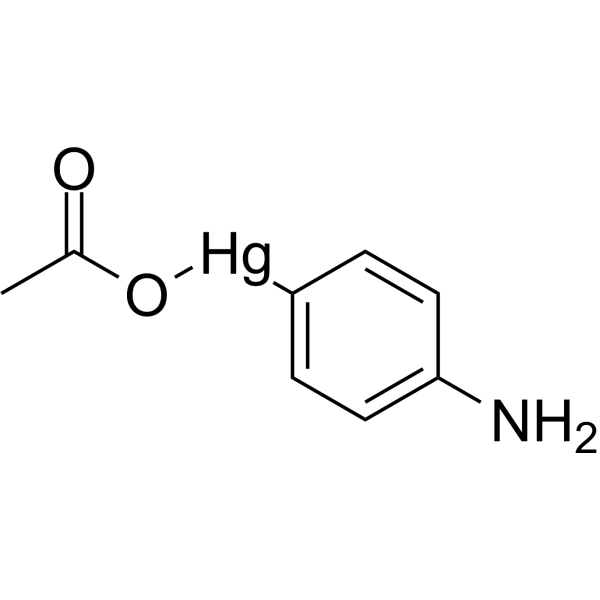
p-Aminophenylmercuric acetate
Based on 11 publication(s) in Google Scholar
p-Aminophenylmercuric acetate is an organomercurial activator of matrix metalloproteinases (MMP). P-Aminophenylmercuric acetate participates in the activation and inhibition of MMP-8 by attacking protein sulfhydryl or inducing cysteine switching reaction. p-Aminophenylmercuric acetate promotes the shedding of betacellulin precursor (pro-BTC). p-Aminophenylmercuric acetate influences the binding of agonists and antagonists to the opiate receptor.
For research use only. We do not sell to patients.
- Purity : 98.32%
- CAS No.: 6283-24-5
- Formula: C8H9HgNO2
- Molecular Weight:351.75
-
Storage:Powder -20°C, 3 years , 4°C, 2 years ; In solvent -80°C, 6 months , -20°C, 1 month

To place orders, for customer services and technical support, please contact: MedChemExpress USA
Tel: 609-228-6898 E-mail: [email protected] [email protected]


-
 Biological Activity
-
Chemical Information
-
Solvent & Solubility
- Protocols
- Purity & Documentation
- References
-
 Help & FAQs


-

HY-P73296
MMP-2 Protein, Human (HEK293) -
HY-P73300
MMP-9 Protein, Human (HEK293) -
HY-D0843
N-EthylmaleimideCysteine Residues Modifier -
HY-100350
CA-074 methyl esterCathepsin B Inhibitor -
HY-15768
IlomastatMMP Inhibitor -
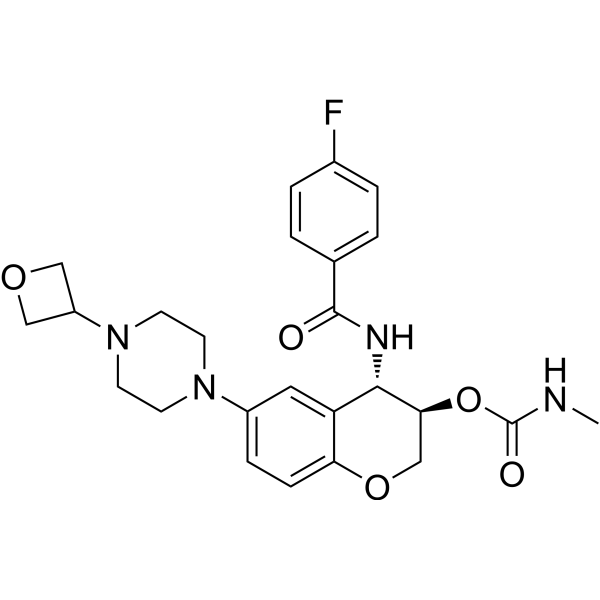
HY-15533
LY 3000328Cathepsin S Inhibitor -
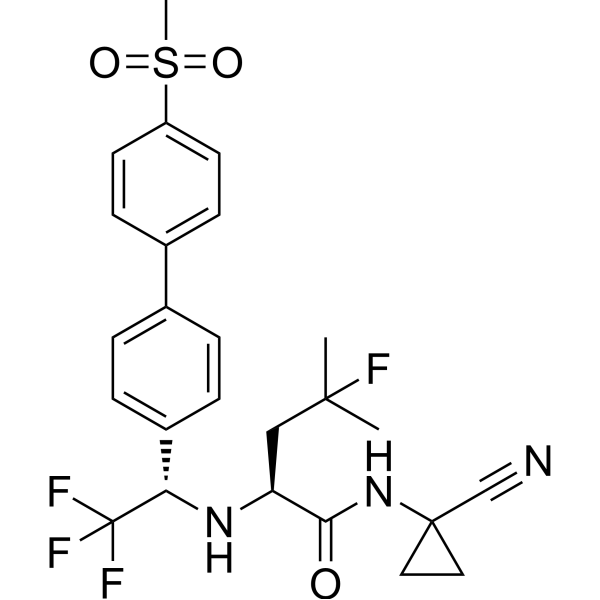
HY-10042
OdanacatibCathepsin K Inhibitor -
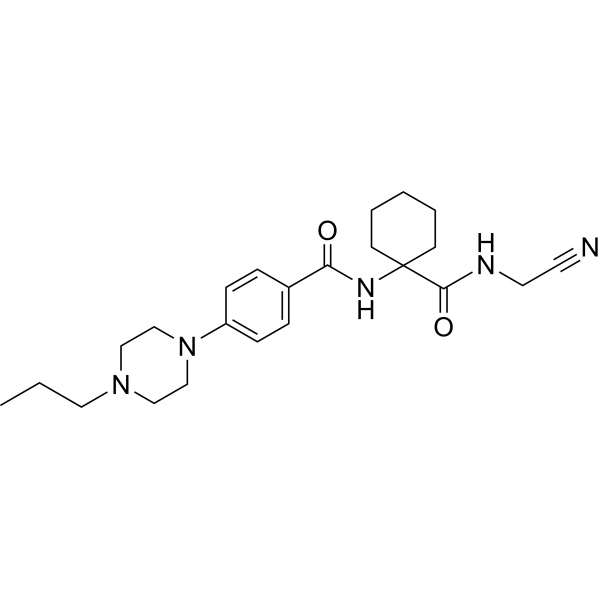
HY-15100
BalicatibCathepsin K Inhibitor -
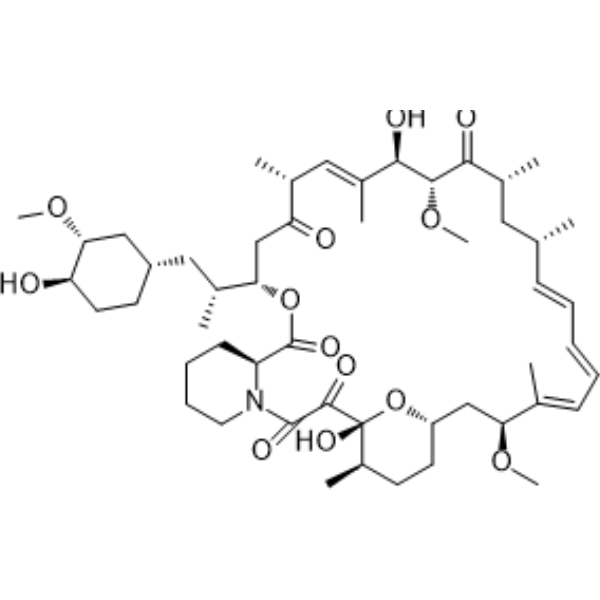
HY-10219
RapamycinmTOR Inhibitor -
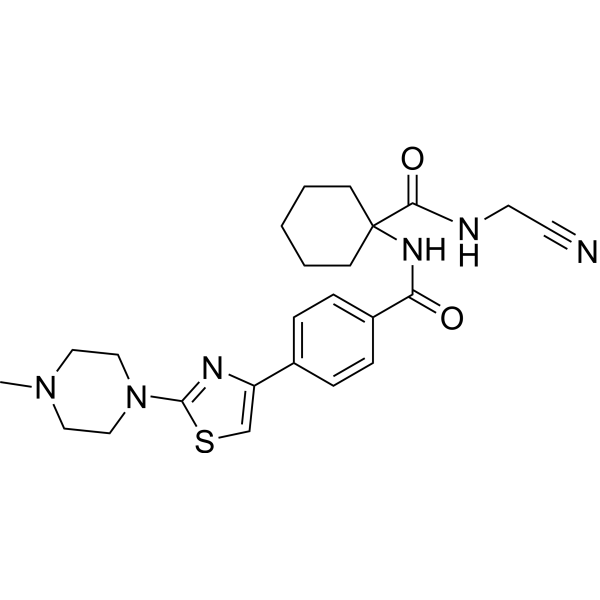
HY-103352
L-006235Cathepsin K Inhibitor -
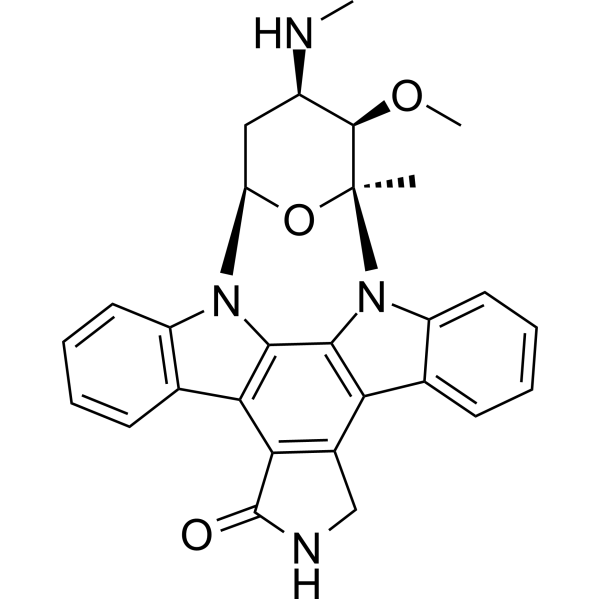
HY-15141
StaurosporinePKC/PKA Inhibitor -
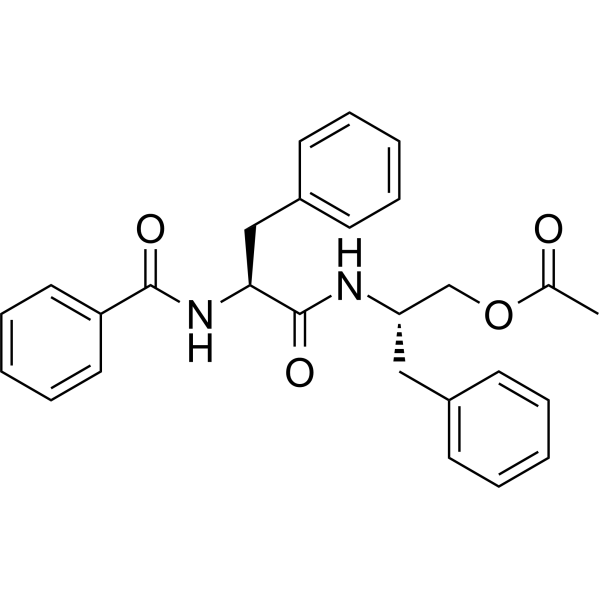
HY-N2905
Aurantiamide acetateCathepsin Inhibitor
Publications Citing Use of MedChemExpress (MCE) p-Aminophenylmercuric acetate
More- Adv Funct Mater. 2026 Feb 12.
- Adv Sci (Weinh). 2026 Jun 9:e76004. [Abstract]
- Sci Adv. 2025 Jan 17;11(3):eadr8841. [Abstract]
- Biomaterials. 2026 Jun:329:123945. [Abstract]
- Chem Eng J. 2026 Jan 12;529:172936.
- Biomedicines. 2026 Jan 27;14(2):286. [Abstract]
- J Photochem Photobiol B. 2026 May:278:113402. [Abstract]
- Biol Reprod. 2025 Apr 13;112(4):709-727. [Abstract]
- Biochem Biophys Res Commun. 2025 Oct 30:786:152681. [Abstract]
- STAR Protoc. 2025 Jun 20;6(2):103867. [Abstract]
- Hong Kong University. 2025.
 Customer Validation & Images

-
WB
-
WB
All Cathepsin Isoforms
More

Biological Activity
Description
In Vitro
p-Aminophenylmercuric acetate (APMA) (0-30 µM; 20 min) decreases the apparent number of dihydromorphine binding sites and increases the sensitivity of agonist binding to the inhibitory effects of sodium in rat brain homogenate[2].
p-Aminophenylmercuric acetate (0.5 mM; 30 min) activates the MMP-2 and MMP-9[3].
MedChemExpress (MCE) has not independently confirmed the accuracy of these methods. They are for reference only. Further protocols information, click here.


Chemical Information
-
CAS No. 6283-24-5
-
Appearance Solid
-
Molecular Weight 351.75
-
Formula C8H9HgNO2
-
Color White to yellow
-
SMILES
O=C(C)O[Hg]C1=CC=C(C=C1)N
-
Shipping
Room temperature in continental US; may vary elsewhere.
-
Storage
Powder -20°C 3 years 4°C 2 years In solvent -80°C 6 months -20°C 1 month


Publications (11)
-
Journal Impact Factor
-
Most Recent
-
-
Adv Sci (Weinh)
A Brain-Penetrant Nanobody Reveals GSK3β-Driven Proline-Directed Phosphorylation as a Master Regulator of Ischemic Neurodegeneration. [Abstract]2026 Jun 9:e76004. PMID: 42261803 -
Sci Adv
Peptide-drug conjugates repolarize glioblastoma-associated macrophages to resensitize chemo-immunotherapy of glioblastoma. [Abstract]2025 Jan 17;11(3):eadr8841. PMID: 39823328 -
Biomaterials
Targeting hypersialylation via lectin-directed protein aggregation therapy (LPAT) for anti-metastasis applications. [Abstract]2026 Jun:329:123945. PMID: 41456502 -
-
Biomedicines
Environmental Lead Promotes Breast Cancer Migration and Invasion via the AKR1C3-NF-κB-MMP Axis. [Abstract]2026 Jan 27;14(2):286. PMID: 41751184 -
J Photochem Photobiol B
Development of a self-assembling aggregation-induced emission nanoprobe for targeted therapy and real-time imaging in non-small cell lung cancer. [Abstract]2026 May:278:113402. PMID: 41793940 -
Biol Reprod
Collagen turnover during cervical remodeling involves both intracellular and extracellular collagen degradation pathways. [Abstract]2025 Apr 13;112(4):709-727. PMID: 39823285
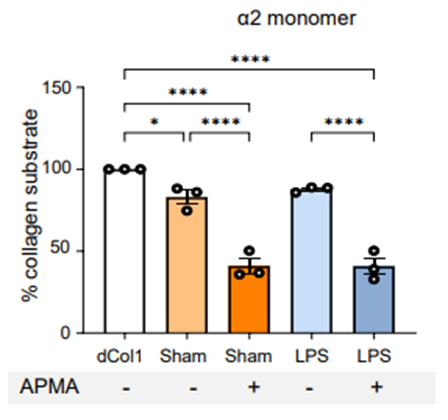
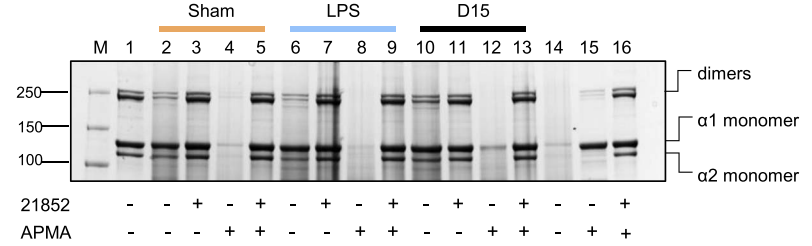
p-Aminophenylmercuric acetate purchased from MedChemExpress. Usage Cited in: Biol Reprod. 2025 Apr 13;112(4):709-727. [Abstract]
After preincubation with APMA (2 mM, 2 h), a non-enzymatic activator of proMMPs, for 2 h, MMPs significantly degraded collagen monomers compared to non-preincubated APMA samples in both groups.
p-Aminophenylmercuric acetate purchased from MedChemExpress. Usage Cited in: Biol Reprod. 2025 Apr 13;112(4):709-727. [Abstract]
Initial studies showed low endogenous gelatinase activity, but preincubation with APMA (2 mM, 2 h) significantly increased the collagen degradative rate in all the 3 groups.
-
Biochem Biophys Res Commun
2025 Oct 30:786:152681. PMID: 41056877 -
STAR Protoc
Protocol for isolating extracellular vesicles from human or mouse airway macrophages for functional assays and in vivo or in vitro experimentation. [Abstract]2025 Jun 20;6(2):103867. PMID: 40460201 -


Solvent & Solubility
In Vitro:
DMSO : 100 mg/mL (284.29 mM; Need ultrasonic; Hygroscopic DMSO has a significant impact on the solubility of product, please use newly opened DMSO)
Please refer to the solubility information to select the appropriate solvent. Once prepared, please aliquot and store the solution to prevent product inactivation from repeated freeze-thaw cycles.
Storage method and period of stock solution: -80°C, 6 months; -20°C, 1 month. When stored at -80°C, please use it within 6 months. When stored at -20°C, please use it within 1 month.
Please refer to the solubility information to select the appropriate solvent. Once prepared, please aliquot and store the solution to prevent product inactivation from repeated freeze-thaw cycles.
Storage method and period of stock solution: -80°C, 6 months; -20°C, 1 month. When stored at -80°C, please use it within 6 months. When stored at -20°C, please use it within 1 month.
Concentration (start) × Volume (start) = Concentration (final) × Volume (final)
In Vivo:
Select the appropriate dissolution method based on your experimental animal and administration route.
- For the following dissolution methods, please ensure to first prepare a clear stock solution using an In Vitro approach and then sequentially add co-solvents:
- To ensure reliable experimental results, the clarified stock solution can be appropriately stored based on storage conditions. As for the working solution for In Vivo experiments, it is recommended to prepare freshly and use it on the same day.
- The percentages shown for the solvents indicate their volumetric ratio in the final prepared solution. If precipitation or phase separation occurs during preparation, heat and/or sonication can be used to aid dissolution.
Add each solvent one by one: 10% DMSO 40% PEG300 5% Tween-80 45% Saline
Solubility: ≥ 2.08 mg/mL (5.91 mM); Clear solution
This protocol yields a clear solution of ≥ 2.08 mg/mL (saturation unknown).
Taking 1 mL working solution as an example, add 100 μL DMSO stock solution (20.8 mg/mL) to 400 μL PEG300, and mix evenly; then add 50 μL Tween-80 and mix evenly; then add 450 μL Saline to adjust the volume to 1 mL.
Preparation of Saline: Dissolve 0.9 g sodium chloride in ddH₂O and dilute to 100 mL to obtain a clear Saline solution.
In Vivo Dissolution Calculator
Please enter the basic information of animal experiments:
-
-
-
-
Recommended: Prepare an additional quantity of animals to account for potential losses during experiments.
Please enter your animal formula composition:
-
%DMSO +
Recommended: Keep the proportion of DMSO in working solution below 2% if your animal is weak.
-
%+
-
+%Tween-80 + +
-
%Saline +
The co-solvents required include: DMSO, . All of co-solvents are available by MedChemExpress (MCE). , Tween 80. All of co-solvents are available by MedChemExpress (MCE).
Working solution concentration: 0.22 mg/mL
Method for preparing stock solution: mg drug dissolved in μL DMSO. Stock solution concentration: mg/mL.
1. Take μL DMSO stock solution;
2. Add μL .
μL , mix evenly;
3. Then add μL Tween 80, mix evenly;
4. Then add μL
Please ensure that the stock solution in the first step is dissolved to a clear state, and add co-solvents in sequence. You can use ultrasonic heating (ultrasonic cleaner, recommended frequency 20-40 kHz), vortexing, etc. to assist dissolution.

Protocols
-
Mitochondrial membrane-potential fluorescent assay
Mitochondrial membrane potential fluorescent assays estimate ΔΨm in living cells using lipophilic cationic dyes such as TMRM, TMRE, rhodamine 123, and JC-1, which accumulate in mitochondria according to membrane polarization; loss of signal after FCCP or CCCP treatment is interpreted as mitochondrial depolarization. TMRM/TMRE and rhodamine 123 are commonly used for semi-quantitative live-cell microscopy or flow cytometry, while JC-1 can report a shift from red aggregate fluorescence to green monomer fluorescence during depolarization; interpretation requires controls because dye concentration, quenching mode, cell type, dye efflux, and mitochondrial mass can affect fluorescence independently of ΔΨm.
-
Mitochondrial membrane-potential and mitochondrial mass staining
Mitochondrial membrane potential staining measures the electrochemical polarization across the mitochondrial inner membrane in live cells using lipophilic cationic fluorescent probes; early rhodamine-based work showed that selective mitochondrial dye accumulation is lost when the mitochondrial transmembrane potential is dissipated. JC-1 reports mitochondrial polarization by shifting from green monomer fluorescence to red J-aggregate fluorescence as dye concentration increases within energized mitochondria; therefore, the red/green fluorescence ratio is used as a relative readout of mitochondrial membrane potential. TMRE or TMRM staining provides a single-channel relative readout because these cationic rhodamine esters accumulate in polarized mitochondria, and lower fluorescence indicates reduced mitochondrial polarization when acquisition and dye-loading conditions are controlled. Mitochondrial mass staining is commonly performed with MitoTracker Green FM or related MitoTracker dyes as


Purity & Documentation
-
Data Sheet (272 KB)
-
SDS (420 KB)
- English - EN (420 KB)
- Français - FR (420 KB)
- Deutsch - DE (420 KB)
- Norwegian - NO (420 KB)
- Español - ES (420 KB)
- Swedish - SV (420 KB)
- Italian - IT (420 KB)
- Korean - KR (420 KB)
- Portuguese - PT (420 KB)
-
Handling Instructions (2659 KB)
References
[1]. Sanderson M P, et al. ADAM10 mediates ectodomain shedding of the betacellulin precursor activated by p-aminophenylmercuric acetate and extracellular calcium influx[J]. Journal of Biological Chemistry, 2005, 280(3): 1826-1837. [Content Brief]
[2]. PASTERNAK G W, et al. Differential effects of protein-modifying reagents on receptor binding of opiate agonists and antagonists[J]. Molecular Pharmacology, 1975, 11(3): 340-351. [Content Brief]
[3]. Gendron R, et al. Inhibition of the activities of matrix metalloproteinases 2, 8, and 9 by chlorhexidine[J]. Clinical Diagnostic Laboratory Immunology, 1999, 6(3): 437-439. [Content Brief]


Complete Stock Solution Preparation Table
Please refer to the solubility information to select the appropriate solvent. Once prepared, please aliquot and store the solution to prevent product inactivation from repeated freeze-thaw cycles.
Storage method and period of stock solution: -80°C, 6 months; -20°C, 1 month. When stored at -80°C, please use it within 6 months. When stored at -20°C, please use it within 1 month.
| Optional Solvent | Concentration Solvent Mass | 1 mg | 5 mg | 10 mg | 25 mg |
|---|---|---|---|---|---|
| DMSO | 1 mM | 2.8429 mL | 14.2146 mL | 28.4293 mL | 71.0732 mL |
| 5 mM | 0.5686 mL | 2.8429 mL | 5.6859 mL | 14.2146 mL | |
| 10 mM | 0.2843 mL | 1.4215 mL | 2.8429 mL | 7.1073 mL | |
| 15 mM | 0.1895 mL | 0.9476 mL | 1.8953 mL | 4.7382 mL | |
| 20 mM | 0.1421 mL | 0.7107 mL | 1.4215 mL | 3.5537 mL | |
| 25 mM | 0.1137 mL | 0.5686 mL | 1.1372 mL | 2.8429 mL | |
| 30 mM | 0.0948 mL | 0.4738 mL | 0.9476 mL | 2.3691 mL | |
| 40 mM | 0.0711 mL | 0.3554 mL | 0.7107 mL | 1.7768 mL | |
| 50 mM | 0.0569 mL | 0.2843 mL | 0.5686 mL | 1.4215 mL | |
| 60 mM | 0.0474 mL | 0.2369 mL | 0.4738 mL | 1.1846 mL | |
| 80 mM | 0.0355 mL | 0.1777 mL | 0.3554 mL | 0.8884 mL | |
| 100 mM | 0.0284 mL | 0.1421 mL | 0.2843 mL | 0.7107 mL |


p-Aminophenylmercuric acetate Related Classifications
HY-148905 Related Classifications
 Powered by Bioz