Search Result
Results for "
quantitative
" in MedChemExpress (MCE) Product Catalog:
14
Biochemical Assay Reagents
9
Isotope-Labeled Compounds
| Cat. No. |
Product Name |
Target |
Research Areas |
Chemical Structure |
-
- HY-105129
-
|
|
Biochemical Assay Reagents
|
Cancer
|
|
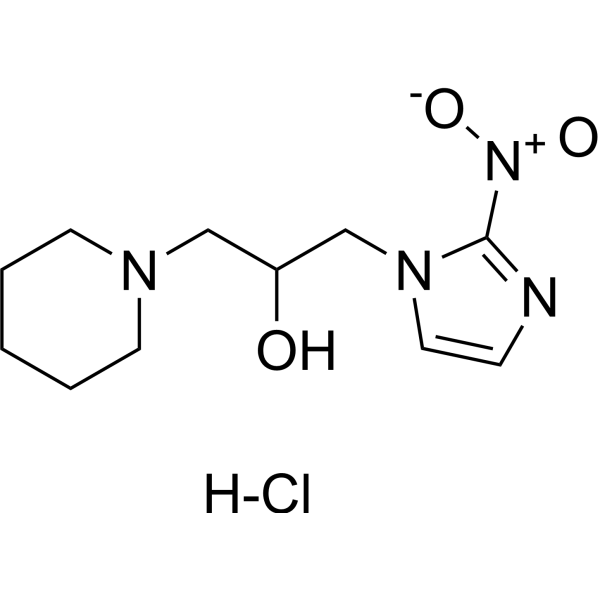
Pimonidazole is a novel hypoxia marker for complementary study of tumor hypoxia and cell proliferation in tumor . Pimonidazole accumulates in hypoxic cells via covalent binding with macromolecules or by forming reductive metabolites after reduction of its nitro group, it can be used for qualitative and quantitative assessment of tumor hypoxia .
|
-
-
- HY-W011664
-
|
DPBF
|
Fluorescent Dye
Reactive Oxygen Species (ROS)
|
Others
|
|
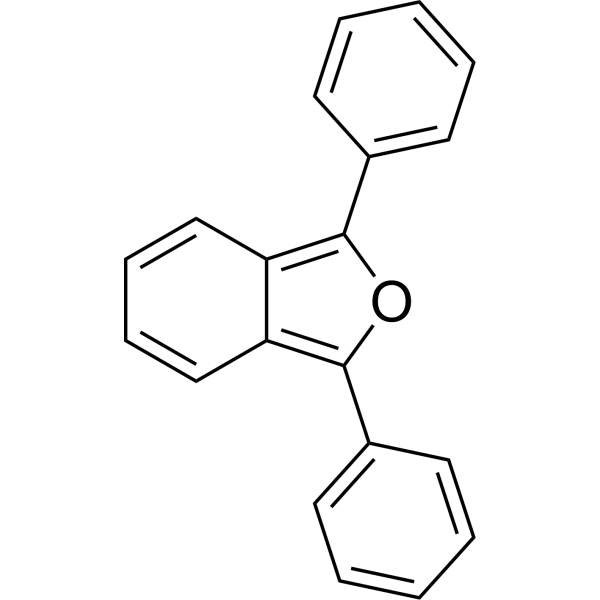
1,3-Diphenylisobenzofuran (DPBF) has been developed as a selective probe for the detection and quantitative determination of hydrogen peroxide in samples containing different reactive nitrogen and oxygen species (RNOS). DPBF is a fluorescent probe which, for almost 20 years, was believed to react in a highly specific manner toward some reactive oxygen species such as singlet oxygen and hydroxy, alkyloxy or alkylperoxy radicals .
|
-
-
- HY-126307
-
Urolithin B
Maximum Cited Publications
6 Publications Verification
|
NF-κB
JNK
ERK
Akt
AMPK
Endogenous Metabolite
|
Inflammation/Immunology
|
|
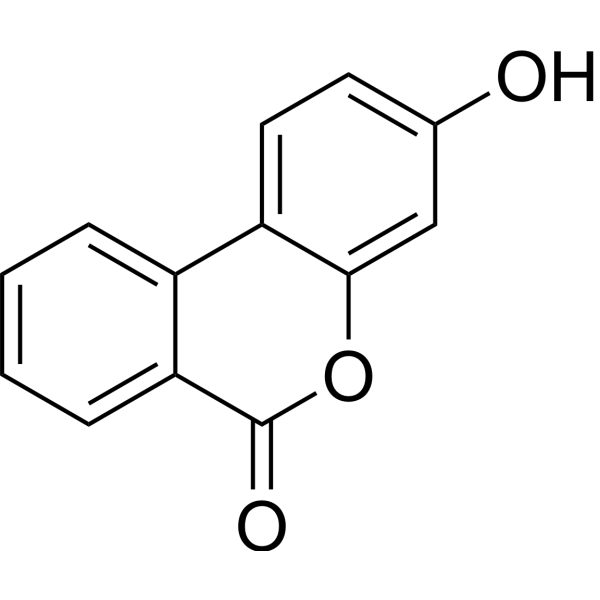
Urolithin B is one of Ellagitannins' slow microbial products, and has anti-inflammatory and anti-inflammatory effects. Urolithin B suppresses NF-κB activity. Urolithin B suppresses JNK, ERK and Akt's oxidation, and increases AMPK's oxidation. Urolithin B is also a quantitative change factor for bone and skin quality .
|
-
-
- HY-D0914
-
|
FD&C Green No. 3; Food green 3; C.I. 42053
|
Environmental Pollutants
α-synuclein
|
Neurological Disease
|
|
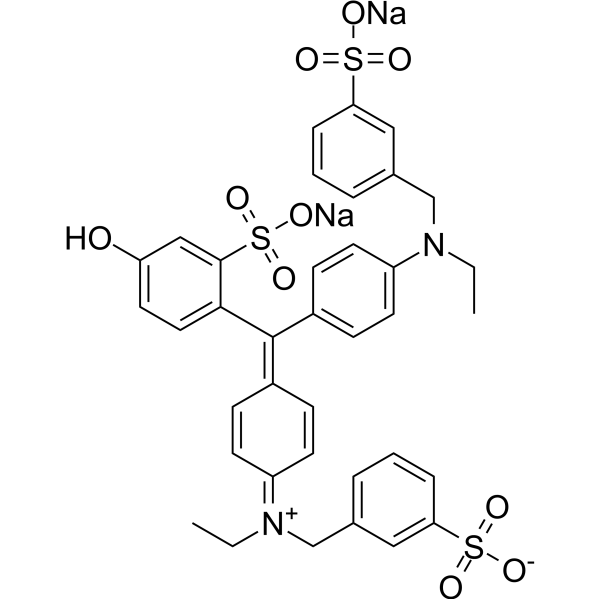
Fast Green FCF is a sea green triarylmethane food dye, with absorption maximum ranging from 622 to 626 nm. Fast Green FCF inhibits α-synuclein aggregation, as well as Aβ and P2X4 receptor, and TLR4/Myd88/NF-κB. Fast Green FCF is widely used as a staining agent like quantitative stain for histones at alkaline pH after acid extraction of DNA, and as a protein stain in electrophoresis. Fast Green FCF improves cognitive impairment, depression, relieves pain allergies, and promotes reproductive function .
|
-
-
- HY-D0971
-
|
Pyronine G; C.I. 45005
|
DNA Stain
|
Others
|
|
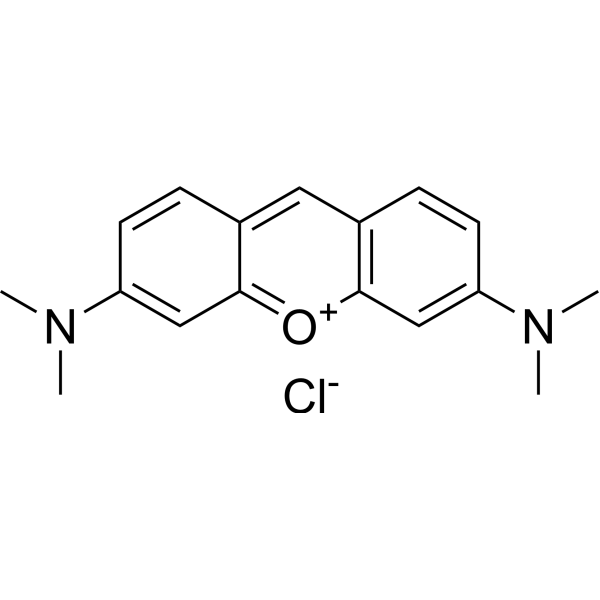
Pyronin Y (Pyronine G) is a cationic dye that intercalates RNA and has been used to target cell structures including RNA, DNA and organelles. Pyronin Y forms fluorescent complexes with double-stranded nucleic acids (especially RNA) enabling semi-quantitative analysis of cellular RNA. Pyronin Y can be used to identify specific RNA subspecies of ribonuclear proteins complexes in live cells .
|
-
-
- HY-15906
-
AMPPD
1 Publications Verification
Lumi-Phos Plus; Lumigen PPD; PPD
|
Phosphatase
|
Others
|
|
AMPPD (Lumi-Phos Plus; Lumigen PPD) is a chemiluminescent substrate for alkaline phosphatase (APase). AMPPD is hydrolyzed by APase to generate an unstable dioxetane intermediate, and the intermediate releases a chemiluminescent signal when it decomposes. The luminescent signal of AMPPD can be detected by highly sensitive equipment, thereby achieving quantitative analysis of the target molecule. AMPPD can be used in ultrasensitive enzyme-linked immunosorbent assays (such as quantitative detection of human tissue kininogen), chemiluminescent detection of proteins and nucleic acids, and other fields .
|
-
-
- HY-105129A
-
|
|
Biochemical Assay Reagents
|
Cancer
|
|
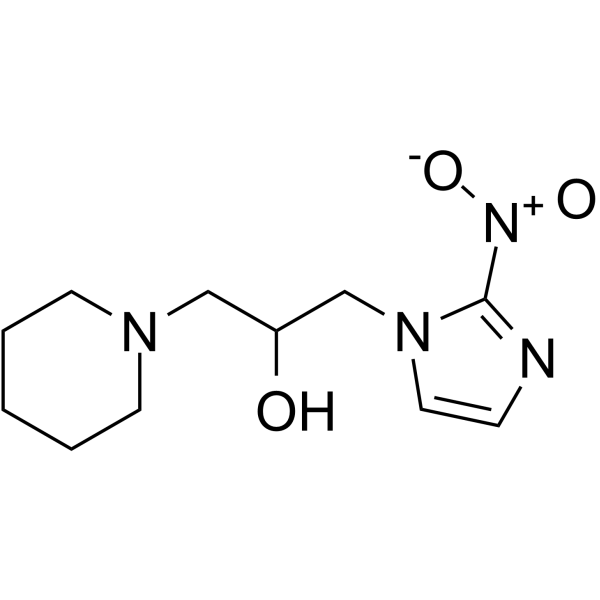
Pimonidazole is a novel hypoxia marker for complementary study of tumor hypoxia and cell proliferation in tumor . Pimonidazole accumulates in hypoxic cells via covalent binding with macromolecules or by forming reductive metabolites after reduction of its nitro group, it can be used for qualitative and quantitative assessment of tumor hypoxia .
|
-
-
- HY-133870
-
|
ITalk
|
Fluorescent Dye
|
Inflammation/Immunology
|
|
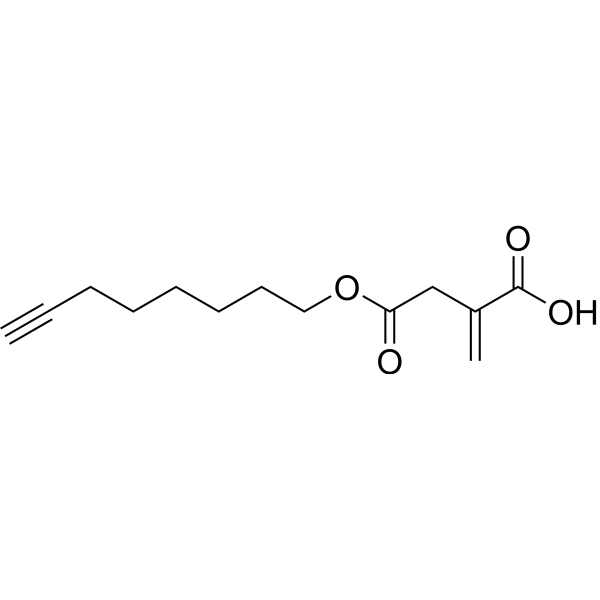
Itaconate-alkyne (ITalk) is a specific bioorthogonal probe for quantitative and site-specific chemoproteomic profiling of Itaconation in living cells. Itaconate-alkyne, a functional analogue of Itaconate, exhibits comparable antiinflammatory effect with Itaconate and enables the labeling of bona fide targets of Itaconate . Itaconate-alkyne is a click chemistry reagent, it contains an Alkyne group and can undergo copper-catalyzed azide-alkyne cycloaddition (CuAAc) with molecules containing Azide groups.
|
-
-
- HY-149461
-
-
-
- HY-W004290
-
|
Methyl margarate
|
Environmental Pollutants
Biochemical Assay Reagents
|
Others
|
|
Methyl heptadecanoate (Methyl margarate) is a methyl ester derivative of heptadecanoic acid (HY-W004284). Methyl heptadecanoate is used as an internal standard for the quantitative calibration of fatty acids in GC-MS analysis .
|
-
-
- HY-N16308
-
|
|
Fluorescent Dye
|
Others
|
|
ER-Laurdan is a derivative of the membrane-permeable fluorescent probe Laurdan (HY-D0080) that targets the endoplasmic reticulum (ER). As a membrane fluidity reporter, ER-Laurdan specifically localizes to the ER luminal membrane, and exhibits a prominent solvatochromic response to fluidity changes caused by membrane packing and exogenous saturated fatty acid stress. ER-Laurdan shows no overlapping localization with mitochondria, enables quantitative analysis of ER membrane fluidity via generalized polarization ratio measurement, and allows automatic signal masking with the help of ER markers. With high specificity and quantitative capability, ER-Laurdan serves as an important tool for investigating metabolic disorders and associated changes in the physical properties of cell membranes .
|
-
-
- HY-122266
-
|
|
Biochemical Assay Reagents
|
Metabolic Disease
|
|
Orcein is an irreversible stain that specifically targets elastic fibers and can interact hydrophobically with the protein components in elastic fibers. Orcein makes elastic fibers in tissues appear purple or purple-red. Orcein can be used for morphological studies of Drosophila polytene chromosomes and for qualitative and quantitative analysis of elastic fibers, collagen fibers and other components in atherosclerotic plaques .
|
-
-
- HY-P3936
-
|
|
Fluorescent Dye
|
Others
|
|
Endotoxin Substrate (Boc-LGR-pNA) is a chromogenic substrate can be used in quantitative assays of endotoxin .
|
-
-
- HY-128522
-
|
|
Ras
|
Cancer
|
|
ARS-1323-alkyne is a covalent inhibitor probe that covalently binds to the Switch-II pocket (S-IIP) of the KRAS G12C mutant protein. ARS-1323-alkyne visualizes the covalent modification of KRAS G12C and quantitatively measures the binding efficiency of the inhibitor to the target. ARS-1323-alkyne can be used to validate the target occupancy of KRAS G12C inhibitors and the synergistic mechanism of combination therapy .
|
-
-
- HY-P3185
-
|
|
Biochemical Assay Reagents
|
Metabolic Disease
|
|
Beta-galactose dehydrogenase is a selective catalyst for β-galactose. Under pH 8.6 conditions, beta-galactose dehydrogenase catalyzes the oxidation of β-galactose, produced by the hydrolysis of lactose by β-galactosidase, with nicotinamide adenine dinucleotide (NAD) to produce reduced nicotinamide adenine dinucleotide (NADH). Beta-galactose dehydrogenase specifically mediates this oxidation reaction for the quantitative detection of the substrate, used in the analysis of lactose concentration in samples such as breast milk .
|
-
-
- HY-108715A
-
|
|
Fluorescent Dye
|
Neurological Disease
|
|
RT-AM is a pro-agent real thiol. Real Thiol is a reversible reaction-based fluorescent probe which can quantitatively monitor the real-time glutathione dynamics in living cells.
|
-
-
- HY-136460
-
|
ETH 1001
|
Calcium Channel
|
Others
|
|
Calcium ionophore I (ETH 1001) is a selective Ca 2+ ionophore for biological membranes. Calcium ionophore I can be used in Ca2+-selective microelectrodes that can be used for quantitative intracellular measurements of resting Ca2+-activities and of slowly changing Ca2+-levels .
|
-
-
- HY-101131
-
|
DNS-glutathione
|
Biochemical Assay Reagents
|
Others
|
|
Dansyl glutathione is a trapping agent for the quantitative estimation and identification of reactive metabolites.
|
-
-
- HY-108715
-
|
|
Fluorescent Dye
|
Neurological Disease
|
|
Real Thiol is a reversible reaction-based fluorescent probe which can quantitatively monitor the real-time glutathione dynamics in living cells.
|
-
-
- HY-W016371
-
|
3,4,5-threechlorine pyridine
|
Biochemical Assay Reagents
|
Others
|
|
3,4,5-Trichloropyridine is a chlorinated pyridine compound and also serves as an internal standard for quantitative proton nuclear magnetic resonance spectroscopy .
|
-
-
- HY-W004290S
-
|
|
Isotope-Labeled Compounds
Biochemical Assay Reagents
Drug Derivative
|
Others
|
|
Methyl heptadecanoate-d33 is the deuterium labeled Methyl heptadecanoate (HY-W004290). Methyl heptadecanoate (C17:0 methyl ester) is the methyl ester derivative of heptadecanoic acid (HY-W004284). Methyl heptadecanoate is used as an internal standard for quantitative calibration of fatty acids in GC-MS analysis .
|
-
-
- HY-W010341
-
|
|
Biochemical Assay Reagents
|
Others
|
|
2-Pyridinecarbohydrazide is a versatile heterocyclic building block widely used in medicinal chemistry and coordination chemistry, and it finds extensive applications in various synthetic fields. 2-Pyridinecarbohydrazide reacts with the reducing end of carbohydrates to enhance mass spectrometry ionization efficiency, enabling isomer-specific identification of monosaccharides, disaccharides, ketoses/aldoses, and quantitative mass spectrometry imaging of biological tissues .
|
-
-
- HY-W110793
-
|
Diphenylthiocarbazone
|
Biochemical Assay Reagents
|
Metabolic Disease
|
|
Dithizone can be toxic to pancreatic islet cells and cause experimental diabetes. Dithizone can be used for in vitro in vivo staining of transplanted islets and cytoplasmic granules of bone marrow cells. Dithizone can be used as a chelating agent and colorimetric indicator for the detection and extraction of various heavy metals, including lead and mercury, in analytical and biochemical applications. Dithizone forms stable colored complexes with metal ions and can be quantitatively analyzed by methods such as spectrophotometry .
|
-
-
- HY-D1262
-
|
Thiol-green 2
|
Fluorescent Dye
|
Others
|
|
BODIPY-TS (Thiol-green 2) is a fast response and thiol-specific turn-on probe. BODIPY-TS utilizes the thiosulfonate scaffold as a thiol recognition unit. BODIPY-TS has low toxicity, and features high selectivity, low detection limit, and quantitative reaction to thiols . Ex: 490 nM; Em: 515 nM.
|
-
-
- HY-W009454
-
|
4-Nitopheyl Sulfate potassium
|
Fluorescent Dye
|
Others
|
|
Potassium p-nitrophenyl sulfate (4-Nitophenyl Sulfate potassium) serves as a chromogenic substrate for arylsulfatases. Potassium p-nitrophenyl sulfate releases nitrophenol under the cleavage action of arylsulfatases, and the activity of arylsulfatases can be quantitatively determined via colorimetric detection at 400 nm. Potassium p-nitrophenyl sulfate is commonly used in enzyme inhibition assays and metabolite analog-related studies .
|
-
-
- HY-141749B
-
|
CLPM hydrochloride; SR 26334 hydrochloride
|
Drug Metabolite
|
Cardiovascular Disease
|
|
Clopidogrel carboxylic acid (CLPM) hydrochloride is an inactive metabolite of the widely used antiplatelet medication clopidogrel, which serves as a reference standard for quantitative analysis of clopidogrel metabolism. Clopidogrel carboxylic acid hydrochloride has been shown to represent approximately 85% of circulating clopidogrel, hydrolyzed from the active form by esterases. Clopidogrel carboxylic acid hydrochloride plays a crucial role in assessing the pharmacokinetics and bioavailability of clopidogrel in various clinical and research settings.
|
-
-
- HY-N10348
-
|
|
Others
Drug Derivative
|
Endocrinology
|
|
Progoitrin is a sulfur-containing glucosinolate, as well as a naturally occurring orally active thioglycoside. Progoitrin acts as a hepatotoxin and antithyroid agent. Progoitrin is quantitatively converted to goitrin in vivo, including via a gastrointestinal hydrolysis pathway that does not require exogenous myrosinase, thereby blocking the organification of iodine in the thyroid gland and inhibiting the uptake and accumulation of radioactive iodine. Progoitrin can be used in studies related to Graves' disease .
|
-
-
- HY-W075885
-
|
trans-platinumdiamminedichloride
|
DNA Alkylator/Crosslinker
|
Others
|
|
trans-Platinum(II)diammine dichloride (trans-platinumdiamminedichloride) is a geometric isomer of Cisplatin (HY-17394). Trans-Platinum(II)diammine dichloride is a DNA cross-linking agent that induces significant DNA cross-link damage while exhibiting low cytotoxicity. Trans-Platinum(II)diammine dichloride is useful for studying DNA-protein cross-links .
|
-
-
- HY-N7868
-
|
|
Biochemical Assay Reagents
|
Others
|
|
Methyl tricosanoate is a saturated fatty acid methyl ester and also serves as an internal standard, which can be used for the quantitative analysis of neuraminic acid (NA) concentration .
|
-
-
- HY-160092A
-
|
|
HDAC
|
Neurological Disease
|
|
Martinostat hydrochloride is a HDAC inhibitor and can be labeled with radionuclides for quantitative imaging of HDACs in vivo in the central nervous system and major peripheral organs .
|
-
-
- HY-W015996
-
|
pNP-GalNAc
|
Fluorescent Dye
|
Others
|
|
4-Nitrophenyl-N-acetyl-α-D-galactosaminide (pNP-GalNAc) can be used as a chromogenic substrate for N-acetyl-D-galactosaminase. 4-Nitrophenyl-N-acetyl-α-D-galactosaminide is cleaved by N-acetyl-D-galactosaminase to generate a yellow solution. The enzyme activity is quantitatively determined by absorbance detection .
|
-
-
- HY-D2482
-
|
APG-1 AM
|
Fluorescent Dye
|
Neurological Disease
|
|
Asante potassium green-1 AM (APG-1 AM) is a cell-permeable K +-sensitive fluorescent indicator and potassium ion indicator that exhibits minimal interference from Na + and pH at physiologically relevant intracellular levels. Asante potassium green-1 AM enables non-invasive monitoring and quantitative analysis of intracellular potassium ion concentration (ᵢ) . Its excitation/emission maxima are 525/545 nm, respectively.
|
-
-
- HY-W034869
-
|
Diamino-tetraisothiocyanato-chromium
|
Biochemical Assay Reagents
|
Others
|
|
Reinecke (Diamino-tetraisothiocyanato-chromium) is an ammonium salt. Reinecke participates in the quantitative precipitation of histones and basic compounds present in acidic tissue extracts by forming Reinecke complexes .
|
-
-
- HY-P3203A
-
|
|
TNF Receptor
|
Inflammation/Immunology
|
|
DSTYSLSSTLTLSK TFA is a generic human peptide and can be used for infliximab quantitative detection . Infliximab (Avakine) is a chimeric monoclonal IgG1 antibody that specifically binds to TNF-α.
|
-
-
- HY-149711
-
|
|
ICMT
|
Metabolic Disease
|
|
Farnesylcysteine (FC) is a competitive inhibitor of ICMT. The fcly mutant has quantitatively low farnesylcysteine (FC) lyase activity and an enhanced response to ABA. Farnesylcysteine induces an ABA hypersensitive phenotype in Arabidopsis thaliana .
|
-
-
- HY-W760733
-
|
|
Biochemical Assay Reagents
|
Metabolic Disease
|
|
2,4-Decadienal is a toxic aldehyde produced by the oxidation of linoleic acid-rich oils. 2,4-decadienal can be used as an alternative oxidation indicator for linoleic acid-rich oils .
|
-
-
- HY-D1460
-
|
|
Bacterial
β-glucuronidase
|
Infection
|
|
Fluorescein Di-β-D-Glucuronide is an orally active fluorescent probe substrate and an indicator of β-glucuronidase (βG) activity in intestinal bacteria. Fluorescein Di-β-D-Glucuronide can be used for non-invasive time-lapse optical imaging of βG activity in intestinal bacteria in nude mice. Fluorescein Di-β-D-Glucuronide supports the quantitative analysis of bacterial βG enzyme activity and inhibition .
|
-
-
- HY-P4582
-
|
Suc-FAAF-pNA
|
Ser/Thr Protease
|
Others
|
|
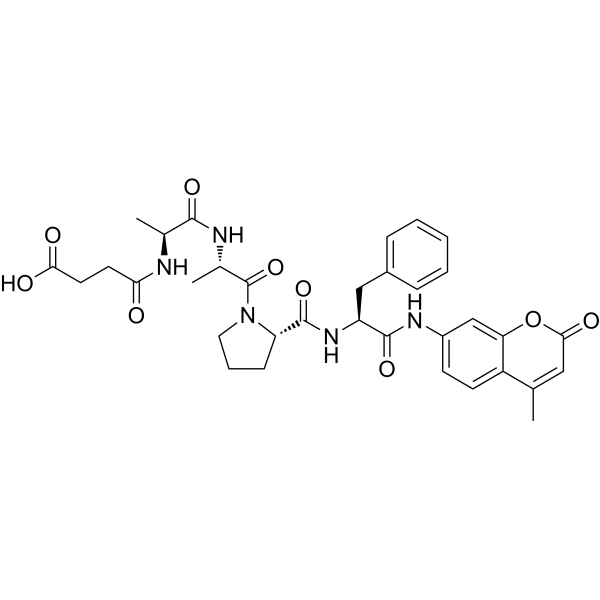
Suc-Phe-Ala-Ala-Phe-pNA (Suc-FAAF-pNA) is a chromogenic polypeptide substrate that can be used for the quantitative activity assay of intracellular subtilisin (ISP) and neutral metalloprotease (NPS) derived from Saccharomonospora canescens. Suc-Phe-Ala-Ala-Phe-pNA is hydrolyzed by the catalytic triad of mature proteases to release the chromophore pNA. Suc-Phe-Ala-Ala-Phe-pNA is applicable to enzymological studies .
|
-
-
- HY-W015672
-
-
-
- HY-131389
-
|
|
Biochemical Assay Reagents
|
Others
|
|
Cholesteryl heptadecanoate is a cholesteryl ester internal standard that accurately determines the concentration of free cholesterol in cells without hydrolyzing triglycerides. Cholesteryl heptadecanoate can be used for the quantitative determination of cholesteryl esters by GC or LC mass spectrometry .
|
-
-
- HY-158800
-
|
|
Biochemical Assay Reagents
|
Others
|
|
1-NBD-decanoyl-2-decanoyl-sn-glycerol is a diacylglycerol (DAG) derivative, which is labeled with a fluorescent group NBD. 1-NBD-decanoyl-2-decanoyl-sn-glycerol is the substrate for diacylglycerol kinase (DGK), and can be used for quantitative detection of the DGF enzyme kinetics in vitro, and the changes in DAG and PA during cell signaling .
|
-
-
- HY-P3123A
-
|
|
Fluorescent Dye
|
Others
|
|
Dnp-RPLALWRS TFA is a fluorescent peptide substrate designed for human matrilysin (MMP-7). After enzymatic cleavage of Dnp-RPLALWRS TFA at the alanine-leucine bond, the release of the Dnp group alleviates fluorescence quenching, thereby enabling real-time quantitative analysis of MMP-7 activity by increasing tryptophan emission. Dnp-RPLALWRS TFA provides a sensitive and efficient detection method for kinetic studies and inhibitor screenin .
|
-
-
- HY-P11263
-
|
|
iGluR
|
Neurological Disease
|
|
AVLX-144 is a highly potent inhibitor of postsynaptic density protein 95 (PSD-95). AVLX-144 can be used as a template to develop imaging probes for postsynaptic density (PSD) molecules, and can be labeled with fluorine-18 (¹⁸F) or tritium (³H) to visualize PSD-95 in vivo. AVLX-144 can be utilized for the study of Parkinson's disease .
|
-
-
- HY-147507
-
|
|
Fluorescent Dye
|
Others
|
|
SBP-1 is a sulfite bioluminescent probe (SBP). SBP-1 exhibits the excellent responsivity, selectivity and sensitivity towards sulfite. The recognition of SBP-1 towards sulfite is based on the mechanism of a sulfite-mediated intramolecular cleavage reaction. SBP-1 can be used for detection of exogenous and endogenous sulfite in living animal. SBP-1 also possesses a capability for quantitatively detecting sulfite within a certain concentration range in solution .
|
-
-
- HY-160092
-
|
|
HDAC
|
Neurological Disease
|
|
Martinostat is a HDAC inhibitor and can be labeled with radionuclides for quantitative imaging of HDACs in vivo in the central nervous system and major peripheral organs .
|
-
-
- HY-P3149
-
|
|
TNF Receptor
|
Inflammation/Immunology
|
|
LEESGGGLVQPGGSMK, a proteolysis peptide, is a component of Infliximab. LEESGGGLVQPGGSMK can be used for quantitative analysis of Infliximab. Infliximab is a chimeric monoclonal IgG1 antibody that specifically binds to TNF-α .
|
-
-
- HY-W017431
-
|
|
Drug Metabolite
|
Metabolic Disease
|
|
2,5-Dimethylbenzoic acid is one of the main urinary metabolites of Pseudocumene (1,2,4-trimethylbenzene) in rats. 2,5-Dimethylbenzoic acid can be used to quantitatively determine the inhalation exposure level of Pseudocumene .
|
-
-
- HY-106586
-
|
P-286
|
Biochemical Assay Reagents
|
Others
|
|
Ioxaglic acid (P-286) is negatively charged contrast agent, is useful as an inverse indicator for glycosaminoglycan (GAG) used in computed tomography (CT). Ioxaglic acid can be used for imaging of human osteoarthritic cartilage via quantitative assessment of glycosaminoglycan content .
|
-
-
- HY-141642
-
|
Glycerol triheptadecanoate; Trimargarin
|
Biochemical Assay Reagents
|
Others
|
|
Triheptadecanoin (Glycerol triheptadecanoate) is an internal standard for the rapid GC analysis of fatty acid methyl esters in edible fats and oils. Triheptadecanoin enables the quantitative analysis of trans-fatty acid content in edible fats and oils via a rapid GC method. Triheptadecanoin smoothly undergoes methylation with m-TFPTAH in toluene solution at room temperature .
|
-
-
- HY-W420344
-
|
|
Potassium Channel
|
Others
|
|
Dehydroindapamide is the indole form of Indapamide (HY-B0259). Dehydroindapamide standard can be used to quantitatively measure the Indapamide turnover rate by CYP3A4, which was approximately 10-fold higher than that of Indoline (HY-Y0788), and slightly enhanced affinity for CYP3A4 .
|
-
- HY-124324
-
|
p-Nitopheyl β-D-cellotioside
|
Fluorescent Dye
|
Others
|
|
4-Nitrophenyl β-D-cellotrioside (p-Nitopheyl β-D-cellotioside) is a chromogenic substrate for endoglucanases and cellulose biohydrolases. As a fluorescent dye, nitrophenyl β-D-Cellotrioside can be hydrolyzed by enzymes to release 4-nitrophenol, producing a yellow color. The activity of the enzyme can be quantitatively analyzed by monitoring the change in absorbance at 405 nm .
|
-
- HY-N0093A
-
|
Cyclocytidine; Cyclo-CMP
|
DNA/RNA Synthesis
CMV
Autophagy
|
Cancer
|
|
Ancitabine is the precursor of the anticancer agent Cytarabine (HY-13605), which targets targets related to cell metabolism and proliferation. Ancitabine can inhibit tumor cell proliferation, interfere with the DNA synthesis process of tumor cells, and prevent cell division. Under alkaline pH conditions, Ancitabine can be quantitatively converted into Cytarabine and can be used in the study of cancers such as colorectal cancer .
|
-
- HY-P11262
-
|
|
GLP Receptor
|
Metabolic Disease
|
|
GUB021794 is a potent and highly selective glucagon-like peptide-1 receptor (GLP-1R) agonist developed using the streaMLine platform with an EC50 value of 18 pM. GUB021794 has a very weak activity against SCTR, with an EC50 value of 190 nM. GUB021794 can significantly reduce the body weight, food intake, and total fat mass of mice in a diet-induced obesity (DIO) model. GUB021794 can be used for research on obesity/diabetes .
|
-
- HY-D0914A
-
|
|
α-synuclein
|
Neurological Disease
|
|
Fast green FCF free acid is a dye that is acid-resistant. Fast Green FCF free acid inhibits α-synuclein aggregation, as well as Aβ, P2X4 receptor and TLR4/Myd88/NF-κB. Fast Green FCF free acid is widely used as a staining agent like quantitative stain for histones at alkaline pH after acid extraction of DNA, and as a protein stain in electrophoresis. Fast Green FCF free acid improves cognitive impairment, depression, relieves pain allergies, and promotes reproductive function .
|
-
- HY-160542
-
|
|
Endogenous Metabolite
|
Others
|
|
Clenhexyl hydrochloride is a urinary metabolite useful for quantitative screening in doping control screening programs .
|
-
- HY-N15422
-
|
|
TRP Channel
|
Inflammation/Immunology
|
|
Glucoputranjivin (compound 1) is a reference compound that can be used for qualitative and quantitative determinations of active compounds in SO .
|
-
- HY-108026
-
|
|
Biochemical Assay Reagents
|
Others
|
|
Hapten C is a derivative of histamine. Hapten C is utilized for synthesis of immunogens and coating antigens, that can quantitative determine the histamine via ELISA .
|
-
- HY-124433
-
|
iso-Tridecanoic methyl ester
|
Biochemical Assay Reagents
|
Others
|
|
Methyl 11-Methyldodecanoate is a methylated fatty acid methyl ester that has been used as a standard for the quantitative analysis of 11-methyl lauric acid in vernix and M. oleifera extracts.
|
-
- HY-P3149B
-
|
|
TNF Receptor
|
Inflammation/Immunology
|
|
LEESGGGLVQPGGSMK acetate, a proteolysis peptide, is a component of Infliximab. LEESGGGLVQPGGSMK acetate can be used for quantitative analysis of Infliximab. Infliximab is a chimeric monoclonal IgG1 antibody that specifically binds to TNF-α .
|
-
- HY-P3203
-
-
- HY-P3149A
-
|
|
TNF Receptor
|
Inflammation/Immunology
|
|
LEESGGGLVQPGGSMK TFA, a proteolysis peptide, is a component of Infliximab. LEESGGGLVQPGGSMK TFA can be used for quantitative analysis of Infliximab. Infliximab is a chimeric monoclonal IgG1 antibody that specifically binds to TNF-α .
|
-
- HY-W568314
-
|
|
Drug Intermediate
|
Others
|
|
Vericiguat impurity-1 is the impurity of Vericiguat (HY-16774). Vericiguat impurity-1 can be used as impurity standards in impurity analysis, to develop selective and quantitative methods to determine impurities .
|
-
- HY-138127
-
|
|
Biochemical Assay Reagents
|
Others
|
|
Gendenafil is an analog of Sildenafil (HY-15025). Gendenafil can be used as internal standard for quantitative analysis of Sildenafil (HY-15025), Tadalafil (HY-90009A), and Vardenafil (HY-B0442) .
|
-
- HY-164227
-
|
|
Biochemical Assay Reagents
|
Others
|
|
Vericiguat impurity-2 is the impurity of Vericiguat (HY-16774). Vericiguat impurity-2 can be used as impurity standards in impurity analysis, in order to develop selective and quantitative methods to determine impurities .
|
-
- HY-W354544
-
|
Dihydrodiethylstilbestrol
|
Estrogen Receptor/ERR
|
Endocrinology
|
|
(Rac)-Hexestrol is the racemic form of Hexestrol (HY-B1662). Hexestrol is a synthetic non-steroidal estrogen. (Rac)-Hexestrol usually appears in deuterated form and is used as an internal standard for precise quantitative analysis in analytical chemistry.
|
-
- HY-N9274
-
|
|
Endogenous Metabolite
|
Others
|
|
3-Hydroxy-3-(4-hydroxyphenyl)-lactic acid is a key metabolite in the P. roqueforti fermentation approach, with quantitative data of 10.2 ± 1.1 µM in Tyr 1 (presence of L-tyrosine) of .
|
-
- HY-17011
-
|
|
Fungal
|
Metabolic Disease
|
|
Croconazole is an antifungal agent containing imidazole rings. Croconazole has a unique structural feature of aryl vinyl at the imidazole ring N-1. Croconazole can be used for the identification and quantitative study of major metabolites in rat urine and bile .
|
-
- HY-B1230A
-
|
|
Endogenous Metabolite
|
Inflammation/Immunology
|
|
Camylofin dihydrochloride is an antispasmodic drug with activity in relieving smooth muscle spasms. Camylofin dihydrochloride is used to suppress spasms during labor and to provide pharmacotherapy for ulcerative colitis. The analysis of camylofin dihydrochloride can be quantitatively determined by gas chromatography to assess its content in pharmaceutical preparations .
|
-
- HY-172508
-
|
|
Fluorescent Dye
Phosphoramidites
|
Others
|
|
Perylene dU phosphoramidite is a bright and extremely photostable fluorescent polycyclic aromatic hydrocarbon (PAH) label with a quantum yield approaching quantitative. Due to the low lifetime of fluorescence, this probe does not form excimers.With this phosphoramidite, perylene can be introduced into DNA by automated oligonucleotide synthesis.
|
-
- HY-172567
-
|
|
Biochemical Assay Reagents
Phospholipase
|
Others
|
|
PLC thio-PIP2 trisodium is an analog of naturally occurring PIP2. PLC thio-PIP2 trisodium can simulate the process of PIP2 being hydrolyzed by PLC in in vitro experiments, and then quantitatively analyze the activity of PLC by detecting the free thiol produced by hydrolysis .
|
-
- HY-158655
-
|
(3'-Sulfo)Galβ-Cer (d18:1/17:0); N-Heptadecanoyl sulfatide; C17 Sulfatide
|
Biochemical Assay Reagents
|
Neurological Disease
|
|
C17 3'-Sulfo galactosylceramide (d18:1/17:0) is a member of the sulfatide class of glycolipids. C17 3'-Sulfo galactosylceramide (d18:1/17:0) can be used for the mass spectrometric quantitative urinary determination in metachromatic leukodystrophies .
|
-
- HY-122792
-
|
|
Endogenous Metabolite
|
Cardiovascular Disease
|
|
Phenyramidol hydrochloride is an anticoagulant and analgesic with activity that increases detection sensitivity in biological samples. Phenyramidol hydrochloride can be oxidized in aqueous media by electrochemical methods to achieve its quantitative analysis. The detection of Phenyramidol hydrochloride using an amino-functionalized multi-walled carbon nanotube-modified glassy carbon electrode showed significant enhancement of the current peak .
|
-
- HY-173535
-
|
TNP-β-L-Guanosine 5'-triphosphate tetrasodium
|
Arf Family GTPase
|
Others
|
|
TNP-β-L-GTP (TNP-β-L-Guanosine 5'-triphosphate) tetrasodium is a fluorescent GTP mimetic that can be used to study the binding kinetics and affinity of GTP-binding proteins (such as G proteins and GTPases). TNP-β-L-GTP tetrasodium carries a TNP fluorophore, which changes fluorescence intensity upon protein binding, allowing for quantitative analysis .
|
-
- HY-105129AS
-
|
|
Isotope-Labeled Compounds
|
Cancer
|
|
Pimonidazole-d10 is the deuterium labeled Pimonidazole. Pimonidazole is a novel hypoxia marker for complementary study of tumor hypoxia and cell proliferation in tumor . Pimonidazole accumulates in hypoxic cells via covalent binding with macromolecules or by forming reductive metabolites after reduction of its nitro group, it can be used for qualitative and quantitative assessment of tumor hypoxia .
|
-
- HY-P5201S
-
|
|
Isotope-Labeled Compounds
|
Others
|
|
VTSEGAGLQLQK-13C6,15N2 is the 13C and 15N labeled VTSEGAGLQLQK. VTSEGAGLQLQK is an amino acid sequence in the C-terminal region of recombinant human alpha-acid glucosidase (rhGAA). VTSEGAGLQLQK can be used to bind anti-drug antibodies (ADA) in plasma and quantitatively analyze the therapeutic effect .
|
-
- HY-P2651
-
|
|
Fluorescent Dye
|
Others
|
|
Dansyl-D-Ala-Gly-Phe(pNO2)-Gly is a synthetic peptide substrate. As a substrate of NEP, Dansyl-D-Ala-Gly-Phe(pNO2)-Gly can be specifically recognized and cleaved by the enzyme, thereby releasing the fluorophore dansyl, which can be quantitatively detected. Therefore, it is often used to determine the activity of NEP .
|
-
- HY-W004290R
-
|
Methyl margarate (Standard)
|
Reference Standards
Biochemical Assay Reagents
Drug Derivative
|
Others
|
|
Methyl heptadecanoate (Standard) is the analytical standard of Methyl heptadecanoate (HY-W004290). This product is intended for research and analytical applications. Methyl heptadecanoate (C17:0 methyl ester) is the methyl ester derivative of heptadecanoic acid (HY-W004284). Methyl heptadecanoate is used as an internal standard for quantitative calibration of fatty acids in GC-MS analysis .
|
-
- HY-P5201S1
-
|
|
Isotope-Labeled Compounds
|
Others
|
|
VTSEGAGLQLQK-13C6,15N2 (TFA) is the 13C- and 15N-labeled VTSEGAGLQLQK. VTSEGAGLQLQK is an amino acid sequence in the C-terminal region of recombinant human alpha-acid glucosidase (rhGAA), which can be used to bind anti-drug antibodies in plasma and quantitatively analyze the therapeutic effect .
|
-
- HY-105129R
-
|
|
Reference Standards
Others
|
Cancer
|
|
Pimonidazole (hydrochloride) (Standard) is the analytical standard of Pimonidazole (hydrochloride). This product is intended for research and analytical applications. Pimonidazole is a novel hypoxia marker for complementary study of tumor hypoxia and cell proliferation in tumor . Pimonidazole accumulates in hypoxic cells via covalent binding with macromolecules or by forming reductive metabolites after reduction of its nitro group, it can be used for qualitative and quantitative assessment of tumor hypoxia .
|
-
- HY-105129AR
-
|
|
Reference Standards
Others
|
Cancer
|
|
Pimonidazole (Standard) is the analytical standard of Pimonidazole. This product is intended for research and analytical applications. Pimonidazole is a novel hypoxia marker for complementary study of tumor hypoxia and cell proliferation in tumor . Pimonidazole accumulates in hypoxic cells via covalent binding with macromolecules or by forming reductive metabolites after reduction of its nitro group, it can be used for qualitative and quantitative assessment of tumor hypoxia .
|
-
- HY-107372D
-
|
UTP tetrasodium; Uridine 5'-triphosphate tetrasodium
|
Biochemical Assay Reagents
|
Cardiovascular Disease
|
|
Uridine triphosphate (tetrasodium) (UTP (tetrasodium)) is released during cardiac ischemia. Uridine triphosphate (tetrasodium) belongs to a family of extracellular nucleotide signaling molecules. Uridine triphosphate (tetrasodium) can stimulate vasodilation, automaticity in ventricular myocytes and release tussue-quantitative activator (t-PA). Uridine triphosphate (tetrasodium)-induced t-PA release can dissolve the thrombus in myocardial infarction .
|
-
- HY-W420344R
-
|
|
Potassium Channel
Reference Standards
|
Others
|
|
Dehydroindapamide (Standard) is the analytical standard of Dehydroindapamide. This product is intended for research and analytical applications. Dehydroindapamide is the indole form of Indapamide (HY-B0259). Dehydroindapamide standard can be used to quantitatively measure the Indapamide turnover rate by CYP3A4, which was approximately 10-fold higher than that of Indoline (HY-Y0788), and slightly enhanced affinity for CYP3A4 .
|
-
- HY-103382R
-
|
|
Reference Standards
Fungal
|
Infection
|
|
Phenyramidol (Hydrochloride) (Standard) is the analytical standard of Phenyramidol (Hydrochloride). This product is intended for research and analytical applications. Phenyramidol hydrochloride is an anticoagulant and analgesic with activity that increases detection sensitivity in biological samples. Phenyramidol hydrochloride can be oxidized in aqueous media by electrochemical methods to achieve its quantitative analysis. The detection of Phenyramidol hydrochloride using an amino-functionalized multi-walled carbon nanotube-modified glassy carbon electrode showed significant enhancement of the current peak .
|
-
- HY-144470S
-
|
|
Isotope-Labeled Compounds
Potassium Channel
|
Others
|
|
Dehydroindapamide-d3 is the deuterium labeled Dehydroindapamide (HY-W420344). Dehydroindapamide is the indole form of Indapamide (HY-B0259). Dehydroindapamide standard can be used to quantitatively measure the Indapamide turnover rate by CYP3A4, which was approximately 10-fold higher than that of Indoline (HY-Y0788), and slightly enhanced affinity for CYP3A4 .
|
-
- HY-P3123
-
|
|
Fluorescent Dye
|
Others
|
|
Dnp-RPLALWRS is a fluorescent peptide substrate designed for human matrilysin (MMP-7). After enzymatic cleavage of Dnp-RPLALWRS at the alanine-leucine bond, the release of the Dnp group alleviates fluorescence quenching, thereby enabling real-time quantitative analysis of MMP-7 activity by increasing tryptophan emission. Dnp-RPLALWRS provides a sensitive and efficient detection method for kinetic studies and inhibitor screenin .
|
-
- HY-126307R
-
|
|
NF-κB
JNK
ERK
Akt
AMPK
Endogenous Metabolite
Reference Standards
|
Inflammation/Immunology
|
|
Urolithin B (Standard) is the analytical standard of Urolithin B. This product is intended for research and analytical applications. Urolithin B is one of Ellagitannins' slow microbial products, and has anti-inflammatory and anti-inflammatory effects. Urolithin B suppresses NF-κB activity. Urolithin B suppresses JNK, ERK and Akt's oxidation, and increases AMPK's oxidation. Urolithin B is also a quantitative change factor for bone and skin quality .
|
-
- HY-173138
-
|
|
Monoamine Oxidase
|
Neurological Disease
|
|
FCOB02 is a monoamine oxidase B (MAO-B) ligand. FCOB02 can be labeled as [18F]FCOB02, a 4-methylcoumarin-like targeting probe. [18F]FCOB02 has a high affinity for MAO-B with an IC50 of 10.68 nM. [18F]FCOB02 can be used in specific MAO-B imaging as well as quantitative analysis in vivo .
|
-
- HY-P11555
-
-
- HY-176999
-
-
- HY-P11427
-
-
- HY-176999S
-
-
- HY-101131R
-
|
DNS-glutathione (Standard)
|
Others
Reference Standards
|
Others
|
|
Dansyl glutathione (Standard) is the analytical standard of Dansyl glutathione (HY-101131). This product is intended for research and analytical applications. Dansyl glutathione is a trapping agent for the quantitative estimation and identification of reactive metabolites.
|
-
- HY-116121
-
|
|
Biochemical Assay Reagents
|
Others
|
|
S-Nitrosohomocysteine is a compound generated by the reaction of homocysteine and nitrous acid. It has the activity of quantitative formation under different pH conditions and its stability is affected by transition metal ions. Its formation involves more powerful nitrosating agents.
|
-
- HY-D3205
-
|
|
Fluorescent Dye
|
Others
|
|
Bis (picolinoyl) fluorescein is a Cu 2+ esterase activity probe with both fluorogenic and chromogenic properties. Bis (picolinoyl) fluorescein enables quantitative analysis of free Cu 2+, as well as detection of esterolytic activity of Cu bound to organic ligands or biomolecules .
|
-
- HY-108715R
-
|
|
Fluorescent Dye
Reference Standards
|
Neurological Disease
|
|
Real Thiol (Standard) is the analytical standard of Real Thiol (HY-108715). This product is intended for research and analytical applications. Real Thiol is a reversible reaction-based fluorescent probe which can quantitatively monitor the real-time glutathione dynamics in living cells.
|
-
- HY-108026R
-
|
|
Reference Standards
Biochemical Assay Reagents
|
Others
|
|
Hapten C (Standard) is the analytical standard of Hapten C (HY-108026). This product is intended for research and analytical applications. Hapten C is a derivative of histamine. Hapten C is utilized for synthesis of immunogens and coating antigens, that can quantitative determine the histamine via ELISA .
|
-
- HY-172577
-
|
Ion potassium green-4 (TMA)
|
Fluorescent Dye
Potassium Channel
|
Others
|
|
IPG-4 (Ion potassium green-4) TMA is an extracellular potassium ion fluorescence indicator with an Ex/Em ratio of 525/545 nm. IPG-4 TMA can be used for real-time monitoring and quantitative analysis of the transport of the biological electrochemical ion pump K⁺ .
|
-
- HY-166417S
-
|
|
Isotope-Labeled Compounds
mAChR
|
Others
|
|
Tiotropium-d3 iodide is the deuterium labeled Tiotropium iodide. Tiotropium-d3 iodide is a muscarinic acetylcholine receptor (mAChR) antagonist that blocks the binding of the acetylcholine ligand. Tiotropium-d3 iodide serves as a stable isotope tracer for quantitative analysis .
|
-
- HY-167806
-
|
|
Biochemical Assay Reagents
|
|
|
N-C16-desoxymethylsphingosine is an atypical sphingoid base with quantitative activity in biological samples. N-C16-desoxymethylsphingosine can be used as a standard to help analyze relevant biological samples. N-C16-desoxymethylsphingosine has important application value in biochemical research.
|
-
- HY-122792R
-
|
|
Endogenous Metabolite
Reference Standards
|
Cardiovascular Disease
|
|
Phenyramidol (Hydrochloride) (Standard) is the analytical standard of Phenyramidol (Hydrochloride). This product is intended for research and analytical applications. Phenyramidol hydrochloride is an anticoagulant and analgesic with activity that increases detection sensitivity in biological samples. Phenyramidol hydrochloride can be oxidized in aqueous media by electrochemical methods to achieve its quantitative analysis. The detection of Phenyramidol hydrochloride using an amino-functionalized multi-walled carbon nanotube-modified glassy carbon electrode showed significant enhancement of the current peak .
|
-
- HY-136205
-
|
Iodoacetamide-alkyne; N-Hex-5-ynyl-2-iodo-acetamide
|
TRP Channel
|
Infection
Inflammation/Immunology
|
|
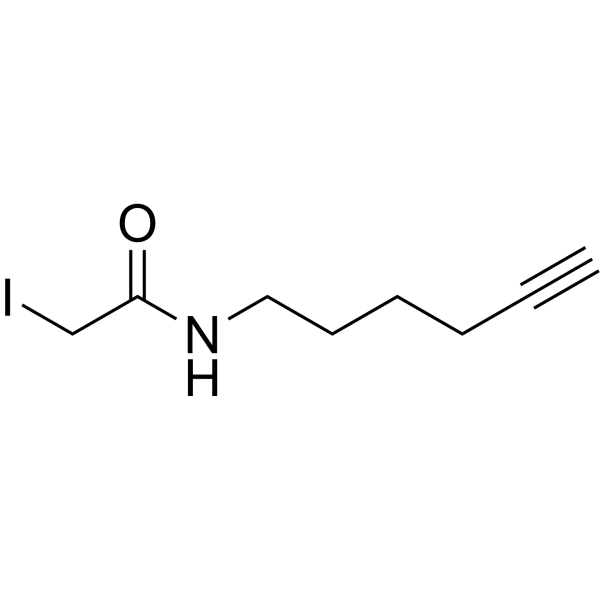
IA-Alkyne (Iodoacetamide-alkyne; N-Hex-5-ynyl-2-iodo-acetamide) is a TRP channel (TRPC) agonist and has the potential for the study of respiratory infection . IA-Alkyne can be used to develop an isotopically tagged probe for quantitative cysteine-reactivity profiling . IA-Alkyne is a click chemistry reagent, it contains an Alkyne group and can undergo copper-catalyzed azide-alkyne cycloaddition (CuAAc) with molecules containing Azide groups.
|
-
- HY-W010736A
-
|
|
Biochemical Assay Reagents
|
Others
|
|
1,2-Dipalmitoyl-rac-glycerol is a diacylglycerol containing palmitic acid at the sn-1 and sn-2 positions (Cat. No. 10006627). It is found in a variety of vegetable oils, including palm, soybean, canola, and corn. 1 \n 1,2-Dipalmitoyl-rac-glycerol MaxSpec Standard is a quantitative grade standard of 1,2-dipalmitoyl-rac-glycerol prepared for mass spectrometry and related applications requiring quantitative reproducibility . The solution has been prepared gravimetrically and contained in argon-sealed deactivated glass ampoules. Concentrations were verified by comparison to independently prepared calibration standards. This 1,2-dipalmitoyl-rac-glycerol MaxSpec Standard is guaranteed to meet specifications for identity, purity, stability, and concentration and is supplied with a batch-specific Certificate of Analysis. Ongoing stability testing is performed to ensure concentrations remain accurate throughout the shelf life of the product. Note: Add more solution to the vial than listed. Therefore, accurate volume measurements are necessary to prepare calibration standards. Follow recommended storage and handling conditions to maintain product quality.
|
-
- HY-W019823
-
|
|
Fluorescent Dye
|
Infection
Neurological Disease
|
|
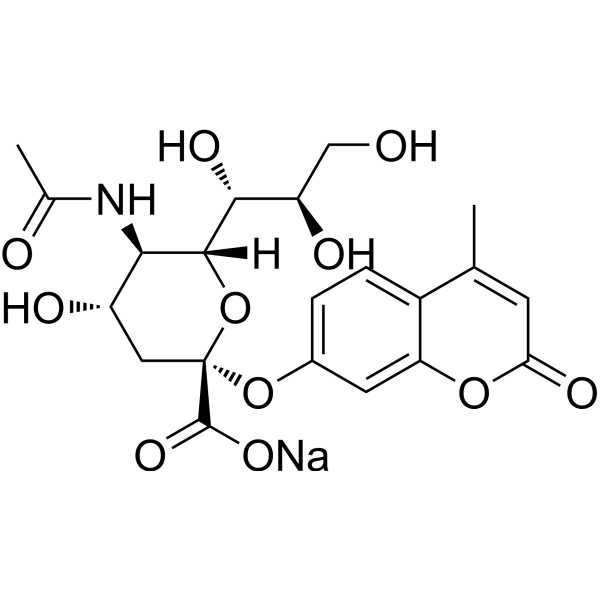
4-MUNANA is a substrate of influenza virus neuraminidase (NA) with high selectivity and irreversible reaction. In the enzymatic reaction, 4-MUNANA is hydrolyzed by NA to generate fluorescent 4-methylumbelliferone (4-MU). By detecting the fluorescence intensity of 4-MU, quantitative analysis of NA activity can be achieved. 4-MUNANA can be used in influenza-related research, such as screening NA inhibitors, developing new anti-influenza drugs, and studying the infection mechanism of influenza viruses .
|
-
- HY-D1603
-
|
|
Fluorescent Dye
|
Others
|
|
BODIPY FL-EDA is a widely used fluorescent dye for quantitative analysis of nucleotides. BODIPY FL-EDA is an aliphatic amine analog that can react with aldehydes and ketones. BODIPY FL-EDA can be used to detect both modified and unmodified deoxynucleotides and to determine DNA damage and genomic DNA methylation through capillary electrophoresis with laser-induced fluorescence (CE-LIF). Additionally, it can be used for quantifying intracellular ATP levels. The excitation wavelength is 500 nm, and the emission wavelength is 510 nm .
|
-
- HY-153080
-
|
|
Fluorescent Dye
mRNA
|
Others
|
|
Firefly Luciferase mRNA (N1-Me-Pseudo UTP) is a modified form of firefly luciferase mRNA, which is N1-methylated pseudo uridine (N1-Me-Pseudo UTP). Firefly Luciferase mRNA (N1-Me-Pseudo UTP) is a commonly used reporter molecule in biomedical and mRNA research and its core function is to rapidly and quantitatively monitor the expression and delivery efficiency of mRNA through the emission of light signals .
|
-
- HY-D3347
-
|
|
Fluorescent Dye
|
Cancer
|
|
DUPA-FITC is a fluorescent reagent targeting PSMA, which specifically binds to prostate cancer cells expressing PSMA without non-specific binding to normal blood cells. DUPA-FITC can label PSMA-expressing prostate cancer cells in whole blood, followed by internalization and trafficking to acidic intracellular endosomes, during which the fluorescence is quenched. When combined with flow cytometry and density gradient centrifugation enrichment, DUPA-FITC enables quantitative analysis of circulating tumor cells in peripheral blood samples from prostate cancer patients .
|
-
- HY-D2188
-
|
|
Deubiquitinase
|
Cancer
|
|
IMP-2373 is a low-toxicity activity-based probe targeting covalent pan-deubiquitinase (DUB), which modulates and monitors DUB activity via covalent binding to the catalytic cysteine and active site of DUB. IMP-2373 enables real-time tracking of dynamic intracellular DUB activity in physiologically relevant living cell systems, and quantitative analysis of activity changes induced by pharmacological inhibition or MYC dysregulation. IMP-2373 can be used for research on related diseases such as B-cell lymphoma .
|
-
- HY-D1224A
-
|
CPRG sodium
|
Biochemical Assay Reagents
|
Others
|
|
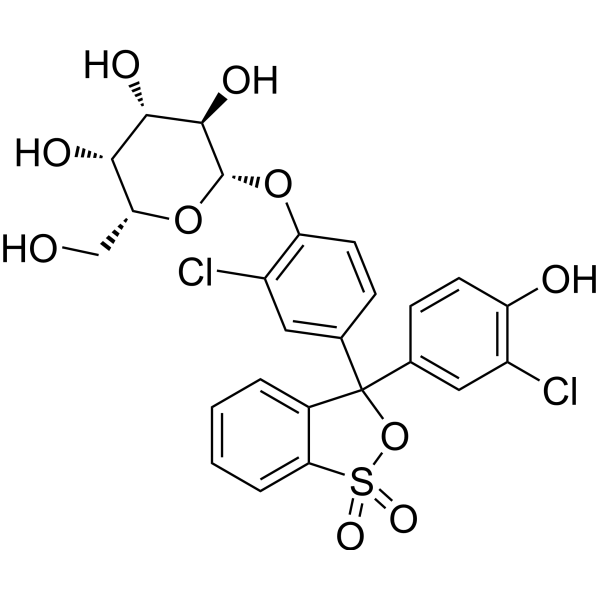
Chlorophenol red-β-D-galactopyranoside (CPRG) sodium is an efficient and sensitive chromogenic substrate for β-galactosidase (HY-P2869), widely used in colorimetric assays. Chlorophenol red-β-D-galactopyranoside sodium itself appears pale yellow. When it is specifically hydrolyzed by β-galactosidase, it releases chlorophenol red. The released chlorophenol red turns purple-red under alkaline or neutral pH conditions. This color change from yellow to red can be quantitatively detected at wavelengths of 540-572 nm using visible spectrophotometry .
|
-
- HY-D0121B
-
|
|
Fluorescent Dye
|
Others
|
|
INDO 1 pentasodium is a cell-impermeant ratiometric, free calcium ion (Ca 2+) fluorescent indicator that can quantitatively monitor dynamic changes in intracellular free Ca 2+ concentrations. When unbound to Ca 2+ (free state), INDO 1 pentasodium exhibits a peak emission wavelength of 485 nm under UV excitation (350 nm). Upon binding to Ca 2+ (bound state), the emission peak shifts to 405 nm. INDO 1 pentasodium is highly photolabile and susceptible to photobleaching, and its emission spectrum may overlap with the autofluorescence of NADH .
|
-
- HY-W612175
-
|
|
Leukotriene Receptor
|
Others
|
|
H-Ala-pNA is an L-amino acid p-nitroaniline (pNA) derivative and a specific substrate for leukotriene A4 hydrolase. The D-enantiomer of H-Ala-pNA shows no activity toward leukotriene A4 hydrolase. H-Ala-pNA can be catalytically hydrolyzed by leukotriene A4 hydrolase, and the p-nitroaniline produced during the reaction is monitored spectrophotometrically at 405 nm to enable quantitative detection of enzyme activity. H-Ala-pNA is used to evaluate the potency of inhibitors targeting the amidase activity of leukotriene A4 hydrolase .
|
-
- HY-DY1053
-
|
|
Fluorescent Dye
Reactive Oxygen Species (ROS)
|
Others
|
1,3-Diphenylisobenzofuran (DPBF) (solution) has been developed as a selective probe for the detection and quantitative determination of hydrogen peroxide in samples containing different reactive nitrogen and oxygen species (RNOS). DPBF is a fluorescent probe which, for almost 20 years, was believed to react in a highly specific manner toward some reactive oxygen species such as singlet oxygen and hydroxy, alkyloxy or alkylperoxy radicals . Solvent and concentration: DMSO: 10 mM The 1 mL volume is defined as the base specification. All larger sizes correspond to incremental volumes of this base.
|
-
- HY-D1224
-
|
CPRG
|
Biochemical Assay Reagents
|
Others
|
|
Chlorophenol red-β-D-galactopyranoside (CPRG) is an efficient and sensitive chromogenic substrate for β-galactosidase (HY-P2869), widely used in colorimetric assays. Chlorophenol red-β-D-galactopyranoside itself appears pale yellow. When it is specifically hydrolyzed by β-galactosidase, it releases chlorophenol red. The released chlorophenol red turns purple-red under alkaline or neutral pH conditions. This color change from yellow to red can be quantitatively detected at wavelengths of 540-572 nm using visible spectrophotometry .
|
-
- HY-164158
-
|
|
Drug Derivative
|
Others
|
|
N,N-Dimethyl psychosine is a derivative of Psychosine (HY-136490). N,N-Dimethyl psychosine can be used as an internal standard compound to quantify Psychosine in alkaline-treated lipid extracts .
|
-
- HY-D0155
-
|
|
Fluorescent Dye
|
Others
|
|
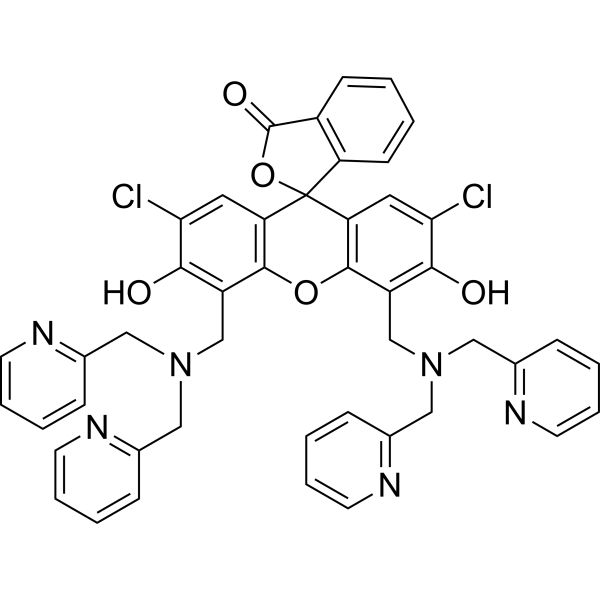
Zinpyr-1 is a zinc-responsive fluorescent indicator and a membrane-permeable metal-binding probe. Zinpyr-1 forms a complex with Mn 2+ ions and generates a fluorescence turn-on signal. Zinpyr-1 binds to free zinc ions in serum, enabling quantitative detection of free zinc concentration. Zinpyr-1 produces fluorescence signals reflecting the relative zinc concentration in plant root cells, localizes to specific layers of plant root cells, and can be used to support analyses related to plant zinc transporter mutations and homeostasis .
|
-
- HY-DY1034
-
|
|
Fluorescent Dye
|
Infection
Neurological Disease
|
4-MUNANA (solution) is a substrate of influenza virus neuraminidase (NA) with high selectivity and irreversible reaction. In the enzymatic reaction, 4-MUNANA is hydrolyzed by NA to generate fluorescent 4-methylumbelliferone (4-MU). By detecting the fluorescence intensity of 4-MU, quantitative analysis of NA activity can be achieved. 4-MUNANA can be used in influenza-related research, such as screening NA inhibitors, developing new anti-influenza drugs, and studying the infection mechanism of influenza viruses . Solvent and Concentration: Sterile water: 10 mM
|
-
- HY-D0219A
-
|
|
Fluorescent Dye
|
Others
|
|
Thymol Blue sodium is an acid-base indicator used to indicate changes in pH. Thymol Blue sodium fades from red to yellow at pH 1.2 to 2.8 and from yellow to blue at pH 8.0 to 9.6. Quantitative detection is achieved through the absorption peak shift (435 nm/596 nm) of the UV-visible spectrum. Thymol blue sodium can be fixed in a silica gel matrix through sol-gel technology to form a solid-state sensor for in-situ pH measurement in the marine environment and acid-base monitoring in the biomedical field .
|
-
- HY-179548
-
|
|
Drug Derivative
|
Others
|
|
Photoclick palmitic acid is a derivative of the long-chain saturated fatty acid palmitic acid (HY-N0830). The photoclick-type long-chain saturated fatty acid has been used as a probe for studying protein lipidation .
|
-
- HY-175424
-
|
|
Others
|
Others
|
|
N3-CMC is a click chemistry reagent. N3-CMC containing an azide group can undergo ring strain-promoted alkyne-azide cycloaddition (SPAAC) with molecules containing DBCO or BCN groups. N3-CMC can also undergo copper-catalyzed azide-alkyne cycloaddition (CuAAc) with molecules containing alkyne groups. N3-CMC reacts specifically with the pseudouridine (Ψ)-containing RNA, and biotin is subsequently conjugated to the N3-CMC-Ψ RNA via click chemistry, quantitatively analyzing the dynamic changes of Ψ .
|
-
- HY-182367
-
|
|
GPR39
|
Neurological Disease
|
|
TMN-OMe is a blood-brain barrier-permeable GPR39 agonist and a radiotracer for positron emission tomography (PET). TMN-OMe activates GPR39 by recruiting β-arrestin, exhibits highly selective binding ability in the mouse brain, and enables quantitative analysis of GPR39 at the in vivo level. TMN-OMe shows specific uptake in GPR39 knockout mice, Alzheimer's disease model (APP/PS1) mice, and blocking experiments. TMN-OMe facilitates in-depth exploration of changes in GPR39-related mechanisms in neurological diseases and is widely used in Alzheimer's disease research .
|
-
- HY-NP0144
-
|
WGA (Fluorescein)
|
Fluorescent Dye
|
Others
|
|
Succinylated Wheat Germ Agglutinin (Fluorescein) (WGA (Fluorescein)) is a fluorescent lectin that acts as a probe to specifically bind biomolecules. Succinylated Wheat Germ Agglutinin (Fluorescein) binds to cell surface glycoconjugates containing N-acetylglucosamine. Succinylated Wheat Germ Agglutinin (Fluorescein) is a selective agglutinating agent targeting specific red blood cells, thymocytes, splenocytes and lymphocytes. Succinylated Wheat Germ Agglutinin (Fluorescein) binds to fibroblasts and lymphocytes via dual binding sites in a temperature-dependent, saturable manner. Succinylated Wheat Germ Agglutinin (Fluorescein) can be used for quantitative studies of cell surface receptor glycoconjugates (Ex=495 nm, Em=515 nm) .
|
-
- HY-B1422
-
|
Aminacrine
|
Bacterial
HIV
|
Infection
|
|
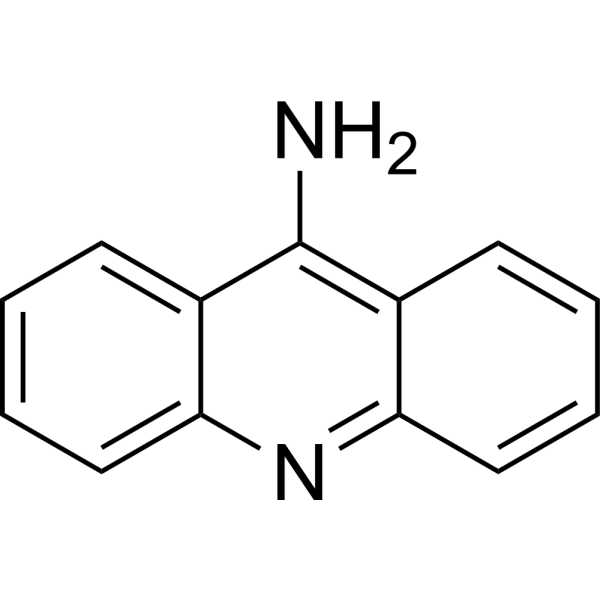
9-Aminoacridine, a fluorescent probe, acts as an indicator of pH for quantitative determination of transmembrane pH gradients (inside acidic). 9-Aminoacridine is an antimicrobial. 9-Aminoacridine exerts its antimicrobial activity by interacting with specific bacterial DNA and disrupting the proton motive force in K. pneumoniae. 9-Aminoacridine is a HIV-1 inhibitor and inhibits HIV LTR transcription highly dependent on the presence and location of the amino moiety. 9-Aminoacridine inhibits virus replication in HIV-1 infected cell lines. 9-Aminoacridine is used as a Rifampin (RIF; HY-B0272) adjuvant for the multidrug-resistant K. pneumoniae infections .
|
-
- HY-Y0678
-
|
TRIMETHYL PHLOROGLUCINOL
|
Biochemical Assay Reagents
|
Others
|
|
1,3,5-Trimethoxybenzene (TRIMETHYL PHLOROGLUCINOL) is an electrophilic substitution reaction substrate targeting free chlorine (Cl +) and free bromine (Br +). 1,3,5-Trimethoxybenzene has highly selective electrophilic addition characteristics. By capturing halogens, it undergoes specific substitution reactions to generate stable halogenated products. 1,3,5-Trimethoxybenzene can not only quench residual oxidants, but also quantify the halogen concentration by detecting the product without affecting the stability of redox-sensitive disinfection byproducts (DBPs). 1,3,5-Trimethoxybenzene is mainly used in water quality testing and quantitative analysis of free chlorine/bromine in water. At the same time, in phytochemistry, it is a key component of rose fragrance and participates in the study of pollination attraction mechanism .
|
-
- HY-48813
-
|
|
Endogenous Metabolite
NF-κB
Interleukin Related
|
Metabolic Disease
|
|
Glycoursodeoxycholic acid 3-sulfate is a glycine-conjugated sulfated bile acid 3-sulfate, which is produced by SULT2A1-mediated sulfation of glycoursodeoxycholic acid (HY-N1424) in the liver. Glycoursodeoxycholic acid 3-sulfate attenuates the anti-inflammatory effect of glycoursodeoxycholic acid and impairs the inhibitory effect on the IL-17 and NF-κB signaling pathways. Glycoursodeoxycholic acid 3-sulfate shows a significant correlation with aortic flow velocity and BNP in patients with aortic stenosis. Glycoursodeoxycholic acid 3-sulfate is mainly used in related studies such as quantitative analysis, quality control and biochemical experiments; it often serves as a reagent for metabolomics analysis and can also be applied to research related to aortic stenosis .
|
-
- HY-D0219
-
|
Thymolsulphonephthalein
|
Fluorescent Dye
|
Others
|
|
Thymol blue is a reversible pH indicator that responds to the pH of the solution through structural changes of protonation and deprotonation. Thymol blue is red (HI - form) under acidic conditions and blue (I 2- form) under alkaline conditions. Quantitative detection is achieved through the absorption peak shift (435 nm/596 nm) of the UV-visible spectrum. Thymol blue selectively responds to pH changes, changing from red to yellow at pH 1.2-2.8 and from yellow to blue at pH 8.0-9.6. Thymol blue can be fixed in a silica gel matrix through sol-gel technology to form a solid-state sensor for in-situ pH measurement in the marine environment and acid-base monitoring in the biomedical field[1][2].
|
-
- HY-79587
-
|
|
Biochemical Assay Reagents
|
Others
|
|
Benzil is a 1,2-diketone compound with multiple functions including photo-peroxidation initiator, crosslinking initiator and pattern-forming agent, and is commonly used as a precursor for photodegradable network crosslinkers. In oxygen-purged polymer films or glassy matrices, Benzil reacts with molecular oxygen under illumination at wavelengths greater than 370 nm or 400 nm, and converts to benzoyl peroxide in nearly quantitative yield. Subsequently, the generated benzoyl peroxide groups produce free radicals via thermal or photochemical decomposition, thereby enabling crosslinking of polymer chains, grafting of new monomers, and preparation of patterned polymers on solid surfaces using mask irradiation. Benzil also induces crosslinking of photodegradable poly (phenyl vinyl ketone) to form a stable photodegradable polymer network .
|
-
- HY-Y0678R
-
|
|
Reference Standards
Biochemical Assay Reagents
|
Others
|
|
1,3,5-Trimethoxybenzene (TRIMETHYL PHLOROGLUCINOL) is an electrophilic substitution reaction substrate targeting free chlorine (Cl+) and free bromine (Br+). 1,3,5-Trimethoxybenzene has highly selective electrophilic addition characteristics. By capturing halogens, it undergoes specific substitution reactions to generate stable halogenated products. 1,3,5-Trimethoxybenzene can not only quench residual oxidants, but also quantify the halogen concentration by detecting the product without affecting the stability of redox-sensitive disinfection byproducts (DBPs). 1,3,5-Trimethoxybenzene is mainly used in water quality testing and quantitative analysis of free chlorine/bromine in water. At the same time, in phytochemistry, it is a key component of rose fragrance and participates in the study of pollination attraction mechanism .
|
-
- HY-W010991
-
|
FAPGG
|
Angiotensin-converting Enzyme (ACE)
|
Others
|
|
N-[3-(2-Furyl)acryloyl]-Phe-Gly-Gly (FAPGG) is a specific substrate of angiotensin converting enzyme (ACE) with a Ki of 2.546×10 -4 M. It is used as a chromogenic probe for quantitative detection of ACE activity. N-[3-(2-Furyl)acryloyl]-Phe-Gly-Gly can be hydrolyzed by ACE to generate N-[3-(2-furyl)acryloyl]-Phe (FAP) and Gly-Gly, and the ACE inhibitory effect is monitored by photometry. FAPGG competitively binds to the active center of ACE and is a key tool for screening ACE inhibitors such as Captopril (HY-B0368) and Dioscorin. Its reversible mechanism of action supports hypertension research and drug development targeting the renin-angiotensin system .
|
-
- HY-153006
-
|
DCFH2
|
Biochemical Assay Reagents
|
Others
|
|
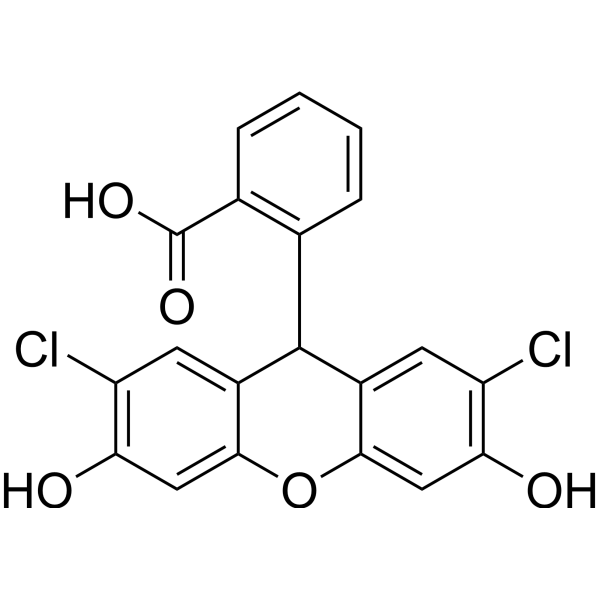
2,7-Dichlorodihydrofluorescein (DCFH2) is a non-fluorescent reactive oxygen species (ROS) probe with an excitation wavelength of 485-500 nm and an emission wavelength of 515-530 nm. 2,7-Dichlorodihydrofluorescein is first hydrolyzed by intracellular esterases and then oxidized by ROS to generate non-biomembrane-permeable, highly fluorescent 2,7-dichlorofluorescein (DCF). The fluorescence intensity of DCF is positively correlated with the ROS concentration. 2,7-Dichlorodihydrofluorescein can undergo oxidation reactions with a variety of ROS (such as ·OH, H2O2, ONOO -, etc.) and is used to quantitatively detect the level of oxidative stress inside and outside cells. It is suitable for oxidative stress analysis in in vitro cell models and in vivo targeted delivery (such as liver-targeted liposomes) .
|
-
- HY-34611
-
|
N-Boc-L-2,4-diaminobutyric acid; Boc-Dab-OH
|
Drug Intermediate
ASCT
|
Neurological Disease
Cancer
|
|
Boc-L-2,4-Diaminobutyric acid (N-Boc-L-2,4-diaminobutyric acid; Boc-Dab-OH) is a versatile synthetic starting material with a cleavable protecting group. Boc-L-2,4-Diaminobutyric acid not only reduces the backbone cleavage rate by protecting the side-chain γ-amino group, but also triggers intramolecular cyclization of self-immolative linkers under acidic cleavage conditions, thus constructing stimuli-responsive materials. Boc-L-2,4-Diaminobutyric acid is also an important building block for bioactive molecules. It can be used in the synthesis of ASCT2 (SLC1A5) inhibitors and carboxynorspermine, and can also serve as an internal standard to support the quantitative detection of specific intracellular amino acids by UPLC-QQQ-MS .
|
-
- HY-P4551
-
|
N-Benzoyl-Gly-His-Leu
|
Angiotensin-converting Enzyme (ACE)
Amino Acid Derivatives
|
Cardiovascular Disease
|
|
Hippuryl-His-Leu-OH (N-Benzoyl-Gly-His-Leu) is a specific substrate for angiotensin-converting enzyme (ACE I) and a molecular tool used for ACE activity detection in in vitro experiments. Hippuryl-His-Leu-OH is hydrolyzed by ACE through competitive binding. Under ACE catalysis, Hippuryl-His-Leu-OH undergoes hydrolysis to produce hippuric acid (HA). The amount of HA produced can be used to quantitatively assess ACE activity or screen for ACE inhibitors. The released His-Leu can also react with o-phthalaldehyde or Fluorescamine (HY-D0715) for fluorescence detection. Hippuryl-His-Leu-OH can be applied to the in vitro screening of ACE inhibitors for hypertension and cardiovascular diseases, and is also used in the study of ACE activity changes in physiological and pathological processes such as renal compensatory hypertrophy .
|
-
- HY-B1422S
-
|
Aminacrine-13C6
|
Bacterial
HIV
Isotope-Labeled Compounds
|
Infection
|
|
9-Aminoacridine-13C6 is the 13C-labeled 9-Aminoacridine(HY-B1422). 9-Aminoacridine, a fluorescent probe, acts as an indicator of pH for quantitative determination of transmembrane pH gradients (inside acidic). 9-Aminoacridine is an antimicrobial. 9-Aminoacridine exerts its antimicrobial activity by interacting with specific bacterial DNA and disrupting the proton motive force in K. pneumoniae. 9-Aminoacridine is a HIV-1 inhibitor and inhibits HIV LTR transcription highly dependent on the presence and location of the amino moiety. 9-Aminoacridine inhibits virus replication in HIV-1 infected cell lines. 9-Aminoacridine is used as a Rifampin (RIF; HY-B0272) adjuvant for the multidrug-resistant K. pneumoniae infections .
|
-
- HY-W011422
-
|
NSC 528
|
Fluorescent Dye
|
Others
|
|
2,6-Dibromo-4-(chloroimino)cyclohexa-2,5-dienone (NSC 528) is a colorimetric dye used for the detection of phenolic compounds. 2,6-Dibromo-4-(chloroimino)cyclohexa-2,5-dienone reacts with phenolic compounds at a pH of about 9.4 to produce an indigo dye. 2,6-Dibromo-4-(chloroimino)cyclohexa-2,5-dienone has been used as a Gibbs reagent for the colorimetric detection of phenolic compounds. 2,6-Dibromo-4-(chloroimino)cyclohexa-2,5-dienone has also been used in a colorimetric reaction for the quantitative colorimetric detection of aflatoxins, turning the colorless aflatoxins green with an absorption band at 673 nm.
|
-
- HY-D3391
-
|
|
Bacterial
|
Infection
|
|
RMR-Tre is a fluorescent probe targeting the mycobacterial acyltransferase Ag85. Under the catalysis of Ag85, RMR-Tre undergoes 6-position mycoloylation and anchors to the mycobacterial membrane, while achieving fluorescence activation by inhibiting the intramolecular twisted charge transfer state transition. RMR-Tre can distinguish live mycobacteria from dead ones through metabolism-driven labeling, enabling rapid, wash-free, low-background detection of viable bacteria. RMR-Tre reports the drug resistance of Mycobacterium tuberculosis via the trehalose catalytic shift activity readout associated with TreS. In addition, RMR-Tre can be combined with flow cytometry or high-content imaging techniques to visualize and quantitatively analyze the metabolic heterogeneity of Mycobacterium tuberculosis related to persistence and drug resistance. RMR-Tre is widely used in tuberculosis-related research .
|
-
- HY-142021
-
|
|
Cathepsin
Parasite
|
Infection
Inflammation/Immunology
|
|
Z-Leu-Arg-AMC is a fluorogenic peptide substrate for cysteine proteases (e.g., Cathepsin) (Ex=350 nm,Em=460 nm). Z-Leu-Arg-AMC is preferentially cleaved by Cathepsin K and S under weakly acidic conditions, while its hydrolysis relies on residual Cathepsin S activity at neutral pH. Z-Leu-Arg-AMC serves as a substrate for recombinant Sphenophorus levis Cathepsin L, falcipain-2, falcipain-3, berghepain-2, knowlepain-2, vivapain-2, as well as falcipain-2 chimeras and constructs. It enables quantitative detection of cysteine protease activity in human inflammatory bronchoalveolar lavage fluid via fluorescence generation. Z-Leu-Arg-AMC can be used in research related to pulmonary inflammatory diseases and malaria .
|
-
- HY-W020012
-
|
22-NBD Cholesterol
|
Fluorescent Dye
|
Metabolic Disease
|
|
Fluoresterol (22-NBD Cholesterol) is a cholesterol-specific fluorescent probe with cholesterol-mimicking binding properties. Fluoresterol is ineffective orally and does not cross the blood-brain barrier. Fluoresterol specifically binds to cholesterol transport-related proteins (such as ABCA1 and ABCG1) and is primarily used in cholesterol metabolism research, particularly for the visualization and quantitative analysis of cholesterol absorption, efflux, intracellular transport efficiency, and reverse cholesterol transport (RCT) processes. The commonly used concentration of Fluoresterol in in vitro experiments is 0.1-10 μM, and the commonly used dose in in vivo experiments is 5-20 mg/kg (gavage or intraperitoneal injection), with excitation/emission wavelengths of 472/540 nm. Fluoresterol can be applied to the study of cholesterol metabolism mechanisms related to hyperlipidemia, atherosclerosis, and non-alcoholic fatty liver disease (NAFLD) .
|
-
- HY-B1306
-
|
p-Aminohippuric acid
|
Others
|
Neurological Disease
Metabolic Disease
|
|
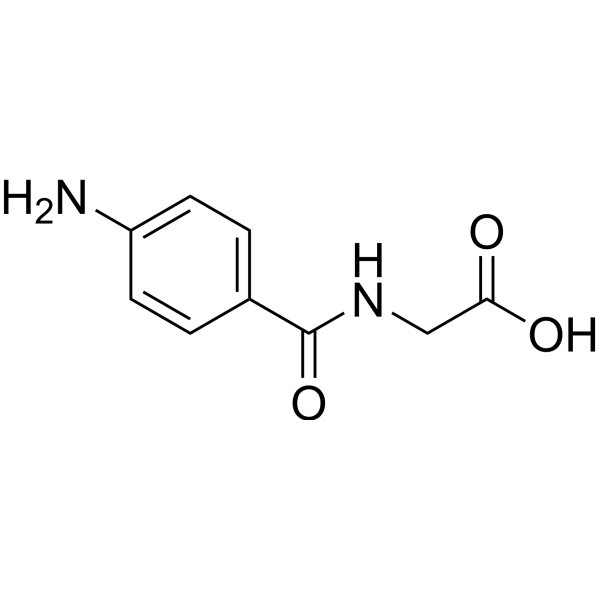
4-Aminohippuric acid (p-Aminohippuric acid) is a coordination ligand for metal ions (such as Cu 2+, Fe 3+, Hg 2+) and a functionalization reagent for nanomaterials. 4-Aminohippuric acid can coordinate with metal ions or modify the surface of materials such as carbon nanotubes and gold nanoparticles through amino and carboxyl groups. 4-Aminohippuric acid can form stable complexes with metal ions or participate in the synthesis of nanomaterials as a reducing agent/stabilizer, enriching metal ions or giving nanoparticles peroxidase-mimicking activity. 4-Aminohippuric acid can be used to construct highly sensitive electrochemical sensors or colorimetric sensors to detect and quantitatively analyze heavy metal ions such as copper, iron, and mercury in environmental water samples and biological samples. 4-Aminohippuric acid may also be a biomarker for attention-deficit/hyperactivity disorder (ADHD) .
|
-
- HY-B1422R
-
|
Aminacrine (Standard)
|
Reference Standards
Bacterial
HIV
|
Infection
|
|
9-Aminoacridine (Standard) is the analytical standard of 9-Aminoacridine. This product is intended for research and analytical applications. 9-Aminoacridine, a fluorescent probe, acts as an indicator of pH for quantitative determination of transmembrane pH gradients (inside acidic). 9-Aminoacridine is an antimicrobial. 9-Aminoacridine exerts its antimicrobial activity by interacting with specific bacterial DNA and disrupting the proton motive force in K. pneumoniae. 9-Aminoacridine is a HIV-1 inhibitor and inhibits HIV LTR transcription highly dependent on the presence and location of the amino moiety. 9-Aminoacridine inhibits virus replication in HIV-1 infected cell lines. 9-Aminoacridine is used as a Rifampin (RIF; HY-B0272) adjuvant for the multidrug-resistant K. pneumoniae infections .
|
-
- HY-W115721
-
|
Sodium rhodizonate dibasic
|
Reactive Oxygen Species (ROS)
DNA/RNA Synthesis
|
Others
|
|
Rhodizonic acid disodium (Sodium rhodizonate dibasic) is a transition metal-dependent pro-oxidant and lead detection agent that induces reactive oxygen species generation, DNA damage, and inhibits Aconitase activity. Rhodizonic acid disodium generates superoxide anion radicals in an iron (II)-dependent manner, leading to aconitase inactivation. Rhodizonic acid disodium also triggers hydroxyl radical-mediated DNA strand breaks and 8-OHdG formation via copper ion reduction. Rhodizonic acid disodium reacts with lead to form a scarlet precipitate, with the color intensity proportional to lead content, enabling qualitative or quantitative analysis of lead. Rhodizonic acid disodium can also be used for real-time visualization of the dynamic process of lead sequestration in the plant rhizosphere and evaluation of the effects of environmental factors such as soil type on the stability of lead-sequestering structures .
|
-
- HY-179227
-
|
|
HDAC
|
Neurological Disease
|
|
HDAC6 ligand-7 (Compound 16a) is a positron emission tomography (PET) tracer for the deacetylase 6 (HDAC6) enzyme with a Kd value of 1.66 nM. HDAC6 ligand-7 exhibits excellent HDAC6 inhibitory activity, with IC50 values of 2.7 and 3.7 nM for hHDAC6 and mHDAC6, respectively, and has high selectivity for HDAC1/4/7/8. HDAC6 ligand-7 after being radioactively labeled with fluorine-18, [¹⁸F]HDAC6 ligand-7 shows varying degrees of radioactive uptake in PET, which can reflect the specific binding to HDAC6. HDAC6 ligand-7 can be used for the study of HDAC6 imaging .
|
-
- HY-137875
-
|
N-Benzoyl-Gly-His-Leu hydrate
|
Angiotensin-converting Enzyme (ACE)
Amino Acid Derivatives
|
Cardiovascular Disease
|
|
Hippuryl-His-Leu-OH (N-Benzoyl-Gly-His-Leu) hydrate is a specific substrate for angiotensin-converting enzyme ACE I and is a molecular tool used for ACE activity detection in in vitro experiments. Hippuryl-His-Leu-OH hydrate is hydrolyzed by ACE through competitive binding. Under ACE catalysis, Hippuryl-His-Leu-OH hydrate undergoes hydrolysis to produce hippuric acid (HA). The amount of HA produced can be used to quantitatively assess ACE activity or screen for ACE inhibitors. The His-Leu released from Hippuryl-His-Leu-OH hydrate can also react with o-phthalaldehyde or Fluorescamine (HY-D0715) for fluorescence detection. Hippuryl-His-Leu-OH hydrate can be applied to the in vitro screening of ACE inhibitors for hypertension and cardiovascular diseases, and is also used in the study of changes in ACE activity during physiological and pathological processes such as renal compensatory hypertrophy .
|
-
- HY-B1306R
-
|
p-Aminohippuric acid (Standard)
|
Reference Standards
Biochemical Assay Reagents
|
Neurological Disease
Metabolic Disease
|
|
4-Aminohippuric acid (p-Aminohippuric acid) (Standard) is the analytical standard of 4-Aminohippuric acid (HY-B1306). This product is intended for research and analytical applications. 4-Aminohippuric acid (p-Aminohippuric acid) is a coordination ligand for metal ions (such as Cu 2+, Fe 3+, Hg 2+) and a functionalization reagent for nanomaterials. 4-Aminohippuric acid can coordinate with metal ions or modify the surface of materials such as carbon nanotubes and gold nanoparticles through amino and carboxyl groups. 4-Aminohippuric acid can form stable complexes with metal ions or participate in the synthesis of nanomaterials as a reducing agent/stabilizer, enriching metal ions or giving nanoparticles peroxidase-mimicking activity. 4-Aminohippuric acid can be used to construct highly sensitive electrochemical sensors or colorimetric sensors to detect and quantitatively analyze heavy metal ions such as copper, iron, and mercury in environmental water samples and biological samples. 4-Aminohippuric acid may also be a biomarker for attention-deficit/hyperactivity disorder (ADHD) .
|
-
- HY-D0077
-
|
Oregon green 488
|
Fluorescent Dye
|
Others
|
|
2',7'-Difluorofluorescein (Oregon green 488) is a fluorescein derivative and a pH-sensitive fluorescent probe (pKa ~4.7). Upon excitation at 488 nm, 2',7'-Difluorofluorescein exhibits pH-sensitive fluorescence intensity through the formation of dianions, while its pH sensitivity decreases under excitation at 450 nm, allowing its use in ratiometric pH analysis. 2',7'-Difluorofluorescein can be used for the quantitative analysis of pH values in the range of 2-7 in submicron aerosol particles. 2',7'-Difluorofluorescein undergoes buffer-mediated and buffer-free excited-state proton transfer between different protonated forms, and its cationic form undergoes rapid excited-state deprotonation. 2',7'-Difluorofluorescein is resistant to photodegradation, maintains stable absorption and fluorescence properties within the physiological pH range, and serves as a fluorescent protein label, a component of Ca 2+ indicators, a fluorescent imaging agent, and an anisotropy probe .
|
-
- HY-B1306S
-
|
p-Aminohippuric acid-d4
|
Biochemical Assay Reagents
|
Neurological Disease
Metabolic Disease
|
|
4-Aminohippuric acid-d4 (p-Aminohippuric acid-d4) is the deuterium labeled 4-Aminohippuric acid (HY-B1306). 4-Aminohippuric acid (p-Aminohippuric acid) is a coordination ligand for metal ions (such as Cu 2+, Fe 3+, Hg 2+) and a functionalization reagent for nanomaterials. 4-Aminohippuric acid can coordinate with metal ions or modify the surface of materials such as carbon nanotubes and gold nanoparticles through amino and carboxyl groups. 4-Aminohippuric acid can form stable complexes with metal ions or participate in the synthesis of nanomaterials as a reducing agent/stabilizer, enriching metal ions or giving nanoparticles peroxidase-mimicking activity. 4-Aminohippuric acid can be used to construct highly sensitive electrochemical sensors or colorimetric sensors to detect and quantitatively analyze heavy metal ions such as copper, iron, and mercury in environmental water samples and biological samples. 4-Aminohippuric acid may also be a biomarker for attention-deficit/hyperactivity disorder (ADHD) .
|
-
- HY-P1047
-
|
[Pro18, Asp21] β-Amyloid (17-21)
|
Amyloid-β
|
Neurological Disease
|
|
β-Sheet Breaker Peptide iAβ5 is an effective brain amyloid-β (Abeta) degrader. Abeta deposits are associated with Alzheimer's disease (AD), and the related toxicity arises from its β-sheet conformation and aggregation. β-Sheet Breaker Peptide iAβ5 can repeatedly induce the degradation of fibrillary amyloid deposits in vivo. Therefore, β-Sheet Breaker Peptide iAβ5 can prevent and/or reverse neuronal contraction caused by Abeta and reduce the range of interleukin IL-1beta positive microglial-like cells around Abeta deposits. β-Sheet Breaker Peptide iAβ5 can reduce the size and/or number of brain amyloid plaques in AD. β-Sheet Breaker Peptide iAβ5 is labeled with a hydrophobic benzyl alcohol (HBA) tag and shows a bright blue color under acidic conditions, which can be used for quantitative determination.
|
-
- HY-161972
-
|
|
HyT
Ferroptosis
Glutathione Peroxidase
|
Cancer
|
|
ZX782 is a HyT GPX4 degrader and a ferroptosis inducer, which induces GPX4 degradation and significantly increases lipid ROS accumulation in HT1080 cells. ZX782 can be used to treat AD by reducing the size and/or number of brain amyloid plaques and by inhibiting the spread of IL-1beta-positive microglial-like cells around amyloid plaques. ZX782 is labeled with hydrophobic benzyl alcohol (HBA) and appears bright blue under acidic conditions, which can be used for quantitative determination . ZX782 is composed of target protein ligand (red part) ML-210 (HY-100003), PROTAC linker (black part) Bromo-PEG2-CH2-Boc (HY-141371) and Hty molecule (blue part) Adamantan-1-ylmethanamine (HY-W037848). The conjugate consisting of Hyt and linker parts is Adamantan-C-amide-PEG2-C-Br (HY-161974), and the activity control of the target protein ligand is Hydroxyl-ML-210 (HY-161973).
|
-
- HY-12761
-
|
|
Cannabinoid Receptor
|
Cardiovascular Disease
Others
Neurological Disease
Metabolic Disease
Inflammation/Immunology
Cancer
|
|
A-836339 is a selective CB2 receptor agonist, with Ki values of 0.4 nM and 0.8 nM in humans and rats, respectively. A-836339 exhibits multiple effects such as analgesia, gastric protection, anti-inflammation, and antioxidant activity. A-836339 produces antinociceptive and analgesic activities by activating CB2 receptors in the dorsal root ganglia and spinal cord. A-836339 can also exert gastric protective effects through anti-inflammatory mechanisms (reducing TNF-α and IL-1β) and antioxidant mechanisms (enhancing the activities of CAT and SOD, and reducing H2O2). Radioactively labeled A-836339 can serve as a CB2-specific radioligand for autoradiography and PET imaging. A-836339 can be used in research on inflammatory pain, neuropathic pain, gastric ulcers, cerebral ischemia, etc .
|
-
-
-
HY-L0091V
-
|
|
1,367,511 compounds
|
|
Chemspace Lead-Like Compound Library contains 1,367,511 in-Stock lead-like compoundswith favorable physicochemical profiles and high Quantitative Estimation of Drug-likeness.
|
-
-
HY-L239
-
|
|
70 compounds
|
|
Steroid hormones (also known as steroidal hormones) are a class of tetracyclic aliphatic hydrocarbon compounds derived from cholesterol. Typical representatives of steroid hormones include cortisol, aldosterone, testosterone, estradiol, among others. These hormones serve diverse regulatory functions within the body. For instance, aldosterone helps maintain the homeostasis of extracellular fluid volume and circulating blood volume; testosterone and estradiol primarily promote the development and maturation of male and female reproductive organs and regulate reproductive functions.
MCE designs a unique collection of 70 steroid hormones. This library can be used for research related to metabolic or immune diseases, investigations into the mechanisms of action of nuclear receptor signaling pathways, as well as identification and quantitative analysis in metabolomics studies.
|
| Cat. No. |
Product Name |
Type |
-
- HY-W019823
-
|
|
Fluorescent Dyes
|
|
4-MUNANA is a substrate of influenza virus neuraminidase (NA) with high selectivity and irreversible reaction. In the enzymatic reaction, 4-MUNANA is hydrolyzed by NA to generate fluorescent 4-methylumbelliferone (4-MU). By detecting the fluorescence intensity of 4-MU, quantitative analysis of NA activity can be achieved. 4-MUNANA can be used in influenza-related research, such as screening NA inhibitors, developing new anti-influenza drugs, and studying the infection mechanism of influenza viruses .
|
-
- HY-W011664
-
|
DPBF
|
Fluorescent Dyes
|
|
1,3-Diphenylisobenzofuran (DPBF) has been developed as a selective probe for the detection and quantitative determination of hydrogen peroxide in samples containing different reactive nitrogen and oxygen species (RNOS). DPBF is a fluorescent probe which, for almost 20 years, was believed to react in a highly specific manner toward some reactive oxygen species such as singlet oxygen and hydroxy, alkyloxy or alkylperoxy radicals .
|
-
- HY-D0914
-
|
FD&C Green No. 3; Food green 3; C.I. 42053
|
Fluorescent Dyes
|
|
Fast Green FCF is a sea green triarylmethane food dye, with absorption maximum ranging from 622 to 626 nm. Fast Green FCF inhibits α-synuclein aggregation, as well as Aβ and P2X4 receptor, and TLR4/Myd88/NF-κB. Fast Green FCF is widely used as a staining agent like quantitative stain for histones at alkaline pH after acid extraction of DNA, and as a protein stain in electrophoresis. Fast Green FCF improves cognitive impairment, depression, relieves pain allergies, and promotes reproductive function .
|
-
- HY-D0971
-
|
Pyronine G; C.I. 45005
|
Fluorescent Dyes
|
|
Pyronin Y (Pyronine G) is a cationic dye that intercalates RNA and has been used to target cell structures including RNA, DNA and organelles. Pyronin Y forms fluorescent complexes with double-stranded nucleic acids (especially RNA) enabling semi-quantitative analysis of cellular RNA. Pyronin Y can be used to identify specific RNA subspecies of ribonuclear proteins complexes in live cells .
|
-
- HY-W010991
-
|
FAPGG
|
Fluorescent Dyes
|
|
N-[3-(2-Furyl)acryloyl]-Phe-Gly-Gly (FAPGG) is a specific substrate of angiotensin converting enzyme (ACE) with a Ki of 2.546×10 -4 M. It is used as a chromogenic probe for quantitative detection of ACE activity. N-[3-(2-Furyl)acryloyl]-Phe-Gly-Gly can be hydrolyzed by ACE to generate N-[3-(2-furyl)acryloyl]-Phe (FAP) and Gly-Gly, and the ACE inhibitory effect is monitored by photometry. FAPGG competitively binds to the active center of ACE and is a key tool for screening ACE inhibitors such as Captopril (HY-B0368) and Dioscorin. Its reversible mechanism of action supports hypertension research and drug development targeting the renin-angiotensin system .
|
-
- HY-D1224
-
|
CPRG
|
Fluorescent Dyes
|
|
Chlorophenol red-β-D-galactopyranoside (CPRG) is an efficient and sensitive chromogenic substrate for β-galactosidase (HY-P2869), widely used in colorimetric assays. Chlorophenol red-β-D-galactopyranoside itself appears pale yellow. When it is specifically hydrolyzed by β-galactosidase, it releases chlorophenol red. The released chlorophenol red turns purple-red under alkaline or neutral pH conditions. This color change from yellow to red can be quantitatively detected at wavelengths of 540-572 nm using visible spectrophotometry .
|
-
- HY-D0155
-
|
|
Fluorescent Dyes
|
|
Zinpyr-1 is a zinc-responsive fluorescent indicator and a membrane-permeable metal-binding probe. Zinpyr-1 forms a complex with Mn 2+ ions and generates a fluorescence turn-on signal. Zinpyr-1 binds to free zinc ions in serum, enabling quantitative detection of free zinc concentration. Zinpyr-1 produces fluorescence signals reflecting the relative zinc concentration in plant root cells, localizes to specific layers of plant root cells, and can be used to support analyses related to plant zinc transporter mutations and homeostasis .
|
-
- HY-B1422
-
|
Aminacrine
|
Fluorescent Dyes
|
|
9-Aminoacridine, a fluorescent probe, acts as an indicator of pH for quantitative determination of transmembrane pH gradients (inside acidic). 9-Aminoacridine is an antimicrobial. 9-Aminoacridine exerts its antimicrobial activity by interacting with specific bacterial DNA and disrupting the proton motive force in K. pneumoniae. 9-Aminoacridine is a HIV-1 inhibitor and inhibits HIV LTR transcription highly dependent on the presence and location of the amino moiety. 9-Aminoacridine inhibits virus replication in HIV-1 infected cell lines. 9-Aminoacridine is used as a Rifampin (RIF; HY-B0272) adjuvant for the multidrug-resistant K. pneumoniae infections .
|
-
- HY-122266
-
|
|
Fluorescent Dyes
|
|
Orcein is an irreversible stain that specifically targets elastic fibers and can interact hydrophobically with the protein components in elastic fibers. Orcein makes elastic fibers in tissues appear purple or purple-red. Orcein can be used for morphological studies of Drosophila polytene chromosomes and for qualitative and quantitative analysis of elastic fibers, collagen fibers and other components in atherosclerotic plaques .
|
-
- HY-D0219
-
|
Thymolsulphonephthalein
|
Fluorescent Dyes
|
|
Thymol blue is a reversible pH indicator that responds to the pH of the solution through structural changes of protonation and deprotonation. Thymol blue is red (HI - form) under acidic conditions and blue (I 2- form) under alkaline conditions. Quantitative detection is achieved through the absorption peak shift (435 nm/596 nm) of the UV-visible spectrum. Thymol blue selectively responds to pH changes, changing from red to yellow at pH 1.2-2.8 and from yellow to blue at pH 8.0-9.6. Thymol blue can be fixed in a silica gel matrix through sol-gel technology to form a solid-state sensor for in-situ pH measurement in the marine environment and acid-base monitoring in the biomedical field[1][2].
|
-
- HY-108715
-
|
|
Fluorescent Dyes
|
|
Real Thiol is a reversible reaction-based fluorescent probe which can quantitatively monitor the real-time glutathione dynamics in living cells.
|
-
- HY-D1262
-
|
Thiol-green 2
|
Fluorescent Dyes
|
|
BODIPY-TS (Thiol-green 2) is a fast response and thiol-specific turn-on probe. BODIPY-TS utilizes the thiosulfonate scaffold as a thiol recognition unit. BODIPY-TS has low toxicity, and features high selectivity, low detection limit, and quantitative reaction to thiols . Ex: 490 nM; Em: 515 nM.
|
-
- HY-D1603
-
|
|
Fluorescent Dyes
|
|
BODIPY FL-EDA is a widely used fluorescent dye for quantitative analysis of nucleotides. BODIPY FL-EDA is an aliphatic amine analog that can react with aldehydes and ketones. BODIPY FL-EDA can be used to detect both modified and unmodified deoxynucleotides and to determine DNA damage and genomic DNA methylation through capillary electrophoresis with laser-induced fluorescence (CE-LIF). Additionally, it can be used for quantifying intracellular ATP levels. The excitation wavelength is 500 nm, and the emission wavelength is 510 nm .
|
-
- HY-DY1034
-
|
|
Fluorescent Dyes
|
4-MUNANA (solution) is a substrate of influenza virus neuraminidase (NA) with high selectivity and irreversible reaction. In the enzymatic reaction, 4-MUNANA is hydrolyzed by NA to generate fluorescent 4-methylumbelliferone (4-MU). By detecting the fluorescence intensity of 4-MU, quantitative analysis of NA activity can be achieved. 4-MUNANA can be used in influenza-related research, such as screening NA inhibitors, developing new anti-influenza drugs, and studying the infection mechanism of influenza viruses . Solvent and Concentration: Sterile water: 10 mM
|
-
- HY-W015996
-
|
pNP-GalNAc
|
Fluorescent Dyes
|
|
4-Nitrophenyl-N-acetyl-α-D-galactosaminide (pNP-GalNAc) can be used as a chromogenic substrate for N-acetyl-D-galactosaminase. 4-Nitrophenyl-N-acetyl-α-D-galactosaminide is cleaved by N-acetyl-D-galactosaminase to generate a yellow solution. The enzyme activity is quantitatively determined by absorbance detection .
|
-
- HY-D2482
-
|
APG-1 AM
|
Fluorescent Dyes
|
|
Asante potassium green-1 AM (APG-1 AM) is a cell-permeable K +-sensitive fluorescent indicator and potassium ion indicator that exhibits minimal interference from Na + and pH at physiologically relevant intracellular levels. Asante potassium green-1 AM enables non-invasive monitoring and quantitative analysis of intracellular potassium ion concentration (ᵢ) . Its excitation/emission maxima are 525/545 nm, respectively.
|
-
- HY-D2188
-
|
|
Fluorescent Dyes
|
|
IMP-2373 is a low-toxicity activity-based probe targeting covalent pan-deubiquitinase (DUB), which modulates and monitors DUB activity via covalent binding to the catalytic cysteine and active site of DUB. IMP-2373 enables real-time tracking of dynamic intracellular DUB activity in physiologically relevant living cell systems, and quantitative analysis of activity changes induced by pharmacological inhibition or MYC dysregulation. IMP-2373 can be used for research on related diseases such as B-cell lymphoma .
|
-
- HY-D1460
-
|
|
Fluorescent Dyes
|
|
Fluorescein Di-β-D-Glucuronide is an orally active fluorescent probe substrate and an indicator of β-glucuronidase (βG) activity in intestinal bacteria. Fluorescein Di-β-D-Glucuronide can be used for non-invasive time-lapse optical imaging of βG activity in intestinal bacteria in nude mice. Fluorescein Di-β-D-Glucuronide supports the quantitative analysis of bacterial βG enzyme activity and inhibition .
|
-
- HY-D0219A
-
|
|
Fluorescent Dyes
|
|
Thymol Blue sodium is an acid-base indicator used to indicate changes in pH. Thymol Blue sodium fades from red to yellow at pH 1.2 to 2.8 and from yellow to blue at pH 8.0 to 9.6. Quantitative detection is achieved through the absorption peak shift (435 nm/596 nm) of the UV-visible spectrum. Thymol blue sodium can be fixed in a silica gel matrix through sol-gel technology to form a solid-state sensor for in-situ pH measurement in the marine environment and acid-base monitoring in the biomedical field .
|
-
- HY-DY1053
-
|
|
Fluorescent Dyes
|
1,3-Diphenylisobenzofuran (DPBF) (solution) has been developed as a selective probe for the detection and quantitative determination of hydrogen peroxide in samples containing different reactive nitrogen and oxygen species (RNOS). DPBF is a fluorescent probe which, for almost 20 years, was believed to react in a highly specific manner toward some reactive oxygen species such as singlet oxygen and hydroxy, alkyloxy or alkylperoxy radicals . Solvent and concentration: DMSO: 10 mM The 1 mL volume is defined as the base specification. All larger sizes correspond to incremental volumes of this base.
|
-
- HY-124324
-
|
p-Nitopheyl β-D-cellotioside
|
Fluorescent Dyes
|
|
4-Nitrophenyl β-D-cellotrioside (p-Nitopheyl β-D-cellotioside) is a chromogenic substrate for endoglucanases and cellulose biohydrolases. As a fluorescent dye, nitrophenyl β-D-Cellotrioside can be hydrolyzed by enzymes to release 4-nitrophenol, producing a yellow color. The activity of the enzyme can be quantitatively analyzed by monitoring the change in absorbance at 405 nm .
|
-
- HY-D0914A
-
|
|
Fluorescent Dyes
|
|
Fast green FCF free acid is a dye that is acid-resistant. Fast Green FCF free acid inhibits α-synuclein aggregation, as well as Aβ, P2X4 receptor and TLR4/Myd88/NF-κB. Fast Green FCF free acid is widely used as a staining agent like quantitative stain for histones at alkaline pH after acid extraction of DNA, and as a protein stain in electrophoresis. Fast Green FCF free acid improves cognitive impairment, depression, relieves pain allergies, and promotes reproductive function .
|
-
- HY-D0121B
-
|
|
Fluorescent Dyes
|
|
INDO 1 pentasodium is a cell-impermeant ratiometric, free calcium ion (Ca 2+) fluorescent indicator that can quantitatively monitor dynamic changes in intracellular free Ca 2+ concentrations. When unbound to Ca 2+ (free state), INDO 1 pentasodium exhibits a peak emission wavelength of 485 nm under UV excitation (350 nm). Upon binding to Ca 2+ (bound state), the emission peak shifts to 405 nm. INDO 1 pentasodium is highly photolabile and susceptible to photobleaching, and its emission spectrum may overlap with the autofluorescence of NADH .
|
-
- HY-W011422
-
|
NSC 528
|
Fluorescent Dyes
|
|
2,6-Dibromo-4-(chloroimino)cyclohexa-2,5-dienone (NSC 528) is a colorimetric dye used for the detection of phenolic compounds. 2,6-Dibromo-4-(chloroimino)cyclohexa-2,5-dienone reacts with phenolic compounds at a pH of about 9.4 to produce an indigo dye. 2,6-Dibromo-4-(chloroimino)cyclohexa-2,5-dienone has been used as a Gibbs reagent for the colorimetric detection of phenolic compounds. 2,6-Dibromo-4-(chloroimino)cyclohexa-2,5-dienone has also been used in a colorimetric reaction for the quantitative colorimetric detection of aflatoxins, turning the colorless aflatoxins green with an absorption band at 673 nm.
|
-
- HY-B1422R
-
|
Aminacrine (Standard)
|
Fluorescent Dyes
|
|
9-Aminoacridine (Standard) is the analytical standard of 9-Aminoacridine. This product is intended for research and analytical applications. 9-Aminoacridine, a fluorescent probe, acts as an indicator of pH for quantitative determination of transmembrane pH gradients (inside acidic). 9-Aminoacridine is an antimicrobial. 9-Aminoacridine exerts its antimicrobial activity by interacting with specific bacterial DNA and disrupting the proton motive force in K. pneumoniae. 9-Aminoacridine is a HIV-1 inhibitor and inhibits HIV LTR transcription highly dependent on the presence and location of the amino moiety. 9-Aminoacridine inhibits virus replication in HIV-1 infected cell lines. 9-Aminoacridine is used as a Rifampin (RIF; HY-B0272) adjuvant for the multidrug-resistant K. pneumoniae infections .
|
-
- HY-D3205
-
|
|
Fluorescent Dyes
|
|
Bis (picolinoyl) fluorescein is a Cu 2+ esterase activity probe with both fluorogenic and chromogenic properties. Bis (picolinoyl) fluorescein enables quantitative analysis of free Cu 2+, as well as detection of esterolytic activity of Cu bound to organic ligands or biomolecules .
|
-
- HY-108715R
-
|
|
Fluorescent Dyes
|
|
Real Thiol (Standard) is the analytical standard of Real Thiol (HY-108715). This product is intended for research and analytical applications. Real Thiol is a reversible reaction-based fluorescent probe which can quantitatively monitor the real-time glutathione dynamics in living cells.
|
-
- HY-D3347
-
|
|
Fluorescent Dyes
|
|
DUPA-FITC is a fluorescent reagent targeting PSMA, which specifically binds to prostate cancer cells expressing PSMA without non-specific binding to normal blood cells. DUPA-FITC can label PSMA-expressing prostate cancer cells in whole blood, followed by internalization and trafficking to acidic intracellular endosomes, during which the fluorescence is quenched. When combined with flow cytometry and density gradient centrifugation enrichment, DUPA-FITC enables quantitative analysis of circulating tumor cells in peripheral blood samples from prostate cancer patients .
|
-
- HY-D3391
-
|
|
Fluorescent Dyes
|
|
RMR-Tre is a fluorescent probe targeting the mycobacterial acyltransferase Ag85. Under the catalysis of Ag85, RMR-Tre undergoes 6-position mycoloylation and anchors to the mycobacterial membrane, while achieving fluorescence activation by inhibiting the intramolecular twisted charge transfer state transition. RMR-Tre can distinguish live mycobacteria from dead ones through metabolism-driven labeling, enabling rapid, wash-free, low-background detection of viable bacteria. RMR-Tre reports the drug resistance of Mycobacterium tuberculosis via the trehalose catalytic shift activity readout associated with TreS. In addition, RMR-Tre can be combined with flow cytometry or high-content imaging techniques to visualize and quantitatively analyze the metabolic heterogeneity of Mycobacterium tuberculosis related to persistence and drug resistance. RMR-Tre is widely used in tuberculosis-related research .
|
| Cat. No. |
Product Name |
Type |
-
- HY-15906
-
AMPPD
1 Publications Verification
Lumi-Phos Plus; Lumigen PPD; PPD
|
Biochemical Assay Reagents
|
|
AMPPD (Lumi-Phos Plus; Lumigen PPD) is a chemiluminescent substrate for alkaline phosphatase (APase). AMPPD is hydrolyzed by APase to generate an unstable dioxetane intermediate, and the intermediate releases a chemiluminescent signal when it decomposes. The luminescent signal of AMPPD can be detected by highly sensitive equipment, thereby achieving quantitative analysis of the target molecule. AMPPD can be used in ultrasensitive enzyme-linked immunosorbent assays (such as quantitative detection of human tissue kininogen), chemiluminescent detection of proteins and nucleic acids, and other fields .
|
-
- HY-D0155
-
|
|
Biochemical Assay Reagents
|
|
Zinpyr-1 is a zinc-responsive fluorescent indicator and a membrane-permeable metal-binding probe. Zinpyr-1 forms a complex with Mn 2+ ions and generates a fluorescence turn-on signal. Zinpyr-1 binds to free zinc ions in serum, enabling quantitative detection of free zinc concentration. Zinpyr-1 produces fluorescence signals reflecting the relative zinc concentration in plant root cells, localizes to specific layers of plant root cells, and can be used to support analyses related to plant zinc transporter mutations and homeostasis .
|
-
- HY-W115721
-
|
Sodium rhodizonate dibasic
|
Biochemical Assay Reagents
|
|
Rhodizonic acid disodium (Sodium rhodizonate dibasic) is a transition metal-dependent pro-oxidant and lead detection agent that induces reactive oxygen species generation, DNA damage, and inhibits Aconitase activity. Rhodizonic acid disodium generates superoxide anion radicals in an iron (II)-dependent manner, leading to aconitase inactivation. Rhodizonic acid disodium also triggers hydroxyl radical-mediated DNA strand breaks and 8-OHdG formation via copper ion reduction. Rhodizonic acid disodium reacts with lead to form a scarlet precipitate, with the color intensity proportional to lead content, enabling qualitative or quantitative analysis of lead. Rhodizonic acid disodium can also be used for real-time visualization of the dynamic process of lead sequestration in the plant rhizosphere and evaluation of the effects of environmental factors such as soil type on the stability of lead-sequestering structures .
|
-
- HY-W016371
-
|
3,4,5-threechlorine pyridine
|
Biochemical Assay Reagents
|
|
3,4,5-Trichloropyridine is a chlorinated pyridine compound and also serves as an internal standard for quantitative proton nuclear magnetic resonance spectroscopy .
|
-
- HY-W110793
-
|
Diphenylthiocarbazone
|
Biochemical Assay Reagents
|
|
Dithizone can be toxic to pancreatic islet cells and cause experimental diabetes. Dithizone can be used for in vitro in vivo staining of transplanted islets and cytoplasmic granules of bone marrow cells. Dithizone can be used as a chelating agent and colorimetric indicator for the detection and extraction of various heavy metals, including lead and mercury, in analytical and biochemical applications. Dithizone forms stable colored complexes with metal ions and can be quantitatively analyzed by methods such as spectrophotometry .
|
-
- HY-W075885
-
|
trans-platinumdiamminedichloride
|
Biochemical Assay Reagents
|
|
trans-Platinum(II)diammine dichloride (trans-platinumdiamminedichloride) is a geometric isomer of Cisplatin (HY-17394). Trans-Platinum(II)diammine dichloride is a DNA cross-linking agent that induces significant DNA cross-link damage while exhibiting low cytotoxicity. Trans-Platinum(II)diammine dichloride is useful for studying DNA-protein cross-links .
|
-
- HY-N7868
-
|
|
Biochemical Assay Reagents
|
|
Methyl tricosanoate is a saturated fatty acid methyl ester and also serves as an internal standard, which can be used for the quantitative analysis of neuraminic acid (NA) concentration .
|
-
- HY-W034869
-
|
Diamino-tetraisothiocyanato-chromium
|
Biochemical Assay Reagents
|
|
Reinecke (Diamino-tetraisothiocyanato-chromium) is an ammonium salt. Reinecke participates in the quantitative precipitation of histones and basic compounds present in acidic tissue extracts by forming Reinecke complexes .
|
-
- HY-W760733
-
|
|
Biochemical Assay Reagents
|
|
2,4-Decadienal is a toxic aldehyde produced by the oxidation of linoleic acid-rich oils. 2,4-decadienal can be used as an alternative oxidation indicator for linoleic acid-rich oils .
|
-
- HY-NP0144
-
|
WGA (Fluorescein)
|
Biochemical Assay Reagents
|
|
Succinylated Wheat Germ Agglutinin (Fluorescein) (WGA (Fluorescein)) is a fluorescent lectin that acts as a probe to specifically bind biomolecules. Succinylated Wheat Germ Agglutinin (Fluorescein) binds to cell surface glycoconjugates containing N-acetylglucosamine. Succinylated Wheat Germ Agglutinin (Fluorescein) is a selective agglutinating agent targeting specific red blood cells, thymocytes, splenocytes and lymphocytes. Succinylated Wheat Germ Agglutinin (Fluorescein) binds to fibroblasts and lymphocytes via dual binding sites in a temperature-dependent, saturable manner. Succinylated Wheat Germ Agglutinin (Fluorescein) can be used for quantitative studies of cell surface receptor glycoconjugates (Ex=495 nm, Em=515 nm) .
|
-
- HY-D1224A
-
|
CPRG sodium
|
Biochemical Assay Reagents
|
|
Chlorophenol red-β-D-galactopyranoside (CPRG) sodium is an efficient and sensitive chromogenic substrate for β-galactosidase (HY-P2869), widely used in colorimetric assays. Chlorophenol red-β-D-galactopyranoside sodium itself appears pale yellow. When it is specifically hydrolyzed by β-galactosidase, it releases chlorophenol red. The released chlorophenol red turns purple-red under alkaline or neutral pH conditions. This color change from yellow to red can be quantitatively detected at wavelengths of 540-572 nm using visible spectrophotometry .
|
-
- HY-124433
-
|
iso-Tridecanoic methyl ester
|
Biochemical Assay Reagents
|
|
Methyl 11-Methyldodecanoate is a methylated fatty acid methyl ester that has been used as a standard for the quantitative analysis of 11-methyl lauric acid in vernix and M. oleifera extracts.
|
-
- HY-W010736A
-
|
|
Biochemical Assay Reagents
|
|
1,2-Dipalmitoyl-rac-glycerol is a diacylglycerol containing palmitic acid at the sn-1 and sn-2 positions (Cat. No. 10006627). It is found in a variety of vegetable oils, including palm, soybean, canola, and corn. 1 \n 1,2-Dipalmitoyl-rac-glycerol MaxSpec Standard is a quantitative grade standard of 1,2-dipalmitoyl-rac-glycerol prepared for mass spectrometry and related applications requiring quantitative reproducibility . The solution has been prepared gravimetrically and contained in argon-sealed deactivated glass ampoules. Concentrations were verified by comparison to independently prepared calibration standards. This 1,2-dipalmitoyl-rac-glycerol MaxSpec Standard is guaranteed to meet specifications for identity, purity, stability, and concentration and is supplied with a batch-specific Certificate of Analysis. Ongoing stability testing is performed to ensure concentrations remain accurate throughout the shelf life of the product. Note: Add more solution to the vial than listed. Therefore, accurate volume measurements are necessary to prepare calibration standards. Follow recommended storage and handling conditions to maintain product quality.
|
-
- HY-167806
-
|
|
Biochemical Assay Reagents
|
|
N-C16-desoxymethylsphingosine is an atypical sphingoid base with quantitative activity in biological samples. N-C16-desoxymethylsphingosine can be used as a standard to help analyze relevant biological samples. N-C16-desoxymethylsphingosine has important application value in biochemical research.
|
| Cat. No. |
Product Name |
Target |
Research Area |
-
- HY-137875
-
|
N-Benzoyl-Gly-His-Leu hydrate
|
Angiotensin-converting Enzyme (ACE)
Amino Acid Derivatives
|
Cardiovascular Disease
|
|
Hippuryl-His-Leu-OH (N-Benzoyl-Gly-His-Leu) hydrate is a specific substrate for angiotensin-converting enzyme ACE I and is a molecular tool used for ACE activity detection in in vitro experiments. Hippuryl-His-Leu-OH hydrate is hydrolyzed by ACE through competitive binding. Under ACE catalysis, Hippuryl-His-Leu-OH hydrate undergoes hydrolysis to produce hippuric acid (HA). The amount of HA produced can be used to quantitatively assess ACE activity or screen for ACE inhibitors. The His-Leu released from Hippuryl-His-Leu-OH hydrate can also react with o-phthalaldehyde or Fluorescamine (HY-D0715) for fluorescence detection. Hippuryl-His-Leu-OH hydrate can be applied to the in vitro screening of ACE inhibitors for hypertension and cardiovascular diseases, and is also used in the study of changes in ACE activity during physiological and pathological processes such as renal compensatory hypertrophy .
|
-
- HY-W010991
-
|
FAPGG
|
Angiotensin-converting Enzyme (ACE)
|
Others
|
|
N-[3-(2-Furyl)acryloyl]-Phe-Gly-Gly (FAPGG) is a specific substrate of angiotensin converting enzyme (ACE) with a Ki of 2.546×10 -4 M. It is used as a chromogenic probe for quantitative detection of ACE activity. N-[3-(2-Furyl)acryloyl]-Phe-Gly-Gly can be hydrolyzed by ACE to generate N-[3-(2-furyl)acryloyl]-Phe (FAP) and Gly-Gly, and the ACE inhibitory effect is monitored by photometry. FAPGG competitively binds to the active center of ACE and is a key tool for screening ACE inhibitors such as Captopril (HY-B0368) and Dioscorin. Its reversible mechanism of action supports hypertension research and drug development targeting the renin-angiotensin system .
|
-
- HY-P3936
-
|
|
Fluorescent Dye
|
Others
|
|
Endotoxin Substrate (Boc-LGR-pNA) is a chromogenic substrate can be used in quantitative assays of endotoxin .
|
-
- HY-137811
-
|
Suc-Ala-Ala-Pro-Phe-AMC
|
Peptides
|
Others
|
|
Suc-AAPF-AMC is an α-chymotrypsin fluorogenic substrate for the quantitative determination of chymotrypsin activity .
|
-
- HY-P1047
-
|
[Pro18, Asp21] β-Amyloid (17-21)
|
Amyloid-β
|
Neurological Disease
|
|
β-Sheet Breaker Peptide iAβ5 is an effective brain amyloid-β (Abeta) degrader. Abeta deposits are associated with Alzheimer's disease (AD), and the related toxicity arises from its β-sheet conformation and aggregation. β-Sheet Breaker Peptide iAβ5 can repeatedly induce the degradation of fibrillary amyloid deposits in vivo. Therefore, β-Sheet Breaker Peptide iAβ5 can prevent and/or reverse neuronal contraction caused by Abeta and reduce the range of interleukin IL-1beta positive microglial-like cells around Abeta deposits. β-Sheet Breaker Peptide iAβ5 can reduce the size and/or number of brain amyloid plaques in AD. β-Sheet Breaker Peptide iAβ5 is labeled with a hydrophobic benzyl alcohol (HBA) tag and shows a bright blue color under acidic conditions, which can be used for quantitative determination.
|
-
- HY-34611
-
|
N-Boc-L-2,4-diaminobutyric acid; Boc-Dab-OH
|
Drug Intermediate
ASCT
|
Neurological Disease
Cancer
|
|
Boc-L-2,4-Diaminobutyric acid (N-Boc-L-2,4-diaminobutyric acid; Boc-Dab-OH) is a versatile synthetic starting material with a cleavable protecting group. Boc-L-2,4-Diaminobutyric acid not only reduces the backbone cleavage rate by protecting the side-chain γ-amino group, but also triggers intramolecular cyclization of self-immolative linkers under acidic cleavage conditions, thus constructing stimuli-responsive materials. Boc-L-2,4-Diaminobutyric acid is also an important building block for bioactive molecules. It can be used in the synthesis of ASCT2 (SLC1A5) inhibitors and carboxynorspermine, and can also serve as an internal standard to support the quantitative detection of specific intracellular amino acids by UPLC-QQQ-MS .
|
-
- HY-P3203A
-
|
|
TNF Receptor
|
Inflammation/Immunology
|
|
DSTYSLSSTLTLSK TFA is a generic human peptide and can be used for infliximab quantitative detection . Infliximab (Avakine) is a chimeric monoclonal IgG1 antibody that specifically binds to TNF-α.
|
-
- HY-P4582
-
|
Suc-FAAF-pNA
|
Ser/Thr Protease
|
Others
|
|
Suc-Phe-Ala-Ala-Phe-pNA (Suc-FAAF-pNA) is a chromogenic polypeptide substrate that can be used for the quantitative activity assay of intracellular subtilisin (ISP) and neutral metalloprotease (NPS) derived from Saccharomonospora canescens. Suc-Phe-Ala-Ala-Phe-pNA is hydrolyzed by the catalytic triad of mature proteases to release the chromophore pNA. Suc-Phe-Ala-Ala-Phe-pNA is applicable to enzymological studies .
|
-
- HY-P3123A
-
|
|
Fluorescent Dye
|
Others
|
|
Dnp-RPLALWRS TFA is a fluorescent peptide substrate designed for human matrilysin (MMP-7). After enzymatic cleavage of Dnp-RPLALWRS TFA at the alanine-leucine bond, the release of the Dnp group alleviates fluorescence quenching, thereby enabling real-time quantitative analysis of MMP-7 activity by increasing tryptophan emission. Dnp-RPLALWRS TFA provides a sensitive and efficient detection method for kinetic studies and inhibitor screenin .
|
-
- HY-P11263
-
|
|
iGluR
|
Neurological Disease
|
|
AVLX-144 is a highly potent inhibitor of postsynaptic density protein 95 (PSD-95). AVLX-144 can be used as a template to develop imaging probes for postsynaptic density (PSD) molecules, and can be labeled with fluorine-18 (¹⁸F) or tritium (³H) to visualize PSD-95 in vivo. AVLX-144 can be utilized for the study of Parkinson's disease .
|
-
- HY-P4551
-
|
N-Benzoyl-Gly-His-Leu
|
Angiotensin-converting Enzyme (ACE)
Amino Acid Derivatives
|
Cardiovascular Disease
|
|
Hippuryl-His-Leu-OH (N-Benzoyl-Gly-His-Leu) is a specific substrate for angiotensin-converting enzyme (ACE I) and a molecular tool used for ACE activity detection in in vitro experiments. Hippuryl-His-Leu-OH is hydrolyzed by ACE through competitive binding. Under ACE catalysis, Hippuryl-His-Leu-OH undergoes hydrolysis to produce hippuric acid (HA). The amount of HA produced can be used to quantitatively assess ACE activity or screen for ACE inhibitors. The released His-Leu can also react with o-phthalaldehyde or Fluorescamine (HY-D0715) for fluorescence detection. Hippuryl-His-Leu-OH can be applied to the in vitro screening of ACE inhibitors for hypertension and cardiovascular diseases, and is also used in the study of ACE activity changes in physiological and pathological processes such as renal compensatory hypertrophy .
|
-
- HY-P60128
-
|
|
Peptides
|
Others
|
|
TTP is a generic surrogate peptide. TTP can be used for quantitative analysis of a recombinanthuman immunoglobulin G1 (hIgG1) in rat serum .
|
-
- HY-P3149
-
|
|
TNF Receptor
|
Inflammation/Immunology
|
|
LEESGGGLVQPGGSMK, a proteolysis peptide, is a component of Infliximab. LEESGGGLVQPGGSMK can be used for quantitative analysis of Infliximab. Infliximab is a chimeric monoclonal IgG1 antibody that specifically binds to TNF-α .
|
-
- HY-P11262
-
|
|
GLP Receptor
|
Metabolic Disease
|
|
GUB021794 is a potent and highly selective glucagon-like peptide-1 receptor (GLP-1R) agonist developed using the streaMLine platform with an EC50 value of 18 pM. GUB021794 has a very weak activity against SCTR, with an EC50 value of 190 nM. GUB021794 can significantly reduce the body weight, food intake, and total fat mass of mice in a diet-induced obesity (DIO) model. GUB021794 can be used for research on obesity/diabetes .
|
-
- HY-P3149B
-
|
|
TNF Receptor
|
Inflammation/Immunology
|
|
LEESGGGLVQPGGSMK acetate, a proteolysis peptide, is a component of Infliximab. LEESGGGLVQPGGSMK acetate can be used for quantitative analysis of Infliximab. Infliximab is a chimeric monoclonal IgG1 antibody that specifically binds to TNF-α .
|
-
- HY-P3203
-
-
- HY-P3149A
-
|
|
TNF Receptor
|
Inflammation/Immunology
|
|
LEESGGGLVQPGGSMK TFA, a proteolysis peptide, is a component of Infliximab. LEESGGGLVQPGGSMK TFA can be used for quantitative analysis of Infliximab. Infliximab is a chimeric monoclonal IgG1 antibody that specifically binds to TNF-α .
|
-
- HY-P2651
-
|
|
Fluorescent Dye
|
Others
|
|
Dansyl-D-Ala-Gly-Phe(pNO2)-Gly is a synthetic peptide substrate. As a substrate of NEP, Dansyl-D-Ala-Gly-Phe(pNO2)-Gly can be specifically recognized and cleaved by the enzyme, thereby releasing the fluorophore dansyl, which can be quantitatively detected. Therefore, it is often used to determine the activity of NEP .
|
-
- HY-P5201S1
-
|
|
Isotope-Labeled Compounds
|
Others
|
|
VTSEGAGLQLQK-13C6,15N2 (TFA) is the 13C- and 15N-labeled VTSEGAGLQLQK. VTSEGAGLQLQK is an amino acid sequence in the C-terminal region of recombinant human alpha-acid glucosidase (rhGAA), which can be used to bind anti-drug antibodies in plasma and quantitatively analyze the therapeutic effect .
|
-
- HY-P3123
-
|
|
Fluorescent Dye
|
Others
|
|
Dnp-RPLALWRS is a fluorescent peptide substrate designed for human matrilysin (MMP-7). After enzymatic cleavage of Dnp-RPLALWRS at the alanine-leucine bond, the release of the Dnp group alleviates fluorescence quenching, thereby enabling real-time quantitative analysis of MMP-7 activity by increasing tryptophan emission. Dnp-RPLALWRS provides a sensitive and efficient detection method for kinetic studies and inhibitor screenin .
|
-
- HY-P11555
-
-
- HY-P11427
-
-
- HY-P11710
-
|
|
Peptides
|
Others
|
|
Phos-FLAG is a phosphorylated FLAG peptide. Phos-FLAG can undergo a Staudinger-like linkage reaction with azide groups metabolized into cell surface glycans and organ glycoproteins, enabling quantitative analysis of the presence of cell surface azides. Phos-FLAG can detect azide-labeled glycans in isolated cell and organ lysates .
|
-
- HY-K1095
-
2 Publications Verification
|
|
MCE Live & Dead Bacterial Viability and Counting Kit is based on dual-fluorescence staining technology, which can effectively differentiate live bacteria from dead bacteria and enable quantitative detection using flow cytometry. It can also be used for quantitative analysis of various bacterial mixtures.
|
-
- HY-K2002
-
1 Publications Verification
|
|
MCE BCA Protein Assay Kit is a colorimetric assay based on the bicinchoninic acid (BCA) reaction principle for quantitative protein determination.
|
-
- HY-K0311
-
|
|
|
MCE GSH/GSSG Assay Kit is suitable for the quantitative determination of reduced and oxidized glutathione (GSH/GSSG) in whole blood, plasma, serum, urine, and tissue and cell extracts.
|
-
- HY-K0553
-
|
|
|
MCE Mycoplasma Detection Kit (qPCR) is a diagnostic kit that utilizes the real-time quantitative PCR (qPCR) method to detect mycoplasma contamination in biological materials such as cultured cells.
|
-
- HY-K6017
-
|
|
|
MCE 3D Cell-ATP Viability Detection kit is based on high-sensitivity bioluminescence detection technology (luciferase system) that quantitatively measures ATP to detect the number and viability of 3D cells in culture.
|
-
- HY-K2111
-
1 Publications Verification
|
|
MCE HOLO Mouse Interferon-γ (IFN-γ) Detection Kit is a homogeneous luminescence-based assay used for the quantitative detection of mouse IFN-γ concentrations in biological samples such as buffer solutions, cell culture supernatants, or serum.
|
-
- HY-K2110
-
|
|
|
MCE HOLO Human Interferon-γ (IFN-γ) Detection Kit is a homogeneous luminescence-based assay used for the quantitative detection of human IFN-γ concentrations in biological samples such as buffer solutions, cell culture supernatants, or serum.
|
-
- HY-K2114
-
|
|
|
MCE HOLO Mouse Tumor Necrosis Factor-α (TNF-α) Detection Kit is a homogeneous luminescence-based assay used for the quantitative detection of mouse TNF-α concentrations in biological samples such as buffer solutions, cell culture supernatants, or serum.
|
-
- HY-K2112
-
|
|
|
MCE HOLO Human Tumor Necrosis Factor-α (TNF-α) Detection Kit is a homogeneous luminescence-based assay used for the quantitative detection of human TNF-α concentrations in biological samples such as buffer solutions, cell culture supernatants, or serum.
|
-
- HY-K2113
-
|
|
|
MCE HOLO Human Tumor Necrosis Factor-β (TNF-β) Detection Kit is a homogeneous luminescence-based assay used for the quantitative detection of human TNF-β concentrations in biological samples such as buffer solutions, cell culture supernatants, or serum.
|
-
- HY-K2101
-
|
|
|
MCE HOLO Human Interleukin-2 (IL-2) Detection Kit is a homogeneous luminescence-based assay used for the quantitative detection of human IL-2 concentrations in biological samples such as buffer solutions, cell culture supernatants, or serum.
|
-
- HY-K2103
-
|
|
|
MCE HOLO Human Interleukin-6 (IL-6) Detection Kit is a homogeneous luminescence-based assay used for the quantitative detection of human IL-6 concentrations in biological samples such as buffer solutions, cell culture supernatants, or serum.
|
-
- HY-K2104
-
|
|
|
MCE HOLO Human Interleukin-8 (IL-8) Detection Kit is a homogeneous luminescence-based assay used for the quantitative detection of human IL-8 concentrations in biological samples such as buffer solutions, cell culture supernatants, or serum.
|
-
- HY-K2105
-
|
|
|
MCE HOLO Human Interleukin-10 (IL-10) Detection Kit is a homogeneous luminescence-based assay used for the quantitative detection of human IL-10 concentrations in biological samples such as buffer solutions, cell culture supernatants, or serum.
|
-
- HY-K2117
-
|
|
|
MCE HOLO Mouse Interleukin-6 (IL-6) Detection Kit is a homogeneous luminescence-based assay used for the quantitative detection of Mouse IL-6 concentrations in biological samples such as buffer solutions, cell culture supernatants, or serum.
|
-
- HY-K2102
-
|
|
|
MCE HOLO Human Interleukin-5 (IL-5) Detection Kit is a homogeneous luminescence-based assay used for the quantitative detection of human IL-5 concentrations in biological samples such as buffer solutions, cell culture supernatants, or serum.
|
-
- HY-K2109
-
|
|
|
MCE HOLO Human Interleukin-22 (IL-22) Detection Kit is a homogeneous luminescence-based assay used for the quantitative detection of human IL-22 concentrations in biological samples such as buffer solutions, cell culture supernatants, or serum.
|
-
- HY-K2118
-
|
|
|
MCE HOLO Mouse Interleukin-2 (IL-2) Detection Kit is a homogeneous luminescence-based assay used for the quantitative detection of Mouse IL-2 concentrations in biological samples such as buffer solutions, cell culture supernatants, or serum.
|
-
- HY-K2107
-
|
|
|
MCE HOLO Human Interleukin-17A (IL-17A) Detection Kit is a homogeneous luminescence-based assay used for the quantitative detection of human IL-17A concentrations in biological samples such as buffer solutions, cell culture supernatants, or serum.
|
-
- HY-K2115
-
|
|
|
MCE HOLO Human Interleukin-2 Receptor (IL-2R) Detection Kit is a homogeneous luminescence-based assay used for the quantitative detection of human IL-2R concentrations in biological samples such as buffer solutions, cell culture supernatants, or serum.
|
-
- HY-K2116
-
|
|
|
MCE HOLO Human Interleukin-1β (IL-1β) Detection Kit is a homogeneous luminescence-based assay used for the quantitative detection of human IL-1β concentrations in biological samples such as buffer solutions, cell culture supernatants, or serum.
|
-
- HY-K2108
-
|
|
|
MCE HOLO Human Interleukin-17F (IL-17F) Detection Kit is a homogeneous luminescence-based assay used for the quantitative detection of human IL-17F concentrations in biological samples such as buffer solutions, cell culture supernatants, or serum.
|
-
- HY-K2106
-
|
|
|
MCE HOLO Human Interleukin-12p70 (IL-12p70) Detection Kit is a homogeneous luminescence-based assay used for the quantitative detection of human IL-12p70 concentrations in biological samples such as buffer solutions, cell culture supernatants, or serum.
|
-
- HY-K0511
-
|
|
|
MCE RT Master Mix for qPCR (gDNA digester plus) is a convenient, ready-to-use formulation for reverse transcription and can eliminate genomic DNA (gDNA) contaminations in RNA samples. The cDNA product can be directly applied as a template in a standard PCR and real time quantitative PCR (qPCR). The 100 rxns is defined as the base specification. All larger sizes correspond to incremental volumes of this base.
|
-
- HY-K0524
-
1 Publications Verification
|
|
MCE 2-Color Tracking SYBR qPCR Master Mix (Universal) is a 2× concentration premixed reagent utilizing a special performance-enhanced Taq DNA polymerase protected via a hot-start activation technique, and optimized qPCR buffer system to perform SYBR Green I based quantitative PCR (qPCR). The 100 rxns is defined as the base specification. All larger sizes correspond to incremental volumes of this base.
|
-
- HY-K0324
-
|
|
|
MCE MCE Total Superoxide Dismutase (SOD) Activity Colorimetric Assay Kit (Xanthine Oxidase-NBT Method) is based on the xanthine oxidase–NBT chromogenic system and quantitatively determines total SOD activity in various biological samples by measuring the inhibition of NBT reduction to formazan in the xanthine/xanthine oxidase–generated superoxide system at 560 nm. It is suitable for the determination of SOD activity in cell or tissue homogenate supernatants, whole blood, erythrocyte extracts, serum, and other biological samples.
|
| Cat. No. |
Product Name |
Category |
Target |
Chemical Structure |
-
- HY-126307
-
-
-
- HY-B1306
-
|
p-Aminohippuric acid
|
Classification of Application Fields
Ketones, Aldehydes, Acids
Other Diseases
Endogenous metabolite
Disease Research Fields
Source Classification
|
Others
|
|
4-Aminohippuric acid (p-Aminohippuric acid) is a coordination ligand for metal ions (such as Cu 2+, Fe 3+, Hg 2+) and a functionalization reagent for nanomaterials. 4-Aminohippuric acid can coordinate with metal ions or modify the surface of materials such as carbon nanotubes and gold nanoparticles through amino and carboxyl groups. 4-Aminohippuric acid can form stable complexes with metal ions or participate in the synthesis of nanomaterials as a reducing agent/stabilizer, enriching metal ions or giving nanoparticles peroxidase-mimicking activity. 4-Aminohippuric acid can be used to construct highly sensitive electrochemical sensors or colorimetric sensors to detect and quantitatively analyze heavy metal ions such as copper, iron, and mercury in environmental water samples and biological samples. 4-Aminohippuric acid may also be a biomarker for attention-deficit/hyperactivity disorder (ADHD) .
|
-
-
- HY-W004290
-
-
-
- HY-N16308
-
|
|
Structural Classification
Lipid
|
Fluorescent Dye
|
|
ER-Laurdan is a derivative of the membrane-permeable fluorescent probe Laurdan (HY-D0080) that targets the endoplasmic reticulum (ER). As a membrane fluidity reporter, ER-Laurdan specifically localizes to the ER luminal membrane, and exhibits a prominent solvatochromic response to fluidity changes caused by membrane packing and exogenous saturated fatty acid stress. ER-Laurdan shows no overlapping localization with mitochondria, enables quantitative analysis of ER membrane fluidity via generalized polarization ratio measurement, and allows automatic signal masking with the help of ER markers. With high specificity and quantitative capability, ER-Laurdan serves as an important tool for investigating metabolic disorders and associated changes in the physical properties of cell membranes .
|
-
-
- HY-Y0678
-
|
TRIMETHYL PHLOROGLUCINOL
|
Structural Classification
Natural Products
Rosaceae
Plants
Rosa rugosa Thunb.
Source Classification
|
Biochemical Assay Reagents
|
|
1,3,5-Trimethoxybenzene (TRIMETHYL PHLOROGLUCINOL) is an electrophilic substitution reaction substrate targeting free chlorine (Cl +) and free bromine (Br +). 1,3,5-Trimethoxybenzene has highly selective electrophilic addition characteristics. By capturing halogens, it undergoes specific substitution reactions to generate stable halogenated products. 1,3,5-Trimethoxybenzene can not only quench residual oxidants, but also quantify the halogen concentration by detecting the product without affecting the stability of redox-sensitive disinfection byproducts (DBPs). 1,3,5-Trimethoxybenzene is mainly used in water quality testing and quantitative analysis of free chlorine/bromine in water. At the same time, in phytochemistry, it is a key component of rose fragrance and participates in the study of pollination attraction mechanism .
|
-
-
- HY-N10348
-
-
-
- HY-B1306R
-
|
p-Aminohippuric acid (Standard)
|
Structural Classification
Ketones, Aldehydes, Acids
Endogenous metabolite
Source Classification
|
Reference Standards
Biochemical Assay Reagents
|
|
4-Aminohippuric acid (p-Aminohippuric acid) (Standard) is the analytical standard of 4-Aminohippuric acid (HY-B1306). This product is intended for research and analytical applications. 4-Aminohippuric acid (p-Aminohippuric acid) is a coordination ligand for metal ions (such as Cu 2+, Fe 3+, Hg 2+) and a functionalization reagent for nanomaterials. 4-Aminohippuric acid can coordinate with metal ions or modify the surface of materials such as carbon nanotubes and gold nanoparticles through amino and carboxyl groups. 4-Aminohippuric acid can form stable complexes with metal ions or participate in the synthesis of nanomaterials as a reducing agent/stabilizer, enriching metal ions or giving nanoparticles peroxidase-mimicking activity. 4-Aminohippuric acid can be used to construct highly sensitive electrochemical sensors or colorimetric sensors to detect and quantitatively analyze heavy metal ions such as copper, iron, and mercury in environmental water samples and biological samples. 4-Aminohippuric acid may also be a biomarker for attention-deficit/hyperactivity disorder (ADHD) .
|
-
-
- HY-Y0678R
-
|
|
Structural Classification
Natural Products
Rosaceae
Plants
Rosa rugosa Thunb.
Source Classification
|
Reference Standards
Biochemical Assay Reagents
|
|
1,3,5-Trimethoxybenzene (TRIMETHYL PHLOROGLUCINOL) is an electrophilic substitution reaction substrate targeting free chlorine (Cl+) and free bromine (Br+). 1,3,5-Trimethoxybenzene has highly selective electrophilic addition characteristics. By capturing halogens, it undergoes specific substitution reactions to generate stable halogenated products. 1,3,5-Trimethoxybenzene can not only quench residual oxidants, but also quantify the halogen concentration by detecting the product without affecting the stability of redox-sensitive disinfection byproducts (DBPs). 1,3,5-Trimethoxybenzene is mainly used in water quality testing and quantitative analysis of free chlorine/bromine in water. At the same time, in phytochemistry, it is a key component of rose fragrance and participates in the study of pollination attraction mechanism .
|
-
-
- HY-N15422
-
-
-
- HY-W004290R
-
-
-
- HY-103382R
-
|
|
Alkaloids
Microorganisms
Indole Alkaloids
Source Classification
|
Reference Standards
Fungal
|
|
Phenyramidol (Hydrochloride) (Standard) is the analytical standard of Phenyramidol (Hydrochloride). This product is intended for research and analytical applications. Phenyramidol hydrochloride is an anticoagulant and analgesic with activity that increases detection sensitivity in biological samples. Phenyramidol hydrochloride can be oxidized in aqueous media by electrochemical methods to achieve its quantitative analysis. The detection of Phenyramidol hydrochloride using an amino-functionalized multi-walled carbon nanotube-modified glassy carbon electrode showed significant enhancement of the current peak .
|
-
-
- HY-126307R
-
-
| Cat. No. |
Product Name |
Chemical Structure |
-
- HY-W004290S
-
|
|
|
Methyl heptadecanoate-d33 is the deuterium labeled Methyl heptadecanoate (HY-W004290). Methyl heptadecanoate (C17:0 methyl ester) is the methyl ester derivative of heptadecanoic acid (HY-W004284). Methyl heptadecanoate is used as an internal standard for quantitative calibration of fatty acids in GC-MS analysis .
|
-
-
- HY-B1306S
-
|
|
|
4-Aminohippuric acid-d4 (p-Aminohippuric acid-d4) is the deuterium labeled 4-Aminohippuric acid (HY-B1306). 4-Aminohippuric acid (p-Aminohippuric acid) is a coordination ligand for metal ions (such as Cu 2+, Fe 3+, Hg 2+) and a functionalization reagent for nanomaterials. 4-Aminohippuric acid can coordinate with metal ions or modify the surface of materials such as carbon nanotubes and gold nanoparticles through amino and carboxyl groups. 4-Aminohippuric acid can form stable complexes with metal ions or participate in the synthesis of nanomaterials as a reducing agent/stabilizer, enriching metal ions or giving nanoparticles peroxidase-mimicking activity. 4-Aminohippuric acid can be used to construct highly sensitive electrochemical sensors or colorimetric sensors to detect and quantitatively analyze heavy metal ions such as copper, iron, and mercury in environmental water samples and biological samples. 4-Aminohippuric acid may also be a biomarker for attention-deficit/hyperactivity disorder (ADHD) .
|
-
-
- HY-105129AS
-
|
|
|
Pimonidazole-d10 is the deuterium labeled Pimonidazole. Pimonidazole is a novel hypoxia marker for complementary study of tumor hypoxia and cell proliferation in tumor . Pimonidazole accumulates in hypoxic cells via covalent binding with macromolecules or by forming reductive metabolites after reduction of its nitro group, it can be used for qualitative and quantitative assessment of tumor hypoxia .
|
-
-
- HY-P5201S
-
|
|
|
VTSEGAGLQLQK-13C6,15N2 is the 13C and 15N labeled VTSEGAGLQLQK. VTSEGAGLQLQK is an amino acid sequence in the C-terminal region of recombinant human alpha-acid glucosidase (rhGAA). VTSEGAGLQLQK can be used to bind anti-drug antibodies (ADA) in plasma and quantitatively analyze the therapeutic effect .
|
-
-
- HY-P5201S1
-
|
|
|
VTSEGAGLQLQK-13C6,15N2 (TFA) is the 13C- and 15N-labeled VTSEGAGLQLQK. VTSEGAGLQLQK is an amino acid sequence in the C-terminal region of recombinant human alpha-acid glucosidase (rhGAA), which can be used to bind anti-drug antibodies in plasma and quantitatively analyze the therapeutic effect .
|
-
-
- HY-144470S
-
|
|
|
Dehydroindapamide-d3 is the deuterium labeled Dehydroindapamide (HY-W420344). Dehydroindapamide is the indole form of Indapamide (HY-B0259). Dehydroindapamide standard can be used to quantitatively measure the Indapamide turnover rate by CYP3A4, which was approximately 10-fold higher than that of Indoline (HY-Y0788), and slightly enhanced affinity for CYP3A4 .
|
-
-
- HY-B1422S
-
|
|
|
9-Aminoacridine-13C6 is the 13C-labeled 9-Aminoacridine(HY-B1422). 9-Aminoacridine, a fluorescent probe, acts as an indicator of pH for quantitative determination of transmembrane pH gradients (inside acidic). 9-Aminoacridine is an antimicrobial. 9-Aminoacridine exerts its antimicrobial activity by interacting with specific bacterial DNA and disrupting the proton motive force in K. pneumoniae. 9-Aminoacridine is a HIV-1 inhibitor and inhibits HIV LTR transcription highly dependent on the presence and location of the amino moiety. 9-Aminoacridine inhibits virus replication in HIV-1 infected cell lines. 9-Aminoacridine is used as a Rifampin (RIF; HY-B0272) adjuvant for the multidrug-resistant K. pneumoniae infections .
|
-
-
- HY-176999S
-
|
|
|
EOTMBA-d3 is the deuterium labeled EOTMBA (HY-176999). EOTMBA is a peptide labeling reagent and can be used for quantitative analysis of dipeptides and tripeptides .
|
-
-
- HY-166417S
-
|
|
|
Tiotropium-d3 iodide is the deuterium labeled Tiotropium iodide. Tiotropium-d3 iodide is a muscarinic acetylcholine receptor (mAChR) antagonist that blocks the binding of the acetylcholine ligand. Tiotropium-d3 iodide serves as a stable isotope tracer for quantitative analysis .
|
-
| Cat. No. |
Product Name |
|
Classification |
-
- HY-136205
-
|
Iodoacetamide-alkyne; N-Hex-5-ynyl-2-iodo-acetamide
|
|
Alkynes
|
|
IA-Alkyne (Iodoacetamide-alkyne; N-Hex-5-ynyl-2-iodo-acetamide) is a TRP channel (TRPC) agonist and has the potential for the study of respiratory infection . IA-Alkyne can be used to develop an isotopically tagged probe for quantitative cysteine-reactivity profiling . IA-Alkyne is a click chemistry reagent, it contains an Alkyne group and can undergo copper-catalyzed azide-alkyne cycloaddition (CuAAc) with molecules containing Azide groups.
|
-
- HY-133870
-
|
ITalk
|
|
Alkynes
|
|
Itaconate-alkyne (ITalk) is a specific bioorthogonal probe for quantitative and site-specific chemoproteomic profiling of Itaconation in living cells. Itaconate-alkyne, a functional analogue of Itaconate, exhibits comparable antiinflammatory effect with Itaconate and enables the labeling of bona fide targets of Itaconate . Itaconate-alkyne is a click chemistry reagent, it contains an Alkyne group and can undergo copper-catalyzed azide-alkyne cycloaddition (CuAAc) with molecules containing Azide groups.
|
-
- HY-128522
-
|
|
|
Alkynes
|
|
ARS-1323-alkyne is a covalent inhibitor probe that covalently binds to the Switch-II pocket (S-IIP) of the KRAS G12C mutant protein. ARS-1323-alkyne visualizes the covalent modification of KRAS G12C and quantitatively measures the binding efficiency of the inhibitor to the target. ARS-1323-alkyne can be used to validate the target occupancy of KRAS G12C inhibitors and the synergistic mechanism of combination therapy .
|
| Cat. No. |
Product Name |
|
Classification |
-
- HY-153080
-
|
|
|
mRNA
|
|
Firefly Luciferase mRNA (N1-Me-Pseudo UTP) is a modified form of firefly luciferase mRNA, which is N1-methylated pseudo uridine (N1-Me-Pseudo UTP). Firefly Luciferase mRNA (N1-Me-Pseudo UTP) is a commonly used reporter molecule in biomedical and mRNA research and its core function is to rapidly and quantitatively monitor the expression and delivery efficiency of mRNA through the emission of light signals .
|
-
- HY-131389
-
|
|
|
Cholesterol
|
|
Cholesteryl heptadecanoate is a cholesteryl ester internal standard that accurately determines the concentration of free cholesterol in cells without hydrolyzing triglycerides. Cholesteryl heptadecanoate can be used for the quantitative determination of cholesteryl esters by GC or LC mass spectrometry .
|
-
- HY-172508
-
|
|
|
Phosphoramidites
Uracil
|
|
Perylene dU phosphoramidite is a bright and extremely photostable fluorescent polycyclic aromatic hydrocarbon (PAH) label with a quantum yield approaching quantitative. Due to the low lifetime of fluorescence, this probe does not form excimers.With this phosphoramidite, perylene can be introduced into DNA by automated oligonucleotide synthesis.
|
Your information is safe with us. * Required Fields.
Inquiry Information
- Product Name:
- Cat. No.:
- Quantity:
- MCE Japan Authorized Agent: