
1520 Results for "

weak

" in MedChemExpress (MCE) Product Catalog:
Products (1520)

1520 Results for "weak" in MCE Product Catalog:

214
214 Publications Verification
Cat. No.: HY-15979A
CAS No.: 130964-39-5
Target:  

PKA Autophagy

Research Areas:  

Others

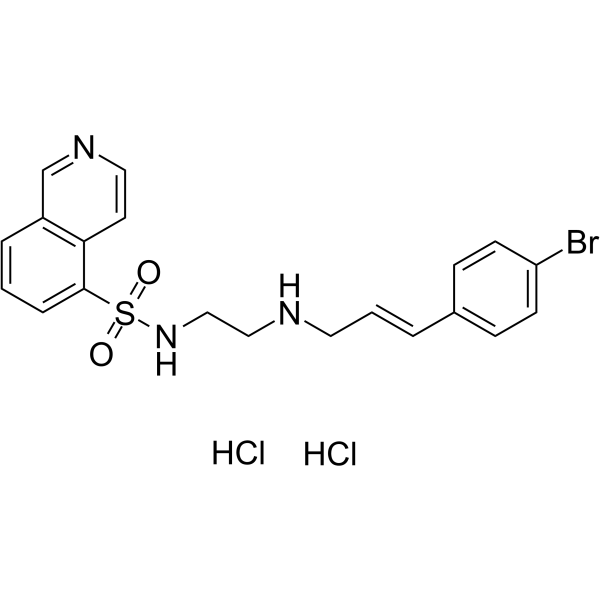
H-89 dihydrochloride is a potent and selective inhibitor of protein kinase A (PKA) with an IC50 of 48 nM and has weak inhibition on PKG, PKC, Casein Kinase.
loading...
    loading...
214
214 Publications Verification
Cat. No.: HY-15979
CAS No.: 127243-85-0
Target:  

PKA Autophagy

Research Areas:  

Neurological Disease

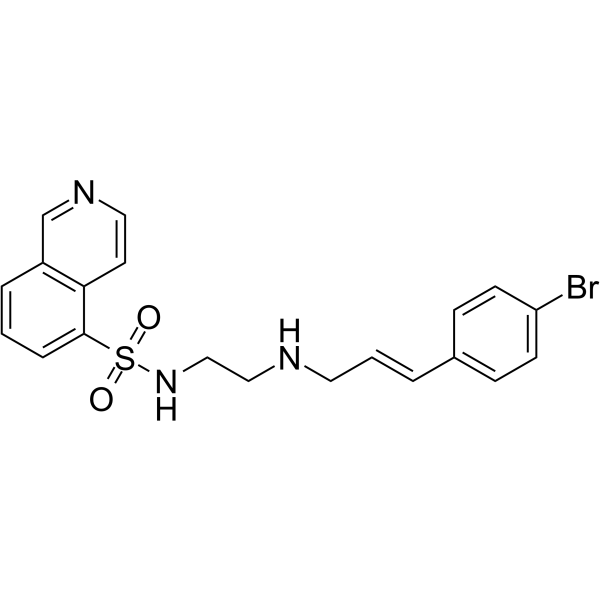
H-89 is a potent and selective inhibitor of cyclic AMP-dependent protein kinase (protein kinase A) with IC50 of 48 nM and has weak inhibition on PKG, PKC, Casein Kinase, and others kinases.
loading...
    loading...
78
78 Cited Publications
Cat. No.: HY-13318
CAS No.: 187227-45-8
Purity:  99.50%
Synonyms: GS 4071; Ro 64-0802; Oseltamivir carboxylate
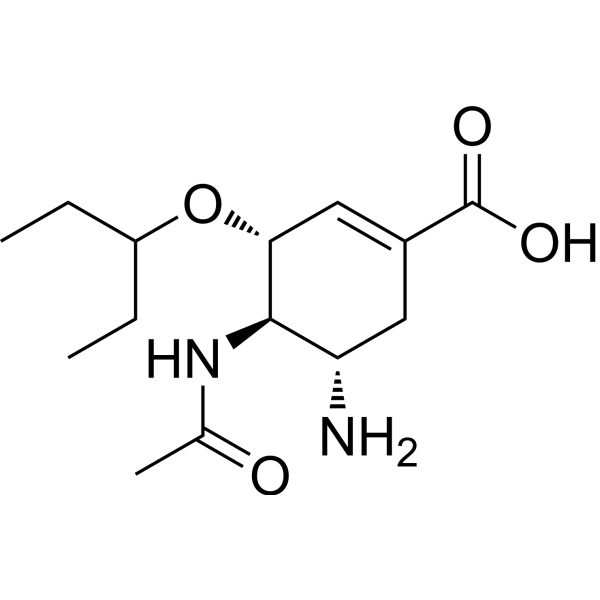
Oseltamivir acid (GS 4071), the active metabolite of Oseltamivir phosphate, is an orally bioavailable, potent and selective inhibitor of influenza virus neuraminidase (IC50=2 nM) with activity against both influenza A and B viruses. Oseltamivir acid has an extremely weak ability to penetrate the BBB under normal physiological conditions, but its blood-brain barrier penetration is significantly enhanced under inflammatory conditions .
loading...
    loading...
29
29 Cited Publications
Cat. No.: HY-164388
CAS No.: 162852-62-2
Z-VAD is an irreversible, broad-spectrum pan-caspase inhibitor that can inhibit a variety of caspases including caspase-3, -6, -7, -8, -9, etc. (with a weaker inhibitory effect on caspase-2). Z-VAD can block apoptosis signaling pathways, induce autophagy and necrosis in tumor cells, and has anti-angiogenic activity. Z-VAD can enhance the sensitivity of breast cancer and lung cancer cells to radiotherapy in vitro and in vivo, and prolong the growth delay of tumor xenograft models. Z-VAD is well tolerated and is mainly used in research related to cancer radiosensitization and cell death pathway regulation .
loading...
    loading...
26
26 Cited Publications
Cat. No.: HY-153808
CAS No.: 9007-81-2
Research Areas:  

Inflammation/Immunology

Complete Freund's adjuvant (CFA) is an immunoadjuvant emulsified with antigen by its discoverer Jules T. Freund to enhance an animal's immune response to an antigen. Complete Freund's adjuvant (CFA) is also an inducer of the Th1 immune response and a ligand of TLRs. Complete Freund's adjuvant (CFA) contains heat-killed inactive tuberculosis bacilli and consists of a paraffin oil-in-water emulsion. Complete Freund's adjuvant (CFA) stimulates a strong and durable immune response and can be used to induce persistent inflammatory pain models in mice, experimental autoimmune myocarditis (EAM) models, and more. Incomplete Freund's adjuvant (IFA) (HY-153808A) is another type of Freund's Adjuvant that stimulates a weaker immune response .
loading...
    loading...
19
19 Cited Publications
Cat. No.: HY-13259C
CAS No.: 1211877-36-9
Purity:  99.97%
Synonyms: (S,R,S)-(-)-MG-132; Z-Leu-D-Leu-Leu-al
Target:  

Proteasome

Research Areas:  

Cancer

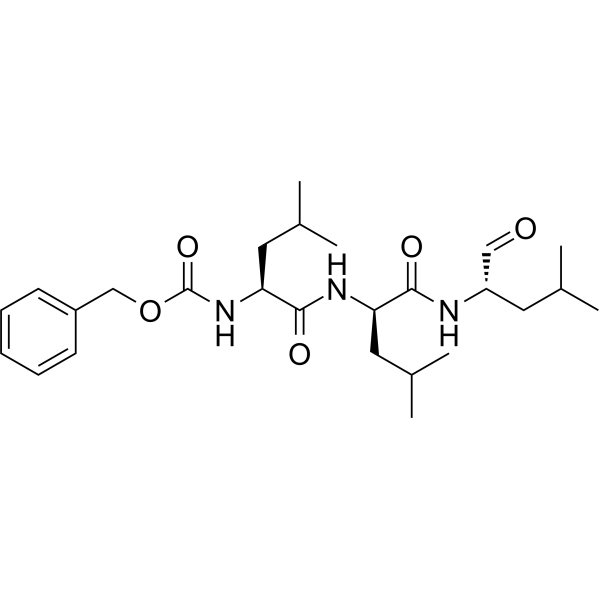
(R)-MG-132 ((S,R,S)-(-)-MG-132) is the enantiomer of MG-132. (R)-MG-132 is a proteasome inhibitor with weaker cell cytotoxicity than MG-132 .
loading...
    loading...
19
19 Cited Publications
Cat. No.: HY-122272
CAS No.: 61869-08-7
Purity:  99.92%
Synonyms: BRL29060
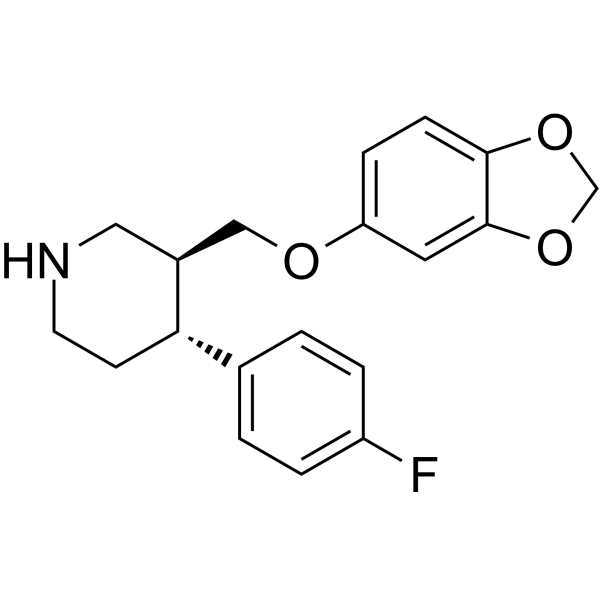
Paroxetine (BRL29060) is an orally active and selective serotonin reuptake inhibitor (SSRI) and apoptosis inducer with blood-brain barrier permeability. Paroxetine inhibits nitric oxide synthase and CYP2D6, induces desensitization of 5-HT1A/1B/1D autoreceptors, downregulates 5-HT2 receptors, and promotes the production of inflammatory cytokines. Paroxetine is a weak norepinephrine (NE) uptake inhibitor and possesses antitumor activity. Paroxetine is widely used in research concerning depression, obsessive-compulsive disorder, panic disorder, social phobia, generalized anxiety disorder, post-traumatic stress disorder, premenstrual dysphoric disorder, hot flashes, and related conditions .
loading...
    loading...
19
19 Cited Publications
Cat. No.: HY-B0492
CAS No.: 78246-49-8
Synonyms: BRL29060 hydrochloride; BRL29060A
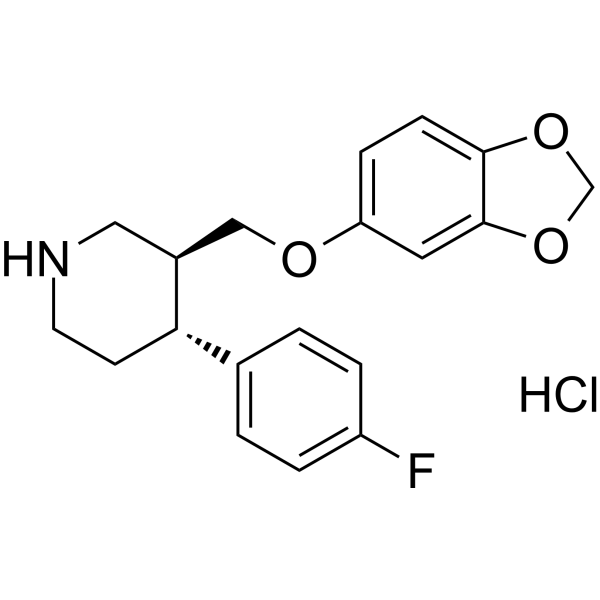
Paroxetine (BRL29060) hydrochloride is an orally active and selective serotonin reuptake inhibitor (SSRI) and apoptosis inducer with blood-brain barrier permeability. Paroxetine hydrochloride inhibits nitric oxide synthase and CYP2D6, induces desensitization of 5-HT1A/1B/1D autoreceptors, downregulates 5-HT2 receptors, and promotes the production of inflammatory cytokines. Paroxetine hydrochloride is a weak norepinephrine (NE) uptake inhibitor and possesses antitumor activity. Paroxetine hydrochloride is widely used in research concerning depression, obsessive-compulsive disorder, panic disorder, social phobia, generalized anxiety disorder, post-traumatic stress disorder, premenstrual dysphoric disorder, hot flashes, and related conditions .
loading...
    loading...
18
18 Cited Publications
Cat. No.: HY-D1300
CAS No.: 231946-72-8
Synonyms: LysoTracker Red DND-99
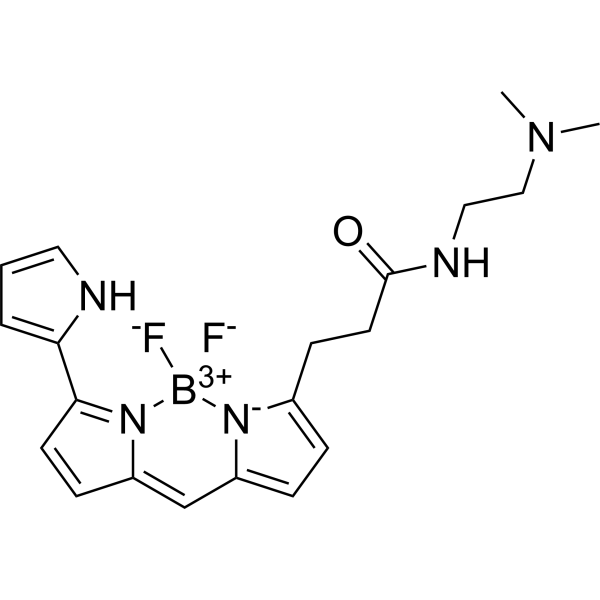
LysoTracker Red is a Red fluorescently labeled lysosomal probe with a maximum excitation/emission wavelength of 577/590 nm. The structure is composed of a fluorescein group and linked weak bases, which can freely cross the cell membrane and gather on spherical organelles. It is suitable for observing the internal biosynthesis and related pathogenesis of lysosomes .
loading...
    loading...
15
15 Cited Publications
Cat. No.: HY-129039
CAS No.: 778649-18-6
Purity:  99.58%
Synonyms: MB-3
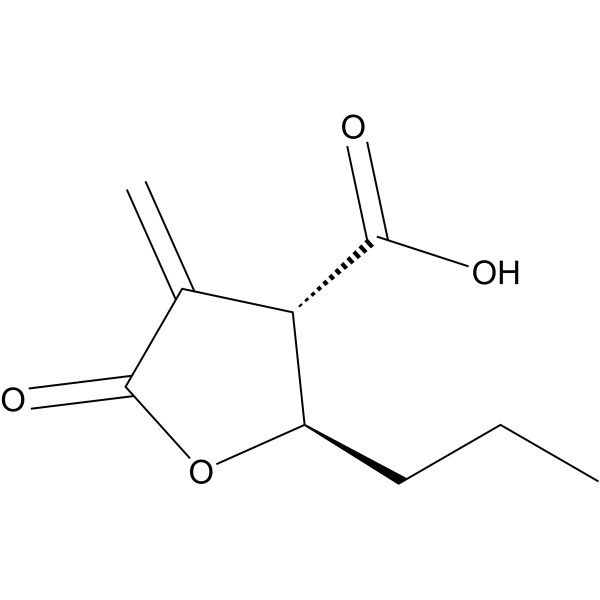
Butyrolactone 3 (MB-3) is a specifical small-molecule inhibitor of the histone acetyltransferase Gcn5 (IC50=100 μM), which has a high affinity to the Gcn5 enzyme comparable to that of its natural substrate, histone H3. Butyrolactone 3 shows weak inhibitory on CBP (IC50=0.5 mM). Butyrolactone 3 can be used in studies of cancer, metabolic, autoimmune and neurological diseases .
loading...
    loading...
13
13 Cited Publications
Cat. No.: HY-138097
CAS No.: 115066-04-1
Purity:  ≥98.0%
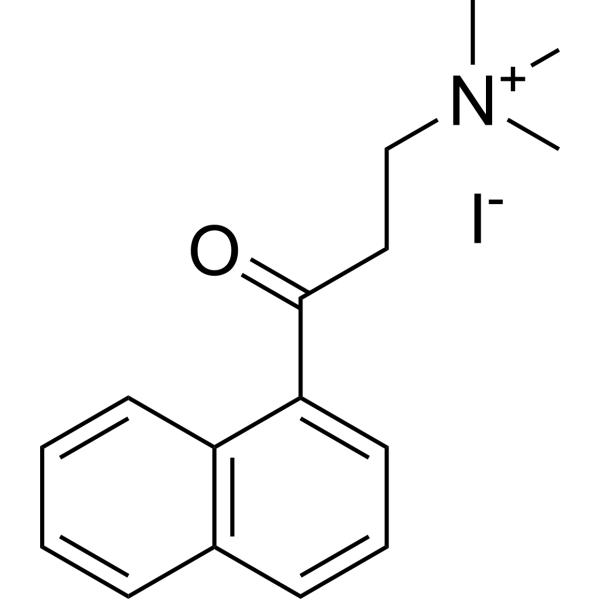
α-NETA is a potent and noncompetitive choline acetyltransferase (ChA) inhibitor with an IC50 of 9 μM. α-NETA is a potent ALDH1A1 (IC50=0.04 µM) and chemokine-like receptor-1 (CMKLR1) antagonist. α-NETA weakly inhibits cholinesterase (ChE; IC50=84 µM) and acetylcholinesterase (AChE; IC50=300 µM). α-NETA has anti-cancer activity .
loading...
    loading...
13
13 Cited Publications
Cat. No.: HY-114421
CAS No.: 2064175-41-1
Purity:  99.89%
Synonyms: dTAG-13
Research Areas:  

Cancer

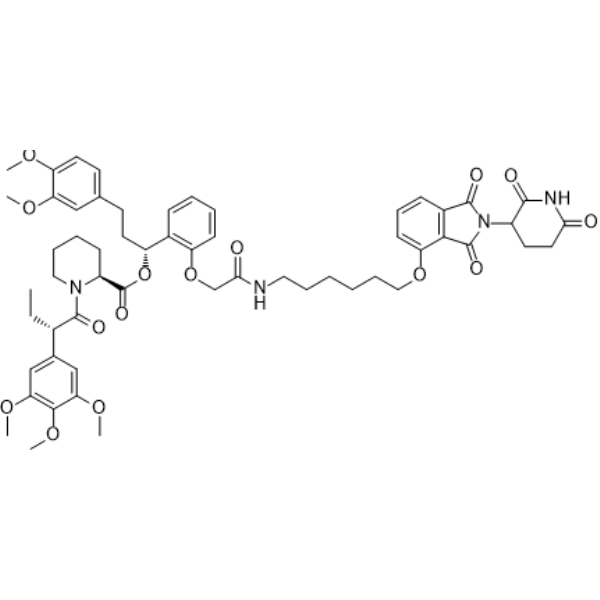
FKBP12 PROTAC dTAG-13 (dTAG-13) is a FKBP12 F36V PROTAC degrader and a PXR partial agonist. FKBP12 PROTAC dTAG-13 induces ubiquitination and proteasomal degradation of proteins tagged with FKBP12 F36V, without degrading wild-type FKBP12 or un-fused PXR. It weakly promotes the recruitment of SRC-1, strongly inhibits the interaction between NCoR and PXR, and upregulates the expression of CYP3A4 and other drug metabolism-related genes. FKBP12 PROTAC dTAG-13 is applicable to research related to breast cancer and leukemia [1] .
loading...
    loading...
12
12 Cited Publications
Cat. No.: HY-14435
CAS No.: 457081-03-7
Purity:  98.20%
Target:  

JAK

Research Areas:  

Cancer

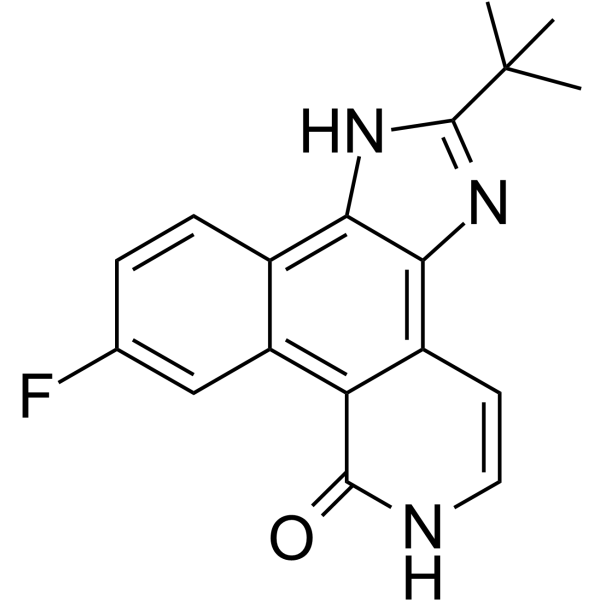
Pyridone 6 is a pan-JAK inhibitor, which potently inhibits the JAK kinase family, with IC50s of 1 nM for JAK2 and TYK2, 5 nM for JAK3, and 15 nM for JAK1, while displaying significantly weaker affinities (130 nM to >10 mM) for other protein tyrosine kinases.
loading...
    loading...
12
12 Cited Publications
Cat. No.: HY-135867E
Purity:  97.09%
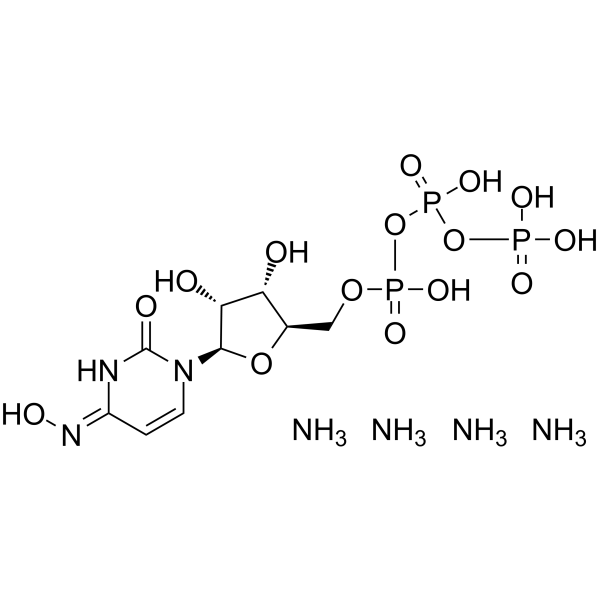
NHC-triphosphate tetraammonium is an active phosphorylated intracellular metabolite of β-d-N4-Hydroxycytidine (NHC) (HY-125033) as a triphosphate form . NHC-triphosphate tetraammonium is a weak alternative substrate for the viral polymerase and can be incorporated into HCV replicon RNA .
loading...
    loading...
11
11 Cited Publications
Cat. No.: HY-15610
CAS No.: 1168091-68-6
Purity:  98.74%
Synonyms: RG 7421; MEK inhibitor 1
Target:  

MEK Apoptosis

Research Areas:  

Cancer

GDC-0623 (RG 7421) is a potent, ATP-uncompetitive inhibitor of MEK1 (Ki=0.13 nM, +ATP), and displays 6-fold weaker potency against HCT116 (KRAS (G13D), EC50=42 nM) versus A375 (BRAF V600E, EC50=7 nM).
loading...
    loading...
11
11 Cited Publications
Cat. No.: HY-B0492A
CAS No.: 110429-35-1
Synonyms: BRL29060 hydrochloride hemihydrate; BRL29060A hemihydrate
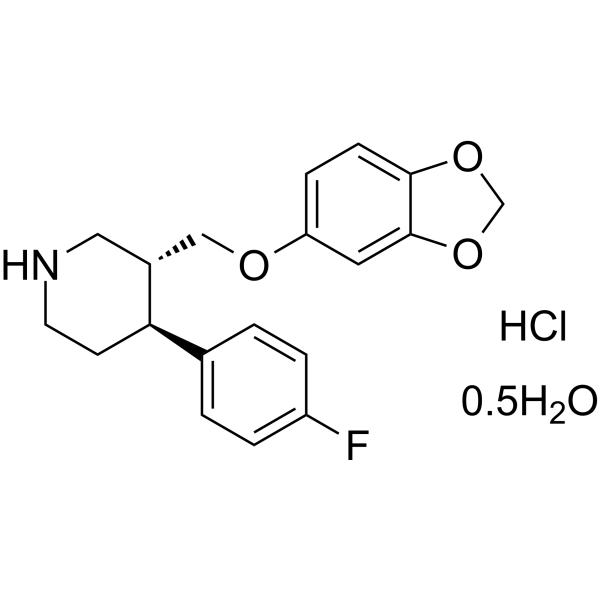
Paroxetine (BRL29060) hydrochloride hemihydrate is an orally active and selective serotonin reuptake inhibitor (SSRI) and apoptosis inducer with blood-brain barrier permeability. Paroxetine hydrochloride hemihydrate inhibits nitric oxide synthase and CYP2D6, induces desensitization of 5-HT1A/1B/1D autoreceptors, downregulates 5-HT2 receptors, and promotes the production of inflammatory cytokines. Paroxetine hydrochloride hemihydrate is a weak norepinephrine (NE) uptake inhibitor and possesses antitumor activity. Paroxetine hydrochloride hemihydrate is widely used in research concerning depression, obsessive-compulsive disorder, panic disorder, social phobia, generalized anxiety disorder, post-traumatic stress disorder, premenstrual dysphoric disorder, hot flashes, and related conditions .
loading...
    loading...
11
11 Cited Publications
Cat. No.: HY-136109
CAS No.: 1310422-41-3
Purity:  99.89%
Synonyms: SEP-363856 hydrochloride; SEP-856 hydrochloride
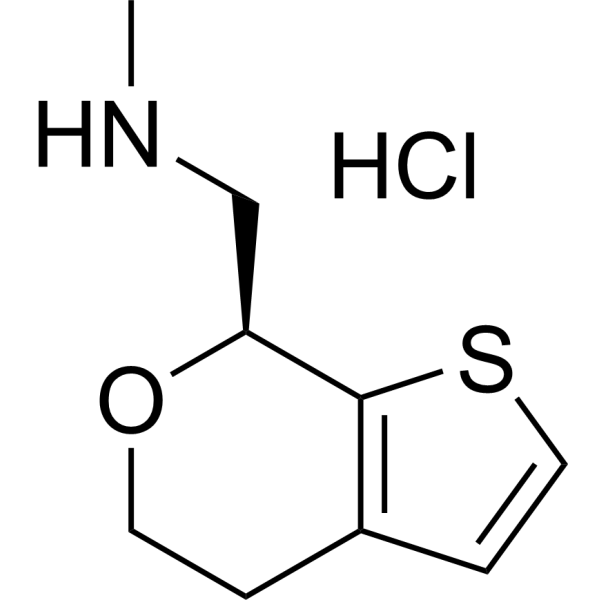
Ulotaront hydrochloride (SEP-363856 hydrochloride; SEP-856 hydrochloride) is an orally active, blood-brain barrier-penetrant TAAR1 full agonist with an EC50 of 0.14 µM. Ulotaront hydrochloride is a 5-HT1A agonist and a weak agonist of 5-HT1B and 5-HT7 receptors. Ulotaront hydrochloride state-dependently modulates glutamatergic synaptic transmission in the striatum and hippocampus, reducing spontaneous glutamatergic synaptic activity and enhancing evoked synaptic responses. Ulotaront hydrochloride exhibits antipsychotic-like effects in animal models of schizophrenia and also improves glucose tolerance and reduces body weight by delaying gastric emptying and modulating central neural circuits related to energy balance. Ulotaront hydrochloride can be used in research on schizophrenia and obesity .
loading...
    loading...
10
10 Cited Publications
Cat. No.: HY-156376
CAS No.: 1224195-72-5
Purity:  99.99%
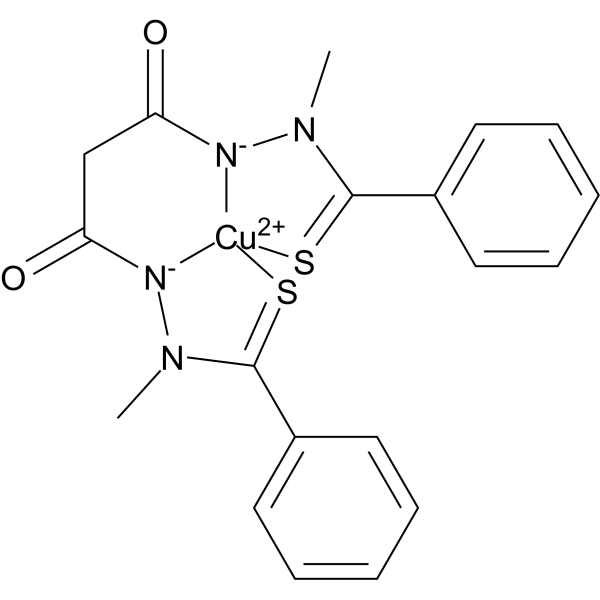
Cu(II)-Elesclomol is a complex formed by Elesclomol (HY-12040) and Cu 2+ (copper ions). Cu(II)-Elesclomol is also a weak inhibitor of DNA topoisomerase I. Cu(II)-Elesclomol exerts anticancer effects by inducing oxidative stress and DNA damage through copper chelation. Cu(II)-Elesclomol can inhibit tumor cell proliferation and induce cell cycle arrest and apoptosis. Cu(II)-Elesclomol can be used in the study of cancer .
loading...
    loading...
9
9 Cited Publications
Cat. No.: HY-13925
CAS No.: 185039-89-8
Purity:  99.46%
Target:  

Wee1 Apoptosis

Research Areas:  

Cancer

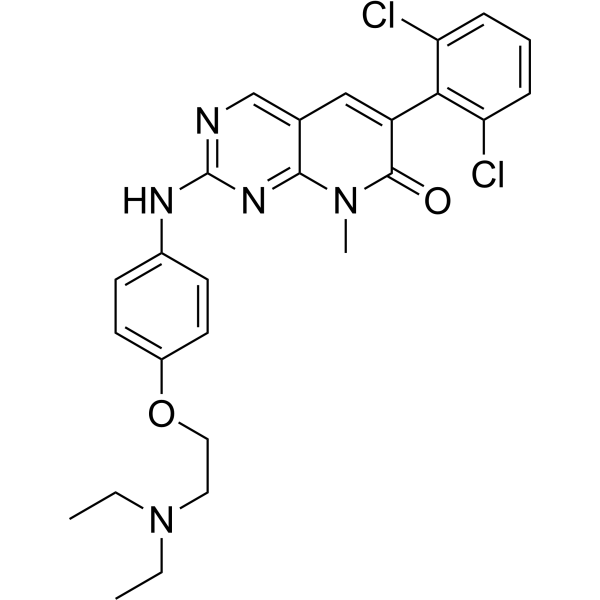
PD0166285, a substrate of P-gp, is a WEE1 inhibitor and a weak Myt1 inhibitor with IC50 values of 24 and 72 nM, respectively. PD0166285 exhibits an IC50 of 3.433 μM for Chk1 .
loading...
    loading...
9
9 Cited Publications
Cat. No.: HY-112061
CAS No.: 78950-78-4
Purity:  99.87%
Synonyms: 8-Hydroxy-DPAT
Target:  

5-HT Receptor

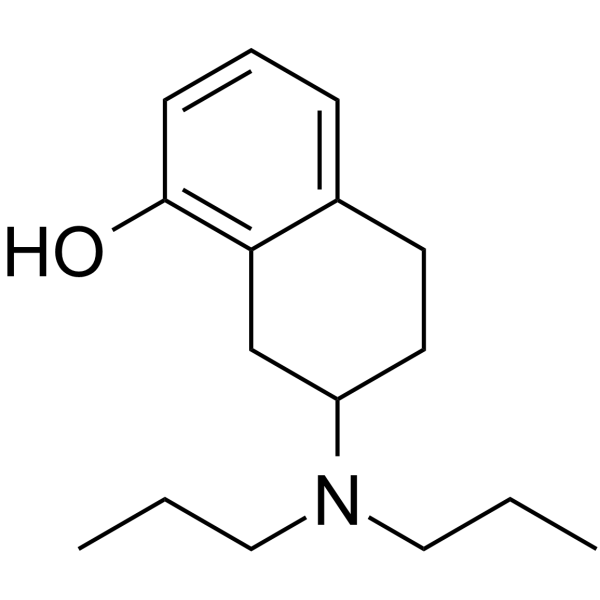
8-OH-DPAT is a potent, brain-penetrant and selective 5-HT agonist, with a pIC50 of 8.19 for 5-HT1A and a Ki of 466 nM for 5-HT7; 8-OH-DPAT weakly binds to 5-HT1B (pIC50, 5.42), 5-HT (pIC50 <5).
loading...
    loading...
