



COX
Cyclooxygenase
Cyclooxygenase (COX), officially known as prostaglandin-endoperoxide synthase (PTGS), is an enzyme that is responsible for formation of important biological mediators called prostanoids, including prostaglandins, prostacyclin and thromboxane. Pharmacological inhibition of COX can provide relief from the symptoms of inflammation and pain. Drugs, like Aspirin, that inhibit cyclooxygenase activity have been available to the public for about 100 years. Two cyclooxygenase isoforms have been identified and are referred to as COX-1 and COX-2. Under many circumstances the COX-1 enzyme is produced constitutively (i.e., gastric mucosa) whereas COX-2 is inducible (i.e., sites of inflammation). Non-steroidal anti-inflammatory drugs (NSAID), such as aspirin and ibuprofen, exert their effects through inhibition of COX. The main COX inhibitors are the non-steroidal anti-inflammatory drugs (NSAIDs).
COX Isoform Specific Products
All Product Categories
-
COX Related Products (1315)
Related Products (1315)

-
Antibodies (6)
-
COX Isoform Comparison
-
TX-1123
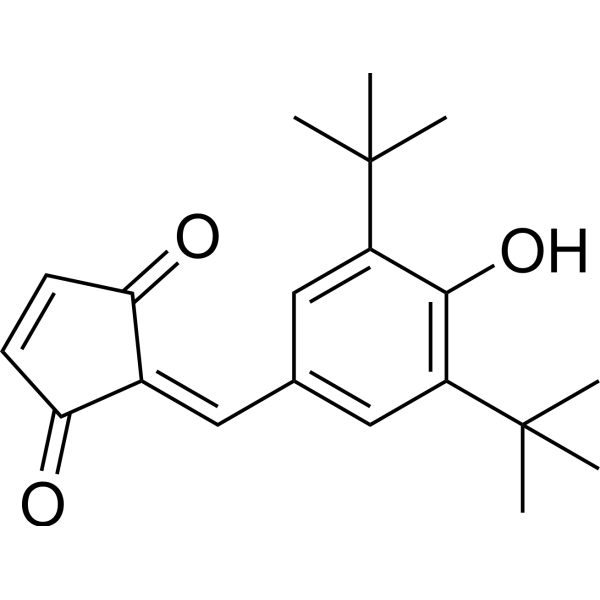 0 ImagesCat. No.: HY-121828CAS No.: 157397-06-3TX-1123 is a potent protein tyrosine kinase (PTK) inhibitor for Src, eEF2-K, and PKA, and EGFR-K/PKC. TX-1123 is a cyclo-oxygenase (COX) inhibitor with IC50 values of 1.16 μM and 15.7 μM for COX2 and COX1, respectively. TX-1123 has low mitochondrial toxicity. TX-1123 can be used in research of cancer.
-
Hordenine-d6 hydrochloride
 0 ImagesCat. No.: HY-N0113BSSynonyms: Ordenina-d6 hydrochloride; Peyocactine-d6 hydrochlorideHordenine-d6 hydrochloride (Ordenina-d6 hydrochloride; Peyocactine-d6 hydrochloride) is the deuterated-labeled Hordenine hydrochloride (HY-N0113B). Hordenine hydrochloride (Ordenina hydrochloride; Peyocactine hydrochloride) is a multifunctional alkaloid with oral activity and blood-brain barrier penetration. Hordenine hydrochloride inhibits LPS-induced phosphorylation of p38, JNK, ERK1/2, p65, IκB, and AKT, prevents p65 nuclear translocation, and suppresses inflammatory cytokines and mediators. Hordenine hydrochloride inhibits melanin synthesis in melanocytes and reconstructed epidermis. Hordenine hydrochloride activates the Wnt/β-catenin signaling pathway. Hordenine hydrochloride activates DRD2, acts as a D3R partial agonist, α2A-AR full agonist, and 5-HT2A-R antagonist, and inhibits SERT and DAT. Hordenine hydrochloride inhibits α-synuclein accumulation and ameliorates motor deficits in Parkinson's disease models. Hordenine hydrochloride limits alcohol intake, reduces relapse drinking behavior. Hordenine hydrochloride can be used for research on mastitis, skin pigmentation, acute lung injury, foodborne diseases, hair loss, Parkinson's disease, bacterial infections, and alcohol use disorder.
-
COX-2-IN-21
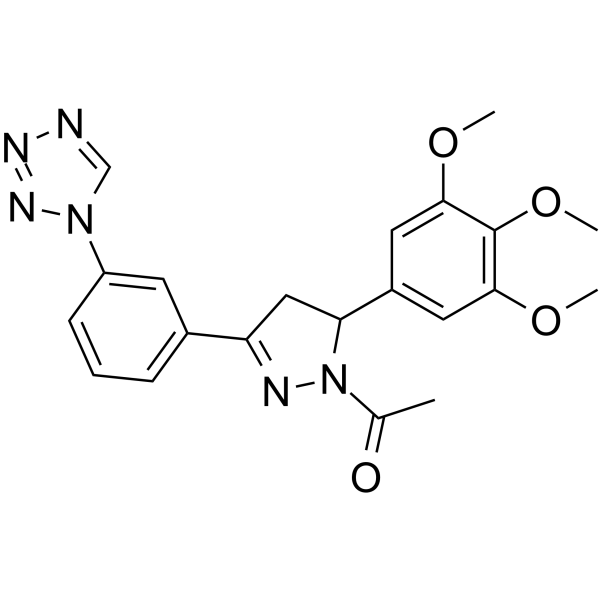 0 ImagesCat. No.: HY-147815CAS No.: 2519631-11-7COX-2-IN-21 (Compound 5c) is a selective and orally active COX-2 inhibitor with an IC50 of 0.039 μM. COX-2-IN-21 shows promising anti-inflammatory potential.
-
Anti-inflammatory agent 110
 0 ImagesCat. No.: HY-180800Anti-inflammatory agent 110 (Compound 7b) is a analgesic/anti-inflammatory agent. Anti-inflammatory agent 110 has a good binding affinity for COX-2. Anti-inflammatory agent 110 demonstrated potent analgesic and anti-inflammatory activities in the mouse hot plate test and the rat carrageenan edema model.
-
COX-2-IN-70
 0 ImagesCat. No.: HY-189356COX-2-IN-70 is an orally active and selective COX-2 inhibitor with an IC50 of 1.86 μM. COX-2-IN-70 reduces the production of prostaglandins and thromboxanes by inhibiting the COX-2 isoenzyme. COX-2-IN-70 can be used for inflammation research.
-
Anti-inflammatory agent 109
 0 ImagesCat. No.: HY-180291Anti-inflammatory agent 109 (Compound 2m) is an anti-inflammatory agent. Anti-inflammatory agent 109 directly interacts with p65, attenuates aberrant activation of the NF-κB pathway. Anti-inflammatory agent 109 significantly suppresses the release of key pro-inflammatory mediators, including IL-1β, COX-2, and iNOS. Anti-inflammatory agent 109 conferres robust protection against LPS-induced acute liver injury in septic mice.
-
Longiferone B
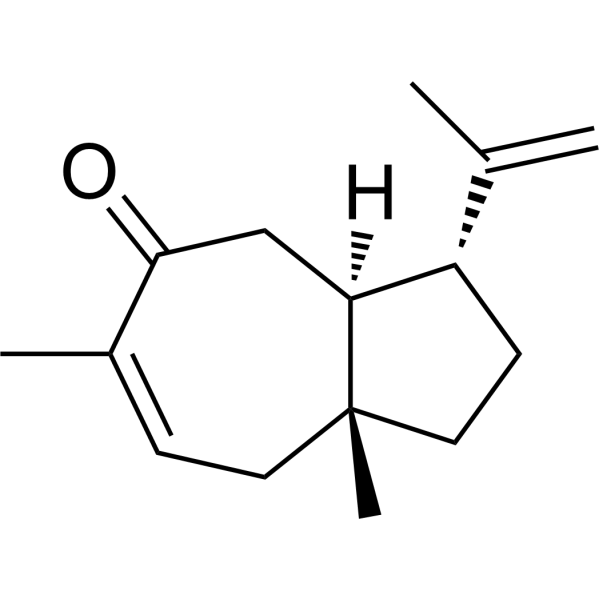 0 ImagesCat. No.: HY-137957CAS No.: 1639810-67-5
-
MAO-B-IN-56
 0 ImagesCat. No.: HY-182786MAO-B-IN-56 is a multi-target-directed ligand with AChE, BChE, MAO-B, and BACE1 inhibitory activity, with IC50 values of 0.35 μM, 3.22 μM, 0.14 μM, and 3.85 μM respectively, and shows selectivity for AChE over BChE and MAO-B over MAO-A.MAO-B-IN-56 reduces amyloid-beta production, reduces paw edema, improves spatial memory, and enhances Alzheimer's disease hallmarks and associated histopathological alterations.MAO-B-IN-56 can be used for the research of alzheimer's disease.
-
Aspirin-d7
 0 ImagesCat. No.: HY-W707656Aspirin-d7 is the deuterium labeled Aspirin (HY-14654). Aspirin (Acetylsalicylic acid) is an orally active, potent and irreversible inhibitor of cyclooxygenase COX-1 and COX-2, with IC50 values of 5 and 210 μg/mL, respectively. Aspirin induces apoptosis. Aspirin inhibits the activation of NF-κB. Aspirin also inhibits platelet prostaglandin synthetase, and can prevent coronary artery and cerebrovascular thrombosis.
-
Iminostilbene-d10
 0 ImagesCat. No.: HY-W753956CAS No.: 3044090-39-0Iminostilbene-d10 is the deuterium labeled Iminostilbene (HY-N7064). Iminostilbene is a chemical precursor of carbamazepine. Additionally, Iminostilbene is an orally active inhibitor of PKM2 (Pyruvate Kinase M2) and COX2 (Cyclooxygenase-2). Iminostilbene exerts its effects by inhibiting PKM2 and its interaction with HIF-1α and STAT3, reducing COX2 and iNOS expression, and decreasing LPS-induced release of IL-1β, IL-6, TNF-α, and MCP-1, thereby suppressing macrophage-mediated inflammatory responses and improving myocardial ischemia/reperfusion (MI/R) injury. Iminostilbene holds promise for research in inflammation regulation, cardiovascular diseases (such as MI/R injury), and macrophage-mediated immune-related diseases.
-
VU0487836
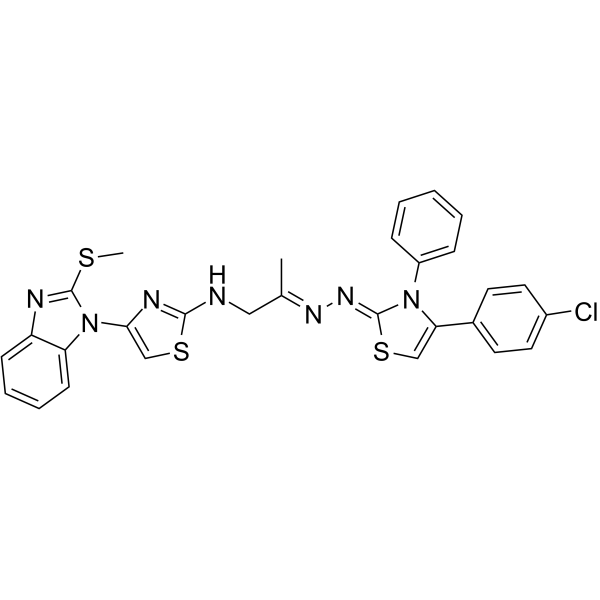
 0 ImagesVU0487836 is a selective cyclooxygenase-1 (COX-1) inhibitor with an IC50 of 0.36 μM against ovine-derived COX-1. VU0487836 serves as a prototype for the development of radiological imaging agents targeting COX-1 for ovarian cancer. VU0487836 is applicable to relevant research on ovarian cancer.
-
LM-4108
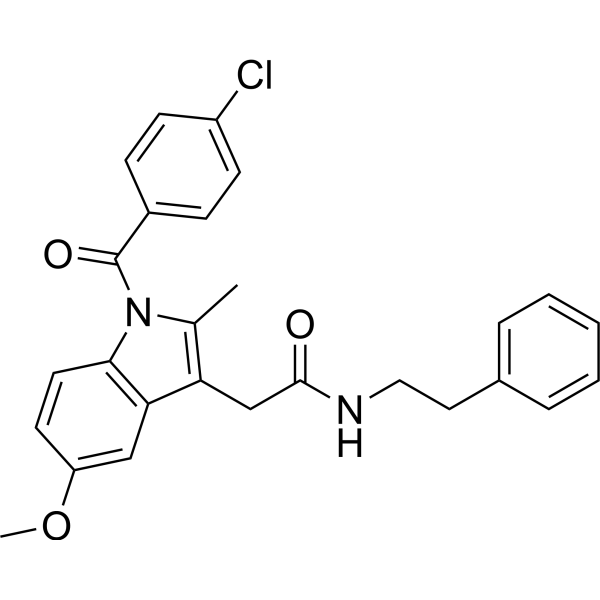 0 ImagesCat. No.: HY-123639CAS No.: 261766-32-9Synonyms: N-(2-Phenylethyl)-indomethacin amideLM-4108 (N-(2-Phenylethyl)-indomethacin amide) is a selective and orally active COX-2 inhibitor with an IC50 of 0.06 μM for purified human COX-2. LM-4108 shows anti-inflammatory activity and may be effective in prevention of cancer. Half-lives for the disappearance of 10 μM LM-4108 in rat, human, and mouse liver microsomes were 11 min, 21 min, and 51 min, respectively.
-
Tectorigenin sodium sulfonate
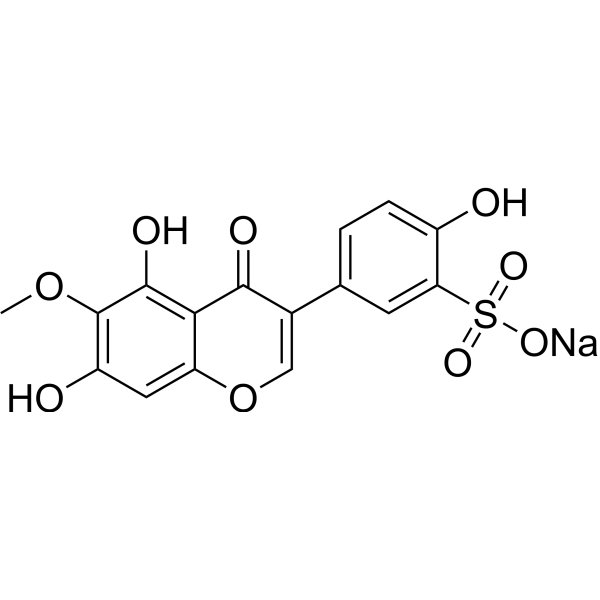 0 ImagesCat. No.: HY-N7878CAS No.: 807636-25-5Tectorigenin sodium sulfonate is the product of tectorigenin sulfonated with sulfuric acid and mixed with saturated salt water. Tectorigenin sodium sulfonate has high water-solubility and good antioxidant properties.
-
Oxaprozin-d5
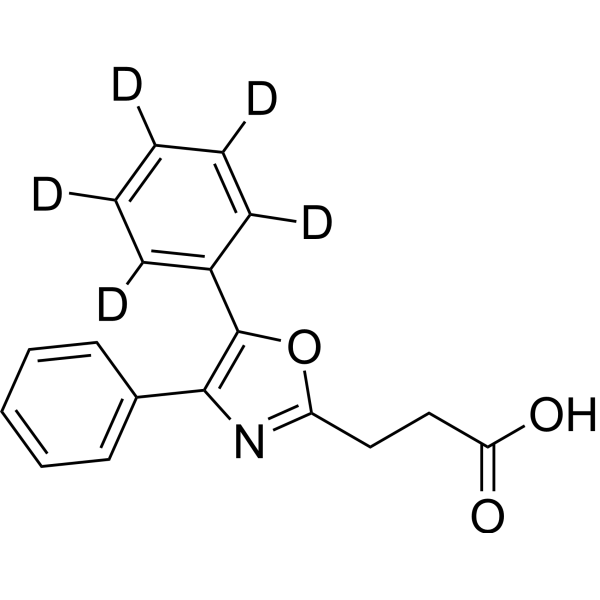 0 ImagesCat. No.: HY-B0808S1CAS No.: 2933758-40-6Synonyms: Oxaprozinum-d5; Wy21743-d5
-
COX-1/2-IN-12
 0 ImagesCat. No.: HY-183673CAS No.: 3068797-68-9COX-1/2-IN-12 is an orally active dual inhibitor of COX-1 and COX-2, with an IC50 of 41.6 nM against human COX-1 and an IC50 of 31.1 nM against human COX-2. COX-1/2-IN-12 induces antinociceptive activity and inhibits edema in in vivo experiments. COX-1/2-IN-12 can be used in research related to inflammation and pain.
-
Ginkgetin (Standard)
 0 ImagesGinkgetin (Standard) is the analytical standard of Ginkgetin. This product is intended for research and analytical applications. Ginkgetin, a biflavone, is isolated from Ginkgo biloba leaves. Ginkgetin exhibit anti-tumor, anti-inflammatory, neuroprotective, anti-fungal activities. Ginkgetin is also a potent inhibitor of Wnt signaling, with an IC50 of 5.92 μΜ.
-
Mabuprofen
 0 ImagesCat. No.: HY-108310CAS No.: 82821-47-4Synonyms: AminoprofenMabuprofen (Aminoprofen) is an amide derivative of Ibuprofen (HY-78131) and a COX inhibitor. Mabuprofen inhibits prostaglandin biosynthesis, thereby reducing inflammation, relieving pain and lowering body temperature. Mabuprofen is applicable to research related to arthritis, muscle pain, inflammatory diseases, headache and toothache.
-
(-)-Catechin (Standard)
 0 ImagesCat. No.: HY-N0898ARCAS No.: 18829-70-4Synonyms: (-)-Cianidanol (Standard); (-)-Catechuic acid (Standard)(-)-Catechin (Standard) is the analytical standard of (-)-Catechin. This product is intended for research and analytical applications. (-)-Catechin is Catechin's one kind of different structure. Catechin inhibitory enzyme-1 (COX-1), IC50 of 1.4 μM. (-)-Catechin promotes hBM-MSC adipose cell differentiation, increases fat cell differentiation, and PPARγ level.
-
Imrecoxib-d7
 0 ImagesCat. No.: HY-114200SSynonyms: BAP-909-d7




