



Caspase 1
Caspase-1 is the effector protease of canonical inflammasomes, where inflammasome activation enables processing and secretion of IL-1β and IL-18[1]. Mechanistically, caspase-1/11 cleaves gasdermin D (GSDMD), and GSDMD functions downstream as a pyroptosis executioner while also providing negative feedback on caspase-1/11 activation[2]. In endothelial models, homocysteine and lipopolysaccharide induced NLRP3 inflammasome assembly, caspase-1 activation, IL-1β cleavage, and caspase-1-dependent pyroptosis linked to endothelial dysfunction[3]. In respiratory infection models, Nontypeable Haemophilus influenzae activated caspase-1 and caspase-1 inhibition significantly reduced IL-1β release in respiratory cells and human lung tissue[4]. Compared with related isoforms, caspase-1 primarily controlled infected macrophage pyroptosis and IL-18 production in pneumonic melioidosis, whereas caspase-11 mediated infected lung epithelial-cell pyroptosis[5]. More broadly, murine caspase-11 and human caspase-4/5 define the noncanonical inflammasome pathway as cytosolic LPS sensors, separating their upstream recognition role from canonical procaspase-1 inflammasome activation[6]. For experimental applications, caspase-1 inhibitors can test IL-1β-dependent inflammatory output, while GSDMD-derived peptide inhibition provides a tool to suppress caspase-1/11 activation and downstream substrate cleavage[2][4].
References:
- [1]. Dinarello CA. Mutations in cryopyrin: bypassing roadblocks in the caspase 1 inflammasome for interleukin-1beta secretion and disease activity. Arthritis Rheum. 2007 Sep;56(9):2817-22. doi: 10.1002/art.22841. PMID: 17763412. et al. Mutations in cryopyrin: bypassing roadblocks in the caspase 1 inflammasome for interleukin-1beta secretion and disease activity. Arthritis Rheum. 2007 Sep;56(9):2817-22. [Content Brief]
- [2]. Hu Y, et al. The Gasdermin D N-terminal fragment acts as a negative feedback system to inhibit inflammasome-mediated activation of Caspase-1/11. Proc Natl Acad Sci U S A. 2022 Nov 8;119(45):e2210809119. [Content Brief]
- [3]. Xi H, et al. Caspase-1 Inflammasome Activation Mediates Homocysteine-Induced Pyrop-Apoptosis in Endothelial Cells. Circ Res. 2016 May 13;118(10):1525-39. [Content Brief]
- [4]. detto Loria JR, et al. Nontypeable haemophilus influenzae (NTHi) leads to caspase-1-dependent upregulation of interleukin 1-beta (IL-1β) in respiratory cells and human lung tissue–A role of the “inflammasome” in respiratory tract infections. European Respiratory Journal. 2014 Jan 7;38(Suppl 55).
- [5]. Wang J, et al. Caspase-11-dependent pyroptosis of lung epithelial cells protects from melioidosis while caspase-1 mediates macrophage pyroptosis and production of IL-18. PLoS Pathog. 2018 May 23;14(5):e1007105. [Content Brief]
- [6]. Wu J, et al. Pyroptosis by caspase-11 inflammasome-Gasdermin D pathway in autoimmune diseases. Pharmacol Res. 2021 Mar;165:105408. [Content Brief]
-
Caspase 1 Related Products (81)
Related Products (81)

-
Recombinant Proteins (3)
-
Antibodies (1)
-
MPQPPAK
 0 ImagesCat. No.: HY-P12336MPQPPAK is a polypeptide obtained from the enzymatic hydrolysis of C-phycocyanin (HY-D1025) and possesses neuroprotective activity. MPQPPAK enhances the activities of antioxidant enzymes SOD, CAT, and GSH-Px, reduces ROS, inhibits apoptosis and acetylcholinesterase (AChE) activity in brain tissue, and decreases protein carbonyl content. In the MPTP (HY-W114750)-induced zebrafish Parkinson's disease model, MPQPPAK exhibits antioxidant effects, inhibits autophagy and apoptosis, reverses the loss of dopaminergic neurons and cerebral blood vessels, and alleviates motor deficits. MPQPPAK can be used for research on Parkinson's disease.
-
Phoenixin-20 TFA
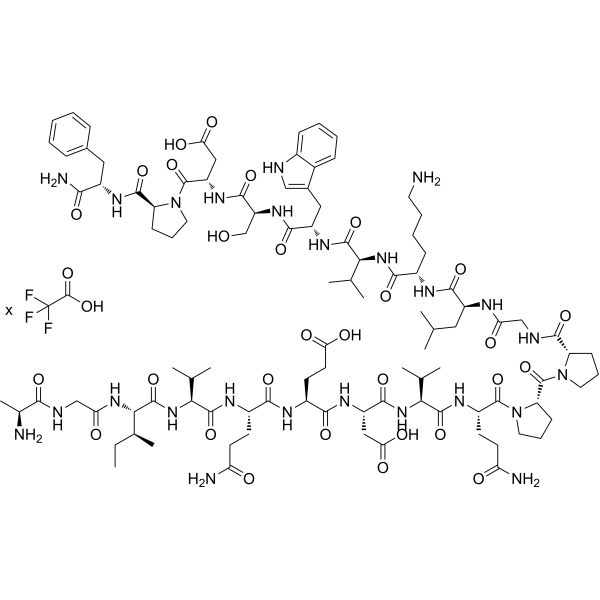 0 ImagesCat. No.: HY-P5763ASynonyms: PNX-20 TFAPhoenixin-20 TFA (PNX-20 TFA) is a neuropeptide that activates GPR173. Phoenixin-20 TFA inhibits LPS-induced TLR-4/MyD88/NF-κB signaling, pro-inflammatory cytokines, adhesion molecules, MMPs, and cytotoxicity. Phoenixin-20 TFA increases SIRT1 and inhibits NLRP3/ASC/caspase-1, oxidative stress, and IL-1β/IL-18. Phoenixin-20 TFA alleviates ox-LDL-induced endothelial dysfunction, monocyte adhesion, adhesion molecules, cytokines, NADPH oxidase/NOX-4, and ROS. Phoenixin-20 TFA promotes GPR173/STAT6-mediated anti-inflammatory polarization of microglia and neuroprotection. Phoenixin-20 TFA can be used in research on dental pulp infection, pulmonary arterial hypertension, atherosclerosis, neuroinflammation, anxiety, and neurodegenerative diseases.
-
MNP2
 0 ImagesCat. No.: HY-P11581MNP2 is a NLRP3-ASC interaction inhibitor. MNP2 selectively binds to the PYD domain of ASC (Ka=149 nM) and blocks ASC-PYM binding (Ka=58 nM), thereby inhibiting the interaction between ASC and NLRP3 and suppressing the formation of the NLRP3 inflammasome. MNP2 inhibits IL-1β release and caspase-1 maturation, and reduces the efflux of potassium and chloride ions. MNP2 prevents mitochondrial damage and reactive oxygen species production, and significantly decreases NLRP3 inflammasome formation in neurodegenerative pathologies induced by β-amyloid, Tau protein and α-synuclein. MNP2 is applicable for the research of neurodegenerative diseases.
-
NLRP3-IN-84
 0 ImagesCat. No.: HY-178953NLRP3-IN-84 (Compound 32) is a NLRP3 inflammasome inhibitor. NLRP3-IN-84 can interfere with the oligomerization process of NLRP3 by inhibiting the activity of NLRP3 ATPase (IC50 = 158.4 nM). NLRP3-IN-84 inhibits Caspase-1 (IC50 = 27.7 nM), IL-1β release (PBMC: IC50 = 19.5 nM; mPBMC: IC50 = 24.2 nM), and ASC plaque formation (IC50 = 131 nM). NLRP3-IN-84 has no inhibitory activity on NLRC4 and AIM2 inflammasomes. NLRP3-IN-84 exhibits significant in vivo anti-inflammatory effects in a mouse acute peritonitis model. NLRP3-IN-84 can be used for the study of NLRP3-related inflammatory diseases.
-
NLRP3-IN-81
 0 ImagesCat. No.: HY-174312CAS No.: 2922814-85-3NLRP3-IN-81 (N102) is a BBB-penetrable inhibitor against NLRP3 inflammasome-dependent pyroptosis with an EC50 of 0.029 μM against cell pyroptosis induced by Nigericin (HY-127019). NLRP3-IN-81 potently inhibits NLRP3-dependent activation of caspase-1 and the release of IL-1β. NLRP3-IN-81 disturbs the interaction of NLRP3 with the adaptor protein ASC and inhibits ASC oligomerization. NLRP3-IN-81 can be used for pyroptosis-related diseases research, such as inflammatory bowel diseases and type 2 diabetes.
-
NLRP3-IN-87
 0 ImagesCat. No.: HY-181488CAS No.: 3097745-69-9NLRP3-IN-87 is a selective and orally active NLRP3 inhibitor with a Kd of 0.23 μM. NLRP3-IN-87 binds directly to the NLRP3 NACHT domain, disrupts NLRP3-NEK7 and NLRP3-ASC interactions, inhibits ASC oligomerization, and blocks inflammasome assembly. NLRP3-IN-87 suppresses caspase-1 activation and IL-1β secretion. NLRP3-IN-87 exhibits anti-inflammatory and analgesic activity, reducing joint swelling, inflammation, and pain in an MSU (HY-B2130A)-induced acute gout mouse model. NLRP3-IN-87 can be used for the research of gout.
-
Berkeleyamide B
 0 ImagesCat. No.: HY-N16408CAS No.: 1019854-22-8Berkeleyamide B is a dual matrix metalloproteinase-3 (MMP-3) and caspase-1 inhibitor. Berkeleyamide B is promising for research of cancers and inflammatory disease (e.g., rheumatoid arthritis).
-
Mca-YVADAP-Lys(Dnp)-OH
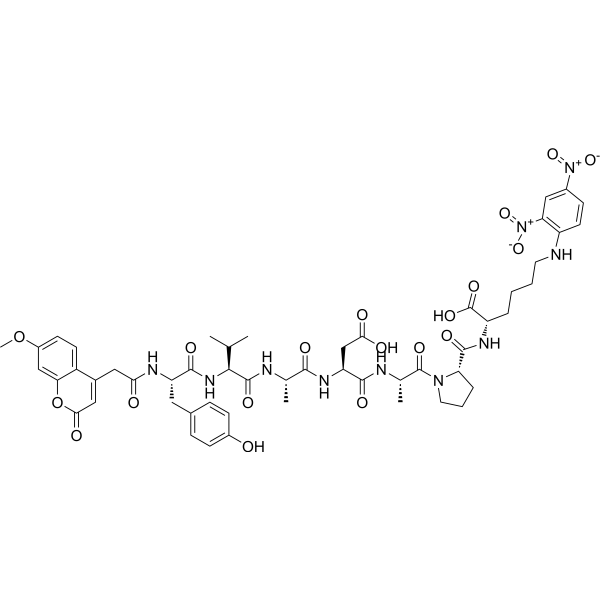 0 ImagesCat. No.: HY-P2616CAS No.: 189696-01-3Mca-YVADAP-Lys(Dnp)-OH is a fluorogenic substrate for caspase-1 and angiotensin-converting enzyme 2 (ACE2).
-
CQ31
 0 ImagesCat. No.: HY-183739CAS No.: 441022-67-9CQ31 is a PEPD and XPNPEP1 inhibitor, with an IC50 of 0.67 μM against PEPD and an IC50 of 122 μM against XPNPEP1. CQ31 inhibits the M24B aminopeptidase activity of PEPD and XPNPEP1. CQ31 induces the accumulation of Xaa-Pro-containing peptides, mildly inhibits DPP8/9, and triggers CASP1-dependent pyroptosis via activation of the CARD8 inflammasome and caspase-1. CQ31 can be used in research related to cancers such as acute myeloid leukemia.
-
Berkeleyamide C
 0 ImagesCat. No.: HY-N16409CAS No.: 1019854-23-9Berkeleyamide C is a selective matrix metalloproteinase-3 (MMP-3) and caspase-1 inhibitor. Berkeleyamide C blocks MMP-3-mediated tumor cell invasion and metastasis, as well as the abnormal activation of inflammation and apoptosis related to caspase-1. Berkeleyamide C is promising for research of cancers and inflammation-related diseases.
-
RR-171
 0 ImagesCat. No.: HY-P11935CAS No.: 2410535-57-6RR-171 is an amino acid polypeptide and an inhibitor of the Wnt signaling pathway. RR-171 reduces the expression levels of Wnt-1, GSK3β and β-catenin. RR-171 induces apoptosis (Apoptosis) in pancreatic cancer cells, which is characterized by an increased Bax/Bcl-2 ratio, activation of Caspase-3/7/9, and increased Cleaved-PARP; this pro-apoptotic effect can be partially reversed by Z-VAD-FMK (HY-16658B). RR-171 also induces pyroptosis (Pyroptosis) in pancreatic cancer cells, which is manifested by activation of the NLRP-3 inflammasome, activation of Caspase-1, cleavage of GSDMD, upregulation of IL-1β and IL-18, and increased LDH release; this pro-pyroptotic effect can be partially reversed by VX-765 (HY-13205). RR-171 inhibits the viability, proliferation and colony formation of pancreatic cancer cells, with low cytotoxicity against normal cells. RR-171 downregulates the expression of Ki-67 and PCNA in tumor tissues in vivo, with favorable biosafety. RR-171 can be used in studies related to pancreatic cancer.
-
MTAAAR
 0 ImagesCat. No.: HY-P12337MTAAAR is a polypeptide obtained from the enzymatic hydrolysis of C-phycocyanin (HY-D1025) and possesses neuroprotective activity. MTAAAR enhances the activities of antioxidant enzymes SOD, CAT, and GSH-Px, reduces ROS, inhibits apoptosis and acetylcholinesterase (AChE) activity in brain tissue, and decreases protein carbonyl content. In the MPTP (HY-W114750)-induced zebrafish Parkinson's disease model, MTAAAR exhibits antioxidant effects, inhibits autophagy and apoptosis, reverses the loss of dopaminergic neurons and cerebral blood vessels, and alleviates motor deficits. MTAAAR can be used for research on Parkinson's disease.
-
Nivocasan
 0 ImagesCat. No.: HY-16275CAS No.: 908253-63-4Synonyms: GS 9450; LB-84451
-
Ac-YVAD-CHO acetate
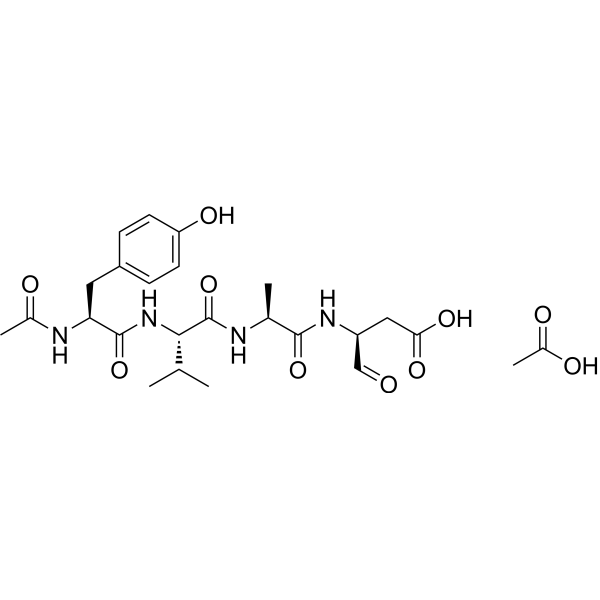 0 ImagesCat. No.: HY-120019ASynonyms: L-709049 acetateAc-YVAD-CHO (L-709049) acetate is a potent, reversible, specific tetrapeptide interleukin-lβ converting enzyme (ICE) inhibitor with mouse and human Ki values of 3.0 and 0.76 nM. Ac-YVAD-CHO acetate is also a caspase-1 inhibitor. Ac-YVAD-CHO acetate can suppress the production of mature IL-lβ.
-
Ac-Trp-Glu-His-Asp-Aldehyde
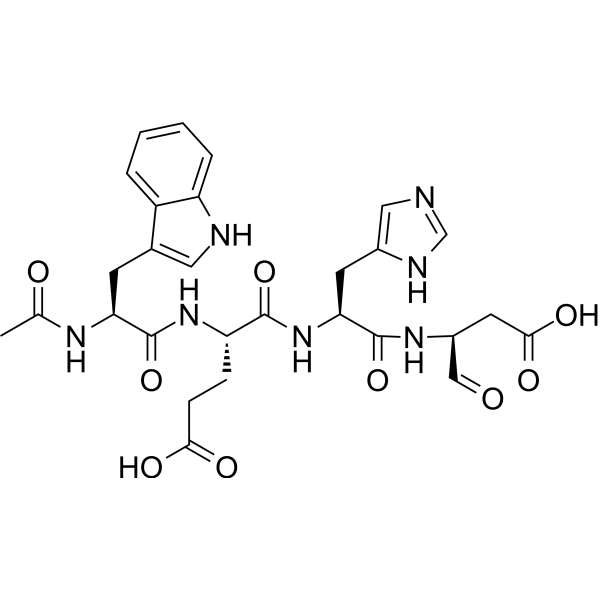 0 ImagesCat. No.: HY-P4535CAS No.: 189275-71-6Ac-Trp-Glu-His-Asp-Aldehyde is a potent and selective caspase-1 inhibitor with a Ki value of 56 pM.
-
Relaxin H3 (human)
 0 ImagesCat. No.: HY-P4890CAS No.: 1158181-62-4Relaxin H3 (human) is a relaxin peptide with anti-inflammatory, anti-apoptotic, anti-pyroptotic, anti-migratory, protective and anti-fibrotic activities. Relaxin H3 (human) acts on RXFP1 to generate cAMP and reduce the levels of ATP and ROS. Relaxin H3 (human) inhibits renal inflammatory pyroptosis (pyroptosis), NLRP3 inflammasome activation, caspase-1 activation, IL-1β/IL-18 secretion, collagen synthesis, TGF-β1 signaling pathway, Smad2 phosphorylation, myofibroblast differentiation, TIMP expression, and HRMEC migration. Relaxin H3 (human) activates AMPK, upregulates MFN2 expression, improves mitochondrial quality control and membrane potential, inhibits apoptosis (apoptosis) and pyroptosis, restores retinal ultrastructure, and reverses excessive left ventricular collagen expression. Relaxin H3 (human) can be used in studies related to kidney stones, nephrocalcinosis, diabetic cardiomyopathy, fibrotic cardiomyopathy, and diabetic retinopathy.
-
Ac-AAVALLPAVLLALLAP-YVAD-CHO
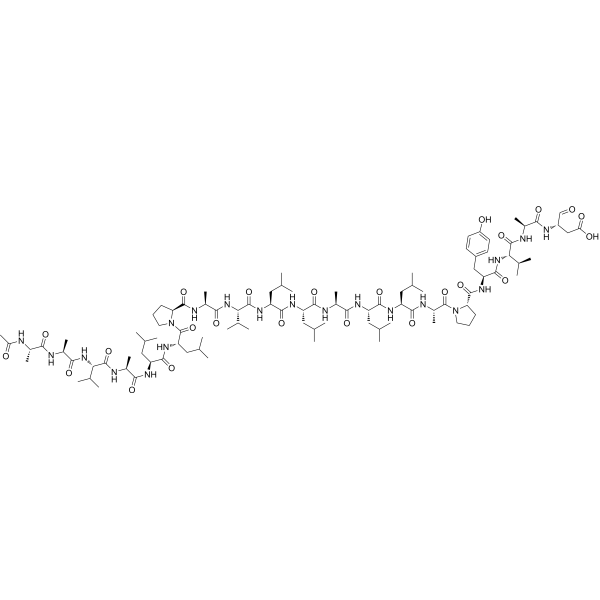 0 ImagesCat. No.: HY-P5938CAS No.: 201608-12-0Ac-AAVALLPAVLLALLAP-YVAD-CHO is a cell-permeable caspase-1 inhibitor that has antitumor activity.
-
13(S)-HOTrE
 0 Images13 (S)-HOTrE is an oxylipin metabolite of α-Linolenic acid (HY-N0728). 13 (S)-HOTrE mediates the inactivation of the NLRP3 inflammasome through the PPAR-γ pathway to exert anti-inflammatory effects. 13 (S)-HOTrE inhibits NF-κB nuclear translocation, ROS production, autophagy and IL-1β levels, induces apoptosis, and increases IL-10 levels. 13 (S)-HOTrE alleviates LPS-induced inflammatory responses in macrophages, prolongs the survival time of septic mice, and regulates the immunometabolic phenotype in parenteral nutrition mouse models. 13 (S)-HOTrE can be used in the research of immune and inflammation-related diseases.
-
Tabersonine hydrochloride
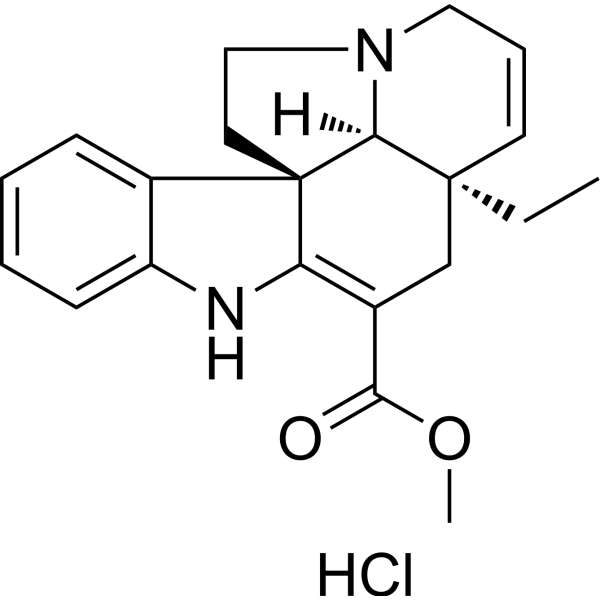 0 ImagesTabersonine hydrochloride is a selective, orally active NLRP3 inhibitor. Tabersonine hydrochloride directly binds to the NACHT domain of NLRP3, inhibiting its ATPase activity and oligomerization, thereby blocking ASC spot formation and caspase-1 activation, and reducing the release of pro-inflammatory cytokines such as IL-1β. Tabersonine hydrochloride also inhibits K63-linked ubiquitination of TRAF6, blocking NF-κB, PI3K/Akt, and p38 MAPK signaling pathways. Tabersonine hydrochloride can inhibit inflammatory responses, induce apoptosis of liver cancer cells through mitochondrial pathways and death receptor pathways, reduce mitochondrial membrane potential, promote cytochrome c release, and activate caspase proteins. Tabersonine hydrochloride is mainly used in the study of NLRP3-driven inflammatory diseases (such as acute lung injury, sepsis, peritonitis) and tumors such as liver cancer.
-
Periplogenin (Standard)
 0 ImagesPeriplogenin (Standard) is the analytical standard of Periplogenin (HY-N2414). Periplogenin is an orally active cardiac glycoside found in Cortex periplocae. Periplogenin can induce ROS production and necroptosis and cause G0/G1 phase arrest. Periplogenin can inhibit pyroptosis by regulating the NLRP3/Caspase-1/GSDMD signaling. Periplogenin suppresses growth of prostate carcinoma cells by docking to an ATP1A1 protein pocket and forming a hydrogen bond with T804. Periplogenin can be used for the researches of cancer, inflammation and immunology, such as prostate carcinoma, rheumatoid arthritis and psoriasis.




