



Caspase 9
Caspase 9 plays a central role in the mitochondrial, or intrinsic, apoptotic pathway, where cytochrome c release promotes apoptosome formation with Apaf-1 and procaspase-9[1]. Mechanistically, activated caspase 9 cleaves and activates effector caspases 3 and 7, linking mitochondrial dysfunction to proteolytic cell death execution[1][2]. In disease models, diminished Apaf-1 activity reduced cytochrome c-dependent caspase activation in ovarian cancer cell lines, while ischemic hippocampal neurons showed caspase 9 activation before neuronal death[2][3]. Compared with caspase 8 in the extrinsic pathway, caspase 9 primarily mediates the intrinsic route to caspase 3 activation in ischemic neurons and TNFR-mediated hepatocyte apoptosis[3][4]. For experimental applications, Apaf-1 ligands inhibited apoptosome-mediated procaspase-9 activation and reduced apoptotic phenotypes in mitochondrial apoptosis models[5].
References:
- [1]. Allan LA, et al. Apoptosis and autophagy: Regulation of caspase-9 by phosphorylation. FEBS J. 2009 Nov;276(21):6063-73. [Content Brief]
- [2]. Wolf BB, et al. Defective cytochrome c-dependent caspase activation in ovarian cancer cell lines due to diminished or absent apoptotic protease activating factor-1 activity. J Biol Chem. 2001 Sep 7;276(36):34244-51. [Content Brief]
- [3]. Cao G, et al. Cloning and characterization of rat caspase-9: implications for a role in mediating caspase-3 activation and hippocampal cell death after transient cerebral ischemia. J Cereb Blood Flow Metab. 2002 May;22(5):534-46. [Content Brief]
- [4]. Imao M, et al. Differential caspase-9-dependent signaling pathway between tumor necrosis factor receptor- and Fas-mediated hepatocyte apoptosis in mice. Liver Int. 2006 Feb;26(1):137-46. [Content Brief]
- [5]. Malet G, et al. Small molecule inhibitors of Apaf-1-related caspase- 3/-9 activation that control mitochondrial-dependent apoptosis. Cell Death Differ. 2006 Sep;13(9):1523-32. [Content Brief]
-
Caspase 9 Related Products (197)
Related Products (197)

-
Antibodies (2)
-
Phoxim
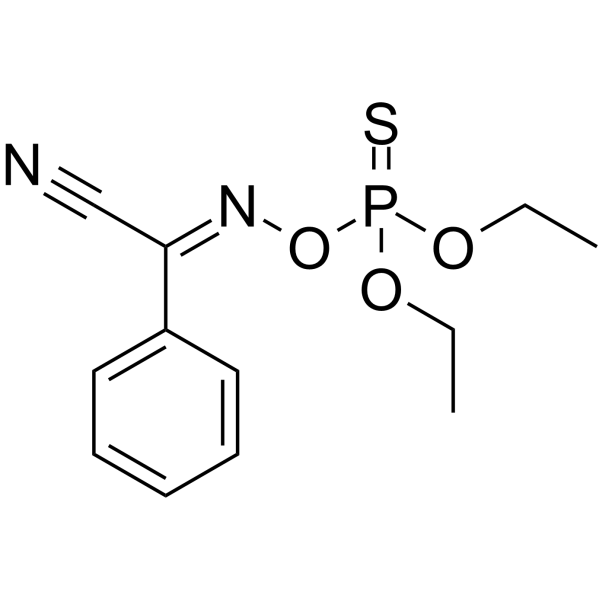 0 ImagesCat. No.: HY-B0819CAS No.: 14816-18-3Phoxim is an organophosphorus pesticide and an orally active inhibitor of cholinesterase and CYP3A, which induces neurotoxicity in Caenorhabditis elegans and causes nephrotoxicity characterized by glomerular atrophy and interstitial fibrosis. Phoxim induces inhibition of the autophagy pathway. Phoxim induces dopaminergic neuron degeneration and exacerbates Aβ-induced paralysis. Phoxim damages enterocytes and disrupts intestinal barrier integrity. Phoxim induces ROS accumulation. Phoxim induces mitochondrial apoptosis, involving upregulation of Bad, Bax, caspase-3, and caspase-9 and downregulation of Bcl-2. Phoxim inhibits mitochondrial functional enzymes (COX, Ca2+-Mg2+-ATPase, SDH). Phoxim upregulates Nrf2 mRNA expression in the jejunal mucosa. Phoxim increases TNF-α and decreases IL-6 and IL-8 in the intestinal mucosa. Phoxim alters gut microbial composition by increasing total bacteria and Escherichia coli and reducing Lactobacillus. Phoxim enhances energy metabolism in silver carp by upregulating key glycolytic and gluconeogenic enzymes. Phoxim is used in research on neurodegenerative diseases, nephrotoxicity, intestinal oxidative stress and barrier dysfunction, and bacterial sepsis.
-
4′-O-Methylglabridin
 0 Images4′-O-Methylglabridin is an apoptosis inducer with antioxidant, cell cycle-disrupting and anticancer cytotoxic activities. 4′-O-Methylglabridin inhibits various cancer cell lines including liver cancer, breast cancer and colorectal cancer cell lines. By reducing the expression levels of phosphorylated Rb (Ser807/811) and p21 proteins, 4′-O-Methylglabridin promotes cell accumulation at the subG1 and G2/M phases, and triggers caspase-dependent apoptosis via cytochrome C release and caspase-9 activation. 4′-O-Methylglabridin also exerts antioxidant effects by inhibiting lipid peroxide levels and reducing β-carotene consumption, thereby blocking LDL oxidation. 4′-O-Methylglabridin can be used in the research of various cancers and atherosclerotic diseases.
-
Sanggenon G
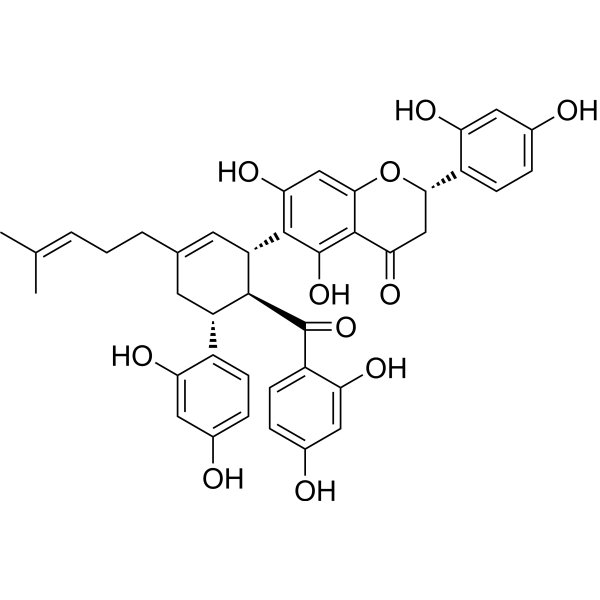 0 ImagesCat. No.: HY-12372CAS No.: 85698-31-3Sanggenon G is a cell-permeable and potent inhibitor of X-linked inhibitor of apoptosis protein (XIAP). Sanggenon G binds specifically to the BIR3 domain of XIAP with a binding affinity of 34.26 μM. Sanggenon G enhances caspase activation.
-
GD3 Ganglioside
 0 ImagesCat. No.: HY-157343CAS No.: 62010-37-1GD3 Ganglioside is an Apoptosis inducer and a biomarker for mouse neural stem cells. GD3 Ganglioside expresses in neural stem cells and the subventricular zone of the adult mouse brain. GD3 Ganglioside targets the mitochondrial permeability transition pore complex, induces pore opening, dissipates mitochondrial transmembrane potential, triggers Mitochondrial swelling, releases pro-apoptotic factors, and activates Caspase-9. GD3 Ganglioside is applicable to research related to glioblastoma.
-
Procyanidin B2-3'-O-gallate
 0 ImagesCat. No.: HY-N16483CAS No.: 109280-47-9Procyanidin B2-3'-O-gallate is a mono-gallate ester that can be found in grape seed extract. Procyanidin B2-3'-O-gallate induces cleavage of caspase-9, caspase-3, and PARP, reduces levels of Bcl-2, Bcl-Xl, and androgen receptor and induces apoptosis. Procyanidin B2-3'-O-gallate can be used for the research of prostate cancer.
-
BAG3/HSP70-IN-1
 0 ImagesCat. No.: HY-170944BAG3/HSP70-IN-1 (compound 16) is the first-in-class BAG3 and HSP70 dual inhibitor. BAG3/HSP70-IN-1 binds to BAG3 full-length, BAG3-BD, and HSP70 proteins with Kds of 33.10 μM, 27.90 μM, and 33.80 μM, respectively. BAG3/HSP70-IN-1 inhibits HeLa cells with an IC50 of 49.46 μM. BAG3/HSP70-IN-1 induces apoptosis by activating caspase 3 and caspase 9 levels in HeLa cells. BAG3/HSP70-IN-1 elevates p21 levels while reduces FOXM1 expression in HeLa cells. BAG3/HSP70-IN-1 decreases ATPase activity.
-
DpC hydrochloride
 0 ImagesCat. No.: HY-114243ACAS No.: 1382469-40-0DpC hydrochloride is a selective, orally active iron chelator with anticancer activity. DpC hydrochloride acts on signaling pathway-related targets such as JNK, NF-κB, and its activity is competitively inhibited by another iron chelator Dp44mT (HY-18973). By chelating intracellular iron and copper ions in tumor cells to form redox-active complexes, DpC hydrochloride induces oxidative stress, activates the JNK, NF-κB pathways and downregulates IκBα, upregulates the expressions of neuroglobin and cytoglobin, activates caspase 3/9 to induce tumor cell apoptosis. It also overcomes P-glycoprotein-mediated multidrug resistance through a lysosome-targeting mechanism, and exhibits broad-spectrum synergistic effects when combined with various chemotherapeutic agents. DpC hydrochloride inhibits tumor metastasis and increases TNF-α levels in the tumor microenvironment to enhance endogenous immune responses. DpC hydrochloride is applicable to the research of various malignancies including neuroblastoma, pancreatic cancer, prostate cancer, lung cancer, and breast cancer.
-
Maxadilan
 0 ImagesCat. No.: HY-P3483CAS No.: 135374-80-0Maxadilan is a specific irreversible PAC1 receptor agonist and a potent vasodilator peptide present in the salivary glands of sand flies. Maxadilan exhibits anti-apoptotic activity in hADSCs. Maxadilan inhibits pro-inflammatory cytokines (TNF-α) and enhances anti-inflammatory mediators (IL-10). Maxadilan can activate leukocytes and inhibit vascular permeability through PAC1 receptors. Maxadilan promotes neural differentiation of human adipose-derived stem cells. Maxadilan can be used to study endotoxin shock, atherosclerosis, and neurodegenerative diseases[1][2][3][4][5].
-
Trijuganone C
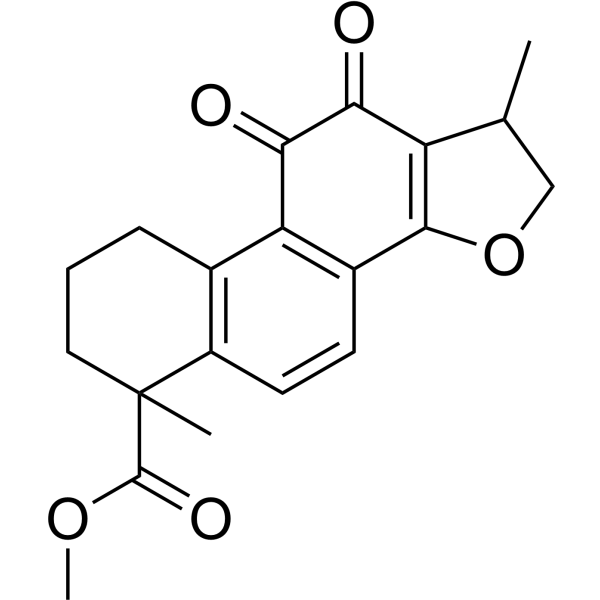 0 ImagesCat. No.: HY-N8617CAS No.: 135247-94-8Trijuganone C is a tanshinone-type diterpenoid compound. Trijuganone C can be isolated from the roots of Salvia miltiorrhiza Bunge. Trijuganone C induces chromatin condensation, DNA fragmentation, activation of Caspase-3, -8 and -9, as well as cleavage of PARP. Trijuganone C activates Bid and Bax, leading to loss of mitochondrial membrane potential and inducing the release of cytochrome c from mitochondria into the cytosol. Trijuganone C exerts antiproliferative effects through Apoptosis induction mediated by Mitochondrial dysfunction and Caspase activation. Trijuganone C exhibits significant antiproliferative activity against leukemia cells and colon cancer cells.
-
c-MYC/BCL2 ligand 1 iodide
 0 ImagesCat. No.: HY-174403c-MYC/BCL2 ligand 1 iodide is a dual-targeting c-MYC/Bcl-2 G4 ligand with Kd values of 0.90 μM (c-MYC G4) and 0.56 μM (Bcl-2 G4). c-MYC/BCL2 ligand 1 iodide inhibits c-MYC and Bcl-2 gene transcription by binding to G4-forming sequences and downregulates their protein expression. c-MYC/BCL2 ligand 1 iodide inhibits suppresses migration, induces caspase-dependent apoptosis, and triggers cell cycle G1 arrest in MCF-7 cells. c-MYC/BCL2 ligand 1 iodide significantly suppresses tumor growth in a 4T1 syngeneic model with no observable toxicity. c-MYC/BCL2 ligand 1 iodide can be used for the research of breast cancer.
-
Ganoderic acid T1
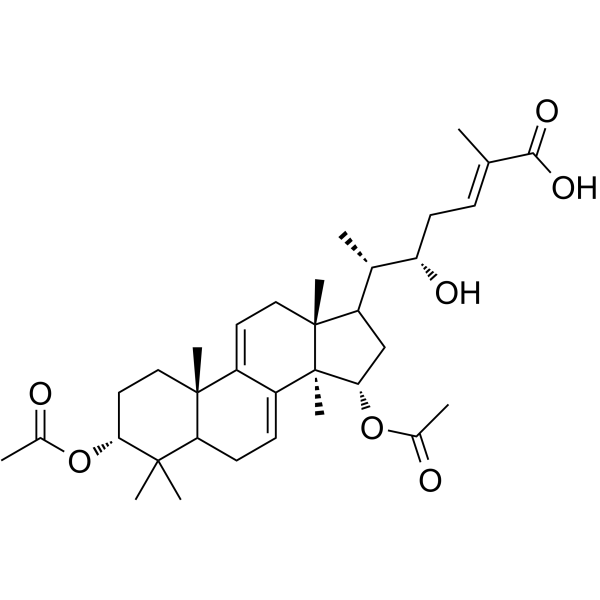 0 ImagesCat. No.: HY-N11648Ganoderic acid T1 is a deacetylated derivative of Ganoderic acid T. Ganoderic acid T1 attenuates antioxidant defense system and induces apoptosis of cancer cells. Ganoderic acid T1 decreases mitochondrial membrane potential and activates caspase-9 and caspase-3, to trigger apoptosis. Ganoderic acid T1 also increases the generation of intracellular ROS to produce pro-oxidant activities and cytotoxicity.
-
2-Methoxyjuglone
 0 ImagesCat. No.: HY-N17440CAS No.: 15127-94-32-Methoxyjuglone, a naphthoquinone, is an apoptosis inducer. 2-Methoxyjuglone activates caspase-9 and caspase-3 via the mitochondrial cytochrome c-dependent intrinsic apoptosis cascade. 2-Methoxyjuglone increases pro-apoptotic Bax levels, decreases anti-apoptotic Bcl-2 levels, and promotes mitochondrial cytochrome c release. 2-Methoxyjuglone induces apoptosis morphological features, early apoptosis, S-phase and G2/M-phase cell cycle arrest, and DNA double-strand breaks. 2-Methoxyjuglone exerts activity against Gram-positive bacteria, pathogenic fungi, and phytopathogenic fungi. 2-Methoxyjuglone can be used for the research of hepatocellular carcinoma, osteosarcoma, colon adenocarcinoma, breast cancer, fungal infection, bacterial infection.
-
MAPK-IN-3
 0 ImagesCat. No.: HY-169412CAS No.: 2848599-79-9MAPK-IN-3 (Compound 4a) is an anti-proliferative agent that shows particularly strong inhibitory effects on KYSE 30, HCT 116, and HGC 27, with IC50 values of 0.57 μM, 3.27 μM, and 2.28 μM, respectively. MAPK-IN-3 blocks the cell cycle via a p53-dependent mechanism and induces cell apoptosis through a p53-independent mechanism. MAPK-IN-3 downregulates the expression of cell cycle-related proteins like Cyclin D1 and cyclin B1, upregulates pro-apoptotic proteins such as cleaved PARP, cleaved caspase-7, and cleaved caspase-9, and reduces the expression of anti-apoptotic proteins like Bcl-2. Additionally, MAPK-IN-3 increases the intracellular level of ROS in KYSE 30 cells and upregulates the expression of members of the MAPK signaling pathway associated with ROS, such as p-ERK, p-p38 and p-JNK.
-
EGFR-IN-217
 0 ImagesCat. No.: HY-189142EGFR-IN-217 is an ATP-competitive EGFR kinase inhibitor, with an IC50 of 60.7 nM against EGFR. EGFR-IN-217 exhibits kinase inhibitory activity against PI3K-α and mTOR. EGFR-IN-217 upregulates pro-apoptotic factors including P53, Bax, PUMA, and caspase-7, -8 and -9, and downregulates the anti-apoptotic protein BCL-2, thereby inducing cell apoptosis and cycle arrest. EGFR-IN-217 shows tumor growth inhibitory effects in the solid Ehrlich ascites carcinoma xenograft mouse model. EGFR-IN-217 can be applied in the research of solid Ehrlich ascites carcinoma, hepatocellular carcinoma, and breast cancer.
-
Triphenyltin(IV) diisopropyl dithiocarbamate
 0 ImagesCat. No.: HY-180782Triphenyltin(IV) diisopropyl dithiocarbamate (Compound OC2) is an anti-leukemia agent. Triphenyltin(IV) diisopropyl dithiocarbamate exhibits extremely strong cytotoxicity towards Jurkat cells, with an IC₅₀ value of 0.1 μM. Triphenyltin(IV) diisopropyl dithiocarbamate causes DNA damage, which subsequently leads to mitochondrial dysfunction, a large amount of ROS production, and ultimately results in the activation of the mitochondrial apoptosis pathway (involving the activation of Caspase-9/-3) and the G0/G1 phase cell cycle arrest, all of which jointly lead to the death of leukemia cells.
-
HSP90-IN-11
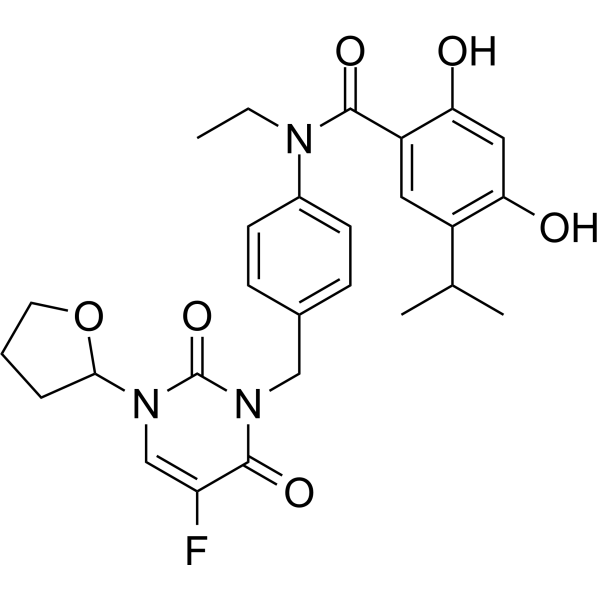 0 ImagesCat. No.: HY-146325CAS No.: 2986564-20-7HSP90-IN-11 is a HSP90 inhibitor with an IC50 of 27.8 nM. HSP90-IN-11 inhibits the activity of HSP90, which in turn induces rapid degradation of EGFR and Akt proteins in non-small cell lung cancer (NSCLC) cells. HSP90-IN-11 induces accumulation of the G1 subphase cell population in NSCLC cells, activates caspase-3, caspase-8, caspase-9 and PARP, thereby triggering apoptosis. HSP90-IN-11 exhibits antiproliferative activity in colorectal cancer and NSCLC cells. HSP90-IN-11 can be used for the research of colorectal cancer and non-small cell lung cancer.
-
DNMT-IN-6
 0 ImagesCat. No.: HY-182009CAS No.: 3038316-36-5DNMT-IN-6 is a DNA methyltransferase inhibitor with activity against DNMT1, DNMT3A, and DNMT3B. DNMT-IN-6 drives demethylation, and restores TMS1 tumor suppressor gene expression. DNMT-IN-6 induces apoptosis, causes G2/M phase arrest, disrupts mitochondrial integrity, and activates the intrinsic caspase cascade (3/7/9). DNMT-IN-6 inhibits tumor growth, and improves survival in xenograft models. DNMT-IN-6 can be used for the research of cancer, such as diffuse large B-cell lymphoma.
-
Anticancer agent 324
 0 ImagesCat. No.: HY-P11828Anticancer agent 324 is a Survivin inhibitor. Anticancer agent 324 competitively binds to Survivin’s linker region and triggers proteasomal IAP degradation. Anticancer agent 324 blocks Borealin binding and chromosomal passenger complex formation, and inhibits Survivin-CRM1 nuclear-cytoplasmic transport. Anticancer agent 324 activates extrinsic (caspase-8) and intrinsic (caspase-9) apoptotic pathways, activates executioner caspases-3 and caspases-7, and arrests cell cycle. Anticancer agent 324 can be used for the research of breast cancer.
-
Phoxim-d5 (phenyl-d5) (mixture of isomers)
 0 ImagesCat. No.: HY-W758414Phoxim-d5 (phenyl-d5) (mixture of isomers) is the deuterated-labeled Phoxim (HY-B0819). Phoxim is an organophosphorus pesticide and an orally active inhibitor of cholinesterase and CYP3A, which induces neurotoxicity in Caenorhabditis elegans and causes nephrotoxicity characterized by glomerular atrophy and interstitial fibrosis. Phoxim induces inhibition of the autophagy pathway. Phoxim induces dopaminergic neuron degeneration and exacerbates Aβ-induced paralysis. Phoxim damages enterocytes and disrupts intestinal barrier integrity. Phoxim induces ROS accumulation. Phoxim induces mitochondrial apoptosis, involving upregulation of Bad, Bax, caspase-3, and caspase-9 and downregulation of Bcl-2. Phoxim inhibits mitochondrial functional enzymes (COX, Ca2+-Mg2+-ATPase, SDH). Phoxim upregulates Nrf2 mRNA expression in the jejunal mucosa. Phoxim increases TNF-α and decreases IL-6 and IL-8 in the intestinal mucosa. Phoxim alters gut microbial composition by increasing total bacteria and Escherichia coli and reducing Lactobacillus. Phoxim enhances energy metabolism in silver carp by upregulating key glycolytic and gluconeogenic enzymes. Phoxim is used in research on neurodegenerative diseases, nephrotoxicity, intestinal oxidative stress and barrier dysfunction, and bacterial sepsis.
-
YVPGP
 0 ImagesCat. No.: HY-P10992CAS No.: 2095286-57-8YVPGP is an oligopeptide exacted from Anthopleura anjunae. YVPGP has a significant antitumor activity by mediating PI3K/AKT/mTOR signaling pathway. YVPGP arrests DU-145 cells in the S phase and induces apoptosis via mitochondrial and death receptor pathways (caspase3, 7, 8, 9). YVPGP effectively inhibits tumor growth in DU-145 xenografts mice model, promising for prostate cancer research.




