



Caspase 9
Caspase 9 plays a central role in the mitochondrial, or intrinsic, apoptotic pathway, where cytochrome c release promotes apoptosome formation with Apaf-1 and procaspase-9[1]. Mechanistically, activated caspase 9 cleaves and activates effector caspases 3 and 7, linking mitochondrial dysfunction to proteolytic cell death execution[1][2]. In disease models, diminished Apaf-1 activity reduced cytochrome c-dependent caspase activation in ovarian cancer cell lines, while ischemic hippocampal neurons showed caspase 9 activation before neuronal death[2][3]. Compared with caspase 8 in the extrinsic pathway, caspase 9 primarily mediates the intrinsic route to caspase 3 activation in ischemic neurons and TNFR-mediated hepatocyte apoptosis[3][4]. For experimental applications, Apaf-1 ligands inhibited apoptosome-mediated procaspase-9 activation and reduced apoptotic phenotypes in mitochondrial apoptosis models[5].
References:
- [1]. Allan LA, et al. Apoptosis and autophagy: Regulation of caspase-9 by phosphorylation. FEBS J. 2009 Nov;276(21):6063-73. [Content Brief]
- [2]. Wolf BB, et al. Defective cytochrome c-dependent caspase activation in ovarian cancer cell lines due to diminished or absent apoptotic protease activating factor-1 activity. J Biol Chem. 2001 Sep 7;276(36):34244-51. [Content Brief]
- [3]. Cao G, et al. Cloning and characterization of rat caspase-9: implications for a role in mediating caspase-3 activation and hippocampal cell death after transient cerebral ischemia. J Cereb Blood Flow Metab. 2002 May;22(5):534-46. [Content Brief]
- [4]. Imao M, et al. Differential caspase-9-dependent signaling pathway between tumor necrosis factor receptor- and Fas-mediated hepatocyte apoptosis in mice. Liver Int. 2006 Feb;26(1):137-46. [Content Brief]
- [5]. Malet G, et al. Small molecule inhibitors of Apaf-1-related caspase- 3/-9 activation that control mitochondrial-dependent apoptosis. Cell Death Differ. 2006 Sep;13(9):1523-32. [Content Brief]
-
Caspase 9 Related Products (197)
Related Products (197)

-
Antibodies (2)
-
Calactin
 0 ImagesCat. No.: HY-167237CAS No.: 20304-47-6Calactin is a glycoside that can be isolated from Asclepias curassavica L.. Calactin activates caspase-3, caspase-8, caspase-9, and phosphorylates ERK. Calactin induces DNA damage, apoptosis, PARP cleavage, G2/M phase cell cycle arrest, shifts Bax/Bcl-2 expression, and shows anti-proliferation effects in leukemia cells. Calactin can be used for the research of leukemia.
-
BCS12
 0 ImagesBCS12 is a CAIX inhibitor. BCS12 inhibits the viability of cancer cells under hypoxic conditions. BCS12 elevates ROS levels and suppresses the expression of HIF-1α and CA9. BCS12 downregulates Bcl-2, activates caspase-9, caspase-3, caspase-7 and Bax, and induces PARP cleavage and apoptosis. BCS12 reduces tumor burden, increases the number of apoptotic nuclei and restores tissue structure in rats bearing breast tumors. BCS12 can be used in research related to triple-negative breast cancer.
-
Difopein
 0 ImagesCat. No.: HY-P1380CAS No.: 396834-58-5Difopein is a 14-3-3 protein inhibitor. Difopein acts as an apoptosis inducer, regulates apoptosis-related proteins, downregulates Bcl-2, upregulates Bax, activates caspase-9 and caspase-3, and induces nuclear fragmentation, membrane-enclosed apoptotic bodies and DNA ladder formation. Difopein serves as a tumor growth inhibitor, which inhibits the proliferation of glioma cells and induces their apoptosis in in vivo nude mouse models. Difopein is applicable to glioma-related research.
-
JAK1/CDK7-IN-1
 0 ImagesCat. No.: HY-181528JAK1/CDK7-IN-1 is a JAK1/CDK7 inhibitor. JAK1/CDK7-IN-1 forms a stable and tightly bound complex with JAK1. JAK1/CDK7-IN-1 disrupts the cell cycle, induces G2/M phase arrest, and increases the proportion of pre-G1 phase cells. JAK1/CDK7-IN-1 induces cellular apoptosis (apoptosis) and necrosis. JAK1/CDK7-IN-1 is applicable to research related to breast cancer and prostate cancer.
-
EGFR/VEGFR2-IN-10
 0 ImagesCat. No.: HY-179485EGFR/VEGFR2-IN-10 is a selective EGFR, VEGFR2 and COX2 inhibitor with IC50s of 8.5, 68 and 158 nM, respectively. EGFR/VEGFR2-IN-10 induces G1-phase cell cycle arrest in MCF-7 cells. EGFR/VEGFR2-IN-10 increases the Bax/Bcl-2 ratio, upregulates caspase-8, and elevates caspase-9 protein levels, confirming activation of the intrinsic apoptotic pathway. EGFR/VEGFR2-IN-10 demonstrates exceptional therapeutic potential by simultaneously inhibiting tumor proliferation, angiogenesis, and inflammation pathways while maintaining a favorable selectivity profile. EGFR/VEGFR2-IN-10 can be used as a research tool for cervical, liver, colon, and breast cancer studies.
-
PROTAC PI3K/110β degrader-1
 0 ImagesCat. No.: HY-176421CAS No.: 3070438-85-3PROTAC PI3K/110β degrader-1 is a VHL-recruiting PROTAC degrader targeting PI3K/110β, with DC50 values of 0.416 μM (MCF-7) and 19.66 μM (A549), respectively. PROTAC PI3K/110β degrader-1 recruits VHL to induce proteasomal degradation of PI3K/110β. It activates endoplasmic reticulum stress (ERS)-mediated mitochondrial apoptosis via the PERK/ATF4/CHOP unfolded protein response (UPR) pathway, downregulates p-AKT and Bcl-2, upregulates Bax, cleaved-caspase-9 and cleaved-caspase-3, inhibits the expression and activity of P-gp, and exerts synergistic anti-tumor effects with Doxorubicin (Adriamycin, ADM) (HY-15142A) and Cisplatin (DDP) (HY-17394). PROTAC PI3K/110β degrader-1 can be used in research related to multidrug-resistant cancers.
-
HL435
 0 ImagesCat. No.: HY-161769HL435 is a BRD4 PROTAC degrader with DC50 values of 11.9 nM (MDA-MB-231 cells) and 21.9 nM (MCF-7 cells), respectively. HL435 recruits the CRL4DCAF11 E3 ubiquitin ligase complex to degrade BRD4 via the ubiquitin-proteasome system. HL435 induces cell cycle arrest and apoptosis (apoptosis) in cancer cells, downregulates the expression levels of cyclin D1 and cyclin B1, activates caspase-9, and induces PARP1 cleavage. HL435 exerts anti-tumor activity both in vitro and in mouse xenograft tumor models. HL435 can be used for the research of breast cancer and prostate cancer.
-
EMT inhibitor-3
 0 ImagesCat. No.: HY-170929CAS No.: 2930726-89-7EMT inhibitor-3 (compound 11i) is a epithelial-mesenchymal transition (EMT) inhibitor. EMT inhibitor-3 inhibits neuroblastoma SK-N-SH cells with an IC50 of 2.5 μM. EMT inhibitor-3 inhibits SK-N-SH cell proliferation, migration, and invasion. EMT inhibitor-3 increases the Bax/Bcl-2 protein expression ratio, promotes Cytochrome C ( HY-125857) release from mitochondria, and activates caspases 9 and caspases 3, inducing mitochondria-mediated endogenous tumor cell Apoptosis. EMT inhibitor-3 is potential for cancer research.
-
ST09
 0 ImagesCat. No.: HY-15668CAS No.: 1370037-59-4ST09 is an efficient and low toxicity Curcumin (HY-N0005) derivative. ST09 significantly inhibits cell migration and downregulates the expression of MMP1, MMP2, and Vimentin. ST09 has strong cytotoxicity to breast cancer cells, such as MDA-MB-231, MCF7 and T47D cells. ST09 induces cell apoptosis by upregulating Bax and cleaved caspase-3/9. ST09 can be used in the research of cancer such as breast cancer.
-
XAN-5
 0 ImagesCat. No.: HY-181599XAN-5 is a mitochondrial DNA G-quadruplex (mtG4) ligand with a Kd of 3.8 μM. XAN-5 selectively binds and stabilizes mtG4 structures, disrupting mitochondrial gene transcription and DNA replication. XAN-5 triggers mitochondrial dysfunction, ROS overproduction, G0 phase arrest and caspase-dependent apoptosis. XAN-5 inhibits autophagy and induces immunogenic cell death. XAN-5 inhibits tumor growth in a mouse liver cancer model while enhancing tumor-infiltrating CD4+ and CD8+ T cells. XAN-5 targets two cancer resistance mechanisms simultaneously. XAN-5 can be used for the research of liver cancer.
-
TPP-C8-CO-DSG bromide
 0 ImagesCat. No.: HY-184737TPP-C8-CO-DSG bromide is a derivative of Diosgenin (HY-N0177) and an anticancer agent. TPP-C8-CO-DSG bromide downregulates Bcl-2 expression and upregulates Bax expression. TPP-C8-CO-DSG bromide promotes the cleavage of Caspase 9, Caspase 3 and PARP-1. TPP-C8-CO-DSG bromide depolarizes mitochondrial membrane potential, reduces intracellular ATP production, and induces intracellular ROS accumulation. TPP-C8-CO-DSG bromide promotes Apoptosis. TPP-C8-CO-DSG bromide exhibits anticancer activity against prostate cancer, breast cancer, lung adenocarcinoma, cervical cancer and colorectal cancer. TPP-C8-CO-DSG bromide can be used in the research of cervical cancer.
-
IDO1-IN-34
 0 ImagesCat. No.: HY-183317IDO1-IN-34 is a selective IDO1 inhibitor with an IC50 of 0.093 μM. IDO1-IN-34 exhibits cytotoxicity against various cancer cell lines. IDO1-IN-34 inhibits the kynurenine (kynurenine) pathway and activates IL-2. IDO1-IN-34 induces cell apoptosis via the endogenous mitochondrial pathway, while increasing the levels of cytochrome c, caspase-3, caspase-9 and PARP-1. IDO1-IN-34 can be used for research on liver cancer, lung cancer, breast cancer, prostate cancer, colon cancer and leukemia.
-
Tambulin
 0 ImagesTambulin is an orally active flavonol compound found in Zanthoxylum armatum. Tambulin can inhibit cell proliferation, induce apoptosis and inhibit ROS production. Tambulin upregulates cleaved caspase-3, cleaved caspase-9, and Bax, downregulates Bcl-2 levels. Tambulin can stimulate glucose-dependent insulin secretion and induce endothelium-independent vasorelaxation. Tambulin binds to succinate dehydrogenase (SDH) (Ki = 11.02 μM) and shows significant ferric reducing power. Tambulin can enhances oxidative stress resistance, reduces, lipofuscin deposits, lipid levels, α-synuclein levels, improves locomotary behavior, and dopamine levels in in age-synchronized L1 hermaphrodite Caenorhabditis elegans models of ageing and Parkinson's disease. Tambulin can be used for the researches of Parkinson's disease, lung squamous cell carcinoma, and diabetes.
-
HDAC1-IN-11
 0 ImagesCat. No.: HY-178021HDAC1-IN-11 (Compound 6) is a HDAC1 inhibitor with an IC50 of 106.6 nM. HDAC1-IN-11 inhibits the expression of Sp1 and RAD51, thereby inducing Caspase-dependent apoptosis. HDAC1-IN-11 has antitumor activity and sensitizes Etoposide (HY-13629) and Gemcitabine (HY-17026), promoting synergistic death of NSCLC cells through the inhibition of homologous recombination and non-homologous end joining (NHEJ) pathways involved in DNA DSB repair. HDAC1-IN-11 can be used for chemotherapy of cancers like NSCLC research.
-
VEGFR-2-IN-70
 0 ImagesCat. No.: HY-175019VEGFR-2-IN-70 is a potent VEGFR-2 inhibitor with an IC50 of 18.04 nM. VEGFR-2-IN-70 exhibits cytotoxicity against A549 and MCF-7 cancer cells with IC50 values of 0.43 μM and 3.8 μM, respectively. VEGFR-2-IN-70 induces G1 cell cycle arrest and apoptosis in lung cancer cells. VEGFR-2-IN-70 is useful in cancer research.
-
Antitumor agent-214
 0 ImagesCat. No.: HY-181720CAS No.: 1911631-77-0Antitumor agent-214 is a chalcone analogue with anti-tumor activity. Antitumor agent-214 induces cell cycle arrest and apoptosis in tumor cells, disrupts mitochondrial metabolism, and upregulates the expression of caspase 3, caspase 7 and caspase 9, downregulates PARP1. Antitumor agent-214 can be used for anti-tumor research related to colorectal cancer, breast cancer, lung cancer, and cervical cancer.
-
d-T101 peptide
 0 ImagesCat. No.: HY-P11298CAS No.: 2120397-85-3d-T101 peptide, a human hormone-peptide, is a T1/ST2 receptor ligand. d-T101 peptide binds to the T1/ST2 receptor and activates caspases 8, 9 and 3 mediated apoptosis, together with activation of JNKinase and p38 MAPKinase. d-T101 peptide also changes Golgi structural with function loss and downregulation of the endoplasmic reticulum (ER) stress repair mechanism. d-T101 peptide has immunostimulatory and anticancer activity, selectively induces apoptosis in proliferating cancer cells and increases IL-2 and IFN-γ expression as well as the recruitment of NK cells and M1 macrophages to the tumor site.
-
Duocarmycin A
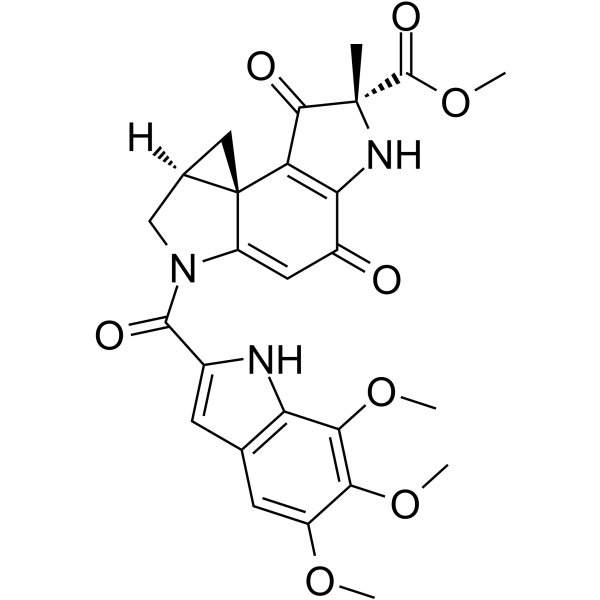 0 ImagesCat. No.: HY-12455CAS No.: 118292-34-5Duocarmycin A is an antitumor antibiotic and DNA alkylating agent with broad-spectrum antibacterial activity, which can serve as a payload for synthesizing antibody-drug conjugates (ADCs). Duocarmycin A selectively binds to the AT-rich minor groove of DNA, forms covalent adducts by alkylating the adenine N3 residue, thereby disrupting DNA structure and inhibiting its replication and transcription. Duocarmycin A induces apoptosis, sub-G1 phase accumulation and chromatin condensation, reduces the levels of pro-caspase-3/9, and induces p53-independent p21 expression. Duocarmycin A is widely used in the research of various malignancies, including leukemia, sarcoma, glioblastoma, as well as multiple solid tumor models such as lung cancer, breast cancer, and colorectal cancer.
-
Topo I/II-IN-3
 0 ImagesCat. No.: HY-183330Topo I/II-IN-3 is a dual inhibitor of topoisomerase I/II (topoisomerase I/II), with an IC50 of 8.99 μM against Topo I and an IC50 of 26.92 μM against Topo II. Topo I/II-IN-3 induces DNA damage, elevates intracellular ROS levels, activates the mitochondrial apoptosis pathway, and exerts cytotoxicity against cancer cells. Topo I/II-IN-3 upregulates the expression of γ-H2AX, p53, activated caspase-9, Bax and activated caspase-3, while downregulating the expression of Bcl-2. Topo I/II-IN-3 can be used in research related to breast cancer, liver cancer and gastric cancer.
-
Z-LEHD-FMK TFA
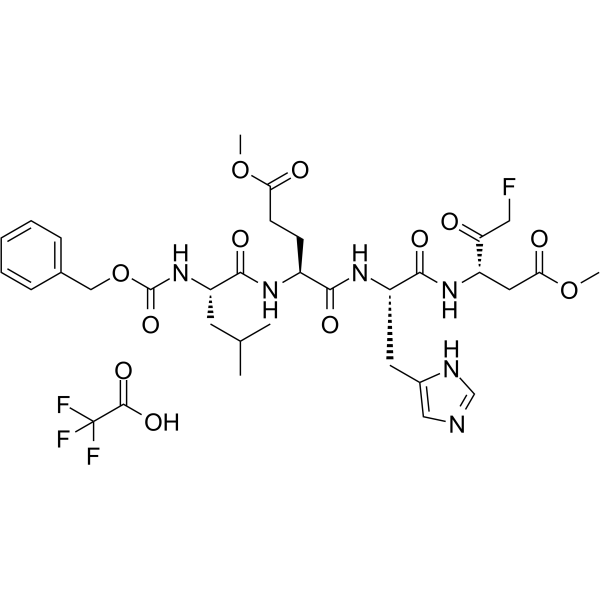 0 ImagesCat. No.: HY-P1010ACAS No.: 524746-03-0Z-LEHD-FMK TFA is a selective and irreversible inhibitor of caspase-9, protects against lethal reperfusion injury and attenuates apoptosis. Z-LEHD-FMK TFA exhibits the neuroprotective effect in a rat model of spinal cord trauma.




