



Caspase 9 Activator
-
Anticancer agent-364
 0 ImagesCat. No.: HY-189286
Anticancer agent-364 is a phenylalanine-derived hydrazone heterocyclic compound that exhibits selective cytotoxicity against NSCLC lung cancer cells. Anticancer agent-364 inhibits VEGF-A, VEGFR-1, and VEGFR-2, increases caspase-3/7, caspase-8, and caspase-9 activity, and induces apoptosis. Anticancer agent-364 can be used for research on non-small cell lung cancer.
-
EGFR-IN-109
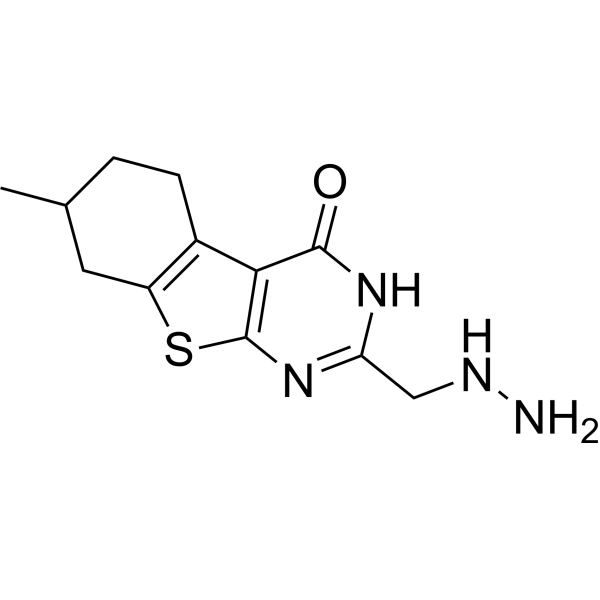 0 ImagesCat. No.: HY-162360CAS No.: 3019971-97-9
-
PDGFRA/CAIX/XII-IN-1
 0 ImagesCat. No.: HY-181587Purity: 98.10%
PDGFRA/CAIX/XII-IN-1 is an inhibitor of PDGFRA, CA IX and CA XII, with an IC50 of 20 nM against PDGFRA, a Ki of 93.3 nM against CA IX, and a Ki of 80.0 nM against CA XII. PDGFRA/CAIX/XII-IN-1 binds to the ATP-binding pocket of PDGFRA and blocks the downstream STAT3, AKT and ERK1/2 signaling pathways. PDGFRA/CAIX/XII-IN-1 induces G0/G1 cell cycle arrest and endogenous apoptosis (Apoptosis), including cleavage of PARP-1, caspase-9 and caspase-3, activation of caspase 3/7, and down-regulation of Mcl-1. PDGFRA/CAIX/XII-IN-1 exhibits antiproliferative activity in eosinophilic leukemia cells. PDGFRA/CAIX/XII-IN-1 can be used for the research of leukemia.
-
EGFR/BRAFV600E-IN-6
 0 ImagesCat. No.: HY-180154CAS No.: 3120155-78-1
EGFR/BRAFV600E-IN-6 (Compound 7c) is a dual EGFR/BRAFV600E inhibitor with IC50 values of 0.12 and 0.05 μM. EGFR/BRAFV600E-IN-6 can activate caspase-3/8/9, unregulate Bax expression and downregulate Bcl-2 levels. EGFR/BRAFV600E-IN-6 can induce apoptosis and shows antioxidant activity. EGFR/BRAFV600E-IN-6 can be used for the research of cancer, such as colon cancer.
-
CHNQD-01522
 0 ImagesCat. No.: HY-181675
CHNQD-01522 is a microtubule inhibitor targeting the colchicine binding site on β-tubulin. CHNQD-01522 binds to the colchicine binding site on β-tubulin, inhibits microtubule polymerization, and evades P-glycoprotein transport in cancer cells. CHNQD-01522 inhibits proliferation, suppresses tumor cell colony formation, arrests cell cycle in G2/M phases, and induces apoptosis in cancer cells. CHNQD-01522 upregulates of Bax and activation of caspase-9 and caspase-3. CHNQD-01522 shows anti-tumor efficacy in subcutaneous and orthotopic hepatocellular carcinoma xenograft tumor models. CHNQD-01522 can be used for the research of hepatocellular carcinoma.
-
EGFR-IN-201
 0 ImagesCat. No.: HY-181659CAS No.: 3103654-99-2
EGFR-IN-201 is a potent EGFR inhibitor, with an IC50 of 0.091 μM against wild-type EGFR; for mutant EGFR variants, the IC50 values of EGFRT790M, EGFRL858R and EGFRC797S are 0.147 μM, 0.221 μM and 0.703 μM, respectively. EGFR-IN-201 inhibits EGFR downstream signaling proteins AKT1 (IC50 = 0.225 μg/mL) and ERK1 (IC50 = 0.705 μg/mL). EGFR-IN-201 induces G0/G1 cell cycle arrest, apoptosis and low-level necrosis in cancer cells. EGFR-IN-201 is applicable to research on cancers such as colon cancer.
-
HDAC6-IN-63
 0 ImagesCat. No.: HY-178022
HDAC6-IN-63 (Compound 7) is an orally active HDAC6 inhibitor with an IC50 of 145 nM. HDAC6-IN-63 inhibits the expression of Sp1 and RAD51, thereby inducing Caspase-dependent apoptosis. HDAC6-IN-63 has antitumor activity and sensitizes Etoposide (HY-13629) and Gemcitabine (HY-17026), promoting synergistic death of NSCLC cells through the inhibition of homologous recombination and non-homologous end joining (NHEJ) pathways involved in DNA DSB repair. HDAC6-IN-63 can be used for chemotherapy of cancers like NSCLC research.
-
EGFR-IN-134
 0 ImagesCat. No.: HY-168623
EGFR-IN-134 (compound 3f), a triazolo[3,4-a]isoquinoline derivative, is a potent EGFR inhibitor with an IC50 of 0.023 µM. EGFR-IN-134 induces apoptosis and necrosis. EGFR-IN-134 initiates cell cycle arrest at the G2/M and pre-G1 phases, downregulates anti-apoptotic protein Bcl2 and upregulates pro-apoptotic proteins: p53, Bax, and caspases 3, 8, and 9. EGFR-IN-134 shows antiproliferative and anticancer activity.
-
Ginsenoside Rh2 (Standard)
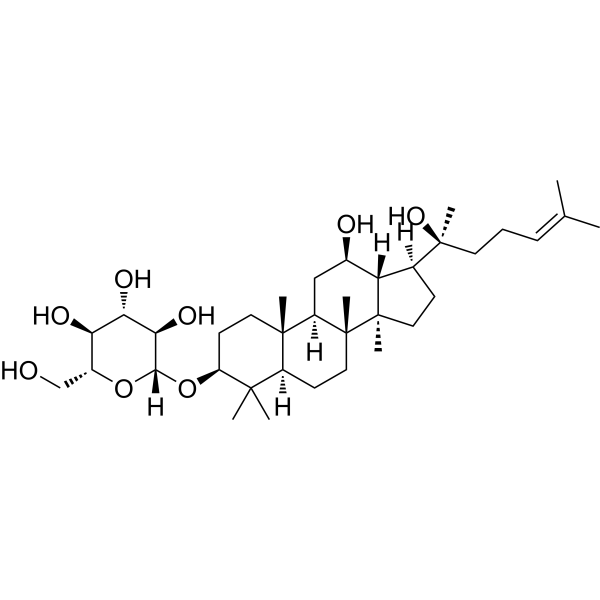 0 ImagesSynonyms: 20(S)-Ginsenoside Rh2(Standard); 20(S)-Rh2(Standard)
-
EM20-25
 0 ImagesCat. No.: HY-101999CAS No.: 141266-44-6
EM20-25 is an inhibitor for Bcl-2, which interferes with the interaction between BCL-2 and BAX, activates caspase-9 and thus induces the apoptosis. EM20-25 affects the mitochondrial function, causes the open of permeability transition pore (PTP). EM20-25 enhances the sensitivity of cells to Staurosporine (HY-15141), and enhances the killing effect of BCL-2-expressing leukemia cells to Chlorambucil (HY-13593) and Fludarabine (HY-B0069).
-
CDC25A/NF-κB-IN-1
 0 ImagesCat. No.: HY-184446
CDC25A/NF-κB-IN-1 is an effective dual-target inhibitor of CDC25A and NF-κB, and is a prodrug of Pt(IV). CDC25A/NF-κB-IN-1 has anticancer activity and low cytotoxicity to normal cells. CDC25A/NF-κB-IN-1 can trigger a variety of anticancer mechanisms, including S phase cell cycle arrest, mitochondrial endogenous apoptosis, endoplasmic reticulum stress, autophagy-dependent ferroptosis. CDC25A/NF-κB-IN-1 has good safety and can be used for ovarian cancer research.
-
NSC 850745
 0 ImagesCat. No.: HY-175848
NSC 850745 is a selective and potent c-Met/STAT3 inhibitor with IC50 values of 210 and 670 nM. NSC 850745 can inhibit cell proliferation, induce G2/M phase arrest and induce apoptosis. NSC 850745 can downregulate AKT-1, VEGF and Bcl-2 expression and upregulate p53, Bax and caspase expression. NSC 850745 can be used for the research of cancer, such as leukemia and colon cancer.
-
DZ-1-DHA
 0 ImagesCat. No.: HY-184557CAS No.: 2223036-84-6
DZ-1-DHA is a conjugate of DHA (HY-B2167) and DZ-1 dye. DZ-1-DHA mediates selective cellular uptake via binding to overexpressed OATP1A2. DZ-1-DHA induces the cleavage of Caspase-3, Caspase-8, Caspase-9 and PARP-1. DZ-1-DHA induces Apoptosis and Ferroptosis. DZ-1-DHA induces ROS production through a Fenton-like mechanism, causes mitochondrial membrane depolarization, and triggers lipid peroxidation. DZ-1-DHA can be used in studies related to colorectal cancer liver metastasis.
-
Topo I/II-IN-2
 0 ImagesCat. No.: HY-170912
Topo I/II-IN-2 (Compound 3g) is an inhibitor of Topo I and Topo II. Topo I/II-IN-2 inhibits NCI-H446 cells and NCI-H1048 cells with IC50s of 1.30 μM and 1.42 μM, respectively. Topo I/II-IN-2 induces mitochondrial Apoptosis, mitochondrial dysfunction and activity generation. Topo I/II-IN-2 inhibits the PI3K/Akt/mTOR pathway. Topo I/II-IN-2 prevents SCLC (small cell lung cancer) cell proliferation, invasion, and migration in vitro. .
-
SP-6-27
 0 ImagesCat. No.: HY-136893CAS No.: 1384170-58-4
SP-6-27 is a tubulin depolymerizing agent that binds to the colchicine site of β-tubulin. SP-6-27 induces G2/M cell cycle arrest in ovarian cancer cells. SP-6-27 enhances intrinsic apoptosis in ovarian cancer cells through upregulation of Bax, Apaf-1, caspase-6, caspase-9, and caspase-3. SP-6-27 reduces ovarian cancer cell migration. SP-6-27 inhibits capillary tube formation by human umbilical vein endothelial cells. SP-6-27 shows minimum cytotoxicity to normal ovarian epithelia. SP-6-27 shows enhanced cytotoxicity in chemo-sensitive/resistant ovarian cancer cells when combined with Cisplatin (HY-17394). SP-6-27 can be used for the research of ovarian cancer.
-
Swerchirin
 0 Images
Swerchirin is an orally active, plant-derived xanthone that acts as an inhibitor of the Raf/MEK/ERK signaling pathway. Swerchirin downregulates the expression of phosphorylated MEK and phosphorylated ERK, induces mitochondrial apoptosis and cell cycle arrest, regulates Bcl-2 family proteins, triggers cytochrome c release, activates caspases, and drives PARP cleavage. Swerchirin reduces blood glucose levels in rat models under fasting, fed, glucose-loaded conditions, and following treatment with Tolbutamide (HY-B0401). Swerchirin can be used in research related to ovarian cancer, liver injury, and diabetes.
-
GUT-70
 0 ImagesCat. No.: HY-120923CAS No.: 161633-75-6
GUT-70, a tricyclic coumarin, is a Hsp90 inhibitor. GUT-70 activates the caspase 2, 3, 8 and 9, and induces the apoptosis in leukemic cells. GUT-70 inhibits HIV-1 replication in chronically infected cells via suppression of the NF-κB pathway. GUT-70 can be used for the study of leukemic, mantle cell lymphoma (MCL) and HIV-1 infection.
-
GEA 3162 hydrochloride
 0 ImagesCat. No.: HY-120314A
GEA 3162 hydrochloride is an orally active compound that acts as a NO/ONOO⁻ donor. GEA 3162 hydrochloride significantly inhibits the activation of human polymorphonuclear leukocytes (PMNs) through the cGMP pathway, inhibits the release of inflammatory mediators, and exerts anti-inflammatory and protective effects. GEA 3162 hydrochloride induces apoptosis of neutrophils and bone marrow cells by activating caspase-2/3/8/9 through the ONOO⁻ pathway. GEA 3162 hydrochloride has a bidirectional effect in the rat gastric ulcer model: at low doses, it significantly reduces gastric mucosal damage, while at high doses, it aggravates the ulcer area. GEA 3162 hydrochloride can be used for research on inflammatory conditions such as gastric ulcers.
-
MAHS-3
 0 ImagesCat. No.: HY-187513
MAHS-3 is a thymidylate synthase (TS) and dihydrofolate reductase (DHFR) inhibitor, with IC50 values of 5.279 μM and 52.60 μM against human targets, respectively. MAHS-3 exhibits broad-spectrum antiproliferative activity against cancer cells, induces cell cycle arrest, activates endogenous caspase-dependent apoptosis, reduces MMP levels, inhibits cell migration, increases intracellular NO levels, and promotes autophagy activity. MAHS-3 can be used in cancer-related research.
-
RR-171
 0 ImagesCat. No.: HY-P11935CAS No.: 2410535-57-6
RR-171 is an amino acid polypeptide and an inhibitor of the Wnt signaling pathway. RR-171 reduces the expression levels of Wnt-1, GSK3β and β-catenin. RR-171 induces apoptosis (Apoptosis) in pancreatic cancer cells, which is characterized by an increased Bax/Bcl-2 ratio, activation of Caspase-3/7/9, and increased Cleaved-PARP; this pro-apoptotic effect can be partially reversed by Z-VAD-FMK (HY-16658B). RR-171 also induces pyroptosis (Pyroptosis) in pancreatic cancer cells, which is manifested by activation of the NLRP-3 inflammasome, activation of Caspase-1, cleavage of GSDMD, upregulation of IL-1β and IL-18, and increased LDH release; this pro-pyroptotic effect can be partially reversed by VX-765 (HY-13205). RR-171 inhibits the viability, proliferation and colony formation of pancreatic cancer cells, with low cytotoxicity against normal cells. RR-171 downregulates the expression of Ki-67 and PCNA in tumor tissues in vivo, with favorable biosafety. RR-171 can be used in studies related to pancreatic cancer.



